


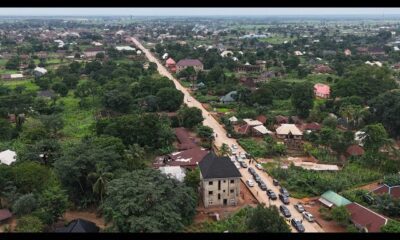

Towns & Communities in Nigeria
Nkalagu Town, Ebonyi State: Industry, Memory, and a Forgotten Nigerian Community

Nkalagu is a town in Ebonyi State with a rich industrial history and a community shaped by its limestone deposits and the Nigerian Cement Company. Explores the geography, origins, industrial legacy, social life, and current developments of this historic town.

Nkalagu is one of those Nigerian towns with a name that quietly carries weight. Situated in Ishielu Local Government Area of Ebonyi State, southeastern Nigeria, it sits right at the border where Enugu gives way to Ebonyi to welcome travellers before they even realize they have crossed State lines. For decades, this town was relevant. Not just locally, but nationally. This was where limestone was pulled from the earth and turned into cement that contributed in building the modern Nigeria.
Yet, today, when people search for Nkalagu, they find surprisingly little. A few paragraphs. Scattered references. News reports tied almost entirely to an abandoned factory. The everyday life of the town, its memory, its internal rhythms remain largely undocumented online. That silence is striking, especially for a place that once stood at the centre of Nigeria’s early industrial ambition.
Nkalagu is best known as the home of the Nigerian Cement Company (NigerCem), one of the earliest cement plants in the country. The factory brought jobs, migration, and infrastructure. It turned a rural settlement into a bustling industrial town. When production stopped, the impact was deep and lasting. Families felt it. The town felt it. What followed was not just economic decline but a gradual fading from national attention.
This article tells the story of Nkalagu as it can be responsibly told. It draws from verifiable records, government documents, news reports, and documented oral accounts. It does not invent traditions or borrow culture from neighbouring towns. Instead, it looks closely at what is known, what can be confirmed, and what remains missing. In doing so, it treats the town, not as a footnote but as a real place shaped by industry, memory, and community resilience.
To understand Nkalagu is to understand how Nigerian towns rise, struggle, and endure. It is a story of land and limestone, of work and loss, of presence and silence. And it is long overdue.
Location, Boundaries, and Strategic Position of Nkalagu

Nkalagu is a town in Ebonyi State, Nigeria located in the Ishielu Local Government Area. It lies close to the border with Enugu State which makes it one of the first major settlements travellers encounter when entering Ebonyi from the west. Its position along the busy Enugu–Abakaliki expressway has long made it a natural gateway that connects trade routes, local villages, and industrial activity.
Nkalagu is made up of several villages, including Ishiagu, Uwule, Imeoha, Amanvu, and Akiyi. Each village maintains its own leadership and traditions under the Onyishi system where the oldest male in the village serves as the traditional head. This structure keeps community life organized, and ensures that local issues are addressed and cultural practices continue, even in the absence of formal documentation.
The geography of the town is also notable for its natural resources. Limestone deposits in the surrounding hills gave rise to the establishment of the Nigerian Cement Company in the mid-20th century. This natural endowment made the town strategically important for industrial development in Nigeria.
Beyond industry, the location of Nkalagu supports commerce and social exchange. Nkwo Nkalagu market sits along the main road and attracts traders and travellers from nearby towns and villages. Aside a marketplace, it is where news, goods, and relationships converge.
Being both a border town and a centre of early industrial activity, Nkalagu has a unique strategic position in Ebonyi State. Its accessibility, res beingources, and historical significance make it more than just a dot on the map. The town connects people, ideas, and opportunities, even if much of its life remains undocumented in mainstream sources.
Origins and Early Settlement
The story of Nkalagu began long before the cement factories and industrial bustle. Like many towns in southeastern Nigeria, its origins are preserved mainly through oral accounts passed down by generations. According to these local narratives, the town was founded by a hunter named Nkalagu, the second son of a man called Odeke from the broader Nkanu region.
As the story goes, Nkalagu was a young man with a keen eye for fertile land. He travelled widely in search of a place to settle moving through forests and hills, until he found a spot that promised both abundance and peace. That location became the foundation of the town that now bears his name. Though historical records are limited, these oral accounts have endured, and has given the residents a sense of identity and connection to their past.
Early settlement in Nkalagu was influenced by its natural environment. The fertile soil supported farming while the hills and forests offered protection and resources. Families established homesteads in clusters that eventually grew into the villages known today: Ishiagu, Uwule, Imeoha, Amanvu, and Akiyi. Life was communal, and decisions were guided by the elders who balanced daily needs with social cohesion.
Documentation of these early years is sparse, which is common for many towns in Nigeria where written records were rarely kept before the colonial administration. What can be confirmed, however, is that Nkalagu emerged as a self-sustaining community with clear social structures. Villages were connected through shared markets, festivals, and agricultural work, even if those cultural events were not widely recorded in official archives.
By the time industrial interest reached the town in the mid-20th century, Nkalagu had already developed a recognizable structure. The combination of fertile land, accessible location, and cohesive community life made it an attractive site for investment. Its early settlement set the stage for its later significance.
Limestone and the Birth of an Industrial Town
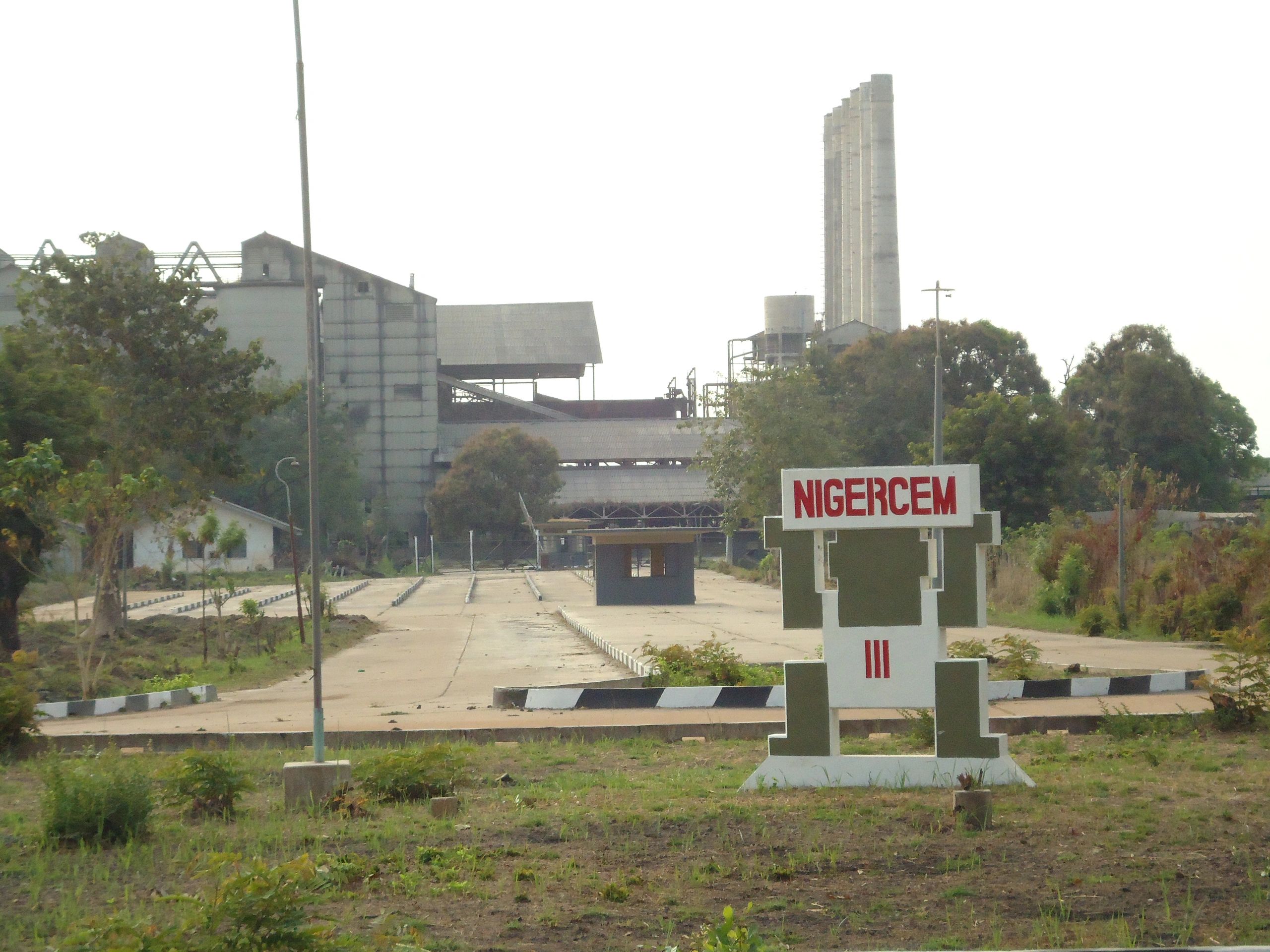
One of the defining chapters in the story of Nkalagu began beneath its soil. The town sits on rich deposits of limestone, a natural resource essential for cement production. This mineral wealth did not go unnoticed. In the mid-20th century, the Nigerian government identified Nkalagu as an ideal site for industrial development because of its abundant limestone, accessible location, and supportive local community.
This decision led to the establishment of the Nigerian Cement Company, also known as Nigercem, one of the first cement factories in Nigeria. Construction began in the 1950s, and soon the town transformed. Fields and forests that had sustained small-scale farming gave way to industrial buildings, quarries, and access roads. Workers came from nearby villages and distant States, drawn by employment opportunities and the promise of a steady income.
Nigercem quickly became the heartbeat of Nkalagu. Housing was built for workers, schools were established for children, and roads were constructed to connect the industrial site to surrounding villages. Markets grew, and the town took on a rhythm dictated by production schedules, delivery trucks, and the ebb and flow of daily labour. Life in the town changed as people adapted to the opportunities and challenges that came with industrialization.
The limestone deposits themselves were remarkable. Geologists note that Nkalagu sits on part of a larger limestone formation that stretches across southeastern Nigeria. This geological feature made the town strategically important for cement production. Raw limestone was mined, crushed, and processed to produce cement that contributed to infrastructure projects across Nigeria. The town, once a quiet agricultural settlement was now central to the nation’s building efforts.
Industrial activity in Nkalagu also fostered social change. The town became more diverse as people from different ethnic and regional backgrounds settled temporarily or permanently. Local commerce expanded, with new markets, shops, and service providers emerging to meet the needs of residents and workers. The presence of Nigercem reshaped daily life and brought both economic opportunity and a new sense of identity for the town.
The transformation of Nkalagu through limestone and industry illustrates how natural resources can define a community’s trajectory. While its early settlement provided a foundation but its limestone deposits and the establishment of Nigercem propelled Nkalagu into national significance, thus leaving a legacy that continues to form its memory and identity today.
Decline of Nigercem and Its Consequences
For decades, Nkalagu thrived alongside the Nigerian Cement Company. The factory was the lifeblood of the town. Families relied on its steady wages, markets buzzed with activity, and the town carried the confidence of industrial significance. But by the early 2000s, Nigercem had fallen silent. Production stopped, machines rusted, and the once-busy plant became a shadow of its former self.
The reasons for the decline were complex. Management challenges, ownership disputes, and insufficient investment all played a role. Some reports highlighted conflicts between federal and state authorities over control of the company while others pointed to outdated technology and poor maintenance. Whatever the cause, the impact on the town was immediate and profound.
Thousands of workers lost their jobs. Families who had depended on the company for income suddenly faced uncertainty. Local markets slowed as disposable income dropped, and small businesses that supplied goods and services to the factory struggled to survive. A town that had once been alive with industrial energy now faced quiet streets and growing economic tension.
The closure also reshaped the social life of Nkalagu. Migration increased as younger workers left for opportunities elsewhere. Communities that had thrived on factory employment had to adjust by returning to subsistence farming, trade, or small-scale businesses. The fate of the Nigercem was more than economic loss, it was a cultural shift that altered the rhythm of everyday life and challenged the sense of identity of the town.
In recent years, there have been attempts to revive the factory. The Ebonyi State Government set up committees to explore reopening Nigercem by engaging investors and host communities. These efforts have met both hope and resistance. Residents are eager for jobs and renewed activity but there are disagreements over ownership, community benefits, and the best way to restart operations.
The decline of Nigercem is a story of opportunity lost and potential deferred. Yet, it also shows the resilience of Nkalagu people. Despite the closure, the town continues to function. Markets remain, village leadership structures endure, and residents continue to find ways to adapt. The memory of Nigercem lingers. It reminds the community of its past prominence and shapes the hopes for a future where industry and livelihood might return.
Community Structure and Social Organization
Beyond its industrial history, Nkalagu is a town that thrives on community life and social organization. The town is made up of five main villages: Ishiagu, Uwule, Imeoha, Amanvu, and Akiyi. Each village maintains its own leadership under the Onyishi system. The system entails a traditional gerontocratic structure where the oldest male serves as the head. The Onyishi guides communal decisions, settles disputes, and preserves customs, and ensures that daily life continues smoothly, even as the town faces economic and social changes.
The villages are closely linked through daily interaction and shared spaces. Nkwo Nkalagu market which is located along the main Enugu–Abakaliki road serves as the town’s central hub. It is not just a place to buy and sell goods, it is where people meet, exchange news, and reinforce social bonds. Market days attract traders from neighbouring villages, thereby creating a lively mix of commerce and community interaction.
Families in Nkalagu often live in compounds that include multiple generations. These compounds strengthen ties between relatives and provide a sense of security and identity. Agricultural work, small-scale trading, and local craftsmanship continue to play important roles in sustaining livelihoods, especially following the decline of Nigercem.
Social life in Nkalagu also involves informal gatherings and community support networks. Villagers come together for mutual aid, shared celebrations, and problem-solving as a way of maintaining a sense of cohesion, despite the absence of formal documentation about festivals or ceremonies. The culture of cooperation ensures that community life remains vibrant, even if much of it has not been recorded in books or online archives.
In many ways, the social structure of Nkalagu is both traditional and adaptive. It honours the leadership of elders while allowing the town to respond to changes in industry, migration, and commerce. This balance between continuity and adaptation has helped Nkalagu to maintain its identity over the years by providing a framework for resilience as the town navigates the challenges of modern Nigeria.
The Cultural Silence Around Nkalagu
When it comes to culture, Nkalagu presents a different story from many Nigerian towns. Unlike communities that are widely known for specific festivals, dances, or rituals, Nkalagu has little formal documentation of such events. Academic journals, news articles, and online sources rarely describe unique cultural practices in the town. This silence is notable because it contrasts sharply with the detailed coverage of its industrial history.
This lack of documentation does not mean that traditions are absent. Residents continue to observe daily customs, family ceremonies, and social practices that define community life. Market days, naming ceremonies, and seasonal gatherings remain important, even if these events have not been captured in print or online. The culture of the town exists largely in oral memory passed from the elders to the younger generations.
Scholars and journalists have noted that some communities in Nigeria like Nkalagu have been overshadowed by industrial or political history. In the case of Nkalagu, the prominence of Nigercem and the limestone industry drew attention away from everyday cultural life. The economic and social transformations brought by industry made daily life a practical concern, thus leaving cultural documentation largely neglected.
The archival silence also reflects a broader challenge in Nigerian research. Many towns with rich, lived traditions remain underrepresented in formal records. In Nkalagu, understanding culture requires listening to the residents, visiting markets, and engaging with the elders. These oral histories provide insights into its identity, values, and social cohesion.
Highlighting this silence is important for several reasons. It reminds readers and researchers that not all communities are fully represented online or in print. It emphasizes the value of first-hand engagement with local people. And it creates space for Nkalagu to be understood not just through its industrial past but also through the rhythms, practices, and memories of its residents.
In essence, the story of Nkalagu is not one of absence but of hidden presence. Its culture survives quietly in households, markets, and villages. The town may lack widely published festivals and cultural events but it holds everyday practices and social patterns that define its people and sustain their sense of community.
Nkalagu in Contemporary Ebonyi State
Today, Nkalagu is a town that carries both history and hope. The echoes of the Nigerian Cement Company still linger but the town is not defined solely by its past. Residents continue to live, work, and maintain community life by blending memories of industrial prominence with the realities of contemporary challenges.
The Ebonyi State Government has shown renewed interest in the town, particularly in efforts to revive Nigercem. Committees have been established to engage investors, plan redevelopment, and involve host communities in decision-making. These initiatives have sparked discussions about ownership, community rights, and economic priorities that highlight the importance of balancing development with local interests.
Even without a fully operational cement factory, Nkalagu maintains a vibrant social and economic life. The Nkwo Nkalagu market draws traders and buyers from neighbouring towns. Small businesses, farms, and service providers sustain livelihoods, and are keeping the town active and connected. Families work the land, children go to schools, and the local leaders maintain traditional governance systems that provide continuity and social cohesion.
Migration patterns have shifted in recent years. Some young people leave in search of formal employment elsewhere while others remain to explore opportunities within the town. This mix of continuity and change affects its evolving identity. Nkalagu is no longer just an industrial hub, it is a community adapting to new realities while preserving its memory and social structures.
Importantly, the present-day relevance of the town is also cultural. While formal documentation of festivals and rituals is scarce, everyday practices such as market interactions, village gatherings, family ceremonies sustain its sense of community. The people continue to live, remember, and engage with their environment in ways that preserve both history and hope.
In this contemporary moment, Nkalagu represents a story of resilience. It is a town negotiating its past, its resources, and its future. The residents, local authorities, and potential investors all play a role in deciding what comes next, and the town continues to hold significance within Ebonyi State as both a gateway and a community with a unique industrial and social history.
Why Nkalagu’s Story Still Deserves Attention
The story of Nkalagu comprises more than the rise and fall of a cement factory. It is the story of a community influenced by its natural resources, industrial ambition, and the lived experiences of its people. From its early settlement by families seeking fertile land, to the transformative years of Nigercem, and through the challenges of industrial decline, Nkalagu has endured and adapted.
Nkalagu deserves attention because it offers lessons about resilience, identity, and the intersection of industry and community. The town illustrates how a single natural resource, in this case, limestone can define a community’s economic significance, influence migration, and leave a lasting imprint on social life. It also highlights the costs of industrial decline as it shows how livelihoods and community rhythms are affected when a major employer disappears.
Equally important is its cultural story, or the silence surrounding it. Unlike other towns that have documented records of festivals, dances, or rituals, the everyday practices in Nkalagu remain largely undocumented. This absence reminds researchers and readers that not all communities are equally represented in archives or online. It underscores the need for oral histories, community engagement, and careful observation to capture the full richness of life in towns like Nkalagu.
Today, Nkalagu stands as both a witness to history and a participant in the ongoing story of Nigeria’s development. The residents continue to farm, trade, gather, and maintain traditional leadership systems. Even though government initiatives and investor interest offer opportunities for renewal, its character is ultimately shaped by the people who live there, their memories, and their shared experiences.
Highlighting Nkalagu is an act of recognition. It acknowledges its past achievements, its present realities, and the potential for a future that balances development with community life. By telling the story accurately and respectfully, we ensure that this unique town is remembered not just for its industrial past, but for its ongoing contribution to the social and economic fabric of Ebonyi State and Nigeria.
In Conclusion …
Nkalagu is not just a town defined by limestone or the legacy of the Nigerian Cement Company, it is a community shaped by its geography, its people, and its resilience. From its early settlement by families seeking fertile land, through the industrial boom brought by cement production, to the challenges of the factory closure and economic shifts, Nkalagu tells a story of adaptation and endurance.
Its cultural life may not be widely documented but its everyday practices, markets, village leadership, and family traditions preserve a unique identity that persists despite industrial decline. Nkalagu exemplifies how communities can survive, adapt, and maintain cohesion, even when history seems to overlook them.
Today, with renewed government interest in revitalizing industry and ongoing community efforts, Nkalagu stands at a crossroads between memory and potential. Its story reminds us that every town, no matter how overlooked carries lessons about resilience, identity, and the intersection of people, land, and opportunity.
By looking at Nkalagu, we gain insight into a part of Ebonyi State and Nigeria that is often forgotten. Its past, present, and future deserve recognition, research, and respect, not just for its industrial significance but for the lives, stories, and communities that continue to define it.
References
- https://en.wikipedia.org/wiki/Nkalagu
- https://www.withinnigeria.com/2025/05/27/special-report-how-rats-reptiles-took-over-multibillion-naira-nigercem-factory-in-ebonyi-state/
- https://www.nairaland.com/8423397/update-nigercem-nkalagu
- https://ikengaonline.com/2026/01/08/host-communities-reject-ebonyi-govts-plan-for-new-nigercem-cement-plant/
- https://dailypost.ng/2025/06/29/ebonyi-govt-moves-to-revive-nigercem-nkalagu-sets-up-committee/
- https://tribuneonlineng.com/ebonyi-govt-accuses-ibeto-of-stalling-nigercem-cement-revival/
- https://www.swifttalk.net/blogs/post/nkalagu-large-deposit-of-limestone-in-ebonyi
You might want to check this out …








