Nigerian Ethnic Groups
The Kanuri People of Bornu: Fascinating History, Rich Culture, and Traditions

Kanuri people are an influential ethnic group in Bornu with a fascinating history, rich culture, and enduring traditions rooted in centuries of civilization and community life.

Beyond being a name in history books, the Kanuri people of Bornu are a living community whose daily lives carry echoes of centuries-old empires, trade routes, and cultural traditions. Walking through a Kanuri village or the streets of Maiduguri, you see families tending farms, children learning the Kanuri language, and neighbours gathering for stories, meals, and music. Every festival, every household, and every corner holds a piece of their rich heritage.
Their history is remarkable. The Kanuri were at the heart of the Kanem-Bornu Empire, a state that connected West and Central Africa through trade, governance, and Islamic scholarship. That legacy is still visible today in the rhythm of community life, the values they uphold, and the traditions they preserve.
This article dives into the Kanuri people’s history, culture, language, and traditions, and paints a picture of a community that has flourished across centuries. You will discover how their past shapes their present and why their story remains a vital part of Nigeria’s cultural identity.
Who Are the Kanuri People?
The Kanuri people are an ethnic group that has lived for centuries in the northeastern part of Nigeria, mostly in Borno State as well as in parts of Niger, Chad, and Cameroon. They are known for their settled way of life that combines farming, trade, and strong community structures. The Kanuri are not just defined by geography, they carry a history that stretches back to the Kanem-Bornu Empire, one of West Africa’s most influential states.
Language plays a central role in Kanuri identity. The Kanuri language which is part of the Western Saharan branch of the Nilo-Saharan language family is spoken in several dialects that include Yerwa Kanuri and Manga Kanuri. Through their language, the Kanuri have preserved stories, proverbs, and oral histories that pass wisdom from one generation to the next.
Culturally, the Kanuri are deeply connected to their past. Their daily routines, family life, and social gatherings reflect centuries of tradition. Extended families often live close together, and respect for elders is central. Community decisions are frequently guided by long-standing customs, balancing family responsibilities with collective well-being.
Religion is another defining aspect of Kanuri identity. Most Kanuri people are Muslims, a faith embraced by their ancestors as early as the eleventh century during the height of the Kanem-Bornu Empire. Islamic teachings influence education, marriage, and daily life that blends with some older cultural practices in ways that are uniquely Kanuri.
Simply put, the Kanuri people are a community with a living history that is shaped by centuries of governance, trade, culture, and faith. Their identity is both rooted in the past and adapted to modern life which makes them one of Nigeria’s most enduring and fascinating ethnic groups.
Historical Background of the Kanuri People

The history of the Kanuri people is one of the longest and most documented in West Africa. Their story does not begin abruptly or in isolation, rather, it stretches over many centuries, influenced by powerful empires, long-distance trade, religion, and a firm sense of identity that continues today.
The roots of Kanuri history lie in the region around Lake Chad, a vast body of water that has been a crossroads for people and ideas for thousands of years. By the ninth century, a political entity known as Kanem had risen north of the lake. Over time, Kanem grew into a strong state that controlled trade routes across the Sahara, linking sub‑Saharan Africa with North Africa and the Mediterranean world. Salt, leather, gold, and other goods passed through its markets, carried by caravans traversing difficult desert terrain.
Leadership in Kanem was concentrated in a dynasty called the Sefawa (Sayfawa) dynasty which provided rulers for centuries. These leaders helped to centralize authority and establish political structures that would endure, even as the state changed and adapted over time. The society was organized around clans and ruling families, with local officials helping to manage distant regions.
One of the most significant changes in Kanuri history came in the eleventh century when the leaders of Kanem embraced Islam more fully. Islam had arrived in the region through trade and the influence of Muslim scholars and merchants long before. But its growing adoption by the rulers transformed the political culture. Islamic law, education, and literacy became part of court life. Arabic became a language of record, scholarship, and diplomacy alongside the Kanuri language.
By the late fourteenth century, the centre of power shifted from Kanem to Bornu, a region to the southwest of the lake. This shift happened for many reasons which include pressure from external foes and internal leadership changes. Bornu became the new heart of what is now called the Kanem‑Bornu Empire. For centuries, Bornu proved resilient, and managed to maintain its identity, even as regional powers rose and fell around it.
During its peak, the Kanem‑Bornu Empire was a major regional power. It maintained armies, engaged in diplomacy with neighbouring states, and continued to play a central role in trans‑Saharan trade. Scholars, travellers, and traders wrote about its wealth and organization. The empire was not static. It experienced periods of consolidation and struggle, expansion and retreat. But it survived where many other states did not.
European contact began to increase from the eighteenth century onwards as European merchants and eventually, colonial powers pushed deeper into the interior of Africa. The coming of colonialism in the late nineteenth and early twentieth centuries reshaped the political boundaries of the region. The once‑expansive sphere of Kanem‑Bornu was divided among colonial territories, and new systems of governance were introduced.
Despite these disruptions, the identity of the Kanuri people remained strong. Traditional institutions such as the title of the Shehu of Borno continued to matter, even if their political role changed under colonial and then post‑independence systems. In Nigeria, after the independence in 1960, the Kanuri people continued to make significant contributions to national life in politics, scholarship, and culture.
Today, the history of the Kanuri is not only preserved in documents and the pages of history books. It lives in the way families pass down stories from one generation to the next, in local histories taught in schools, and in the rhythms of festivals and religious life. This deep historical memory gives the Kanuri people a strong sense of who they are, where they come from, and what they carry forward from the past.
Social Structure and Community Life
The Kanuri people are known for the strength of their communities and the way social life is organized. Their society has traditionally been hierarchical but deeply rooted in family and communal bonds. The foundation of Kanuri social structure is the extended family. Multiple generations often live close together, and share responsibilities, resources, and decisions. The elders hold a respected place in the household and community as they offer guidance, resolve disputes, and teach cultural knowledge to the younger generations.
At the broader level, Kanuri communities have historically been organized around clans and lineage groups with leadership structures that link local villages to the central authority of the Shehu of Borno. The Shehu serves as both a spiritual and cultural figure that preserves traditions, oversees rituals, and mediates in social matters. Even today, the Shehu plays an influential role in maintaining the sense of unity and identity among the Kanuri people.
The Kanuri people also practice communal decision-making where village elders, family heads, and community representatives consult on issues affecting the group. This could include matters like land distribution, agricultural planning, trade disputes, or preparation for festivals and public ceremonies. Community cohesion is strengthened by regular gatherings, shared labour during planting and harvest seasons, and participation in celebrations which reinforce bonds across households.
Social life among the Kanuri people is closely intertwined with religion. As predominantly Muslim communities, daily routines, education, and social obligations often follow Islamic principles. Religious scholars and local imams are not only spiritual guides, they are also active participants in community decision-making, education, and conflict resolution.
Gender roles within the Kanuri society are structured but complementary. Men often handle farming, trading, and formal leadership roles, while women manage households, support farming activities, oversee food preparation, and contribute to artisanal crafts. Both men and women play active roles in festivals, family events, and communal celebrations. Children are raised with respect for elders, awareness of family responsibilities, and an understanding of cultural and religious norms.
Community life is also reflected in the physical spaces the Kanuri inhabit. Traditional homes are usually built from sun-dried mud bricks designed to stay cool in the heat of northeastern Nigeria. Houses are grouped closely together in villages or urban quarters to foster interaction and cooperation. Shared courtyards, communal wells, and markets create spaces where daily life unfolds and social bonds are strengthened.
The Kanuri people have maintained their communal values, even as modern pressures and urbanization influence daily life. Today, neighbourhoods in Maiduguri or smaller towns in Borno still reflect traditional patterns of cooperation and respect. This balance of tradition and adaptation highlights the resilience and enduring sense of identity among the Kanuri people.
Religion and Beliefs

The Kanuri people are predominantly Muslims, as Islam became firmly established in their society by the eleventh century during the Kanem-Bornu Empire. The rulers of the empire embraced Islam which then spread widely through trade, education, and governance.
Islam shapes many aspects of Kanuri life. The children often attend Quranic schools to learn reading, writing, and religious teachings. Daily routines, festivals, and community decisions are influenced by Islamic principles. Major celebrations include Eid al-Fitr and Eid al-Adha which are observed with communal prayers, feasting, and family gatherings.
Despite the dominance of Islam, some older cultural practices remain. Traditional rituals, respect for the ancestors, and local customs are sometimes integrated into religious life to create a distinctive Kanuri cultural expression. Religious leaders, including imams and scholars guide both spiritual and social matters with the aim of maintaining a balance between faith and cultural heritage.
Language and Literature
The Kanuri people speak the Kanuri language, a member of the Western Saharan branch of the Nilo-Saharan language family. It has several dialects, namely, Yerwa Kanuri, Manga Kanuri, and Bilma Kanuri which correspond to different regions across Nigeria, Niger, Chad, and Cameroon. The language is not only a means of communication but also a vessel of Kanuri identity that carries the stories, values, and traditions of generations.
Historically, the Kanuri language was written in Arabic script, especially during the Kanem-Bornu Empire where it was used in administration, religious instruction, and scholarship. Many Kanuri scholars mastered both Arabic and Kanuri, and produced texts on Islamic law, history, and governance. These manuscripts which are preserved in libraries and Quranic schools are key records of the community’s intellectual and cultural achievements.
Oral literature is equally important. Storytelling, proverbs, songs, and folktales remain central to Kanuri life. Elders use these oral traditions to teach lessons, pass on historical knowledge, and entertain. These narratives often incorporate elements of morality, social responsibility, and communal values, thus making them both educational and culturally sustaining.
Education continues to be tied to language. In many Kanuri communities, children learn to read and write Kanuri alongside Arabic, particularly in Quranic schools as a way of ensuring that both religious knowledge and cultural heritage are preserved. This dual literacy keeps Kanuri history, religion, and literature alive in everyday life.
Through both written and oral traditions, the Kanuri people maintain a strong connection to their past. Language and literature are not just tools for communication, they are central to the identity, continuity, and resilience of Kanuri culture.
Culture and Traditions
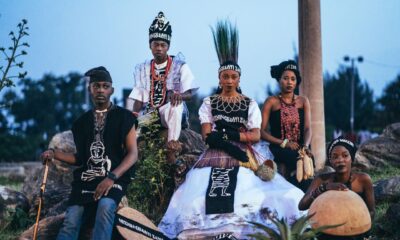
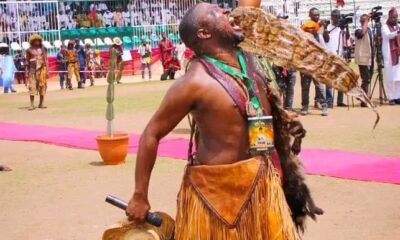
The Kanuri people have a rich cultural life that combines centuries of history with local customs and social practices. Traditional clothing, music, dance, and festivals reflect a sense of identity that has been carefully preserved over generations. Men typically wear long robes called “babban riga” with embroidered caps, while the women often wear colourful wrappers, scarves, and decorative jewelry. Clothing is both practical for the climate and expressive of social status and cultural pride.
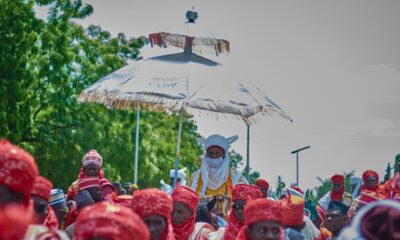
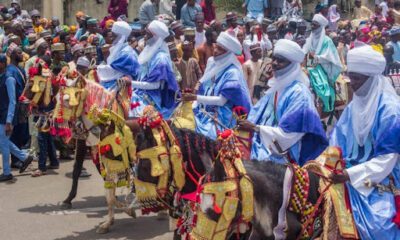
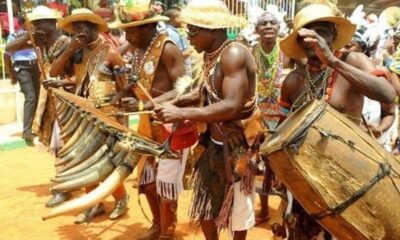
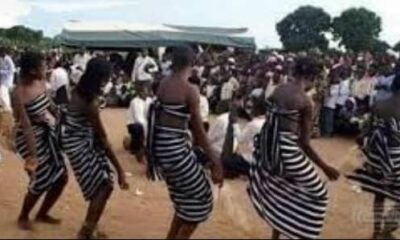
Music and dance play central roles in daily life and special occasions. Traditional instruments include drums, flutes, and stringed instruments which accompany performances during weddings, religious festivals, and community celebrations. Dancing is often group-based to reinforce unity and collective participation. Festivals like the Durbar festival in Borno showcase elaborate horsemanship, parades, and pageantry, thus combining Islamic celebration with centuries-old Kanuri martial traditions.
Food is another key part of Kanuri culture. Meals often feature millet, rice, sorghum, and maize prepared in soups, stews, or porridge. Shared meals strengthen family and community bonds, especially during religious festivals and communal gatherings. Traditional markets provide spaces where people buy, sell, and exchange goods as well as maintain social interaction and cultural knowledge.
Among the Kanuri people, rituals and customs guide major life events. Marriage, naming ceremonies, and funerals are marked by structured practices that honour both family and community. Marriages often involve formal negotiations between families and ceremonies that include music, dance, and communal feasting. Funerals are communal affairs that include prayers, recitations, and rituals emphasizing respect for the ancestors.
Craftsmanship is another expression of Kanuri culture. Weaving, leatherwork, pottery, and basket-making are traditional skills passed down through generations. These crafts are practical, but also carry cultural meaning that reflect design, symbolism, and identity unique to Kanuri communities.
The Kanuri people still adapt these traditions in modern life. Urbanization, education, and technology influence daily practices, but music, dress, food, and ceremonies remain central to cultural identity. This careful preservation of customs alongside adaptation demonstrates the resilience and continuity of Kanuri heritage.
Festivals and Celebrations
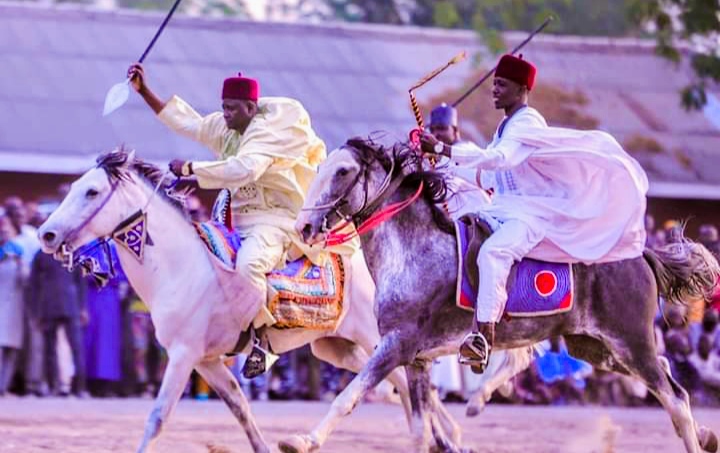
The Kanuri people celebrate several festivals that highlight their rich cultural heritage that blends history, religion, and community life. Among the most prominent is the Durbar Festival held during major Islamic holidays such as Eid al-Fitr and Eid al-Adha. In Maiduguri and across Borno State, the festival features colourful parades of horsemen, traditional leaders, and musicians, with the Shehu of Borno often taking a central role. The event showcases Kanuri horsemanship, music, and attire as a reflection of centuries-old traditions that connect the community to its historical roots.
Another significant festival is the Bunu Festival which is a harvest celebration that occurs at the end of the rainy season. Farmers display crops like millet, sorghum, and yams while the community comes together for music, dance, storytelling, and communal feasts. The Bunu Festival is a time of gratitude and cultural reinforcement that highlight the Kanuri connection to the land and agricultural life.
In addition, modern gatherings such as the Global Kanuri Cultural Festival or Kanem-Bornu Cultural Summit unite Kanuri communities from Nigeria, Niger, Chad, and Cameroon. These events celebrate Kanuri heritage through traditional performances, crafts, music, and discussions on cultural preservation.
Even routine religious celebrations carry cultural significance. During Eid prayers and feasts, Kanuri communities incorporate traditional music, attire, and communal meals in a way that combines Islamic observance with local customs. These practices ensure that cultural identity remains vibrant, even as the Kanuri navigate contemporary life.
Through these festivals, the Kanuri people maintain a living connection to their history, strengthen community bonds, and celebrate the traditions that define their culture.
Economy and Daily Life
The daily life of the Kanuri people is closely tied to both the land and trade. Traditionally, agriculture forms the backbone of their economy. Families cultivate millet, sorghum, maize, and rice, often using age-old farming techniques passed down through generations. Livestock rearing, including cattle, goats, and sheep also plays an important role as they provide food, income, and status within the community.
Trade has long been part of Kanuri life. The Kanem-Bornu Empire historically connected trans-Saharan trade routes, and Kanuri traders dealt in goods like salt, leather, grains, and cloth. This trading tradition continues today on a smaller scale in local markets where families sell agricultural produce, crafts, and other goods.
Daily routines often begin early, with men attending to farming or trade and women managing households, preparing meals, and participating in crafts such as weaving, pottery, and leatherwork. Children assist in family tasks as well as attend Quranic or formal schools, thus helping them to gain both literacy and cultural knowledge.
Community life remains tightly knit. Villages and urban neighbourhoods are structured around shared spaces such as markets, mosques, and courtyards to foster interaction and cooperation. Social gatherings, festivals, and religious events create regular opportunities for families and neighbours to connect.
Modern influences are also influencing Kanuri life. In cities like Maiduguri, many Kanuri people now work in education, government, and business. Yet, even in urban settings, traditional values, communal support, and cultural practices remain central. This blend of continuity and adaptation portrays the resilience of the Kanuri people in both rural and urban environments.
Challenges and Modern Influence
The Kanuri people have faced significant challenges in recent decades, particularly in northern Nigeria. Security concerns, economic pressures, and the effects of conflict in Borno State have disrupted traditional livelihoods, education, and community life. Despite these difficulties, Kanuri communities continue to preserve their cultural identity and maintain social cohesion.
Urbanization and modernization have introduced new opportunities and challenges. In cities like Maiduguri, many Kanuri families balance traditional customs with modern education, business, and careers. Young people pursue schooling, entrepreneurship, and professional jobs.
Technology and media are also changing daily life. Mobile phones, social media, and access to information influence communication, commerce, and cultural exchange. Yet, even with these modern influences, the Kanuri people actively preserve their language, music, festivals, and Islamic traditions to ensure that cultural heritage remains a living part of everyday life.
The resilience of the Kanuri community is evident in how traditions adapt without being lost. From family structures to community leadership, religious practice, and cultural celebrations, the Kanuri people affirm a balance between preserving history and navigating modern realities. This adaptability ensures that their identity continues to grow for future generations.
Why the Kanuri People Are Still Relevant Today
Beyond being an ethnic group in northeastern Nigeria, the Kanuri people are a living connection to centuries of African history, culture, and resilience. Their story which is rooted in the Kanem-Bornu Empire offers insight into the development of trade, governance, and Islamic scholarship in West Africa. By understanding the Kanuri, we gain a deeper appreciation for the complex story of Nigeria’s cultural heritage.
Kanuri traditions, from music, dance, and crafts to religious practice and social organization illustrate how communities can preserve their identity as they adapt to change. Their language, literature, and oral histories carry lessons about continuity, family, and collective responsibility. These cultural contributions are not confined to the past. So, they continue to influence education, governance, and social life in the region.
In a modern world where globalization can erode local customs, the Kanuri people exemplify resilience, cultural preservation, and community cohesion. Their ability to maintain centuries-old practices alongside modern lifestyles is the proof of the enduring significance of their culture. For historians, anthropologists, and anyone interested in African heritage, the Kanuri people offer a rich, living example of how history, faith, and daily life intersect to create a unique cultural identity.
Studying and celebrating the Kanuri people reminds us that culture is not static. It is lived, shared, and passed on. This knowledge makes the Kanuri people a vital part of Nigeria’s cultural landscape and an essential voice in understanding the history and diversity of West Africa.
In Conclusion …
The Kanuri people of Bornu are a remarkable community whose history, culture, and traditions have endured for centuries. From their roots in the Kanem-Bornu Empire to their modern lives in Nigeria and the Lake Chad region, the Kanuri have preserved language, faith, social structures, and cultural practices that define their identity.
Their resilience in the face of challenges, commitment to family and community, and ability to combine tradition with modern life make the Kanuri a vital part of Nigeria’s cultural heritage. Understanding their story allows us to appreciate the richness of West African history, the importance of cultural preservation, and the enduring influence of the Kanuri people today.
By exploring their history, social life, language, religion, and customs, we see a community that is both deeply rooted and forward-looking with the aim of ensuring that their heritage continues to flourish for generations to come.
References
- https://www.britannica.com/topic/Kanuri
- https://en.wikipedia.org/wiki/Kanuri_people
- https://www.britannica.com/place/Kanem-Bornu
- https://articles.connectnigeria.com/tribes-in-nigeria-the-kanuri-tribe/
- https://www.culturesofwestafrica.com/who-are-kanuri-people/
- https://everyevery.ng/the-kanuri-people-of-nigeria/
- https://en.wikipedia.org/wiki/Kanuri_language
You may want to check this out …