


Ethnic Cultures
Yoruba Traditional Marriage in Nigeria: Meaning, Customs and Cultural Significance

Yoruba traditional marriage is a rich cultural ceremony in Nigeria that explores the customs, rituals, and the cultural significance of Yoruba marriage traditions which include introduction, engagement, bride price, attire, and community blessings carried out with respect and unity.

Marriage in Yoruba culture entails more than a union between two people. It is a celebration of family, community, and tradition that has been passed down for generations. Yoruba traditional marriage weaves together rituals, prayers, and symbolic customs that honour both the bride and the groom, their families, and the heritage they inherit.
From the careful negotiation of the bride price to the joyful dances and ceremonial attire, every step tells a story of respect, unity, and cultural pride.
Understanding these customs is not just about observing a ceremony, it is about appreciating a way of life that values relationships, ancestry, and communal bonds.
In Nigeria, Yoruba traditional marriage stands as a vibrant reflection of culture in action, a living practice that continues to connect the past with the present.
What Is Yoruba Traditional Marriage?
Yoruba traditional marriage is a deeply rooted cultural ceremony that marks the formal union of a man and a woman within the Yoruba communities in southwestern Nigeria. Unlike a purely legal or religious wedding, it is a communal event that involves not just the couple but their families, elders, and often the wider community. This ceremony is locally called Ìgbéyàwó which literally means “taking a bride,” and it serves as the foundation of marital life in Yoruba culture.
Basically, Yoruba traditional marriage is about respect, social responsibility, and continuity of heritage. The groom and his family formally seek the bride’s hand, engage in symbolic negotiations, and present carefully chosen gifts that express gratitude, honour, and goodwill. The bride, her family, and the community participate fully by offering blessings, advice, and support.
It is important to note that Yoruba traditional marriage is not a single event. It unfolds in stages that include family introductions, engagement rituals, and the main wedding ceremony, each with specific customs and meanings. Every action, from presenting kola nuts to adorning the traditional attire carries cultural significance. These practices celebrate unity, reaffirm familial ties, and ensure that the marriage aligns with both spiritual and societal expectations.
In essence, Yoruba traditional marriage is a living tradition that preserves cultural values, strengthens community bonds, and provides a framework for couples to start their life together with respect, love, and shared responsibility.
Historical Background
Marriage has always held a central place in Yoruba society. For centuries, it was not merely a personal milestone, it was a communal event that connected families, lineages, and communities. In traditional Yoruba life, marriage was a way to create alliances, ensure social stability, and pass down values from one generation to the next. It carried both practical and symbolic purposes.
Historically, Yoruba communities were organized around extended families and clans. In this system, marriages were carefully considered not only for the compatibility of the couple but also for the relationships and networks that would be strengthened between families. A well-chosen marriage could foster cooperation, mutual support, and even political influence within the community. Elderly family members played a critical role in guiding negotiations, overseeing ceremonies, and ensuring that traditions were respected.
The rituals and customs observed in Yoruba traditional marriage have deep roots. Symbols like the kola nut, honey, palm wine, and yams are not just decorative, they carry specific cultural meanings. The kola nut, for instance, represents hospitality, respect, and blessing. Palm wine and honey signify sweetness and prosperity in marital life. These symbols have been preserved over generations, and reflect a worldview that integrates spirituality, social cohesion, and respect for ancestry.
Polygamy also influenced traditional Yoruba marriage structures historically. While modern practice often leans toward monogamy, many traditional ceremonies and customs still reflect patterns from when multiple wives were common in royal or affluent households. Each wife had her own marriage rites, and the extended family network was central to ensuring harmony and shared responsibilities.
Over time, Yoruba marriage customs adapted to outside influences. Colonialism, Christianity, Islam, and urbanization brought changes to the timing, structure, and presentation of marriage ceremonies. Yet, the essence of the tradition, namely, family involvement, symbolic gifts, communal blessing, and cultural identity remains intact. Today, Yoruba traditional marriage still serves as a living bridge between the past and present that connects modern couples with centuries of heritage.
Getting to understand this historical background is key to appreciating why each ritual, negotiation, and celebration in a Yoruba traditional marriage carries meaning beyond the surface. It is not merely a ceremony, it is a cultural heritage that binds people, history, and values together in a shared moment of joy and respect.
Key Customs and Rituals in Yoruba Traditional Marriage
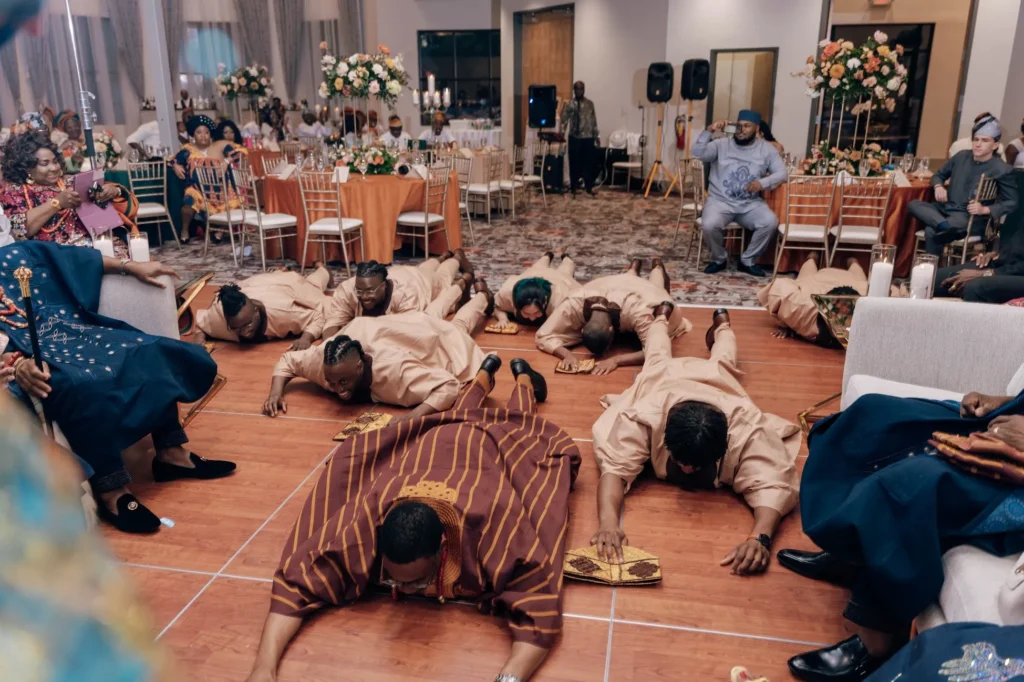
Yoruba traditional marriage is celebrated through a series of meaningful ceremonies, each of which has its own customs, symbolism, and purpose. These rituals are not only visually lively, they carry profound cultural and spiritual significance. Every step emphasizes family, respect, and community participation which makes the marriage a shared experience rather than a private event.
1. Family Introduction (Ìbílẹ̀ Ìdáná)
The journey to Yoruba traditional marriage begins with family introduction often called Ìbílẹ̀ Ìdáná. This is the first formal meeting between the groom’s family and the bride’s family. The groom’s family visits to express their intention to marry the bride and seek approval from her parents and elders.
During this ceremony, families exchange pleasantries, gifts, and sometimes, food items as a sign of goodwill. Respect for elders is central here. The younger family members often kneel or prostrate to greet the elders as a sign of humility and acknowledgment of their authority. This stage sets the tone for a harmonious relationship between the families and ensures that the union is socially and culturally recognized.
2. Engagement Ceremony (Ìdáná or Ìkúǹyàn)
The engagement ceremony is the cornerstone of Yoruba traditional marriage and often the most colourful and elaborate part of the process. This event is sometimes called Ìdáná or Ìkúǹyàn, depending on local traditions, and it involves several key elements:
Letter of Intent. The groom’s family formally presents a letter declaring their desire to marry the bride. This is read aloud and often accompanied by polite speeches from family elders.
Presentation of Gifts (Eru Iyawo). A variety of symbolic gifts are brought to the bride’s family. Common items include kola nuts, alligator peppers, honey, yams, palm wine, and carefully chosen fabrics. Each item carries a meaning – honey represents sweetness in the marriage, kola nuts symbolize hospitality and respect, and yams signify fertility and sustenance.
Negotiation of Bride Price (Owo Ori). Central to Yoruba engagement is the discussion of the bride price known as Owo Ori. This is not seen as a purchase but as a gesture of appreciation and respect for the bride and her family. It reflects the groom’s readiness to care for his wife and honour her family.
Blessings and Prayers. Elders from both families offer prayers for prosperity, health, and happiness for the couple. Songs, drumming, and dancing often accompany these blessings, to add a joyful, communal atmosphere to the occasion.
Two individuals, the Alaga Ijoko and Alaga Iduro, typically oversee the ceremony. The Alaga Ijoko guides the bride’s side while the Alaga Iduro manages the groom’s side. They ensure that all traditions are followed correctly and help to explain rituals to the guests.
3. The Wedding Day (Ìgbéyàwó)
The main wedding ceremony is the culmination of all prior events and is often the most visually striking. It can take place at the bride’s family home, a community hall, or another designated venue. The programme of the event follows thus:
Arrival of the Groom (Ọmọkùnrin). The groom and his entourage arrive with music, drums, and dance. Guests often wear coordinated outfits called Aso Ebi which signals family unity and celebration. Upon arrival, the groom may kneel or prostrate before the bride’s elders to show respect.
Traditional Attire. Attire is an essential part of Yoruba traditional marriage. The bride wears Aso‑oke, lace, and a head tie called gele while the groom dons a flowing robe known as Agbada with a cap called fila. These outfits highlight Yoruba cultural identity and bring vibrancy and colour to the ceremony.
Rites of Union. The couple is presented to the elders, and prayers are offered for their future. Symbolic acts such as sharing kola nuts and palm wine affirm unity and family blessing. The ceremony is accompanied by traditional music, dancing, and communal feasting, to emphasize the fact that marriage is a collective celebration.
4. Additional Customs and Practices
Beyond the engagement and wedding day, several other customs are observed to ensure a successful marriage, and they include:
Pre-Marital Counseling. Elders provide advice and guidance to the couple on marital life, family roles, and responsibilities.
Family Support. Even after the wedding, the bride’s family often continues to support the couple, especially in their early married life.
Symbolic Rituals. Some communities practice additional rituals like breaking eggs which signify fertility, or offering specific prayers for peace and prosperity.
Every ritual in Yoruba traditional marriage has meaning. They connect the couple to their families, ancestors, and community. These practices also pass down cultural values such as respect, unity, and responsibility to the younger ones. The ceremonies celebrate not just the couple but the society that surrounds them.
Cultural Significance of Yoruba Traditional Marriage
Yoruba traditional marriage is much more than a ceremony or festive gathering. Its importance extends deeply into family life, community cohesion, and the preservation of cultural identity. Each stage, from the introduction to wedding day, carries meaning that resonates across generations. Recognizing the cultural significance helps to appreciate why these rituals are carefully observed and widely respected among the Yoruba people.
Strengthening family bonds. One of the most important purposes of Yoruba traditional marriage is to unite not just two individuals but two families. The ceremonies provide structured opportunities for families to meet, interact, and build mutual respect. Elders from both sides guide the discussions and negotiations, thus creating trust and understanding between families. This shared responsibility fosters long-lasting connections and ensures that the couple receives support throughout married life.
The communal nature of these events also allows the extended family members to actively participate in the marriage. Cousins, aunts, uncles, and neighbours all become witnesses to the union.
Preserving cultural values and heritage. Every ritual, gift, and prayer in a Yoruba traditional marriage is embedded with cultural meaning. Presenting kola nuts, palm wine, yams, and honey is not just ceremonial, it symbolizes values such as respect, prosperity, fertility, and sweetness in married life. Attire, music, and dance also express Yoruba identity and serve as a living archive of the people’s artistic and spiritual heritage.
Through these customs, the younger ones learn about family roles, respect for elders, and the importance of communal responsibility. This ensures that cultural knowledge is passed down and not lost, even as the society modernizes.
Spiritual and social recognition. In Yoruba culture, marriage is both a social contract and a spiritual covenant. The involvement of elders, prayers, and libations ensures that the union is blessed and protected. By following the traditional rites, the couple is acknowledged as fully integrated into each other’s families and the wider community. This recognition creates a framework of accountability where families actively support the marriage and help to resolve conflicts, if they arise.
Symbolism of gifts and bride price. The presentation of gifts and negotiation of the bride price (Owo Ori) are central to Yoruba traditional marriage. These are not payments but symbolic gestures that show respect, gratitude, and readiness to care for the bride. They also serve as a reminder that marriage is about shared responsibility and mutual commitment, thus reinforcing the social and moral expectations attached to the union.
Connecting the past, present, and future. Yoruba traditional marriage links generations. It honours the ancestors, celebrates the couple, and provides a blueprint for future family life. The ceremonies remind participants of their cultural roots and allow couples to begin their marital journey with the support of their families and community. In essence, it preserves identity, continuity, and social harmony.
Promoting community unity. Beyond the couple and their families, Yoruba traditional marriage strengthens the wider community. Celebrations are communal events where neighbours, friends, and local leaders come together. This fosters solidarity and reinforces a collective cultural identity. It also creates shared memories that continue to bind people together long after the wedding day.
Overall, Yoruba traditional marriage is not just a celebration of love, it is a culturally rich institution that maintains social order, passes down values, and keeps traditions alive. It is a ceremony where family, community, and heritage converge with the aim of ensuring that marriage is seen as a shared journey rather than an individual milestone.
Modern Changes and Adaptations

While Yoruba traditional marriage remains deeply rooted in history, modern life has brought significant changes in how these ceremonies are conducted. Urbanization, globalization, and exposure to Western lifestyles have influenced the timing, scale, and even style of these marriages. However, the essence which is the respect for family, community, and cultural heritage continues to guide every union.
Combining tradition with modern weddings. Many Yoruba couples today choose to combine traditional rites with religious or civil ceremonies. For example, a couple may first hold a church or registry wedding, followed by the traditional engagement and wedding ceremonies. This approach allows couples to honour both the modern legal requirements and traditional customs.
In some urban areas, the ceremonies are more compact due to time constraints or financial considerations. While historically, Yoruba traditional marriages could last for several days with extended festivities, modern weddings often condense events into a single day or a weekend celebration. Even in these shortened ceremonies, the core rituals like the bride price negotiation, gift presentation, and family blessings are carefully maintained.
Changes in attire and fashion. Though fashion has evolved, traditional Yoruba attire remains central. Brides now experiment with modern fabrics and styles while retaining symbolic elements like Aso-oke and gele. Grooms may opt for designer Agbada and custom accessories in a way that combine contemporary fashion with traditional identity. These adaptations allow couples to personalize their wedding, even as they preserve cultural heritage.
Incorporating technology and media. Modern Yoruba weddings often leverage technology to enhance celebrations. Social media live streams, professional photography, and videography allow extended family and friends who cannot attend in person to participate virtually. Couples also use technology to plan events, send digital invitations, and coordinate guest logistics, thus making the ceremonies more accessible without compromising tradition.
Simplification of rituals. Some families simplify certain rituals to accommodate modern schedules or changing social norms. While the core elements of Yoruba traditional marriage – family introductions, gift presentation, and blessings remain intact, elaborate practices like multi-day feasting or ritual dances may be shortened. This makes the ceremonies more manageable and still preserves cultural integrity.
Urban influence and cost considerations. In cities, the rising cost of weddings has led many families to adapt. Some choose smaller guest lists or more practical gifts instead of traditional items that may be expensive or difficult to source. Despite these changes, families often ensure that symbolic acts like offering kola nuts, palm wine, and honey are included to maintain the cultural meaning.
Maintaining cultural identity amid change. Even with modern adaptations, Yoruba traditional marriage continues to serve as a vital link between generations. Couples consciously retain rituals that symbolize respect, family unity, and ancestral connection. Modern changes have not replaced tradition, rather, have allowed it to remain relevant in contemporary society. By balancing heritage with modern conveniences, Yoruba couples continue to celebrate their culture as they meet the practical demands of today’s world.
Essentially, Yoruba traditional marriage has evolved to accommodate modern lifestyles, urban living, and technological advancements. Yet, the ceremonies remain a living testament to culture, family, and community. Couples continue to honour their heritage, even as they adapt to the realities of contemporary life.
Common Misconceptions
Despite its rich history and cultural depth, Yoruba traditional marriage is often misunderstood by both outsiders and the younger people. Misconceptions can lead to undervaluing the ceremony or misunderstanding its purpose. Clarifying these points helps people to appreciate the true meaning behind the rituals and the role they play in Yoruba society.
One of the most common misconceptions is that Yoruba traditional marriage is simply a transaction where the groom “buys” the bride. In reality, the bride price which is known as Owo Ori is symbolic rather than commercial. It represents gratitude, respect, and the groom’s readiness to provide and honour his wife. The discussion of the bride price also allows families to demonstrate care for the union and communicate expectations, thereby creating a foundation for mutual respect and family support.
Some people believe that traditional marriage is no longer relevant in modern society, especially in urban areas or among Christian and Muslim communities. However, Yoruba traditional marriage remains highly valued. It preserves cultural heritage, connects couples to their families and ancestors, and strengthens community bonds. Even modern couples often combine traditional rites with religious or civil weddings to prove that tradition can coexist with contemporary life.
While weddings in many cultures focus primarily on the bride and groom, Yoruba traditional marriage emphasizes families and community. Every ritual, from family introductions to blessing ceremonies reinforces social connections and communal responsibility. The couple is celebrated, but the event also honours family ties, elders, and social harmony.
Another misconception is that Yoruba traditional marriage follows a single, uniform procedure. In truth, customs vary across different towns and regions in Yoruba land. While core elements like gift presentation, bride price negotiation, and family blessings are common, specific rituals, attire, and ceremonial sequences can differ. These regional variations add richness and diversity to the cultural practice.
Finally, some people see Yoruba traditional marriage as primarily a social celebration with music, dancing, and colourful attire. While the festivities are indeed joyful and important, they are accompanied by deep symbolic meaning. Each act, from offering kola nuts to blessing the couple, conveys respect, spirituality, and cultural values. The celebration is inseparable from the purpose behind it. It is both a communal joy and a meaningful cultural ritual.
By addressing these misconceptions, it becomes clear that Yoruba traditional marriage is a carefully structured institution that balances symbolism, community involvement, and cultural identity. Learning these truths allows couples, families, and outsiders to fully appreciate the ceremony beyond its surface-level celebrations.
In Conclusion …
Yoruba traditional marriage is a living and enduring cultural practice that goes far beyond a single day of celebration. It unites families, honours elders, reinforces community bonds, and preserves centuries of heritage. From the initial family introductions to the engagement rituals, bride price negotiation, symbolic gifts, and the colourful wedding day, every step carries meaning and purpose.
This tradition connects the past with the present, and teaches respect, responsibility, and the value of family with the aim of ensuring that couples begin their married life supported by a network of relatives, friends, and community members. Even in modern times where urbanization and global influences have altered how weddings are conducted, the core customs remain alive. Couples find ways to combine traditional rites with contemporary elements.
Yoruba traditional marriage is not only as a ceremony, it as a cultural institution that celebrates love, family, and community, and serves as a living reminder of the Yoruba people’s values, history, and identity. In Nigeria today, these marriages remain cherished events that preserve tradition as they embrace the realities of modern life ensuring that each union is both meaningful and memorable.
References
- https://en.wikipedia.org/wiki/Yoruba_traditional_wedding
- https://adewumiidowupaul.wordpress.com/2021/07/20/traditional-marriage-system-in-yoruba-culture/
- https://bytuva.wixsite.com/oritour/post/inside-the-yoruba-traditional-wedding-the-deep-meaning-magic-and-timeless-rituals
- https://ericknaus.com/research/language-culture/yoruba-nigerian-wedding-traditions-a-celebration-to-remember/
- https://www.yorubalibrary.com/forum/articles/2024/july/02/yoruba_marriage_cutoms
- https://discover.hubpages.com/relationships/The-Yoruba-traditional-Wedding-The-Yoruba-traditional-marriage-ceremony
You might want to check this out …