





Biographies & Personalities
Chief Cletus Ibeto: From Humble Beginnings in Nnewi to One of Nigeria’s Top Industrial Giants

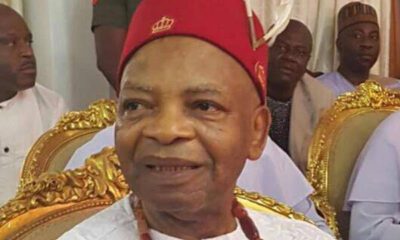
Chief Cletus Ibeto is a prominent Nigerian industrialist whose journey from humble beginnings in Nnewi to becoming one of Nigeria’s top industrial giants is that of resilience, vision, community impact, and a deep commitment to national development.
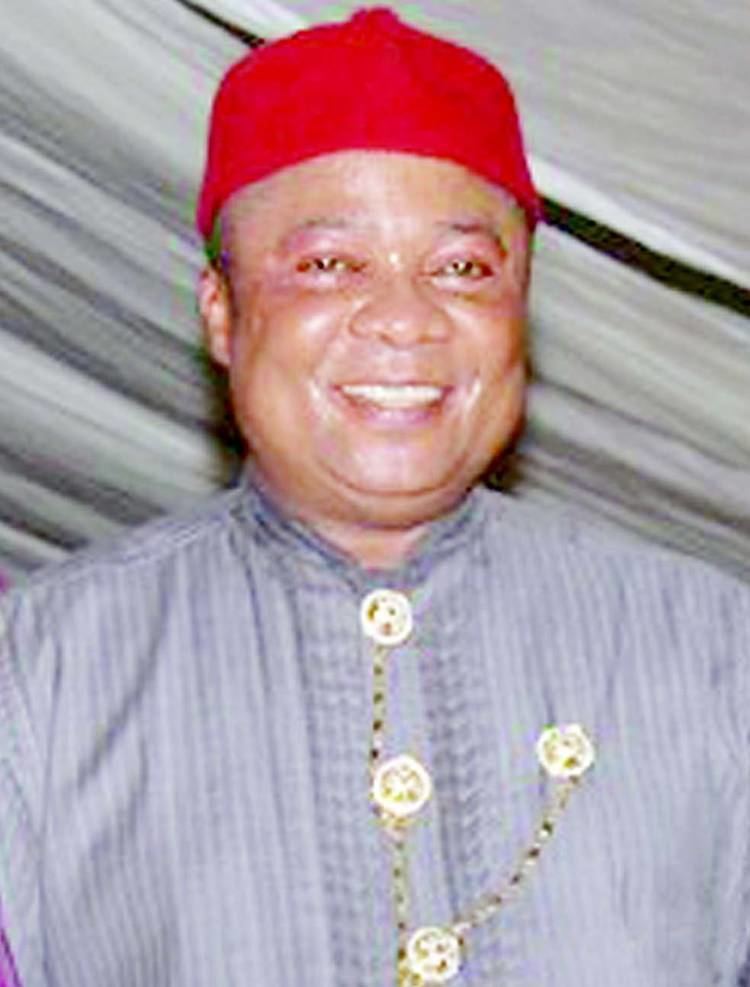
The story of Chief Cletus Ibeto did not begin as that of a titan of industry. Born in the bustling town of Nnewi in Anambra State, southeastern Nigeria, he was a young man with curiosity, grit, and a strong sense that his future would be defined by effort and opportunity. Long before the accolades and business successes, he was a trader learning the rhythms of commerce. But that early experience would become the foundation for a remarkable journey.
Today, Chief Cletus Ibeto is known as one of Nigeria’s most influential industrial leaders. His name appears in conversations about indigenous manufacturing, job creation, and economic innovation. He built a business empire that spans automotive parts, petrochemicals, cement, real estate, and energy. Yet, the power of his story is not found only in the scale of his companies. It is found in his determination to grow talent, invest in his community, and help to build an industrial future for his country.
What makes Chief Cletus Ibeto’s journey compelling is not just the success on paper. It is the way he moved from modest beginnings in Nnewi to becoming a respected business figure whose work impacts thousands of lives. His story invites us into the world of Nigerian enterprise where challenges are real, breakthroughs are hard‑earned, and resilience matters more than any quick formula for success.
In this article, we will explore his life in a way that goes beyond dates and titles. We will look at the personal choices, the setbacks, the leadership lessons, and the legacy that define who Chief Cletus Ibeto truly is. This is a story about industry but more than that, it is also a story about purpose. It is a story worth knowing.
Chief Cletus Ibeto’s Early Life and Background
Chief Cletus Madububugwu Ibeto (Omekannaya) was born on November 6, 1952 in Nnewi, a town in southeastern Nigeria celebrated for its entrepreneurial spirit and industrious people. Growing up in this vibrant community, he was surrounded by traders, craftsmen, and business-minded families who treated commerce as a way of life. From an early age, the young Cletus showed curiosity and a desire to learn by often observing how deals were made and how relationships in business were built.
His family was not wealthy but they emphasized hard work, honesty, and perseverance. As a boy, he became familiar with the daily rhythms of trading through helping family members in small ventures and learning the basics of supply, demand, and customer care. These early experiences planted the seeds of his entrepreneurial mindset long before he would formally enter the business world.
The environment in Nnewi played a significant role in influencing his ambitions. Known as the “Japan of Africa,” the town was already a hub of commerce, small-scale manufacturing, and trade. For a young Cletus, this setting offered both inspiration and practical lessons. He witnessed firsthand the value of dedication, the importance of quality in business, and the impact that well-managed enterprises could have on the community.
Even in his early years, it was clear that Chief Cletus Ibeto possessed a combination of curiosity, discipline, and vision that would later define his rise as one of Nigeria’s top industrial leaders. His humble beginnings in Nnewi did not limit his dreams, instead, they fuelled his determination to create businesses that would serve Nigeria and support its growth.
Education and Formative Years
Education was a journey that Chief Cletus Ibeto pursued with determination, even as life demanded hard work and early responsibility. Unlike many of his peers, he did not follow a traditional path to formal schooling. In his youth, the demands of helping his family and learning the ways of business in Nnewi took precedence over classroom lessons. Yet, the absence of formal education did not diminish his curiosity or his drive to succeed.
As a young man, he continued to build experience through practical business exposure. Through apprenticeship with traders, and by running small ventures himself, he learned essential lessons about commerce, negotiation, and customer relations. These formative years taught him the value of patience, attention to detail, and trustworthiness in business. Every transaction, no matter how small became an opportunity to understand the principles of trade and industry.
Remarkably, Chief Cletus Ibeto returned to formal education later in life. At the age of 48, he took the bold step of writing the West African Senior School Certificate Examination (WASSCE). This was a move that reflected both courage and a lifelong commitment to learning. Not content with just secondary education, he pursued higher education and earned a Bachelor of Science degree in Accountancy from the University of Nigeria, Nsukka at age 54. This achievement is a testament to his belief that it is never too late to learn, grow, and prepare for greater responsibilities.
His educational journey did more than add credentials to his name. It strengthened his understanding of finance, management, and business systems, and that knowledge would later support the expansion of his industrial ventures. Along the way, he received honorary doctorate degrees in recognition of his contributions to Nigerian industry, further cementing his status as a visionary leader who values knowledge as much as hard work.
The combination of practical business experience and formal education gave Chief Cletus Ibeto a unique perspective. He could navigate complex industrial landscapes while remaining grounded in the realities of entrepreneurship. These formative years not only prepared him for the challenges of building an industrial empire but also instilled a philosophy that continues to guide his approach to leadership, philanthropy, and community development.
Entrepreneurial Journey
The story of Chief Cletus Ibeto as a business leader begins in the early 1970s, shortly after the Nigerian Civil War. Like many young men in Nnewi at the time, he saw opportunities in trading and small-scale commerce. He started his entrepreneurial journey as a spare parts trader dealing on automotive batteries, tires, and other essential vehicle components. Each sale represented more than a transaction as it offered a lesson in trust, supply chains, and understanding customer needs. These early ventures laid the foundation for what would become a diversified industrial empire.
In 1980, he formally established The Ibeto Group, thus marking the transition from small trading to industrial enterprise. The Group initially focused on manufacturing lead-acid automotive batteries under the brand “Union Battery.” This product quickly gained recognition for quality, reliability, and affordability, and helped to establish the Ibeto brand in Nigerian commerce. The success of Union Battery allowed him to reinvest in expanding the company’s operations to set the stage for diversification.
By the mid-1990s, Chief Cletus Ibeto had expanded into the petroleum sector with the creation of Ibeto Petrochemical Industries Ltd. The company became one of Nigeria’s largest private storage and distribution facilities for petroleum products, with a capacity exceeding 60,000 metric tonnes. This venture reflected his strategic vision to identify critical sectors in Nigeria’s economy where indigenous ownership and local production could reduce dependence on imports.
The growth of Ibeto Group did not stop there. Chief Cletus Ibeto ventured into the cement industry by establishing Ibeto Cement Company Ltd along with a modern cement bagging terminal in Port Harcourt. This facility serves as a hub for distributing cement across Nigeria to support infrastructure projects and contribute to the growth of local manufacturing. His ability to spot opportunities and execute complex industrial projects became a hallmark of his entrepreneurial style.
Over the years, The Ibeto Group has diversified further by expanding into real estate, hospitality, energy, banking and general trading. These businesses collectively provide employment for thousands of Nigerians, foster skills development, and contribute to the industrialization of the country. By focusing on sectors that have tangible impact on local communities, Chief Cletus Ibeto has demonstrated that entrepreneurship is not only about personal success but also about creating opportunities that benefit the society.
The journey of Chief Cletus Ibeto illustrates the power of combining practical experience with strategic vision. His early years as a trader gave him insights into market behaviour and human relations while his later ventures into industrial manufacturing and petrochemicals showcase his ability to scale operations, manage complex projects, and lead organizations that influence national economic development.
Major Achievements and Contributions

Chief Cletus Ibeto stands out as one of Nigeria’s most accomplished industrialists with a career that has transformed multiple sectors of the economy. Through The Ibeto Group, he has built a diversified industrial empire spanning automotive parts, petrochemicals, cement production, real estate, energy, and financial services. Each of these ventures reflects his ability to identify critical gaps in Nigeria’s economy and develop solutions that create jobs, strengthen local capacity, and promote industrial growth.
In manufacturing, Chief Cletus Ibeto established the Union Battery, one of Nigeria’s leading producers of automotive batteries. The company quickly gained recognition for quality and reliability, and set the standards in a sector that had previously relied heavily on imported products. Under his leadership, Union Battery grew into a trusted brand that serves both domestic and regional markets.
Expanding into petrochemicals, he founded the Ibeto Petrochemical Industries Ltd which became one of the largest private petroleum storage and distribution facilities in Nigeria. With storage tanks exceeding 60,000 metric tonnes, the company strengthened supply chains and supported industrial growth across the country.
Chief Cletus Ibeto also made a mark in the construction and infrastructure sector with the creation of the Ibeto Cement Company Ltd. Its modern cement bagging and distribution facilities supplied major construction projects nationwide, and contributed to the development of roads, housing, and commercial buildings. This venture exemplified his vision of integrating industrial enterprise with national development priorities.
Recognizing the need for financial inclusion and support for small businesses, Chief Cletus Ibeto established the Ibeto Microfinance Bank. The bank provides accessible financial services to entrepreneurs and communities with the goal of helping small and medium-sized businesses grow and thrive. By facilitating loans, savings, and financial education, the bank complements his industrial initiatives and reinforces his commitment to sustainable economic development.
In further support of Nigeria’s industrial and logistics ecosystem, Chief Cletus Ibeto also owns the Ibeto Seaport & Terminal, a private terminal facility that supports bulk cargo handling and industrial supply chains. The terminal plays a role in easing import and export logistics for raw materials and finished goods, particularly for heavy industries such as cement, petrochemicals, and manufacturing. This investment aligns with his broader vision of strengthening infrastructure that enables local production and efficient distribution.
In recognition of his outstanding contributions to industry and the Nigerian economy, Chief Cletus Ibeto has received numerous honours. He was conferred with the Officer of the Order of the Niger (OON) and later the Commander of the Order of the Niger (CON) as a reflection of his impact on national development and industrial growth. His achievements have earned him respect not only within Nigeria but across West Africa, and has established him as a leading figure among indigenous industrialists.
Beyond his companies, Chief Ibeto has served in leadership roles that extend his influence. He has participated in business associations, chambers of commerce, and advisory committees where he offers insights that support entrepreneurship, industrial policy, and economic development. His approach is proof that industrial success is most impactful when paired with mentorship, strategic vision, and the cultivation of broader business ecosystems.
Chief Cletus Ibeto’s major achievements are a testament to persistence, strategic thinking, and long-term planning. From a modest trader in Nnewi to the head of one of Nigeria’s largest industrial conglomerates, his journey illustrates the possibility that visionary leadership can drive industrial growth, create employment opportunities, promote financial inclusion, and strengthen the nation’s economy.
Philanthropy and Community Development
While Chief Cletus Ibeto is celebrated for his industrial achievements, his legacy is equally defined by his commitment to philanthropy and community development. He has consistently used his success to improve the lives of people in his hometown Nnewi, across Anambra State, and in the broader Nigerian society.
One of his most notable recent contributions is the funding and construction of an ultra-modern palace hall within the palace of the Igwe Nnewi. This facility serves as a central venue for community gatherings, traditional ceremonies, and cultural events. The hall has become a symbol of Chief Ibeto’s dedication to preserving and enhancing the cultural identity of his community while providing functional spaces for civic engagement.
Chief Cletus Ibeto also gave back to the spiritual life of Nnewi through the buidling of the St. Cletus Catholic Church in Otolo, Nnewi. Named in his honour, the church reflects his deep commitment to faith and the well-being of his community. Beyond serving as a place of worship, it functions as a hub for education, social programmes, and community cohesion that strengthens the social fabric of the area.
Education has been another key focus of Chief Cletus Ibeto’s philanthropic work. Over the years, he has awarded hundreds of scholarships to deserving students to enable them to pursue secondary and tertiary education. Many of these scholarships target fields that are vital to national development, including medicine, engineering, and business. His support ensures that young Nigerians, regardless of economic background can access opportunities that may otherwise have been out of reach.
In addition to education and religious projects, Chief Cletus Ibeto has invested in critical community infrastructure. He has funded road construction, water supply projects, and health centres that improve living standards, create employment opportunities, and support local economic activities. By doing so, he has strengthened the foundations of sustainable development in the regions where his influence is strongest.
Other philanthropic gestures include supporting the building of community halls, medical outreach programmes, and civic initiatives. These efforts demonstrate a philosophy that success carries responsibility and that business leaders have a role to play in fostering social progress. Chief Cletus Ibeto’s investments in his community are tangible, lasting, and directly improve the quality of life for thousands of people.
Through these contributions, Chief Cletus Ibeto has shown that industrial success and social responsibility can go hand in hand. His philanthropic work complements his business achievements, and leaves a legacy that combines economic growth with cultural preservation, education, and community empowerment.
Challenges and Resilience
No great journey comes without obstacles, and Chief Cletus Ibeto’s path to industrial success was no exception. From his early days as a spare parts trader in Nnewi to leading one of Nigeria’s largest industrial conglomerates, he faced challenges that tested his vision, patience, and determination.
In the competitive business environment of post-civil war Nigeria, resources were scarce, and infrastructure was limited. Supply chains were unreliable, and industrial equipment often had to be imported at great cost. As a young entrepreneur, Chief Cletus Ibeto had to navigate these conditions while establishing trust with customers and suppliers. Every misstep could have meant the failure of his fledgling ventures, yet, he persisted as he learned from each challenge and turned obstacles into lessons.
As The Ibeto Group expanded into petrochemicals and cement, regulatory hurdles and market competition presented new difficulties. Licensing requirements, government policies, and foreign competition required careful navigation. Chief Cletus Ibeto approached these challenges strategically by combining thorough planning, strong networks, and a deep understanding of local business dynamics. His ability to adapt and stay resilient enabled him to secure the approvals and partnerships necessary for sustainable growth.
Education was another area of personal challenge. Returning to formal schooling as an adult, writing the West African Senior School Certificate Examination at age 48, and later, earning a university degree in his fifties demanded extraordinary discipline. Balancing studies with business responsibilities tested both his time management and perseverance. Yet, he completed these milestones to demonstrate that resilience is not only about business but also about personal growth and lifelong learning.
Financial risks were also a constant companion. Investing in industrial ventures like cement and petrochemicals required substantial capital and came with high stakes. Mistakes could affect employees, communities, and entire industries. His careful risk assessment, commitment to quality, and hands-on approach allowed him to mitigate potential setbacks and maintain steady progress.
Through these challenges, Chief Cletus Ibeto developed a reputation for steadfastness and reliability. His resilience is rooted in a clear vision, disciplined planning, and an unwavering belief in the potential of Nigeria and its people. These qualities not only ensured the survival and growth of his businesses but also inspired others to pursue entrepreneurship with courage and determination.
Chief Cletus Ibeto’s journey is a validation that success is never linear. It is built on the willingness to face adversity, learn continuously, and keep moving forward even when conditions seem unfavourable. His story serves as a powerful reminder that resilience, when combined with vision and integrity can turn challenges into opportunities and leave a lasting impact on both the industry and society.
Leadership Philosophy and Vision
The success of Chief Cletus Ibeto is not only measured by the size of his industrial empire but also by the clarity of his leadership philosophy and the vision that drives it. Throughout his career, he has emphasized discipline, integrity, and a deep commitment to long-term planning. These values are reflected in how he manages his businesses, nurtures talent, and contributes to the broader economy.
Chief Cletus Ibeto believes that strong leadership begins with understanding people. He invests in training, mentorship, and the development of employees as way of ensuring that his workforce is skilled, motivated, and aligned with the company’s goals. By valuing human capital as much as financial capital, he has built organizations capable of sustaining growth even in challenging economic environments.
Strategic thinking is another hallmark of his leadership style. Chief Cletus Ibeto approaches business opportunities with a careful analysis of market needs, resource availability, and potential risks. Whether expanding into cement, petrochemicals, or real estate, he applies a methodical approach that balances innovation with practicality. His ability to foresee industry trends and position his companies for growth has been central to the enduring success of The Ibeto Group.
Equally important is his vision for Nigeria. Chief Cletus Ibeto sees industrial development as a pathway to national prosperity. He emphasizes the importance of local production, job creation, and self-reliance. By building manufacturing capacity within Nigeria, he has contributed not only to the growth of his company but also to the economic resilience of Nigeria. His commitment to creating opportunities for local suppliers and skilled workers reflects a belief that business success and national development are interconnected.
Chief Ibeto also demonstrates leadership through example. His personal dedication, work ethic, and willingness to continue learning inspire those around him. He has often stated that challenges are opportunities to improve, and that leaders must remain grounded while pursuing ambitious goals. This approach has earned him respect both within his organizations and across Nigeria’s business community.
In addition, he engages with business associations and advisory boards where he shares insights with emerging entrepreneurs and influences policies that support industrial growth. Through these efforts, Chief Cletus Ibeto not only builds businesses but also cultivates an ecosystem where Nigerian entrepreneurs can thrive.
Ultimately, Chief Cletus Ibeto’s leadership philosophy combines vision, discipline, and social responsibility. His approach underscores that successful business leadership, more than profit, is about creating value for employees, communities, and the country. His story provides a model for aspiring entrepreneurs and industrialists who wish to make a meaningful impact while achieving enduring success.
Personal Life and Values

Away from the industrial boardrooms and business meetings, Chief Cletus Ibeto is a family man whose personal life reflects his values of resilience, commitment, and grounded faith. He has lived a life marked by both personal challenges and new beginnings as proof that even successful leaders navigate changes with grace.
Chief Cletus Ibeto first marriage produced three children. The marriage ended, and he navigated the challenges of separation while balancing his business responsibilities. His approach to this personal transition was consistent with the discreet and private manner that characterizes much of his life outside the public eye.
In December 2012, he remarried to Augustina Ifeyinwa Okpala in a widely celebrated ceremony that brought together dignitaries from business, political, and entertainment sectors. The event which held at Our Lady Queen of Peace Catholic Church marked a new chapter in his personal life. Augustina who is a native of Ndikpa Ugwulano in Umunze, Anambra State shares his Catholic faith and has stood beside him in both family and philanthropic endeavours.
Chief Cletus Ibeto’s children from his first marriage have largely remained out of the spotlight, and are pursuing their own lives and careers away from public scrutiny. As a parent, he emphasizes values that mirror his own life journey – the importance of integrity, hard work, and lifelong learning.
Faith is another central pillar of his personal life. As a devout Christian, he has invested not only in his spiritual growth but also in institutions that strengthen communal faith. This commitment is reflected in projects such as the St. Cletus Catholic Church in Otolo, Nnewi which stands both as a place of worship and as a symbol of his belief in community enrichment.
Chief Ibeto remains connected to his roots in Nnewi by participating in community life and supporting local development. Even with immense success and influence, he is known for humility, discipline, and a values‑centered approach to life. These traits have shaped his family relationships and his broader role as a leader, mentor, and community elder.
Legacy and Future Outlook
The story of Chief Cletus Ibeto is one of resilience, vision, and transformative impact. From humble beginnings in Nnewi to becoming one of Nigeria’s top industrialists, his life reflects the power of hard work, strategic thinking, and a commitment to both business and community development.
His legacy is multi-dimensional. Through The Ibeto Group, he has created thousands of jobs, strengthened Nigeria’s industrial base, and fostered opportunities for indigenous manufacturing. His ventures in automotive batteries, petrochemicals, and cement have not only shaped Nigerian industry but have also inspired a new generation of entrepreneurs to pursue ambitious goals within the country.
Equally significant is his dedication to community and societal progress. Investments in infrastructure, education, faith-based institutions, and cultural projects in Nnewi and beyond demonstrate that his impact extends far beyond profit margins. By funding the ultra-modern Nnewi palace hall and the St. Cletus Catholic Church, and by supporting scholarships and community projects, Chief Cletus Ibeto has left tangible markers of development that will benefit generations to come.
Looking ahead, the future of his legacy is anchored in sustainability, innovation, and mentorship. Chief Cletus Ibeto emphasizes local production, skill development, and youth empowerment as pillars of Nigeria’s industrial growth. His approach signals a forward-thinking vision, one where business success goes hand-in-hand with national development and the empowerment of future leaders.
For aspiring entrepreneurs, business leaders, and community advocates, Chief Cletus Ibeto’s journey provides a blueprint for combining ambition with responsibility. His story reminds us that lasting success is measured not only by wealth but by the lives impacted, the institutions strengthened, and the communities uplifted along the way.
Essentially, Chief Cletus Ibeto has built more than an industrial empire, he has crafted a legacy of resilience, innovation, and societal contribution that will continue to influence Nigeria for decades. His vision for the future, grounded in faith, family, and industry ensures that his name will remain synonymous with enterprise, integrity, and community development.
In Conclusion …
The life and career of Chief Cletus Ibeto illustrate how vision, determination, and integrity can transform humble beginnings into extraordinary success. From the bustling streets of Nnewi where he first learned the fundamentals of trade, to leading one of Nigeria’s most influential industrial conglomerates, his journey is a testament to resilience, strategic thinking, and lifelong learning.
Chief Cletus Ibeto’s achievements go beyond business. Through industrial innovation, community development, and philanthropy, he has created employment, strengthened local economies, and uplifted the lives of countless Nigerians. Projects such as the ultra-modern Nnewi palace hall and St. Cletus Catholic Church highlight his commitment to preserving culture, faith, and communal growth, alongside economic progress.
His personal values, leadership philosophy, and focus on education demonstrate that true success combines professional accomplishment with social responsibility. By mentoring others, investing in communities, and maintaining a vision for Nigeria’s industrial future, Chief Cletus Ibeto has ensured that his impact will endure for generations.
Ultimately, this is more than a biography of an industrialist. Beyond that, it is a narrative of inspiration. It is a story that reminds aspiring entrepreneurs, business leaders, and community advocates that dedication, integrity, and vision can shape not just individual success but the future of an entire nation.
References
- https://en.wikipedia.org/wiki/Cletus_Ibeto
- https://www.legit.ng/business-economy/money/1481826-the-business-savvy-nigerian-billionaire-secondary-school-certificate-age-48/
- https://nairametrics.com/2022/07/23/cletus-ibeto-the-billionaire-who-struck-gold-and-never-looked-back/
- https://newswirengr.com/2022/07/25/anambra-born-billionaire-cletus-ibeto-wrote-waec-at-age-48-graduated-university-at-54/
- https://thesun.ng/ibeto-an-enthralling-story-of-an-achiever/
- https://www.westafricanpilotnews.com/2020/01/05/ibeto-donates-ultra-modern-hall-and-civic-center-to-community/
- https://kashgain.net/blog/biography-net-worth-family-and-business-career-of-chief-cletus-ibeto/
- https://moiawards.com/cletus-ibeto-nominated-for-the-lifetime-achievement-in-industry-leadership-award-at-the-moi-awards/
- https://thesun.ng/ibeto-an-enthralling-story-of-an-achiever/
- https://nnewicity.com/5-notable-nigerian-industrialists-from-nnewi/