Nigerian Political History
Chuba Okadigbo: The Remarkable Life and Enduring Legacy of Nigeria’s Intellectual Senate President

Chuba Okadigbo, also known as the Oyi of Oyi was a Nigerian philosopher, academic, and Senate President known for his intellectual depth and bold political voice. This is remembering his life, education, political journey, controversies, and lasting legacy in Nigeria’s democratic history.

Chuba Okadigbo remains one of the most intriguing figures in Nigeria’s political history. A philosopher turned politician, he carried into public office a rare depth of thought that set him apart in the rough world of Nigerian politics. Long before he became the President of the Nigerian Senate, he was already known in academic circles as a sharp mind who questioned how power should be used and who it should serve.
Born in Ogbunike, Anambra State, and educated both in Nigeria and abroad, Chuba Okadigbo moved easily between classrooms and political corridors. That movement was not always smooth. His journey through power came with influence, conflict, and moments that tested both his beliefs and his political standing. Yet, even in controversy, he remained firm in his voice and ideas.
To remember Chuba Okadigbo is to revisit a time intellectual depth had a visible place in Nigeria’s Senate. It is also to examine how ideas, ambition, and leadership can intersect in ways that leave a lasting mark on a nation’s democratic story.
Chuba Okadigbo’s Early Life and Background
Chuba Okadigbo was born on 17 December 1941 in Asaba, in present-day Delta State, Nigeria. Although his birth took place outside his ancestral home, his family roots are firmly in Ogbunike, Oyi Local Government Area of Anambra State, southeastern Nigeria. That connection to the Igbo heartland stayed with him throughout his life and often influenced how he understood identity, governance, and public service.
He grew up in a period Nigeria was still under colonial rule, and access to formal education was not evenly distributed. Like many children of his generation who would later rise to prominence, his early years were defined by discipline, cultural grounding, and a strong respect for learning. These early experiences helped him to develop a habit of questioning ideas and seeking deeper explanations for how the society works.
From a young age, Chuba Okadigbo showed strong curiosity and a natural interest in reading and discussion. People who knew him in his formative years often described him as thoughtful and reflective, someone who preferred understanding issues rather than accepting them at face value. This mindset later became a defining part of his academic and political identity.
His upbringing in southeastern Nigeria also exposed him to community values and traditional systems of leadership. These influences, combined with his formal education helped him to form a worldview that blended cultural awareness with intellectual reasoning.
Education and Academic Excellence
The educational journey of Chuba Okadigbo is one of the strongest foundations of his public life. He did not only study to earn degrees, he pursued learning as a way of understanding people, power, and society. This commitment to knowledge later became one of the reasons he stood out in Nigerian politics.
He began his formal education in Nigeria where he completed his early schooling before moving on to higher studies. His academic path eventually led him to the United States of America where he furthered his education. At the Catholic University of America in Washington, D.C., he studied philosophy and political science. These fields demanded deep thinking and careful reasoning.
He earned advanced degrees, including a doctorate in philosophy. His academic work focused on political theory, ethics, and governance. These areas of study later influenced how he spoke and engaged with public issues. During his time in the United States, he also worked as a lecturer who taught philosophy in different academic settings. His students and colleagues often described him as precise, articulate, and highly analytical in his approach to ideas.
After returning to Nigeria, Chuba Okadigbo continued his academic career at the University of Nigeria, Nsukka where he taught philosophy. He was also associated with Bigard Memorial Seminary in Enugu. There, he contributed to intellectual discussions on ethics and human society.
What made his academic life remarkable was not only the positions he held but the way he connected philosophy to real-world governance. He did not treat political theory as abstract thought alone. Instead, he used it as a lens to examine leadership, justice, and the responsibilities of those in power. This intellectual background later became a defining feature of his political identity and public reputation.
Entry into Nigerian Politics
The transition of Chuba Okadigbo from academia into politics did not happen suddenly. It grew naturally from his long-standing interest in governance, political philosophy, and public affairs. After years of teaching and writing on political ideas, he gradually moved closer to the practical world of decision-making in Nigeria.
His first major step into national political involvement came in 1977 when he served as a member of the Constituent Assembly. This body was responsible for drafting parts of the constitutional framework that would guide Nigeria’s Second Republic. For someone with a strong background in political theory, this role gave him an opportunity to contribute to the structure of the state in a practical way.
By 1979, Chuba Okadigbo had become part of the political administration of President Shehu Shagari by serving as a special adviser. This position placed him at the centre of national governance discussions during a critical period in Nigeria’s democratic development. It also exposed him to the realities of political negotiation, power balance, and policy implementation.
Unlike many who entered politics primarily through party structures, Okadigbo’s entry was informed by intellectual engagement and advisory roles. He was already known for his analytical style, and this made him valuable in policy discussions, especially on issues related to governance and institutional design.
However, even in these early political years, it became clear that his approach would not always align smoothly with the existing political order. He was outspoken, firm in his views, and often willing to question established decisions. These traits would later define both his rise and the controversies that followed him in national politics.
Rise to Senate Leadership

The political return of democracy in 1999 created a new opening for experienced voices like Chuba Okadigbo. After years in academia, advisory roles, and political observation, he re-entered national politics with renewed influence. He was elected as Senator representing Anambra North Senatorial District under the platform of the People’s Democratic Party (PDP).
His entry into the Nigerian Senate was significant, not just because of his political background but because of the intellectual weight he brought into legislative discussions. At a time Nigeria was rebuilding democratic institutions after years of military rule, his presence added a strong academic and philosophical dimension to debates in the upper chamber.
In August 1999, following internal leadership changes in the Senate, Chuba Okadigbo was elected as the President of the Nigerian Senate, making him the 8th person to hold that office. His emergence came after the impeachment of Senator Evan Enwerem, and it placed him at the centre of Nigeria’s legislative leadership during the early phase of the Fourth Republic.
As Senate President, he was vocal about the need to protect the independence of the legislature. He often engaged in discussions around constitutional balance, separation of powers, and the role of lawmakers in holding the executive accountable. His leadership style was assertive, and he did not hesitate to challenge positions he believed weakened institutional authority.
However, his time in office was brief. In November 2000, he was removed from the position of Senate President following allegations of financial impropriety linked to Senate contracts and procurement processes. The development created political tension within the National Assembly and drew national attention.
Despite his removal from the Senate presidency, he remained a Senator. His influence within legislative debates continued, and he retained a visible role in national political discussions. His rise to Senate leadership, though short-lived, remains one of the most defining phases of his political career which marked him as a central figure in Nigeria’s early Fourth Republic governance.
Political Philosophy and Intellectual Identity
One of the most defining aspects of Chuba Okadigbo was not just the offices he held, but the way he thought about politics itself. He approached governance as something deeper than competition for power. For him, politics was a system that required structure, responsibility, and a clear understanding of how institutions should work.
With his background in philosophy, Chuba Okadigbo often spoke in a reflective and analytical manner. He was known for linking political events to broader questions about ethics, leadership, and the purpose of government. This made his speeches and public statements different from many of his contemporaries. They were less about slogans and more about ideas.
He believed strongly in the importance of institutional independence, especially for the legislature. In his view, a functioning democracy required a National Assembly that could think and act without undue pressure from the executive arm of government. This belief guided many of his positions while he served in the Senate.
Chuba Okadigbo also valued political history and used it frequently in his arguments. He often drew lessons from past governments and global political systems to explain current issues in Nigeria. This habit reflected his academic training and his preference for careful reasoning over emotional political reactions.
At the same time, his intellectual identity sometimes placed him at odds with the more transactional side of Nigerian politics. While some saw him as principled and deeply thoughtful, others viewed his approach as too rigid for the realities of political negotiation. These differences contributed to both his influence and his conflicts within the political space.
Even with such challenges, his reputation as an intellectual politician remained strong. He stood out in a political environment where deep theoretical engagement was not always common, and this distinction continues to define how Chuba Okadigbo is remembered in Nigeria’s political history.
Controversies and Political Challenges
The political journey of Chuba Okadigbo was not without turbulence. In fact, some of the most defining moments of his career came from the tensions and disagreements that surrounded his time in public office, especially during his tenure in the Senate.
The most significant controversy occurred during his time as President of the Nigerian Senate between 1999 and 2000. He was accused of financial irregularities connected to Senate procurement processes. The allegations led to intense investigations and political pressure within the National Assembly. In November 2000, he was removed from office as Senate President following a vote of impeachment by his colleagues.
The situation created a major national debate at the time. Supporters of Chuba Okadigbo argued that the process reflected deeper political struggles within the Senate and broader tensions between the legislative and executive arms of government. Critics, however, saw the removal as a necessary step to maintain accountability in public office.
Beyond the Senate episode, he also experienced political disagreements within his party and the broader political environment. His outspoken nature and strong opinions often placed him in difficult positions during negotiations and party discussions. He was not known for political silence when issues of governance or principle were involved, and this sometimes created friction with allies and opponents alike.
Despite these challenges, Chuba Okadigbo remained active in national politics. He continued to participate in debates and maintained his influence within opposition circles after leaving the People’s Democratic Party. His willingness to move across political platforms reflected both his resilience and his ongoing search for what he believed to be a more balanced political environment.
While controversies marked parts of his career, they did not erase his reputation as an intellectual figure in politics. Instead, they added complexity to his public image. This reflected a life that moved between influence, disagreement, and persistent engagement with national issues.
Later Political Career and Comeback Attempts
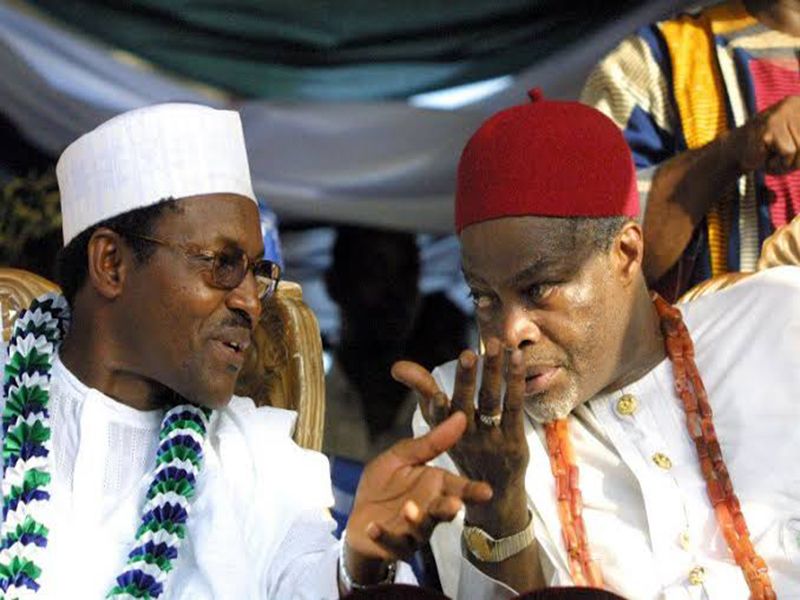
After leaving the People’s Democratic Party (PDP), Chuba Okadigbo continued his political journey with a renewed sense of purpose. His exit from the party did not mark the end of his influence in national politics. Instead, it opened a new chapter where he aligned with opposition voices and remained active in influencing political conversations.
He later joined the All Nigeria Peoples Party (ANPP), a major opposition platform at the time. This move positioned him within a different political bloc and reflected his shifting alliances in Nigeria’s evolving democratic landscape. Even outside the ruling party structure, he maintained visibility in national debates, often commenting on governance, leadership, and institutional direction.
In 2003, Chuba Okadigbo became a key figure in Nigeria’s presidential election cycle when he was selected as the vice-presidential candidate of Muhammadu Buhari under the ANPP platform. The ticket represented a strong opposition challenge to the ruling party during that election period. Although they did not win the election, the campaign reinforced his relevance in national politics and confirmed his standing as a major political actor.
His participation in the election also showed his willingness to return to frontline politics, despite earlier setbacks. Rather than stepping away after his Senate experience, he remained engaged by seeking opportunities to influence national leadership at the highest level.
Throughout this period, Chuba Okadigbo continued to speak on governance issues and political reform. His public presence, whether through campaigns or commentary, reflected a consistent interest in Nigeria’s democratic development and institutional balance.
Even though his later political career was shorter than many expected, it demonstrated persistence. He remained part of the national political conversation until his final days in 2003, leaving behind a record of continued engagement across different political phases.
Personal Life
The personal life of Chuba Okadigbo was as layered as his public journey, though he kept much of it away from the spotlight that followed his political career. Still, key parts of his family life are well documented and offer a clearer picture of the man behind the public figure.
He was first married to Prof. Miriam Ikejiani-Clark, a respected academic and political scientist. Their marriage produced four children before it eventually ended in divorce. Both went on to build individual professional paths, with Miriam also becoming a notable figure in academia and public service.
After his first marriage, he married Dr. Juliet Nwokoye, a pediatrician. This union also produced two children, but that too ended in divorce. This period of his life remained more private, with limited public attention compared to his political career.
Later in life, he married Margery Okadigbo, a lawyer and politician. She would later make her own mark in Nigerian politics, serving as Senator representing Anambra North in the National Assembly years after his passing. Their relationship remained one of the most discussed aspects of his personal history, especially because both husband and wife eventually held senatorial influence in the same district at different times.
Beyond his marriages, Chuba Okadigbo was known to maintain strong ties to his roots in Ogbunike, Anambra State. He valued family connections and cultural identity, and these remained an important part of his personal grounding throughout his academic and political life.
Death and National Reaction
The final chapter of Chuba Okadigbo’s life came suddenly and left many Nigerians in shock. He died on 25 September 2003 in Abuja at the age of 61. At the time of his death, he had just returned from a political rally in Kano linked to the presidential campaign of Muhammadu Buhari under the All Nigeria Peoples Party (ANPP).
Reports at the time indicated that he experienced breathing difficulties shortly after the rally. He was rushed to the hospital in Abuja where he was confirmed dead. His passing occurred during an active political season, and that made the news even more impactful across the country.
The reaction to his death was immediate and widespread. Political leaders, academics, and citizens across Nigeria expressed sorrow over the loss of a figure many saw as both an intellectual and a strong political voice. Tributes highlighted his contributions to legislative leadership, his academic background, and his outspoken role in national debates.
For many who followed his career, Chuba Okadigbo represented a rare blend of scholarship and politics. His death created a sense of unfinished work, especially among those who believed he still had more to contribute to Nigeria’s democratic development.
He was buried in his hometown, and his passing was marked by reflections on his complex political journey. While opinions about his career remained mixed, there was broad agreement that he had left a noticeable imprint on Nigeria’s political and intellectual landscape.
Legacy of Chuba Okadigbo
The legacy of Chuba Okadigbo sits in a unique place within Nigeria’s political history. It is neither simple nor one-dimensional. Instead, it is a mix of intellectual influence, political controversy, institutional contribution, and a lasting reminder of what happens when deep academic thought enters the practical world of governance.
At the core of his legacy is his identity as an intellectual in politics. Few Nigerian politicians of his era brought the level of philosophical depth that Chuba Okadigbo carried into public office. His background in philosophy and political theory influenced how he approached debates, especially on democracy, institutional balance, and the responsibilities of leadership.
During his time as Senate President, even though brief, he contributed to early conversations about legislative independence in Nigeria’s Fourth Republic. His insistence that the National Assembly should function as a strong and independent arm of government added to ongoing national discussions about separation of powers and democratic stability.
Beyond formal office, his legacy also lives in how he is remembered in academic and political circles. Many see him as a symbol of what is possible when education and politics intersect, even if the outcome is not always smooth. His career also serves as a reminder that intellectual strength does not automatically shield a politician from the realities and pressures of political life.
In opposition politics, his later involvement in the ANPP and the 2003 presidential campaign positioned him as someone willing to remain active in national affairs until the end of his life. This persistence added another layer to his public image as a committed political participant rather than a passive observer.
At the same time, his controversies remain part of the public memory. The impeachment from the Senate presidency and the political tensions surrounding his career continue to shape discussions about accountability, leadership style, and institutional conflict in Nigeria.
Today, Chuba Okadigbo is remembered as a figure who brought intellect into a political environment often driven by strategy and competition. His life continues to attract attention from historians, political analysts, and students of governance who seek to understand the balance between ideas and political reality in Nigeria’s democratic journey.
Why Chuba Okadigbo’s Story is Still Relevant
Years after his death, Chuba Okadigbo continues to appear in conversations about Nigerian politics, not as a passing reference but as a serious case study in leadership, ideas, and governance. His relevance today is tied to the questions his life still raises about how politics should be practiced in a democratic society.
One reason he still matters is the way he brought intellectual depth into political office. In a system where public debate can sometimes lean heavily on slogans and party loyalty, Chuba Okadigbo represented a different approach. He argued from principles, historical context, and structured reasoning. This style remains rare in modern political discourse, and that makes his example stand out even more today.
He also remains relevant in discussions about legislative independence in Nigeria. During his time as Senate President, he strongly supported the idea that the legislature should not operate as an extension of the executive arm. That conversation is still ongoing in Nigeria’s democracy, especially around issues of accountability, oversight, and institutional balance.
Another reason his name still comes up is the complexity of his political journey. Chuba Okadigbo moved through academia, advisory roles, legislative leadership, opposition politics, and national campaigns. His career shows how Nigerian politics often involves shifts in alignment, negotiation, and survival within changing political environments.
For the younger generations, his life also raises important questions about the place of education in leadership. He is often remembered as one of the few Nigerian politicians who consistently carried academic thinking into public office. This continues to inspire debates about what kind of preparation is needed for effective governance.
Finally, his story remains relevant because it is unfinished in many ways. The mix of influence, controversy, and intellectual presence leaves behind a record that invites continued reflection. Chuba Okadigbo is not just remembered as a former Senate President; he is studied as a figure who tried to merge ideas with political practice in a challenging environment.
Conclusion …
The life of Chuba Okadigbo carries a weight that is difficult to reduce to titles or political positions alone. He was a philosopher who entered politics, a teacher who stepped into governance, and a public figure who often chose ideas over convenience. Across different stages of his journey, he remained consistent in one thing – a deep belief that leadership should be guided by thought, structure, and responsibility.
From his early academic life to his time as Senate President, and later as an opposition political actor, Chuba Okadigbo moved through Nigeria’s democratic space with a voice that was distinct. It was a voice formed by study, sharpened by experience, and sometimes, tested by political conflict. His career did not follow a smooth path. Yet, it left behind a record that continues to draw attention in discussions about governance and leadership.
Remembering Chuba Okadigbo is not only about recalling a former Senate President. It is also about reflecting on the role of intellectual engagement in public life and what it means when ideas enter the demanding world of politics. His story remains part of Nigeria’s broader democratic history where leadership, debate, and national direction continue to evolve.
References
- Wikipedia contributors. (2025, March 27). Chuba Okadigbo. In Wikipedia. https://en.wikipedia.org/wiki/Chuba_Okadigbo
- The Guardian. (2023, September 25). Remembering Chuba Okadigbo, 20 years after. https://guardian.ng/features/remembering-chuba-okadigbo/
- The Sun Nigeria. (2023, September 24). My life 20 years after Okadigbo’s death. https://thesun.ng/my-life-20-years-after-okadigbos-death/
- National Assembly of Nigeria. (n.d.). Past Presidents of the Senate. https://nass.gov.ng/senate/past-presidents
- Encyclopaedia Britannica. (n.d.). Nigeria: The Fourth Republic. https://www.britannica.com/place/Nigeria/The-Fourth-Republic
You may want to check this out …