




Igbo Culture and Tradition
Cannon Gunshots (Egbe Mkponani): Origin, Deep Meaning, and Symbolism in Igbo Tradition

Egbe Mkponani (cannon gunshots) are used in Igbo tradition for several purposes. Discover their origin, meaning, symbolism, cultural role, and deeper spiritual significance.

At many Igbo funerals and cultural events, there is a moment that needs no explanation for those who understand it. When the loud cannon blast rings out, people do not panic. No one runs. Instead, attention shifts. The sound has done its job. That is the sound of egbe mkponani.
For outsiders, it often raises questions. Why are gunshots fired? What do they mean? In some cases, it is dismissed as mere ceremony or mistaken for celebration. But the meaning is far more precise than that. Egbe mkponani is a form of communication in Igbo tradition.
In traditional Igbo society, sound has always carried meaning. Before modern tools, communities relied on systems that could reach people quickly and clearly. Instruments like the ikoro and ogene were used to pass information. Cannon gunshots (egbe mkponani) became part of that same system used when the message needed weight, urgency, or public recognition. When egbe mkponani is heard, it is not just marking an event. It is announcing it.
It can signal that a respected elder has passed. It can mark the beginning of burial rites. It can acknowledge a person’s status or draw the community into a shared moment. The sound is deliberate, and its timing is rarely accidental.
Understanding egbe mkponani in Igbo tradition starts with letting go of the idea that it is just noise. It is structured, intentional, and widely understood within the cultural context. Once that is clear, the rest of its symbolism begins to make sense.
The Origin of Egbe Mkponani in Igbo Tradition
Before modern technology, communities relied on structured systems to share information. In Igbo society, communication was not limited to speech alone. Instruments like the ikoro, ogene, and ekwe were used to send messages across distances. Egbe mkponani developed within this same system.
Traditional cannon shots, often referred to as egbe mkpọnani became part of a broader communication network. These sounds were not random. They were deliberate signals that people in the community could recognize and interpret.
Historical and cultural documentation shows that cannon blasts were used to announce events such as births, ceremonies, and gatherings. In one recorded cultural account, cannon shots were fired in different locations to inform both the community and ancestral lineage about the birth of a child.
This shows that egbe mkponani has always been about sending a message, not just making noise.
Why Cannon Gunshots Are Used in Igbo Tradition
Once you understand that egbe mkponani is part of a communication system, the next question becomes clearer. Why use something as loud and forceful as a cannon gunshot? The answer is simple. Some messages are too important to be missed.
In Igbo tradition, egbe mkponani is reserved for moments that carry weight. It is not used casually. It appears when an event needs to be announced, acknowledged, and taken seriously by the entire community.
As a Traditional Communication System
At its most basic level, egbe mkponani is a signal. Before modern communication, sound was one of the fastest ways to reach people across distances. A single cannon blast could travel far beyond what a voice could carry. More importantly, it could cut through daily activity and demand attention.
People did not need long explanations. The sound itself was enough to alert them that something significant had happened. This made mkponani effective. It was immediate, clear, and difficult to ignore.
As a Symbol of Honour and Status
Not every event calls for egbe mkponani. Its use often points to the importance of a person or occasion. In many communities, cannon gunshots are used to honour individuals who held recognized positions or lived lives that carried influence.
The number of shots can also matter. More shots, like 21-gunshots may be used for people of higher status or those who have earned titles within the community.
In this context, egbe mkponani becomes a public statement. It tells everyone that the person being honoured is not ordinary. Their life and role are being acknowledged in a visible and audible way.
In Igbo Burial and Funeral Rites
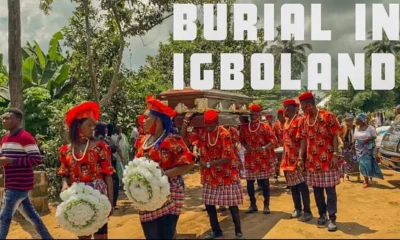
One of the most common settings where egbe mkponani is heard is during funerals. When an adult community member passes away, cannon gunshots are used to announce the death, mark the beginning of burial activities, or, honour the life that has ended. It is not only about informing people. It is also about giving the moment the seriousness it deserves. The sound carries a message that goes beyond words. It tells the community that a transition has taken place and that attention should be given to it.
As a Spiritual Signal
In Igbo belief systems, life is not limited to what can be seen. There is an understanding that the living, the ancestors, and the spiritual world are connected. Within this worldview, sound is not only heard by people. It is also considered a way of sending signals beyond the physical space. Egbe mkponani fits into this idea.
The force of the sound is often associated with calling attention, not just among the living but within the broader spiritual order. It can accompany rituals, mark transitions, and signal that something meaningful has occurred. This adds another layer to the meaning of egbe mkponani. It is not only social. It also carries spiritual weight.
As a Community Alert System
Another reason egbe mkponani is used is its ability to gather attention quickly. When the sound is heard, people become aware that something is happening. Even without details, they know it concerns the community. This creates a shared awareness that brings people together. In traditional settings where communal life is central, this kind of alert system is important. It ensures that key moments are not missed and that people can respond, participate, or take notice.
In all these uses, one thing remains consistent, and that is the fact that egbe mkponani is not random. It is deliberate. It appears when the moment matters and when the message needs to be clear, public, and understood.
The Symbolism of Egbe Mkponani

To understand egbe mkponani fully, you have to move beyond what the ears hear and focus on what the sound represents. In Igbo tradition, sound is never empty. It carries intent, context, and shared understanding. Egbe mkponani is one of the clearest examples of this. At first listen, it is just a loud cannon blast. But within the cultural setting, it communicates several layers at once.
Egbe mkponani is, first of all, a public announcement. It interrupts normal life on purpose. People stop what they are doing because the sound signals that something outside the ordinary is happening. It could be a death, a burial rite, a title ceremony, or a major community event.
In this sense, it acts like a traditional alert system. It tells everyone within hearing range that attention is required, even if the details are not yet known.
Another strong layer of symbolism is respect. Egbe mkponani is not used for just any individual or occasion. It is usually reserved for events that involve recognized members of the community, especially elders, titled persons, or people whose lives have carried visible impact.
The sound itself becomes a form of acknowledgment. It tells the public that a life is being marked in a way that deserves attention. In many cases, the pattern or number of gunshots can also signal the level of honour attached to the occasion. This creates a shared understanding without spoken explanation.
Egbe mkponani often appears during moments of change. In funerals, it marks the passage from physical life to ancestral existence. In ceremonies, it can signal the completion of a status change, such as title-taking or initiation into a respected group. This is why the sound often feels final or decisive. It does not just announce an event. It marks a transition that the community is expected to recognize.
One of the most important aspects of egbe mkponani is how it brings people into a shared moment. Even if individuals are not directly involved in the event, they become part of it once the sound is heard. Conversations pause. Movement slows. Attention shifts. This creates a sense of unity around the event. People may interpret it differently, but they experience it together. In traditional Igbo life, where community connection is central, this shared awareness carries cultural importance.
Mkponani also carries emotional and psychological weight. The sharpness of the sound makes it difficult to ignore. It does not blend into the background. It stands apart. Because of this, it is often associated with seriousness and importance. Over time, people learn to associate the sound with moments that matter. This association is part of what gives egbe mkponani its meaning within the culture.
In many Igbo interpretations of life and spirituality, sound does not end with what is physically heard. It travels through memory, space, and belief. Mkponani fits into this understanding. It is often viewed not just as a signal to the living, but also as part of a broader cultural awareness that includes ancestral presence and spiritual acknowledgment.
While interpretations vary across communities, the underlying idea remains the same. The sound is not limited to the moment it is heard.
Ultimately, the symbolism of egbe mkponani is built on layers. It announces important events. It communicates respect and status. It marks transitions in life and death. It creates shared awareness in the community. It carries emotional and cultural weight.
When all these layers come together, it is no longer just a cannon blast. It becomes a structured form of communication that connects people, events, and cultural memory.
When and Where Mkponani Is Traditionally Used
To understand the meaning of egbe mkponani in real life, it helps to look at the exact moments it appears in Igbo communities. It is not a general background sound. It is tied to specific cultural situations where something important is happening and needs public attention.
Across many Igbo communities, its use follows familiar patterns, even though details may vary slightly from place to place.
One of the most recognized settings for egbe mkponani is during funerals. When an elder, titled person, or adult community member passes on, cannon gunshots are used to signal the arrival of the body from the morgue; when the body is being committed to the earth for burial, during funeral proceedings, and at the close of the funeral rites.
In this context, egbe mkponani becomes part of a structured process. It helps the community to recognize that a transition has taken place and that collective participation is required. The sound is not casual. It is deliberate and timed to match key stages of the burial/funeral process.
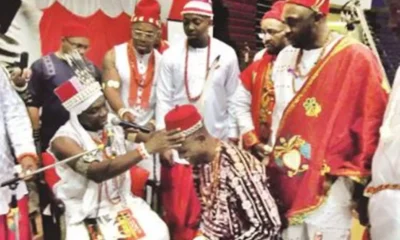
Egbe mkponani is also used during traditional title-taking events or other traditional recognition ceremonies. When someone receives a traditional title, the event is often marked with cannon gunshots. At these moments, it becomes a form of announcement that says a person has entered a respected position within society. It helps to communicate status without needing lengthy
During cultural festivals, egbe mkponani may be used to mark important stages of celebration. Festivals in Igbo land often involve gatherings, performances, and rituals that bring the community together. Cannon gunshots can signal the beginning of a major event, the arrival of key figures, or a shift from one stage of the celebration to another. Here, mkponani supports the rhythm of the festival. It helps to structure the flow of activities and keeps the community aware of what is happening.
Egbe mkponani is sometimes used outside ceremonies when something significant needs to be communicated quickly. In traditional settings, where there were no loudspeakers or digital systems, cannon gunshots served as a way to alert people that a major meeting is taking place, a respected individual has arrived, or a significant event has occurred that requires attention. This use ties directly to its role as a communication system. It ensures that important information reaches people across different parts of the community.
In some communities, egbe mkponani is used to acknowledge the presence of highly respected figures. When such individuals arrive, cannon gunshots may be fired to either show respect, signal their importance, or alert the community to their presence. This use is less about ceremony and more about recognition. It publicly marks the arrival of someone whose presence carries cultural or social weight.
Across all these settings, one pattern remains consistent – egbe mkponani is used when the event is important; the community needs to pay attention, or the moment carries cultural weight. It is not used casually or frequently. Its value lies in its selective use.
Understanding where egbe mkponani is used helps to clarify its deeper role in Igbo tradition. It is not simply sound added to ceremonies. It is part of how the community organizes attention, communicates meaning, and marks moments that matter in collective life.
Common Misconceptions About Egbe Mkponani
When people first encounter egbe mkponani, especially outside Igbo communities, it is easy for misunderstandings to form. The sound is loud, unfamiliar, and often heard in emotionally charged moments like funerals or major ceremonies. Without cultural context, assumptions can quickly replace meaning. But the meaning is not what many people think at first glance.
One of the most common misunderstandings is that egbe mkponani is just noise or entertainment. Mkponani is not random noise and it is not meant for entertainment. It is a structured cultural signal used to communicate important information. In traditional Igbo society, sound is a language system, and mkponani is part of that system. Each use has purpose. It announces, it alerts, and it honours. Nothing about it is accidental.
Some people assume that mkponani is only a festive sound, but that is not accurate. It is used in both joyful and solemn contexts. While it may appear during festivals or title ceremonies, it is also commonly heard during funerals and burial rites. In those cases, the tone of the moment is serious, not celebratory. So, its meaning depends entirely on context, not mood.
Because it involves cannon gunshots, egbe mkponani is sometimes wrongly associated with violence. In cultural practice, however, the sound is symbolic. It is not intended to harm or threaten. It functions as a communication tool and a ceremonial marker. Its purpose is social and cultural, not violent. The sound carries meaning through tradition, not aggression.
Another misconception is that mkponani is simply a habit or leftover practice without structure. In reality, it belongs to a broader Igbo communication system where sound carries coded meaning. Alongside instruments like the ikoro and ogene, mkponani fits into a traditional framework used to communicate events, mark transitions, and draw community attention. It is part of an organized cultural logic, not an informal act.
One other misunderstanding is the ege mkponani means the same thing everywhere. But then, Igbo culture is not uniform across all communities. While mkponani is widely understood as a form of announcement or ceremonial sound, the exact usage can differ from place to place. The number of gunshots, timing, and context may vary, depending on local customs. This means that mkponani is consistent in purpose, but flexible in expression.
Some assume that because society has changed, mkponani has lost its significance. While modernization has affected how and where it is used, the meaning has not disappeared. In many communities, it is still used during funerals, cultural festivals, and traditional ceremonies. Its role as a marker of important events remains intact. What has changed is not the meaning but the environment in which it is practiced.
These misconceptions around egbe mkponani usually come from viewing it without cultural context. Once you understand its place in Igbo tradition, the picture becomes clearer. It is not random sound, not violence, and not empty ceremony. It is a structured cultural signal that carries meaning about respect, transition, and community awareness.
Egbe Mkponani in Modern Igbo Society

In today’s Igbo communities, mkponani still exists, though it now sits between tradition and modern life. Cities have grown, laws have changed, and public spaces are more regulated. Yet, in many cultural settings, the sound of cannon gunshots has not disappeared. What has changed is how and when it is used.
Understanding the meaning in modern society means looking at how tradition adapts without losing its core identity.
Even with urbanization and modern communication tools, egbe mkponani remains present in key cultural moments. It is still used in traditional funerals, title-taking ceremonies, cultural festivals, and visits or arrivals of dignitaries in some communities,
In these settings, mkponani continues to serve its original purpose, that is announcing important events and giving them cultural weight. What has changed is that it is now more carefully managed, often used only in specific, recognized traditional contexts.
In urban areas, especially cities, the use of cannon gunshots has become more controlled. This is due to noise regulations, safety or health concerns, or dense population environments. As a result, some communities have reduced or modified its use, while others limit it to designated cultural spaces or approved events. This shift does not erase egbe mkponani. Instead, it changes its visibility and frequency in modern life.
One of the strongest reasons mkponani still exists is identity. For many Igbo people, especially in diaspora communities, traditional practices like mkponani represent a connection to heritage. It reminds people that culture is not only in language or dress, it is also in rituals and shared experiences.
Even the younger generations who may not fully understand every detail often recognize egbe mkponani as part of “what makes a traditional Igbo event feel complete.”
Modern Igbo society continues to negotiate between preservation and adaptation. On one hand, there is respect for cultural heritage, and there is desire to maintain traditional practices. On the other hand, there are safety and legal considerations, plus changing lifestyle in urban spaces.
Egbe mkponani exists in this balance. It is not abandoned, but it is also not used without consideration.
Despite all changes, mkponani continues because it still serves a purpose that modern tools do not fully replace. It communicates importance instantly. It marks cultural moments with clarity. It connects present events to ancestral tradition. And it creates shared attention in a community setting. In other words, it still works within the cultural logic that gave it meaning in the first place.
Ultimately, mkponani in modern Igbo society is not the same as it was generations ago, but it has not lost its identity. It has adapted to new environments while keeping its core function intact. It still speaks, even in a world that now has new ways of communicating.
Why Egbe Mkponani is Still Important Today
In a world where messages travel instantly through phones, loudspeakers, and social media, it may seem like mkponani belongs to another time. Yet, in many Igbo communities, the sound of cannon gunshots is still heard at key cultural moments. It has not disappeared, and that is not random. To understand the meaning of mkponani today is to understand why some traditions survive, even when modern alternatives exist.
Mkponani carries memory in a way that is not written but lived. Each time it is used in a funeral, festival, or title ceremony, it connects present events to older traditions. It reminds people that they are part of a long cultural line where meaning is passed not only through stories but also through practice.
Even for the younger people, hearing the sound of mkponani often signals that something “traditional” is taking place. That recognition alone keeps cultural memory active.
Modern communication is fast. But then, not everything important needs explanation. Cannon gunshot does something different. It does not describe the event. It announces it. A single cannon blast can tell a whole community that something significant has happened. Whether it is a burial, a title ceremony, or a major gathering, the sound creates immediate awareness without needing interpretation. This simplicity is part of its strength.
One of the most powerful roles of egbe mkponani is how it brings people into the same moment. When the sound is heard, people pause. Even those not directly involved become aware that something is happening within the community. This shared awareness creates a sense of collective experience. In traditional Igbo life, where community is central, this shared moment matters. It turns individual events into something everyone recognizes together.
In many settings, mkponani is not just an addition to the ceremony. It is part of what gives the ceremony its full identity. Without it, some traditional events can feel incomplete to those familiar with the culture. The sound signals that the event is not ordinary. It marks it as something that deserves attention, respect, and recognition. This is why it continues to appear in important cultural gatherings.
Modern life in Igbo communities has changed in many ways. Cities are busier, communication is digital, and lifestyles are different from the past. Yet, mkponani still appears in specific traditional settings. Its survival shows that culture does not disappear easily. Instead, it adapts while keeping certain core practices alive. Mkponani is one of those practices that continues because it still serves a clear cultural role.
For many people, especially those in the diaspora or living away from their ancestral communities, egbe mkponani is part of what makes Igbo culture recognizable. It is tied to identity, not just tradition. Hearing it often brings a sense of belonging to something larger than the immediate moment. It reminds people that culture is not only spoken or written. It is also experienced through sound, ritual, and shared understanding.
Egbe mkponani is still important in Igbo tradition today because it does what modern tools cannot fully replace. It announces with weight, gathers attention without confusion, and ties present moments to cultural history. It is not just a sound that continues to exist. It is a practice that continues to mean something.
Conclusion …
At the end of it all, egbe mkponani is not difficult to hear but it is easy to misunderstand, if you take it at face value. A loud cannon blast can feel like interruption, especially to someone outside the culture. But within Igbo tradition, it carries a level of meaning that cannot be captured by silence or speech alone.
It announces moments that matter. It marks transitions that the community is expected to recognize. It calls attention to lives, events, and ceremonies that are not meant to pass quietly. In doing so, it becomes more than a ritual sound. It becomes a way of speaking without words.
Across generations, mkponani has remained part of how Igbo communities communicate importance. Even as society changes, its role in funerals, title ceremonies, and cultural gatherings continues to hold weight. Not because it is loud, but because it is understood. And that is what makes it a cultural language.
References
- https://igbozuru.com/culture-traditions/cannon-shots-egbe-mkpo-nala-igbo-communication-system-that-conveys-and-reverberates/
- https://dibianwangwuuchendu.com/2025/10/24/the-echo-of-gunpowder-in-odinani-igbo-spirituality/
You may want to check this out …