






Igbo Economic Development
Beyond Agitation: Practical Paths to Igbo Economic Power and Self-Realization

Igbo economic power is growing through enterprise, community systems, and a renewed focus on investing back home. Discover practical ways Igbo people, especially those outside the region, can drive real development and lasting prosperity.
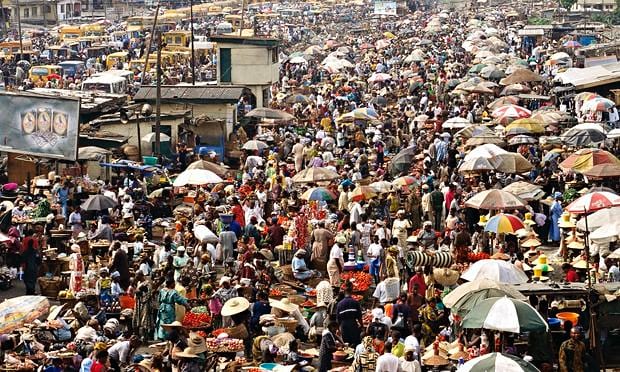
If you have ever spent a few minutes in any major market in Nigeria, you would have noticed something beyond the surface. Maybe a young apprentice learning the ropes. A trader expanding into a second shop. A business owner sending goods across states before noon. These are everyday scenes, but together they tell a bigger story. This is Igbo economic power in operation.
For years, conversations have centered on politics and agitation. Yet, on the ground, Igbo economic power has been growing in a different way. Quietly. Consistently. Through enterprise, relationships, and systems that work. From Onitsha to Aba, from Nnewi to cities far outside the Southeast, Igbo people have built strong economic networks that continue to expand.
But there is a shift worth paying attention to. More people are beginning to ask a simple question. What happens when this same energy is directed back home?
History gives context. After the Nigerian Civil War, many Igbo families had to start again from almost nothing. What followed was not waiting for perfect conditions. It was action. Trade returned. Skills were passed down. Communities organized themselves. Over time, that effort rebuilt lives and laid the foundation for today’s Igbo economic power.
Now the foundation is already in place. The opportunity is not just to grow individually but to build collectively with intention. Not only in major cities, but in hometowns. Not only for today, but for the long term.
This article looks at Igbo economic power as a working system and, more importantly, as a call to action. A practical look at how everyday decisions, especially by those living outside the region, can drive real development back home and create lasting economic strength where it matters most.
Understanding Igbo Economic Power in Today’s Nigeria
To understand Igbo economic power, you have to move past headlines and look at everyday activity. It shows up in small shops that grow into distribution businesses. It appears in traders who connect suppliers and buyers across states. It lives in the steady flow of goods, money, and relationships that keep markets alive.
This is not abstract. Igbo economic power is practical and visible.
Across Nigeria, Igbo entrepreneurs are deeply involved in trade, manufacturing, transport, and services. Many operate within the small and medium enterprise space which plays a major role in the country’s economy. You will find them in major cities, and also in smaller towns where commerce is just as active, even if less visible.
What makes Igbo economic power stand out is how it is built. It is not driven mainly by large institutions or government systems. It grows from individual effort, supported by community networks and shared knowledge. People learn, start small, expand gradually, and often bring others along in the process.
There is also a pattern of movement. Over the years, many Igbo business owners have established themselves outside the Southeast, building strong economic footprints in places like Lagos and Abuja. This has created wealth and influence, but it has also spread Igbo economic power across different regions, instead of concentrating it at home. That is where a new layer of understanding becomes important.
If Igbo economic power is already strong, the next question is how it can be directed more intentionally. How can existing networks, skills, and capital be used not just to grow individually but to strengthen the region collectively? The answer begins with awareness. Recognizing that this economic strength already exists is the first step. The next step is deciding where and how it is applied. Because in the end, Igbo economic power is not just about activity. It is about direction.
Entrepreneurship as the Foundation of Igbo Economic Power
At the heart of Igbo economic power is something very simple, yet deeply powerful – entrepreneurship. It is not just about owning a business. It is about a mindset that sees opportunity where others see limitation. It is the habit of starting small, learning quickly, and expanding steadily. In many Igbo communities, this approach to life and work is not unusual. It is normal.
Walk through major markets like Onitsha, Nnewi or Aba, and you will see how Igbo economic power takes shape in real time. A single shop can grow into a supply chain. A spare parts dealer can become a distributor. A small trading activity can develop into a cross-state or even international business. These are not isolated stories. They are part of a broader system of enterprise.
What stands out is how this entrepreneurial culture is passed on. Many young people are introduced early to buying and selling, negotiation, and customer relationships. Over time, they learn how money moves, how trust is built, and how businesses survive in competitive environments. This practical exposure becomes the foundation of Igbo economic power.
Research and economic observations across Nigeria consistently show that small and medium enterprises are a major driver of growth, and Igbo entrepreneurs play a significant role in this space. But beyond the statistics, what matters more is the consistency. The steady presence of Igbo-owned businesses across different sectors and locations shows a pattern of resilience and adaptability. However, there is another layer to this story.
Much of this entrepreneurial strength is spread across cities outside the Southeast. It has created wealth and influence in many places, but it has also scattered potential that could be more strategically concentrated. This is where Igbo economic power can move to a new level, not by changing the culture of entrepreneurship, but by directing it with more intention.
When entrepreneurship is combined with long-term planning and a stronger focus on building back home, it becomes more than individual success. It becomes regional development. That is why entrepreneurship is not just part of the story of Igbo economic power. It is the foundation it stands on.
The Igbo Apprenticeship System as a Tool for Expansion

One of the strongest drivers of Igbo economic power is not found in formal classrooms or government programmes. It is found in markets, workshops, and small business spaces where knowledge is passed from one person to another. This is the Igbo Apprenticeship System, widely known as Igba Boi.
Basically, the system is simple. A young person learns a trade under an established business owner. Over a period of years, they gain practical experience in buying, selling, customer relations, supply chains, and financial discipline. When the training period is completed, many are supported to start their own businesses. In some cases, they are given capital, goods, or both. This system has quietly produced thousands of entrepreneurs and continues to play a major role in strengthening Igbo economic power across Nigeria.
What makes it unique is how it combines learning with opportunity. It is not just about acquiring skills. It is about creating a pathway into business ownership. This cycle of training and transition has helped to sustain a continuous flow of new business owners in Igbo markets for decades.
Studies on informal economic systems in Nigeria have recognized the apprenticeship model as a significant contributor to entrepreneurship development and job creation, especially in southeastern Nigeria. It functions as a practical, community-based approach to economic growth, even without formal structures. But beyond its success, there is an important conversation emerging.
Much of the businesses created through this system are concentrated in major commercial cities. While this has strengthened urban markets, it has also contributed to the spread of Igbo economic power away from the region of origin. This is where expansion becomes a new opportunity.
If more apprentices are intentionally encouraged and supported to establish businesses in the southeast, the system can go beyond personal success. It can become a tool for regional development. Shops can become local industries. Trading hubs can develop in smaller communities. Economic activity can grow closer to where people come from.
In this sense, the Igbo Apprenticeship System is not just a tradition. It is a living structure that can be directed toward broader impact. And when combined with intentional investment back home, it becomes one of the most powerful engines for expanding Igbo economic power in a sustainable way.
Community Networks as Platforms for Collective Action
One of the less talked about but deeply important pillars of Igbo economic power is the strength of community networks. Long before modern institutions became common, Igbo communities already had systems for organizing, contributing, and solving problems together. These systems still exist today, and they continue to influence how economic life works.
Town unions, age grades, village meetings, and community associations all play a role in this structure. They are not just social gatherings. They are working platforms where decisions are made, funds are raised, and development projects are coordinated. Through these networks, communities have built schools, roads, markets, and other essential infrastructure with little or no dependence on external support.
This collective approach is one of the reasons Igbo economic power remains resilient. It creates a sense of shared responsibility. When one person succeeds, others are often indirectly supported. When a community project is needed, contributions are mobilized across families, businesses, and even those living outside the region.
For many Igbo people in the diaspora or in major cities, these networks remain active points of connection. They provide a structured way to stay involved in hometown development, even from a distance. Contributions are often pooled for specific goals, such as building classrooms, supporting health centres, or improving local infrastructure.
What makes this system powerful is trust. People contribute because they believe their input will lead to visible results. Over time, this trust strengthens cooperation and keeps the cycle of contribution active. It becomes easier to organize, easier to fund projects, and easier to maintain progress.
In the context of Igbo economic power, these community networks serve as informal institutions. They fill gaps where formal systems may be slow or limited. More importantly, they create a foundation for collective action that goes beyond individual effort. However, there is still room for growth.
If these networks are connected more intentionally to economic planning, not just social or infrastructural projects, they can become even more powerful. For example, they can support local businesses, encourage investment in hometown enterprises, and help coordinate skills development programmes. When community networks are used not only for building physical structures but also for building economic systems, Igbo economic power becomes more structured and more sustainable.
In simple terms, these networks already exist. The opportunity now is to use them more strategically, especially in ways that bring long-term development closer to home.
Thinking Home – A Practical Strategy for Real Growth
One of the most important shifts needed in strengthening Igbo economic power is a simple mindset change – thinking home.
It is not a slogan. It is a decision pattern. It means consciously considering your hometown as a place where value can be built, not just a place you visit during holidays or retire to later in life. It means asking a practical question before every major investment: Can this create impact back home?
For many years, a large portion of Igbo economic activity has been concentrated in major cities like Lagos, Abuja, and Port Harcourt, as well as in international markets. This outward movement has produced success, visibility, and financial stability for individuals and families. That success is real and important. But it has also meant that many hometowns remain underdeveloped compared to the level of economic activity their people generate elsewhere.
This is where thinking home becomes a strategic approach to Igbo economic power. It begins with small but intentional decisions – choosing to invest in land or property in your locality; setting up small production units or service businesses in local communities; supporting local schools, skills centres, or healthcare initiatives, and partnering with trusted community members to start home-based projects. Over time, these decisions shift where development happens.
Instead of all opportunities clustering in already crowded cities, they begin to spread. Local economies become more active. Young people find reasons to stay or return. Businesses start to grow closer to where people originally come from.
There are already examples that show what is possible. Towns like Nnewi have developed strong industrial identities driven largely by local enterprise. Aba continues to function as a major production and trade hub supported by grassroots manufacturing and commerce. These are not accidents. They are the result of sustained local investment and entrepreneurial activity.
The idea of thinking home does not require abandoning success in other places. It simply adds direction to it. A business owner in Lagos can still invest in a workshop in their hometown. A professional abroad can still support a local training centre A trader in another state can still open a branch in their community of origin.
This is how Igbo economic power can become more balanced and sustainable. When economic strength is not only exported but also reinvested locally, the region begins to grow in a more structured way.
There is also a wider impact. When people invest at home, jobs are created locally, families stay more connected, migration pressure on cities reduces, and communities become more self-reliant. It also changes how development is experienced. Instead of waiting for external intervention, communities begin to take ownership of their progress.
In practical terms, thinking home is not about sentiment. It is about strategy. It is about recognizing that long-term Igbo economic power will be stronger when development is both outward and inward at the same time.
The real question is not whether people can succeed outside their communities. That has already been proven. The real question is how much stronger the system becomes when that same success is deliberately brought back home.
Education and Skills as Long-Term Investment

A strong part of Igbo economic power is not only what people build with money but also what they build with knowledge. Across generations, education and practical skills have remained one of the most reliable ways Igbo families invest in the future.
This investment takes different forms. For some, it is formal education in schools and universities. For others, it is hands-on training in trades, business, and technical work. In many cases, it is a combination of both. What matters is not the form alone but also the outcome – the ability to think, solve problems, and create value.
The Igbo apprenticeship system already plays a quiet but powerful role in this space. It is a form of real-world education where learning happens through experience. A young person does not only hear about business. They see it, practice it, and eventually manage it. This kind of learning builds confidence and independence which are essential ingredients of Igbo economic power.
At the same time, formal education has expanded opportunities beyond traditional markets. Today, many Igbo professionals are active in fields like technology, medicine, engineering, law, and finance. This mix of professional knowledge and entrepreneurial skill has widened the scope of economic influence both within Nigeria and globally.
But there is another layer that is becoming increasingly important, and that is digital and modern skills. As the world changes, new opportunities are emerging in areas like digital marketing, software development, remote services, e-commerce, and data and information management.
These skills allow individuals not only to work in global systems but also to bring value back to local communities. For Igbo economic power, this creates a new bridge between global exposure and local impact.
The key challenge, however, is direction. Skills alone are not enough if they are not applied intentionally. This is where the idea of thinking home connects strongly with education. When people use their knowledge to build solutions that also benefit their communities, the impact becomes deeper and more lasting.
For example, a software developer can create tools for local businesses. A teacher can build learning programmes for rural schools. A health professional can support community health awareness. A business graduate can help structure family enterprises. These are not large, dramatic actions. But over time, they strengthen the foundation of Igbo economic power in a very real way.
Education, when combined with skills and intentional application, becomes more than personal advancement. It becomes a shared resource. And when that resource is directed both outward and inward, it creates a cycle of growth that benefits individuals, families, and entire communities.
In simple terms, the more knowledge is applied with purpose, the stronger Igbo economic power becomes across generations.
The Role of the Diaspora in Expanding Igbo Economic Power
A major but sometimes under-discussed pillar of Igbo economic power is the diaspora. Igbo people living outside their home region, and often outside Nigeria have become an important part of how wealth, ideas, and opportunities circulate back home.
This influence is not new. Over the years, many Igbo professionals, traders, and entrepreneurs have built lives in cities across Africa, Europe, and the Americas. In these places, they have gained access to new skills, systems, and business environments. But what makes the diaspora especially important in the story of Igbo economic power is not just where they live, it is how they remain connected to where they come from.
One of the clearest channels of this connection is financial support. Remittances sent home help families pay school fees, start small businesses, build houses, and manage emergencies. These individual contributions, when viewed collectively form a steady flow of capital that supports local economies. But the role of the diaspora goes beyond money.
Many people outside the region also bring back knowledge. They are exposed to different ways of working, different business structures, and more organized systems. When this experience is shared back home, it introduces new ways of thinking about efficiency, scale, and sustainability. This is where Igbo economic power begins to expand beyond informal activity into more structured development.
There is also growing interest in investment. Some diaspora members are now involved in setting up businesses, property development, and small industries in their communities of origin. Others contribute by partnering with local entrepreneurs or supporting existing family businesses. These actions help to bridge the gap between global exposure and local opportunity.
Another important aspect is networking. Diaspora communities often form associations and groups that provide support systems for their members. These same networks can be used to connect local businesses with international markets, suppliers, and investors. In practical terms, this means that a trader or manufacturer in the Southeast can gain access to opportunities that would otherwise be out of reach.
However, the impact of the diaspora is not automatic. It depends on direction and structure. Without coordination, efforts can remain individual and scattered. But when there is intentional focus, even small contributions can create larger outcomes. This is where the idea of thinking home becomes important again. When people in the diaspora make a conscious decision to not only support their families but also invest in systems, businesses, and infrastructure, the effect on Igbo economic power becomes more long-term and sustainable.
There is also an emotional layer to this connection. Many people in the diaspora still maintain strong cultural ties to their hometowns. This sense of identity often drives a desire to contribute, even from a distance. When this emotional connection is combined with structured opportunities for investment, the result is stronger community development.
In simple terms, the diaspora represents both a resource and a bridge. A resource because of the capital and knowledge it brings. A bridge because it connects local communities to global systems. When properly aligned with local efforts, the diaspora can significantly expand Igbo economic power, not just through individual success stories but through coordinated development that reaches back home in meaningful ways.
Building Sustainable Systems
A big part of Igbo economic power today comes from hustle. That word is often used to describe resilience, speed, and the ability to make things work in difficult conditions. And in many ways, it is true. Igbo entrepreneurs are known for adapting quickly, finding opportunities, and building businesses from very little. But as the scale of activity grows, hustle alone is no longer enough.
What is emerging now is the need to move from hustle to structure. In other words, shifting from effort that depends mainly on individual strength to systems that can survive, grow, and scale over time. Right now, many businesses operate informally. Records may be stored in notebooks or memory. Processes are often passed verbally. Decisions depend heavily on the owner. While this works in the early stages, it becomes limiting as businesses expand. Structure changes that.
Structure means clear records of income and expenses, defined roles and responsibilities, repeatable business processes, proper documentation for growth and accountability, and use of digital tools to manage operations. When these elements are in place, a business becomes less dependent on constant physical presence and more capable of scaling beyond one location or one individual. This shift is not about removing the entrepreneurial spirit that drives Igbo economic power. It is about strengthening it. Hustle creates momentum. Structure sustains it.
There is also a broader benefit. Structured systems make it easier for businesses to access funding, attract partners, and expand into new markets. Investors and institutions are more likely to engage when there is clarity and organization. This opens doors that informal systems often struggle to reach.
Another important point is continuity. Many small businesses struggle to survive beyond the founder because systems are not documented. With structure in place, businesses can outlive individuals and even become generational assets. This is a key step in strengthening long-term Igbo economic power.
The shift from hustle to structure also connects directly to the idea of thinking home. When people begin to invest in organized systems back home, it becomes easier to build sustainable economic activity in local communities. Structured businesses can create jobs, train workers, and operate more efficiently in towns and rural areas.
For example, a structured farm enterprise can supply food consistently to local markets. A properly managed manufacturing unit can create stable employment in a hometown. A documented training system can produce skilled workers at scale. These outcomes are difficult to achieve through hustle alone. However, they become realistic when systems are in place. The goal is not to replace the energy that drives Igbo economic power, it is to channel it into something more lasting. Hustle opens doors. Structure keeps them open.
And when both work together, the result is not just activity, it is sustainable growth that can support individuals, families, and entire communities for generations.
Common Misconceptions That Hold Progress Back
Every strong system has stories people tell about it, and Igbo economic power is no different. Over time, certain ideas have spread that sound convincing on the surface, but do not fully match reality. These misconceptions can quietly influence decisions, slow down investment, and limit how far progress can go, if they are not addressed honestly.
One of the most common assumptions is that success is only possible in big cities. Many people believe that real business growth must happen in places like Lagos, Abuja, or other major commercial hubs. While these cities do offer opportunities, this idea has unintentionally reduced attention on local development. It has encouraged the concentration of Igbo economic power outside the Southeast, instead of balancing it with growth at home.
Another belief is that opportunities back home are limited. This is not entirely accurate. In many communities, there is land, labour, and a strong culture of cooperation. What is often missing is structured investment and consistent attention. When people begin to engage intentionally, opportunities start to appear in agriculture, manufacturing, education, real estate, and local services. The issue is not absence. It is direction.
There is also the idea that one person cannot make a meaningful difference. This belief is understandable, especially when challenges seem large. But history shows that many economic systems grow from small, consistent actions repeated by individuals over time. In the case of Igbo economic power, many successful businesses and community projects started with modest beginnings supported by family, apprentices, or local networks.
Another misconception is that progress depends mainly on government intervention. While government policies can support development, much of Igbo economic power has historically grown through private effort, entrepreneurship, and community-driven systems. Markets, apprenticeship structures, and town unions have played a major role in building economic activity, often with limited external support.
There is also a subtle misunderstanding that economic strength is only about individual success. In reality, Igbo economic power becomes stronger when it is shared, multiplied, and reinvested. A single successful business is important but a network of businesses connected to local communities creates broader and more lasting impact.
These misconceptions matter because they influence action. If people believe opportunities are only elsewhere, they may overlook possibilities at home. If they think systems are too weak, they may not engage in building them. If they assume change is too big for individuals, they may not start at all.
Correcting these ideas does not require complex theories. It simply requires looking closely at what already exists. Communities that invest consistently in their own development tend to grow. Businesses that start small but stay structured tend to expand. Networks that stay connected tend to create opportunities across locations.
In the end, strengthening Igbo economic power is not only about adding more effort. It is also about clearing away ideas that limit action. When perception becomes more aligned with reality, decisions become more intentional, and progress becomes easier to sustain.
Why This Matters Now More Than Ever
There is a reason conversations around Igbo economic power feel more urgent today than they did a few decades ago. The world has changed, and so have the rules of economic survival and growth. What used to take years of slow expansion can now happen faster, but only for those who are prepared, organized, and intentional.
Across Nigeria and beyond, economic pressure is increasing. Costs are rising, competition is stronger, and opportunities are no longer tied to location alone. In this kind of environment, scattered effort is not enough. What works better is coordination, structure, and a clear sense of direction. This is exactly where Igbo economic power becomes relevant, not as a concept but as a practical advantage.
There is also a generational shift happening. Younger Igbo people are growing up in a very different world from the one that shaped earlier business systems. Technology, digital work, and global exposure have opened new doors. At the same time, traditional systems like trade, apprenticeship, and community networks are still active. The question now is how to connect both worlds in a way that strengthens Igbo economic power, instead of scattering it.
Another reason this moment matters is the way resources are distributed. Many Igbo entrepreneurs have built successful lives in major cities and outside Nigeria. That success is important. But it has also created a pattern where economic activity is strong individually but less concentrated in the region of origin. This is where intentional decisions about investment and development become critical.
When people begin to think home in practical terms, money does not only circulate in cities far away. Skills are not only applied elsewhere. Networks begin to reconnect with their roots. Over time, this can lead to more balanced development and stronger local economies.
There is also a global context to consider. Many regions around the world that have achieved long-term stability did so by building strong local economies supported by their diaspora, education systems, and entrepreneurial culture. These are not abstract ideas. They are working models that show how economic power grows when systems are aligned and sustained over time.
For Igbo economic power, the timing is important because the tools already exist. There is entrepreneurship, a strong diaspora, active community networks, and a long-standing culture of trade and skill development. What is needed now is more alignment between these elements. Not more effort in isolation, but more coordination in purpose.
This is also a moment for reflection on direction. It is no longer just about individual success stories which are already many. It is about how those successes connect to something larger. How they contribute to towns, communities, and the region as a whole.
In simple terms, this matters now more than ever because the conditions for transformation are already present. What remains is how intentionally they are used. And that decision will determine how far Igbo economic power can go in the years ahead.
Conclusion …
It is easy to talk about Igbo economic power. It is easier to analyze it, describe it, or even celebrate how far it has come. But the real question is what happens after the conversation ends. Because at this point, the foundation is already clear. The systems exist. The talent is widespread. The entrepreneurial drive is not in doubt. What now matters is direction, especially in how individual choices connect to collective impact.
Across cities, markets, and even across continents, many Igbo people are already successful in their own right. They are building businesses, supporting families, and creating value in different environments. That success is real and important. But the next stage of Igbo economic power depends on something deeper than individual achievement. It depends on intentional connection back home.
This is where small decisions begin to matter more than big discussions. Choosing to invest in a hometown project instead of only expanding elsewhere.
Supporting a local business or apprenticeship system.
Helping to structure a family or community enterprise.
Sharing skills in ways that strengthen others, not just self.
These actions may seem simple on their own but over time, they build something larger than any single effort can achieve. The idea of thinking home is not about location alone. It is about responsibility. It is about recognizing that growth becomes more meaningful when it also strengthens the places that shaped us. When that mindset becomes consistent, Igbo economic power stops being scattered potential and becomes coordinated progress.
There is no single moment that defines this shift. It happens quietly, through repeated choices. Through what is invested, where attention is directed, and how success is shared. In the end, the conversation around Igbo economic power is not meant to remain theoretical. It is meant to lead somewhere practical. Toward decisions that strengthen communities. Toward systems that last beyond individuals. Toward development that is not only visible in distant cities but also felt at home.
And that is where real change for Igboland begins.
References
- https://www.researchgate.net/publication/383687324_The_Role_of_the_Igbo_Apprenticeship_System_in_Entrepreneurship_Development_in_Nigeria
- https://www.researchgate.net/publication/377223645_ASSESSMENT_OF_THE_IGBO_APPRENTICESHIP_SYSTEM_IN_NIGERIA
- https://www.researchgate.net/publication/351228596_Small_and_Medium_Enterprises_and_Economic_Growth_in_Nigeria
- https://www.worldbank.org/en/topic/migrationremittancesdiasporaissues
- https://www.afdb.org/en/documents/nigeria-economic-outlook
- https://www.britannica.com/event/Nigerian-Civil-War
- https://www.bbc.co.uk/worldservice/africa/features/storyofafrica/12chapter4.shtml
You might want to check this out …