
Nigerian Political Figures
Olisa Metuh Biography: Early Life, Career, Remarkable Political Journey, Trial, and Life After Politics

Olisa Metuh biography explores the early life, legal career, political rise, EFCC trial, court rulings, and life after politics of the former PDP National Publicity Secretary.
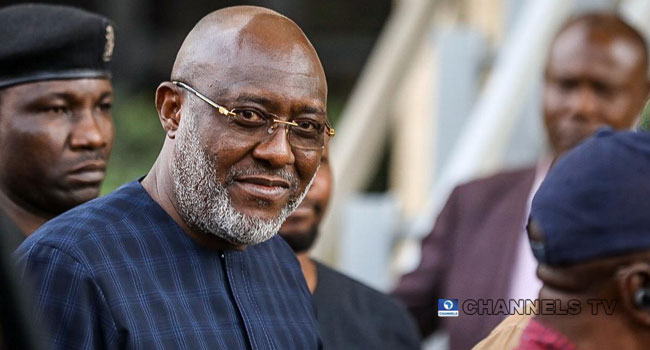
Olisa Metuh was once a familiar voice in Nigeria’s political space, especially during the years the People’s Democratic Party (PDP) dominated national conversations. As the party’s National Publicity Secretary, he stood at the centre of media battles, defending positions, responding to criticism, and influencing how the public understood key political developments at the time.
But his story did not remain only about politics and press briefings. It later took a difficult turn that placed him in the middle of one of Nigeria’s most talked-about corruption trials that drew attention from across the country and beyond.
This Olisa Metuh biography takes a clear and factual look at his early life, legal career, rise within the PDP, his time as a frontline political communicator, the EFCC case that changed the course of his public life, and what followed after the courtroom attention faded.
Olisa Metuh’s Early Life and Background
Olisa Metuh was born in Nnewi, Anambra State, in southeastern Nigeria, into a family that valued education, discipline, and public service. Growing up in this environment exposed him early to structure and responsibility, especially within the cultural setting of the Igbo society where hard work and achievement are highly regarded.
His early years were shaped by a steady focus on education. Like many children from his region, he began his schooling in Nigeria before progressing through the formal education system with a clear interest in academic excellence. The influence of his family background played a quiet but steady role in guiding his choices, especially as he moved closer to adulthood.
From a young age, Olisa Metuh showed an inclination toward structured thinking and communication. His upbringing in Nnewi, a town known for producing entrepreneurs, professionals, and public figures placed him in an environment where ambition and achievement were part of everyday life.
These early foundations helped to set the stage for his later path in law and public life where he would eventually move from legal practice into the national political spotlight.
Education
Olisa Metuh’s educational journey followed a clear academic path that eventually led him into the legal profession. He began and completed his primary and secondary schools before moving on to higher studies.
He later gained admission into the University of Nigeria, Nsukka (UNN) where he studied Law. His time at the university provided him with a strong foundation in legal reasoning, public policy awareness, and structured argumentation. Law training at UNN is known for its rigorous academic standards, and Olisa Metuh completed his studies successfully.
After earning his LLB degree, he proceeded to the Nigerian Law School where he underwent the professional training required for legal practice in Nigeria. He was subsequently called to the Nigerian Bar in 1988, officially qualifying him as a legal practitioner.
This academic background marked the beginning of his professional life in law and later supported his transition into politics where legal knowledge and communication skills became central to his public role.
Early Career in Law
After being called to the Nigerian Bar in 1988, Olisa Metuh began his legal career in a familiar setting. He initially worked within his family’s legal practice, Olisianunba Chambers during which he gained early exposure to client work and day-to-day legal processes. This stage of his career helped him to build practical experience beyond classroom training, especially in handling civil and commercial matters.
Over time, he expanded his professional scope and established his own legal firm, Metuh, Okafor & Associates and served as the managing solicitor. In this role, he was involved in legal advisory services covering areas such as corporate law, real estate transactions, and commercial disputes. The practice gave him room to develop both professional independence and a broader understanding of business and governance-related legal issues.
Alongside private legal practice, he also engaged in consultancy work and business-related advisory roles. These experiences gradually placed him in networks that extended beyond the legal field and into broader economic and public affairs circles.
This phase of his life was important because it marked the transition from a strictly legal career into a wider professional identity that combined law, business, and public engagement.
Political Journey
Olisa Metuh’s entry into politics was gradual rather than sudden. It began in the early 2000s, at a time Nigeria’s democratic institutions were still stabilizing after years of military rule. His background in law and public affairs naturally positioned him for involvement in political organization and party work.
He became active within the People’s Democratic Party (PDP), initially contributing through internal party activities, advisory roles, and participation in committees connected to party structure and elections. His work during this period was largely behind the scenes, as the focus was on coordination, communication, and party organization.
As Olisa Metuh became more established within the PDP, he rose through the party ranks and eventually served as the National Vice Chairman (South-East). In this position, he was involved in managing party affairs within the region, supporting mobilization efforts, and strengthening the party’s presence in the South-East political landscape.
His profile grew further in 2012 when he was appointed National Publicity Secretary of the PDP which was one of the most visible roles within the party. This position placed him at the centre of national political communication. He became responsible for issuing official party statements, addressing the media, responding to opposition criticism, and explaining party positions during key political moments.
During this period, Olisa Metuh became one of the most recognizable voices of the PDP. His regular appearances in interviews and press briefings made him a central figure in Nigeria’s political communication space, especially in the build-up to the 2015 general elections.
His tenure coincided with intense political competition, internal party disagreements, and a highly charged national election season, all of which placed him under constant public attention.
EFCC Trial and Legal Controversy

Olisa Metuh’s political career took a major turn in January 2016 when he was arrested by the Economic and Financial Crimes Commission (EFCC). The arrest came amid wider investigations into financial transactions linked to the Office of the National Security Adviser (ONSA) during the administration of former President Goodluck Jonathan.
He was accused of receiving ₦400 million which the EFCC alleged was part of funds moved without proper authorization or clear contractual basis. According to the prosecution, the money was linked to national security funds and was later traced to political activities.
Olisa Metuh, however, consistently denied any wrongdoing. He maintained that the funds were not used for personal enrichment and argued that the transactions were politically motivated and properly accounted for within party activities.
The case was filed at the Federal High Court in Abuja where he faced a seven-count charge bordering on money laundering and unlawful receipt of funds. The trial attracted widespread media attention due to his status as a former national spokesperson of a ruling political party.
During the proceedings, the EFCC presented witnesses and documentary evidence to support its claims while the defence challenged the prosecution’s interpretation of the financial records and intent behind the transactions. The case moved through several hearings over multiple years, making it one of the most closely followed political corruption trials in Nigeria at the time.
On February 25, 2020, the Federal High Court found Olisa Metuh guilty on some of the charges. He was sentenced to seven years in prison and ordered to make restitution to the federal government. The judgment stated that the court was convinced that the funds were improperly received and not supported by lawful justification under the circumstances presented during the trial.
Following the conviction, Olisa Metuh appealled the ruling. In December 2020, the Court of Appeal in Abuja overturned the conviction and ordered a retrial. The appellate court raised concerns about aspects of the trial process and the handling of certain legal issues during the initial judgment.
The EFCC subsequently indicated its intention to pursue further legal steps at the Supreme Court, thus keeping the case within Nigeria’s judicial system, even after the appeal decision.
This phase of Olisa Metuh’s life significantly shifted public attention from his political role to legal debates around corruption trials, due process, and accountability in Nigeria’s judicial system.
Life After Politics and Legal Battles
Olisa Metuh gradually stepped back from the public political stage. The combination of prolonged court processes, media attention, and personal challenges marked a clear shift in his public visibility.
During this period, he maintained a relatively low profile compared to his earlier years as one of the most visible spokespersons of the People’s Democratic Party (PDP). His appearances in the media became less frequent, and when he did speak publicly, it was often in relation to his trial or broader issues around justice and legal fairness in Nigeria.
Following his exit from party leadership roles, Olisa Metuh did not return to any major official position within the PDP or government structures. Instead, his focus appeared to shift away from active political communication toward personal recovery and reflection after years of public scrutiny and courtroom engagement.
His legal battles, especially the prolonged EFCC case and its appeal process, kept him in the news cycle for several years, even though he was no longer serving in a political office.
Occasionally, Olisa Metuh addressed the media to share his perspective on his experiences. These interviews often centered on his time in detention and the emotional and personal impact of the trial process. He described it as a difficult period that tested him deeply, both personally and professionally.
At the same time, his case continued to attract public discussion in Nigeria, especially in conversations about political accountability, corruption prosecutions, and the fairness of judicial processes in high-profile cases.
Today, Olisa Metuh remains a recognizable figure in Nigeria’s political history. His name is often associated with the PDP’s communication era between 2012 and 2015, as well as one of the most widely reported political corruption trials of that period.
For some observers, he represents a former political communicator caught in the turbulence of Nigeria’s anti-corruption efforts. For others, his case continues to raise questions about legal processes and political interpretation of financial transactions.
Either way, his journey remains part of the broader story of Nigeria’s democratic and political evolution in the Fourth Republic.
Public Image and Legacy
Olisa Metuh occupies a complex place in Nigeria’s political history. His public image is shaped by two very different phases of his life. On one side is his time as a prominent political communicator for the People’s Democratic Party (PDP). On the other is his long legal battle with the Economic and Financial Crimes Commission (EFCC) which drew national attention and shifted how many people view his career.
During his years as National Publicity Secretary of the PDP, Olisa Metuh was widely seen as one of the party’s most vocal and visible spokespersons. He frequently appeared on television, radio, and in newspapers defending party positions and responding to political opposition.
In this period, he built a reputation as a confident communicator who understood political messaging and media engagement. His role placed him at the centre of national political conversations, especially during election seasons and moments of political tension.
His arrest and prosecution by the EFCC in 2016 marked a turning point in public perception of him. The trial became one of the most widely reported political corruption cases in Nigeria at the time, and it significantly altered how his name was discussed in public discourse.
For many Nigerians, his case became part of a broader debate about corruption, political funding, and accountability in public office. The legal process, including the conviction and later appeal decision, kept his name in the public space long after he left active politics.
Olisa Metuh’s legacy is often viewed through two lenses. First, as a political communicator, he played a key role in shaping how the PDP presented itself during a critical period in Nigeria’s democratic development. His visibility helped to define the party’s public messaging style during the early 2010s.
Second, his legal case placed him among several high-profile political figures whose trials became part of Nigeria’s modern anti-corruption narrative. The discussions around his case continue to appear in conversations about judicial fairness, political accountability, and the handling of financial allegations involving public figures.
Olisa Metuh’s story remains a reminder of how closely politics and law can intersect in Nigeria’s public life. His journey reflects both influence and controversy, and it continues to be referenced in discussions about political communication, governance, and the legal system.
While opinions about him differ, his name remains part of Nigeria’s contemporary political record, particularly in relation to the PDP era and the EFCC prosecution period.
Personal Life
Olisa Metuh is known to keep much of his personal and family life away from constant public attention, especially in comparison to his high-profile political years. While his professional and legal journey has been widely reported, details about his private life remain limited in public records.
He is married and has children, but he rarely discusses his family in media interviews. This reserved approach became more noticeable after his years in active politics and during the period of his legal trial when public scrutiny was at its highest.
Outside politics and law, he has largely maintained a low-key lifestyle. Public appearances have mostly been linked to formal events, legal matters, or occasional media engagements where he speaks on national issues or his personal experiences during his trial.
Despite the challenges he faced in public life, he remains a figure whose name continues to appear in discussions about Nigeria’s political history, especially within the context of the People’s Democratic Party (PDP) and the legal controversies that followed his time in office.
Key Facts About Olisa Metuh
- Full Name: Olisa Metuh
- Place of Origin: Nnewi, Anambra State, Nigeria
- Profession: Lawyer and Politician
- Education: Bachelor of Laws (LLB), University of Nigeria, Nsukka; called to the Nigerian Bar in 1988
- Legal Practice: Worked in private legal practice, including Olisianunba Chambers and Metuh, Okafor & Associates
- Political Party: Peoples Democratic Party (PDP)
- Major Political Role: National Publicity Secretary of the PDP (2012–2015)
- Known for: Public communication role in PDP and involvement in a high-profile EFCC corruption trial
- EFCC Case: Faced charges relating to alleged ₦400 million transaction linked to Office of the National Security Adviser funds
- Trial Outcome: Convicted in 2020 at the Federal High Court; conviction later overturned on appeal in 2020, with order for retrial
- Public Profile: One of the most visible PDP spokespersons during the early 2010s political period in Nigeria
Conclusion …
Olisa Metuh’s story is one that moves through law, politics, public communication, and the legal system in Nigeria. From his early days as a trained lawyer to his rise as one of the most visible voices of the People’s Democratic Party (PDP), his journey placed him at the centre of national political conversation during a defining period in Nigeria’s democratic history.
His time as National Publicity Secretary made him a familiar figure in the media, especially during politically sensitive moments when party communication carried national attention. That phase of his life reflected influence, visibility, and active participation in shaping how political messages were presented to the public.
However, his story also took a significant turn with the EFCC trial which brought legal scrutiny, courtroom proceedings, and widespread public debate. The case, its conviction, and later appeal added a complex layer to his public image and ensured that his name remained part of ongoing discussions about governance, accountability, and justice in Nigeria.
Today, Olisa Metuh remains a notable figure in Nigeria’s political memory. His story continues to appear in conversations about political communication, legal accountability, and the realities of public service in a democratic system where power, law, and public perception often intersect in unexpected ways.
References
- Wikipedia contributors. (n.d.). Olisa Metuh. Wikipedia. https://en.wikipedia.org/wiki/Olisa_Metuh
- Information Nigeria. (2016, January). Alleged N400m fraud: EFCC files 7-count charge against Metuh. https://www.informationng.com/2016/01/alleged-n400m-fraud-efcc-files-7-count-charge-against-metuh.html
- Premium Times. (2015). EFCC arrests PDP spokesman Olisa Metuh. https://www.premiumtimesng.com/news/headlines/178341-efcc-arrests-pdp-spokesman-olisa-metuh.html
- The Guardian Nigeria. (2020). Court finds Olisa Metuh guilty of N400m fraud. https://guardian.ng/news/court-finds-olisa-metuh-guilty-of-n400m-fraud/
- Economic and Financial Crimes Commission. (2020). Court jails Metuh for N400m ONSA fraud, to refund N425m to FG. https://www.efcc.gov.ng/efcc/news-and-information/news-release/5513-court-jails-metuh-for-n400m-onsa-fraud-to-refund-n425m-to-fg
- Punch Newspapers. (2020). Appeal court overturns Metuh conviction, orders retrial. https://punchng.com/appeal-court-overturns-metuh-conviction-orders-retrial/
- Channels Television. (2020, December 19). EFCC to appeal judgment nullifying Metuh’s conviction at Supreme Court. https://www.channelstv.com/2020/12/19/efcc-to-appeal-judgement-nullifying-metuhs-conviction-at-supreme-court/
You might want to check this out …