






Economy
Nnewi: The Home of Auto Parts Manufacturing in Nigeria

Nnewi: The Home of Auto Parts Manufacturing in Nigeria. Here’s a detailed look at how a bustling southeastern town built a vast auto parts industry, the markets and people behind it, its challenges, and what the future could hold.

IVM Vehicles
Introduction
Nnewi: The Home of Auto Parts Manufacturing in Nigeria sits in the southeastern region of the country and hums with industry on a daily basis. In Nnewi, you will hear welding sparks, grinding machines and the steady rhythm of hands shaping metal and plastic into parts that keep vehicles moving across Nigeria and beyond.
This town grew from a network of traders and repairers into a dense cluster of workshops, factories and markets, and today, supplies a huge share of Nigeria’s spare parts needs.
What makes Nnewi stand out is its combination of skill, trade networks and local creativity. Small workshops sit side by side with larger manufacturers. Apprentices learn at the bench and then start their own shops.
Markets in Nnewi act as distribution hubs where wholesalers and buyers from other States and neighbouring countries come to source parts. Together, these strengths explain why many people rightly call Nnewi the home of auto parts manufacturing in Nigeria.
As Nigeria works to build more local industry, the story of Nnewi offers practical lessons. It shows how local knowledge, a culture of making, and strong market links can create a lasting manufacturing base.
This article explores how Nnewi became this centre, who the makers are, what they produce, the problems they face and the steps that could help the town grow even more.
Welcome to Nnewi: The Home of Auto Parts Manufacturing in Nigeria!
Come into Nnewi, and the first thing that greets you is the feel of industry. The sound of hard work and innovation blending in perfect rhythm. The air carries the faint scent of engine oil and hot metal, a reminder that this town is constantly at work.
From the time the sun rises to when it sets, workshops buzz with activity, and factories come alive with the clatter of tools, welding sparks, and the steady movement of goods.
This is not just another commercial town; this is Nnewi: the home of auto parts manufacturing in Nigeria. Every market stall and every workshop tells a story of people who turned their skills and determination into thriving businesses. Here, metal scraps become spare parts, plastic molds turn into motorcycle accessories, and ingenuity fuels the economy.
Traders and technicians work side by side, combining knowledge, apprenticeship and enterprise. Buyers come from across Nigeria and West Africa, from Lagos, Accra and Cotonou to source auto parts made right here in Nnewi. The town’s unbroken rhythm of production has earned it respect, not only as a business hub but also as a symbol of local ingenuity and industrial strength.
Nnewi is living proof that with hard work and vision, a community can build its own future. The town has become a vital part of Nigeria’s automotive value chain, a place where innovation, trade, and craftsmanship meet every single day.
Historical and Cultural Roots of Nnewi: The Home of Auto Parts Manufacturing in Nigeria

Fairly-used motorcycles
The town of Nnewi in Anambra State has long roots in commerce and trade which set the stage for its emergence as a major manufacturing hub. By the 1940s, residents of Nnewi were already deeply involved in the motor spare-parts trade across Nigeria.
In the 1950s and 1960s, traders from Nnewi imported parts, initially from Japan, and later, from Taiwan and other East-Asian sources beginning to build networks in the spare-parts business.
Around the 1970s, the real shift from trading to manufacturing began. Spare-parts dealers in Nnewi began to move from merely distributing imported parts to producing their own brand-name components. Local workshops started fabricating parts, often adapting imported technologies to local needs.
Family structures, cultural trust networks and kin-based business models played a strong role. Many of the small manufacturers in Nnewi began as traders, often with family-owned distribution networks. These social structures supported risk-sharing, skill-transfer via apprenticeship, and rapid business formation.
The cosmopolitan trade links developed by Nnewi traders through importing from Asia, establishing machine-shops and clustering many small workshops in the same locality helped the town become part of what some refer to as the “industrial axis” of eastern Nigeria.
All these roots – trade, cultural networks, apprenticeship, and clustering laid the foundation for why Nnewi is today widely recognized as the home of auto parts manufacturing in Nigeria.
How Nnewi, The Home of Auto Parts Manufacturing in Nigeria Operates

Shuttle bus assembling
In Nnewi, the claim that it is “the home of auto parts manufacturing in Nigeria” isn’t just a slogan. It is rooted in how the local system works day-to-day. Several verified factors explain the mechanism and strength of this industrial base.
Clustered Location and Supply Chain Proximity
The auto-parts sector in Nnewi is organized around a dense cluster of firms – small workshops, medium factories and support service shops. These are often located in the towns and villages that make up Nnewi (Otolo, Umudim, Uruagu, Nnewichi).
Because many firms are close together, they share the same local labour pool, machine shops, tool-making services, and distribution networks. This kind of geographic proximity offers collective efficiency advantages.
Trader-Manufacturers and Distribution Networks
A key characteristic of Nnewi system is that many of the manufacturers began as traders in spare parts. They already had import/distribution networks and later, upgraded into manufacturing. This means the supply chain often flows along trader → workshop → manufacturer → market. A micro-assessment observed that many firms are both traders and producers of the same line of parts.
Because of that, distribution networks are already strong and companies don’t need to start from scratch to move goods.
Technology Adaptation and Local Innovation
Although manufacturers in Nnewi may use imported components or older foreign technology, they have demonstrated capability to modify and adapt designs for local conditions. Local firms imitate and assimilate foreign technology to produce components for the Nigerian market
That ability makes Nnewi part of the national conversation for local content in the auto industry, with the National Automotive Design and Development Council (NADDC) recognizing the role of Nnewi as a hub for spare-parts manufacturing.
Diverse Scale of Production
The industrial ecosystem in Nnewi ranges from tiny backyard workshops to medium-sized manufacturing plants. Some firms produce simple parts like belts, cables or plastic moldings. Others supply more complex automotive components. The cluster is not entirely formalized. Many enterprises operate outside full regulatory frameworks. Yet, they remain functional and integrated. This range makes the economy flexible. When small firms face pressure, larger ones or connected firms can absorb activities or supply parts.
Market Integration and Wholesale Distribution
Nnewi’s reputation as the home of auto parts manufacturing in Nigeria is reinforced by its role in distribution. The major markets such as Nkwo Nnewi serve as hubs where parts produced locally are sold wholesale and distributed nationally and into West Africa.
According to one source, since the 1970s, Nnewi residents have controlled up to 80-90 % of the motor-parts trade in Nigeria. This strong trading role complements manufacturing, as what is made can find buyers, thereby reducing risk for producers.
Self-Provision of Infrastructure and Resilience
Despite infrastructure deficits that affect many parts of Nigeria, the Nnewi cluster has shown resilience. Many firms rely on standby generators, boreholes and private arrangements rather than waiting for full public utilities. This self-providing mindset has helped the cluster persist.
Simply put, the operational model of Nnewi: the home of auto parts manufacturing in Nigeria works because of clustering, trader-manufacturer linkages, local innovation, market integration and resilience in the face of infrastructural shortcomings.
Nkwo Nnewi and The Spare Parts Trade

At the heart of Nnewi: The Home of Auto Parts Manufacturing in Nigeria is one of its greatest assets – the bustling Nkwo Nnewi Market, a major hub where manufacturing meets wholesale distribution.
A hub for wholesale auto-parts
Nkwo Nnewi Market is widely cited as the major import and wholesale centre for motor and motorcycle spare parts in Nigeria. Since the 1970s, residents of Nnewi are reported to have controlled approximately 80 %-90 % of the motor-parts trade in Nigeria. That dominance reflects how the market operates as a key node in the trade chain for the region.
A wide product range and deep distribution network
In the market and surrounding zones, you will find everything from new spare parts for cars and motorcycles to fairly-used components, accessories, tyres, cables and batteries. The commercial activities around Nkwo motor-spare-parts propped up the fast development of the local economy of Nnewi. The volume and variety of goods make the market a destination, not only for local buyers but for traders from other Nigerian States and neighbouring countries.
Market structure and industrial linkages
The market does not operate in isolation. It ties directly into the manufacturing ecosystem of Nnewi. Many of the parts sold at Nkwo Nnewi come from local workshops and factories in the town.
The pattern is thus: manufacturers produce parts locally, then wholesalers and traders based in Nkwo obtain and distribute them across Nigeria and beyond. Research shows that manufacturers often began as traders with distribution networks before turning to production. This close market-manufacturing linkage is the reason behind the slogan “Nnewi: the home of auto parts manufacturing in Nigeria”.
Regional reach and reputation
Nnewi: the home of auto parts manufacturing in Nigeria is flying because, thanks to its product range, competitive pricing and ready availability, Nkwo Nnewi market attracts buyers from across West Africa.
This regional footprint reinforces its role beyond local production. The trade outflows help to sustain manufacturing. According to Guardian newspaper, that what started as a spare-parts trading centre at Nkwo Nnewi expanded into an industrial and commercial hub for the east.
Infrastructure, challenges and dynamism
Despite its success, Nkwo Nnewi market faces real infrastructure pressures. Reports indicate that illegal building expansions, unplanned structures and market density create safety and logistical problems. Yet, traders and manufacturers continue to operate and adapt, showing remarkable resilience. Their ability to maintain high volumes of trade inside the market is a testament to the strength of the cluster around Nnewi.
Why Nkwo market matters for Nnewi: The Home of Auto Parts Manufacturing in Nigeria
The market scene at Nkwo is not a side story in the journey of Nnewi: the home of auto parts manufacturing in Nigeria, it is central to why Nnewi claims the status as the home of auto parts manufacturing in Nigeria.
The manufacturing output needs a distribution channel, and the market provides that. The trade intensity fuels demand which in turn encourages local production. And the reputation of Nkwo helps to attract buyers who expect to find parts that are made in Nigeria, in Nnewi. Together, the manufacturing base and the market base form a symbiotic whole.
Nkwo Nnewi and The Spare Parts Trade
At the heart of Nnewi: The Home of Auto Parts Manufacturing in Nigeria is one of its greatest assets – the bustling Nkwo Nnewi Market, a major hub where manufacturing meets wholesale distribution.
A hub for wholesale auto-parts
Nkwo Nnewi Market is widely cited as the major import and wholesale centre for motor and motorcycle spare parts in Nigeria. Since the 1970s, residents of Nnewi: the home of auto parts manufacturing in Nigeria are reported to have controlled approximately 80 %-90 % of the motor-parts trade in Nigeria. That dominance reflects how the market operates as a key node in the trade chain for the region.
A wide product range and deep distribution network
In the market and surrounding zones, you will find everything from new spare parts for cars and motorcycles to fairly-used components, accessories, tyres, cables and batteries. The commercial activities around Nkwo motor-spare-parts propped up the fast development of the local economy of Nnewi. The volume and variety of goods make the market a destination, not only for local buyers but for traders from other Nigerian States and neighbouring countries.
Market structure and industrial linkages
The market does not operate in isolation. It ties directly into the manufacturing ecosystem of Nnewi. Many of the parts sold at Nkwo Nnewi come from local workshops and factories in the town.
The pattern is thus: manufacturers produce parts locally, then wholesalers and traders based in Nkwo obtain and distribute them across Nigeria and beyond. Research shows that manufacturers often began as traders with distribution networks before turning to production. This close market-manufacturing linkage is the reason behind the slogan “Nnewi: the home of auto parts manufacturing in Nigeria”.
Regional reach and reputation
Nnewi: the home of auto parts manufacturing in Nigeria is flying because, thanks to its product range, competitive pricing and ready availability, Nkwo Nnewi market attracts buyers from across West Africa.
This regional footprint reinforces its role beyond local production. The trade outflows help to sustain manufacturing. According to Guardian newspaper, that what started as a spare-parts trading centre at Nkwo Nnewi expanded into an industrial and commercial hub for the east.
Infrastructure, challenges and dynamism
Despite its success, Nkwo Nnewi market faces real infrastructure pressures. Reports indicate that illegal building expansions, unplanned structures and market density create safety and logistical problems. Yet, traders and manufacturers continue to operate and adapt, showing remarkable resilience. Their ability to maintain high volumes of trade inside the market is a testament to the strength of the cluster around Nnewi: the home of auto parts manufacturing in Nigeria.
Why Nkwo matters for Nnewi: The Home of Auto Parts Manufacturing in Nigeria
The market scene at Nkwo is not a side story in the journey of Nnewi: the home of auto parts manufacturing in Nigeria, it is central to why Nnewi claims the status as the home of auto parts manufacturing in Nigeria.
The manufacturing output needs a distribution channel, and the market provides that. The trade intensity fuels demand which in turn encourages local production. And the reputation of Nkwo helps to attract buyers who expect to find parts that are made in Nigeria, in Nnewi. Together, the manufacturing base and the market base form a symbiotic whole.
Products Made in Nnewi: The Home of Auto Parts Manufacturing in Nigeria
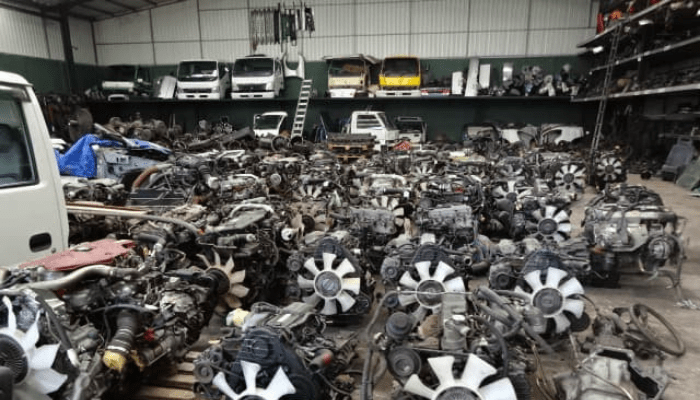
When people refer to “Nnewi: The Home of Auto Parts Manufacturing in Nigeria,” they are describing a place that does far more than just trade parts. The manufacturing base in Nnewi turns raw materials and semi-finished goods into a wide variety of automotive and engineering products that supply markets across Nigeria and beyond.
Wide Range of Automotive Components
Studies of the Nnewi automotive parts cluster highlight that firms in the town produce items such as motorcycle parts and components, cables and hoses, motor engines and roller chains, automotive filters and exhaust systems.
For example, in her shop in Nnewi, one female entrepreneur manufactures clutch levers and shift gears for motorcycles and tricycles, as well as battery head-terminals for various vehicles.
Local press reports state that in addition to these, parts like fan belts, cables, head-lamp covers, wheel covers, brake light covers, engine blocks, pistons and rings are produced in Nnewi: the home of auto parts manufacturing in Nigeria.
Vehicles and Major Assemblies
Nnewi: the home of auto parts manufacturing in Nigeria is a reality because the town is also home to indigenous vehicle manufacturing. For instance, Innoson Vehicle Manufacturing located in Nnewi claims that about 70 percent of the parts in its vehicles are locally produced.
This means that many of the parts made in Nnewi feed directly into vehicle assembly, not just spare parts for replacement, but for new vehicles and complete systems. Tricycles and motorbikes are also being assembled in Nnewi.
Diversification into Non-Automotive Items
While auto parts remain central in the story of “Nnewi: the home of auto parts manufacturing in Nigeria, many Nnewi-based firms also produce non-automotive engineered goods. One profile notes that Nnewi has factories producing electric cables e.g. Cutix Plc, batteries, plastic goods and other industrial-scale items.
In other words, the manufacturing ecosystem in Nnewi supports both the automotive value chain and adjacent engineered manufacturing lines.
Local Content and Industrial Depth
Because such a large variety of products are made in Nnewi: the home of auto parts manufacturing in Nigeria, the town has achieved significant depth of industrial capability. One cluster study noted that approximately 85 percent of firms in the area produced automotive parts and components.
This depth supports the claim of Nnewi: the home of auto parts manufacturing in Nigeria, as the town is not just assembling or trading parts, it is producing them, often adapting them for local conditions, and supplying both replacement and new-manufacture markets.
Why does this matter in affirming the claim of Nnewi: the home of auto parts manufacturing in Nigeria?
When you visit Nnewi: the home of auto parts manufacturing in Nigeria, you will find workshops casting aluminium, machine-shops milling brake parts, moulders producing plastic housings, wiring shops assembling cable harnesses, and battery manufacturers soldering terminals.
That broad range of production means that Nnewi offers a full ecosystem: raw material to finished component, ready for market.
It is this ecosystem that underpins the claim “Nnewi: the home of auto parts manufacturing in Nigeria.” Because the production base is not superficial, it is deep, varied and locally rooted, the town plays a key role in Nigeria’s automotive and parts sector.
Value Chain and Employment in Nnewi: The Home of Auto Parts Manufacturing in Nigeria
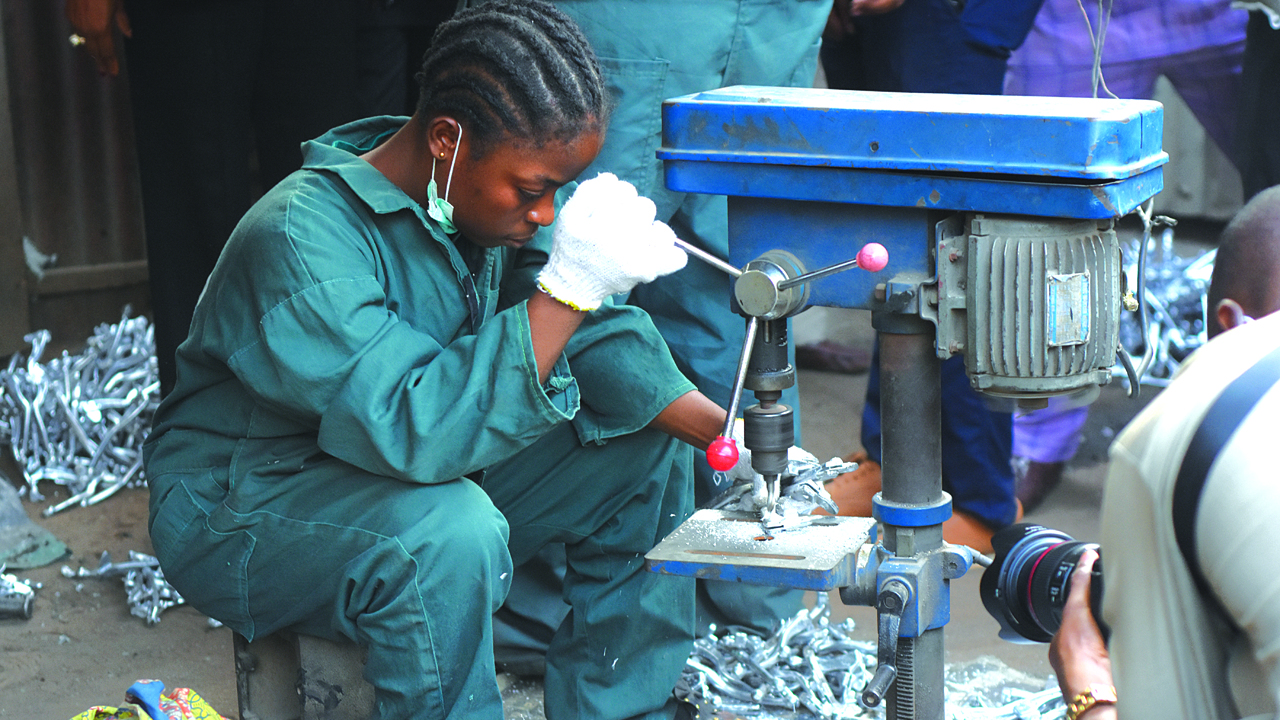
The phrase: “Nnewi: the home of auto parts manufacturing in Nigeria” describes more than just the presence of factories. It captures a full value chain, from raw material sourcing to finished parts, from assembly to wholesale trade that supports thousands of jobs in the town and beyond.
The value chain in action
The auto-parts value chain in Nnewi begins with raw material fabrication. Foundries and machine shops cast metal parts, plastics-moulding firms form components, wiring and cable producers produce electrical parts. These feed into local manufacturers who assemble, test and finish parts for cars, motorcycles and industrial uses.
Because these firms are concentrated in Nnewi: the home of auto parts manufacturing in Nigeria, the movement of materials is fast and costs are lower. One study noted that many firms in the cluster started as traders, and then, moved into production and now supply parts to Nigeria and neighbouring countries.
Once parts are produced, they move to the next link – distribution and trade. Wholesale markets and spare-parts trading networks centred around Nnewi ensure that products are sold across Nigeria. Some goods even reach West Africa.
The research shows that since the mid-1970s, local traders in Nnewi evolved into manufacturers and supply firms with employee bases ranging from 40 to 250 workers which illustrates how the chain generates employment across roles.
Employment and local livelihoods
Employment in Nnewi: the home of auto parts manufacturing in Nigeria spans several layers of the value chain:
- Fabrication and manufacturing jobs: machinists, welders, assemblers, quality-control technicians, machine-operators. Research mentions that firms in Nnewi: the home of auto parts manufacturing in Nigeria have produced parts since the 1970s, adapting foreign technologies locally and employing many workers with no university degree but strong technical training.
- Apprenticeship and informal training: Many workers start as apprentices within family firms or workshops, learning skills on the job. This model allows for rapid skills transfer and is especially strong in the industrial network of Nnewi: the home of auto parts manufacturing in Nigeria. A journal article notes that local traders creating employment opportunities transformed themselves into producers of automobile parts through close linkages to technology suppliers in Asia and that the cluster provides employment to thousands.
- Support jobs and trade roles: Beyond factory floors, jobs in distribution, logistics, supply of materials, market trading, vehicle repair and services all link into the value chain. For every part manufactured, there is often a network of sales and support services around it.
- Entrepreneurship and micro-businesses: Many small firms start in Nnewi as traders or micro-manufacturers. This means that employment is not only in formal factories but also in smaller workshops where families and young entrepreneurs contribute. According to local reports, Nnewi: the home of auto parts manufacturing in Nigeria is dotted with over 50 mini-plants and motorcycle assembly operations, each creating jobs and apprenticeships.
All these matter for Nnewi: the home of auto parts manufacturing in Nigeria for several reasons. Because Nnewi supports a full value chain and a large employment base, it strengthens the claim that it is “the home of auto parts manufacturing in Nigeria.” The fact that manufacturing, distribution, trade and services all exist in a contiguous ecosystem means that jobs stay local and value remains local. This makes Nnewi a significant model of indigenous industrialization in Nigeria.
Moreover, the value chain helps to absorb local entrepreneurial energy. Instead of only importing finished parts, the network in Nnewi: the home of auto parts manufacturing in Nigeria turns local skills into real jobs. The strong employment footprint boosts the town’s economy and national industrial capacity.
Headwinds and implications for employment
While the value chain is strong, challenges remain that affect employment growth. Many firms operate in informal or semi-formal status which can limit investment in equipment and training needed for higher productivity.
Infrastructure deficits like unstable electricity and transport delays raise costs and reduce competitiveness. These constraints can limit how many jobs can be created or how large the firms can grow.
However, government and industry bodies are now pushing for investment zones and industrial parks in Nnewi: the home of auto parts manufacturing in Nigeria aimed at providing modern infrastructure and shared services.
These interventions promise to strengthen the value chain, increase efficiency and lead to more job creation. For example, the development of an auto industrial park would support small and medium scale manufacturers, and thus, expand employment along the chain.
Challenges Facing Nnewi: The Home of Auto Parts Manufacturing in Nigeria
Even as Nnewi cements its reputation as the hub of automotive-component manufacturing in Nigeria, the region’s industrial base continues to grapple with a series of persistent and serious challenges. These obstacles impact the ability of Nnewi manufacturers to scale, compete and sustain their contribution to the economy.
1. Unreliable and costly power supply
Top on the list of challenges facing Nnewi: the home of auto parts manufacturing in Nigeria is that of power supply. Many manufacturers in Nnewi run on diesel generators and backup systems, because the public electricity supply is erratic. This raises manufacturing costs, disrupts production schedules and affects product quality. For a cluster that aims to strengthen its position as the home of auto parts manufacturing in Nigeria, high power-costs dampen competitiveness relative to imported parts.
2. Poor infrastructure and logistic constraints
Next on the lineup of challenges facing Nnewi: the home of auto parts manufacturing in Nigeria is poor infrastructure and logistics constraints. Research shows that rapid industrial and commercial growth in Nnewi has outpaced the provision of roads, waste management and utility services. Inadequate transport infrastructure slows down movement of raw materials and finished products, thereby raising cost and reducing responsiveness to market demand.
3. High production cost and access to finance
Also among the challenges facing Nnewi: the home of auto parts manufacturing in Nigeria is high production cost and access to finance. Small and medium-scale manufacturers in Nnewi often face difficulties accessing formal financing.
They may lack collateral, formal records or bankable business plans. An article on Nnewi’s industrialists noted that micro auto-parts producers in the area appealed for interest-free loans and improved incentives. At the same time, production costs in Nigeria are elevated due to inflation, exchange-rate volatility and expensive imported inputs.
4. Quality, standards and informal production
While many firms produce components locally, a number operate outside formal regulatory frameworks or without certification. The National Automotive Design and Development Council (NADDC) has pointed out the challenges posed by unauthorized parts-manufacturing operations.
The lack of standardization is a challenge for Nnewi: the home of auto parts manufacturing in Nigeria. It weakens the claim and limits access to larger domestic and export markets that demand certified quality.
5. Competition from imports and low local-value addition
Despite local production, many parts are still imported or assembled from kits, limiting value-addition locally. Many firms still rely on imported components, and assembling rather than full manufacturing constrains the growth of the industry. Imported parts often undercut local producers on price, putting pressure on Nnewi-based makers of automotive components. This is a challenge that Nnewi: the home of auto parts manufacturing in Nigeria faces.
6. Market instability, regulatory uncertainty and institutional support
Industrial stakeholders in Nnewi: home of auto parts manufacturing in Nigeria have repeatedly raised the issue of inadequate government support and policy inconsistency. In 2018, Nnewi micro-producers told the press that they felt neglected, despite their contribution to employment and industry.
Moreover, local market governance issues such as illegal structures in major markets threaten the stability of the trade environment in Nnewi.
7. Urbanization, environmental and social pressures
The automotive parts cluster and related trade in Nnewi has driven rapid urban growth. According to academic surveys, Nnewi: the home of auto parts manufacturing in Nigeria has experienced environmental stress, infrastructure overload and declining service quality as industry expanded.
For a region claiming to be the home of auto parts manufacturing in Nigeria, these urban-environmental challenges can hamper logistics, workforce welfare and long-term sustainability.
By addressing these challenges through reliable infrastructure, investment in standards, access to finance, policy support and quality improvement, Nnewi: the home of auto parts manufacturing in Nigeria can strengthen its position.
Opportunities and the Way Forward for Nnewi: The Home of Auto Parts Manufacturing in Nigeria
With the wide recognition of Nnewi: the home of auto parts manufacturing in Nigeria, the town is poised for significant growth. Thanks to government initiatives, regional market opportunities and local industrial strength, this vibrant hub has several promising pathways forward.
Leveraging import substitution and large domestic demand
The National Automotive Design and Development Council (NADDC) has revealed that Nigeria spends approximately US $19 million annually importing motorcycle spare parts alone, excluding tricycles and vehicles. This points to a clear opportunity for Nnewi-based manufacturers. By producing locally, the town can capture a portion of this lost value. By increasing local content and manufacturing capacity, Nnewi: the home of auto parts manufacturing in Nigeria can strengthen its position and reduce dependence on imports.
Development of the Nnewi Auto Industrial Park
One of the most visible opportunities is the establishment of the proposed Auto Industrial Park in Nnewi being developed with the collaboration of Anambra State, the NADDC, international partners such as United Nations Industrial Development Organization (UNIDO) and African Export‑Import Bank (Afreximbank).
This industrial park would offer shared infrastructure in terms of power, security, testing labs and facilities to small and medium-sized manufacturers of auto components. By reducing overheads and raising the bar on technical standards, the park will enhance the capability of Nnewi: the home of auto parts manufacturing in Nigeria.
Export potential under AfCFTA and regional trade
The strengths of Nnewi in auto parts manufacturing position it well to benefit from the African Continental Free Trade Area (AfCFTA) and expanding West African markets. The region’s demand for reliable, locally-manufactured spare parts is growing, and Nnewi suppliers can fill the gaps left by imported parts. With proper quality standards and logistics, being known as the home of auto parts manufacturing in Nigeria gives Nnewi a strong brand to compete regionally and continent-wide.
Skills development, modern technologies and new product segments
The shift in the automotive industry toward technologies like electric vehicles (EVs) and compressed natural gas (CNG) offers a fresh opportunity. The NADDC has already emphasized training programmes and frameworks for new automotive technologies.
Local manufacturers in Nnewi: the home of auto parts manufacturing in Nigeria can leverage their core skills in metal fabrication, wiring, plastic moulding to move into manufacturing parts for EVs, CNG-powered vehicles and other future segments. By doing so, it reinforces its role as the home of auto parts manufacturing in Nigeria while anticipating the next generation of vehicle technology.
Strengthening supply chains and increasing value-addition
While Nnewi has an extensive manufacturing base, there is an opportunity to deepen value-addition. That means moving from merely assembling imported sub-components to full manufacturing of key parts locally, improving quality control and meeting recognized standards.
As cited, many parts are still imported. By upgrading equipment, certification and design capabilities, Nnewi: the home of auto parts manufacturing in Nigeria can capture higher-value work and grow both volumes and margins.
To translate these opportunities into lasting growth and cement its status as Nnewi: the home of auto parts manufacturing in Nigeria, the following steps are key:
- Complete the auto industrial park infrastructure with reliable power, waste management, logistics hubs and testing facilities.
- Facilitate access to affordable finance and investment for small and medium manufacturers in Nnewi so they upgrade equipment and meet standards.
- Implement quality assurance and product certification programmes so Nnewi-made parts meet national and regional specifications.
- Encourage local firms to partner with vehicle assemblers and original-equipment manufacturers (OEMs) to integrate locally made components.
- Train the workforce in advanced manufacturing techniques, emerging automotive technologies and business-management skills.
- Promote export readiness through packaging, logistics, trade-finance access and marketing for regional demand under AfCFTA.
By seizing these opportunities, Nnewi: the home of auto parts manufacturing in Nigeria can enhance its claim in tangible ways, not just in reputation but in production volume, export reach, technological capability and job creation.
The industrial ecosystem of the town, if strengthened, can serve as a model of how local manufacturing clusters can transform regional economies.
In Conclusion … Towards Sustaining the Legacy of Nnewi: The Home of Auto Parts Manufacturing in Nigeria
In conclusion, the story of Nnewi: the home of auto parts manufacturing in Nigeria is one of vision, enterprise and resilience. From a modest trading town in southeastern Nigeria, it has grown into a powerful industrial hub. Its evolution from import trading to indigenous production reflects the creativity and determination of its people who have transformed opportunities into a legacy of innovation and productivity.
Across its bustling markets, machine shops and factories, Nnewi demonstrates what local industrialization can achieve when entrepreneurial spirit meets determination. The manufacturers have not only built thriving businesses but have also created a self-sustaining value chain that employs thousands, supports families and drives regional commerce. Its industrial ecosystem has become a model for grassroots development in Africa’s manufacturing landscape.
Yet, sustaining this legacy requires addressing real challenges. Reliable power, access to finance, modern infrastructure and quality certification are essential, if Nnewi is to maintain its competitive edge. Continued investment in training, technology and research will help local firms transition from small-scale production to globally competitive manufacturing. Collaborative initiatives like the Nnewi Auto Industrial Park mark a promising step in that direction.
As Nigeria seeks to diversify its economy and reduce dependence on imports, Nnewi stands ready to lead the charge. With policy support, innovation incentives and a renewed commitment to quality, Nnewi: the home of auto parts manufacturing in Nigeria can evolve from a regional hub into a continental powerhouse. Its story reminds us that industrial success is not born overnight, rather, it is built, one ingenuous step at a time.
References
- https://guardian.ng/business-services/nnewi-nigerias-self-made-industrial-hub/
- https://guardian.ng/opinion/nnewis-manufacturing-sectors-potential-as-the-japan-of-africa/
- https://www.researchgate.net/publication/335207711_INDUSTRIAL_CLUSTERS_AND_INDUSTRIALISATION_IN_NIGERIA_A_Micro-Assessment_of_the_Nnewi_Automotive_Component_Industrial_Cluster_Anambra_State
- https://african.business/2015/03/economy/roll-first-made-nigeria-cars
- https://www.vanguardngr.com/2024/12/nnewi-auto-industrial-park-to-reduce-nigerias-19m-annual-spend-on-imported-motorcycle-parts-fg/
- https://www.innosonvehicles.com/the-innoson-story/
- https://www.innosonvehicles.com/about-ivm/
- https://nnewicommunity.com/nnewi-african-taiwan/
- https://nnewi.info/nnewi-history/
- https://nnewicommunity.com/nnewi-history/
- https://nnewicity.com/nnewi-the-automobile-hub/















Pingback: Nnewi: The Silicon Valley of Nigeria Nnewi City