

Nnewi Auto Business
NNEWI, THE AUTOMOBILE HUB OF NIGERIA AND AFRICA: WHAT THE FUTURE HOLDS

INTRODUCTION
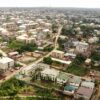
Nnewi is a vibrant commercial and industrial city in Anambra State, Nigeria that today, stands as the heartbeat of the nation’s automobile industry. Known as the “Japan of Africa” because of its entrepreneurial spirit and engineering ingenuity, Nnewi is the second largest city in Anambra State after Onitsha. Yet, it punches far above its weight in innovation, production, and trade.
Over the decades, the city has evolved. From a community of spare-parts traders to Africa’s foremost indigenous automobile hub and home to bustling markets, vehicle assembling plants, and Nigeria’s first truly indigenous automaker, Innoson Vehicle Manufacturing (IVM).
Nnewi’s story is remarkable because its automobile sector was built almost entirely through indigenous effort, powered by vision, skill, and resilience, with little government intervention. From the sprawling Agbo Edo New Motor Spare Parts Market, the continent’s biggest motorcycle parts market at Nkwo Nnewi, to Innoson’s expanding factories producing trucks, CNG, and electric vehicles, Nnewi represents the true spirit of African industrial self-reliance.
As the world shifts toward cleaner, smarter mobility, electric bikes, CNG vehicles, and sustainable transport, Nnewi refuses to be left behind. It is re-inventing itself for the future, blending its tradition of local craftsmanship with modern manufacturing and global partnerships.
In this article, we will be exploring how Nnewi became the automobile powerhouse of Nigeria and Africa, the driving forces behind its growth, and what the future holds for this extraordinary city.
BRIEF HISTORY OF AUTOMOBILE BUSINESS IN NNEWI
Long before indigenous vehicle assembly or manufacturing, Nnewi’s economic vitality centered around trade in used and new motor spare parts, imported motorcycles, and re‐exportation. As early as the 1970s and 1980s, Nnewi traders were importing “tokunbo” (fairly-used) motorcycles and spare parts. The demand for affordable motorcycle mobility in Nigeria led to spare parts, repairs, and mechanics becoming big business.
This was the situation, until 1987 when Innocent Chukwuma, the founder of what became Innoson came with a landmark introduction of made‐in‐Nigeria motorcycles at prices much lower than the fairly-used ones. He reportedly sold new motorcycles then for about ₦60,000, undercutting the used ones. This move gradually reduced importation of used motorcycles.
Over the years, the spare‐parts markets in Nnewi expanded, both in size and in complexity. Traders, artisans, fabricators, and mechanics learned to repair, re‐adapt, fabricate, or “marry” parts i.e. modify one part to fit another. The local economy grew around this ecosystem. Government involvement was minimal at the earlier stages. The sector was driven by private traders, small and medium scale workshops, and locally raised capital rather than large state or federal industrial policy.
In the 2000s, precisely around 2007, Innoson formalized vehicle manufacturing through the incorporation of Innoson Vehicle Manufacturing Company Limited to assemble and manufacture commercial and passenger vehicles in Nnewi. Evolving from spare parts and motorcycles to full automobile assembly and manufacturing was, indeed, a major breakthrough.
While Nigeria has had various automotive policy frameworks e.g. the NAIDP – National Automotive Industry Development Plan, many of Nnewi’s developments came because of private initiative.
In the early years, the growth of automobile business in Nnewi was almost entirely bottom-up. But in recent times, government has begun to play more roles through licensing, regulation, and occasionally, subsidies or market patronage.
MAJOR AUTOMOBILE MARKETS IN NNEWI
Nnewi is famous for its markets, especially in spare parts, motorcycles, and vehicles. Here are some of the major ones:
Agbo Edo New Motor Spare Parts Market
Agbo-Edo is one of the largest new motor spare parts markets in Nigeria. It specializes in new motor spare parts for cars, trucks, and other vehicles. Many sources describe it as a very large and well-organized market, with almost every kind of new motor spare part available. Agbo-Edo market is well known across the country for its diversity of parts and efficient trade system.
New Motorcycle Spare Parts Market (Nkwo Nnewi New Motorcycle Spare Parts Market)

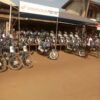
“Machine Parts” as it is popularly known in Nnewi focuses mainly on new motorcycle parts. It is regarded as the biggest motorcycle spare parts market in Nigeria and Africa. Traders in this market stock a wide range of parts for different motorcycle brands, while artisans and mechanics operate nearby to serve customers.
The market caters to both repairers and private owners who come from within and outside Anambra State to buy in bulk or retail. Sources such as NG Worldorgs and Nairaland affirm the central role of “Machine Parts” market in Nigeria’s motorcycle spare parts trade.
Nwagbala Market
Also known as Mgbuka Machine Parts or simply Mgbuka, this market is known for fairly-used motorcycles and secondhand spare parts. The market also serves as a hub for artisans who repair, rebuild, repaint, or modify spare parts to fit different machines.
Many low-income buyers who cannot afford brand new motorcycles or parts come to Nwagbala to purchase quality used ones. It is less formal and more artisan-driven compared to the larger markets. Nairaland identifies Nwagbala as a crucial part of Nnewi’s robust automobile ecosystem, especially, for used parts and technical craftsmanship.
THE ADVENT OF INNOSON VEHICLES

Innoson Vehicle Manufacturing Co. Ltd. (IVM) was founded in 2007 in Nnewi under the leadership of Chief Innocent Chukwuma. The company’s mission has been to manufacture durable, affordable vehicles suited for Nigerian and African conditions, with as much local value addition as possible.
Innoson started with mini‐buses and pickups. Then, it expanded to sedans, SUVs, family vehicles, intercity buses, fire trucks, etc. according to the company, a high proportion (about 70%) of parts used are sourced locally, while the rest are imported from overseas e.g. Japan, China, Germany.
In recent years, IVM has upgraded its plant, moving from manual to semi‐automation to essentially more automated plant systems. It has embarked on a multi‐billion-naira expansion at Umuezena, Umudim, Nnewi, which will be dedicated to manufacturing heavy‐duty trucks and Compressed Natural Gas/Liquefied Natural Gas (CNG/LNG) vehicles.
In September 2024, Innoson unveiled its first locally produced electric vehicle (EV) at its plant in Nnewi. The test drive was completed, though as at the time of that announcement, the EV had not yet gone through full certification or been officially released for sale.
The existing plant had been producing several thousand vehicles annually. But with the expansion, the capacity is expected to increase significantly. For example, one report is saying that the plant will be able to build 30,000 CNG buses annually following its heavy‐duty/CNG‐dedicated expansion.
Also worthy of mention is the fact that IVM does not only produce for Nigeria but exports to some African countries, including Sierra Leone, Mali, Congo, Ghana, Côte d’Ivoire, Burkina Faso.
THE CURRENT STATE OF THE AUTOMOBILE BUSINESS IN NNEWI

The first electric vehicle built by Innoson was a sign that Nnewi is pushing toward electrification. Given that Innoson and government policy are increasingly focusing on alternate fuels and EVs, the likelihood of having electric bikes and tricyles also built in Nnewi is high.
But then, the assembly of tricycles a.k.a. kekes locally has been a part of the automotive firms’ plans. According to sources, since about 2022, Innoson under NAIDP is licensed to assemble three‐wheel motor vehicles in Nnewi. Also, there are parts and workshops in Nnewi that build, repair, adapt and assemble motorcycles, motorbikes, tricycles etc. While not all are formal large manufacturing plants, the cumulative effect is industrial.
It is known that many shuttle or commercial buses are imported into Nigeria in 40 ft containers in Semi Knock Down (SKD) form. Traders in the market deal in spare parts and sometimes in assembling components shipped. The presence of many warehouses used by assemblers or spare‐part wholesalers is part of how the city functions as hub.
WHAT THE FUTURE HOLDS FOR NNEWI AUTOMOBILE INDUSTRY
For the automobile and mobility sector, the future looks bright. Putting together the historical development and current trajectories, there are plausible developments for sectors in the coming years.
With Innoson’s expansion into heavy duty trucks, buses, and CNG/LNG vehicles, this commercial hub could become a regional exporter of such vehicles, not just to neighboring countries but beyond. As capacity increases e.g., from 10,000 to possibly 60,000 units annually with automation, the scale would need better supply chains, component manufacturing, quality control, and infrastructure.
More electric vehicles (EVs) will likely emerge. For example, small cars, motorcycles/tricycles, shuttle buses. Innoson already started with its first EV. CNG/LNG conversions and new manufacturing plants for fuel‐efficient or low‐emission vehicles will likely grow, especially, if government policy and regulation encourage alternate fuels and environmental compliance. There will be increasing pressure and opportunity to build battery supply, charging infrastructure, or alternate fuel infrastructure in and around Nnewi.
For Nnewi to thrive as automobile hub, local production of components like engines, transmissions, chassis parts, electrical systems needs to grow. Artisan workshops may evolve into more formal small to medium scale component factories. Tyre manufacturing, glass, upholstery, electronics, etc. can cluster around the automobile facilities. Innoson has already some lines for tires and tubes, though not yet fully in Nnewi.
Although Nnewi’s rise was mostly indigenous, government policy is increasingly critical through the NAIDP, licensing, incentives, import tariff structure, enforcing quality and safety standards. If the policy supports import substitution i.e. less import of used/used parts when new can be made locally and provides infrastructure e.g. power, roads, waste management, etc., the automobile sector stands the chance of growing faster.
While Innoson is currently the dominant indigenous manufacturer in town, there are indications that other players may want to set up vehicle manufacturing in the region, either as fully new brands or assembly plants for foreign brands. Sources sometimes mention licensed but not yet operational assemblers or vehicles planned under NAIDP. Whether these materialize depends on capital, policy, supply chain, skilled workforce.
The establishment of the Nnewi Auto Industrial Park is a key policy move to reduce Nigeria’s annual foreign exchange drain which is placed around US$19 million spent on the imporation of motorcycle spare parts. The Industrial Park, when developed fully, would host parts manufacturers, assemblers, and related businesses.
For this future to be realized, some challenges must be tackled:
- Infrastructure: E.g. power supply, roads, waste disposal, transport logistics.
- Quality standards and regulation: E.g. ensuring safety, environmental compliance.
- Financing: Vehicle manufacturing is capital intensive. There is need for access to affordable loans, incentives.
- Skilled labour: E.g. engineers, quality assurance personnel, design, battery tech etc.
- Competition: Coming from imported used vehicles, smuggled spare parts, brands with strong foreign backing.

IN CONCLUSION…
The journey of Nnewi as a commercial city is already impressive. From being a cluster of spare parts traders and used bikes to a city hosting an indigenous vehicle manufacturer (Innoson), entering heavy duty vehicle, bus, and now electric vehicle production. With its major markets), dense artisan networks, and growing industrial infrastructure, Nnewi has many of the ingredients of becoming a continental automobile hub.
The future envisions Nnewi supplying not only local but regional markets with new cars, trucks, EVs, and mobility solutions. With policy supports, infrastructure improves, and innovation continues, Nnewi automobile industry could become a central pillar of Nigeria’s industrialization, employment growth, and export revenue.
REFERENCES
- https://gouni.edu.ng/faculty-of-arts/wp-content/uploads/2019/10/THINKERS-JOURNAL-VOL.-1-BOOK-2.pdf
- https://ng.worldorgs.com/catalog/nnewi/auto-parts-market/nkwonnewinewmotorcyclesparepartsmarket
- https://www.nairaland.com/5704490/nnewi-markets-nkwo-nnewi-misconception
- https://www.thisdaylive.com/2024/04/13/innoson-again-commits-to-producing-high-quality-vehicles-says-nnewi-plant-is-active
- https://nairametrics.com/2024/09/11/innoson-vehicles-unveils-its-first-locally-produced-electric-vehicle
- https://cdn.businessday.ng/wp-content/uploads/2024/05/BD_20240521.pdf
- https://www.vanguardngr.com/2024/12/nnewi-auto-industrial-park-to-reduce-nigerias-19m-annual-spend-on-imported-motorcycle-parts-fg
- https://en.wikipedia.org/wiki/Automotive_industry_in_Nigeria
- https://nnewicity.com/?s=Nnewi+news#google_vignette