







Biographies & Personalities
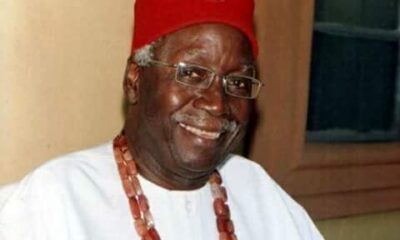
Remembering Prof. Ben Nwabueze: The Constitutional Architect Who Shaped Nigeria’s Legal and Federal System

Ben Nwabueze was one of Nigeria’s most influential constitutional scholars whose works, legal philosophy, and participation in constitution-making helped to define Nigeria’s federal structure and legal development across decades.

In Nigerian constitutional law, few names appear as consistently in serious legal discussions as Prof. Ben Nwabueze. His influence did not come from political office or public noise. It came from decades of disciplined writing and teaching that quietly entered courtrooms, classrooms, and policy debates.
Ben Nwabueze worked with ideas that go to the heart of governance. How power should be structured. How a federal system should function. And, what it means for a constitution to truly guide a nation. These were not abstract questions for him. They were practical issues tied to Nigeria’s stability and future.
Over time, his books and legal arguments became reference points for understanding constitutional law in Nigeria and across parts of Africa. Judges, scholars, and policymakers continue to engage with his work because it speaks directly to the challenges of governing a diverse country under a federal arrangement.
This article explores the life of Prof. Ben Nwabueze, his intellectual journey, and enduring contribution to Nigeria’s legal and federal system, with attention to the ideas that continue to shape constitutional debates today.
Prof. Ben Nwabueze’s Early Life and Academic Foundations
The early life of Ben Nwabueze began in Atani, a riverine community in present-day Anambra State where he was born in 1932. He grew up at a time formal education opportunities in Nigeria were still limited. Notwithstanding, his early academic path already showed signs of a strong and focused mind.
From the beginning, education played a central role in his life. He moved steadily through his early schooling with clear academic strength, eventually earning admission to study law in the United Kingdom. This step was significant, not just personally but also in the context of his later contributions to constitutional thought.
At the University of London, Ben Nwabueze immersed himself in legal studies at a time British constitutional traditions strongly influenced many emerging legal systems around the world. He completed his legal training and was called to the Bar in England, having gained exposure to comparative constitutional systems and the practical workings of law in a structured democracy.
These academic years shaped more than his qualifications. They helped to form the intellectual base that would later define his work. His interest was not limited to legal rules alone. He paid close attention to how constitutions function in real societies, especially in countries with diverse populations and complex political arrangements.
By the time he completed his studies, he was already developing the foundation of what would become a lifelong engagement with constitutional law, governance, and the structure of federal systems.
Academic Career and Rise as a Legal Scholar

The academic career journey of Ben Nwabueze began in earnest when he returned to Nigeria after his legal training in the United Kingdom. He did not step directly into public life or political roles. Instead, he chose the classroom where his influence would grow slowly but steadily through teaching, writing, and deep intellectual engagement.
He joined the University of Lagos as a lecturer in law where his approach to constitutional law quickly set him apart. Students and colleagues noticed that he did not treat law as a collection of technical rules alone. He explained it as a living system connected to governance, society, and the balance of power within a country. This way of teaching made his lectures both demanding and memorable.
His academic reputation expanded further when he moved into higher responsibilities within the university system. He became Dean of the Faculty of Law at the University of Zambia, a position that placed him at the centre of legal education beyond Nigeria. In that role, he contributed to building a stronger foundation for legal studies in Southern Africa, while continuing his own research and writing.
During these years, Ben Nwabueze developed a strong academic voice. His work was not limited to classroom teaching. He published widely on constitutional law, focusing on how governments function in newly independent African states. His writing was clear, structured, and deeply analytical, and that helped his ideas gain attention in both academic and legal circles.
What set him apart was the seriousness with which he approached constitutional questions. He examined how power is distributed, how institutions interact, and what happens when constitutional principles are not followed in practice. These themes became central to his scholarly identity.
Over time, his academic work moved beyond national boundaries. He became recognized across Africa as one of the leading voices in constitutional law, with his writings influencing legal thought in several countries. His rise was not sudden or dramatic. It was built through consistent scholarship, teaching, and a growing body of work that connected legal theory with real governance challenges.
Intellectual Works That Defined Constitutional Law
The reputation of Prof. Ben Nwabueze as a leading constitutional thinker rests heavily on his written works. These books did more than explain legal principles. They helped to clarify how constitutions operate in practice, especially in countries adjusting to independence and complex governance systems.
One of his most influential works is Constitutional Law of the Nigerian Republic (1964). This book is often regarded as a foundational text in Nigerian constitutional studies. It offered a structured explanation of Nigeria’s early constitutional framework and helped many students and legal practitioners understand the logic behind governmental authority and legal order in a newly independent state.
Another major contribution is Presidentialism in Commonwealth Africa (1974). In this work, Ben Nwabueze examined presidential systems across several African countries that inherited or adapted constitutional models from colonial governance. He explored how executive power functions in these systems and raised important questions about balance, accountability, and institutional control.
In Constitutionalism in the Emergent States, he turned his attention to a broader issue, that is, how newly independent countries can build constitutional systems that are not only legally sound but also practically effective. The book examined the gap between written constitutions and political reality, especially where institutions are still developing.
Across his writings, a few consistent ideas stand out. He paid close attention to the rule of law and the need for government power to operate within clearly defined limits. He also explored how federal systems can manage diversity without weakening national unity. These were not abstract theories for him. They were practical concerns tied to the stability of states like Nigeria.
What made his intellectual work especially important was its influence beyond academia. His writings became reference materials in legal education and were frequently consulted in discussions about constitutional interpretation. Judges, lawyers, and scholars often engaged with his ideas when addressing constitutional questions in practice.
Through these works, Ben Nwabueze established himself not just as a commentator on constitutional law but as one of the thinkers whose ideas helped to define how constitutional systems in Africa are studied and understood.
Role in Nigeria’s Constitutional Development
The contribution of Ben Nwabueze to Nigeria’s constitutional development goes beyond academic writing. He was actively involved in conversations and processes that influenced how Nigeria’s system of government was designed and understood, especially during the critical years following independence.
One of his most notable contributions was his involvement in constitutional discussions that fed into the 1979 Constitution. At a time Nigeria was searching for a stable democratic structure after years of political instability, his expertise in constitutional law made him a respected voice in debates about how power should be organized at the federal level.
His input focused strongly on structure and balance. He was concerned with how executive authority should operate without overwhelming other arms of government. He also paid attention to the relationship between the federal government and the regions, arguing for arrangements that would preserve diversity and still maintain national unity.
Prof. Ben Nwabueze consistently approached constitutional development from a legal and institutional point of view. He believed that a constitution must do more than describe government offices. It must also limit power, define responsibilities clearly, and provide a workable framework for accountability. These ideas influenced how many scholars and policymakers thought about constitutional design in Nigeria.
Beyond formal drafting processes, his influence also came through his writings which were widely read by those involved in policy and governance. His books provided a reference point for understanding federalism and presidential systems in a way that was both practical and theoretical.
He also participated in broader national conversations on governance and reform, especially during periods when Nigeria faced questions about restructuring its political system. In these discussions, his position was often rooted in a careful reading of constitutional history and comparative legal systems.
Through these contributions, Ben Nwabueze became more than an academic observer. He became part of the intellectual foundation that helped to shape how Nigeria’s constitutional system was designed, debated, and continuously re-examined over time.
Legal Philosophy and Vision for Federalism
At the centre of Ben Nwabueze’s work is a clear and consistent concern – how power should be organized in a way that is lawful, balanced, and suitable for a diverse society like Nigeria. His legal philosophy is grounded in constitutionalism which he understood not just as the existence of a written constitution but as a system where power is defined, limited, and exercised within agreed rules.
For Ben Nwabueze, the rule of law was not optional. He argued that government authority must always operate within legal boundaries, and that institutions must be strong enough to prevent the abuse of power. In his view, a constitution loses its value when it becomes a document that exists only on paper without guiding real governance.
A major part of his thinking focused on federalism. Nigeria’s structure as a federation, with multiple ethnic groups and regions, required careful balance. He believed that true federalism meant more than dividing the country into states. It required giving those states meaningful authority to manage their affairs while still remaining part of a unified nation.
He was particularly concerned about the concentration of power at the centre. Over time, he observed that Nigeria’s federal system was becoming too centralized, with the federal government holding significant control over resources and decision-making. This, he argued, weakened the spirit of federalism and reduced the autonomy of the states.
In his writings, Ben Nwabueze explained that a healthy federal system depends on cooperation between levels of government, not dominance by one level. He emphasized that decentralization can promote accountability, reduce tension, and allow different regions to develop according to their needs.
Another important aspect of his philosophy was the idea that constitutions must grow with society. He acknowledged that no constitutional system is perfect from the beginning. However, he insisted that changes should be guided by careful legal reasoning rather than political convenience.
His views on federalism and constitutional structure continue to influence discussions on restructuring in Nigeria. Many of the issues he raised decades ago, such as the balance of power and the role of states, remain central to current debates.
Through his legal philosophy, Ben Nwabueze offered more than academic theory. He provided a framework for thinking about governance in a way that connects law, power, and the everyday realities of a complex nation.
Public Service and National Engagement
Although Ben Nwabueze is best known for his academic work, his influence extended well beyond the university. Over the years, he became an active participant in national conversations about governance, democracy, and constitutional reform in Nigeria.
He was often called upon to contribute to discussions on how the country should be governed, especially during periods of political transition and constitutional review. His voice carried weight because it was grounded in decades of research and a deep understanding of constitutional systems, both within Nigeria and in other parts of Africa.
One of the most visible aspects of his public engagement was his involvement with Ohanaeze Ndigbo. As a co-founder and long-serving Secretary-General, Ben Nwabueze played a key role in shaping conversations around Igbo identity, unity, and political representation within Nigeria. His contributions in this space were thoughtful and measured, often linking cultural concerns with broader national issues.
He was also a leading member of The Patriots, a group of respected Nigerians committed to constitutional reform and good governance. Through this platform, he consistently advocated for a more balanced federal structure and called for constitutional changes that would better reflect Nigeria’s diversity.
Beyond formal organizations, Ben Nwabueze contributed regularly through public lectures, opinion pieces, and policy discussions. He remained engaged with national issues by offering perspectives on constitutional matters, governance challenges, and the direction of democratic development in Nigeria.
What stands out in his public service is the consistency of his message. Whether speaking in academic settings or national forums, he remained focused on the same core ideas, namely, the importance of constitutional order, the need for balanced governance, and the role of law in guiding public life.
Through these efforts, Ben Nwabueze bridged the gap between scholarship and real-world governance, and brought legal ideas into everyday national conversations.
Recognition, Awards, and Legal Status

The professional life of Ben Nwabueze attracted recognition from both legal and academic institutions in Nigeria and beyond. These honours were not based on courtroom practice alone. They were hinged on the depth and influence of his scholarly work in constitutional law.
One of the most notable distinctions he received was the title of Senior Advocate of Nigeria (SAN). This is the highest rank for legal practitioners in Nigeria usually awarded to experienced advocates in litigation. In his case, the recognition was largely based on his academic contributions and published works which had already become essential references in legal circles. This placed him among a rare group of scholars whose intellectual output earned them national legal recognition.
He was also a recipient of the Nigerian National Order of Merit (NNOM), one of the country’s most prestigious awards for intellectual achievement. The award is given to individuals who have made lasting contributions to national development through scholarship and research. His selection for this honour affirmed the value of his work in shaping legal understanding in Nigeria.
In addition to national honours, Ben Nwabueze received academic recognition through advanced degrees and fellowships. He earned a Doctor of Laws (LL.D) degree from the University of London, awarded on the strength of his published research rather than a traditional thesis. This type of degree is reserved for scholars whose work has made a significant impact in their field.
He was also associated with respected legal and academic bodies, both within Nigeria and internationally where his expertise in constitutional law was acknowledged. His writings were widely cited, and his contributions were recognized in legal education across several African countries.
Taken together, these honours and recognitions point to a career defined by intellectual depth and long-term influence. For Ben Nwabueze, professional recognition followed naturally from years of focused work in understanding and explaining how constitutional systems operate.
Debates, Criticism, and Intellectual Disagreements
The work of Ben Nwabueze has been widely respected. However, it has also attracted serious debate, especially among scholars, lawyers, and political commentators who engage closely with constitutional issues in Nigeria.
One area of discussion has been his interpretation of Nigeria’s constitutional history. In some of his writings, Ben Nwabueze questioned the extent to which certain Nigerian constitutions truly reflected the will of the people, pointing to external influences and the conditions under which they were produced. While many scholars agreed with this line of thinking, others argued that constitutional development in post-colonial states is often influenced by both internal and external realities, making it difficult to draw clear boundaries.
There have also been differing views on his position regarding federalism. His strong support for a more decentralized system where states exercise greater control over their affairs has been welcomed by some and challenged by others. Critics have raised concerns about whether deeper decentralization could create uneven development across regions or weaken national cohesion if not carefully managed.
Another point of intellectual disagreement has involved his analysis of executive power within presidential systems. In examining how authority is structured, Ben Nwabueze often highlighted the risks of concentrating too much power in the executive arm. While this position aligns with classical constitutional thinking, some political analysts have argued that strong executive leadership can be necessary in certain contexts, especially in developing democracies.
It is also worth noting that Ben Nwabueze did not remain fixed in one position throughout his life. As Nigeria’s political environment evolved, he revisited earlier ideas and contributed to ongoing debates about constitutional reform. This willingness to engage with new realities added depth to his work and kept his voice relevant in changing times.
These debates do not diminish his standing. Instead, they show how central his ideas are to serious discussions about governance in Nigeria. His work continues to invite careful reading, thoughtful critique, and ongoing engagement from those interested in constitutional law and political structure.
Later Life and Continued Influence
In his later years, Prof. Ben Nwabueze remained deeply engaged with national issues, even as he stepped back from formal academic roles. He did not withdraw from public life. Instead, he continued to write, speak, and contribute to conversations on governance, constitutional reform, and the direction of Nigeria’s democracy.
Through essays, public statements, and lectures, he addressed ongoing concerns about how the Nigerian state was functioning. He often returned to questions he had raised much earlier in his career, especially those relating to federal balance, constitutional order, and the limits of executive authority. His tone during this period was thoughtful and direct, informed by decades of observing how constitutional systems work in practice.
Ben Nwabueze was also active in advocacy efforts through platforms such as The Patriots where he joined other senior figures in calling for constitutional reforms that would better align governance with Nigeria’s realities. His contributions in these discussions were grounded in both historical knowledge and comparative legal insight.
Even as new generations of scholars and legal practitioners emerged, his earlier works continued to hold relevance. His books remained part of legal education, and his ideas were still referenced in debates about restructuring, governance, and institutional reform. For many, his writings provided a steady framework for understanding complex constitutional questions.
Prof. Ben Nwabueze passed away in October 2023 at the age of 90. His death marked the end of a long and influential life, but not the end of his impact. The questions he raised and the ideas he developed continue to guide discussions about Nigeria’s legal and political structure.
In many ways, his later years were a continuation of his lifelong commitment to constitutional thought. He remained consistent in his focus, careful in his reasoning, and engaged with the issues that mattered most to the country he had studied for decades.
His Legacy as the Constitutional Architect of Modern Nigeria
The legacy of Ben Nwabueze rests on something deeper than titles or positions. It is rooted in the body of ideas he developed and the lasting influence those ideas continue to have on constitutional law in Nigeria.
Over several decades, his work helped to give structure to how constitutional law is studied, taught, and understood in the country. His books became standard references in universities, not just because they explained legal principles but because they connected those principles to the realities of governance in Nigeria. For many students of law, engaging with constitutional issues often begins with his writings.
Beyond the classroom, his influence extended into legal practice and public policy. His analysis of federalism, executive power, and constitutional limits continues to guide discussions among lawyers, judges, and policymakers. Even where there is disagreement, his work provides a starting point for serious engagement with constitutional questions.
Ben Nwabueze also leaves behind a legacy of intellectual discipline. He approached legal questions with patience, depth, and clarity. He avoided quick conclusions, and instead, built his arguments carefully, drawing from history, comparative law, and close observation of political systems. This method gave his work lasting value.
Another important part of his legacy is his consistency. From his early academic years to his later public engagements, he remained focused on the same core concerns – how power is organized, how it is controlled, and how it can serve the public within a constitutional framework. This steady line of thought made his contributions easy to trace and relevant across generations.
Today, as Nigeria continues to face questions about governance, federal structure, and constitutional reform, the work of Ben Nwabueze remains part of the conversation. His ideas are still consulted, debated, and applied in efforts to understand and improve the system.
His legacy, therefore, is not confined to the past. It lives on in the ongoing search for a constitutional order that works effectively for a complex and diverse nation.
Conclusion …
The relevance of Prof. Ben Nwabueze has not faded with time. If anything, the questions he raised about constitutional order, federal balance, and the limits of power have become even more urgent in today’s Nigeria.
Across the country, debates about restructuring, governance, and the effectiveness of democratic institutions continue to dominate public discourse. These are the same issues Ben Nwabueze spent decades examining with careful attention and clarity. His work offers a way to approach these challenges with structure and understanding rather than reaction.
What makes his contribution enduring is not just what he wrote, it is also how he approached problems. He insisted on looking beyond surface-level politics to the deeper legal and institutional foundations of governance. He believed that without a strong constitutional framework, no system can function effectively, no matter the intentions behind it.
Today, students still study his books, legal scholars still engage with his arguments, and policymakers still draw from his insights when considering reforms. His ideas continue to provide guidance in a country that is still working to balance unity, diversity, and effective governance.
In the end, Ben Nwabueze remains relevant because he helped to explain how Nigeria can better organize power within the rule of law. His voice remains present in the ongoing effort to build a system that is fair, stable, and responsive to the needs of its people.
References
- https://en.wikipedia.org/wiki/Ben_Nwabueze
- https://dailytrust.com/prof-ben-nwabueze-1931-2023/
- https://guardian.ng/news/prof-ben-nwabueze-dies-at-92/
- https://businessday.ng/news/article/in-memoriam-ben-nwabueze-the-legal-luminary-the-author/
- https://www.opinionnigeria.com/the-prophetic-paradigm-of-professor-benjamin-nwabueze-by-ike-willie-nwobu/
You might want to check this out …