






Anambra News
Adazi-Enu Town: History, Culture, Economy, Festivals, and Development

Adazi-Enu is one of the prominent towns in Anaocha Local Government Area of Anambra State, Nigeria. Together with Adazi-Ani and Adazi-Nnukwu, it forms what is popularly called the “Adazi group of towns.” These communities share a common ancestry and history, but Adazi-Enu is often regarded as the eldest among them, giving it a special place in the cultural hierarchy.
The town is well known for its strong attachment to Igbo traditions, its vibrant festivals, and its progressive outlook in modern times. Adazi-Enu is a land that reflects the typical Igbo story, proud of its roots, yet adaptable to the challenges of the present. Its people are industrious, deeply religious, and united in their pursuit of peace, progress, and development.

Historical Background
The history of Adazi-Enu is tied to the ancestry of Okotu, the founding figure of the Adazi towns. Oral tradition states that Okotu had several sons, and Adazi-Enu is recognized as the first. This position has shaped the town’s influence within the cluster, as it naturally assumed the role of an elder brother to the other Adazi communities.
In the precolonial era, the people of Adazi-Enu lived in small village units, governed by elders, priests, and title holders. Leadership was not centralized under one monarch as seen in other regions, but rather spread across respected men who held the Ozo title and served as custodians of customs and traditions. Decisions were made in village assemblies, where every adult male had a voice.
With the coming of European missionaries in the early 20th century, particularly the Church Missionary Society (CMS), Adazi-Enu experienced a cultural transformation. Christianity and Western education began to spread. The first church was built in 1908, marking the beginning of a religious and social shift. While many embraced the new faith, the community continued to respect and preserve its age-long customs and traditions.
Geography and People
Adazi-Enu sits on fertile land that makes it suitable for farming, which has been the primary occupation of its people for generations. The soil is rich, allowing for the cultivation of yam, cassava, cocoyam, maize, vegetables, and especially garden eggs, which the community is now famous for. The landscape is also marked by streams and natural features that support agriculture and provide water for domestic use.
The town is organized into six districts:
- Umuabu
- Akwankwo
- Ogweni-Ojii
- Ogwani Ocha
- Obe
- Enugwu-Adazi
Together, these districts contain 22 villages, each with its own local leadership, traditions, and responsibilities. This structure ensures that while Adazi-Enu functions as a single town, every village maintains its identity and contributes to the larger whole.
The people of Adazi-Enu are known for their communal spirit, strong work ethic, and hospitality. Many indigenes have migrated to other parts of Nigeria and abroad, forming a diaspora community that remains connected to their roots through remittances, seasonal visits, and active participation in community development projects.
Traditional Leadership and Governance
Adazi-Enu operates under a traditional leadership system led by the Igwe, who serves as the custodian of the town’s customs and the representative of the community in broader Anambra affairs. The current traditional ruler, Igwe Alphonsus Okpalaechelu, has been instrumental in promoting unity, peace, and development in the town.
The Igwe is supported by a council of chiefs, elders, and title holders, including the Ozo society, which plays a central role in cultural preservation. The village councils also retain authority in settling disputes, organizing festivals, and ensuring peace among their members.
This structure ensures that leadership is not just concentrated in the palace but spread across respected individuals at every level of the community. The balance between traditional leadership and the modern democratic system of local government helps the town maintain stability and continuity.
Cultural Heritage and Festivals
Adazi-Enu is rich in cultural traditions, many of which have survived centuries of change. The community’s festivals are both spiritual and social, bringing together residents and those in the diaspora. Some of the major cultural practices and festivals include:
- Iwa Ogodo: This is a rite of passage for young men, marking their transition into adulthood. It is a moment of pride for families, as it shows that their son has reached maturity and can now participate fully in community affairs.
- Ime-Ezi: A cultural ceremony for young women, celebrating their maturity and readiness for greater responsibilities in society.
- Iro Muo: A sacred sacrificial rite to appease the deities and seek blessings for the community.
- Ichi Ozo: The process of taking the Ozo title, one of the highest honors in Igbo culture. It symbolizes integrity, leadership, and a lifetime commitment to the service of the community.
- Masquerade Culture: Adazi-Enu is home to colorful masquerades such as Ekwulo, Okwomma, Oji-Onu, and Izaga. These masquerades appear during festivals, funerals of elders, and other important occasions, providing both entertainment and spiritual symbolism.
- New Yam Festival (Iwa Ji Ofuu): As an agrarian society, yam is regarded as the king of crops. Every year, the people celebrate the harvest with the New Yam Festival. The event is marked by traditional dances, music (using ogene, ekwe, and udu instruments), masquerade displays, and prayers by elders for a fruitful year.
- Annual Enugwu Village Day: Instituted by Igwe Alphonsus Okpalaechelu, this modern cultural celebration takes place every January 1. It is not only a time for cultural displays but also a platform for awards, youth and women empowerment programs, and community development projects.
These festivals keep the cultural identity of Adazi-Enu alive and strengthen the bonds among its people, both at home and in the diaspora.

Adazi-Enu Day 2023
Religion and Spiritual Life
Religion in Adazi-Enu reflects the journey of many Igbo towns. Before the arrival of missionaries, the people practiced traditional religion, worshipping deities and ancestors through shrines and rituals. These practices shaped their worldview, guiding their farming seasons, festivals, and moral conduct.
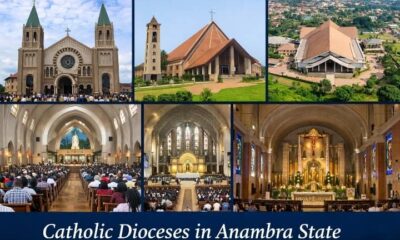
With the arrival of Christianity in 1908, the town gradually adopted new forms of worship. Today, Adazi-Enu is predominantly Christian, with Anglican and Catholic churches dominating the religious landscape. The churches have played a major role in education, morality, and social development, establishing schools, health centers, and youth organizations.
Despite the spread of Christianity, traditional practices have not disappeared. Many families still observe cultural rites such as Iwa Ogodo and Ichi Ozo, which are now seen as cultural heritage rather than purely religious obligations. The peaceful coexistence of Christianity and traditional beliefs gives Adazi-Enu a unique spiritual balance.

St Peter Parish Adazi-Enu
Economy and Occupation
The economy of Adazi-Enu has always revolved around farming, a heritage that stretches back generations. Farming is not just a means of livelihood; it is also tied to the community’s cultural and social life. Families cultivate yam, cassava, maize, cocoyam, and vegetables, ensuring food security while also participating in the seasonal cycle of festivals like the New Yam Festival, which celebrates harvest and abundance.
One of the unique features of Adazi-Enu’s economy is its specialization in green garden egg cultivation. This crop, known locally as “añara,” is widely consumed across Igboland and beyond, and Adazi-Enu farmers are recognized for producing it in large quantities. Many families have turned this into a profitable business, supplying local markets and bigger towns such as Awka, Onitsha, and Enugu. Garden egg farming has become a source of pride and identity for the town, and it also sustains traders who transport and sell the produce.
Trade complements agriculture in Adazi-Enu, and the Nkwo market is the economic hub where farm produce, livestock, and household goods are sold. The four Igbo market days—Eke, Orie, Afo, and Nkwo—define trading activities, but Nkwo day remains the busiest, attracting buyers and sellers from neighboring communities. Women play a significant role in trade, especially in the sale of garden eggs, vegetables, palm oil, and food condiments.
In addition to farming and trading, many residents run small-scale businesses ranging from tailoring and carpentry to motorbike transportation, block molding, and petty shops. The influence of diaspora members is also notable. Sons and daughters of Adazi-Enu living in Lagos, Abuja, Port Harcourt, and abroad frequently invest in local projects. They sponsor boreholes, road repairs, scholarships, and health initiatives, thereby strengthening the town’s economy.
However, farmers face challenges such as lack of government support, limited access to modern equipment, and poor credit facilities. Most still rely on traditional farming methods, and without access to irrigation or fertilizer subsidies, productivity remains limited. Addressing these challenges could transform Adazi-Enu into a larger agricultural hub, especially if green garden egg farming is expanded into agro-processing and packaging for wider markets.
Education and Social Development
Education has always held a place of honor in Adazi-Enu. Missionaries played a key role in laying the foundation for literacy by establishing early mission schools, often linked with Catholic and Anglican churches. These schools not only introduced reading and writing but also promoted moral instruction and community service.
Over time, Adazi-Enu developed a reputation for valuing education, and today the community boasts a number of primary and secondary schools that cater to both local children and those from neighboring villages. Schools like community secondary institutions and mission-owned schools continue to shape young minds, preparing them for higher education and professional careers.
The literacy level in Adazi-Enu is considered high compared to some rural towns, thanks to the strong tradition of sending children to school. Parents make sacrifices to ensure their children gain access to education, often relying on diaspora relatives to pay tuition or provide textbooks.
Educated elites from Adazi-Enu have gone on to become teachers, doctors, lawyers, engineers, and entrepreneurs across Nigeria and abroad. Importantly, many of them give back to the community by sponsoring scholarships, donating classroom blocks, and organizing career guidance seminars for youths. Education, therefore, is not just about personal success in Adazi-Enu but also about contributing to the progress of the town.
Read More:Top 10 Richest Towns in Anambra State
Security and Community Initiatives
Like many towns in Anambra State, Adazi-Enu relies heavily on community-driven security initiatives to maintain peace. The role of vigilante groups has become increasingly important in recent years, especially as rural areas face challenges like petty theft and boundary disputes. These groups patrol at night, provide support during festivals, and ensure that communal events run smoothly without disturbances.
In 2024, the community demonstrated a strong spirit of collective responsibility by donating vehicles, motorcycles, and modern security gadgets to the local vigilante team. This initiative was supported by contributions from wealthy individuals, diaspora members, and even small traders who gave according to their ability. Such unity reflects the communal values of the Igbo people, where everyone takes part in ensuring safety and progress.
Security also extends beyond policing; it is woven into cultural and social norms. During festivals and homecomings, elders, youths, and women’s associations play active roles in ensuring order. Visitors are welcomed warmly, but there is also a system of accountability where any misbehavior is quickly addressed by community leaders. This blend of tradition and modern vigilance has helped Adazi-Enu remain relatively peaceful.
Health and Social Services
Healthcare in Adazi-Enu has evolved over the years. While traditional medicine once dominated, today there are health centers, maternity homes, and private clinics serving the community. Churches and NGOs have played vital roles in setting up basic health services, especially in maternal care, child immunization, and health education.
However, challenges remain. In 2023, there was a clampdown on illegal health centers and unlicensed maternity homes operating within Adazi-Enu. This move, supported by the state government and local leaders, was necessary to protect residents from quackery and unsafe practices. Although it created temporary gaps in access, it raised awareness about the importance of proper medical licensing and standards.
The community has also benefited from church-based health missions where medical practitioners provide free consultations, distribute drugs, and carry out health awareness campaigns. These missions often coincide with religious celebrations, drawing large crowds.
Looking forward, Adazi-Enu has the potential to improve its healthcare system by attracting more qualified medical professionals, expanding facilities, and encouraging private investment in hospitals and pharmacies.
Notable People from Adazi-Enu
Adazi-Enu has produced a number of influential individuals across various sectors of Nigerian society. These include traditional rulers, businessmen, religious leaders, academics, and professionals who have left their mark locally and nationally.
Traditional leaders, such as the Igwe of Adazi-Enu, play important roles not just in governance but also in representing the town at wider cultural and political gatherings. Religious leaders from the town have also risen to prominence within the Catholic and Anglican churches, contributing to education and moral development across Nigeria.
The diaspora community of Adazi-Enu includes successful businessmen and professionals who have invested back home. They contribute to projects such as school renovations, scholarships, road repairs, and security initiatives. Their influence highlights the strength of the town’s values in nurturing individuals who achieve success yet remain connected to their roots.
Challenges Facing Adazi-Enu
Despite its cultural richness and economic potential, Adazi-Enu faces several challenges. Youth unemployment remains a major issue, as many young people complete school but struggle to find stable jobs. This has fueled rural-urban migration, with many leaving for Awka, Onitsha, Lagos, and Abuja in search of opportunities.
Erosion and environmental degradation are also pressing concerns, as parts of Anambra State are affected by gully erosion, which threatens farmlands, homes, and roads. Without intervention, these environmental issues could hinder agricultural productivity and displace families.
Another challenge is the lack of significant government presence in infrastructure and agriculture. While the community has made strides in self-help projects, larger government-backed initiatives in roads, electricity, and irrigation would make a big difference.
These challenges highlight the need for stronger partnerships between the community, diaspora, and government to unlock the full potential of Adazi-Enu.
Future Prospects and Developmental Aspirations
Adazi-Enu looks to the future with optimism, driven by a vision of modernization while preserving cultural heritage. The town has the potential to transform its economy through agribusiness and agro-processing, especially by developing its specialization in garden egg farming into value-added products such as packaged vegetables, sauces, and health foods.
Education and youth empowerment remain central to the town’s aspirations. By creating more opportunities for skill acquisition, ICT training, and entrepreneurship, Adazi-Enu can reduce unemployment and keep its young population engaged productively.
The importance of unity among the three Adazi towns—Adazi-Enu, Adazi-Ani, and Adazi-Nnukwu— cannot be overstated. Working together, they can attract larger development projects, host cultural festivals of regional significance, and create a stronger voice in Anambra State politics.
Adazi-Enu also has opportunities in tourism. With its cultural festivals, traditional institutions, and proximity to historical towns like Nri, it could attract cultural tourists and researchers interested in Igbo history.
In summary, the future of Adazi-Enu rests on a balance of tradition, leadership, and modernization. By leveraging its agricultural strengths, educational legacy, and community unity, the town is well-placed for growth and relevance in Anambra and beyond.