




Ancestry
Ajalli, Anambra State: History, Culture and Key Facts

Ajalli is an Igbo town in Anambra State, Nigeria. Learn the history, culture, villages, landmarks, economy, education, governance, festivals, and modern life of this Anambra town.

Ajalli is one of the most interesting towns in Anambra State because it blends deep history, strong culture, and modern community life in a unique way. Known as the headquarters of Orumba North Local Government Area, Ajalli has grown into a key centre for administration, education, and cultural activities in southeastern Nigeria.
The town is made up of close knit villages, proud traditions, and people who value learning, festival life, and community development. Visitors and researchers often describe Ajalli as a place where local heritage is respected, and new ideas and development projects are welcome.
This introduction sets the stage for a full look at Ajalli’s origin, geography, people, festivals, governance, economy, schools, landmarks, and the roles that make it stand out in Anambra State today.
Location and Geography of Ajalli
Ajalli is a town in Orumba North Local Government Area (LGA) in Anambra State in the southeastern region of Nigeria. It is the administrative headquarters for the Orumba North LGA. This makes it an important location for local government activities.
Ajalli’s precise geographic coordinates are approximately 6°02′46″ North latitude and 7°12′36″ East longitude which places it in the tropical region of southeastern Nigeria. This location gives Ajalli a climate with a distinct rainy season from about March to October and a dry season from about November to February, typical of the region’s weather patterns.
The town lies on gently rolling land with fertile soil that supports farming, the main economic activity for many residents. The landscape is made up of small hills, open fields, and patches of rainforest which helps to sustain crops such as yam, cassava, rice, and vegetables. This fertile geography makes agriculture a major livelihood for people in Ajalli and surrounding communities.
Ajalli is surrounded by several neighbouring towns and villages within Orumba North, including Ufuma, Akpu, Nawfija, Umuogem, Ndiokparaeke, Ndiowu, and Ndikelionwu. These neighbouring settlements form close cultural and economic ties with Ajalli, and many travel the short distances between these communities for markets, schools, and festivals.
The town sits within the West Africa Time Zone (UTC +1) and uses the postal code 423120 for its area within the Orumba North LGA.
Overall, the location of the town in Anambra State gives it easy access to the rest of southeastern Nigeria through regional roads that connect major towns and local markets. Its geography combines fertile farmland with a climate that supports both farming and community life.
Historical Background

The history of Ajalli reflects both long‑standing local tradition and documented colonial‑era developments that forged its role in Anambra State and southeastern Nigeria. Ajalli is an Igbo speaking community with deep ties to early settlement patterns, pre‑colonial governance, missionary influence, and colonial administration.
Local historical accounts link the founding of the town to a migration from the Arochukwu area in what is now Abia State. According to tradition, settlers from Arochukwu arrived in the area that is now Ajalli around the mid‑1700s and established the town while maintaining cultural connections with their place of origin, even as they developed a unique local identity within Igboland. This traditional origin story is recorded in local histories describing the settlement by migrants led by an early founder believed to be Oji‑Oti Eni Mgboro.
Before the coming of European missionaries and colonial rule, Ajalli, like many Igbo communities, operated systems of governance led by councils of elders, age‑grade societies, and respected community leaders. These indigenous structures balanced local decision‑making and social order, rooted in customary practice rather than centralized monarchies typical of other West African societies.
In the early 20th century, colonial British administration designated Ajalli as an important local centre. Colonial officials established administrative institutions in the town, including one of the earliest native courts in the area around 1908 and a post office in 1909. These developments signified the selection of the town as an early administrative hub in the Onitsha Province under British rule.
The presence of colonial governance brought Western systems of law, accounting, and public administration to the region, linking the town more closely with emerging colonial infrastructure.
Around the same period, Christian missionaries, particularly the Catholic Church began formal mission work in the town. Records show that the Catholic mission officially entered Ajalli in 1927, having moved from neighbouring Akpu, drawn by the presence of colonial institutions and the opportunities they provided for establishing churches and schools.
The arrival of missionaries had a lasting effect on social values, education, and community life as Western education and Christianity spread over the following decades.
The early embrace of missionary education and colonial administration helped to position Ajalli as a centre of learning. The community widely accepted formal schooling earlier than many neighbouring towns which contributed to its often‑described reputation as a citadel of learning in Orumba North. This reputation persisted through the 20th century as more villagers gained literacy and professional skills.
Traditional leadership in Ajalli also evolved through these changes. Lineages such as the Ogbuti‑Oti dynasty historically provided custodians of community leadership long before and after colonial rule. In the early 21st century, Ajalli re‑established its traditional rulership after a period without a monarch with the installation of Eze Emesinwa Nwosu VII as traditional ruler, following a 15‑year vacancy in the early 2020s. This event underscored the continuing importance of heritage, lineage, and local governance alongside modern political administration.
Overall, the historical background of Ajalli shows a community shaped by indigenous lineage traditions, missionary presence, strategic colonial‑era decisions, and a consistent emphasis on education and civic life. These layers of history inform its role today as both a cultural guardian and an administrative centre in Anambra State.
People and Community Structure
The people of Ajalli are part of the Igbo ethnic group which is the major ethnic group in Anambra State and much of southeastern Nigeria. Igbo language and cultural practices inform everyday life in Ajalli, and most residents follow Christian faiths alongside important local traditions that influence community gatherings and social cooperation.
The population of Ajalli lives mainly in family compounds and village groups. The town is made up of four principal villages which form the core social and administrative units of the community. These villages are Umueve, Obinikpa, Umuabiama, and Amagu. Each village functions as a centre of identity for extended families and kinship groups, and leaders from these villages play a role in local decision‑making and community planning.
These four villages also form the basis for political and social organization within the town. For example, elections, customary ceremonies, festivals, and community projects often involve representatives and elders from each village working together. The villages also align with the ward system used by the Orumba North Local Government Area for civic processes such as polling units and local governance. Administrative wards such as Ajalli I (Obinikpa and Umueve) and Ajalli II (Umuabiama and Amagu) reflect this village structure within formal government organization.
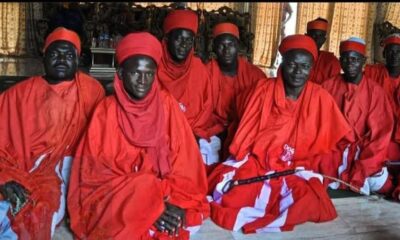
The community structure also includes traditional institutions such as the Eze and a council of elders drawn from the major families and village leadership. In 2021, HRH Eze Emesinwa Nwosu VII was installed as the traditional ruler of Ajalli after the stool had been vacant for about 15 years. The succession follows established customs tied to royal lineages within the community.
Family ties and lineage relations are central to social life in the town. Extended families often live in close proximity, share economic activities such as farming or trade, and support one another in life events such as marriages, funerals, and festivals. Age‑grade groups and local societies are also part of the social structure. These groups gather members of similar ages to carry out communal work, support festivals, and organize events that strengthen unity and cooperation among residents. While age grades are common throughout Igboland, they remain an important organizational feature in town life and community development.
Essentially, Ajalli people combine strong local bonds with broader Igbo cultural identity. Its village structure, traditional leadership, and community associations create a framework that supports cooperation, cultural continuity, and civic engagement in everyday life.
Culture and Traditions

Ajalli culture reflects the broader heritage of the Igbo ethnic group in Anambra State while also featuring customs and celebrations unique to the town. The cultural life is rich, grounded in community relationships, agricultural rhythms, and shared values that bring people together throughout the year.
Its traditions are closely tied to farming cycles because agriculture has shaped daily life for generations. Like many Igbo communities, Ajalli observes harvest customs that express gratitude for successful planting and harvesting seasons. These cultural practices go beyond simple ceremonies to reinforce unity, thank the ancestors and God, and remind residents of the importance of hard work and cooperation in community life. Such harvest celebrations are key parts of Igbo tradition across the region.
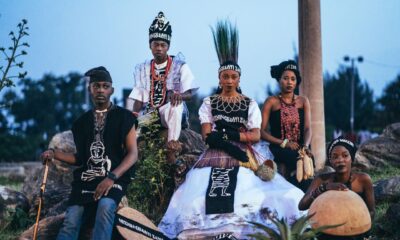
One of the most visible cultural highlights in Ajalli is the Otute Ujari Festival, an annual event that brings people of the community together in a colourful celebration of tradition, harvest, and social unity. During the festival, residents, visitors, and friends from neighbouring towns gather to enjoy masquerade performances, traditional music, dance, and displays of local attire and food. Otute Ujari Festival showcases the deep connection between culture and agriculture in the town while emphasizing community pride and belonging.
This festival also encourages young people to value their heritage and learn from elders. Local leaders and age‑grade societies participate actively in festival planning and execution. Masquerade groups, including performers invited from surrounding communities entertain crowds with vibrant movements and symbolic displays of strength, identity, and tradition.
Cultural ceremonies in Ajalli include the breaking of kola nuts, libation pouring, and shared feasting which are typical Igbo ways of honouring guests and expressing gratitude. During important functions such as the coronation anniversaries of the traditional ruler, people from all villages come together in festive attire to celebrate and uphold customs that link the past to the present. These events strengthen social bonds and remind residents of their shared identity in both family and community life.
Traditional arts like storytelling, communal dance, and music are part of everyday cultural expression. Although Christian worship is central in the town today, many families still incorporate traditional respects for the ancestors and land into ceremonies that mark births, marriages, funerals, and seasonal rites. These blend of practices reflect how contemporary religious life and long‑standing cultural customs coexist in the town.
Ajalli culture and traditions are rooted in the land, in shared celebrations, and in the ways people honour their history and each other. Cultural life remains a strong part of its identity and a source of pride for residents at home and in the diaspora.
Governance and Leadership
Ajalli plays an important role in both formal government and traditional leadership within Orumba North Local Government Area in Anambra State, Nigeria. As the headquarters of Orumba North LGA, it hosts the local government secretariat and offices where government activities are coordinated for towns in the council area. Residents and surrounding communities visit the council headquarters for public services, permitting, and local administrative matters. Orumba North LGA works under Nigeria’s system of local government, guided by leaders elected or appointed to manage community needs, development, and basic infrastructure.
In addition to formal government, traditional leadership also affect community life in Ajalli as the town recognizes a traditional ruler who acts as a cultural leader, custodian of local customs, and representative of the people in matters of community unity and heritage. Historically, Ajalli traditional ruler comes from the Ogbuti‑Oti royal dynasty, a lineage that has produced several rulers since its founding. The traditional stool is typically inherited by the first son of the immediate past ruler, following established local custom.
After about fifteen years without a recognized traditional ruler, Ajalli installed HRH Eze Emesinwa Nwosu VII as traditional ruler in 2021. His coronation was conducted under customary rites and witnessed by the heads of Ajalli’s four constituent villages: Amagu, Umuabiama, Umueve, and Obinikpa. This event marked the restoration of traditional leadership after a period without a monarch.
Today, the traditional ruler in Ajalli performs ceremonial functions, presides over cultural events, and contributes to decision‑making in matters affecting community peace and tradition. Although the powers of the traditional ruler are primarily cultural and ceremonial in contemporary Nigeria, the Eze remains an influential figure in local dispute resolution, rites, and public representation of the community’s heritage.
Traditional leadership in Ajalli works alongside elected officials of Orumba North Local Government to support progress in education, infrastructure, and social cohesion. Community associations such as the town union and village councils also contribute to local governance by organizing development projects, advising on leadership matters, and liaising with government representatives.
Governance in Ajalli blends modern local government structures with Igbo traditional leadership and allows both systems to play roles in the social and civic life of the town. This combination helps to maintain cultural continuity while responding to the administrative needs of the people and the wider Orumba North LGA.
Economy and Occupations
The economy of Ajalli is a reflection of the broader economic patterns of Orumba North Local Government Area and Anambra State, Nigeria. Like many towns in southeastern Nigeria, the economic life is deeply rooted in agriculture, local trade, services, and small‑scale occupations that sustain families and local markets.
Farming is the most widespread economic activity for people in Ajalli and surrounding communities. The land around the town is fertile, part of the larger agricultural landscape of Orumba North, and suitable for producing staple crops such as yam, cassava, rice, and palm products. Most households engage in subsistence farming to produce food mainly for family consumption and selling surplus at local markets. This pattern of farming supports food security and provides livelihoods for a large number of residents.
Local investments in agriculture across the region also support productivity. For example, programmes aimed at developing agricultural value chains in Orumba North have focused on improving farming outputs and crop processing. Although these programmes are more widely publicized in towns like Ndikelionwu, the effects extend to nearby farming communities including Ajalli by making improved farming tools and processing facilities more accessible.
Trade is another key part of Ajalli economy. Traders buy and sell agricultural produce and everyday goods in local markets that serve the town and neighbouring villages. Commerce helps to sustain local businesses and provides cash income for farmers and traders alike.
Women in Ajalli are often active participants in market trade, selling fresh produce, food, and handcrafted items. Men also engage in trade as well as in transporting goods between farms and markets. These market activities are central to the economic and social life of the community and makes the town part of a thriving local trade network across Orumba North.
Because Ajalli is the headquarters of Orumba North LGA, the town benefits from services related to government administration. Offices connected to local government bring civil service job opportunities, clerical work, and administrative services to residents. Workers in Ajalli may be employed in public service positions or in support roles linked to local government functions.
Small businesses also contribute to the local economy. Shops, bars, transport services, mobile phone vendors, salons, tailors, and other service providers support daily life and generate income for local residents. These small businesses help to meet everyday needs and provide jobs for young people and artisans.
Other occupations in the area include animal rearing such as poultry, goats, and sometimes cattle, which support household income and food supply. Some residents also engage in personal services like beauty treatment, crafts, and informal transport services that complement agricultural activities.
Education also plays a role in the local economy. People from the town who work as teachers, lecturers, and education professionals contribute their skills to schools within and beyond the town. The presence of educational institutions in the larger Orumba North area supports youth employment and skill development.
Education and Social Development
Education and social development are important parts of life in Ajalli. The people and neighbouring towns place a strong value on learning because education has long been a way for individuals and families to improve their livelihoods and contribute to social progress.
Formal education in the region dates back to the early 20th century when Christian missionaries brought Western schooling to communities in Orumba North, including Ajalli. Mission schools laid the foundation for literacy and modern learning that later expanded throughout the LGA. The Catholic mission officially entered Ajalli in 1927, establishing schools and churches that became focal points for education and social change.
This missionary influence encouraged greater acceptance of formal education among local families and increased attendance at schools as literacy became linked to economic opportunity and civic engagement.
Today, Ajalli and the wider Orumba North area benefit from a network of primary and secondary schools that serve young learners from the town and surrounding villages. Although specific school listings for Ajalli are drawn from the larger local government data, Orumba North hosts many community secondary schools, including Community Secondary School, Ajalli, among others in the council area. These schools provide basic and secondary education to students growing up in the region and support pathways toward further education.
As the Anambra State government prioritizes education as a key driver of social development, initiatives like the free education policy aim to expand access to schooling for children across Orumba North and other LGAs by integrating more public primary schools into the government system.
The proximity of Ajalli to institutions such as the Federal Polytechnic, Oko located within Orumba North also influences social development. The Federal Polytechnic, established in 1979, is a major tertiary institution in the area that provides higher education and technical training opportunities for students from the town and other nearby communities. Its presence helps to broaden educational horizons and supports youth aspirations for careers in engineering, technology, business, and other fields.
Social development in the area also benefits from community associations, youth groups, and local leadership that work together to support school programmes, mentorship activities, and community enrichment projects. These efforts seek to improve living standards, encourage school attendance, and prepare young people for future opportunities in a rapidly changing world.
Overall, education in Ajalli is a blend of historical foundations, government support, local involvement, and expanding opportunities. Schools remain central to community life, and education continues to shape social development by equipping children and young adults with knowledge, skills, and the confidence to contribute to their community and beyond.
Landmarks and Places of Interest

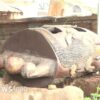
The Frontage of Ajalli Cave
When you visit Ajalli in Orumba, you will find a blend of natural sites, cultural spaces, and community landmarks that reflect its heritage and local life. These sites are meaningful to residents and offer insight into both everyday activity and community culture.
One of the most distinctive natural landmarks in Ajalli is a cave locally called Ogba located in the Obinikpa village of the town. This cave is part of the larger Orumba North geographical landscape which includes several caves and rock formations noted by scholars and tourism sources in the State. Ajalli cave has historical significance for local residents and was once a water source for the community before boreholes became more common. The cave is accessible from main roads and remains a natural feature of interest in the town.
Ajalli town structure includes public spaces such as the town square, community meeting areas, and halls where important festivals, civic gatherings, and events take place. Local social life often centres around such spaces where residents gather for discussions, cultural performances, and festivals. One location cited locally is Ogbiti Orji, a community space noted online as a park or town square where people meet and socialize.
While not a landmark in the traditional sense of a building or natural monument, the festival grounds in Ajalli are important places of interest because they host major cultural celebrations such as the Otute Ujari Festival. This traditional carnival highlights masquerade performances, dance, music, cultural dress, and communal activities that bring together people from the town and neighbouring communities each harvest season. Such events are a major cultural attraction in the town.
Christian churches are central places of interest in the life of the town that reflect its faith and social history. The Catholic Church, in particular has been influential since its establishment in the town after missionaries moved in from neighbouring areas in the early 20th century. Churches often act as community hubs where religious services, social programmes, and educational events take place, linking spiritual life with community development.
Although they are outside Ajalli town centre, several natural attractions in Orumba North LGA and the wider region are often visited by residents and visitors alike. These include lakes and caves such as Iyiocha/Amaokpala Lake and Obutu Lake in Ndikelionwu which are recognized by the Anambra State Ministry of Culture, Entertainment and Tourism as natural sites with tourism potential due to their scenic qualities and potential for picnicking, fishing, and relaxation. The region’s network of caves and rock formations links Ajalli to broader natural landscapes that attract nature enthusiasts and students of geography.
As the headquarters of Orumba North LGA, Ajalli hosts the local government secretariat which functions as a civic landmark and centre for administrative services. The secretariat building and associated offices bring people from across the LGA for official matters and public programmes. Local markets and trading spots around the town also serve as landmarks in daily life, where farmers and traders meet to exchange agricultural products and goods.
Notable People from Ajalli
Ajalli has produced individuals who have made significant contributions to Nigeria’s political, intellectual, and civic life. These notable people include public figures whose achievements are recognized beyond the local community.
Arthur Agwuncha Nwankwo (1939–2020)
Arthur Agwuncha Nwankwo was born in Ajalli, Anambra State and became one of Nigeria’s most respected authors, publishers, and pro‑democracy activists. He wrote more than 20 books and used his writing to challenge undemocratic governance during military rule in Nigeria. Nwankwo also served as vice‑chairman of the National Democratic Coalition (NADECO) and played a leading role in campaigns for a return to democratic government in the 1990s. His activism led to his detention in 1998 during General Sani Abacha’s regime, and he was released following Abacha’s sudden death that year. In addition to his political work, Nwankwo was chancellor of the Eastern Mandate Union (EMU) and a prominent voice in civil society.
Professor Humphrey Nwosu
Sources list Professor Humphrey Nwosu as a notable figure from Ajalli. He served as Chairman of the National Electoral Commission of Nigeria (NECON) (now INEC). He played a leading role in managing Nigerian elections and contributing to electoral reforms. His work in electoral administration has had lasting influence on Nigeria’s democratic process.
Eze Emesinwa Nwosu VII
Eze Emesinwa Nwosu VII is the current traditional ruler of Ajalli. His installation in 2021 ended a 15‑year vacancy on the traditional stool, reinforcing the importance of Igbo traditional leadership and cultural continuity in the town. As Eze, he functions as a cultural and community leader, presiding over customary events, festivals such as the Otute Ujari Festival, and ceremonies that uphold local heritage.
Beyond these widely recognized individuals, many grassroots leaders, educators, business people, and youth innovators from Ajalli contribute to community development, education, and cultural preservation. Local leaders often emerge through town unions, age‑grade societies, and civil organizations that drive social programmes, charity efforts, and public events in Ajalli and neighbouring towns.
Modern Developments
In recent years, Ajalli and the wider Orumba North Local Government Area in Anambra State have seen several development activities aimed at improving infrastructure, healthcare, culture, and community life.
One notable modern improvement in the town is the renovation of the Model Primary Healthcare Centre in Amagu village. In 2025, the lawmaker representing the Orumba‑North constituency in the Anambra State House of Assembly, Hon. Mazi Paul Obu refurbished the health centre to provide better services to residents.
This included fixing buildings and adding a water borehole and staff quarters to ensure that healthcare services are more reliable and accessible for the community.
The annual Otute Ujari Festival continues to be a lively modern cultural event that attracts not just residents of Ajalli but visitors from neighbouring communities. The 2025 edition featured masquerade performances, traditional attire, food displays, and cultural music. Leaders at the festival emphasized cultural pride, unity, and support for agriculture and youth participation in local development.
In the wider Orumba North area, infrastructure development has been highlighted by ongoing road construction and rehabilitation projects. The local government and the Anambra State government have worked on improving major roads that link Ajalli to neighbouring towns such as Ufuma, Ndiokpalaeke, and Amansea. These road projects aim to make travel easier, support farming and trade, and open up rural communities for economic activity.
Local civic engagement and cultural celebration have also grown. For example, community events like the second coronation anniversary of the traditional ruler drew residents and visitors in 2025 to celebrate heritage, peace, and unity. Such events reinforce social bonds and promote Ajalli’s identity within the region.
Together, these developments show that while Ajalli continues to honour its traditions, it is also embracing improvements in healthcare, infrastructure, culture, and community participation, thereby helping the residents to build brighter futures.
In Conclusion …
Ajalli in Anambra State is a town where history, culture, and modern life come together in a vibrant and meaningful way. From its origins as a settlement of migrants from Arochukwu, through its development under colonial administration and missionary influence, to its present-day status as the headquarters of Orumba North Local Government Area, it has consistently been a centre of culture, learning, and community cohesion.
Its people and community structure, anchored in four main villages support strong social ties, traditional leadership, and civic participation. Its culture and traditions, seen in festivals like the Otute Ujari Festival and everyday community life continue to preserve Igbo heritage while embracing modern influences. Its governance and leadership balance traditional rulership with modern local government structures, ensuring continuity and progress.
Economically, Ajalli thrives through agriculture, trade, small businesses, and public service while education and social development remain central to empowering residents and preparing future generations. Its landmarks, religious centres, natural sites, and community institutions offer both historical significance and contemporary relevance. Moreover, notable individuals from Ajalli highlight the contribution of the town to national development and leadership.
Modern developments in healthcare, infrastructure, and cultural celebration demonstrate that Ajalli is evolving while preserving its heritage. Overall, Ajalli stands out as a community that values its history, cherishes its culture, invests in its people, and continues to grow in the modern era. It is a shining example of how tradition and progress can coexist in southeastern Nigeria.
References
- https://ha.wikipedia.org/wiki/Ajalli
- https://en.wikipedia.org/wiki/Orumba_North
- https://wikipedia.nucleos.com/viewer/wikipedia_en_all_maxi_2024-01/A/Ajalli
- https://www.city-facts.com/ajalli/population
- https://www.emmason247.com.ng/blog/history-origin-culture-and-traditions-of-ajalli-town-in-anambra-state-/WRZIIWICWV
- https://new.aronewsonline.com/a-brief-profile-of-ndieni-asa-communities-ajalli/
- https://www.finelib.com/listing/Orumba-North-Local-Government-Area/62148/
- https://www.agorasc.org/about-orumba-north
- https://absradiotelevision.com/2025-otute-ujari-festival-ajalli-community-holds-carnival/
- https://www.scribd.com/document/881295186/History-of-Orumba-North
- https://guardian.ng/news/anambra-community-crowns-new-monarch-after-15-years/
You might want to check this out …