Igbo Traditional Medicine
Aju Mbaise: Origins, Ancient Herbal Secrets, and Cultural Significance in Igbo Traditional Medicine

Aju Mbaise is a traditional Igbo poly-herbal remedy that originates from Mbaise in Imo State, southeastern Nigeria. Explore its origins, ingredients, cultural importance, and scientific studies behind its use in Igbo traditional medicine.

In Mbaise, Imo State, health care has long been part of everyday life at home, not just something tied to hospitals. One of the well-known herbal preparations people still talk about is Aju Mbaise.
Aju Mbaise is a traditional herbal mixture used in Igbo communities, especially within Igbo traditional medicine. It is made by combining the leaves, bark, and roots of different plants, and then boiling them into a drink. For many families, it is commonly linked with postpartum care and general body recovery after illness or stress.
People in the community have used it for years based on knowledge passed down from the older generations. It is not a new invention, rather, it is something that has been part of local healing practices for a long time.
At the same time, Aju Mbaise has also gained attention in research settings. Some studies have looked at the plants used in the mixture and their natural chemical properties, trying to understand why it has remained important in traditional practice.
This article looks at Aju Mbaise in a simple way. It covers where it comes from, how it is made, why it is important in Igbo traditional medicine, and what researchers are beginning to learn about it today.
Origins of Aju Mbaise in Mbaise Culture
Aju Mbaise originates from Mbaise in Imo State, a place where the use of herbs has been part of everyday life for a long time. Before modern clinics became common, people depended on plants around them for many basic health needs.
In this setting, Aju Mbaise did not start as a fixed recipe or something created at a single point in history. It grew gradually. Different families and traditional healers tried combinations of local plants and paid attention to what seemed helpful in real situations. Over time, certain mixtures became more widely accepted and repeated.
In Mbaise communities, knowledge about herbs was usually learned through close contact with older people, not through formal teaching. A young person might observe how a parent or elder prepared herbal mixtures and slowly learn the process through repetition. This is how preparations like Aju Mbaise stayed within families and local groups.
It also became part of how people responded to everyday health concerns, especially in situations where hospitals were far away or not the first option. The mixture was not treated as something mysterious. It was part of practical, familiar care rooted in local experience.
Today, Aju Mbaise is still known in Igbo traditional medicine because it carries this background of long-term, community-based knowledge rather than a single origin story or inventor.
Composition of Aju Mbaise
Aju Mbaise is not made from a single plant. It is a mix of different medicinal plants that are combined and boiled together. This is why it is often described as a poly-herbal preparation in ethnobotanical studies.
The exact combination can vary slightly from one household or herbal practitioner to another. However, research and local documentation show that the mixture commonly includes a selection of bitter and medicinal plants known in Igbo traditional medicine for their strong natural properties.
Some of the plants often associated with Aju Mbaise include:
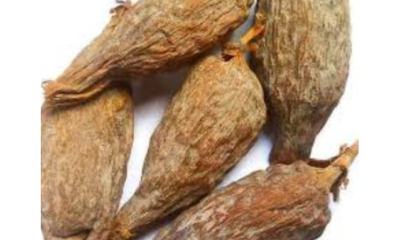
- Xylopia aethiopica (commonly used in many West African herbal preparations)
- Dialium guineense
- Uvaria chamae
- Cnestis ferruginea
- Combretum species
- Napoleona imperialis
- Heterotis rotundifolia
These plants are usually taken in different forms such as bark, leaves, roots, or stems, depending on what the practitioner believes is needed.
Traditionally, the plants are carefully selected and cleaned. They are measured in bundles or handfuls, depending on tradition, combined in a large pot and boiled in water for several hours until the active parts of the plants are released into the liquid. The result is a dark herbal drink that is then stored and used in controlled amounts.
In Igbo herbal practice, each plant is believed to contribute something different. Some are considered “bitter” plants, others are known for cleansing effects, and some are included for general body support. The idea is that the combination works together rather than relying on one plant alone.
Scientific studies on similar herbal mixtures in Nigeria show that these plants contain natural compounds such as flavonoids, tannins, and alkaloids which are often studied for their biological activity in laboratory research settings.
While traditional knowledge guides how Aju Mbaise is prepared and used, modern research is still working to fully understand how each component functions when combined.
Ancient Herbal Secrets Behind Aju Mbaise
What many people call Aju Mbaise today did not come from written instructions or formal records. It came from long-term observation of plants and careful attention to how the body responds to them in real situations.
One key idea behind Aju Mbaise in Igbo traditional medicine is combination. Instead of relying on one plant, different plants are brought together in one preparation. Each plant is believed to contribute something different, and the mixture is taken as a single remedy. This approach is common in many African herbal systems where balance is considered more important than isolation.
Another important part of the knowledge behind Aju Mbaise is bitterness. Many of the plants used in the mixture are naturally bitter. In traditional understanding, bitter plants are often linked with cleansing and internal “reset” of the body. This idea is based on cultural experience passed down through generations, not laboratory testing.
Over time, people also learned how preparation affects strength. Boiling for a long time, combining bark with leaves, and using specific plant parts are all part of how the mixture is prepared. These choices are not random. They come from repeated use and observation of what seems to work in practice.
Modern research on the plants found in Aju Mbaise shows that many contain natural compounds such as flavonoids, tannins, and alkaloids. These compounds are widely studied in pharmacology for their biological activity. While this does not fully explain traditional beliefs, it shows that the plants used have measurable chemical properties that scientists continue to investigate.
At the centre of it all is knowledge that has stayed within communities for a long time. It is practical knowledge, built through experience, not theory. This is what many people refer to when they talk about the “ancient secrets” behind Aju Mbaise.
Cultural Significance of Aju Mbaise in Igbo Traditional Medicine
In Igbo communities, Aju Mbaise is more than a herbal mixture. It sits within a wider way of life where health, family care, and tradition are closely connected. One of the most important roles of Aju Mbaise is its place in postpartum care.
In many homes, it is traditionally used after childbirth as part of recovery practices. This is usually done under the guidance of older women or caregivers who understand how it is prepared and when it is taken. In this context, it is not just about the drink itself, it is about the care system around it.
Beyond childbirth, Aju Mbaise is also associated with general body wellness in traditional settings. People have used it during periods when they feel weak or need what is locally understood as internal cleansing. These uses are based on long-standing community experience rather than hospital-based prescriptions.
Culturally, the preparation and sharing of herbal mixtures like Aju Mbaise also carry meaning. It often involves trust in family knowledge and respect for older generations who hold herbal experience. In many households, learning about these preparations is part of growing up and observing how care is given at home.
It also reflects how Igbo traditional medicine views health. Instead of separating the body from nature, plants are seen as part of everyday support systems. This is why herbal knowledge has remained important, even as modern medicine becomes more available.
Today, Aju Mbaise still holds cultural value because it represents continuity. It connects present-day practices with older ways of understanding health in Igbo society, especially in Mbaise communities where the tradition is strongly rooted.
How Aju Mbaise Is Used Traditionally
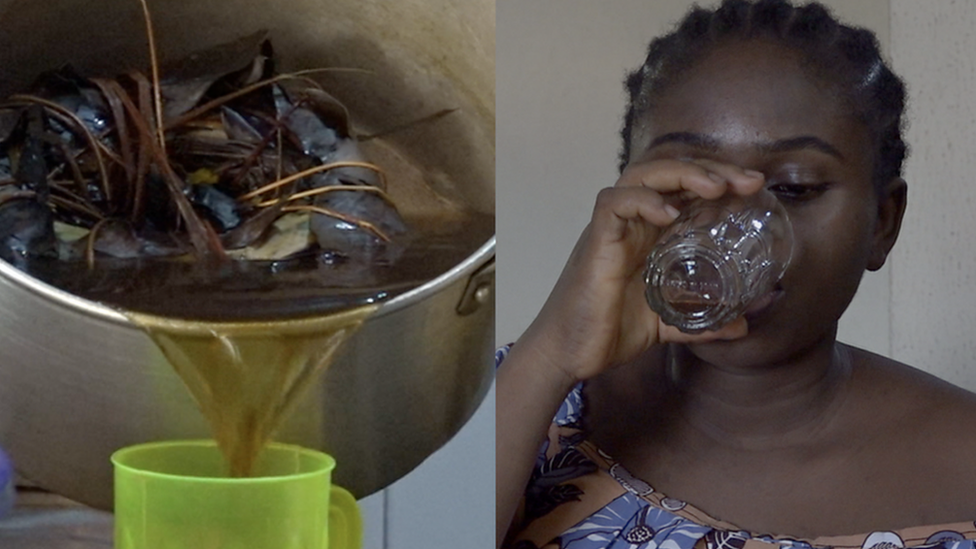
In traditional Igbo practice, Aju Mbaise is used as a prepared herbal drink made from boiled plant materials. The process and use are simple, but they follow patterns that have been passed down over time.
After the herbs are collected and boiled for several hours, the liquid is allowed to cool. It is then stored and taken in small, measured portions. In many homes, it is usually consumed as a warm or room-temperature drink, depending on preference and guidance from those who prepared it.
One of the most common traditional uses of Aju Mbaise is during postpartum recovery. In this context, it is taken as part of a wider care routine after childbirth. Older women or caregivers often guide when and how it is used, based on experience within the family or community.
Outside postpartum care, it is also used in some households as part of general wellness routines. Some people take it during periods of physical weakness or after illness, based on traditional beliefs about restoring balance in the body. These uses are not fixed in strict rules, rather, they follow familiar cultural practices within Igbo traditional medicine.
The timing and quantity are usually not standardized like modern medicine. Instead, they depend on local knowledge, observation, and the advice of experienced herbal practitioners.
In most cases, Aju Mbaise is not used alone. It is often part of a broader approach to care that includes rest, diet adjustments, and other traditional practices. This makes it less about a single remedy and more about a system of support within the household.
Scientific Interest in Aju Mbaise
In recent years, Aju Mbaise has moved beyond local use in Igbo communities and entered the attention of researchers who study medicinal plants. This interest does not replace traditional knowledge. Instead, it focuses on understanding what is inside the mixture and how its plant components behave under scientific testing.
Studies carried out in Nigeria have examined Aju Mbaise as a poly-herbal formulation. This means that it is made from several plants combined together, rather than a single herb. Researchers are especially interested in this kind of preparation because many traditional remedies in Africa use plant combinations rather than isolated ingredients.
Laboratory studies have identified that the plants used in Aju Mbaise contain natural chemical compounds such as flavonoids, alkaloids, tannins, saponins and terpenoids. These compounds are widely studied in pharmacology because they are known to show biological activity in controlled experiments.
Some published research has also tested extracts of Aju Mbaise in animal models. These studies report possible antibacterial effects and other biological activities under laboratory conditions. However, these findings are still in early stages and are not the same as clinical results in humans.
It is important to separate traditional use from scientific validation. In Igbo traditional medicine, Aju Mbaise is used based on long-standing community knowledge. In science, it is being studied to understand its chemical composition and possible effects in controlled environments.
Because of this, researchers often describe Aju Mbaise as part of ethnobotanical knowledge. This field focuses on how communities use plants for health and how that knowledge can be documented and studied further.
Overall, scientific interest in Aju Mbaise is still developing, but it shows growing recognition of traditional medicine as a source of valuable plant-based knowledge worth deeper investigation.
Aju Mbaise in Contemporary Society

Today, Aju Mbaise still exists in many Igbo homes, but its place in everyday life has changed compared to earlier generations. Though it is no longer the first option for everyone, it has not disappeared either. Instead, it now sits between tradition and modern living.
In some communities in Imo State and beyond, Aju Mbaise is still prepared at home, especially by older family members who are familiar with herbal practices. It is often used in situations tied to cultural care routines, particularly after childbirth or during periods when families prefer traditional wellness approaches.
At the same time, access to hospitals, pharmacies, and modern healthcare has increased. This has influenced how often people turn to traditional herbal mixtures. For some families, Aju Mbaise is now used occasionally rather than as a regular practice. For others, it remains part of cultural identity and home-based care.
Another noticeable change is how herbal products are shared and sold. In urban areas, some versions of traditional mixtures are now packaged and marketed as herbal remedies. This shift has made Aju Mbaise more visible outside its original communities. However, it has also raised questions about preparation methods and consistency.
Even with these changes, the cultural meaning of Aju Mbaise has not disappeared. It still represents a connection to ancestral knowledge and local ways of understanding health. For many people, it is not only about the drink itself, it is about trust in traditional practices and the memory of how care was once provided in the home.
In contemporary society, Aju Mbaise exists in this balanced space. It is part tradition, part modern interest, and part ongoing cultural conversation about how indigenous knowledge fits into today’s world.
Challenges in Preserving Traditional Herbal Knowledge
The knowledge behind Aju Mbaise and similar herbal practices in Igbo traditional medicine is not fully written down in formal records. It has mostly been passed through oral teaching, observation, and practice within families and communities. This way of learning has helped it to survive for generations, but it also creates real challenges today.
One major challenge is the loss of oral transmission. As older herbal practitioners and knowledgeable elders grow older, fewer people are learning directly from them. When this knowledge is not documented, parts of it can disappear with time.
Another issue is changing lifestyles. The younger generations are more exposed to modern healthcare, urban living, and global information systems. Because of this, interest in traditional preparation methods like those used for Aju Mbaise is not as strong as it once was in some communities.
There is also the problem of incomplete documentation. While researchers have begun to study herbal mixtures, many traditional recipes are still not fully recorded in detail. This makes it difficult to preserve exact methods, especially when plant combinations and preparation steps vary between families.
Misidentification of plants is another concern. Many medicinal plants look similar, and without proper training, it is easy for errors to occur when gathering ingredients. This can affect both safety and effectiveness.
Commercialization has also changed the picture. In some cases, herbal mixtures are packaged and sold without clear standard preparation methods. While this increases availability, it can also lead to variation in quality and loss of traditional consistency.
Despite these challenges, interest in ethnobotanical research is growing. Scientists and cultural researchers are beginning to document traditional medicine systems more carefully. This includes studies on Aju Mbaise which helps to preserve information that might otherwise be lost.
Preserving this knowledge depends on both documentation and responsible teaching. When traditional practitioners, researchers, and communities work together, it becomes easier to keep these practices alive in a more structured and reliable way.
The Future of Aju Mbaise and Igbo Herbal Medicine
The future of Aju Mbaise and Igbo herbal medicine is shaped by two things happening at the same time. On one side, there is growing interest in natural and plant-based remedies. On the other side, modern healthcare systems continue to expand and become more widely used. Aju Mbaise now exists at the meeting point of both worlds.
One clear direction for the future is more scientific research. Studies on medicinal plants used in Aju Mbaise have already begun, focusing on their chemical composition and biological activity in laboratory settings. As interest in ethnobotany grows, more structured research may help to document how these plants work individually and in combination. This does not replace traditional knowledge. It helps to explain it in ways that can be studied and preserved.
Another important direction is documentation. Many aspects of Igbo herbal medicine are still passed down orally. Recording this knowledge in written and digital forms can help to preserve it for future generations. This includes plant identification, preparation methods, and cultural context around use.
Education also plays a role. When the younger generations learn about traditional medicine alongside modern science, it becomes easier to understand both systems without losing cultural identity. This can help to reduce the gap between traditional practitioners and modern health professionals.
There is also increasing attention on quality control. As herbal mixtures become more widely shared and sometimes commercialized, there is a need for clearer standards. This includes accurate plant identification, safe preparation methods, and consistency in formulation.
At a cultural level, Aju Mbaise is likely to remain important because it is tied to identity and heritage in Mbaise communities. Even as lifestyles change, many people continue to value traditional practices that connect them to family history and local knowledge systems.
The future of Aju Mbaise will depend on balance. When tradition is respected, and at the same time carefully studied and documented, it can continue to exist in a way that is both culturally meaningful and scientifically understood.
Conclusion …
Aju Mbaise remains an important part of Igbo traditional medicine, especially within the Mbaise cultural area of Imo State. It is a herbal preparation built on long-standing knowledge of local plants, passed through generations and used mainly in home-based care practices such as postpartum recovery and general wellness support.
What makes Aju Mbaise stand out is not only its ingredients, rather, it is the way it connects people to a system of health that developed long before modern healthcare became widely available. It carries with it practical experience, cultural memory, and a way of understanding the body that is rooted in observation of nature and daily life.
At the same time, modern research has begun to take interest in the plants used in the mixture. Studies on its phytochemical content and biological activity show that it contains compounds that are scientifically relevant, even though much of this work is still at an early stage and largely based on laboratory and animal studies.
As the society continues to change, Aju Mbaise sits in a unique position. It is part of cultural heritage, a subject of scientific curiosity, and a living practice still found in some homes today. Its continued relevance will depend on how well this knowledge is documented, respected, and understood across both traditional and modern systems of health.
In the end, Aju Mbaise tells a larger story about how communities use the natural environment around them to care for health, and how that knowledge continues to find meaning in a changing world.
References
- Wikipedia contributors. (n.d.). Aju Mbaise. Wikipedia, The Free Encyclopedia. https://en.wikipedia.org/wiki/Aju_Mbaise
- Evbakhavbokun, O. E., et al. (2020). Phytochemical screening and antibacterial properties of Aju Mbaise. Tropical Journal of Natural Product Research. https://tjnpr.org/index.php/home/article/view/1117
- Ijioma, S. N., et al. (2021). Evaluation of toxicity profile and pharmacological potentials of Aju Mbaise polyherbal extract in rats. Scientific African. https://www.researchgate.net/publication/347917478_Evaluation_of_Toxicity_Profile_and_Pharmacological_Potentials_of_Aju_Mbaise_Polyherbal_Extract_in_Rats
- Uroko, R. I., et al. (2025). Evaluation of selected pharmacological properties of Aju Mbaise in experimental models. Biology, Medicine & Natural Product Chemistry. https://sciencebiology.org/index.php/BIOMEDICH/article/view/748
- Ogunkunle, A. T. J., et al. (2014). Documentation of herbal formulations in Nigeria: Ethnobotanical perspectives. Evidence-Based Complementary and Alternative Medicine. https://pubmed.ncbi.nlm.nih.gov/24701246/
You might want to check this out …