






History and heritage
Amaokpala, Anambra ‖ Culture, Festivals, Landmarks and Things You Should Know

Amaokpala is a vibrant town in Anambra with deep-rooted traditions, the iconic Okponsi festival, clean lake landmarks, rich cultural heritage and growing opportunities for education and tourism.

Iyi Ocha Lake – Amaokpala
Amaokpala is a captivating town in Anambra State, Nigeria known for its rich cultural heritage, vibrant festivals and serene natural landscapes. Situated in Orumba North Local Government Area, Amaokpala is home to sacred sites like Iyi Ocha Lake, age-old traditions such as the Okponsi festival and community events like the celebrated Ada Amaokpala pageant.
With a history rooted in Igbo customs, fertile lands for agriculture and a people deeply committed to preserving their culture, Amaokpala offers a unique glimpse into authentic Nigerian life.
In this article, we explore Amaokpala’s history, geography, culture, landmarks, education, leadership, events, challenges and opportunities, giving you everything you need to know about this remarkable Anambra town.
History of Amaokpala
Amaokpala is a longstanding Igbo community located in Orumba North Local Government Area of Anambra State, Nigeria. According to scholarly research, the town has been in existence since time immemorial, with no formal written record of its founding. Its origins are preserved mainly through oral tradition, making its early history deeply rooted in ancestral memory.
Amaokpala lies in the heart of Igboland and is not situated along any major river. This positioning likely limited early European contact during colonial times, contributing to its relatively low presence in colonial-era documents. The town is bordered by Ndiowu to the east, Ndikelionwu and Omogho to the northeast, Awgbu to the northwest, Nanka to the west, and Oko to the south.
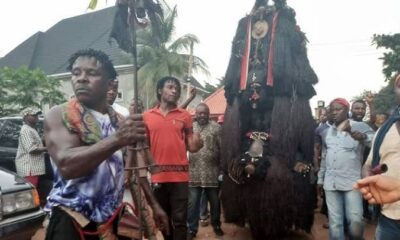
One of the most defining parts of Amaokpala’s history is its Okponsi festival, a deeply spiritual and communal rite that has shaped the cultural identity of the town for generations. According to Benedict Okoli‑Ekemezie’s hermeneutical study, Okponsi is an annual four-day festival involving phases such as izu-ufolo, agu‑mmanwu, okobolo, iya, mmanwu, mgbako-mmanwu, oso-mmanwu and inu-mmanwu.
Etymologically, the name Okponsi derives from the Igbo words ikpo (to pack) and nsi (impurities), meaning “to pack away impurities.” The ritual serves as a cleansing of the land, i.e. spiritually purging it of evil or negative forces in order to ensure a successful farming season. It is also a form of appeasement where ancestors and deities are honoured in hopes of securing their favour for fertile yields and communal prosperity.
Though the history of Amaokpala does not appear in many colonial archives, the strength of its oral tradition and the sustained practice of Okponsi show how the community has preserved its heritage across centuries.
Geography and Location of Amaokpala

Amaokpala, Anambra
Amaokpala is situated in Orumba North Local Government Area of Anambra State, in southeastern Nigeria. Orumba North covers about 320.6 km² and, as part of this LGA, Amaokpala shares in its largely agrarian and gently undulating terrain.
The area is characterized by fertile soil which supports subsistence farming as one of the major economic activities. Local farmers in the region grow crops such as yam, cassava, rice and palm produce which are the key staples of the local economy.
The climatic conditions of Amaokpala reflect those of the larger Orumba North LGA. It experiences a tropical climate with two distinct seasons, i.e. rainy season around March to October, and dry season, roughly from November to February. The average temperature in the LGA hovers around 26 °C.
A notable physical feature of Amaokpala is Iyi Ocha, commonly known as Amaokpala Lake. The water of the lake is reputed to be so clear that one can see its bottom. According to local sources, the lake empties into the Odo River.
Culturally, the lake holds high significance. Its custodial deity is overseen by a chief priest traditionally drawn from the local royal lineage which demonstrates how spiritual and traditional practices intersect with geographic features in the town.
The villages in the Amaokpala rural area are Amokwe, Ndikpa and Umudike. In terms of its neighbouring communities, Amaokpala is surrounded by several other towns in Orumba North. Among them are Ndiowu, Ndikelionwu, Omogho, Awgbu, Nanka and Oko.
Culture and Traditions

Amaokpala
Amaokpala is a deeply traditional Igbo community whose cultural life is anchored in ritual, ancestry and spiritual meaning. One of its most defining cultural practices is the Okponsi festival which remains central to its identity.
The Okponsi Festival
Okponsi festival is an annual, four-day event that rotates according to the traditional Igbo market cycle, specifically on the four market days of Afor, Nkwo, Eke and Orie. In Amaokpala, different kindreds host the festival in rotation which underlines communal participation and shared responsibility.
The stages of Okponsi festival are rich in meaning and ritual. According to study, the key phases include:
Preparation: Families prepare individually. Elders meet at a central family meeting known as Eze-isi but don’t openly discuss the date or activities. They mix and drink wine in silence after prayers and disperse quietly.
Izu-ufolo: This is a gathering of elders where nothing is openly discussed. It’s more symbolic than deliberative, intended as a spiritual alignment.
Agu-mmanwu: A night masquerade known as the “tiger masquerade” emerges. It is described as powerful and terrifying, unleashing synchronized sounds in the night and deeply affecting the community.
Okobolo: This is the musical phase where a special band called Okobolo, accompanied by flute plays through villages. The music can be intense, especially when both young men and masquerades respond to it.
Mmanwu Phases: There are several masquerade stages, including mmanwu, mgbako-mmanwu, oso-mmanwu and inu-mmanwu. These represent different ancestral or spiritual dances, blending cosmological, social and artistic meanings.
Iya: This is another ritual component, often linked to cleansing and appeasement
The name “Okponsi” itself is symbolic. It comes from Igbo words “ikpo” (to pack) and “nsi” (feaces), literally meaning “to pack away impurities.” Through the festival, participants symbolically cleanse the land of negative forces and appeal to their ancestors and deities to bless the coming farming season.
Spiritual and Social Significance
Okponsi has religious, social and existential importance for Amaokpala people. According to the same hermeneutical study, this festival links the community’s spiritual beliefs with its agrarian life. The rituals performed are meant to maintain harmony between humans, the land and the spirit world, particularly ancestors, ensuring both physical and metaphysical wellbeing.
Socially, Okponsi reinforces community bonds. The rotational hosting system ensures that every kindred plays a role, strengthening unity and shared belonging. Through masquerades and dance, the younger generation also learns the stories of their origins, spiritual values and responsibilities toward the land.
Oral Tradition and Continuity
Much of Amaokpala’s culture is preserved through oral tradition. Songs, proverbs and stories about Okponsi, ancestral lineage and the spiritual nature of their lake (Iyi Ocha) are passed down from elders to younger people. Because written historical records are limited for Amaokpala, oral transmission remains vital for cultural continuity.
Modern Adaptation and Challenges
Despite its deep roots, Okponsi festival has faced misinterpretation by outsiders, including non-indigenes and religious groups, according to research. Some see it as mere superstition while for others, it’s spiritually profound and culturally essential. The challenge for Amaokpala is to preserve the authentic ritual value of Okponsi while allowing for adaptations that make sense in today’s context.
Cultural Identity Through Masquerades
Masquerades are central to Amaokpala traditions. They are not just for entertainment; each type of mmanwu e.g., agu-mmanwu, oso-mmanwu carries spiritual meaning and represents ancestral or supernatural forces. These performances connect age-old cosmologies with community life.
Masquerades also serve as cultural educators. They dramatize moral lessons, warn against misbehaviour and embody ancestral archetypes. Their rhythmic performances, combined with music, create a powerful, immersive experience during Okponsi.
Economy
The economy of the town is deeply rooted in the larger economic pattern of Orumba North Local Government Area which relies heavily on agriculture, local trade and small-scale livelihoods that serve both subsistence and regional market needs.
Farming is the mainstay of the economy, much like in the rest of Orumba North. The land around the town is fertile and well-suited for growing key staple crops. According to regional data, farmers cultivate yam, cassava, and palm produce which are central to local food security and income generation.
Because most farmers are smallholders, their production tends to be on a subsistence level, not necessarily for large-scale commercial export, but for sustaining families and supplying local markets.
In addition to crop farming, residents engage in animal rearing, particularly livestock such as goats, poultry, and possibly pigs, though specific data for Amaokpala is extrapolated from broader LGA economic profiles.
Small-scale services and commerce also contribute to the economy. There are hotels, small businesses and trade centres in Orumba North. Transportation, especially, motorcycle and tricycle operation also plays a role in local trade.
Notable Landmarks and Attractions in Amaokpala
Apart from being a culturally rich town, Amaokpala hosts key natural landmarks that attract visitors and hold deep spiritual meaning for the community. Below are some of the most important and interesting attractions in and around Amaokpala.
Iyi Ocha (Amaokpala Lake)
One of the most prominent landmarks in Amaokpala is Iyi Ocha, often referred to as the Amaokpala Lake. This lake is officially recognized in Anambra State’s tourism inventory as one of the key lakes and sacred rivers in Orumba North LGA.
According to a tourism study, Iyi Ocha is especially clean. Locals claim that the water hates any form of dirt. The lake draws regular visitors, including students from the Federal Polytechnic, Oko, and is accessible by different routes, making it reasonably open to tourists.
Spiritually, the lake holds a sacred place in the hearts of Amaokpala people. It is traditionally guarded by a chief priest whose role connects the physical site with ancestral and cosmological belief systems, highlighting how natural geography is deeply tied to local spiritual life.
Mysteries of the Lake
Local lore and reports from tourism research make Iyi Ocha even more intriguing. For example, some sources claim that there is no record of aquatic life in the lake and no recorded drowning, which contributes to its mystique. In one reported incident, villagers noticed the lake’s level dropped significantly overnight after refuse was improperly dumped – a phenomenon many locals interpret as a spiritual reaction.
Role in Tourism Potential
Although Amaokpala Lake remains largely undeveloped in terms of formal tourism infrastructure, its potential is well recognized. A scholarly tourism-management study classifies Iyi Ocha at the early stage in the Tourist Area Life Cycle (TALC) model, meaning that there is still room for thoughtful development.
The Anambra State Government also explicitly lists Iyi Ocha among its natural tourism assets under the Ministry of Culture, Entertainment and Tourism, suggesting that with investment, the site could become a more prominent attraction for leisure, recreation and cultural tourism.
Surrounding Regional Attractions
While Amaokpala’s most significant landmark is its lake, the broader Orumba North LGA is surrounded by other natural and cultural attractions that enrich the region’s appeal:
Ajalli Cave: This is one of several caves in Orumba North with tourism potential, as listed by the Anambra tourism ministry.
Obutu Lake, Ndikelionwu: Also mentioned by the State tourism ministry, this lake is part of the broader water-resources heritage in the area.
These sites, while not strictly within Amaokpala, help link the town to a network of natural attractions that could make a visit there more compelling for tourists interested in ecotourism, culture and adventure.
Educational and Community Institutions
Amaokpala, as part of Orumba North in Anambra State has a number of educational and community institutions that reflect its commitment to both traditional values and modern development.
Formal Education Institutions
One of the most prominent schools in Amaokpala is Holy Ghost Academy, Amaokpala (HGAA). Established in September 2003 by the Congregation of the Holy Spirit (Spiritans), this all-boys secondary school emphasizes both academic excellence and moral discipline. According to an academic source, HGAA was the first Spiritan secondary school in Anambra State focused on Spiritan values in educational works.
At the level of tertiary education, residents of Amaokpala benefit from proximity to the Federal Polytechnic, Oko which is situated in the same Orumba North Local Government Area. This public polytechnic, established in 1979 provides technical and vocational training to students from Amaokpala, neighbouring communities and across Nigeria.
Regarding public secondary schools, Amaokpala is listed under the Orumba North Universal Basic Education Board school development programme. This shows government recognition and support for formal education in the community.
Health Education and Youth Engagement
Amaokpala youth are actively engaged in public health education. For example, youths from the town participated in a campaign against Lassa fever and COVID-19 organized in cooperation with State government officials. This kind of engagement helps build community resilience, as young people are empowered to spread awareness and adopt hygienic practices.
The involvement of Amaokpala youth in public health campaigns also connects to larger efforts. UNICEF, for instance, has previously trained grassroots stakeholders in Orumba North, which includes Amaokpala to lead Lassa fever prevention education. These trainings underscore the importance of community-based institutions in health and education.
Community and Religious Institutions
Religious institutions also play a key role in Amaokpala social fabric. The Catholic Diocese of Ekwulobia, which includes Amaokpala oversees several schools, among them Holy Ghost Academy. This connection to the diocese reinforces the link between faith-based institutions and education in the town.
Beyond formal schools, community-led structures such as development unions help coordinate local initiatives. These bodies often support education, health and cultural projects in Amaokpala, ensuring that growth aligns with local values and priorities.
Traditional Leadership and Town Union in Amaokpala
Amaokpala maintains a strong structure of traditional leadership alongside its town union, both playing vital roles in guiding cultural, social and development affairs in the community.
Traditional Leadership
The traditional ruler of Amaokpala is HRH Cyprian O. Okeke, also known as Udodinma III. He is recognized as the Igwe of Amaokpala, serving as the custodian of its customs, traditions and ancestral heritage.
In 2015, Igwe Okeke publicly opposed the establishment of a brothel close to his palace, describing it as a “desecration” of Amaokpala traditional institution. This move highlighted his role as both spiritual and moral leader in the town.
According to listings of traditional rulers in Anambra State, Igwe Cyprian Okeke’s position is officially recognized by State authorities.
Town Union
Amaokpala Development Union (ADU) is the official town union for Amaokpala. It serves as the main organized body for development, diaspora engagement and community projects.
The union is active both locally and internationally, with a that mobilizes the indigenes abroad to support social, cultural and infrastructural initiatives. For example, the Ada Amaokpala pageant organized by the diaspora branch is a major cultural event that promotes youth leadership and community pride.
In 2025, members of the Amaokpala diaspora appealed to the Anambra State governor to address insecurity in the town following a high-profile kidnapping. This demonstrates the union’s capacity to represent and advocate for the community at high political levels.
Cultural Events in Amaokpala
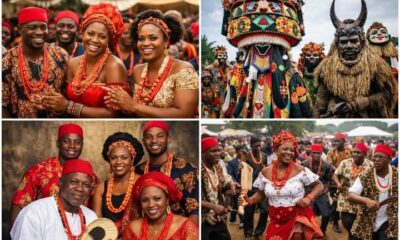
Amaokpala celebrates its heritage through a mix of traditional festivals and community pageants, with the Okponsi festival being its most ancient cultural event, and the Ada Amaokpala pageant emerging more recently as a platform to showcase their young women’s talents, poise and connection to their cultural roots.
Okponsi Festival
Okponsi festival is town’s signature cultural event held annually over a period of four days. According to study, the festival rotates through the four traditional Igbo market days – Afor, Nkwo, Eke, and Orie, with each year’s hosting done by a different village or kindred.
Key phases of the Okponsi festival include Izu-ufolo, Agu-mmanwu, Okobolo, Iya, various masquerade performances (mmanwu, mgbako-mmanwu, oso-mmanwu, inu-mmanwu), among others.
Ada Amaokpala Pageant
The Ada Amaokpala pageant is organized by the ADU, Diaspora Branch, and is a relatively new but culturally significant event.
In the 2024 edition, Miss Christabel Nwaogu was crowned Ada Amaokpala, winning the sum of ₦200,000. The contest included rounds for traditional attire, talent and evening gown.
The 2025 pageant (third edition) was won by Miss Precious Chukwuma from Amaokwe village. She received ₦300,000 while the first and second runners-up were awarded ₦150,000 and ₦75,000, respectively.
The event is designed not just for beauty as contestants are judged on cultural awareness, speaking ability, talent and how well they represent the values and traditions of town.
According to the pageant organizers, it is a powerful platform for building self-confidence, leadership skills and community pride among young women in the community.
Challenges and Opportunities
Amaokpala, like many communities in Orumba North confronts a mix of structural challenges, particularly in environment, infrastructure and development, but also stands on firm ground for several promising opportunities, especially in cultural and eco-tourism.
The challenges include:
Environmental Degradation (Erosion): Orumba North LGA which includes Amaokpala is among the areas in Anambra State severely affected by gully erosion, a serious environmental threat.
According to The ICIR, some erosion control projects meant to protect communities have been abandoned or poorly implemented, leaving residents vulnerable to flooding and land loss. These environmental challenges do not only affect farmland and homes but also threaten the natural landscapes like lakes that could otherwise draw tourists.
Infrastructure Deficits: Local businesses in Anambra State, including in rural LGAs face infrastructural constraints such as poor roads and unreliable power supply. For tourism to thrive in Amaokpala e.g., around Iyi Ocha lake, good road access and infrastructure are critical. Without them, visitor numbers will be limited, and the community may struggle to monetize its attractions.
Funding and Investment for Tourism: While lakes like Iyi Ocha are listed among Anambra State’s tourism potentials, fully developing them as tourist resorts requires investment. The State tourism policy acknowledges these lakes, but turning them into functioning tourist destinations remains a work in progress. According to analyses of lake-resort development in the Agulu-Orumba region which includes Amaokpala, lack of standard resort facilities and challenges in financing are significant barriers.
Security and Governance: Orumba North has faced security concerns, which affect both the quality of life of residents and the potential for tourist inflow. Infrastructure projects remain a priority, but reports suggest that some areas are still underserved which may limit local development and reduce the rate at which Amaokpala can benefit from State-led tourism or economic programs.
Sustainability and Environmental Risk: As with many natural tourist assets, developing Iyi Ocha and environment must balance ecological preservation with tourism growth. Inadequate planning may degrade the very resources tourism depends on. There is also the challenge of ensuring that local stakeholders i.e. residents, traditional leaders benefit meaningfully from tourism rather than being marginalized or displaced.
Despite these challenges, there are opportunities in the town:
Eco-Tourism and Heritage Tourism: Iyi Ocha represents a significant opportunity for eco-tourism. The Anambra State Ministry of Culture, Entertainment & Tourism explicitly lists lake tourism, including Iyi Ocha as a key area for development. Heritage tourism is gaining traction in Anambra. According to BusinessDay, the State is working on a “Heritage Tourism Master Plan” to link cultural sites, build infrastructure and empower local custodians of tradition.
Properly developed, Amaokpala could become part of a tourism circuit that includes other natural and cultural attractions e.g., caves, erosion site-turn tourist-site within Orumba North.
Job Creation and Economic Growth: Developing tourism in the community could generate local employment in guiding, hospitality, crafts and transport, and stimulate the local economy. Heritage tourism tends to support a broad ecosystem of artisans, storytellers, food vendors, transport operators and others. According to research on the Agulu-Orumba lake resort potential, a well-developed lake resort could significantly boost local income and provide a sustainable source of economic activity.
Youth Engagement and Skill Development: There are existing youth empowerment initiatives in Orumba North. For instance, there was a past programme aimed to give over 3,000 youths vocational and entrepreneurial training in agriculture, ICT and other areas.
These initiatives could be aligned with tourism development. Young people could be trained as eco-guides, hospitality workers or in crafts production, ensuring that tourism growth is inclusive and locally rooted.
Public-Private-Community Partnerships: The Anambra government’s tourism policy framework shows openness to community-based tourism enterprises. There is potential for partnerships with private investors, traditional authorities and town unions in Amaokpala to develop the lake, build visitor facilities and manage sites sustainably, sharing benefits with local people.
Sustainable Development and Ecological Awareness: As Anambra begins to position its natural erosion sites and lakes as tourist destinations, Amaokpala could benefit from broader State efforts to promote sustainable tourism, ecological education and conservation.
This can also build environmental resilience. Tourist revenues could help fund erosion control, conservation projects and community-led environmental protection.
Overall, Amaokpala has real developmental challenges, especially around environmental degradation, infrastructure, and funding. But its natural assets, cultural depth and community spirit offer promising opportunities. With strategic investment, strong partnerships and sustainable planning, the town could unlock its tourism potential, empower its youth and turn its challenges into engines for growth.
In Conclusion …
Amaokpala is a town rich in history, culture and natural beauty. From its traditional leadership under HRH Igwe Cyprian O. Okeke to vibrant cultural festivals like the Okponsi Festival and contemporary events such as the Ada Amaokpala pageant, the town demonstrates a deep respect for heritage while embracing modern community initiatives.
Economically, Amaokpala thrives on agriculture, small-scale trade and the potential for eco-tourism, anchored by assets like Iyi Ocha Lake. While challenges such as erosion, infrastructure deficits and limited investment persist, opportunities for youth empowerment, heritage tourism and agro-processing point to a promising future.
With strong leadership, active town unions and a community-oriented spirit, Amaokpala exemplifies how rural towns in Nigeria can preserve cultural identity while pursuing sustainable development. ‘
Whether through education, cultural engagement or economic growth, this Anambra town remains a community with resilience, pride and untapped potential – a town every visitor and researcher should know about.
References
- https://www.agorasc.org/about-orumba-north
- https://nigerianjournalsonline.com/index.php/NJAH/article/view/3549
- https://www.davidpublisher.com/Public/uploads/Contribute/5f2cc504e60c9.pdf
- https://anambrastate.gov.ng/ministry-of-culture-entertainment-and-tourism/
- https://www.westafricanpilotnews.com/2024/01/02/miss-nwaogu-crowned-ada-amaokpala-2024-wins-200000-naira/
- https://dailytimesng.com/amaokpala-youths-embrace-campaign-against-lassa-fever-coronavirus/
- Nigerian Journal of Arts and Humanities (NJAH), Volume 3 Number 2, 2023 (ISSN: 2814-3760, E-ISSN: 2955-0343)
You might want to check this out …