




Cultural Festivals in Nigeria
Amaseikumor Festival: The Powerful Cultural Celebration of the Ijaw People of Nigeria

Amaseikumor festival is a powerful Ijaw cultural celebration in Nigeria that promotes unity, spiritual cleansing, and tradition. Discover its history, meaning, rituals, and significance.
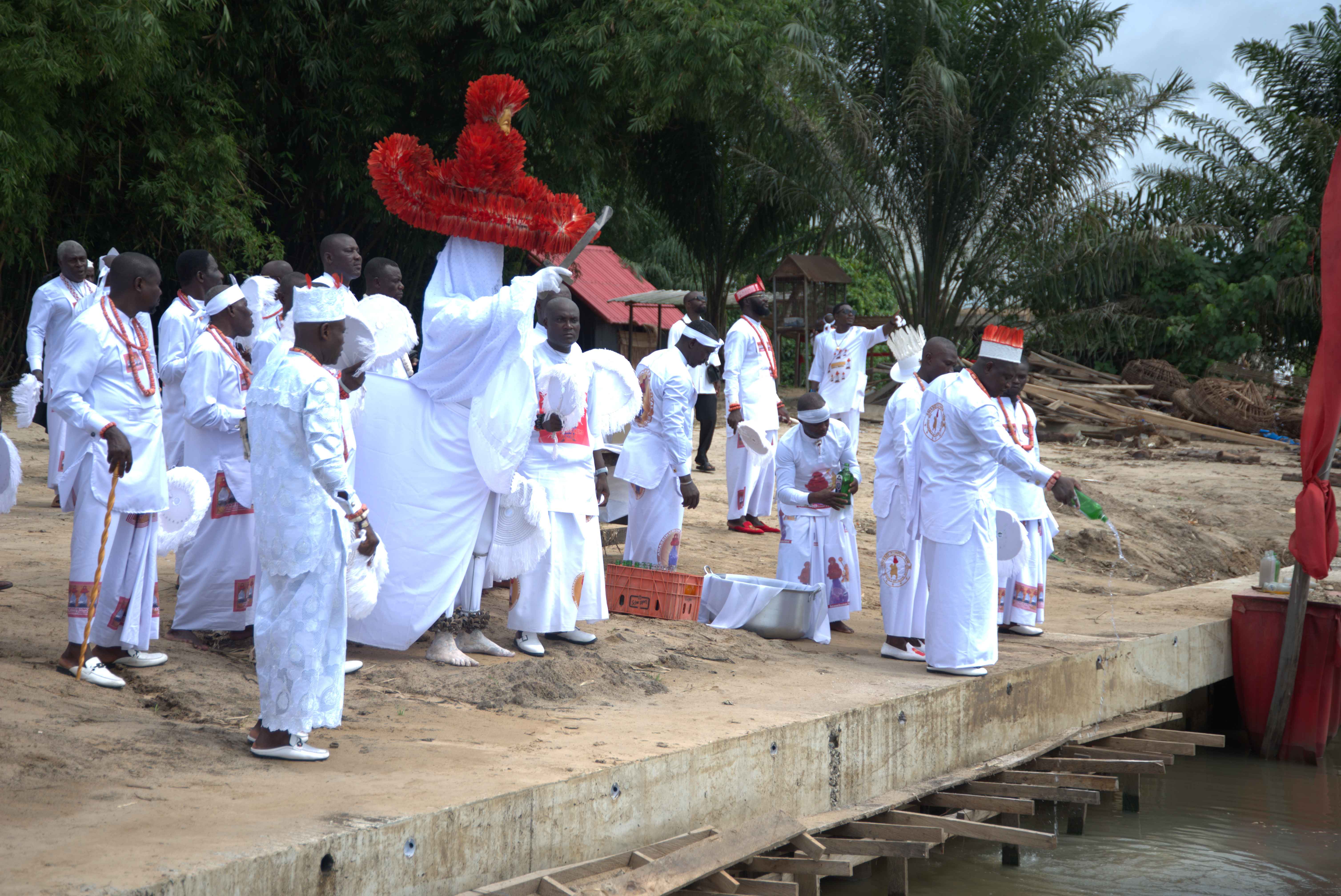
In Oporoza, a quiet riverine town in Delta State, there is a week each year when ordinary routines give way to something more deliberate. Boats arrive on the waters steadily. Families gather. Conversations turn serious. It is the heralding of the Amaseikumor festival.
The Amaseikumor festival is one of the most important cultural and spiritual traditions of the Ijaw people. It is not built around spectacle or entertainment. It is built around accountability. The central idea is simple but demanding. People are expected to examine their lives, admit wrongdoing where necessary, and commit to living rightly within the community.
Across several days, the town moves through a clear rhythm. There are rituals led by priests, moments of quiet reflection, public gatherings, and cultural expressions that carry long-standing meaning. White clothing appears often, not for style, but as a symbol of purity. There is drumming, and there is movement. But they do not distract from the purpose. They support it.
The Amaseikumor festival has been observed for generations in the Gbaramatu Kingdom, and its relevance has not faded. At a time many traditions are losing their place, this one continues to hold attention because it speaks directly to how people live with one another.
This article takes a closer look at the Amaseikumor festival, its origins, its meaning, and why it still carries weight in Nigeria today.
Historical Origins of the Amaseikumor Festival
The Amaseikumor festival has deep roots in the early history of the Ijaw people, particularly those of the Gbaramatu Kingdom in present-day Delta State. Oral tradition places its origin far back in time, with some accounts tracing it to as early as the first century AD. While exact dates are difficult to confirm due to the absence of written records, what is consistent across sources is that the festival has been observed for many generations without interruption.
At the centre of its origin is a guiding principle often interpreted as “do not pollute the land.” This idea goes beyond physical cleanliness. It speaks to moral conduct, truthfulness, and responsibility within the community. The early Ijaw settlers are believed to have established the Amaseikumor festival as a way to maintain order, settle disputes, and prevent actions that could bring harm to the land or the people.
The festival is closely linked to a traditional code sometimes referred to as Izon-Gesi, a system of values that promotes honesty, justice, and communal harmony. Before formal legal systems, this cultural framework helped to regulate behaviour. The Amaseikumor festival became the annual period when these values were revisited, and when individuals were expected to account for their actions.
Spiritual belief also played a major role in defining the festival. The Ijaw worldview recognizes the presence of divine forces and ancestral spirits that are actively involved in human affairs. The Amaseikumor festival developed as a structured way to seek alignment with these forces. It created a space where the community could ask for forgiveness, restore balance, and invite peace for the coming year.
What is notable is how the festival has endured. Despite colonial influence, religious change, and modernization, the Amaseikumor festival has remained relevant. It has adapted in form at different points. Yet, its purpose has stayed consistent. It continues to serve as a reminder of a time community life was guided by shared values, and when cultural systems were designed to keep people accountable to one another.
Meaning and Significance of the Festival
The Amaseikumor festival is built on a clear idea that guides both its rituals and its expectations. The phrase “Amaseikumor” is commonly understood to mean “do not pollute the land.” Within the Ijaw worldview, the land is not just a physical space. It is tied to life, ancestry, and spiritual balance. To “pollute” it can mean wrongdoing, dishonesty, violence, or any act that disrupts communal peace.
This is why the Amaseikumor festival is not centered on entertainment alone. It is a period of moral reckoning. Individuals are expected to look inward, acknowledge faults, and make amends where necessary. In some cases, this includes public confession which is seen as a way to restore trust within the community.
Another key meaning of the festival is spiritual cleansing. The Ijaw belief system holds that negative actions can affect not just individuals but the entire community. Through prayers, rituals, and guided observances, the festival creates a space for cleansing both personal and collective burdens. It is a way of starting again on a clean slate.
The Amaseikumor festival also carries a strong message of unity. People return home from different places to take part in the celebration. Old conflicts are addressed. Relationships are repaired. There is a shared understanding that the strength of the community depends on cooperation and mutual respect.
Beyond this, the festival serves as a marker of cultural identity. For the Ijaw people, especially those in places like Oporoza, it is a reminder of who they are and where they come from. The rituals, language, dress, and performances all carry layers of meaning that connect the present generation to their ancestors.
In practical terms, the festival also contributes to social order. By setting aside a specific time for accountability and renewal, it helps to maintain discipline within the community. It encourages people to live in a way that supports peace and stability throughout the year.
Taken together, the Amaseikumor festival is both spiritual and social. It addresses the inner life of individuals and the shared life of the community at the same time. That balance is what gives it lasting importance.
When the Amaseikumor Festival Holds
The Amaseikumor festival is not held randomly. It follows a traditional cycle observed by the Gbaramatu Kingdom in Delta State. It is usually celebrated once every year, though the exact dates may shift slightly based on traditional arrangements set by the custodians of the culture. In most recent years, the festival has taken place around April, with activities stretching across several days, often up to a week.
The timing is carefully chosen. It is tied to the cultural calendar of the Ijaw people and coordinated by traditional leaders and spiritual custodians in Oporoza. This ensures that preparations, rituals, and community participation align properly with the purpose of the festival.
During this period, life in Oporoza and surrounding communities slows down as people return home to take part. The timing is, therefore, not just a date on a calendar. It is a collective return to tradition, identity, and shared responsibility.
Where the Amaseikumor Festival Is Celebrated
The Amaseikumor festival is primarily celebrated in Oporoza, a riverine town in Delta State. Oporoza serves as the traditional headquarters of the Gbaramatu Kingdom and is widely regarded as the spiritual and cultural centre of the festival. Each year, it becomes the main gathering point for participants, drawing people from across Ijaw communities.
Oporoza is located in Warri South-West Local Government Area, and is accessible mainly by water. This geography adds to the unique character of the festival. In the days leading up to the event, the waterways become active as boats transport visitors, indigenes, and cultural groups into the town. The movement itself is part of the experience as it marks a return to cultural roots.
While Oporoza hosts the central activities, the significance of the Amaseikumor festival extends beyond a single location. Other communities within the Gbaramatu Kingdom also observe aspects of the festival, aligning their local practices with the main event. This creates a shared cultural rhythm across the region.
Ijaw people living outside Delta State often travel back home during this period. For many, attending the Amaseikumor festival is not optional. It is a responsibility tied to identity and belonging. The gathering of people from different places strengthens connections and keeps the tradition active across generations.
In recent years, the festival has also attracted visitors from other parts of Nigeria and beyond. Researchers, cultural enthusiasts, and tourists come to witness the event firsthand. Despite this growing attention, the festival remains rooted in its original setting, with Oporoza continuing to hold its place as the heart of the Amaseikumor celebration.
How the Amaseikumor Festival is Celebrated
The Amaseikumor festival follows a structured sequence of activities that unfold over several days, usually about a week. Each stage has a clear purpose that moves from preparation and spiritual focus to communal gathering and cultural expression. The process is deliberate, and every step is tied to the central idea of cleansing and renewal.
Before the main events begin, there is a period of preparation observed by participants. Certain rules guide behaviour during this time. People are expected to avoid actions considered morally or spiritually inappropriate. In some cases, this includes abstaining from specific activities and maintaining personal discipline.
This stage is quiet but important. It sets the tone for what follows and prepares individuals to take part in the deeper aspects of the Amaseikumor festival.
The festival begins formally with rituals led by traditional priests and elders. These ceremonies often take place in sacred spaces such as areas close to water which holds strong symbolic meaning in Ijaw belief.
Prayers are offered, libations are poured, and invocations are made to call on spiritual forces and ancestral presence. These opening rites mark the official start of the festival and signal that the community has entered a sacred period.
One of the most defining aspects of the Amaseikumor festival is the emphasis on confession. Individuals are encouraged to acknowledge wrongdoing and seek forgiveness. This is not treated lightly. It is a serious process that aims to restore trust and balance within the community.
Cleansing rituals accompany this stage. These may involve symbolic acts carried out under the guidance of spiritual leaders. The goal is to remove both personal and collective burdens that may affect the well-being of the people.
As the festival progresses, the atmosphere becomes more outward and communal. People gather in open spaces for cultural displays that highlight Ijaw heritage. These include traditional drumming and music, group dances that follow established patterns, masquerade appearances with specific roles and meanings, and storytelling through song and movement.
While these activities are lively, they are not separate from the purpose of the festival. They are expressions of identity and continuity that link present-day participants to earlier generations.
The Amaseikumor festival also provides space for social interaction. Families host visitors, meals are shared, and discussions take place among elders and community members.
In some cases, disputes are addressed during this period. The gathering of people creates an opportunity for dialogue and resolution. This strengthens relationships and supports long-term peace within the community.
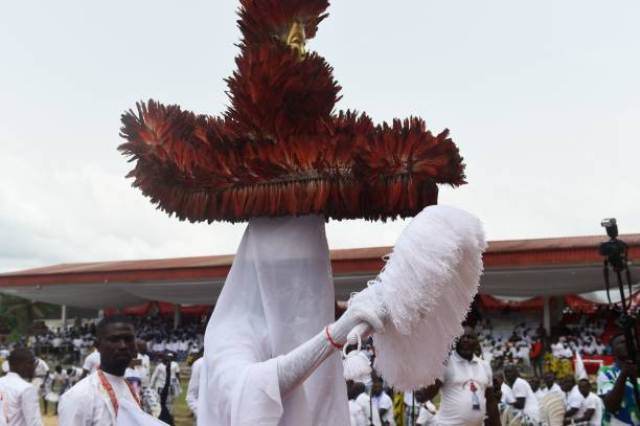
The final day of the festival brings together all elements of the celebration. Large crowds gather, and the most visible cultural displays take place. Masquerades appear in full form, music becomes more intense, and the sense of unity is at its peak.
This closing stage is both a celebration and a conclusion. It marks the end of the cleansing period and the beginning of a renewed cycle. Participants leave with a shared understanding of responsibility and a sense of continuity.
From start to finish, the Amaseikumor festival is not random or loosely arranged. It follows a clear structure that combines spirituality, culture, and community life. Each stage builds on the one before it in a way that creates a complete experience that has been maintained over generations.
Spiritual Elements and Traditional Beliefs
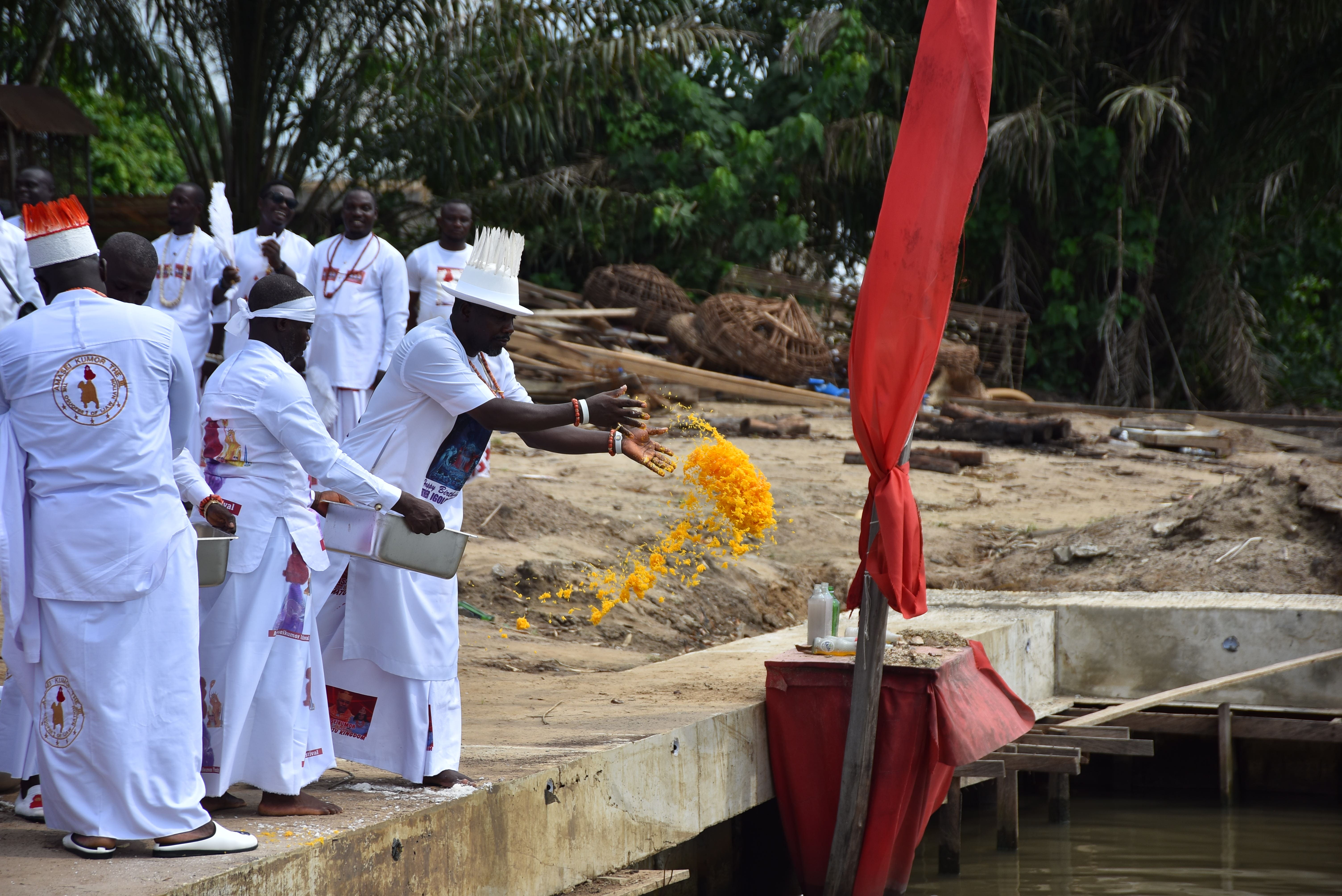
At the heart of the Amaseikumor festival is a strong spiritual foundation that shapes every part of the celebration. For the Ijaw people, the world is not divided into the physical and the spiritual. Both exist side by side, and influence daily life, decisions, and community well-being. The festival is one of the clearest expressions of this belief.
A central figure in the spiritual life of the Ijaw is Egbesu. Egbesu is regarded as a guardian of truth and justice. Within the context of the Amaseikumor festival, this deity is associated with accountability. The belief is that wrongdoing cannot be hidden. Actions are seen, weighed, and responded to within the spiritual order.
This is why the festival places such strong emphasis on honesty. Confession is not just a social act. It is spiritual. It is understood as a way of aligning oneself with truth and avoiding consequences that may come from violating moral codes.
Another important aspect of the Amaseikumor festival is the role of ancestral spirits. The Ijaw believe that their ancestors remain present and active in the affairs of the living. During the festival, rituals are performed to acknowledge and honour these ancestors. Prayers, offerings, and invocations are directed toward them to seek guidance, protection, and continued connection.
Nature also plays a significant role in these beliefs. Water, in particular, holds deep meaning. Rivers and creeks are not just physical features of the environment. They are seen as sacred spaces where spiritual interactions take place. Many rituals during the festival are performed near water to symbolize purification and renewal.
Traditional priests and spiritual leaders guide these processes. They are responsible for conducting rituals correctly and maintaining the integrity of the festival. Their role is not ceremonial alone. They serve as custodians of knowledge that has been passed down through generations.
The idea of cleansing during the Amaseikumor festival is both personal and communal. It is believed that negative actions can affect the entire community, not just the individual. This is why the festival is collective. Everyone participates in creating a balanced and peaceful environment.
These spiritual elements are not separate from everyday life. They are part of a broader belief system that continues to guide how people live, relate with one another, and understand their place in the world. The Amaseikumor festival simply brings these beliefs into focus by making them visible and active within a defined period each year.
The Role of Ijaw Youths and Community Leaders
The Amaseikumor festival is not sustained by rituals alone. It depends on people. At the centre of this are the youths and community leaders whose roles keep the tradition active, organized, and meaningful from one generation to the next.
Ijaw youths are deeply involved in the planning and execution of the festival. Their participation is both practical and cultural. In the days leading up to the Amaseikumor festival, young people help to prepare the community. They clean public spaces, set up areas for gatherings, and assist with logistics as visitors begin to arrive. Given the riverine nature of places like Oporoza, many youths also coordinate movement by water, helping to receive guests and guide them through the town.
During the festival itself, youths take part in traditional dances and group performances, drumming and musical displays, masquerade support roles, and crowd coordination and general organization.
Beyond these visible roles, there is also a learning process taking place. The festival serves as a living classroom where the younger people observe, ask questions, and gradually understand the meaning behind each practice. This is how knowledge is transferred, not through formal teaching, but through participation and experience.
Community leaders provide direction and structure for the Amaseikumor festival. This group includes traditional rulers, chiefs, elders, and priests. Each has a defined responsibility. Traditional rulers and chiefs oversee the general coordination of the festival and ensure that customs are followed correctly. Elders serve as custodians of history and tradition, and provide guidance based on long-standing knowledge. Priests and spiritual leaders handle the sacred aspects which include conducting rituals, offering prayers, and guiding the community through the cleansing process.
Their presence ensures that the festival does not lose its meaning. They maintain the balance between cultural expression and spiritual purpose.
What stands out in the Amaseikumor festival is the cooperation between the youths and the leaders. The elders provide knowledge and authority. The youths provide energy and continuity. Together, they create a system that allows the festival to function smoothly. This relationship also strengthens community bonds. It builds respect across age groups and ensures that the values behind the festival are not lost over time.
In this sense, the Amaseikumor festival continues to exist not just as a yearly event but as a shared responsibility carried by both the young and the old.
Cultural Symbols, Attire, and Performances

The Amaseikumor festival is as visual as it is spiritual. Every item worn, every movement made, and every sound heard carries meaning. These elements are not added for decoration. They are part of a system of expression that communicates values, beliefs, and identity within the Ijaw culture.
One of the most noticeable features of the festival is the use of white clothing. Many participants appear dressed in white garments throughout the Amaseikumor festival. White is widely understood within the community as a symbol of purity, peace, and spiritual readiness.
Wearing white during the festival reflects the inner state expected of participants. It signals a commitment to cleansing, honesty, and a renewed way of living. Beyond white garments, people also wear traditional wrappers, beads, and headgear that identify their status, age group, or role within the community. The attire, in this sense, is not just cultural. It is communicative.
Masquerades play a central role in the Amaseikumor festival. They are not viewed as mere costumes or entertainment figures. Within Ijaw belief, masquerades represent spiritual forces and, in some cases, the presence of ancestral spirits.
Each masquerade has a distinct identity. The way it moves, the materials used in its design, and the timing of its appearance all carry specific meaning. Some appear during key ritual moments, while others take part in public displays during the later stages of the festival.
Their presence adds a layer of depth to the celebration, and reminds participants that the festival exists within both visible and unseen realms.
Sound and movement are constant throughout the Amaseikumor festival. Traditional drums set the rhythm for many activities, from processions to group dances. The beats are not random. They follow patterns that have been passed down over time.
Dance is often performed in groups, with coordinated steps that reflect unity and shared identity. These dances are sometimes used to tell stories, celebrate community life, or mark important stages of the festival.
Songs are also part of the experience. They may include praise, historical references, or messages tied to the purpose of the festival. Through music and dance, culture is both preserved and actively expressed.
Certain objects used during the Amaseikumor festival carry symbolic meaning. These may include ritual items handled by priests during ceremonies, objects used in cleansing rites, and traditional instruments that guide performances
While some of these symbols are not always explained openly, they are understood within the community. They serve as links between past and present as they hold knowledge that has been preserved through generations.
Taken together, the attire, performances, and symbols of the Amaseikumor festival create a complete cultural language. They allow the Ijaw people to express who they are without relying on words alone. Through what is seen and heard, the deeper purpose of the festival becomes clear.
Amaseikumor Festival in Modern Nigeria
The Amaseikumor festival has not remained hidden within local communities. In recent years, it has gained wider attention across Nigeria as it has moved from a largely community-based observance to a cultural event that attracts national interest.
Each year, Oporoza in Delta State receives a growing number of visitors during the festival period. These include government officials, cultural researchers, media organizations, and tourists who are interested in experiencing Ijaw traditions firsthand. The presence of these groups has increased visibility and brought the festival into broader public conversation.
Media coverage has played a role in this shift. Reports, documentaries, and online content have made it easier for people outside the Niger Delta to learn about the Amaseikumor festival. Social media, in particular has allowed images and short videos from the event to circulate widely, and has drawn attention to its cultural depth and unique structure.
At the same time, the festival has become part of conversations around cultural tourism in Nigeria. There is growing recognition that events like the Amaseikumor festival can contribute to local economies by attracting visitors and supporting small businesses within host communities.
Despite this increased exposure, the core of the festival has remained largely intact. The spiritual elements, the emphasis on accountability, and the structure of the rituals continue to guide how it is observed. Community leaders have been careful to ensure that attention from outside does not change the purpose of the festival.
There is also a growing effort to document the Amaseikumor festival more formally. Scholars, cultural organizations, and local authorities are beginning to record its history, practices, and meanings in written and digital forms. This is important for preservation, especially as the older generations who hold much of the knowledge continue to age.
However, the festival still exists within a modern environment that presents both opportunities and pressure. Increased attention can bring support. But it can also lead to misunderstanding or oversimplification of its deeper meaning.
In today’s Nigeria, the Amaseikumor festival stands at a point where tradition and modern awareness meet. It continues to serve its original purpose within the Ijaw community while gradually becoming recognized as an important part of the country’s cultural heritage.
Challenges Facing the Festival
Even with its strong cultural and spiritual foundation, the Amaseikumor festival is not without challenges. Like many traditional practices in Nigeria, it exists in a changing environment where modern life, shifting values, and external pressures continue to influence how it is experienced and sustained.
One of the most noticeable challenges is the movement of young people away from their communities. Many Ijaw youths now live in urban centres like Lagos, Port Harcourt, and other cities for education or work.
This migration affects participation in the Amaseikumor festival. While many still return home for the celebration, others are less connected to daily cultural practices. Over time, this can weaken familiarity with the deeper meanings behind the rituals and reduce consistent involvement.
Another challenge is misunderstanding from outside the community. Because the Amaseikumor festival includes spiritual rituals, confessions, and traditional practices, it is sometimes viewed through a narrow lens by those unfamiliar with Ijaw belief systems.
This can lead to simplified or inaccurate interpretations of what the festival represents. In reality, the Amaseikumor festival is a structured cultural system built around accountability, cleansing, and community balance, not random ritual activity.
The festival is deeply connected to the natural environment, especially rivers and creeks around Oporoza in Delta State. However, environmental challenges in the Niger Delta which include pollution and ecosystem changes have affected traditional ways of life.
Since many rituals and symbolic activities are tied to water and land, environmental degradation can indirectly impact the experience and continuity of the Amaseikumor festival.
A large part of the knowledge surrounding the Amaseikumor festival has been passed down orally. While this method has preserved the tradition for generations, it also presents a risk in the modern era.
Without consistent documentation, details about certain practices, meanings, and historical accounts may be lost over time. Efforts are now being made to record the festival in written and digital formats. But the process is still ongoing.
The rise of different religious beliefs and modern social values has also influenced how some people view traditional festivals. In some cases, the younger generations may feel less attached to indigenous practices, preferring newer cultural or religious expressions. Though this shift does not erase the festival, it changes participation patterns and can affect long-term continuity, if not balanced with cultural education.
Despite these challenges, the Amaseikumor festival continues to hold its place within Ijaw culture. The fact that it still draws large gatherings and remains meaningful to many communities shows its resilience. However, sustaining it in the long term will require continued cultural education, stronger documentation, and active participation from both the older and younger generations.
In Conclusion …
The Amaseikumor festival remains one of the most important cultural and spiritual traditions of the Ijaw people in Nigeria. It is not just a yearly gathering or a display of heritage. It is a structured moment of reflection, accountability, and community renewal that has endured across generations.
From its historical roots in the Gbaramatu Kingdom to its present-day celebration in Oporoza in Delta State, the festival carries deep meaning. It brings together spiritual beliefs, cultural practices, and social values in a way that few traditions still do today. Through rituals, confessions, music, dance, and communal participation, the Amaseikumor festival creates a space where people reconnect with both their identity and their shared responsibility to one another.
What makes the festival especially significant is its ability to remain relevant in a changing world. Even as modern lifestyles, migration, and external influences continue to reshape communities, the Amaseikumor festival still holds its place. It speaks to issues that remain constant, namely, truth, unity, and the need for balance within society.
Fundamentally, the Amaseikumor festival is a reminder that culture is not only something to observe but something to live. It continues to serve as a bridge between the past and the present, thereby helping the Ijaw people to preserve their heritage, even as they engage with the realities of today.
As interest in Nigeria’s cultural traditions grows, the Amaseikumor festival stands out as a powerful example of how indigenous knowledge systems continue to influence identity, strengthen community bonds, and keep history alive.
References
- https://www.areanewsng.com/opinion/the-history-of-amaseikumor-festival-in-gbaramatu-kingdom-which-began-14-ad/
- https://guardian.ng/news/politicians-monarchs-grace-amaseikumor-festival/
- https://thesun.ng/amaseikumor-festival-reinventing-unity-peace-across-ijawland-gbaramatu-monarch/
- https://www.fmacce.gov.ng/festivals-carnivals/amaseikumor-festival-gbaramatu-kingdom-delta-state/
- https://themonarq.org/niger-deltas-oporoza-comes-alive-gbaraun-egbesu-ibolomobo-ere-and-amaseikumor-festival-of-the-ijaw-people-april-19-to-25-2025/
You may want to check this out …