


Anambra News
Andy Uba Biography: Life, Career, Politics, Controversies & Legacy

Emmanuel Nnamdi Uba, widely known as Andy Uba, was born on December 14, 1958, in Enugu, Nigeria. Although he grew up in the bustling city of Enugu, his ancestral roots trace back to Uga, a town in Aguata Local Government Area of Anambra State in southeastern Nigeria. Andy Uba hails from a family that would later produce notable public figures, including his brother, Senator Chris Uba.
From a young age, Andy Uba was exposed to both academic learning and the values of ambition and public service. He attended Boys High School, Awkunanaw in Enugu for his secondary education. His formative years in school shaped his communication skills, self-confidence, and ability to connect with people from different walks of life, traits that would later serve him well in politics.

Education and Controversial Academic Claims
After completing secondary school, Andy Uba moved abroad for higher education. He was admitted to Concordia University in Montreal, Canada, where he reportedly studied geology. However, official records from the institution later showed that although he enrolled, he did not complete the program or graduate.
Uba also claimed to have attended California State University, as well as earning a doctorate in Biosciences from Buxton University, UK. Buxton University has been described in some reports as an unaccredited institution, which stirred public debates over the authenticity of his academic qualifications. These controversies over his educational background have been a recurring subject in political conversations about him.
While his academic record remains disputed, Uba has maintained that his international exposure helped broaden his worldview and prepared him for leadership roles.
Career in the United States
Before venturing into the Nigerian political scene, Andy Uba spent several years in the United States, where he built a career in the insurance and healthcare industry. From 1985 to 1992, he worked at Golden State Mutual Insurance in California. Later, he ventured into private business, establishing a network of health clinics that specialized in workers’ compensation medical evaluations.
This phase of his life exposed him to high-level management and entrepreneurship. It also helped him build valuable connections, both within the Nigerian diaspora and among influential figures back home.
Entry into Nigerian Politics
Andy Uba’s official political journey began when he returned to Nigeria in the late 1990s, shortly before the nation transitioned from military to democratic rule in 1999. His breakthrough came when he was appointed Special Assistant on Special Duties and Domestic Affairs to President Olusegun Obasanjo.

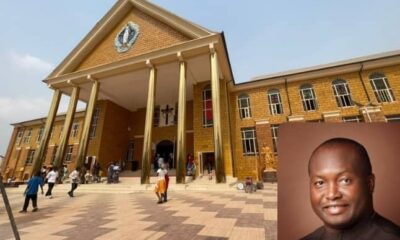
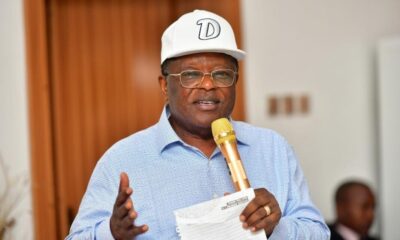
Andy Uba
In this role, Uba quickly became one of the president’s closest and most trusted aides. His position granted him significant influence, as he was often involved in behind-the-scenes political negotiations, policy discussions, and high-level decision-making processes. He was reputed for managing sensitive assignments for the presidency, making him a key figure within the political circle of the early 2000s.
The 2007 Gubernatorial Victory and Removal
Andy Uba’s ambition for elective office reached its first major peak in 2007, when he contested for the position of Governor of Anambra State under the Peoples Democratic Party (PDP). The election saw him declared the winner, and he was sworn into office in May 2007.
However, his governorship was short-lived. Barely one month into his tenure, the Supreme Court of Nigeria ruled that Peter Obi, who had earlier been removed from office, still had time left in his mandate from the 2003 election. The court’s verdict effectively annulled Uba’s election, ending his tenure after just 17 days in office. This made him one of the shortest-serving governors in Nigeria’s political history.
Despite the setback, Andy Uba remained a significant player in Anambra politics, using his federal connections and local influence to stay relevant.
Return to the Political Arena
In 2011, Andy Uba bounced back politically by contesting for the Anambra South Senatorial seat under the PDP. He won the election and took his place in the 7th Senate of the Federal Republic of Nigeria.
During his time in the Senate, Uba served on various committees and sponsored several bills aimed at improving the socio-economic conditions of his constituency. He was re-elected in 2015, continuing his legislative work until 2019. While in the Senate, he developed a reputation as a behind-the-scenes negotiator rather than a frequent public speaker.
Defection to the APC and Gubernatorial Bid
In February 2017, Andy Uba made a political switch from the PDP to the All Progressives Congress (APC). He cited alignment with the party’s ideology and the need to pursue broader political goals as reasons for his defection.
In 2021, Uba contested the APC governorship primary for Anambra State and emerged as the party’s flagbearer for the general election. However, the victory was challenged by some aspirants within the party, leading to a major legal battle.
In December 2021, a Federal High Court in Abuja nullified his candidacy, ruling that the APC did not validly conduct its primary election. The court ordered the party to refund his ₦22.5 million nomination fee. This ruling was later upheld by the Court of Appeal and the Supreme Court in April 2022, dealing another significant blow to his political ambitions.
Legal Troubles and Fraud Allegations
In mid-2024, Andy Uba’s political career faced fresh controversy when he was accused of involvement in a ₦400 million fraud scheme. According to reports, the allegation centered around claims that he offered to secure the position of Managing Director of the Niger Delta Development Commission (NDDC) for an individual in exchange for payment.
The Attorney-General of the Federation approved his prosecution in July 2025, and a court date was set for his arraignment. While Uba has maintained his innocence, the case has attracted intense media attention and public scrutiny, potentially impacting his political credibility.
Philanthropy and Community Engagement
Despite the political controversies surrounding him, Andy Uba is known for his philanthropic efforts, especially within Anambra State. Over the years, he has sponsored educational scholarships, supported community development projects, and assisted small-scale entrepreneurs with funding. His supporters often cite these contributions as evidence of his commitment to grassroots development.
Behind the Scenes, The Obasanjo Years
One of the most defining phases of Andy Uba’s political journey was his time as Special Assistant on Special Duties and Domestic Affairs to President Olusegun Obasanjo from 1999 to 2007.
During this period, he was more than just an aide, he became a gatekeeper to the president. Political allies and business leaders often had to go through Uba before gaining an audience with Obasanjo, giving him significant influence over federal appointments and project approvals.
This role earned him both admiration and criticism. Supporters saw him as an efficient problem-solver who could get things done quickly in the often slow-moving government system. Critics, however, accused him of wielding too much power for an unelected official.
Political Resilience and Strategy
What sets Andy Uba apart from many politicians is his ability to remain relevant despite political setbacks. From the abrupt end of his governorship in 2007 to his disqualification in the 2021 APC primaries, he has repeatedly found ways to return to the political stage.
Analysts often point to his extensive network across party lines as the reason for this resilience. Even after switching from PDP to APC, Uba maintained cordial relationships with politicians from his former party, allowing him to navigate alliances as situations demanded.
This strategic flexibility has helped him influence Anambra politics behind the scenes, even in years when he was not holding elected office.
Influence in Anambra’s Political Landscape
In Anambra State, Andy Uba is regarded as one of the “political godfathers” figures whose endorsements or opposition can make or break political campaigns. His reach extends into local government politics, grassroots mobilization, and even candidate selection within major parties.
While this influence has drawn criticism from those who oppose political “godfatherism,” his supporters see it as proof of his deep understanding of the state’s political dynamics.
Lifestyle and Interests
Away from the political spotlight, Uba is known to enjoy quiet luxury. He has homes in Nigeria and abroad, and is often spotted at high-profile social gatherings. Friends describe him as a lover of music and a host who enjoys entertaining close associates in a relaxed, private setting.
His religious life also plays a role in his public image, his marriage to Pastor Faith Vedelago ties him to a strong Christian network, which has been a quiet but consistent source of political support.
Looking Ahead
At 66, Andy Uba is at a point in his career where speculation about his next moves is inevitable. Some political observers believe he could stage another comeback, possibly through legislative politics or as a kingmaker in future Anambra elections. Others think his ongoing legal battles could mark the closing chapter of his public career.
Regardless of the outcome, one fact is clear, Uba has been a fixture in Nigerian politics for over two decades, shaping both local and national decisions in ways that will be remembered long after he leaves the scene.
Conclusion
Andy Uba’s story is one of ambition, adaptability, and enduring influence. From the corridors of Aso Rock to the political trenches of Anambra State, he has played multiple roles — aide, senator, brief governor, party switcher, and power broker.
Love him or criticize him, his impact on Nigerian politics is undeniable, and his ability to survive in a system known for its unpredictability is a testament to his political skill.
As history continues to judge his legacy, Andy Uba remains a reminder that in Nigerian politics, setbacks are often just stepping stones for those willing to fight their way back.
Read About: Dr. Ifeanyi Ubah: The Nnewi Billionaire Powering Nigeria’s Oil Industry