




Politics
Anioma State: What It Means, Who It Involves, and Why It Matters Now

Anioma State is a proposed new State made up of the Igbo-speaking communities of Delta North in Nigeria. Learn what Anioma means, who the people are, the debates over identity, Senator Ned Nwoko’s proposal and what the creation of Anioma State could mean for Nigeria’s political balance and the South East region.

Anioma People
The conversation about Anioma State has grown into one of the most discussed political topics in Nigeria today. From the chambers of the National Assembly to the streets of Asaba, the idea of carving out a new State from Delta North is stirring strong emotions and complex questions.
At the heart of this proposal is Senator Ned Nwoko’s bill which seeks to establish Anioma State from the nine local government areas that make up Delta North, and crucially, to place the new State within the South East geopolitical zone of Nigeria.
Supporters hail it as a long-overdue step toward balancing Nigeria’s uneven State structure and giving Anioma people a stronger voice in national affairs. Critics, however, raise concerns about identity, regional alignment and the risk of political fragmentation.
But what exactly does Anioma mean? Who are the people behind this name? Why is the proposal generating such controversy, especially among groups like the Ukwuani who sometimes insist they are not Igbo? And what could this mean for smaller Igbo-speaking communities in Edo State who may be left behind, if Anioma State is eventually created?
This article explores everything you need to know, from the history, geography, identity debates, and political significance of the Anioma State proposal.
Meaning of “Anioma”
The word “Anioma” is both a cultural and linguistic identity used by the Igbo-speaking people of Delta North Senatorial District in present-day Delta State, Nigeria. The name is widely believed to have originated as an acronym representing the major subgroups in the area: Aniocha, Ndokwa, Ika and Oshimili. This term was first popularized in the late 1970s by Chief Dennis Osadebay, the first Premier of the defunct Mid-Western Region who sought a unifying name for the Igbo communities west of the River Niger.
In Igbo language, “Anioma” is also interpreted as a phrase meaning “good land” or “beautiful land”, derived from Ani and Oma. Both meanings have come to symbolize the unity, hospitality and shared cultural heritage of the people in this region.
Today, Anioma serves as the collective identity for nine local government areas in Delta North, encompassing people who share close linguistic, cultural and historical ties with the wider Igbo world.
The name represents not just a geographical area, but a sense of belonging for communities long connected by ancestry, trade and tradition.
Who are the Anioma People?

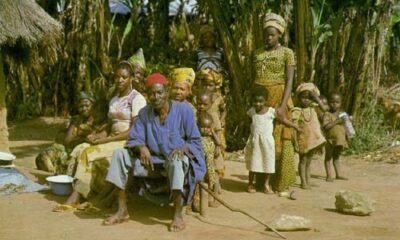
Anioma Culture
Anioma people are the Igbo-speaking inhabitants of Delta North Senatorial District in Delta State, Nigeria. They occupy the west area of the River Niger, and are often referred to as the “Western Igbo” or “Delta Igbo.” Their communities are spread across nine local government areas, namely, Aniocha North, Aniocha South, Oshimili North, Oshimili South, Ika North East, Ika South, Ndokwa East, Ndokwa West and Ukwuani.
Linguistically, Anioma people speak dialects of the Igbo language such as Enuani, Ika, and Ukwuani, with slight variations from one locality to another. Despite these differences, the dialects are mutually intelligible and share common cultural expressions, traditional institutions and social practices with other Igbo groups east of the Niger.
Culturally, Anioma people maintain traditional Igbo customs such as the New Yam Festival, age-grade systems and reverence for ancestral heritage. Christianity is the dominant religion, though some communities still observe indigenous festivals and beliefs alongside modern practices.
Economically, Anioma people are known for farming, trading and civil service. Major urban centres like Asaba, Agbor and Ogwashi-Uku serve as hubs of education, commerce and administration. Asaba, located on the western bank of the River Niger doubles as the capital of Delta State and the cultural heart of Anioma region.
Anioma people share deep historical and kinship ties with other Igbo communities in Anambra, Imo and Enugu States, reaffirming their position as part of the larger Igbo cultural and linguistic family in southern Nigeria.
Local Government Areas That Make Up the Proposed Anioma State
The proposed Anioma State is designed to include the nine local government areas that currently make up the Delta North Senatorial District in Delta State, Nigeria. These are the core territories collectively recognized as Anioma land. Each has its own distinct cultural and linguistic identity but shares deep-rooted Igbo heritage, common traditions and historical links across the region.
- Aniocha North: Headquarters at Issele-Uku. This area includes communities such as Onicha-Ugbo, Idumuje-Ugboko and Obomkpa. It is known for strong traditional institutions and a rich agricultural economy.
- Aniocha South: Headquarters at Ogwashi-Uku which is also a major Anioma town. Other notable communities include Ubulu-Uku, Nsukwa and Ejeme. The people speak the Enuani dialect of Igbo and share cultural similarities with neighbouring Anambra communities.
- Oshimili North: Headquarters at Akwukwu-Igbo. It includes settlements like Okpanam, Illah and Ebu. The area lies close to the River Niger and is an important agricultural and fishing zone.
- Oshimili South: Headquarters at Asaba which also serves as the capital of Delta State and the political and cultural centre of Anioma. Asaba is a fast-growing urban hub known for commerce, education and governance.
- Ika North East: Headquarters at Owa-Oyibu. The Ika people in this area speak a unique Igbo dialect influenced by Benin and other neighbouring cultures. Agbor, one of the largest Anioma towns is located here and has a long history as a regional commercial centre.
- Ika South: Headquarters at Agbor. Communities here, including Abavo and Ozanogogo, share the Ika dialect and a vibrant trading tradition.
- Ndokwa East: Headquarters at Aboh, an ancient riverine settlement with a strong fishing and trading heritage. The people are predominantly Ukwuani-speaking and live along the lower Niger and its tributaries.
- Ndokwa West: Headquarters at Kwale (Utagba-Ogbe). This area is rich in oil and gas resources and has a growing industrial presence. The people speak the Ukwuani dialect and maintain a close connection with other Ndokwa groups.
- Ukwuani: Headquarters at Obiaruku. It is centrally located and culturally vibrant, with communities such as Umutu, Umuaja and Ebedei. Farming and trade are major economic activities here.
Together, these nine local government areas form the cultural, linguistic and geographical core of Anioma. They represent the proposed boundaries of Anioma State as outlined in Senator Ned Nwoko’s bill currently under consideration in the National Assembly.
Senator Ned Nwoko’s Anioma State Bill and His Public Explanations
Senator Prince Ned Nwoko, representing Delta North Senatorial District in the 10th National Assembly is the chief proponent of the bill seeking the creation of Anioma State. His proposal has sparked renewed national interest in the long-standing agitation for a separate State for the Igbo-speaking people west of the River Niger.
In July 2024, Senator Nwoko formally presented a bill to the Senate calling for the creation of Anioma State from the existing Delta North Senatorial District. According to him, the new State should become part of Nigeria’s South East geopolitical zone in order to ensure equity and balance in the nation’s political structure. He emphasized that the South East remains the only zone with five states while others have six or seven, creating a long-standing sense of imbalance and marginalization among the Igbo people.
In various interviews with national media outlets, including Channels Television, Vanguard and ThisDay, Senator Nwoko explained that the proposed Anioma State is not only about ethnic identity but also about fairness, unity and administrative efficiency. He noted that Anioma has all the necessary attributes of a viable State – a sizable population, vast human resources and a functioning capital in Asaba.
Nwoko described the proposed State as a bridge between eastern and western Nigeria, given its geographical position on the west bank of the River Niger. He argued that Anioma people share linguistic, cultural and historical ties with other Igbo groups in Anambra and Imo States, which makes inclusion in the South-East zone both logical and justifiable.
The Senator further explained that creating Anioma State would promote national cohesion by addressing regional disparities that have fueled feelings of exclusion in the South-East. He also linked the proposal to broader peace efforts in the region, suggesting that fairness in State creation would help reduce agitation and encourage a sense of belonging among the Igbo population.
While his proposal has received support from several political figures and advocacy groups, it has also faced resistance from some Anioma leaders who prefer to remain in the South-South geopolitical zone.
Nonetheless, Senator Nwoko insists that the bill is about giving Anioma people their rightful recognition and ensuring Nigeria’s geopolitical balance through peaceful and constitutional means.
Reactions Within Anioma and the Wider Region
The proposal for the creation of Anioma State has generated a wide range of reactions across Delta North and beyond. Within Anioma itself, opinions are divided. Some leaders, traditional rulers and youth groups have welcomed Senator Ned Nwoko’s bill, describing it as a long-overdue step toward achieving political fairness and ethnic identity for the Igbo-speaking communities west of the Niger River. They argue that Anioma people share deep linguistic and cultural ties with the Igbo in the South-East and that joining the zone would restore balance and strengthen their shared heritage.
Supporters also emphasize that Anioma already has the structural and administrative foundations needed for statehood. With Asaba serving as a thriving capital city, and with its growing economy, educational institutions and political organization, many believe Anioma has the capacity to stand as a separate and functional State within Nigeria.
However, other Anioma stakeholders, including prominent politicians and community elders have expressed reservations. Some fear that leaving Delta State for the South-East zone might disrupt existing political and economic relationships within the South-South region. They argue that Anioma’s inclusion in the South-South has brought development opportunities through Delta oil revenue and that a realignment could weaken their regional influence.
Beyond Anioma, reactions from the South-East have largely been supportive. Many Igbo leaders view the proposal as a chance to correct Nigeria’s geopolitical imbalance, as the South-East remains the only zone with five States. Several cultural groups, including Ohanaeze Ndigbo have echoed this sentiment calling for a fair restructuring that ensures equity among all zones.
Meanwhile, in the South-South region, reactions have been mixed. Some Delta and Edo leaders have voiced concerns that the proposal might open old debates about State boundaries and ethnic realignments while others see it as a legitimate expression of self-determination that should be handled peacefully and democratically.
Overall, the Anioma State proposal has rekindled conversations about Nigeria’s political structure, equity and regional identity, raising both hope and caution among the people most directly affected.
The Ukwuani Question: Are Ukwuani People Igbo?
One of the most debated aspects of the Anioma State proposal revolves around the identity of the Ukwuani people. Ukwuani people who occupy Ndokwa East, Ndokwa West and Ukwuani Local Government Areas in Delta North have long held a distinct linguistic and cultural position within the Anioma region. Their language, Ukwuani shares similarities with both Igbo and some Niger Delta dialects, making their ethnic classification a subject of ongoing debate.
Historically, linguistic scholars and cultural researchers have placed Ukwuani within the larger Igbo ethnolinguistic group, describing them as part of the Western Igbo subgroup. Their traditions, names and kinship systems show significant overlap with those of neighbouring Igbo communities such as Ogwashi-Uku, Ubulu-Uku and Ibusa. However, centuries of migration and contact with Urhobo, Isoko and other Niger Delta groups have introduced cultural variations that make the Ukwuani identity somewhat hybrid.
Within the Ukwuani community, opinions are divided. Some groups and leaders affirm their Igbo roots and express support for joining the proposed Anioma State and, by extension, the South-East geopolitical zone. They argue that the differences are mainly linguistic nuances, not indicators of a separate ethnic origin.
Others, however, insist that Ukwuani people are distinct from Igbo people. This group often cites historical separations, colonial administrative boundaries and certain cultural practices as proof of their independent identity. They also express concern that aligning with the South-East could erase their unique heritage and limit political representation.
Despite these debates, many observers note that the question of whether Ukwuani people are Igbo or not is less about language and more about political identity and self-determination. In the context of Anioma State, most proposals and advocacy documents include Ukwuani as an integral part of the region.
Whether or not they fully embrace the Igbo identity, their inclusion remains essential to the historical, cultural and geographical unity of the proposed Anioma State.
Why the Proposal Advocates for Anioma to Join the South-East

Visit on the Anioma State Movement
A major component of Senator Ned Nwoko’s Anioma State proposal is the call for the new State to be part of Nigeria’s South-East geopolitical zone. The reasoning behind this is both cultural and constitutional.
Proponents argue that Anioma people are historically and ethnically Igbo, sharing language, traditions and ancestry with communities across Anambra, Imo, Enugu, Abia and Ebonyi States. For decades, Anioma people have maintained close cultural and familial ties with their counterparts across the Niger River, and many see themselves as part of the broader Igbo nation. By joining the South-East, they believe Anioma would help restore a sense of historical unity that colonial boundary divisions disrupted.
Another key reason for aligning Anioma with the South-East is to address Nigeria’s geopolitical imbalance. The South-East currently has only five States, making it the smallest zone in the country while others have six or more. Advocates for Anioma State argue that its creation would bring the South-East to parity with other zones, thereby promoting fairness in political representation, resource allocation and national development planning.
Supporters also point out that Anioma’s inclusion would give the South-East access to the River Niger’s western bank and an expanded administrative and economic base which could boost regional cooperation and infrastructure growth. Asaba, already a thriving capital city could serve as a strategic link between the South-East and South-South regions, promoting greater unity among Igbo people while maintaining economic bridges across zones.
Culturally, the proposal’s backers believe that being part of the South-East would strengthen Anioma’s identity as an Igbo-speaking region and safeguard its heritage from dilution within the multi-ethnic landscape of Delta State. Politically, they see it as a chance for Anioma to gain stronger representation in the national structure and participate more effectively in the collective aspirations of Igbo people.
Essentially, the call for Anioma to join the South-East is driven by a combination of cultural belonging, geopolitical equity and strategic regional integration, all aimed at ensuring that Anioma people are fully recognized within the historical and political fold of the Igbo nation.
The Significance of Creating Anioma State
The creation of Anioma State would carry deep political, cultural and socio-economic significance, not only for Anioma people but also for Nigeria as a whole. For the people of Delta North, it would represent the fulfillment of a long-standing aspiration for self-determination and political identity. Many Anioma leaders and citizens have, for decades, argued that their inclusion in Delta State has left them politically marginalized and culturally overshadowed within the predominantly Urhobo and Ijaw-dominated South-South region.
If Anioma State becomes a reality, it would give the people a stronger voice in national affairs. With their own governor, legislature and budgetary allocation, Anioma people could design and implement policies that directly reflect their developmental priorities. It would also create new opportunities for job creation, infrastructure expansion and localized governance, especially in cities like Asaba, Agbor, Ogwashi-Uku and Kwale.
Nationally, the significance would extend beyond regional politics. The South-East zone, long vocal about having only five States compared to six in other zones, would finally gain its sixth State. This would help correct the long-standing geopolitical imbalance in Nigeria’s federal structure, bringing a sense of equity among the regions.
Culturally, the creation of Anioma State would reaffirm the shared heritage of the Igbo-speaking people west of the Niger. It would strengthen their connection with their kinsmen across the river, promoting unity and a collective sense of identity. The move would also help preserve and promote local languages and traditions, ensuring that the younger generation grows up with a clear understanding of their roots.
Economically, the region’s rich agricultural land, human resources and growing urban centres could be harnessed to build a strong and sustainable State economy. The status of Asabaa as a regional hub for commerce and administration positions Anioma to attract investment and drive economic development in partnership with neighbouring States.
Ultimately, the creation of Anioma State would symbolize recognition, justice and inclusion. For many, it is not just a political ambition but a cultural homecoming and an opportunity to shape a future that aligns with their history, identity and aspirations within the Nigerian federation.
If Anioma State is legally created and recognized in the South-East zone, the practical impacts could include:
- More direct representation for Anioma at federal levels. Meaning, more senators, more representatives, and a Governor and State executive drawn from Anioma communities. Supporters describe this as a way to correct political marginalization.
- Economic and administrative control: A new State government would control budgets, federal allocations and local development decisions for the Anioma area. Supporters say this could allow the region to plan development focused on Asaba and surrounding towns.
- Cultural affirmation: Being part of the South-East as a State would symbolically tie Anioma more closely to broader Igbo politics and culture which proponents argue would strengthen cultural ties.
- Possible tension with existing Delta State institutions and non-Anioma communities in Delta. Carving out Anioma would be a major political reconfiguration, and it could produce legal disputes over assets, civil service placements and boundary adjustments. This is part of why reactions across Delta and South-South leaders are important to watch.
The Fate of the Small Igbo Communities in Edo State
Beyond Delta North, a few small Igbo-speaking communities exist within Edo State, particularly in areas bordering Delta and Anambra. These include towns such as Igbanke, Egbudu-Akah, Owa and some settlements around Uromi and Esanland. Historically, these communities share ancestry, language and cultural practices with the Igbo of both Anioma and Anambra. They are, sometimes, referred to as the “Edo Igbo” or “Ika-Igbo” communities, reflecting their intertwined identities.
For many years, these groups have felt somewhat isolated, both politically and culturally, due to their minority status in Edo State. Despite maintaining their Igbo dialects, traditional festivals and naming systems, they have often faced challenges in asserting their identity within a predominantly Edo-speaking environment.
With the growing discussions about the proposed Anioma State, concerns have emerged about the fate of these Igbo communities in Edo. If Anioma State is eventually created and incorporated into the South-East geopolitical zone, these communities could find themselves even more isolated, separated from their linguistic and cultural kinsmen by State boundaries.
Many cultural and civic groups have, therefore, called for deliberate inclusion mechanisms. Some suggest that, if Anioma State is established, there should be constitutional or administrative provisions that allow Igbo communities in Edo who so desire to be politically or culturally affiliated with Anioma. This could come in the form of cultural councils, development partnerships or even eventual boundary adjustments through constitutional processes.
Others argue that leaving these communities out would deepen their marginalization, as they would remain minorities in Edo without the cultural and political protection a predominantly Igbo State could offer. On the other hand, some leaders in Edo prefer that the status quo be maintained, emphasizing State unity and discouraging any division along ethnic lines.
The fate of these Igbo-speaking enclaves, therefore, remains an important consideration in the Anioma State debate. Their historical connection to Anioma and the broader Igbo nation makes it vital that any eventual decision about State creation includes a clear roadmap to preserve their identity, heritage and political relevance within Nigeria’s complex ethnic landscape.
What Must Happen Before the Creation of Anioma State
Creating a new State in Nigeria is a complex process that involves several constitutional and political steps. For Anioma State to become a reality, it must go through the procedures outlined in Section 8 of the 1999 Constitution of the Federal Republic of Nigeria (as amended). This section clearly states the requirements for the creation of a new State, making the process both democratic and rigorous.
The first step is that the demand for Anioma State must have widespread support within the area. At least, two-thirds of the members of the National Assembly representing the region, two-thirds of the members of the State House of Assembly, and two-thirds of the local government councils in the affected area must formally endorse the proposal. This ensures that the call for a new State reflects the collective will of the people and their elected representatives.
Once local approval is secured, the proposal must be submitted to the National Assembly where it will be considered by both the Senate and the House of Representatives. It must then receive a two-thirds majority vote in both chambers. After that, the proposal is sent to the President for approval, and subsequently, to the National Boundary Commission for review and adjustment of boundaries, where necessary.
The next phase involves a national referendum. A simple majority of the people in the affected area must vote in favour of the new State during the referendum, reaffirming that the creation truly represents the will of the people. Only after these steps can the National Assembly pass a law formally establishing Anioma State as part of the Nigerian federation.
Beyond the legal process, the success of the Anioma State movement depends on strong political negotiation and national consensus. It requires support from key political figures, especially from other regions, since State creation ultimately affects national balance. Advocates must also make a compelling case that the new State will be economically viable, socially stable, and beneficial to Nigeria’s federal structure.
Senator Ned Nwoko and other Anioma leaders have emphasized that the movement should remain peaceful, inclusive and strategic. They continue to engage federal lawmakers, traditional rulers and socio-cultural organizations across Nigeria to build momentum for the cause.
Ultimately, for Anioma State to be created, legal procedures, political will and broad-based consensus must align. It is a process that requires patience, unity and sustained advocacy. But then, many supporters believe that with time and determination, the dream of Anioma State can become a reality.
Key Controversies and the Politics to Watch
The movement for the creation of Anioma State has reignited several controversies that reflect Nigeria’s complex ethnic, political and regional dynamics. While many view the proposal as a step toward fairness and national balance, others see it as a politically sensitive issue with far-reaching implications.
One of the major controversies centres on identity. Within Delta North, not everyone fully agrees on Anioma’s classification as an Igbo region. While communities such as Asaba, Ogwashi-Uku, Ibusa and Agbor proudly identify as Igbo, others, particularly among the Ukwuani insist on a distinct cultural heritage. This identity debate continues to shape public opinion and could influence how united the region remains behind the push for statehood.
Another key issue is the geopolitical alignment. The proposal by Senator Ned Nwoko to place Anioma within the South-East zone has been welcomed by many Igbo organizations but questioned by some political figures in Delta and the South-South. Critics argue that transferring Anioma out of Delta State could weaken the South-South’s political and economic bloc, especially given the zone’s oil-based revenue. Supporters, however, counter that the move is not about resources but about restoring ethnic balance and historical belonging.
Economic viability also fuels debate. Opponents question whether Anioma State, with limited natural resources compared to oil-rich neighbours, could sustain itself financially. Proponents respond that the region’s human capital, fertile agricultural land, tourism potential and administrative infrastructure, especially with Asaba as its capital provide a solid foundation for economic growth and self-reliance.
Political ambition is another factor. Some observers believe the renewed push for Anioma State is linked to future elections, with politicians seeking to expand their influence or leave a legacy. The involvement of high-profile figures such as Senator Ned Nwoko has both energized the movement and attracted scrutiny from those skeptical of its timing.
Beyond Delta, national politics also plays a role. The creation of Anioma State would give the South-East its long-requested sixth State, potentially altering power dynamics at the federal level. Lawmakers from other regions may either support or resist the idea, depending on how it affects their own political interests and regional balance.
Despite these controversies, the discussion around Anioma State has brought attention to broader issues of equity, representation and cultural recognition in Nigeria’s federal system. As debates continue, observers are watching how local unity, political negotiation and national consensus will determine whether the dream of Anioma State becomes a landmark achievement or another stalled aspiration in Nigeria’s history of State creation.
In Conclusion…
The renewed call for the creation of Anioma State has reignited important conversations about identity, fairness and representation in Nigeria’s evolving federal structure. For the Anioma people, this movement is not just about political boundaries but about recognition. It’s about a chance to reclaim a distinct cultural and historical space that has long been overshadowed within the larger Delta framework.
The proposed Anioma State carries symbolic and practical weight. Culturally, it would reunite the Igbo-speaking communities west of the Niger with their kinsmen in the South-East, restoring a sense of wholeness that colonial-era demarcations disrupted. Politically, it would address one of Nigeria’s long-standing imbalances by granting the South-East its long-requested sixth State, promoting equity in governance and representation. Economically, the region’s strategic location, fertile land and human resources position it to thrive, if managed transparently and inclusively.
Yet, challenges remain. Internal differences among Anioma communities, especially regarding identity and alignment must be handled with dialogue and mutual respect. The concerns of other ethnic groups in Delta and Edo States must also be acknowledged to prevent friction and ensure peaceful coexistence. Most importantly, the process must follow due constitutional steps, backed by broad-based public support and national consensus.
Ultimately, the Anioma State movement represents a broader quest for justice and balance in Nigeria’s federation. Whether it becomes a new State or remains an aspiration, it has already succeeded in drawing attention to the urgent need for equitable representation, respect for cultural identities and unity built on fairness.
For many Anioma people, the dream endures as a vision of a homeland that reflects their history, celebrates their heritage, and gives them a stronger voice in shaping Nigeria’s future.
References
- https://en.wikipedia.org/wiki/Anioma_people
- https://www.vanguardngr.com/2025/09/creation-of-anioma-state-historical-political-necessity-ned-nwoko/
- https://www.channelstv.com/2025/10/26/creation-of-one-more-state-nnamdi-kanus-release-will-bring-peace-to-south-east-ned-nwoko/
- https://punchng.com/delta-apc-stakeholders-make-case-for-anioma-state-creation/
- https://www.thisdaylive.com/2025/11/03/anioma-leaders-reject-ned-nwokos-proposed-state-in-south-east-call-it-betrayal-of-history/
- https://www.thisdaylive.com/2024/07/26/ned-nwokos-state-creation-bill/
- https://www.researchgate.net/publication/322932937_Are_the_Ukwuanis_Benin_or_Igbo_a_study_of_origin_and_migration
- https://www.jstor.org/stable/41854932
- https://dailypost.ng/2025/10/26/ned-nwoko-insists-anioma-state-can-be-self-sustaining/
- TheCable. “Statehood and linguistic identity: Why Anioma’s place is in the south-east.” (Opinion and analysis of zone placement.)
You might want to check this out…