



History and heritage
Azia, Anambra State: History, Culture and Modern Insights

Azia is one of the towns in Anambra State. Discover the history, culture, villages, and modern developments that describe Azia community in Ihiala LGA, Southeast Nigeria.

Azia Town
Azia is a historic town located in the heart of Ihiala Local Government Area in Anambra State, southeastern Nigeria. Known for its deep-rooted traditions, vibrant culture, and evolving modern identity, Azia stands as a remarkable example of how Igbo communities preserve heritage while embracing progress.
With origins traced over a thousand years to the founding ancestor, Azia Alamatugiugele, the town has grown into a cohesive community made up of five villages.
Azia people are predominantly Igbo, and their customs, festivals, and social structures reflect a rich tapestry of history and communal life. From the annual new yam festival that unites the entire town in celebration to the contemporary civic centre that symbolizes growth and modernization, Azia offers a unique blend of tradition and development.
This article explores Azia’s fascinating history, cultural practices, village structure, governance, economy, modern developments, and its role in preserving Igbo identity.
Whether you are a history enthusiast, a cultural explorer, or someone seeking insight into Nigerian communities, this provides a comprehensive look at everything that makes Azia, Anambra State a town of significance and pride.
History of Azia
The town known today as Azia draws its name from its founder, Azia Alamatugiugele. According to local oral tradition, Azia Alamatugiugele lived roughly between 470 and 585 A.D. This makes Azia one of the oldest settlements in what is now southeastern Nigeria.
Histories of Azia trace the community’s roots back to a larger ancestral grouping called Igbonano. Igbonano was a cluster of clans spread across territories that now lie in southern Anambra and parts of Imo State.
In that lineage, Azia is said to descend from a patriarchal line through Osunano, a son of Igbonano. According to tradition, Osunano’s first wife held the land called Ama‑Lolo, a land that later became the estate for Azia and neighbouring communities.
As generations passed, the descendants of Azia Alamatugiugele multiplied and organized themselves into distinct family units. Over time, this ancestral lineage gave birth to the town today known as Azia.
From the original ancestor, local tradition holds that Azia had four sons, namely, Dara-Nsu, Ezebo, Ihite, and Ukwakwa. These sons laid the foundation for what would become the five principal villages that make up the town.
Specifically, the descendants of Ezebo founded the villages of Umudiokpara and Abam, through his sons Ezike Okwe, also called Diokpara and Abamliwu, also called Abam. Over time, Abamliwu’s descendants became distinct enough to form an autonomous village within the town.
This ancestral‑village structure remains central to Azia’s identity. Even today, many families trace their lineage to those original sons, and village affiliation often determines kinship, rights to land, and social bonds within the town.
According to the traditional history, the larger Igbonano area of which Azia is part once practiced a shared set of cultural rituals, religious beliefs, and social customs. This included a common ancestral masquerade tradition, local title systems, and similar naming conventions for lineages and offices.
Before colonial interference, Azia and its sister communities maintained their own governance, led by respected elders and titled individuals, often chosen for their bravery, wisdom, or seniority. Among the early leaders was Dara‑Nsu, the first son of the founder who is remembered for holding the high title “Dara”.
Other early local rulers included prominent descendants such as Ezike Okwe, the first son of Ezebo, the founder of Umudiokpara, and leaders from Ihite and Ukwakwa villages such as the Eze‑Ala of Ukwakwa and the DuruEze of Ihite.
These traditional structures helped to maintain order, settle disputes, allocate communal land, and oversee communal rites long before colonial times.
In later years, especially during colonial rule and post‑independence Nigeria, Azia became officially recognized as a town within Ihiala Local Government Area (LGA) of Anambra State.
Today, historical records about the town, although still largely based on oral tradition are supplemented by academic and local government documents. The claim that the townwas founded around 500 A.D. is documented in some sources.
Geographical Location and Village Structures

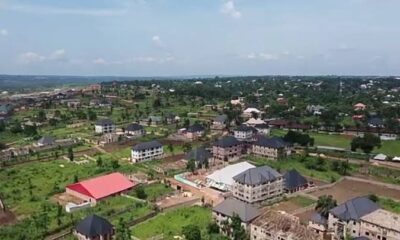
Azia is one of several autonomous towns under Ihiala LGA. Geographically, it is roughly positioned at latitude 5.88333° N and longitude 6.9° E. The area lies within a tropical climate zone and is part of a network of towns and communities that make up Ihiala LGA.
Azia consists of several villages that together form the town. These include Ukwakwu, Umudanso, Umudiokpara, Aham, Egbuayiga, Ihite Azia, Issiokwe, and Ukpakpa Azia. Each village retains its distinct identity and boundaries but they all share a common communal identity as part of Azia. Village affiliation often influences social relationships, land rights, and participation in communal events.
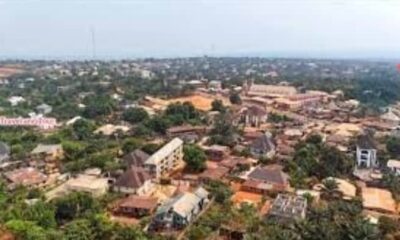
The town and its surrounding areas feature varied terrain, including hills, valleys, and forested or semi-forest zones. These natural features historically determined how villages were settled and organized. Azia also shares borders or proximity with other towns within Ihiala LGA and nearby communities, and together, they form part of a larger network of settlements in southeastern Nigeria.
The village system in the town is central to its social, cultural, and administrative life. It defines community identity, guides local governance and decision-making, and facilitates services such as mail delivery and official records. These villages collectively maintain Azia’s heritage while supporting its modern growth and community initiatives.
Culture and Traditions
The culture and traditions of Azia town reflect its roots in the broader heritage of Igbo people, especially as part of Ihiala Local Government Area (LGA).
One of the most important cultural events for the town and for many Igbo communities is the annual New Yam Festival. This festival marks the end of the farming season and the beginning of the harvest period. In this season, the community thanks their ancestors, gods of the earth, and the land for a bountiful harvest.
Traditionally, the first yam of the harvest is offered in a ritual by the town’s elders or traditional ruler before anyone else may eat new yam. Once the official offering is made, the harvest is shared among family, friends, and community as a symbol of unity, gratitude, and the cycle of life.
Beyond yam, the festival and other communal events often include music, dance, and masquerade performances which provide avenues for cultural expression and communal bonding.
Masquerades form a major part of the culture for people in Ihiala LGA which includes Azia. These masquerades offer more than entertainment as they serve as traditional theatre, moral regulators, and carriers of folklore and ancestral heritage. During festivals or significant communal events such as harvest celebrations, rites of passage, funerals, ceremonies, masquerades appear in colourful robes and masks, often accompanied by drums, gong, and other traditional instruments. Historically, their presence not only entertained but also helped to maintain social order. Masquerades, sometimes, exposed wrongdoings, enforced norms, or served symbolic spiritual functions.
Drama, folk songs, storytelling, and age‑grade or youth-group performances also figure prominently to reflect a vibrant theatrical culture. These performances helped to transmit moral lessons, history, and cultural values across generations long before formal writing became widespread.
Culturally, Azia shares many traditional beliefs common across communities in the old Igbonano region like ancestral reverence, respect for land and earth, and community solidarity. Titles and traditional institutions remain part of social organization. Historically, red‑cap titles and ancestral lineage titles such as Ozo/Okpara/Ezike/Duru prefixes were recognized. Such titles signified status, responsibility, and respect in communal affairs.
Despite changes over time, many people in Azia still value these traditions, even as Christianity and modern lifestyles influence beliefs. This coexistence of ancestral tradition with newer practices shows resilience and adaptability.
Cultural practices and traditions in Azia promote social cohesion. Festivals, masquerades, communal gatherings, and shared celebrations create opportunities for people from different villages to come together. This strengthens bonds, renews kinship ties, and fosters a sense of belonging.
Through dance, music, folklore, and performance arts, younger generations learn about their heritage, values, and communal history. Such cultural transmission supports identity, moral education, and intergenerational continuity which are crucial in a rapidly changing world.
Finally, these traditions reflect respect for land and agriculture. Celebrating harvest, honouring the ancestors, and holding communal festivals reinforce the land-based lifestyle while helping to retain cultural identity, even as modernization advances.
Governance and Leadership of Azia
Azia, like many Igbo towns has a traditional leadership structure anchored in customs, community consent, and a town constitution. Over the years, the process by which it selects its traditional ruler has reflected both respect for tradition and adaptation to evolving community needs.
Historically, Azia has maintained a line of local leaders drawn from its villages and titled families. In more recent memory, one of the prominent traditional rulers was Igwe Pius Chikwado Ojuro of Azia. He was reportedly first crowned on 23 December 1976 and served for decades during which time he played a key role in community development including roads, water supply, and other infrastructure projects.
After his passing, the throne saw successors. One such successor was Prof. Titus Iloduba Eze who before his ascension served as the traditional prime minister (Onowu) of Azia. His coronation followed the death or end of reign of the previous Igwe.
This pattern reveals that the rulership of the town has combined respect for lineage or standing within the community through titled chiefs and village elders with formal recognition to make a blend of tradition and organized leadership.
In the 2020s, Azia experienced a prolonged kingship dispute that lasted around a decade. Conflicts arose over who legitimately held the stool and which village had the right to produce the next Igwe.
By 2024, community stakeholders formally approached the State government for intervention. The government, represented by the Commissioner for Local Government and Chieftaincy Matters assured the people that there would be no imposition of a monarch. Rather, the people, according to their town constitution would select a candidate, and that choice would be recognized.
As a result, on 1 June 2024, at a field beside the town’s civic centre, Azia conducted a community‑wide election for the traditional stool. Villagers from the eligible village as per rotation rules contested, and the process was overseen by an electoral committee. Chief Francis Ugochukwu Chikezie emerged the winner, with the title, Igwe Ugodinobi of Azia. He reportedly secured 380 votes to defeat other candidates who received fewer votes.
After the election, the State government formally recognized Chief Chikezie as the new Igwe and issued him a certificate of recognition.
Economy and Livelihood
Because the town is part of Ihiala Local Government Area (LGA), its economy and livelihood patterns largely reflect those of the wider LGA. Agriculture remains the backbone of life for many residents. The Ihiala area is known for cultivating staple crops such as cassava, yam, cocoyam and vegetables.
In many households, farming is done on small plots, often enough to supply the family with food, and sometimes to provide surplus for sale or trade at local markets. Some people may also grow cash crops or engage in other agricultural activities, even though in Ihiala, the emphasis is on food crops that support both subsistence and local commerce.
Because Azia is under Ihiala LGA, it is reasonable to assume that many of its residents also depend on farming, making agriculture a core part of their livelihood.
Ihiala LGA has a vibrant trading culture and hosts active marketplaces such as Nkwor Ihiala Market and Nkwogbe Market. These serve as central hubs for buying and selling farm produce, household goods, and other items. Many residents engage in small‑scale trade such as selling farm products, food items, or consumer goods. This trade offers a source of income beyond farming and helps families meet their daily needs.
Craft and artisanal work are also part of the economic mix in the LGA. Traditional crafts such as mat‑making, basket weaving, pottery, and other handcrafted goods have been noted as supplementary income sources for some communities in the area.
For Azia, this means that livelihood is likely a mix of farming, small‑scale trade, and craft or service-based activities, much like the wider Ihiala LGA.
In addition to agriculture and trade, Ihiala LGA has small‑scale industrial or service‑based enterprises in some towns, including agro‑processing, small manufacturing, shops, hospitality, transport, and other services.
The presence of good road connectivity, especially because the LGA lies along a major route linking larger towns, supports commerce and services. This connectivity helps farmers and traders in moving goods to and from markets. Thus benefits communities like Azia.
As infrastructure and services grow, there is potential for employment in sectors beyond farming such as retail, transport, hospitality, education, health services, and small‑scale manufacturing or processing.
For Azia, being part of Ihiala LGA suggests that many households rely on a mix of farming, trading, craftwork, and small business to survive. Agriculture may be the backbone, but trade and services complement it. Over time, as infrastructure or services improve, some people may shift more toward commerce or small industries.
In essence, its economy reflects a diversified rural economy rooted in land and agriculture but resilient and flexible enough to include trade, craftsmanship, small services, and community‑based enterprise.
Modern Developments
Over the recent years, Azia in Ihiala LGA of Anambra State has experienced several significant modern developments. From improved infrastructure to renewed traditional‑leadership stability. These changes show how the community is blending heritage with progress. Key developments in the town include:
New Civic Centre; In 2018, during the annual Iriji Azia New Yam Festival, the community officially commissioned a brand‑new civic centre. The building was completed by the Azia Town Union under the leadership of its President‑General, Ichie Kenneth Maduakor and formally opened with support from the then State government of Governor Willie Obiano.
Community Police/Division Headquarters: To strengthen local security and bring police services closer to residents, the town established and commissioned its own police division headquarters, the Azia Police Division. This marked an important step toward improving safety, stability, and law enforcement within the town.
Resolution of Long‑Standing Kingship Dispute: After nearly a decade of leadership conflict, in 2024 the community resolved the protracted igweship stalemate through a community‑wide election. On 1 June 2024, the people gathered to vote for a new traditional ruler under agreed rules, thus ending years of uncertainty.
State Government Recognition of New Monarch: The elected monarch, Igwe Francis Chikezie received official recognition from the State government. The formal certificate of recognition was presented by the State Governor as part of a group of new traditional rulers to affirm his legitimacy and restore traditional governance for Azia.
These recent developments suggest a community ready to move forward without losing its roots. With a functional civic centre, law enforcement presence, and legitimate traditional leadership, Azia is building a foundation for long-term growth.
If the momentum continues, for example, through investments in education, infrastructure, youth engagement, or local business, the community could emerge as a model for balancing heritage with modern community development within Ihiala LGA and beyond.
Education and Social Life in Azia
Education in Azia is supported by a growing network of schools that serve children across the town’s various villages. Verified records show that Azia has five primary schools and two secondary schools which provide formal education within the community.
These schools include Community Secondary School and St. Anthony’s Secondary School, both of which operate within the town and are documented as part of the educational infrastructure of Ihiala Local Government Area. In addition, Mother Paul Memorial Girls School is listed as a functioning girls’ secondary school that offers instruction within the Nigerian curriculum.
These institutions together form the core of the town’s structured educational system and give residents access to basic and post-primary learning without leaving the community.
Social life in Azia is informed primarily by its place within Ihiala Local Government Area where community interactions often revolve around family, religious gatherings and shared public spaces.
While detailed documentation on organized social clubs or community-wide leisure organizations specific to Azia is not publicly available, it is verified that the town maintains public schools and a health centre which serve as important communal points where residents interact.
Churches and local events, although not individually documented in official public records, are commonly part of community life in towns across Ihiala LGA, and Azia’s social activities naturally reflect this broader regional pattern.
Within the limits of verified information, the social environment of the town can be understood as one grounded in shared institutions, everyday community engagement and the close-knit interactions typical of rural and semi-urban communities in Anambra State.
Notable People from Azia
Azia, Anambra State has produced individuals who have excelled in various fields, including academia, business, governance, and community leadership. Their achievements not only bring recognition to the community but also serve as inspiration for younger generations.
Prof. Titus Iloduba Eze: Before becoming a traditional ruler, Prof. Eze was a respected academic in the field of education and public administration. He also served as the traditional prime minister (Onowu) of Azia.
Dr. Chikezie Ugodinobi: A scholar and entrepreneur who contributes to educational development in Azia and surrounding communities, with focus on youth empowerment and skills development.
Chief Francis Ugochukwu Chikezie (Igwe Ugodinobi of Azia): Aside from his role as the traditional ruler, Chief Chikezie has engaged in business and community development projects. His leadership extends beyond ceremonial duties as he promotes economic initiatives in Azia.
Igwe Pius Chikwado Ojuro: A former traditional ruler, Igwe Ojuro contributed significantly to infrastructure, community organization, and social cohesion in Azia. His leadership set the precedents for community development projects and traditional governance.
Known Landmarks and Places of Interest

Azia Civic Centre
Azia may be a historic town but it also has key landmarks and places that reflect both its rich cultural heritage and modern development. From community gathering spaces and civic centres to health facilities and places of worship, these sites play an important role in the daily life, identity, and progress of the town. Exploring these landmarks offers a glimpse into the past, present, and the ways the community continues to thrive.
Azia Civic Centre: This is probably the most prominent public landmark in the town. In 2018, the community commissioned the civic centre during the celebration of the New Yam Festival. A representative of the State government attended the opening. The Civic Centre serves as a communal gathering place for festivals, meetings, cultural events, and other community functions. Its existence reflects how Azia balances tradition and communal development.
Azia Primary Health Centre: This health centre serves the Azia ward in Ihiala LGA. It is a licensed facility that offers a range of medical services ranging from general medical care, pediatrics, antenatal care, immunization, lab services, and more.
As a 24‑hour primary health centre, it represents an important institution for public health in the town, a critical modern infrastructure that supports community wellbeing and development.
Religious / Worship Centres: There is, at least, one known place of worship in Azia listed in public directories like the Kingdom Hall of Jehovah’s Witnesses. These worship centres serve as gathering points for spiritual, social, and communal activities and reflect another dimension of community identity and cohesion.
In Conclusion …
Azia stands out as an important town in Ihiala Local Government Area that is shaped by a long history, a strong cultural identity and a growing network of public institutions. Its documented features such as its established schools and health centre show a community that continues to value progress while maintaining its traditional roots.
Although not every aspect of its social or cultural life is fully captured in public records, the verified information available clearly portrays a town that contributes meaningfully to the cultural and administrative landscape of Anambra State.
As Azia continues to evolve, its heritage, its people and its place within Ihiala LGA remain central to the story of the town and its future.
References
- https://en.wikipedia.org/wiki/Azia
- https://www.emmason247.com.ng/blog/history-origin-culture-and-traditions-of-azia-town-in-anambra-state-/WbZWbDbRWD
- https://ihiala.org/about/‘
- https://mapcarta.com/17042844
- https://www.notchnewsonline.com.ng/2018/09/azia-community-celebrates-new-yam.html
- https://independent.ng/anambra-azia-community-to-elect-new-traditional-ruler-after-10-years-of-kingship-battle/
- https://www.surefootafrik.com/post/azia-community-gets-monarch-after-10-years-of-feud
- https://nnewicity.com/ihiala-town-history-culture-tradition-other-things/