


History and heritage
Nanka Town: Key Things to Know About This Anambra Community

Nanka is an Igbo town in Orumba North, Anambra State. Learn its villages, history, schools, the serious gully erosion problem, recent developments, and other things about this Anambra community.

Ama Obu Nanka
Nanka is one of the most talked-about communities in Anambra State, not only because of its long history and vibrant culture but also because of the environmental challenges that have been part of its story for many years.
As a town made up of seven villages and known for its strong community spirit, Nanka stands out as a place where tradition, resilience, and identity remain very important. From its location in the southeastern part of Nigeria to its role as one of the areas most affected by gully erosion in the country, the town continues to attract public interest, research attention, and government focus.
For anyone who wants to understand what makes southeastern communities unique, Nanka offers a clear picture. The town has active schools, growing institutions, a traditional leadership structure, and a community union that helps manage development and peace.
At the same time, it faces real issues like erosion, land loss, and disputes over leadership, all of which are documented and discussed at local and State levels.
This article breaks down the key things to know about Nanka using verified information, reliable sources, and clear explanations that make the story of this Anambra community an easy read.
History of Nanka
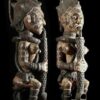
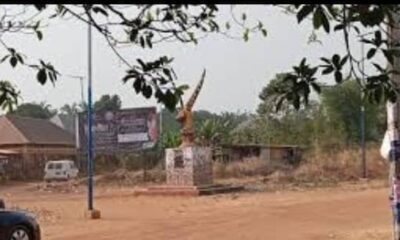
Although there are not quite documented stories about its origin, the history of Nanka can be traced back many generations and is rooted in the wider story of Igbo settlements in southeastern Nigeria. Like most towns in Anambra, Nanka grew from small family groups that expanded over time into the seven villages that make up the community today. These villages are Agbiligba, Enugwu, Ifite, Amako, Umudala, Ubahu and Eti. Agbiligba is traditionally regarded as the head village. This structure is widely documented and accepted as the foundation of the community.
Its historical identity is also tied to farming. For decades, families depended on crops such as yam, cassava, cocoyam and palm produce. Farming shaped the lifestyle, yearly festivals and family systems of the people. Oral tradition shows that Nanka has always been a close community where extended families supported each other, especially during planting and harvest seasons.
Another important part of the history of Nanka is its environmental story. The town sits in a part of Anambra State that has loose, sandy soil. Over many years, this soil type created conditions that made the area vulnerable to heavy gully erosion. By the 1970s and 1980s, the erosion problem had grown so serious that it began to affect homes, farmlands and major access roads. Some of the gully sites around Nanka later became some of the most studied erosion locations in the region.
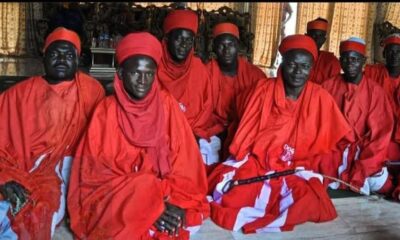
Governance has also been part of the historical development. The community has long maintained a traditional leadership structure headed by an Igwe and supported by the Nanka Patriotic Union, a recognized town union. Both institutions continue to play major roles in settling disputes, coordinating development projects and preserving cultural practices. Public records confirm that the community updated its constitution in 2011 to strengthen these leadership systems.
The history of Nanka is, therefore, a mix of cultural heritage, traditional governance and environmental challenges. These elements have shaped how the town grew, how its people organized themselves and how the community continues to work together to protect its land and identity.
Geography and Demographics
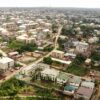
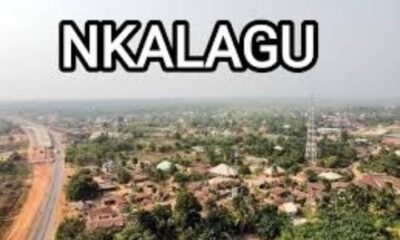
Nanka is a town in the Southeastern part of Nigeria, in Orumba North Local Government Area (LGA), Anambra State. Its approximate geographical coordinates are 6° 03′ 00″ North, 7° 05′ 00″ East. On some maps, the coordinates are given slightly variably, depending on exact mapping source.
Nanka is one of the several towns under Orumba North LGA which is home to multiple towns and villages. Surrounding towns and localities near Nanka include Agulu, Oko, Ekwulobia, and other communities within the region such as Awgbu. The terrain around the town is part of a geologic formation known as the Nanka Formation. This is a sand and shale formation within the larger Anambra Basin sedimentary basin. This geological context affects the land’s soil, drainage, and susceptibility to erosion, a fact important to understanding Nanka’s environmental realities.
The town comprises seven villages, namely, Agbiligba, Enugwu, Ifite, Amako, Umudala, Ubahu, and Eti (or Etti). Among these, Agbiligba is traditionally regarded as the head village of Nanka. The villages are further subdivided into kindreds under traditional communal structure. For example, Agbiligba alone reportedly consists of multiple major kindreds.
According to a community constitution of the local town union and chieftaincy system, these kindreds are grouped into administrative wards used for local governance and representation. Some of the named wards include Umuezeoke, Abasili 1, Abasili 2, Umudunu, and Oka/Umudim.
Because Nanka sits on a geologic formation with sandstone and shale, the soil structure tends to be fragile and prone to erosion under heavy rainfall.
Governance in Nanka
Nanka is governed through a dual leadership structure – a traditional rulership comprising the monarch and his council, and a civic town union. This arrangement combines customary authority with community‑based governance.
At the top is a traditional ruler known as Igwe / Obu‑Nanka, recognized by State authorities, whose role is to uphold tradition, settle customary disputes, and maintain cultural identity. Parallel to that is the civic body, that is, the Nanka Patriotic Union (NPU). NPU handles many aspects of community administration, development projects, and communal affairs.
Some sources also mention a spiritual leadership element through a role called Nwadunu, described as the chief priest who oversees cultural or spiritual matters when necessary. Thus, governance in the town is a blend of tradition, civic organization, and cultural‑spiritual oversight.
A constitution created by the people in 1977 laid the foundation for their chieftaincy rules. The 1977 constitution was later revised, giving rise to the 2011 Nanka Town Union and Chieftaincy Constitution 2011 which defines how rulers are selected, installed and recognized.
Following these rules, the current recognized traditional ruler is Igwe Godwin Ogochukwu Ezeilo (Obunanka of Nanka), installed and formally recognized by the State government in 2017. Under his reign, the traditional institution works alongside NPU to maintain order, uphold customs, and ensure community unity.
The traditional ruler and his cabinet, often referred to as Igwe‑in‑Council also preside over cultural events, festivals, and traditional ceremonies that sustain communal identity. In recent years, having a properly recognized traditional ruler has helped to restore a sense of stability to parts of the town after prior confusion over leadership.
NPU serves as the civic governance arm of Nanka. Its functions include mobilizing community resources, undertaking development projects, coordinating public services, and representing the collective interests of all villages. The Union is responsible for building and maintaining public infrastructure.
For example, one of Nanka’s major recent achievements was the construction of a modern magistrate’s court complex. This project was initiated by NPU and funded by the sons and daughters of the town as a testament to communal cooperation and self-help.
Through NPU, the town also organizes social welfare efforts, youth‑empowerment initiatives, education support and community development programmes. The leadership structure of NPU often includes President‑General, Secretary‑General, ward or village‑level representatives, elders, youth and women leaders. This ensures inclusivity across the villages and demographics.
NPU works alongside the traditional ruler but operates fairly independently in civic matters. The means that governance is shared rather than centralized exclusively under chieftaincy.
Cultural Life in Nanka

Masquerade festival
Nanka is a community rich in cultural heritage where traditional practices and festivals play a key role in everyday life. The town’s cultural identity is expressed through masquerades, age-grade activities, and seasonal festivals, all of which help to preserve social values, foster community spirit, and bring residents together.
Masquerades are an important part of its cultural landscape. They appear during festivals, funerals, and special community events and symbolize ancestral spirits and moral authority. Each village or age-grade association often sponsors a masquerade group, and performances combine dances, music, and theatrical displays. These masquerades entertain and teach lessons about respect, courage, and social responsibility.
Like many Igbo communities, Nanka celebrates the New Yam Festival (Iri Ji or Iwa Ji) annually. This festival marks the end of the farming season and the start of the harvest, a time for giving thanks for the year’s crops. The festival includes rituals, prayers, feasting, and cultural dances, often coordinated by the town union and age-grade associations. Sons and daughters of Nanka who live outside the town often return during this period, making it a significant community reunion and networking event.
Nanka has a strong tradition of age-grade, youth, and women associations which actively organize festivals, educational programmes, and community projects. These groups preserve local culture while encouraging social responsibility, philanthropy, and civic engagement. Their events often include cultural competitions, masquerade performances, and community clean-up initiatives. These activities link tradition with development.
Over the years, the community has witnessed a blending of traditional Igbo customs with Christian practices. For example, thanksgiving services in churches now accompany New Yam Festival celebrations, thus combining prayer and ritual with traditional dances and masquerades. This syncretism demonstrates the ability of the town to adapt its cultural heritage to contemporary lifestyles while maintaining respect for its roots.
Key Public Institutions and Facilities in Nanka

Nanka School Project
Health Facilities
The main public hospital in Nanka is Ofu‑Obu Hospital, first opened in 1992. Later, the hospital was modernized and refurbished under a corporate social responsibility initiative by Esso Exploration and Production Nigeria Limited (EEPNL). The facility serves as part of the maternal and child-health care network in collaboration with the federal government.
There is also a smaller public health facility known as Nanka 1 Primary Health Centre, often referred to as PHC Nanka 1. According to reports, while Nanka-1 PHC exists and offers services such as antenatal care, immunization, general medical services, and emergency/accident care, it has faced infrastructure and resource challenges: irregular electricity, limited water supply, and lack of full laboratory facilities.
For a rural town, Nanka’s health infrastructure which comprises a full hospital plus a primary health centre is a significant public asset. However, resource constraints at smaller facilities suggest that health-care access may still be fragile especially in off-peak times or emergencies.
Educational Institutions
Nanka has several public schools, covering primary and secondary education. Among the secondary schools are:
- Community High School, Nanka: located in the Agbiligba village of Nanka.
- Community Secondary School, Nanka: located in the Enugwu village of Nanka.
These schools are listed among the State-owned secondary schools for Orumba North LGA.
Among the primary schools documented in Nanka are:
- Nwa‑Agu Primary School in Ifite village.
- Michael Primary School Nanka in Agbiligba village.
- Nkwo‑Agu Primary School also in Agbiligba village.
- Enugwu Nanka Primary School in Enugwu village.
Additionally, there is presence of an external support organization, namely, Nanka School Project (NSP). NSP has reportedly rehabilitated facilities at Community High School Nanka by adding a library, improving sanitation, electricity, fencing, and upgrading school environment. Their intervention reportedly improved educational outcomes in that, after reforms by NSP, students from the high school achieved recognition in competitions, suggesting a real impact
Market and Postal / Civic Services
Nanka hosts a main market called Afor Market (formerly Afor-Udo). This market operates on the traditional Igbo “Afor” market day, and reflects the integration of local tradition and commerce.
There is also a functioning post office in the town which is reported to have been operational since the early 20th century.
These institutions support commerce, communication, and civil-administration needs of the residents.
Recreation and Community Facilities
Nanka is home to a sports facility known as NEROS Sports Stadium which was opened on 26 May 2012 by a son of the community, Chief Poly Ike Emenike, MON, Odenigbo Nanka. The stadium provides a venue for sports and community gatherings and is a significant asset for youth development, social cohesion, and recreation.
Economy of Nanka
In Nanka, many people still depend on the land for a living. Historically and today, farming is a major economic activity for residents. Crops such as cassava, yam, maize, banana, and vegetables are commonly grown in the area.
Because the town, and the larger Agulu‑Nanka gully erosion complex area sits on soil types that include acid sands and lateritic soils, with high rainfall and fragile terrain, agriculture here is often challenging.
Trade and local commerce, particularly on market days also contribute to livelihoods, as many people sell farm produce, goods, and services at the local market.
However, in recent decades, severe soil erosion has affected how people live. The gully erosion in the town has swallowed farmlands and economic trees, destroyed homes, displaced families, and rendered some land unfit for agriculture, thereby undermining the livelihoods of many farmers.
Some residents also complain that illegal sand-mining or sand excavation, sometimes, alleged to involve local stakeholders has worsened environmental degradation, further reducing usable farmland and threatening both farming and land-based income.
As a result, many affected people have lost farmland or abandoned old farms. Others now struggle to sustain their households as agricultural returns decline or land becomes unsafe.
Education and Community Groups
Nanka has a culture of community involvement, especially in education. Beyond its public primary and secondary schools, the town benefits from active local organizations that support learning and youth development.
One of the most prominent groups is the Nanka Students’ Union (NSU). It was established in the mid-20th century as a platform for students and young graduates from the community to connect, exchange ideas, and support one another. Over the decades, the union has remained active, serving as a channel for mentorship, educational outreach, and alumni engagement.
The town also has a long-standing age-grade system, along with ladies’ associations and youth groups. These groups typically take up community projects such as school support, scholarships for indigent students, environmental sanitation, and organizing cultural festivals. Their activities help sustain communal ties and ensure that young people stay connected to its development.
Overall, these community groups play a meaningful role in promoting education, social responsibility, and local participation in the town.
Nanka’s Biggest Threat: The Erosion and Landslide Crisis
Nanka lies within a region affected by severe gully erosion. The geological formation underlying the town makes the land vulnerable to soil erosion, especially when heavy rains occur. Over the years, the erosive gullies around the community have grown large and dangerous. In one village, Ubahu, a landslide triggered by heavy rainfall in October 2019 destroyed farmlands, homes, and power lines, cutting off access roads and displacing families.
Researchers documented more than 120 landslides around the town and neighbouring communities. These slides are mostly shallow but repeated events. Over time, they significantly erode land and damage properties.
Farmlands and economic trees have been swallowed by gullies. Many farmers can no longer cultivate affected lands, thus reducing their ability to grow crops for food or income. Some houses and buildings have collapsed or are abandoned due to unstable ground. Families have been displaced, and some parts of the community have been cut off from roads, electricity, and basic amenities.
Erosion has destroyed roads and made access difficult. Sometimes, villages are effectively isolated after heavy rains.
Loss of farmland and homes undermines livelihoods. Many families lose their source of income, face displacement, and struggle to recover.
The erosion/landslide crisis is not a one-time problem. The gullies in the area are active and expanding. Without effective control, the damage increases each rainy season. The landscape vulnerability, caused by soil type and terrain makes the community particularly at risk. Many of the gullies in Nanka–Agulu–Oko area have been recorded among the deepest and widest in the State.
Because agriculture remains a major livelihood for the people, loss of arable soil and farmland strikes at the heart of the community’s economy. Homes, social stability, and generational land ownership are all jeopardized.
Some local and state-level efforts have aimed to control the erosion. Researchers and environmental teams have recommended drainage channels, vegetation/afforestation, flood-water catchment pits, and public awareness. But human activities, including sand mining and deforestation continue to worsen the problem. In one of the villages, residents have accused builders and sand miners of accelerating erosion by disturbing land and draining streams
The scale of the gullies already formed is massive. Controlling them would require sustained, large-scale remediation and stable commitment, something that remains difficult amid limited resources, governance challenges, and environmental neglect.
How Nanka People and Authorities are Responding
Residents, community groups, and government agencies have all taken steps to reduce the impact of the worsening erosion problem, though progress remains uneven.
Local leaders and villagers frequently report dangerous erosion spots to State authorities and federal agencies such as the Nigeria Erosion and Watershed Management Project (NEWMAP). NEWMAP, backed by the World Bank has carried out site assessments in parts of the Agulu–Nanka–Oko axis and recommended engineering solutions, improved drainage, and watershed protection.
Community associations and age grades also play an active role. In several villages, residents have organized self-help work, including clearing blocked water channels, planting trees, and discouraging activities that worsen land degradation, such as bush burning and uncontrolled sand excavation.
Traditional leaders and town-union representatives continue to petition the State government for intervention funds and emergency works during heavy-rainfall seasons, especially when landslides damage homes or block access roads.
Some NGOs and environmental researchers working in the region promote public awareness campaigns on safe land use, proper drainage maintenance, and the dangers of sand mining.
Despite these efforts, the scale of the gully system and the cost of remediation mean that community action alone is not enough, and larger government-funded engineering projects are still needed to bring the crisis under control.
Notable people from Nanka
Historical and modern figures connected to Nanka include academics, clergy and public servants. Among them are:
James Okoye Chukwuka Ezeilo – He was the first professor of mathematics in Nigeria. He became Vice-Chancellor at two major universities, and is widely respected for his contributions to mathematics education in the country.
Paulinus Chukwuemeka Ezeokafor – He serves as the Bishop of the Roman Catholic Diocese of Awka. His clerical leadership has positioned Nanka on Nigeria’s religious map within the Catholic Church.
Precious Chikwendu – A model and Nollywood actress from Etti-Nanka. Her career in entertainment and pageantry highlights a more contemporary, popular-culture representation of people from the town.
Prof. Bernice Nwakaego Ezeilo – She became a professor of Clinical Psychology and is recognized as the first female African Professor of Clinical Psychology. Her work in academia and community service through the local student union shows strong educational legacy from the town.
These figures attest that Nanka has produced individuals excelling in academia, religion, arts, and public service.
Recognized Landmarks and Sites in Nanka
NEROS Sports Stadium: This stadium was built by a son of the town, a major contribution to Nanka’s public infrastructure. It is described as Nanka’s “mecca of football”. It hosts local and regional matches since its commissioning in 2012.
Ofu‑Obu Hospital: The main public health facility in Nanka originally opened in 1992 and later refurbished under a corporate-social-responsibility programme. It remains a key health institution in the community.
Afor Market (formerly Afor-Udo Market): The main market in Nanka which serves as a central trading and social hub for residents.
Agulu‑Nanka‑Oko gully erosion sites: While these are not landmarks in the celebratory sense, unfortunately they are among the most famous physical features associated with Nanka, because of their scale, the danger they pose, and the fact that they draw attention from researchers, government agencies, and media.
In Conclusion …
Nanka is a vibrant and resilient community in Anambra State with a rich history, active community groups, and notable contributions to Nigeria’s academic, religious, and cultural landscape. Its economy remains largely agrarian, supported by local markets, while education and civic engagement continue to grow through schools and active associations such as the Nanka Students’ Union.
However, the town faces significant challenges, the most pressing of which is the erosion and landslide crisis. These environmental threats have destroyed farmland, displaced families, and threatened infrastructure, making it a central focus for local authorities and residents alike. Despite these obstacles, Nanka has seen notable improvements, including upgraded roads, a new magistrate court, and peaceful traditional leadership that fosters community development.
With committed local governance, active civic groups, and the dedication of the people, the town continues to thrive and adapt. Its landmarks, public institutions, and remarkable individuals reflect a community that values progress while navigating the realities of environmental and social challenges.
Nanka stands as a testament to resilience, community spirit, and the enduring potential of Anambra towns.
References
- https://en.wikipedia.org/wiki/Nanka
- https://www.emmason247.com.ng/blog/history-origin-culture-and-traditions-of-nanka-town-in-anambra-state-/VZWGCZWZGCVV
- https://www.medianigeria.com/list-of-towns-and-villages-in-orumba-north-anambra-state/
- https://dailytrust.com/unease-over-constitutions-amendment-in-anambra-communities/
- https://dailypost.ng/2019/10/24/landslide-hits-anambra-community-indigenes-lose-farmland/
- https://www.thecable.ng/tackling-erosion-menace-in-anambra/
- https://independent.ng/nanka-customary-court-in-anambra-metamorphoses-into-magistrate-court/
- https://www.vanguardngr.com/2024/09/were-in-serious-trouble-erosion-threatened-communities-cry-out/
- https://www.thecable.ng/tackling-erosion-menace-in-anambra/
- https://www.anambradaily.com/2023/08/16/amakor-villagers-seek-soludos-intervention-over-nanka-traditional-prime-minister-tussle/
You might want to check this out …