



Igbo Communities
Ihiala Town || History, Culture, Tradition and Other Things

Ihiala is a vibrant town in Anambra State, Nigeria, rich in history, culture, tradition, and economic life. Discover its past, people, challenges, and future.

Ihiala is a bustling town in Anambra State, Nigeria, renowned for its rich history, vibrant culture, and deep-rooted traditions. Often called the heartbeat of Ihiala Local Government Area, the town blends the charm of old-world customs with the dynamism of modern life. From its ancestral origins and thriving agricultural economy to its lively markets and educational institutions, Ihiala stands as a beacon of identity and heritage in southeastern Nigeria.
Strategically located along major trade routes and flanked by scenic rivers and fertile land, Ihiala is more than just a geographical location; it is a community where history, tradition, and progress intersect. The town is home to Igbo people who have preserved their unique customs, festivals, and arts over generations, thus making it a centre of cultural pride and communal life.
This article explores everything about Ihiala: its historical background, demographic makeup, economy, education system, health facilities, culture, traditions, challenges, and future prospects.
Whether you are a researcher, traveller, or curious reader, this comprehensive guide provides an in-depth look at what makes Ihiala a remarkable town in Nigeria.
History of Ihiala
The history of Ihiala, also known as “Ebeleri” by its indigenes is deeply rooted in oral tradition, migration stories, and ancestral lineage that stretch back many centuries. Located in the southern part of Anambra State, Ihiala has grown to be a significant cultural and administrative centre.
According to local tradition, the founder of Ihiala was Ara Ezedara, a migrant who left the Benin kingdom along with his personal deity, Ajaala, in the fifteenth century. He first settled in Abor, but later moved across the Niger River into the thick forest lands.
These forests were then inhabited by wild animals and bandits, but over time, Ezedara and his followers cleared the land and established what later became modern Ihiala. As other migrant groups arrived, they allied with him, and the community grew under his leadership.
Long before modern administrative boundaries, the town was organized into distinct quarters. According to traditional accounts, the town is divided into two main sectors, Ezi‑Ise and Ihite‑Ise, each further subdivided into smaller quarters. These divisions reflect how early settlers structured their community socially and geographically.
In 1976, Ihiala Local Government Area (LGA) was officially created under Nigeria’s military government. The LGA includes not just Ihiala town, but ten autonomous towns: Okija, Uli, Amorka, Azia, Mbosi, Isseke, Orsumoghu, Lilu, and Ubuluisiuzor.
Oral histories connect Ihiala with its neighbouring towns through a genealogical lineage that is culturally significant. One traditional story holds that Achala of Ogidi is the common ancestor of Okija, Ihembosi, Ihiala, and Uli. In this mythology, Okija is considered the eldest, followed in order by Ihembosi, Ihiala, and then Uli. Because of this shared ancestry, some traditional practices such as the kola nut ceremony reflect that relationship.
Ihiala Town is made up of ten constituent villages (quarters):
- Amamumu (Amamu)
- Ogboro‑Isi‑Ala
- Ubahuekwem
- Akwa
- Uzoakwa (Uzọakwa)
- Umudara
- Umuezeawala
- Umuduru‑Oru
- Amaduru
- Umuedike
Today, Ihiala functions as the administrative headquarters of Ihiala LGA. It is strategically located along the Onitsha‑Owerri Expressway which has helped the town remain connected and economically relevant.
Geography and Climate

Ihiala is part of the Ihiala Local Government Area (LGA) in Anambra State, located in southeastern Nigeria. The LGA covers about 304 km². It is bordered on the west by Ogbaru LGA, to the north by Ekwusigo and Nnewi South LGAs, and to the south by parts of Imo State.
The terrain includes hills and valleys interspersed with plains. Elevation in some areas ranges roughly between 83 m and 162 m above sea level. Geologically, the area is characterized by sedimentary formations, primarily shale, sandstone, and siltstone which influence how water drains in the region and contribute to seasonal runoff.
Waterways play a significant role in the geography of the town. Major rivers include the Orashi River and the Akazi River, among others. Other tributaries and streams, like Atamili and Enyinja also run through parts of the LGA. Over time, human activity, especially farming has altered much of the original rainforest, and in some places, forest cover has given way to more shrub-like or derived‑savanna vegetation.
Originally, the town was in the tropical rainforest belt, with tall and layered vegetation. Trees common in this ecological zone included economically important species such as oil palm, Irvingia (bush mango), Milicia excelsa, Treculia africana, and others. However, because of expanding agricultural activity, much of that forest has been transformed into a more open, shrub‑dominated landscape.
The community has a tropical climate with two main seasons: rainy season, which typically runs from April to October, and dry season, from November to March, when the influence of dry air masses increases.
The average yearly rainfall in the town is quite high. Some studies report roughly 1,500 mm per year. Other sources suggest up to 2,250 mm of annual precipitation. According to a more recent environmental study, average annual precipitation is around 2,250 mm.
Typical daily temperatures in the locality range from about 22 °C to 32 °C. The average temperature of the area is reported around 26 °C. Humidity levels are also high, because of the tropical climate, often averaging around 71%.
Population and Demographics
Ihiala is not just a town, it serves as the headquarters of Ihiala Local Government Area (LGA) in Anambra State, Nigeria. According to recent population estimates, the LGA had about 430,800 people as of 2022.
The 2006 national census recorded the population of the LGA at 302,277. By 2022, population projections, based on growth trends estimate, the figure climbed to roughly 430,800. According to some demographic‑mapping sources, parts of the town’s built-up area may host even more. One figure places it at 468,399 residents.
Gender breakdown from older census data was relatively balanced: in 2006, there were 152,200 males and 150,077 females in the LGA. Age distribution from 2006 data showed a young population: 0–14 years made up about 105,612, 15–64 years about 183,625, and 65+ years around 13,040.
The vast majority of the residents are Igbo, one of Nigeria’s largest ethnic groups. Igbo is the dominant language used in daily life, in homes, and in most community institutions. Christianity is the main religion practiced in the LGA/Town, though traditional customs and beliefs still play a role in cultural life.
The LGA is made up of ten autonomous towns: Ihiala (the seat), Okija, Uli, Amorka, Azia, Mbosi, Isseke, Orsumoghu, Lilu, and Ubuluisiuzor. The area is divided administratively into twenty wards, supporting local governance and political representation.
In demographic studies, Ihiala’s average temperature is reported around 26 °C, with an average humidity of 71 percent. These factors influence population behaviour, living conditions, and health.
Government and Leadership

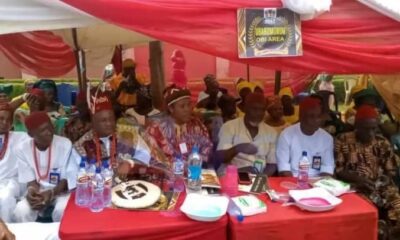
Traditional Ruler of Ihiala – Igwe Obidiegwu
Ihiala town is governed through a mix of traditional structures, local government administration, and political representation, each playing a vital role in shaping the community’s life and development.
Traditional Leadership
The traditional ruler (monarch) in Ihiala is known as the Oluoha, a title specific to this town. As at 2018, Igwe Thomas Ikenna Obidiegwu, also known as Oluoha XVII was selected as the new traditional ruler by the Dioha royal family. His reign emphasizes peace and inclusive dialogue. In 2019, he publicly invited different community factions to reconcile and pursue unity for the development of Ihiala.
During his coronation, representatives from Uzoakwa, one of the autonomous villages in the town reaffirmed their commitment to supporting his reign and working for harmony. Historical and legal records also confirm that the Oluoha title belongs explicitly to the Amamumu quarter, and no other quarter in Ihiala shares this title.
Local Government Leadership
Hon. Kingsley Obi is currently the Transition Committee Chairman of Ihiala Local Government Area. Under his leadership, there have been efforts to improve local infrastructure. For example, Obi launched a road-repair initiative to fix a particularly dangerous pothole along Onitsha‑Owerri highway, signaling a push for meaningful grassroots transformation.
The LGA has also faced serious security challenges. In January 2023, gunmen attacked the council secretariat, destroying at least 14 buildings.
Town Union and Community Governance
The town union, known as the Ihiala Progress Union (IPU) serves as a key civic organization that represents the interests of the people across different quarters and age groups. In December 2022, Okey Leo Ohagba, Esq. was elected President‑General of the IPU. The town union works closely with the traditional structure (Oluoha and his council), and with the local government to address community issues such as development, security, and social welfare.
Political Representation
At the national level, Hon. Ifeanyi Chudy Momah represents Ihiala in the House of Representatives, serving the Ihiala Federal Constituency. His position gives Ihiala a voice in Nigeria’s federal legislative process, connecting local issues to national governance.
Economy and Livelihood
The economy of Ihiala Local Government Area, with Ihiala town as its administrative heart, is rooted in agriculture, trade, and small-scale enterprise. The people depend on a blend of farming, market trading, crafts, and services for their livelihood, making it a vibrant and mixed-economy community.
Farming remains the most important economic activity in the LGA. Major crops grown in the area include cassava, yam, cocoyam, and vegetables. These are staple foods, contributing both to food security and local commerce.
Beyond food crops, Ihiala residents also produce cash crops. According to a local historical account, people engage in palm produce such as palm oil and palm kernel for sale outside the LGA. Livestock raising also exists, and some of the communities historically maintain poultry, goat, and pig farming.
Crafts and traditional industries also supplement farming. For example, basket weaving, mat making, pottery, and other craftworks are part of the local economy.
Trade in Ihiala is active and well-developed because of its strategic location and market culture. The LGA hosts several key markets, including Nkwor Ihiala and Nkwogbe where traders converge to buy and sell farm produce, manufactured goods, and everyday items. These markets are more than just places for exchange; they are social hubs and source of income for many. On certain market days, the volume of trade surges as farmers, artisans, and traders come together, making it a crucial platform for small-scale entrepreneurs.
Ihiala’s position along the Onitsha–Owerri Expressway also supports commerce. This road connectivity helps move agricultural goods from rural farms to larger markets and supports the movement of goods and services in and out of the town.
Aside from agriculture and trade, Ihiala has a number of small-scale industrial and service businesses that contribute to the local economy. As noted, mat-making, basket weaving, and pottery generate income for skilled artisans. Local farms raise animals for meat and eggs, supporting food supply and trade. There are hotels in Ihiala serving travellers, traders, and business people. According to a historic account, there were small industrial centres in the LGA, such as starch mills, a bread industry, and agro‑industrial activities in parts of Uli and Okija.
While agriculture and trade are strong, the economy faces challenges. Many farmers rely on small-scale farming which can limit productivity and profit. According to a study that included the LGA, average household incomes are modest, and a significant portion of the population lives close to the poverty line.
Furthermore, small-scale enterprises sometimes struggle with access to capital, modern technology, and broader markets. According to research on small-scale businesses in Anambra State generally, raw materials from rural communities like Ihiala support local industry, but business growth is often constrained by limited scale and financing.
At the same time, there are opportunities. The high volume of agricultural production gives room for agribusiness growth (processing, value addition). The markets can be further developed for regional trade. Crafts and cultural products (e.g., woven baskets, pottery) could be scaled or marketed more broadly. Service industries (hotels, transport) could benefit from Ihiala’s position on a major highway.
A recent development points to civic investment and local philanthropy. In 2025, a prominent industrialist donated ₦100 million to support building a hospital and nursing school in Ihiala. This investment reflects growing local commitment to social infrastructure, which can indirectly boost the local economy by improving health and education services, and potentially creating jobs.
Culture and Traditions
The culture of Ihiala is rich, deeply rooted in Igbo traditions, and marked by a vibrant blend of masquerades, music, dance, folklore, and community rituals. These cultural practices bring people together, preserving the heritage of their ancestors while still adapting to modern life.
Like most Igbo communities, one of the most important cultural expressions in Ihiala is the masquerade tradition. These are not just performances. In traditional times, masquerades represented ancestral spirits or the dead. The masquerades wear colourful robes and masks and perform at village squares, especially during major festivals or ceremonies. Only men can perform these masquerades.
In Ihiala, some well-known masquerades include Okpaka Mmawu, Ajibusu, and Nwa Otakiri. During performances, music plays a key role. Before masquerades appear in public, there are secret rituals and incantations in their “masquerade houses” led by priests, calling on spiritual power.
Traditional dance is another central part of Ihiala culture. The “mbene” dance is particularly popular. Dance troupes from villages gather, perform rehearsed routines, acrobatics, and songs.
Folklore is shared during community gatherings, especially at night under the moon. Stories of ancestors, moral tales, and traditional beliefs are passed down verbally. In Ihiala, kola nuts (oji) are highly symbolic. They are offered to guests as a sign of honour, respect, and welcome. ‘
Like many Igbo communities, Ihiala (and its autonomous towns) celebrate the New Yam Festival, known locally as Iri Ji, Iwa Ji, or Ike Ji. The festival generally comes at the end of the rainy season (around August/September) and is a time to give thanks for a successful harvest. During Iri Ji, people come together from far and near. There are cultural displays, dancing, and masquerade performances.
Ihiala’s cultural practices reflect a belief in ancestors and spiritual beings. The masquerades are more than entertainment — they are believed to embody the spirits of the dead. Traditional cosmology is also woven into community life. During rituals, the living communicates with ancestors via offerings, dances, and masked performances. These practices also foster moral order: masquerades are sometimes used to discipline social behavior and reinforce community values.
Education
Education in Ihiala Town and the wider Ihiala Local Government Area (LGA) spans from primary schools all the way to a seminary. It is a mix of religious and secular education, with some very important institutions in the Catholic tradition.
Primary and Secondary Education
Ihiala LGA has many public and private primary schools which include Akwa Primary School (Ihiala), Ihite Central School, and Community Primary School, Mbarakpaka. For secondary education, key schools in Ihiala include Abbot Girls Secondary School, Abbot Boys Secondary School, Jubilee Secondary School, St. Jude’s Secondary School (Okohia), and a Government Technical College in Ihiala.
According to a 2019 academic survey, there are around 17 government-owned secondary schools and 21 private secondary schools in the LGA. The same study reports over 50 primary schools in the LGA.
Holy Ghost Juniorate Seminaries (Spiritan Minor Seminary)
One of the most significant educational institutions in Ihiala is the Holy Ghost Juniorate, a Catholic minor seminary run by the Holy Ghost Fathers (Spiritans). The seminary was officially opened on January 16, 1953 to nurture young vocations for the religious and missionary priesthood.
It is the only seminary in the Spiritan (Holy Ghost) congregation in the Southeast of Nigeria for minor seminary training. The seminary’s mission is both spiritual and academic as students receive a balanced education that includes intellectual formation, moral training, and practical skills.
Health and Infrastructure
Although Ihiala Local Government Area faces significant challenges in health care infrastructure, but it also has important health institutions that serve the community. Several public primary health care centres (PHCs) are in a poor state, while its major hospital – Our Lady of Lourdes Hospital, Ihiala remains a key health provider.
Many primary health centres in the LGA are in a deteriorated condition. Some health centres lack basic medical equipment such as BP (blood pressure) apparatus, drip stands, and laboratory kits, making them practically unsafe.
Security and infrastructure are also concerns. Some of these health centres are not fenced, compromising safety, especially for mothers and newborns. According to investigative reports, budget flows for primary healthcare are delayed. As part of the Basic Health Care Provision Fund (BHCPF), there should be money for maintenance and equipment but in practice, some PHCs still lack electricity, water, and even basic sanitary facilities.
Our Lady of Lourdes Hospital, Ihiala is one of the most important health care institutions in Ihiala. The hospital operates 24 hours and provides a range of services: maternity, paediatrics, surgery, infectious diseases, and emergency care. According to its own profile, the hospital has a 300-bed capacity. It also serves as a training centre, with a School of Nursing, a School of Midwifery, and a Medical Laboratory Science School within the hospital complex.
Challenges Facing The Town
Ihiala, like many growing towns in Nigeria, faces a number of serious challenges. These problems affect security, infrastructure, public health, and economic development, and they slow down the town’s potential.
Insecurity and Violence
One of the greatest challenges in Ihiala is insecurity tied to cult groups. In 2024, the community banished 11 people accused of orchestrating cult-related killings and kidnappings. There have also been reports of unknown gunmen and kidnappers operating in the town which has caused fear among residents and forced some to relocate.
Political tensions also contribute to insecurity. According to reports, rivalry between political parties in Ihiala has worsened the security climate, undermining trust and local peace efforts. In April 2025, the police arrested four men from the community for making kidnapping threats, abductions, and cyberstalking.
These layers of insecurity are not just personal risks; they have major social and economic effects. Research shows that the presence of gunmen and cult violence disrupts trade, decreases investment, and erodes public trust in local institutions.
Poor Infrastructure
According to the Ebeleri Development Foundation (EDF), the town struggles with poor road conditions, which hinders commerce and daily movement. The same report from EDF points out that access to clean water in the town is limited, and sanitation infrastructure is weak, making development and living conditions harder.
Health Challenges
In the tuberculosis (TB) control programme, Our Lady of Lourdes Hospital has issues: there is inadequate funding, and very few healthcare workers are trained in TB management. Because of poor infrastructure in the health system, many residents may not be able to access quality medical services. Weak diagnostic capacity and under-resourced PHCs make it harder for people to get timely, effective care.
Economic Decline and Outmigration
The insecurity and poor infrastructure have made some natives leave the town, according to development‑foundation sources. The combined effect of crime, lack of investment, and limited local infrastructure has weakened economic opportunities in the locality, affecting markets, local businesses, and overall growth.
The geographic position of the town contributes to its security risk, as it borders other states (like Imo). Studies note that this location makes it vulnerable to cross-border criminal activity.
Governance and Community Capacity
According to the Ebeleri Development Foundation, some of the infrastructure burden (roads, health, security) requires the community to do more than wait on government, but local funding and organization capacity are weak. IPU (Ihiala Progress Union) leadership has called on indigenes to actively work with the police and share intelligence to reduce crime
Even when interventions happen, like banning cultists, long-term solutions are needed such as community-based development, better social services, and consistent infrastructure investments.
Notable People from Ihiala
Ihiala has produced a number of individuals who have made significant contributions in business, law, traditional leadership, and civic service. While not all are nationally famous, these personalities have shaped the town’s development, influenced the wider Anambra State, and serve as sources of inspiration for the community.
From successful entrepreneurs to respected traditional rulers and civic leaders, the people demonstrate a legacy of achievement and leadership.
Boniface Okonkwo Madubunyi: A well-known entrepreneur, the founder of Mabon Limited (a major energy and real estate company).
Chidi Anselm Odinkalu: Human rights lawyer, academic, and former chairman of Nigeria’s National Human Rights Commission.
Late Victor Nnamdi Okafor (“Ezego I”): Known popularly as Ezego “King of Money” I, a businessman with a rags-to-riches story.
Igwe Thomas Ikenna Amuta Obidiegwu: The current traditional ruler (Oluoha) of Ihiala.
Okey Leo Ohagba, Esq.: President‑General of the Ihiala Progress Union (IPU), a major civic leadership role in Ihiala town.
In Conclusion …
Ihiala is a vibrant community with a rich history, strong cultural heritage, and a resilient population. From its roots as a traditional Igbo settlement to its modern role as the administrative headquarters of Ihiala LGA, the town reflects the dynamic interplay of tradition and progress. Its villages, educational institutions, bustling markets, and community-driven initiatives showcase the town’s commitment to growth, learning, and cultural preservation.
Despite facing challenges such as infrastructure gaps, security concerns, and limited healthcare resources, the people continue to demonstrate resilience and innovation. The town has produced notable individuals who contribute to leadership, business, education, and civic development, reinforcing its reputation as a centre of talent and community pride.
For anyone seeking to learn about the Igbo people from Anambra State, Ihiala offers a unique glimpse into Igbo culture, communal life, and the spirit of progress that drives its people forward.
References
- https://ihiala.org/about/
- https://www.manpower.com.ng/places/lga/118
- https://africantheatreforum.wordpress.com/2017/02/27/theatre-performances-and-culture-indigenous-to-ihiala/
- https://documents1.worldbank.org/curated/en/628691468122974574/pdf/SFG1730-EA-P106172-Box394843B-PUBLIC-Disclosed-1-21-2016.pdf
- https://en.wikipedia.org/wiki/Ihiala
- https://www.naijapedia.com.ng/anambra-state/
- https://www.vanguardngr.com/2024/03/kidnappings-others-anambra-community-banishes-11-suspects/
- https://nnewicity.com/10-most-developed-towns-in-anambra-state/