

Africans
DORA AKUNYILI: REMEMBERING A WOMAN OF SUBSTANCE AND INTEGRITY

Few names in Nigeria’s history command as much respect and admiration as Dora Akunyili. The fearless pharmacist who took on one of the nation’s deadliest enemies – fake drugs. At a time when counterfeit medicines were killing thousands and eroding public trust in healthcare, Dora Akunyili stood out as a beacon of courage, integrity, and competence.
As the Director-General of the National Agency for Food and Drug Administration and Control (NAFDAC), she waged an extraordinary war against the powerful network of drug counterfeiters that had held Nigeria hostage for decades.
Born in 1954 in Makurdi, Benue State, and raised in Anambra, Dora Akunyili combined deep scientific knowledge with moral conviction to restore hope to millions. Her leadership transformed NAFDAC from an overlooked government agency into a respected national institution. Through her relentless efforts, the circulation of fake and substandard drugs in Nigeria dropped dramatically, saving countless lives and setting new standards for public health governance.
This article takes a deep look into the life and legacy of Dora Akunyili. Her humble beginnings, remarkable education, family life, and distinguished career. It also explores her years as NAFDAC boss, her unrelenting fight against counterfeit drugs, her later years as Minister of Information, and the illness that eventually claimed her life. More than a biography, this is the story of a woman who redefined public service in Nigeria and proved that integrity, courage, and vision can change a nation.
FAMILY BACKGROUND AND EARLY LIFE
Dora Nkem Akunyili was born Dorothy Nkem Edemobi on 14 July 1954 in Makurdi, Benue State, Nigeria to Chief and Mrs. Paul Young Edemobi. Although born in Benue, she came from and grew up largely in the southeast. Her family roots are in Agulu, Anambra State. Dora came from a family of devout Catholics who placed strong emphasis on education. From a young age, she showed intellectual promise, and her parents ensured she had the schooling and support she needed.
Dora Akunyili was brought up, partly by her maternal uncle in Anambra State. Those early years shaped both her character and her later commitment to public service. She combined a quiet seriousness about study with a sense of discipline and faith that influenced many of her choices.’
EDUCATION AND ADVANCED TRAINING
Dora Akunyili attended both primary and secondary schools in the southeast before proceeding to the University of Nigeria Nsukka (UNN) where she studied Pharmacy and graduated with a Bachelor of Pharmacy (B.Pharm) in 1978. She continued at UNN to complete a PhD in Pharmacology in 1985.
Her academic formation prepared her for a career that combined clinical knowledge, research skills, and managerial capacity, all of which would be essential later, when she confronted the problem of fake drugs across a large and complex country. Dora Akunyili later did her postdoctoral work and additional management and leadership training, including programmes outside Nigeria that sharpened her administrative skills and understanding of global health systems.
Before entering high-level public service, Dora worked as a pharmacist at the University of Nigeria Teaching Hospital (UNTH) in Enugu and pursued academic and research duties. Her background as a trained pharmacist and researcher gave her credibility in debates about drug safety, regulation, and standards. It also meant that she understood the science behind medicines and how counterfeit products could cause harm.
MARRIAGE AND FAMILY LIFE
Dora Akunyili married Dr. Chike Akunyili, a medical doctor. Together, they had and raised six children, namely, Ijeoma (Ije), Edozie (also called Edo), Somto, Njideka, Chidiogo, and Obumneme. The family combined professional careers and public service. Several of their children would later gain international recognition for achievements in the arts and sciences. Marriage and family life grounded Dora, and despite long, demanding public roles, she remained a wife, a mother and a family figure.
EARLY PUBLIC SERVICE AND STEPPING INTO NATIONAL ROLES
Dora Akunyili’s formal entry into major public service roles came in different ways, over time. She worked in academia and in health settings, before being appointed to several government responsibilities. In the late 1990s and early 2000s, she held positions that exposed her to public administration and national projects, gaining experience that would be critical when she took leadership at NAFDAC.
Her professional reputation as a competent, honest, and technically capable pharmacist grew steadily. Colleagues and observers remember her for combining expertise with moral clarity – a combination that made her an obvious choice for a country facing a public health emergency caused by counterfeit medicines.
BECOMING NAFDAC DIRECTOR-GENERAL
In 2001, Dora Akunyili was appointed Director-General of the National Agency for Food and Drug Administration and Control (NAFDAC). As at the time she arrived at NAFDAC, Nigeria was facing an enormous public healthcare problem. The market was flooded with fake, adulterated, or poor-quality medicines. These products ranged from falsely labelled over-the-counter remedies to dangerous counterfeit antibiotics and antimalarial medicines. The consequences were catastrophic. Patients did not get the correct treatment, illnesses became harder to cure, resistance increased, and people, including children died or suffered prolonged sickness because of fake or substandard drugs. Her own sister was even a victim.
Dora Akunyili assumed leadership at NAFDAC determined to change that reality. She understood that the problem was not just technical. It was institutional and social. Tackling it required better enforcement, public education, cooperation across government and private sectors, and international partnerships. She set out an agenda to tighten regulation, build NAFDAC’s capacity, and bring public attention to the scale and human cost of counterfeit medicines.

STRATEGY AND ACTIONS: HOW DORA FOUGHT COUNTERFEIT DRUGS
Dora Akunyili’s approach to the fake drug problem combined multiple tactics. She believed that a well-informed public is the first line of defense. NAFDAC issued clear warnings, explained how to spot suspicious medicines, and used mass media to alert citizens. Her frank, no-nonsense public messaging made the issue a national conversation and cut through political and social apathy.
Under her leadership, NAFDAC increased raids on drug stores, markets, and warehouses where counterfeit drugs were sold. The agency improved inspection routines, seized dangerous products, and prosecuted offenders, when neccessary. It was a visible, sometimes dramatic campaign, but it produced results.
Dora invested in NAFDAC’s laboratory capacity and technical expertise so that the agency could test suspect products, identify dangerous counterfeits, and issue scientifically solid warnings and recalls.
She worked with police, customs, health professionals, and international bodies to trace supply chains and block the importation and circulation of counterfeit medicines. International organizations and intellectual property agencies noted NAFDAC’s work as a model for coordinated action.
Dora Akunyili insisted on high ethical standards within the agency. She fought corruption inside the regulatory system and made NAFDAC’s actions more transparent and accountable. That integrity inspired public confidence, and many Nigerians rallied behind the agency for the first time.
These actions were not easy. They produced enemies among those who benefited from counterfeit trade, and Dora often faced threats and intimidation. Yet, she pressed on fearless, open, and direct. Her willingness to be visible and to lead from the front gave the campaign moral authority.
MEASURABLE RESULTS AND INTERNATIONAL RECOGNITION
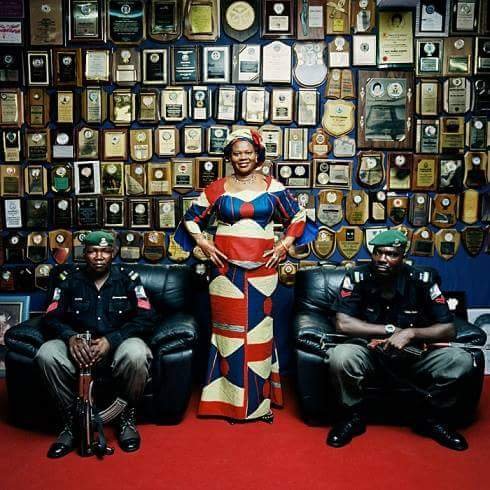
The effects of Dora Akunyili’s leadership were measurable. Multiple sources report significant reductions in the proportion of counterfeit drugs in the Nigerian market during her years at NAFDAC. Some accounts indicate reductions as large as 70 – 80% in certain categories of fake medicines compared to the situation before her term.
International organizations took notice. Her methods and the NAFDAC campaign were held up as a practical example of how a country with limited resources could drastically reduce counterfeit medicines with political will, smart strategy, and transparent leadership.
She also received numerous awards and honours at home and abroad for her work. Organizations, civic groups, and international bodies acknowledged her contribution to public health and safety. By the time she left NAFDAC in 2008, she had turned the agency into a respected regulatory institution and inspired public trust in government action on drug safety.
FROM NAFDAC TO A FEDERAL MINISTER
After her tenure at NAFDAC (2001–2008), Dora Akunyili served as Nigeria’s Federal Minister of Information and Communications from 2008 to 2010. In that role, she served as a public communicator for the federal government, leading a massive reorientation campaign for the country with the slogan: “Good people, Great nation!”.
Her career also featured academic appointments and engagements. She had been a professor and continued to be regarded as an erudite scholar with broad technical knowledge in pharmacology and public health.
Her leadership style which combined science, public engagement, and moral courage made her a sought-after voice for public policy and health advocacy. She authored and inspired books and articles on the fight against counterfeit medicine and helped to shape a generation of regulatory and public health practitioners.
CHALLENGES, THREATS, AND THE PERSONAL COST OF PUBLIC SERVICE
Dora Akunyili’s high-profile anti-counterfeit campaign made her a target. She received several threats and faced quite a number of attempts to intimidate her and NAFDAC staff. In interviews and speeches, she sometimes spoke candidly about the personal risks she faced.
The struggle against vested interests in the counterfeit trade was not just a policy fight. It was dangerous, costly, and lonely. Dora’s resolve in the face of intimidation strengthened public admiration for her and underscored the seriousness of the national problem she tackled. Several profiles at the time highlighted the personal sacrifices she and her team made during those years.
ILLNESS, CONTROVERSY OVER DIAGNOSIS, AND EFFORTS TO GET CARE
Later in the years, Dora Akunyili had health problems. She battled illness for a few years before her death. There were public rumours and controversy at times about her health status. In 2012 and in the years that followed, Dora sought medical care both in Nigeria and abroad.
Some commentary, including journalistic investigations and opinion pieces, discussed challenges she had with diagnosis and treatment. There were suggestions that earlier misdiagnoses or delays in detecting the true nature of her illness complicated her treatment options.
Dora’s family and public supporters tried to secure the best care for her. Her public profile meant that news of her condition attracted national attention and sympathy. Her struggles highlighted concerns about access to timely, accurate cancer diagnosis and treatment for Nigerians – a public health issue that continues to rear its head even till today.

DORA’S UNFORTUNATE DEMISE
On June 7, 2014, Dora Akunyili succumbed to the battle with uterine cancer in a specialist hospital in India. Her passing prompted widespread and heartfelt public mourning across Nigeria and among diaspora communities. Political leaders, civil society, health professionals, and ordinary citizens paid tribute to her courage and to the practical improvements she brought to health and safety in Nigeria. Her burial and funer in Agulu, Anambra State, drew many dignitaries and friends who celebrated her life and public service.
Dora left strong and multi-layered legacy:
- Public health impact: The lives saved and illnesses averted because of the reduction in counterfeit drugs remain an enduring part of her contribution. The improved regulatory capacity she built at NAFDAC is still a template for countries confronting similar problems.
- Moral leadership: Dora’s insistence on integrity and accountability raised expectations about how public institutions should operate. She became a moral symbol for honesty in public office.
- Inspiration for women and public servants: As a female leader in a demanding technical and political field, she inspired many women and young professionals to pursue careers in science, regulation, and public administration.
- International example: Her strategies and results have been studied and cited in international forums concerned with drug safety, intellectual property protection, and anti-counterfeiting efforts.
CONTROVERSIES, CRITIQUES AND BALANCED PERSPECTIVE
There is no public life that is without controversy. During and after Dora Akunyili’s career, some critics questioned aspects of enforcement, the balance between regulation and access to medicines, and the adequacy of prosecutions against major players. Others debated whether the victories against counterfeit drugs were permanent or whether deeper reforms of the supply chain were still needed.
These debates are part of a healthy democratic assessment of public policy. Yet, the balance of evidence and expert commentary shows Dora’s era marked a decisive and positive change in Nigeria’s fight against counterfeit drugs. Scholarly articles and international commentaries frequently point to the measurable decline in fake drugs, and to NAFDAC’s elevation as a functioning regulator under her leadership.
HOW DORA IS REMEMBERED TODAY
Dora Akunyili’s life and work has inspired books, essays, and many awards. Her biography and several commemorative books and articles chart her life and describe the emotional and professional contours of her fight.
She received dozens of national and international honours recognizing her courage, professional competence, and public service. For many Nigerians, her name has become shorthand for integrity and effective leadership.
Dora Akunyili’s battle against counterfeit drugs is not just a story about one woman’s career. It is a case study of how an individual with technical knowledge, moral courage, and the right combination of public engagement and institutional reform can create change at scale. Her life was a reflection that:
- Knowledge matters: Her technical training in pharmacy and pharmacology gave her authority and enabled evidence-based regulation.
- Communication matters: Dora used clear public messaging to enlist ordinary citizens in protecting themselves and demanding safer medicines.
- Integrity matters: She insisted on ethical leadership within her agency and refused to hide problems or accept compromises that would endanger the public.
- Systems matter: Sustainable change requires building institutions with the skills and capacity to enforce standards, test products, and prosecute offenders.
Today, as many countries still wrestle with counterfeit medicines, Dora Akunyili’s story is a model for activists, regulators, and policy-makers. Her success shows that, even in resource-constrained settings, determined leadership and smart strategy can cause positive changes.
IN CONCLUSION…
Dora Akunyili was more than a regulator or a public official. She was a public moral force who used science, policy, and public communication to save lives. Her story is filled with professional competence, personal sacrifice, and a refusal to tolerate actions that harm ordinary people for profit.
She faced danger and resistance, but she also left behind a transformed agency and a clearer national commitment to drug safety. Remembering Dora is not only about celebrating one person, it is about holding up an example of what public service can achieve when it is guided by integrity, expertise, and courage.
REFERENCES
- https://en.wikipedia.org/wiki/Dora_Akunyili
- Uzu Journal of History and International Studies, Volume 9 Number 1, 2023
“DORA NKEM AKUNYILI AND THE FIGHT AGAINST FAKE DRUGS IN
NIGERIA”, 2001-2008. Paschal Nwosu Department of History and International Studies Nnamdi Azikiwe University, Awka - https://www.thelancet.com/article/S0140-6736%2806%2968634-0/fulltext
- https://www.wipo.int/en/web/wipo-magazine/articles/joining-forces-to-combat-counterfeiting-35082
- https://www.thecable.ng/obituary-how-misdiagnosis-led-to-doras-death
You might want to check this out…