



Igbo History & Heritage
Igbere, Abia State: History, Origin, Culture, and Things You Should Know

Igbere is a historic suburban town in Abia State with a rich past, deep culture, unique age-grade system, and well-organized autonomous communities that reflect Igbo life and heritage. Explore the history, origin, culture and all you should know about the town.

Igbere is one of those Igbo towns with a story that quietly carries depth, resilience, and identity. Located in Bende Local Government Area of Abia State, it is not just a place on the map, it is a living community defined by history, tradition, and a strong sense of belonging. For generations, its people have preserved their culture through shared values, communal labour, festivals, and an age-grade system that continues to inform social life.
To understand Igbere is to understand how Igbo communities organize themselves, remember their past, and adapt to change without losing their roots. From its origin stories and migration traditions to its autonomous communities and traditional leadership, the town reflects the wider Igbo experience, even as it maintains its own distinct identity. Every village, ceremony, and social institution tells part of a larger story that has been passed down through oral history and lived practice.
This article takes a calm and factual look at Igbere. It explores where the town is located, how it came to be, how its people live, and why its culture still matters today. Drawing from verifiable sources and community records, it documents the history, culture, and everyday life of the town in a clear way.
Whether you are an indigene, a researcher, or simply curious about Igbo history, this is a grounded guide to understanding Igbere beyond the surface.
Location of Igbere
Igbere is located in Bende Local Government Area of Abia State, in the southeastern part of Nigeria. The town sits within a cluster of historically connected Igbo communities that makes it both geographically central and culturally significant. It lies a short distance from Uzuakoli, about 26 miles from Umuahia, the State capital, and roughly 66 miles from Aba, one of the region’s major commercial cities. Its position places it within easy reach of key roads, markets, and neighbouring towns.
Surrounding Igbere are communities such as Abriba, Ohafia, Item, Alayi, and Ozuitem, all of which share long-standing social and economic ties with the town.
These connections have influenced movement, trade, and inter-community relationships over time. The location of the town has also defined its development and allowed it to remain rooted in the traditional Igbo life while staying connected to the wider Abia State landscape.
The Origin and History of Igbere Town
The history of Igbere is closely tied to oral tradition, shared memory, and the lived experiences of its people. Like many Igbo communities, It’s early beginnings were preserved through storytelling passed from one generation to the next.
These accounts speak of ancestral movements, settlement decisions, and the gradual formation of a community bound by kinship and shared values. While written records of the earliest period are limited, the consistency of these traditions gives insight into how the town emerged distinct within the old Bende area of present-day Abia State.
Igbere is, sometimes, referred to as Igbere Ebiri, a name that reflects its ancestral identity and roots. Elders and local historians describe its formation as a process rather than a single event. Families and kindred groups settled, expanded, and organized themselves over time to give rise to the communities that now make up the town. Land, lineage, and mutual protection played important roles in influencing early life, just as they did in many pre-colonial Igbo societies.
Before colonial rule, Igbere was governed through traditional systems that emphasized collective responsibility. Councils of elders, age grades, and lineage heads managed affairs such as land use, conflict resolution, and communal projects. These systems helped to maintain order and ensured that every segment of society had a role to play.
When the British colonial administration reached the Bende area, new political structures were introduced. Even then, many traditional institutions in Igbere continued to function alongside colonial governance in the bid to adapt without disappearing.
Over time, Igbere became part of larger administrative divisions, including the old Bende Division and later, Bende Local Government Area. These changes connected the town more formally to regional and State structures, even as it allowed it to retain its cultural foundations.
Today, the history of the town lives not only in documents and records but also in festivals, age-grade ceremonies, and everyday community life. It is a history defined by continuity, adjustment, and a strong attachment to identity.
The People of Igbere and Their Identity

The people of Igbere are part of the wider Igbo ethnic group, and their identity is deeply rooted in shared ancestry, language, and communal life. They are commonly referred to as Igberians, a name that represents both place and belonging. The Igbo language is spoken throughout the town with a local dialect that carries expressions and pronunciations unique to the town. Language remains one of the strongest markers of identity, used in homes, markets, ceremonies, and traditional gatherings.
Community life in Igbere is built around values such as respect for elders, cooperation, and collective responsibility. From an early age, individuals are taught the importance of contributing to the well-being of the town, whether through family obligations, age-grade duties, or participation in communal events. These shared values help to maintain social order and reinforce a sense of unity across the different autonomous communities.
Family and lineage also play a central role in forming identity. Many families in Igbere can trace their roots back to several generations, and lineage histories are carefully preserved through oral accounts.
These histories influence social relationships, land ownership, and traditional titles. Together, language, family ties, and communal values form the foundation of what it means to belong to Igbere, and give the people a strong sense of who they are and where they come from.
Autonomous Communities That Make Up Igbere
Igbere is not a single, uniform settlement. It is a town made up of thirteen autonomous communities, each with its own identity, history, and traditional leadership. Together, these communities form what is known as the Igbere clan. This structure reflects a common pattern in Igbo society where autonomy at the village level exists alongside a strong sense of collective belonging.
The autonomous communities that make up the town are Agbo, Amakpo, Amankalu, Amaukwu, Amaiyi, Amaoji, Amaofufe, Eziama, Ibinanta, Ibinaukwu, Okafia, Ohumola, and Umusi. Each of these communities is headed by a traditional ruler known as an Eze. While each Eze oversees the affairs of his own community, they also come together as part of the Igbere Clan Council of Kings, often referred to as Ndi Eze.
This council serves as a unifying traditional authority for the entire town. It handles matters that affect Igbere as a whole, including cultural preservation, conflict resolution, and coordination of major communal events. Decisions are usually made through consultation and consensus which reflect the Igbo tradition of collective leadership rather than centralized power.
The autonomy of these communities allows local customs and histories to be preserved while the clan structure ensures unity and cooperation. This balance between independence and togetherness has helped the town to maintain social stability over time. It also explains why community participation remains strong, as people feel closely connected both to their immediate village and to the town as a whole.
Culture and Traditions of Igbere Town

Culture in Igbere is the heartbeat of the community that influences everyday life, guides social interactions, and preserves the values passed down through generations. The traditions of the town are deeply rooted in Igbo customs, though they carry unique elements that make the town distinct. Festivals, age-grade systems, family practices, and communal ceremonies all play a role in maintaining its identity and social cohesion.
The Age-Grade System
One of the most defining aspects of Igbere culture is the age-grade system. With this system, people born within a similar time frame are grouped together to perform communal duties. These duties range from clearing roads, building structures, organizing town events, and maintaining public order. Age grades also play a role in social discipline which ensures that community members adhere to shared rules and values.
Age grades remain active for many years before retiring. Retirement is celebrated through a ceremony known as Igbotonma where members symbolically lay down the tools they used to serve the community such as cutlasses and hoes. This event honours their contributions and transitions them into respected elder status.
Festivals and Community Events
Festivals in Igbere are vibrant expressions of its cultural life. One of the most notable is the Ezumezu Festival which takes place every three years. This festival brings together sons and daughters of the town from near and far to celebrate community unity and honour retiring age grades. The festival includes traditional dances, parades, and rituals that showcase the heritage and collective spirit of the town.
Other ceremonies highlight important social milestones such as marriages, naming ceremonies, and the initiation of new age-grade members. Music, dance, and storytelling are central to these events.
Family Life and Social Norms
Family structures in Igbere are traditionally extended, with multiple generations often living in close proximity. Respect for elders is a core value, and decisions affecting the family or community typically involve senior members. Marriage, inheritance, and community participation are guided by customs that have been practiced for generations in a way that ensures continuity of social norms.
Women also play important roles in Igbere culture as they organize communal activities, market events, and contribute to ceremonies and festivals. Their participation strengthens social cohesion and ensures that cultural knowledge is passed on to the next generation.
Through its age-grade system, festivals, and family practices, Igbere maintains a culture that is both alive and adaptive. These traditions not only preserve its identity but also offer a model of communal living that balances individual responsibility with collective well-being.
Economy and Occupations of Igbere People
The economy of Igbere speaks about both tradition and adaptation to modern life. Agriculture has long been the backbone of its livelihood. Many families cultivate staple crops such as yam, cassava, cocoyam, and maize, along with palm produce. Farming is not only a source of food but also a cultural practice, as land and crop production are often tied to lineage and family heritage. Small-scale trade in farm produce also supports local markets and sustains inter-community connections.
Trading is another important economic activity. The people participate in local and regional markets where they sell goods such as food items, crafts, and household supplies. Markets serve as social hubs where business and community life intersect. They are spaces for exchanging ideas, forging relationships, and maintaining networks beyond the town.
In addition to farming and trade, many Igberians work in modern professions. Teaching, civil service, healthcare, and small business ownership are common occupations among the residents. Some individuals live in nearby cities such as Umuahia or Aba, or even abroad, yet maintain strong ties to the town. These diaspora connections often bring additional resources, knowledge, and investment back into the town in a way that supports community development.
Community organizations, town unions, and cooperative societies also play a role in Igbere economy. These groups facilitate projects such as road maintenance, market development, and educational initiatives. They help to ensure that economic activities benefit both individual families and the wider town.
Through this combo of traditional agriculture, trade, modern employment, and cooperative community effort, Igbere has built a resilient and adaptive local economy. Its people continue to balance respect for tradition with engagement in broader economic opportunities to maintain both cultural identity and financial stability.
Education, Religion, and Social Development
Education has long been a central part of life in Igbere. The town benefited early from the establishment of schools by missionaries and local leaders. These schools provided generations of children with access to formal education, and equipped them with literacy, numeracy, and vocational skills.
Today, the town has a mix of primary and secondary schools, and many young people pursue higher education in nearby cities or even abroad. Education is seen not only as a path to personal success but also as a means to contribute positively to the community.
Religion also plays a significant role in Igbere social life. Christianity is the dominant faith, with churches serving as centres for worship, moral guidance, and community organization. Many social events, including youth programmes, charity initiatives, and festivals, are supported by church groups. Traditional beliefs still influence some cultural practices, particularly in ceremonies, festivals, and rites of passage.
Social development in Igbere extends beyond formal education and religion. Town unions, cooperative societies, and age-grade groups actively engage in projects that improve infrastructure, health, and public welfare. Roads, schools, and marketplaces often benefit from community-led initiatives. Health awareness, clean water projects, and youth empowerment programmes are examples of how the town continues to develop socially while preserving its cultural identity.
Through education, religion, and community engagement, Igbere has cultivated a society that values knowledge, moral guidance, and collaborative development. These institutions and practices reinforce its identity and ensure that both tradition and progress coexist harmoniously.
Notable Sons and Daughters of Igbere
Igbere has produced several distinguished individuals whose achievements have brought recognition to the town. One of the most prominent is Senator Orji Uzor Kalu, a well‑known Nigerian politician and businessman who was born in the town and served as the Governor of Abia State from 1999 to 2007, before becoming a senator representing Abia North. His leadership in politics and business has made him one of the most influential figures from the community.
Another notable son of the town is Professor Ogwo E. Ogwo, a respected academic who served as Vice‑Chancellor of Abia State University Uturu and later held leadership roles at other Nigerian universities. His contributions to higher education have positioned him among the leading scholars from the town.
Igbere is also the hometown of Wing Commander Emmanuel Ukaegbu, a former officer in the Nigerian Air Force who served as Military Administrator of Anambra State in the late 1990s. His service in Nigeria’s military and administrative roles reflects the varied fields in which sons and daughters of Igbere have excelled.
These are just a few examples of Igberians whose careers span politics, academia, and public service, and illustrate the diverse contributions of the people to the Nigerian society.
Landmarks and Places of Interest in Igbere
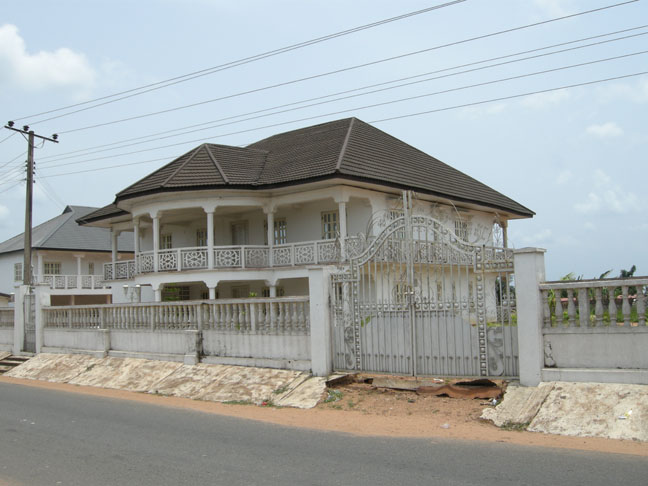
Ancestral landmark
Igbere may be known primarily for its rich culture and history, but it also features several landmarks and places that reflect its heritage and community life. These sites are not only important for locals but also for visitors who want to experience the identity of the town firsthand.
One notable landmark is the Igbere Town Square, a central gathering place where festivals, age-grade parades, and communal meetings are held. The square serves as the heart of the town, and symbolizes unity and acting as a venue for social interaction, decision-making, and celebrations.
Another key site is the Igbere Central Market which has been a hub for trade and commerce for decades. It is here that farmers, traders, and artisans come together to sell goods, share news, and maintain social connections. The market represents both its economic activity and its communal culture, as people of all ages participate in daily interactions.
For those interested in cultural and religious heritage, St. Michael’s Catholic Church and other major churches in Igbere stand as landmarks of spiritual life and social development. These churches often host community programmes, educational initiatives, and cultural events that support the town beyond purely religious functions.
In addition, some ancestral compounds and historical family sites in the town serve as living reminders of lineage and tradition. Many families maintain houses and compounds that have been passed down through generations as a reflection of the respect the people have for heritage and continuity.
Together, these landmarks and places of interest provide a window into the life of Igbere. They connect the indigenes to their past, foster social cohesion in the present, and offer visitors a tangible experience of its culture, economy, and communal spirit.
Igbere in Modern Times
Today, Igbere continues to evolve, even as it maintains its cultural roots and communal values. The town has adapted to modern life without losing the traditions that define its identity. Many residents live and work in cities like Umuahia, Aba, and Lagos, or even abroad but maintain strong ties to their hometown through family, festivals, and community projects. This connection ensures that the culture, age-grade system, and local governance structures remain vibrant and relevant.
Modern infrastructure and technology have also influenced life in Igbere. Roads have improved, schools offer more advanced education, and communication networks allow residents to stay connected with relatives both near and far. These developments have expanded opportunities for trade, education, and professional growth while supporting the social cohesion of the town.
Despite urban migration and modernization, Igbere festivals, age-grade ceremonies, and town meetings continue to bring people together. Events like the Ezumezu Festival remain central in attracting participants from across Nigeria and the diaspora. These gatherings reinforce a sense of belonging and allow the younger generations to learn about the history and values firsthand.
In many ways, Igbere today exemplifies a balance between heritage and progress. Its people embrace modern opportunities as they honour the traditions and social structures that have guided the community for generations. This continuity ensures that it remains not only a place with a rich past but also a town that thrives in the present and looks toward the future.
The Enduring Significance of Igbere Town
Igbere remains an important town because it embodies the resilience, culture, and values of its people. Its traditions, festivals, and age-grade systems continue to influence social life by teaching lessons about unity, responsibility, and community participation. These cultural practices are not just rituals, they are living institutions that connect generations and preserve a shared sense of identity.
The location, its network of autonomous communities, and its historical ties to the broader Igbo region give it both cultural and strategic significance. Igbere has contributed leaders, scholars, and professionals who have influenced Abia State and Nigeria at large in a way that demonstrate the impact a single community can have beyond its borders.
Moreover, Igbere is significant because it provides a model of how tradition and modernity can coexist. Even as residents move to cities or overseas, they still maintain strong ties to the town through festivals, development projects, and family networks. These connections keep the culture alive and ensure that future generations continue to value their heritage.
Ultimately, Igbere stands as a testament to the strength of community, the richness of Igbo culture, and the enduring relevance of towns that honour their past as they embrace the future.
In Conclusion …
Igbere is a living story of history, culture, and community. From its origins and autonomous communities to its festivals, age-grade system, and notable sons and daughters, the town reflects the richness of Igbo life and values. Its people have preserved their traditions while adapting to modern realities in a way that shows how heritage and progress can coexist.
Today, Igbere thrives through education, social development, and active participation in communal life. Its significance lies not only in the past but also in the way it forms identity, fosters unity, and inspires future generations. Understanding the town is to understand a community that honours its roots, celebrates its culture, and remains relevant in a rapidly changing world.
For anyone interested in Igbo history, culture, or the dynamics of Nigerian towns, Igbere offers a vivid example of continuity, resilience, and the enduring power of community.
References