






Igbo culture
Ihachi Nwanyi: The Igbo Tradition That Keeps a Family Name Alive

In traditional Igbo society, when a man dies without a male child, his family name does not disappear. The Igbo people believe that a person may die, but a family must continue. To make sure of this, they created a unique tradition that allows the man’s lineage to live on through his daughter.

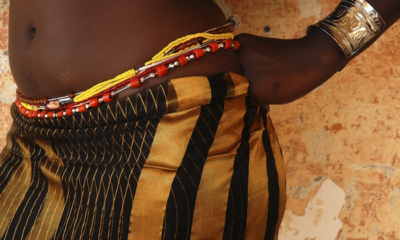
A young igbo bride
This practice is known as Ihachi Nwanyi, which means retaining a woman or keeping a daughter at home. Instead of marrying out, one of the daughters willingly remains in her father’s compound to bear children in his name. Those children continue the family line, inherit his property, and keep his name alive.
Ihachi Nwanyi is more than a cultural practice. It is a story of survival, identity, and the hidden power of women in Igbo land. It shows that even in a society where men were seen as heads of families, the Igbo still recognized that women carried an important kind of strength, the power to preserve a family’s existence.

Meaning and Origin of Ihachi Nwanyi
The phrase “Ihachi Nwanyi” comes from two Igbo words – Ihachi, which means “to retain or keep,” and Nwanyi, which means “woman.” Together, it simply means to keep a woman. In this case, it refers to a daughter who is kept at home to continue her father’s lineage.
The practice is one of the oldest in Igbo society, existing long before colonial rule or Western religion. It reflects the deep Igbo belief that family identity and ancestral continuity must never be lost. For the Igbo, every man’s umu nna (kindred) is like a tree, each generation must add new branches to keep the family alive.
So, when a man has no son to carry on his name, Ihachi Nwanyi becomes a solution. Rather than letting the name fade away, the family chooses one of his daughters to remain in the family home and give birth to children who will answer their grandfather’s name.
Although it was born out of a patriarchal idea, the need to have a male heir, the practice surprisingly gives power to the woman. She becomes the link between her father’s past and his future.
How this Practice Works
When a man dies or grows old without a male child, his kindred gathers to discuss the future of his lineage. The meeting is usually filled with elders, close relatives, and sometimes the eldest daughter. They discuss and agree that the family line must not end with their brother.
One of the daughters is then chosen, often the one who agrees willingly, to stay back in her father’s compound. She does not marry out but instead becomes the “wife” of her father’s house. Her main role is to bear children in her father’s name.
The family then informs the kindred about their decision, because everyone in the village must know that the daughter is now Ihachi Nwanyi. After that, an honorable and responsible man is selected or approved by her to father children for the lineage. In some places, the woman herself chooses the man, but the family must know who he is to avoid bad blood or hidden conflict.
Once agreed, some small traditional rites are performed to bless the union. The woman takes full control of her father’s property and responsibilities. She begins to pay community levies and stands as the head of her father’s household. She remains in her father’s compound, and her children belong entirely to her family, not to the man who fathered them.
Her first son is called Onochie, which means “the one who continues the lineage.” The man who fathers the children does not have any inheritance rights over them. They bear the name of their mother’s father and inherit only from her side of the family. However, if there is mutual respect and peace, the children may show care or kindness to their biological father, but that is by choice, not obligation.
In this way, Ihachi Nwanyi ensures that the man’s compound does not grow cold or empty. His name lives on through his grandchildren, born from his daughter’s womb.
Cultural and Social Meaning
Ihachi Nwanyi carries deep meaning in Igbo culture. It is not just about childbirth, it represents continuity, identity, and the sacred duty of keeping one’s lineage alive. In a society where ancestors are honored and remembered, to lose a family name is like losing one’s spirit. This practice makes sure that never happens.
It also challenges the Western idea that inheritance and family identity must always pass through men. In a quiet but powerful way, it gives women authority over land, property, and family leadership. The woman becomes both daughter and mother to her father’s household.
This shows that while the Igbo system was patriarchal in structure, it still created room for women to lead, decide, and preserve family heritage. The popular women’s group known as Umu Ada is another proof of this power. These women, united by blood and tradition, have always had the right to speak, settle disputes, and defend their father’s homes.
In truth, the Igbo woman has never been powerless. Practices like Ihachi Nwanyi show that she has always been a pillar of the family, the one who keeps the home standing when others are gone.
Variations of this Practice Across Igbo Communities
Like many Igbo traditions, Ihachi Nwanyi is known by different names across the region. The idea is the same, but each community expresses it in its own way.
- In many parts of Nnewi and nearby towns, it is called Ihachi Nwanyi or Iha Nwanyi n’ulo — meaning “keeping a woman at home.”
- In Amichi, people call it Nnete or Anurie na Nnete.
- Some communities in Imo State call it Ada Juo.
- In other parts of Anambra, it is known as Ahara n’ulo.
- In Nnobi, it is called Ihaikwa Nwanyi or Ihanyekwa Nwanyi.
While the names differ, the heart of the practice remains the same, a daughter stays back to continue her father’s lineage.
However, not every Igbo community follows this tradition. For instance, in some areas of Umuahia, instead of Ihachi Nwanyi, people practiced another custom where a man without a male child could marry a woman on behalf of his late brother or himself to bear children in his name.
These differences show how flexible and adaptable Igbo traditions are. Each community shaped its customs to fit its values and beliefs, but the main goal was always the same which was to keep the family name alive.
Modern Perspectives and Debates
Today, the practice of Ihachi Nwanyi is slowly fading in many parts of Igbo land. With the rise of Christianity, modern education, and new inheritance laws, some people now see it as old-fashioned or unnecessary. Many churches, for example, discourage it because it does not fit the Christian idea of marriage and family.
Yet, even with modern changes, the idea behind Ihachi Nwanyi still sparks interesting conversations.
In January 2024, a team led by Nze Tobe Osigwe and his crew sat with some elderly women in Nnewi to discuss Ihachi Nwanyi, Mmachi Nwanyi, and polygamy in relation to modern customs. The conversation revealed how older generations perceive these traditions today. While many described Ihachi Nwanyi as outdated and stressful for women, some still preferred it to modern solutions like child adoption, seeing it as a more natural way to preserve family heritage. (Click Here to Read the full interview).
Some people see it as a symbol of patriarchy, where a woman is used mainly to continue her father’s name. Others, however, see it as a form of empowerment, because the woman gains ownership and authority over her father’s house, something that rarely happened in other traditional settings.
Recent Nigerian court rulings now allow daughters to inherit their father’s property equally with sons. Because of this, the main reason for Ihachi Nwanyi which was to keep the inheritance within the family has become less important. But still, the cultural meaning remains. It reminds us of a time when families found creative ways to preserve their bloodline, even when there were no male children.
Interestingly, this practice is not unique to the Igbo. Among the Esan (sometimes pronounced Esab) people of Edo State and Ogoni people, there is a similar tradition where a daughter can also remain in her father’s house to bear children in his name. Just like Ihachi Nwanyi, it ensures that the family line does not end. This shows that across southern Nigeria, people have long shared the same deep respect for family continuity and ancestral roots.
Read About: The Role of Sira: First Daughters in Ogoni Marriage Tradition
Ihachi Nwanyi, therefore, should not be seen only as an “Igbo thing,” but as part of a wider African wisdom that values legacy and belonging.
The Hidden Power of Igbo Women
One of the most powerful lessons from Ihachi Nwanyi is the strength and respect given to women in traditional Igbo life. While outsiders often describe Igbo culture as male-dominated, those who understand it deeply know that women have always held great influence.
Groups like Umu Ada, daughters of the same lineage have existed for centuries. They are respected voices in family and village matters. They settle disputes, protect their father’s home, and can even fine men who disrespect their family name. Their presence alone carries authority.
Ihachi Nwanyi adds another layer to that power. A woman who becomes Ihachi Nwanyi is not only her father’s daughter, she becomes the symbol of continuity. She controls property, manages household matters, and ensures that her father’s name and spirit remain alive.
It’s also important to note that in the original Igbo culture, a woman did not take her husband’s surname. She remained known by her father’s name, which kept her identity strong. This shows that the idea of women losing their names through marriage came with Western influence, not Igbo tradition.
So, when we look closely, we see that the Igbo woman was never weak or voiceless. Her power may not have always been loud, but it was deep rooted in tradition, respect, and her unbreakable link to the family lineage.
Conclusion
Ihachi Nwanyi is more than an old tradition, it is a window into how the Igbo understood life, family, and survival. It shows that for the Igbo, a family name is sacred, and no branch of that family should ever be allowed to die.
While modern life may have changed how people see this practice, its spirit remains meaningful. It reminds us that in Igbo society, family is not just about blood, it is about responsibility, legacy, and respect for those who came before us.
It also teaches an important truth, that even in a world led by men, women have always been the silent architects of continuity. They are the keepers of memory, the strength of the home, and the roots that hold the family tree firm.
In the end, Ihachi Nwanyi is not just a story about inheritance. It is a story about resilience, identity, and the powerful ways women preserve life, even when the world thinks it has ended.