African History
Isobo People of Otaka: The History, Culture, and Heritage of an Igbo Community in Cross River State

Isobo people have long lived in Cross River State as a community with deep history, rich culture, and strong heritage that connects them to the Igbo of southeastern Nigeria, even while located in the Obubra Local Government Area. Discover things to know about this distinct people.

The Isobo people are one of the lesser-known Igbo communities quietly rooted in the heart of Otaka in Obubra Local Government Area of Cross River State, Nigeria. Tucked between farmlands, rivers, and neighbouring ethnic groups, this Igbo-speaking community has preserved its language, customs, and identity for generations. While many conversations about Igbo history focus on the Southeast, the story of the Isobo people reminds us that Igbo heritage stretches beyond familiar borders.
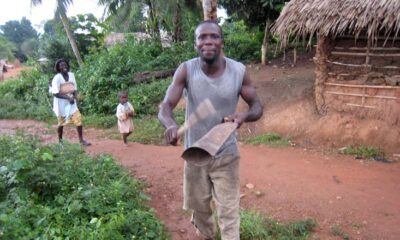
In Otaka and nearby villages like Biko Biko and Ezomezo, daily life moves with the rhythm of farming seasons, market days, and community gatherings. The Isobo people cultivate yam and rice, celebrate traditional festivals such as the Aji Festival, and pass down oral histories that connect them to ancestral Igbo roots. Their identity is not loud or widely documented, yet it is steady and deeply felt. It lives in their dialect, their rites of passage, their marriage customs, and their shared memory.
Understanding the Isobo people means looking beyond maps and political boundaries. It means listening to stories told by elders, observing cultural practices that have endured over time, and recognizing how an Igbo community in Cross River State continues to balance tradition with modern life. This is the story of the Isobo people of Otaka, their history, their culture, and the heritage that anchors them within the broader Igbo nation.
Who Are the Isobo People of Otaka?
The Isobo people are an Igbo-speaking community located in Otaka, a village in Obubra Local Government Area of Cross River State, Nigeria. Though Cross River State is widely known for its Efik, Ejagham, and Bekwarra populations, the Isobo people represent a distinct Igbo presence within the state. Their settlements include Otaka and nearby villages such as Biko Biko and Ezomezo, all of who form a small but culturally cohesive cluster.
Primarily, the Isobo people identify as part of the wider Igbo ethnic group. They speak a dialect of the Igbo language and maintain customs that align closely with Igbo traditions found in southeastern Nigeria. Oral accounts within the community trace their ancestral roots eastward, linking them historically to areas that are today part of Ebonyi State. Over time, they established themselves in what is now Obubra where they have lived for generations.
Life in Otaka revolves largely around farming and community ties. The Isobo people cultivate yam, rice, cassava, and other staple crops. Market days, family gatherings, and seasonal festivals remain central to their social life. Their cultural calendar includes traditional celebrations such as the Aji Festival which highlights womanhood, heritage, and unity within the community.
Although the Isobo people are not as widely documented in mainstream historical literature as the larger Igbo subgroups, their identity is clear and consistent within their locality. They preserve their language, kinship systems, and village leadership structures.
In many ways, the Isobo people of Otaka represent how the Igbo heritage extends beyond the familiar southeastern states and remains alive, even in Cross River State through everyday practice, shared memory, and strong community bonds.
Historical Origins and Migration Narratives

The early history of the Isobo people is preserved mainly through oral tradition rather than extensive written records. Like many small communities in Nigeria, their story has been carried from one generation to the next through storytelling, family lineage accounts, and communal memory. While formal academic publications devoted entirely to the Isobo people of Otaka are limited, local narratives provide consistent themes about their beginnings.
According to community accounts, the Isobo people trace their ancestral roots eastward into the larger Igbo cultural area. Many elders link their origin to regions that are today part of Ebonyi State, particularly areas associated with the Ikwo subgroup of the Igbo. These traditions suggest that their ancestors migrated westward over time, eventually settling in what is now Obubra Local Government Area of Cross River State. Such movements were common in precolonial Nigeria where families and clans relocated in search of fertile farmland, security, and new opportunities.
Geography supports the plausibility of this migration pattern. Obubra shares cultural and linguistic contact zones with communities across the Cross River and southeastern boundary regions. Before colonial boundaries were drawn, people moved more freely across these areas. Trade, marriage alliances, farming expansion, and intercommunity relations often encouraged gradual settlement rather than sudden relocation.
There is no evidence of a single dramatic migration event. Instead, the movement of the Isobo people appears to have been gradual and unfolded over generations. Families established farms, built compounds, and formed kinship networks that solidified their presence in Otaka and surrounding villages such as Biko Biko and Ezomezo. Over time, these settlements grew into stable communities with recognized leadership and social structures.
Colonial administrative records for smaller villages in Cross River State are sparse, and many rural communities were not extensively documented during the early colonial period. As a result, much of the early history of the Isobo people remains rooted in oral testimony rather than archival material. However, the continuity of Igbo language use, naming patterns, and cultural practices among the Isobo people strengthens the link between their present identity and their ancestral Igbo heritage.
Today, migration narratives remain an important part of community identity. They help to explain why the Isobo people, though geographically located in Cross River State share deep linguistic and cultural ties with southeastern Igbo communities. These stories are not simply about movement. They are about belonging, memory, and the long journey of a people who carried their language and traditions with them and planted them firmly in Otaka.
Language and Igbo Identity

Language is one of the clearest markers of identity among the Isobo people. In Otaka and surrounding villages in Obubra Local Government Area of Cross River State, everyday communication takes place in an Igbo dialect. The elders, traders, farmers, and children grow up speaking forms of Igbo that are mutually intelligible with dialects spoken across southeastern Nigeria. This linguistic continuity is one of the strongest foundations of Isobo identity.
Although detailed linguistic surveys specifically focused on the Isobo dialect are limited in publicly available academic literature, community accounts consistently affirm that their speech is Igbo in vocabulary, structure, and expression. Naming patterns, greetings, kinship terms, and proverbs follow recognizable Igbo forms. Personal names often carry meanings typical of Igbo culture that reflect themes of gratitude to God, family lineage, destiny, and community values.
The presence of Igbo language in Otaka is not accidental. It connects the Isobo people to a wider network of Igbo-speaking communities that extend across Ebonyi State, Enugu State, Imo State, and other parts of southeastern Nigeria. Given the proximity of Obubra to Ebonyi State, cross-border interaction has long supported linguistic exchange and cultural continuity. Trade, intermarriage, and seasonal farming activities have further strengthened these ties.
At the same time, the Isobo dialect carries local nuances. Like many Igbo dialects, pronunciation and certain expressions differ slightly from those heard in urban centres such as Enugu or Owerri. These differences do not separate the Isobo people from their Igbo identity. Instead, they place them within the rich diversity of Igbo dialect variations that exist across different regions.
Language also plays a role in cultural preservation. Traditional ceremonies, marriage rites, and community meetings are conducted in Igbo. Oral histories are told in Igbo. Proverbs which are central to Igbo thought and communication are used in conflict resolution and storytelling. Through language, the Isobo people pass down memory and values from one generation to the next.
In a state known for its ethnic diversity, the continued use of Igbo in Otaka quietly affirms the identity of the Isobo people as part of the broader Igbo nation. Their language is more than a tool for conversation. It is a living link to ancestry, belonging, and shared cultural heritage.
Traditional Social and Political Structure

The Isobo people of Otaka maintain a social and political structure deeply rooted in Igbo traditions, shaped by family ties, community consensus, and respect for elders. Their village life is organized around extended families and clans which form the basic units of governance, social responsibility, and cultural continuity.
At the centre of governance is the council of elders. Elders are highly respected for their experience, wisdom, and knowledge of customs. They are responsible for mediating disputes, guiding community decisions, and overseeing cultural practices. Leadership in the council is typically earned through age, social standing, or contributions to the welfare of the community. This system ensures that decisions reflect collective wisdom rather than the authority of a single individual.
Alongside the elders, some villages recognize local chiefs or titleholders who handle specific community duties. These may include organizing festivals, managing land allocation, or representing the village in intercommunity meetings. The chiefs do not wield absolute power, rather, their authority is balanced by customary law and the input of the council of elders.
Family and kinship also play a critical role in governance. Major decisions often involve consultation among heads of families or clans. The extended family system ensures that younger generations receive guidance while older members are supported in matters of health, wealth, and social recognition. This network of obligations strengthens communal bonds and encourages cooperation.
The Isobo people also maintain age-grade systems where groups of people born within a few years of each other are organized to take on communal responsibilities. These age grades may oversee sanitation, security, or festival preparations thereby creating opportunities for active participation in village governance from a relatively young age.
Social customs such as respect for elders, communal labour, and ritual observances are tightly integrated with political structures. Decisions regarding land disputes, marriages, or market regulations are guided by traditional norms to ensure stability and fairness. Even as modern administrative systems exist in Cross River State, the traditional structures in Otaka continue to play an important role in daily life.
Through this combination of councils, family influence, age grades, and customary law, the Isobo people maintain a governance system that balances order, cultural values, and community participation. This structure reinforces social cohesion and ensures that traditions are preserved while allowing the community to adapt to modern influences.
Religion and Spiritual Beliefs
The Isobo people of Otaka practice a blend of traditional Igbo spiritual beliefs and Christianity. This combination reflects both their historical heritage and the influence of modern religious movements in Cross River State.
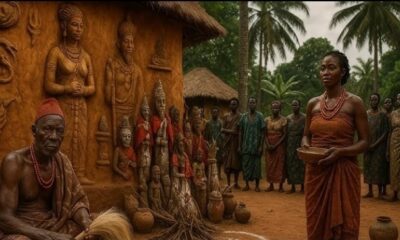
Traditionally, the Isobo people believed in a spiritual system that emphasized ancestral veneration, respect for deities associated with land and harvest, and adherence to rituals tied to nature and community life. Ancestors are revered for guidance, protection, and blessings, especially during festivals, marriages, and funerals. Certain spirits were also believed to influence fertility, farming success, and social harmony.
Deities and spirits associated with rivers, forests, and farmland played central roles in community rituals. Offerings of food, drink, or symbolic items were made to ensure the favour of these spiritual forces. These practices were closely tied to the agricultural cycle, particularly the planting and harvesting seasons.
With the arrival and spread of Christianity, many Isobo people adopted Christian beliefs while still maintaining respect for traditional practices. Churches now exist in Otaka and surrounding villages and offer spaces for communal worship and education. Christian teachings often coexist with local rituals, particularly those celebrating heritage, community festivals, or life milestones.
The coexistence of these beliefs demonstrates a careful balance. While formal Christian worship may take place in churches on Sundays, traditional practices such as honouring the ancestors, celebrating festivals like the Aji Festival, and observing seasonal rites continue to define social and cultural life.
Religion and spirituality among the Isobo people are more than personal faith. They are woven into community identity. Through ceremonies, prayers, and ritual observances, the people maintain a connection to their ancestry, cultural roots, and the land they inhabit. This dual religious presence, that is, traditional and Christian religions helps to preserve the cultural continuity of the Isobo people as they embrace modernity in everyday life.
Festivals and Cultural Celebrations
The Isobo people of Otaka celebrate a rich tapestry of cultural festivals that reinforce community bonds and preserve Igbo heritage. These events are central to social life as they combine music, dance, storytelling, and ritual practices. Among these celebrations, the Aji Festival stands out as a defining cultural event.
The Aji Festival is an annual celebration that focuses on womanhood, heritage, and community unity. Traditionally held in June, the festival originated as a rite of passage for young women to mark the transition into adulthood and public recognition within the community. Today, it has evolved into a broader cultural celebration that highlight female strength, societal contributions, and the continuity of traditions.
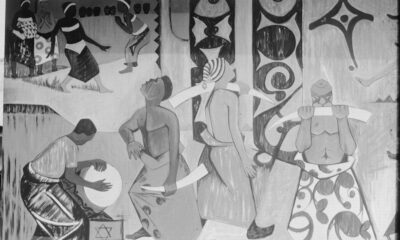
During the festival, young women dress in colourful traditional attire, adorned with beads and local fabrics. They participate in dances and performances that showcase community values and historical narratives. Masquerades often appear as symbolic figures that represent ancestral spirits and add a spiritual dimension to the festivities. Food, music, and communal gathering are integral because they provide opportunities for villagers to strengthen social ties and celebrate shared identity.
The Aji Festival is not only a display of pageantry but also a living expression of cultural preservation. It teaches younger generations about customs, responsibilities, and the history of the Isobo people while reinforcing the value of unity and respect for tradition.
In addition to the Aji Festival, the Isobo people observe agricultural festivals tied to the planting and harvesting of crops. Yam festivals, for example, celebrate the harvest season and involve ritual offerings to ensure the continued fertility of the land. These events also include communal feasts, music, and dance that reflect both gratitude and joy.
The four-day Igbo market cycle, namely, Eke, Orie, Afor, and Nkwo also shapes social and economic life. Market days are cultural gatherings where news is shared, alliances are formed, and communal bonds are strengthened.
Through festivals and celebrations, the Isobo people maintain continuity with broader Igbo traditions while creating a unique cultural identity tied to Otaka. These events are moments of learning, celebration, and communal solidarity that keep history alive in everyday life.
Economy and Traditional Occupations
The Isobo people of Otaka have historically built their livelihoods around agriculture which remains the backbone of their economy. The fertile lands in Obubra Local Government Area support the cultivation of staple crops such as yam, rice, cassava, and maize. Farming is primarily family-based, with households working together to prepare fields, plant seeds, and harvest crops according to the seasons.
Rice cultivation is particularly important as it not only provides sustenance but also serves as a source of income through local trade. Yam farming carries cultural significance that links it to festivals and rituals such as the yam harvest ceremonies which honour the land and ancestors for abundant yields.
In addition to crop farming, some Isobo families engage in small-scale livestock rearing, including goats, poultry, and occasionally cattle. Fishing in nearby rivers and streams supplements the diet and provides an additional means of trade or barter. These activities illustrate the community’s reliance on natural resources and traditional knowledge to sustain livelihoods.
Markets play a significant role in the economic and social life of the Isobo people. Villagers participate in the four-day Igbo market cycle – Eke, Orie, Afor, and Nkwo which regulates trade, social interaction, and cultural rhythm. Market days are occasions to sell farm produce, buy goods, and exchange information. They also serve as informal centres of community cohesion that reinforces relationships among neighbours and clans.
Beyond farming and markets, some community members pursue modern occupations such as teaching, civil service, and small business ownership in nearby towns. Education has increasingly opened opportunities for the younger people to supplement agricultural livelihoods with professional or entrepreneurial ventures.
Overall, the economy of the Isobo people is a combination of traditional occupations and emerging modern engagements anchored in a deep connection to land, community, and cultural practices. Agriculture remains central but evolving opportunities ensure that the community continues to thrive as it preserves its heritage.
Marriage, Family, and Social Customs
The Isobo people of Otaka maintain family and social structures deeply rooted in Igbo tradition where kinship, mutual support, and communal responsibility define daily life. Families are typically extended to include grandparents, parents, children, and often close relatives who live nearby or within the same compound. This system ensures continuity, care for elders, and strong community bonds.
Marriage is both a social and cultural event. Traditional marriage rites are still practiced alongside modern Christian ceremonies as a reflection of a blending of heritage and contemporary influences. Courtship often involves family consultations, demonstrations of respect to elders, and negotiation of bride price which is seen as a symbolic gesture affirming commitment and responsibility rather than commercial exchange.
During traditional wedding ceremonies, the bride and groom participate in rituals that honour the ancestors, demonstrate respect for both families, and celebrate communal unity. Music, dance, and shared meals are integral. This turns marriage into a public event that strengthens social ties beyond the immediate family.
Family structures also play a role in child-rearing and social education. Children are guided by parents, elders, and extended relatives to learn values, work ethics, and cultural practices from an early age. Respect for elders, obedience, communal responsibility, and participation in cultural activities such as festivals are emphasized as key aspects of upbringing.
Inheritance and succession follow customary norms where land and property are typically passed down within the family. The eldest sons often receive particular responsibilities but extended family consultation ensures fairness and community cohesion.
Social customs extend beyond marriage and family. Age-grade systems, communal labour, and participation in festivals and religious rites reinforce shared values and collective identity. Through these systems, the Isobo people maintain a sense of belonging, cultural continuity, and social stability with the aim of ensuring that heritage and tradition are preserved across generations.
Isobo Otaka in Contemporary Cross River State
Today, Isobo Otaka continues to thrive as a small but vibrant Igbo community within Obubra Local Government Area of Cross River State. While the village has retained much of its traditional lifestyle, modern influences have gradually shaped aspects of daily life, education, and infrastructure.
Education has become a central focus for many families. Children from Otaka now attend primary and secondary schools in the village and neighbouring towns, with some pursuing higher education in cities such as Calabar. Access to formal education has opened opportunities for professional careers in teaching, civil service, business, and other fields which allows the younger people to supplement traditional livelihoods with modern occupations.
Infrastructure improvements have also reached parts of Otaka and surrounding villages. Community development projects, often supported by the local government and non-governmental initiatives have introduced solar-powered boreholes, street lighting, and improved road access to enhance the quality of life and support agricultural and economic activities.
Despite these modern developments, the Isobo people maintain strong cultural continuity. Festivals such as the Aji Festival continue to be celebrated with enthusiasm as they provide opportunities for the elders and youth to connect and reinforce community identity. Market days and communal labour remain central to social life.
Migration has also influenced the community. Some families have members living in urban centres or other states, though ties to Otaka remain strong through family networks, land ownership, and participation in festivals and ceremonies. This connection ensures that cultural practices are preserved, even when individuals live away from the village.
Essentially, Isobo Otaka in contemporary Cross River State represents a balance between heritage and progress. The community continues to honour traditions, maintain Igbo identity, and engage in communal life while embracing education, infrastructure development, and modern opportunities that improve living standards and social mobility.
Challenges and Identity Preservation
Like many small ethnic communities, the Isobo people of Otaka face challenges in preserving their cultural identity amid modernization, migration, and external influences. While their Igbo heritage remains strong, the pressures of contemporary life can make maintaining language, traditions, and social practices more difficult.
One key challenge is language preservation. Younger generations increasingly interact with peers in schools or urban centres where English or other Nigerian languages dominate. This can reduce fluency in the Isobo Igbo dialect over time, especially if daily use at home or in community settings declines.
Migration and urbanization also impact identity. Many young people leave Otaka for education or employment in cities which can weaken direct engagement with local customs and festivals. While ties to the village are maintained through family visits and festival participation, the day-to-day immersion that sustains culture is harder to replicate outside the community.
Modernization and technology introduce another layer of influence. Exposure to global media, social networks, and entertainment can shift priorities and lifestyles, sometimes at the expense of traditional practices. Though the community elders and leaders recognize the need to adapt while protecting cultural heritage, balancing tradition with contemporary life is an ongoing challenge.
Despite these pressures, the Isobo people actively work to preserve their identity. Festivals like the Aji Festival serve as powerful tools for teaching the younger ones about heritage, values, and communal responsibility. Family structures, village councils, and age-grade systems continue to provide frameworks for cultural transmission. Additionally, local initiatives encourage documentation of oral histories, stories, and traditions to ensure they are not lost.
This way, the Isobo people navigate modern challenges while reinforcing community identity. Their approach demonstrates resilience and intentional cultural stewardship which ensures that the language, customs, and social practices of Otaka remain alive and meaningful for future generations.
Cultural Significance of the Isobo People
The Isobo people of Otaka hold an important place in the cultural mosaic of Cross River State and the broader Igbo nation. Although small in number, compared to larger Igbo subgroups, their community demonstrates how cultural identity can thrive in borderland regions where multiple ethnic groups interact.
Their significance lies first in preserving Igbo heritage outside the traditional southeastern heartland. Through language, festivals, marriage customs, and social structures, the Isobo people maintain a living connection to Igbo culture. Their Aji Festival, yam celebrations, and age-grade systems serve as active expressions of tradition that allow the younger members to experience and understand their roots.
Second, the Isobo community contributes to cross-cultural interaction within Cross River State. Surrounded by Efik, Bekwarra, Ejagham, and other neighbouring groups, they exemplify how Igbo identity can coexist alongside other cultures. This positioning enriches the diversity of the region and fosters intercultural understanding.
Third, the community demonstrates the resilience of indigenous knowledge systems. Their governance, conflict resolution methods, agricultural practices, and spiritual observances preserve ways of life that have endured for generations. These systems are not static, rather, they adapt as they maintain continuity. This reflects the ingenuity of the Isobo people in preserving culture under changing circumstances.
Finally, the Isobo people represent a microcosm of the broader Igbo identity. Their dialect, proverbs, kinship systems, and social customs echo practices found across southeastern Nigeria, though uniquely shaped by local history and environment. Studying the Isobo offers insights into how the Igbo heritage extends beyond traditional boundaries, and shows that cultural identity is both rooted and adaptable.
In essence, the cultural significance of the Isobo people lies in their ability to sustain Igbo traditions, contribute to regional diversity, and transmit values and practices across generations, thus making them a vital part of the rich ethnic and cultural landscape of Nigeria.
In Conclusion …
The Isobo people of Otaka are a remarkable example of how culture, language, and heritage endure over time. Nestled in Obubra Local Government Area of Cross River State, this Igbo-speaking community has maintained its identity through centuries of migration, social change, and interaction with neighbouring ethnic groups. Their language, festivals, social structures, and family customs reflect a deep connection to Igbo traditions, even as they adapt to contemporary life.
From the Aji Festival that celebrates womanhood and unity to agricultural practices tied to the land, the Isobo people preserve traditions that give meaning, structure, and pride to everyday life. Their governance, age-grade systems, and kinship networks demonstrate how community cohesion is maintained even as modern influences reshape the region.
Today, the Isobo people face challenges common to small communities, including migration, language preservation, and modernization. However, their active efforts to sustain cultural practices ensure that their identity remains strong. They illustrate how a community can honour its past while engaging with the present, and as such, provide a model of resilience, continuity, and cultural richness.
In telling the story of the Isobo people, we see more than a village in Cross River State. We witness a living testament to the endurance of Igbo heritage, the power of community, and the importance of preserving cultural identity for generations to come.
References
- https://www.crossriverhub.com.ng/about-obubra-local-government/
- https://www.nairaland.com/3425009/meet-isobos-igbo-speaking-tribe
- https://ozikoro.com/the-aji-festival-of-isobo-otaka-a-celebration-of-womanhood-and-igbo-heritage-in-cross-river/
- https://www.nairaland.com/7057783/among-indigenous-igbo-people-cross
- https://independent.ng/senator-eteng-facilitates-solar-powered-boreholes-street-lights-in-27-communities-in-cross-river/
You might want to check this out …