



Biographies & Personalities
Remembering Mbazulike Amechi: The Last of Nigeria’s Independence-Era Nationalists

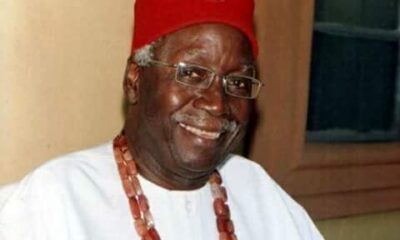
Mbazulike Amechi was a Nigerian nationalist and the first Minister of Aviation whose life story spanned colonial struggle, independence activism, and enduring service to his country.

When Mbazulike Amechi died in 2022, Nigeria lost one of its last living links to the independence struggle that gave birth to the nation. He was not just a former minister or a respected elder. He was a man who had stood face to face with colonial power, challenged it as a young nationalist, and lived long enough to see the country he fought for grapple with its unfinished dreams.
Mbazulike Amechi belonged to a rare generation of Nigerians who did not inherit freedom but helped to wrestle it into existence. As a leading figure in the Zikist Movement, he embraced radical ideas at a time speaking openly against colonial rule came with real danger. Long before independence became a constitutional process, it was a moral fight, and Amechi was part of that fight from the beginning.
After independence, he carried that same sense of duty into public service by becoming Nigeria’s first Minister of Aviation and Transport during the First Republic. What set Mbazulike Amechi apart was his consistency. Whether as a young firebrand, a government minister, or an elder statesman, he remained guided by principles rather than ambition.
This article remembers Mbazulike Amechi not simply as a historical figure but as a human story that stretches across colonial Nigeria, independence, and the modern republic. It explores his life, his role in the nationalist movement, his years in government, and why his death marked the end of an era in Nigerian history. More importantly, it asks why his legacy still matters today.
Growing Up Under Colonial Rule
Mbazulike Amechi was born on June 16, 1929, in Ukpor, a quiet Igbo town in present-day Anambra State, southeastern Nigeria at a time the country was still firmly under British colonial control. For many Nigerians of his generation, childhood unfolded in a world marked by racial inequality, limited political freedom, and a system designed to serve imperial interests rather than local communities.
Colonial rule was not an abstract idea in Amechi’s early life. It was visible in the schools available to African children, in the authority of colonial officers, and in the absence of Nigerians from real political decision-making. Though education offered a narrow path forward, it also exposed young minds to the contradictions of a system that preached order while denying equality. Mbazulike Amechi grew up watching these contradictions play out daily, and they quietly influenced his political awareness.
His upbringing in Ukpor grounded him in Igbo communal values that emphasized responsibility, courage, and collective progress. These values, combined with his exposure to colonial injustice, helped him to form a strong sense of purpose. Like many young Nigerians coming of age in the 1940s, Amechi began to question why his people remained subjects rather than citizens in their own land.
This period of his life laid the foundation for everything that followed. Growing up under colonial rule did not simply affect Mbazulike Amechi’s worldview. It defined the nationalist convictions that would later guide his involvement in Nigeria’s independence movement and inform his lifelong commitment to justice, unity, and public service.
Mbazulike Amechi and the Zikist Movement
Before Nigeria gained independence, calls for freedom took many forms. Some were polite and constitutional. Others were bold and urgent. Among the most dynamic forces of the time was the Zikist Movement, a group of young, educated Nigerians inspired by the ideals of Dr. Nnamdi Azikiwe and determined to challenge colonial authority directly. Mbazulike Amechi became one of its most committed members, and his time with the Zikists would influence the course of his life.
The Zikist Movement emerged in the late 1940s within the broader context of the National Council of Nigeria and the Cameroons (NCNC). It attracted students, workers, and young professionals who believed that independence would not come through polite petitions alone. They argued that colonial rule should end now. For young patriots like Amechi, this conviction went beyond politics. It was a moral stand against a system that denied dignity to Nigerians.
As a student in Onitsha, Mbazulike Amechi was drawn to the energy and urgency of the movement. He took part in protests, helped to organize workers, and spoke out against injustice. At a time that a single public speech could lead to arrest or violence from colonial authorities, he stood firm. His activism went beyond slogans.
He worked with labour unions, including the Armels Transport Union and later in leadership roles within labour districts. These experiences deepened his understanding of struggle and collective action while reinforcing his belief that colonialism could not be reformed from within but had to be confronted decisively.
One of the enduring stories from his early activism is how Dr. Nnamdi Azikiwe personally gave him the nickname “The Boy Is Good.” The name was a rare compliment from a senior nationalist to a young activist but it reflected Amechi’s courage and loyalty. It was more than a label. For Amechi, it became a reminder of the responsibility he bore toward his people’s aspirations.
The Zikist Movement was fearless in its challenge to colonial authority. Members would publicly denounce the system, urging immediate self-rule and refusing to accept half measures. Some took oaths symbolizing their total commitment, including pledges not to marry until Nigeria was free. While many critics viewed these as symbolic gestures, for Amechi and others they reflected a deep seriousness about freedom and personal sacrifice.
Colonial authorities quickly saw the Zikists as a threat. The movement faced bans, arrests, and surveillance. Many leaders, including Amechi’s contemporaries were detained. The crackdown weakened the group but it did not extinguish its influence. Instead, it pushed its ideals into the broader nationalist struggle that contributed to deeper public awareness of the need for independence. Mbazulike Amechi carried these experiences with him long after the movement itself faded from the front pages.
His involvement with the Zikist Movement was not a youthful episode to be forgotten. It was a formative chapter that informed his worldview, strengthened his commitment to Nigeria’s freedom, and prepared him for the responsibilities he would accept in the years after independence.
Entry into Government
After years of fearless activism, Mbazulike Amechi transitioned from the streets and unions of colonial Nigeria to the formal corridors of power. As independence approached, the country needed leaders who not only demanded freedom but could also build institutions and govern effectively. Amechi’s early dedication to the nationalist cause and his experience in the Zikist Movement made him a natural choice for this next phase of service.
In 1959, he was elected to the House of Representatives under the National Council of Nigeria and the Cameroons (NCNC). This marked the beginning of his official political career. For a man who had once risked arrest and public censure for speaking out, entering government required a different kind of courage. He now had to navigate the complexities of legislation, administration, and public expectation while holding on to the ideals that had guided him as a young activist.
With Nigeria’s independence on October 1, 1960, Mbazulike Amechi was appointed as the country’s first Minister of Aviation and Transport. It was a position that carried both symbolic and practical significance. Aviation and transport were vital for a nation that was emerging onto the world stage and needed infrastructure to connect its regions and assert its presence internationally. Amechi approached this responsibility with the same seriousness and integrity that had defined his youth. He emphasized efficiency, planning, and service to the public.
While some contemporaries were drawn to politics for personal advancement, Amechi consistently prioritized principle over ambition. He focused on national development rather than personal gain. His tenure as minister coincided with the challenges of building a newly independent state, balancing regional demands, and fostering unity in a diverse country. Through it all, he remained committed to the vision of a Nigeria that was free, functional, and fair to its citizens.
Even after leaving office following the military coup of January 15, 1966, his experience in government remained a cornerstone of his legacy. Mbazulike Amechi demonstrated that true nationalism was not just about protest or ideology. It was about stepping into responsibility, using influence to serve the people, and carrying forward the principles of freedom into the structures of governance.
His journey from activist to minister affirms that leadership requires both courage and patience. The skills he learned while organizing workers and advocating for independence were directly applied to running a ministry, negotiating with regional leaders, and representing Nigeria’s interests abroad. This chapter of his life confirmed that activism and governance are not separate paths but different expressions of service to one’s country.
A Nationalist Who Chose Principles Over Power

Throughout his life, Mbazulike Amechi demonstrated that true leadership is measured not by titles held or power accumulated but by the consistency of one’s convictions. Even as he moved from street activism to government office, he never allowed ambition to overshadow principle. For Amechi, the mission of serving Nigeria and its people always came before personal gain.
Many contemporaries in the early post-independence era sought influence, often maneuvering for political advantage or regional dominance. Mbazulike Amechi approached politics differently. He believed that leadership was a responsibility to the nation rather than a route to self-promotion. This perspective guided his decisions in government and influenced how he interacted with colleagues, constituents, and the public.
Even after his tenure as Minister of Aviation and Transport ended abruptly with the military coup of 1966, Amechi did not retreat into bitterness or seek revenge. Instead, he remained engaged in his community and continued advocating for national unity and fair governance. His commitment to principle over position left an impression on the younger generations and earned him enduring respect across political lines.
Mbazulike Amechi also made it clear that patriotism could take many forms. One did not need to hold office to serve the nation effectively. In later years, he frequently spoke about the importance of dialogue, compromise, and ethical conduct in politics. His words reflected lessons learned from decades of activism, governance, and witnessing Nigeria navigate the challenges of a new republic.
This steadfast adherence to principle distinguished him from many of his peers. While others, sometimes, compromised values for expediency, Mbazulike Amechi remained guided by a moral compass forged during the days of the Zikist Movement. His life reminds Nigerians that the essence of leadership lies not in accumulation of titles but in leaving a legacy of integrity and service.
By prioritizing the welfare of the country over personal ambition, he proved that true nationalists measure success by contribution, and not by control. Mbazulike Amechi’s example continues to inspire those who seek to serve Nigeria with honesty, courage, and unwavering dedication.
From Revolutionary to Elder Statesman

After Nigeria’s First Republic ended abruptly in 1966, Mbazulike Amechi stepped back from formal politics but he withdrew from public life entirely. He returned to his hometown of Ukpor in Anambra State, and remained deeply connected to his community while continuing to influence national conversations quietly but meaningfully. For a man who had once risked arrest as a young Zikist, this period offered a different form of service, one rooted in guidance, mentorship, and moral leadership.
In his later years, Amechi became a respected elder statesman whose wisdom was sought by politicians, traditional leaders, and civic organizations alike. His perspective on Nigeria was framed not only by his time in government but also by decades of observation, reflection, and engagement with ordinary citizens. He reminded the younger generations that nation-building required patience, dialogue, and an unwavering commitment to fairness.
Even in his nineties, Mbazulike Amechi remained involved in efforts to promote unity and peace, especially in the southeast. He participated in community discussions, mediated disputes, and offered counsel on local and regional issues. His reputation for honesty, integrity, and deep knowledge of Nigeria’s history made his voice influential long after his official political career had ended.
For many, he symbolized a living connection to Nigeria’s independence-era generation. He bridged the past and the present, and translated lessons from the struggles of colonial resistance and early nationhood into guidance relevant for contemporary challenges. In doing so, Mbazulike Amechi showed that leadership is not confined to holding office as it can also take the form of steady presence, thoughtful counsel, and example.
His later years were marked by reflection on both the accomplishments and the missed opportunities of Nigeria’s journey. He celebrated the country’s progress while candidly discussing its ongoing struggles. This honesty, combined with his lifelong dedication to principle earned him admiration across generations, communities, and political divides.
Through this quiet, enduring engagement, Mbazulike Amechi solidified his legacy as more than a minister or activist. He became a mentor, a voice of conscience, and a reminder that the values that guided the fight for independence could still illuminate the path forward for a modern Nigeria.
Demise and Tributes
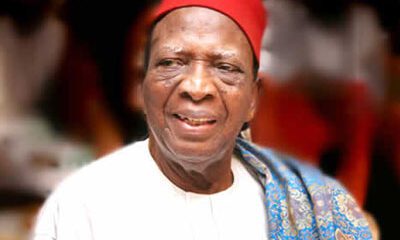
Mbazulike Amechi passed away on November 1, 2022 at the age of 93 in his hometown of Ukpor, Anambra State. His death marked the end of a remarkable life that bridged Nigeria’s colonial struggle, independence, and the challenges of nation-building. For many Nigerians, his passing meant more than the loss of a former minister, it also meant the closing of a chapter in the country’s history, a reminder that the generation that fought for freedom was leaving the stage.
National and regional leaders immediately paid tribute to his life and legacy. President Muhammadu Buhari described him as a man whose dedication to Nigeria’s unity and development set an example for all citizens. State governors, traditional rulers, and political figures from across the country echoed these sentiments that highlighted his lifelong commitment to principle, service, and national unity.
For the people of southeastern Nigeria, Mbazulike Amechi’s death was deeply personal. In Ukpor and surrounding communities, his presence had been a steady source of guidance and inspiration. Local leaders emphasized that his role extended far beyond politics. He was a mentor, a mediator, and a living link to the ideals of the independence era.
His passing also served as a moment for national reflection. As one of the last surviving figures from the Zikist Movement and Nigeria’s independence-era leadership, Mbazulike Amechi embodied the courage, sacrifice, and vision that had helped the country achieve self-rule. He reminded Nigerians that the fight for freedom required moral clarity, patience, and enduring dedication. Many commentators noted that his death symbolized the gradual fading of the generation that directly fought for the nation’s independence, leaving behind both lessons and a responsibility for younger citizens to uphold their ideals.
Mbazulike Amechi’s funeral was attended by politicians, traditional rulers, and community leaders who celebrated his life, service, and unwavering commitment to the nation. Tributes emphasized that while his physical presence had passed, the values he lived by – integrity, courage, and dedication to Nigeria would continue to influence public life.
In remembering Mbazulike Amechi, Nigerians are reminded that history is not only about the offices people held but also about the example they set. His passing encourages reflection on how individuals can contribute to national progress without seeking personal glory. It marked the loss of a figure who embodied the very ideals of the independence era, namely, service, principle, and unwavering faith in the potential of the nation.
Mbazulike Amechi’s Place in Nigerian History
Mbazulike Amechi occupies a unique place in Nigerian history. He was not only a participant in the country’s independence movement but also a symbol of the integrity, courage, and dedication that defined the generation of leaders who brought freedom to Nigeria. His life bridged the colonial era, the independence struggle, the early years of nationhood, and the modern republic, thereby providing a living connection to the ideals and sacrifices that shaped the country.
As a young activist in the Zikist Movement, Mbazulike Amechi exemplified the boldness and moral clarity that inspired many of his peers and challenged the colonial administration. His transition from activism to government service showed that the fight for Nigeria’s future was not limited to protest but also required effective leadership and responsible governance. By serving as the country’s first Minister of Aviation and Transport, he contributed to building the nation’s infrastructure and institutions at a time Nigeria was defining itself on the world stage.
What sets Mbazulike Amechi apart from many other historical figures is his steadfast commitment to principle over personal power. Unlike leaders who pursued influence for its own sake, Amechi focused on service, justice, and national unity. This consistency earned him respect across generations and regions and made him a trusted voice long after his tenure in government ended. His life offers a model of leadership that balances activism with governance, idealism with pragmatism, and principle with patience.
Even decades after leaving office, Mbazulike Amechi remained engaged in national and community affairs. He provided counsel to younger leaders, mediated local disputes, and participated in efforts to promote peace and cohesion in southeastern Nigeria. These actions strengthened his reputation as an elder statesman whose experience and wisdom were invaluable in guiding both local communities and the broader nation.
In the broader narrative of Nigerian history, Mbazulike Amechi stands alongside other independence-era leaders, such as Nnamdi Azikiwe and Michael Okpara. However, his legacy is uniquely characterized by the combination of activism, service, and enduring moral authority. He reminds Nigerians that history is not only made by dramatic events or grand offices but also by consistent dedication to the principles of freedom, justice, and unity.
Ultimately, Mbazulike Amechi’s place in Nigerian history is not measured solely by the positions he held but by the example he set. His life illustrates that true contribution to a nation comes from courage, integrity, and a lifelong commitment to the common good. For generations yet to come, he will remain a symbol of what it means to serve Nigeria with honour, conviction, and unwavering dedication.
In Conclusion …
Mbazulike Amechi was a politician, a minister, an activist and more. He was a living connection to a pivotal era in Nigerian history, a time courage, principle, and vision forged the foundation of a nation. His life spanned the struggle against colonial rule, the excitement of independence, and the complex challenges of nation-building, and offered a story that is both inspiring and instructive for today’s Nigeria.
He demonstrated that leadership is not measured by power or position alone but by integrity, commitment, and service to the common good. From his fearless days in the Zikist Movement to his work as Nigeria’s first Minister of Aviation and Transport, and finally as an elder statesman guiding his community and nation, Mbazulike Amechi consistently chose principle over ambition. His example is proof that true patriotism endures beyond titles, elections, and public recognition.
As one of the last independence-era nationalists, his passing in 2022 marked the end of a historic chapter. Nonetheless, his legacy continues to speak to Nigerians of all ages. He left behind a life defined by courage, conviction, and unwavering dedication to the ideals of freedom, justice, and unity. Mbazulike Amechi’s story is a reminder that history is not just about the events that occurred but about the people who lived, struggled, and believed in a better future for their country.
Remembering Mbazulike Amechi is more than honouring a remarkable life. It is a call to reflect on the values he embodied and to carry forward his vision of a Nigeria built on integrity, service, and national unity. His life belongs not only to history but also to the present and the generations yet to come.
References
- https://en.wikipedia.org/wiki/Mbazulike_Amaechi
- https://thenationonlineng.net/mbazuliki-amaechi-1929-2022/
- https://thesun.ng/mbazulike-amechi-1929-2022/
You might want to check this out …