



Biographies & Personalities
Emeka Anyaoku: The Nigerian Statesman Who Led the Commonwealth Through Crisis

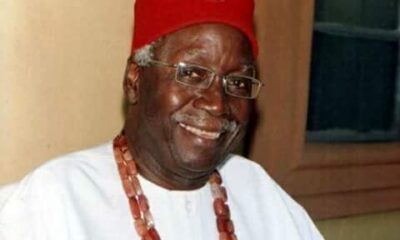
Emeka Anyaoku is a Nigerian diplomat known for his leadership of the Commonwealth of Nations and his lifelong work for peace, democracy, and global cooperation in international relations.
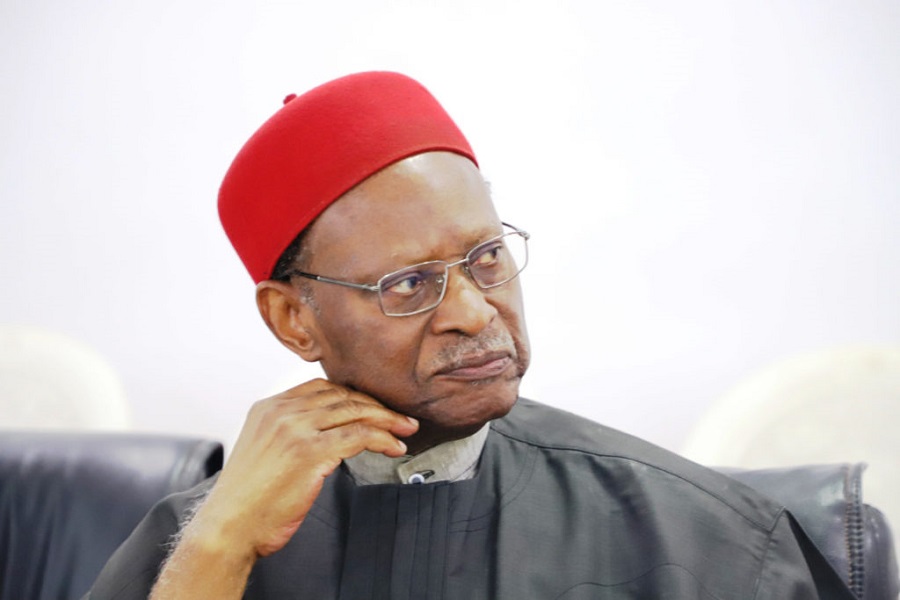
Emeka Anyaoku is not an unpopular name as far as Nigeria’s diplomatic history is concerned. He is one of the few Nigerians who stood at the centre of global decision making during some of the most sensitive political transitions of the late twentieth century.
For a full decade, he served as the Secretary General of the Commonwealth who guided a diverse association of nations through political unrest, democratic transitions, and international tension. At a time the world was redefining power after the Cold War, Emeka Anyaoku was quietly helping to hold together a union of more than fifty countries.
Born in Obosi in Anambra State in 1933, Emeka Anyaoku rose from modest beginnings to become one of Africa’s most respected diplomats. His journey from colonial era Nigeria to the leadership of the Commonwealth is both inspiring and instructive. It is a story of intellect, discipline, patience, and firm belief in dialogue over confrontation.
When Nigeria faced suspension from the Commonwealth during military rule, Chief Anyaoku found himself in a delicate position. He was a proud Nigerian leading an international body committed to democratic governance. The balance required wisdom and restraint.
For many Nigerians searching for Emeka Anyaoku biography, family background, achievements, or his role in the Commonwealth, his life offers far more than titles and dates. It offers insight into how diplomacy works behind closed doors. It reveals how quiet leadership can influence nations. And it reminds us that global respect is earned through credibility and consistency.
Chief Emeka Anyaoku remains relevant today. His voice still matters in conversations about Nigeria’s constitutional reform, governance, and national unity. His legacy is not only about the past. It is about the standards he set for leadership in public life.
This detailed Emeka Anyaoku biography explores his early life, education, diplomatic rise, leadership during crisis, family life, honours, and enduring influence. It is the story of a Nigerian who carried his country’s name onto the global stage and led with calm strength, when it mattered most.
Chief Emeka Anyaoku’s Early Life and Background
Emeka Anyaoku was born on January 18, 1933 in Obosi, a historic town in present-day Anambra State in southeastern Nigeria. Obosi is known for its strong traditional institutions and deep cultural heritage, and these early surroundings played an important role in forming his character. He grew up in a close-knit Igbo community where respect for elders, public service, and moral integrity were highly valued.
He was born into a Christian family at a time Nigeria was still under the British colonial rule. The country was experiencing social change, rising nationalist awareness, and debates about independence. These wider currents formed the backdrop of his childhood. Growing up in the eastern region of Nigeria during the final decades of colonial administration exposed him to conversations about self-determination and national identity. These discussions were part of everyday life, and as a young boy, he observed and absorbed the importance of civic responsibility.
Even at an early age, Emeka Anyaoku showed signs of discipline, thoughtfulness, and seriousness of purpose. Friends and colleagues have often described him as calm and measured. These are qualities nurtured through family values and community expectations.
His roots in Obosi remained central in his life. Despite spending many years abroad in service to Nigeria and the Commonwealth, he maintained strong ties to his hometown. He later received traditional titles in recognition of his contributions, a sign that his community continues to regard him as one of its distinguished sons.
Understanding Emeka Anyaoku’s early life helps to explain the steady path he followed. His journey from the cultural richness of Obosi to leadership on the global stage did not happen by accident. It began in a community that valued service, integrity, and responsibility.
Education and Intellectual Foundation

Emeka Anyaoku’s academic journey laid the foundation for the diplomatic career that would later define his life. His early education began in southeastern Nigeria where he attended mission schools that emphasized discipline, moral values, and academic excellence. These schools instilled in him a love for learning and a sense of responsibility. He later attended the Merchants of Light School in Oba where his intellectual abilities became evident to teachers and peers alike.
After completing his primary and secondary education, Emeka Anyaoku gained admission into the University College Ibadan, then affiliated with the University of London and regarded as Nigeria’s premier institution of higher learning. For young Nigerians in the 1950s, admission to University College Ibadan was a mark of distinction, and for Anyaoku, it became a defining moment in his intellectual development.
He chose to study Classics to immerse himself in ancient Greek and Roman literature, history, and philosophy. This rigorous discipline required careful reading, analytical thinking, and the ability to interpret complex texts. While not directly related to diplomacy, this education sharpened his reasoning, strengthened his writing and communication skills, and taught him to approach problems from multiple perspectives. This ability would later serve him well in international negotiations.
During his university years, Nigeria was approaching independence in 1960, and the campus was alive with debates about governance, nationhood, and Africa’s role in the global arena. Students, including Anyaoku, actively engaged in these conversations which helped to cultivate his interest in political affairs and international cooperation. This environment nurtured his understanding of leadership, dialogue, and consensus-building.
After graduating in 1959 with an honours degree as a College Scholar, Emeka Anyaoku joined the Commonwealth Development Corporation in Lagos. He was later sent to London as an executive trainee and attended courses at the Royal Institute of Public Administration which exposed him to global perspectives on governance and administration. These experiences broadened his worldview, introduced him to international networks, and offered practical insight into public administration as a complement to his classical education.
Emeka Anyaoku’s intellectual foundation, therefore, was a combination of disciplined early schooling, rigorous university training, and international exposure. Together, these elements equipped him with the clarity of thought, cultural awareness, and strategic judgment that would characterize his career. His education was preparation for leadership in complex global environments, and formed the bedrock of his measured, principled approach to diplomacy.
Entry into the Foreign Service

Emeka Anyaoku’s path into diplomacy did not begin with politics. It began with professional excellence. After graduating from the University College Ibadan in 1959, he joined the Commonwealth Development Corporation in Lagos. His performance there quickly earned him recognition. The organization later sent him to London as an executive trainee where he gained further administrative experience and attended courses at the Royal Institute of Public Administration.
It was during this period that his abilities came to the attention of Nigeria’s Prime Minister at the time, Sir Abubakar Tafawa Balewa. Nigeria had gained independence in 1960 and was building its diplomatic service almost from scratch. The country needed well educated, disciplined young professionals who could represent it confidently on the global stage. Emeka Anyaoku fit that description.
In April 1962, Emeka Anyaoku formally joined the Nigerian Ministry of External Affairs. His entry into the Foreign Service came at a critical moment in Nigeria’s early national life. The country was defining its foreign policy identity while navigating Cold War tensions and newly independent African solidarity movements.
Within a short time, he became the personal assistant to the Permanent Secretary of the Ministry of External Affairs. That position placed him close to the centre of policy discussions. He was involved in preparations for international conferences and diplomatic engagements that required precision and discretion.
One of the early milestones in his career was his involvement in diplomatic efforts leading to the establishment of the Organization of African Unity (OAU) in 1963. That organization later evolved into the African Union. His participation in these early continental discussions gave him valuable exposure to multilateral diplomacy.
Later in 1963, Emeka Anyaoku was posted to Nigeria’s Permanent Mission to the United Nations in New York. Serving at the United Nations exposed him to the wider machinery of international governance. He observed negotiations among major powers and smaller states alike. He saw firsthand how alliances were built and how language in resolutions could influence global outcomes.
These early assignments were demanding, yet they suited his temperament. Emeka Anyaoku was known for careful preparation, measured speech, and respect for institutional processes. Those qualities earned him the trust of senior officials and colleagues.
His entry into the Foreign Service marked the beginning of a long relationship with international diplomacy. It was not driven by ambition for public recognition. It was, rather rooted in competence and readiness to serve. From Nigeria’s Ministry of External Affairs to the United Nations, Chief Anyaoku was steadily building the experience that would later carry him to the leadership of the Commonwealth.
Rise Within the Commonwealth Secretariat
Moving to the Commonwealth Secretariat in London in 1966 marked a new phase in Emeka Anyaoku’s career. At the time, the Secretariat was still a relatively young institution. It had been established in 1965 to serve the growing association of independent nations linked by historical ties to Britain. For a young Nigerian diplomat to join its leadership structure so early in its history was significant.
He was appointed Assistant Director of International Affairs. The role required deep knowledge of global politics and steady coordination between member states with different political systems and economic realities. Emeka Anyaoku quickly proved that he understood both the sensitivities and the responsibilities that came with multilateral diplomacy.
By 1971, he was promoted to Director of the International Affairs Division. In that position, he handled political issues affecting member countries and worked closely with heads of government and foreign ministers. These years exposed him to some of the most pressing global debates of the period, including decolonization struggles in southern Africa and tensions within developing nations.
In 1977, Emeka Anyaoku was elected Deputy Secretary General of the Commonwealth with responsibility for political affairs and administration. This was a major step forward. As Deputy Secretary General, he became central to the organization’s political engagements, particularly in matters concerning democracy, governance, and conflict resolution among member states.
His reputation during these years rested on patience and balance. The Commonwealth includes countries from Africa, Asia, the Caribbean, Europe, and the Pacific. Each brought its own priorities and internal challenges. Emeka Anyaoku became known for listening carefully and helping to build consensus, rather than imposing views. His classical training, diplomatic experience, and calm manner combined effectively in this environment.
In 1983, he briefly left the Commonwealth Secretariat to serve as Nigeria’s Minister of External Affairs under the civilian government of President Shehu Shagari. However, after the military coup of December 1983, he returned to the Commonwealth Secretariat by agreement of member governments. That return affirmed the trust and respect he had earned internationally.
By the late 1980s, Emeka Anyaoku had become one of the most experienced figures within the organization. When the time came to choose a successor to Sir Shridath Ramphal, he emerged as the consensus candidate. In October 1989, at the Commonwealth Heads of Government Meeting in Kuala Lumpur, he was elected the third Secretary General of the Commonwealth. He assumed office on July 1, 1990.
His rise within the Commonwealth Secretariat was steady and earned. It was built on years of consistent service, careful diplomacy, and credibility among member nations. By the time he became Secretary General, he was not an outsider stepping into leadership, he was a seasoned insider who understood the institution’s strengths, limitations, and potential.
Leading the Commonwealth Through Crisis
When Emeka Anyaoku assumed office as Secretary General of the Commonwealth on July 1, 1990, the world was in transition. The Cold War was ending. Several African nations were moving away from one party or military rule. South Africa was negotiating the end of apartheid. It was a delicate period in global politics, and the Commonwealth itself was redefining its role in promoting democracy and good governance among its member states.
Emeka Anyaoku entered office with experience and credibility. Having served within the Secretariat for over two decades, he understood the institution from the inside. Yet, the challenges before him were not routine administrative matters. They involved deep political tensions, national sovereignty concerns, and moral questions about governance.
One of the defining issues of his tenure was the struggle against apartheid in South Africa. The Commonwealth had long taken a firm position against racial segregation and minority rule. Under Emeka Anyaoku’s leadership, the organization maintained diplomatic pressure while encouraging dialogue that would lead to a peaceful transition. Between 1991 and 1993, he visited South Africa several times where he engaged with key actors involved in negotiations. These efforts formed part of the broader international movement that supported South Africa’s democratic transition in 1994.
Another major development during his tenure was the formal strengthening of the Commonwealth’s commitment to democratic principles. In 1991, Commonwealth leaders adopted the Harare Commonwealth Declaration in Zimbabwe. The declaration affirmed the organization’s dedication to democracy, human rights, and the rule of law. Emeka Anyaoku played an important role in advancing these principles and ensuring they were not mere statements on paper but standards that guide action.
In 1995, the Commonwealth Ministerial Action Group was established to address serious or persistent violations of those principles by member states. This created a more structured mechanism for engagement when constitutional governance was threatened. The move suggested that the Commonwealth under Emeka Anyaoku was prepared to take principled positions, even when politically sensitive.
One of the most difficult moments of his leadership involved his home country, Nigeria. In 1995, following the execution of environmental activist, Ken Saro Wiwa and eight others during the military government of General Sani Abacha, Nigeria was suspended from the Commonwealth. For Emeka Anyaoku, this was deeply personal. He was a Nigerian leading an international organization that had committed itself to democratic norms.
Yet, he maintained the institutional position of the Commonwealth. His approach balanced professionalism with national identity. He upheld the organization’s principles while continuing to hope for Nigeria’s eventual return to constitutional governance. Nigeria was readmitted in 1999 after the restoration of civilian rule.
Throughout his decade-long service as Secretary General, Emeka Anyaoku strengthened the role of the Commonwealth in election observation. Under his leadership, dozens of observer missions were deployed to member countries. These missions were designed to promote credible electoral processes and peaceful political transitions. They contributed to building trust in democratic institutions across various regions.
He also paid attention to the concerns of smaller and vulnerable member states, particularly in the Caribbean and Pacific regions. Issues such as economic development, environmental vulnerability, and fair participation in global trade were raised consistently during his tenure.
What stands out about his leadership during crisis is not loud confrontation but steady engagement. He believed in dialogue. He valued consensus. He understood that lasting political progress required patience. In a period marked by upheaval and uncertainty, his calm presence helped the Commonwealth to navigate complex terrain without losing its moral direction.
By the time he left office on March 31, 2000, the Commonwealth had grown in membership and strengthened its institutional commitment to democracy. His years in leadership remain closely associated with the organization’s active involvement in supporting political reform and constitutional governance among its member nations.
Major Achievements and Reforms
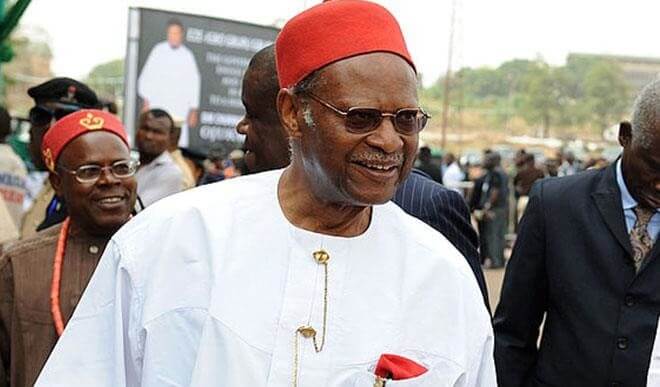
Emeka Anyaoku’s decade as the Secretary General of the Commonwealth is remembered for concrete achievements that strengthened the credibility, influence, and global relevance of the organization. He focused on reforms and initiatives that made the Commonwealth more proactive, principled, and inclusive.
Under his leadership, the Commonwealth became a visible advocate for democratic governance. Chief Emeka Anyaoku encouraged member states to adopt transparent electoral processes, respect human rights, and uphold constitutional norms. During his tenure, the Commonwealth deployed more than fifty election observer missions across Africa, the Caribbean, Asia, and the Pacific.
These missions helped to ensure credible elections and peaceful transitions of power. They also offered guidance to emerging democracies on electoral procedures and institutional development. This work strengthened public confidence in democratic institutions and elevated the role of the Commonwealth as a moral authority in international politics.
Emeka Anyaoku was renowned for his quiet, principled diplomacy in resolving conflicts. He mediated tensions between member states and assisted nations facing internal disputes. His approach emphasized dialogue, negotiation, and consensus-building.
Notable examples include his role in supporting the peaceful transition from apartheid in South Africa and guiding discussions in countries moving from military or one-party rule toward democratic governance. By using calm and steady negotiation, he helped to prevent escalation and fostered solutions acceptable to all parties.
Chief Emeka Anyaoku implemented reforms to improve the efficiency, responsiveness, and professionalism of the Secretariat. He focused on developing skilled staff, creating consistent operational procedures, and improving policy coordination across departments.
These reforms allowed the Secretariat to respond more effectively to the needs of members, including in areas such as development, education, governance, and human rights. By streamlining internal structures, he ensured the organization could function as a credible, authoritative institution on global matters.
A key feature of his leadership was consistent attention to smaller and economically vulnerable member nations. He made sure that island nations, emerging democracies, and less powerful states had a voice in Commonwealth discussions. This emphasis on inclusivity strengthened the credibility of the organization and fostered trust among all members.
One of his most significant reforms was the introduction of mechanisms to hold member countries accountable to the Commonwealth’s core principles. In 1995, the Commonwealth Ministerial Action Group (CMAG) was established to address serious or persistent violations of democracy and human rights. This initiative institutionalized the principle that membership carried responsibility.
It gave the Commonwealth a practical tool for responding to political crises without compromising its legitimacy. Countries such as Nigeria during the military rule of General Sani Abacha were engaged through these mechanisms as a way of balancing diplomacy with adherence to democratic standards.
Throughout his tenure, Emeka Anyaoku emphasized ethical leadership and human rights. He worked to ensure that the Commonwealth’s programmes were not merely symbolic but had real impact on the lives of citizens. He advocated for education, civil society development, and civic engagement as essential elements of a strong, stable democracy. His consistent focus on values over expediency set a standard for future Commonwealth leaders and reinforced the reputation of the organization on the global stage.
By the time Emeka Anyaoku stepped down in 2000, the Commonwealth had gained renewed respect as an institution promoting democracy, good governance, and peaceful conflict resolution. His achievements were not confined to statements or resolutions. They included functional election observer systems, credible conflict mediation processes, strengthened Secretariat structures, and a framework for accountability among member states. These reforms endure as part of the Commonwealth’s operational DNA.
Emeka Anyaoku’s major achievements reflect his calm, thoughtful, and principled approach to leadership. Rather than seeking headlines or confrontation, he focused on building durable institutions, supporting fair governance, and giving every member state a voice in decision-making. His reforms ensured that the Commonwealth could navigate crises effectively while remaining true to its founding ideals.
Views on Nigeria’s Political Structure
Even though Emeka Anyaoku spent much of his career on the international stage, he remained deeply connected to Nigeria’s political realities. His experience observing governance systems across the Commonwealth gave him a unique perspective on what works and what does not in nation building.
Anyaoku has long advocated for reforms that promote inclusivity and national cohesion. He believes that Nigeria’s federal structure should reflect the diversity of its people while ensuring that all regions have a meaningful voice in governance. Over the years, he has encouraged discussions around constitutional review, the strengthening of democratic institutions, and the need to address imbalances that may fuel political tension.
He has spoken publicly about the importance of dialogue in resolving political disputes, and urged leaders and citizens alike to prioritize conversation and compromise over confrontation. According to him, the health of Nigeria’s democracy depends not only on elections but also on the ability of its institutions to function effectively and fairly across all levels of government.
His views are shaped by decades of seeing how democratic principles succeed or fail in different contexts. In countries where leadership respected institutional processes and allowed space for citizen participation, stability and development flourished. Conversely, where power was centralized or institutions were weakened, crises often followed. He uses these lessons to caution against short-term, politically motivated decisions that could undermine the unity of Nigeria.
Emeka Anyaoku’s reflections on Nigeria’s governance go beyond criticism. They are constructive, focused on practical steps for reform. He emphasizes the importance of civic education, the rule of law, and equitable resource distribution. His stance positions him as an elder statesman whose advice is rooted in experience and a long-standing commitment to national development.
By connecting his international experience with Nigeria’s domestic challenges, Emeka Anyaoku has continued to influence conversations about political structure, national unity, and democratic deepening. His perspective serves as a bridge between global best practices and local realities, and offers guidance for both policymakers and citizens.
Awards, Honours, and Recognitions
Emeka Anyaoku’s career has been marked by widespread recognition, both in Nigeria and internationally. His awards reflect his service to diplomacy, democracy, and global cooperation, and highlight the respect he commands across continents.
In Nigeria, he has received some of the nation’s highest honours. He was awarded the Grand Commander of the Order of the Niger (GCON), one of the country’s most prestigious national awards, and the Commander of the Federal Republic (CFR). These honours acknowledge his exceptional contributions to Nigeria’s presence on the global stage and his decades of dedicated public service.
Internationally, Emeka Anyaoku received recognition from several countries and institutions. Queen Elizabeth II appointed him Honorary Knight Grand Cross of the Royal Victorian Order (GCVO), a rare distinction granted to individuals who have provided extraordinary service to the Crown and the Commonwealth. He also received numerous honorary doctorates from universities worldwide as a reflection of his influence in diplomacy, governance, and international relations.
Beyond formal awards, he has been acknowledged for his thought leadership and principled diplomacy. Leaders from Africa, the Caribbean, Asia, and Europe have cited his contributions to peace, conflict resolution, and democratic transitions. His work as Commonwealth Secretary General during pivotal moments such as the end of apartheid in South Africa and Nigeria’s reintegration into the Commonwealth earned him respect for both courage and discretion.
Anyaoku’s honours also include traditional recognition from his home community. He holds titles such as Ichie Adazie of Obosi and Ugwumba Idemili. This reflects the esteem in which his people hold him. These traditional titles celebrate not only his global achievements but also his continued connection to his Nigerian heritage and culture.
Collectively, these awards and recognitions paint a portrait of a man whose impact transcends national boundaries. They highlight a career built on integrity, commitment, and service, and they offer inspiration for current and future generations of diplomats, leaders, and citizens committed to advancing peace, democracy, and human development.
Family, Wife, and Personal Life

Behind Emeka Anyaoku’s diplomatic achievements is a life anchored in family and personal values. In 1962, he married Princess Bunmi Anyaoku, a member of the royal family of Abeokuta in southwestern Nigeria. Their partnership has been described as one of mutual respect, shared purpose, and commitment to service. Princess Bunmi has been actively involved in community development and philanthropic work in a way that complements her husband’s public service with her own initiatives.
The couple has four children. Their children have pursued professional careers ranging from law to business, and have maintained the values of service, integrity, and dedication instilled by their parents. Over the years, the Anyaokus have also welcomed grandchildren.
Despite his international responsibilities, he has remained closely connected to his roots in Obosi, Anambra State. He has been honoured with traditional titles in recognition of his contributions to his community and his standing among the Igbo people. These titles reflect the respect he commands locally, as well as internationally.
Emeka Anyaoku’s personal life is also marked by humility and discipline. Colleagues often describe him as calm, measured, and deliberate in both professional and personal interactions. He balances a rigorous professional life with attention to family, cultural heritage, and voluntary service.
Beyond family, he has remained engaged in initiatives that promote education, democratic values, and civic responsibility. His personal and professional life intertwine to create a model of leadership rooted in both global service and local responsibility.
Essentially, Emeka Anyaoku’s story does not entail only titles and international diplomacy, it highlights a life lived with integrity, grounded in family, and guided by principles that extend from his hometown of Obosi to the world stage.
Emeka Anyaoku Foundation
Emeka Anyaoku’s commitment to service extends beyond his diplomatic career through the Emeka Anyaoku Foundation, an organization dedicated to education, leadership development, and the promotion of democratic values. The Foundation reflects his lifelong belief that strong institutions and informed citizens are essential for national and regional progress.
The programmes of the Foundation focus on three main areas. First, education and scholarships. It provides support to students, particularly in southeastern Nigeria by helping them access quality schooling and higher education opportunities. By empowering young people with knowledge and skills, the Foundation seeks to cultivate the next generation of leaders capable of thoughtful and principled decision-making.
Second, the Foundation emphasizes leadership training and civic engagement. Workshops, seminars, and mentorship programmes are organized to equip emerging leaders with practical skills in governance, conflict resolution, and ethical decision-making. This mirrors his own approach to diplomacy which is grounded in dialogue, patience, and respect for institutional processes.
Third, the Foundation promotes good governance and democratic participation. It engages with civil society organizations and community leaders to advance public awareness about rights, responsibilities, and the importance of accountability in both local and national governance. By doing so, the Foundation helps to reinforce the values that Anyaoku championed during his tenure as Commonwealth Secretary General.
Beyond the programmes, the Emeka Anyaoku Foundation also serves as a platform for dialogue and collaboration. It brings together policymakers, academics, and practitioners to share experiences and best practices, particularly in areas of governance and conflict resolution. These initiatives extend his legacy, and translates decades of international experience into local impact.
Through the Foundation, Emeka Anyaoku shapes conversations about leadership, civic responsibility, and national development in Nigeria. It is a tangible demonstration of his belief that service to country and community does not end with formal office, rather, it continues through mentorship, education, and principled engagement.
Legacy and Continuing Influence
The legacy of Emeka Anyaoku extends far beyond his formal tenure as Secretary General of the Commonwealth. He is widely regarded as one of Nigeria’s most distinguished diplomats and an international statesman whose influence continues to be felt in governance, diplomacy, and leadership development.
One of the hallmarks of his legacy is principled diplomacy. Throughout his career, Emeka Anyaoku demonstrated that negotiation, dialogue, and patience could resolve conflicts that might otherwise escalate. From mediating tensions during the final years of apartheid in South Africa to guiding member states through political transitions, his approach showed that consistent, measured engagement often achieves results more effectively than confrontation.
His leadership also established the Commonwealth as a credible force for democracy and governance. Initiatives such as the Harare Commonwealth Declaration, election observation missions, and the establishment of the Commonwealth Ministerial Action Group created institutional frameworks that continue to guide the organization today. These mechanisms provide accountability, promote transparency, and reinforce the principle that membership carries responsibility.
In Nigeria, Emeka Anyaoku remains a respected voice on political reform and national cohesion. He offers counsel on constitutional review, democratic deepening, and dialogue-driven conflict resolution. His perspectives are sought by government leaders, civil society organizations, and academic institutions alike. By bridging international experience with domestic realities, he provides guidance that is both practical and visionary.
Education and mentorship are also central to his continuing influence. Through the Emeka Anyaoku Foundation, he nurtures young leaders, promotes civic engagement, and invests in the intellectual and ethical development of future generations. These initiatives ensure that his principles, namely, discipline, integrity, and respect for process are passed on to those who will shape Nigeria and the Commonwealth in the years ahead.
Perhaps most importantly, his legacy is humanized by his personal example. He combines professional excellence with humility by maintaining strong family ties, cultural roots, and a commitment to service. Colleagues and observers frequently highlight his calm demeanour, thoughtfulness, and ability to inspire trust across cultures and continents.
Overall, his continuing influence is evident in the institutions he strengthened, the leaders he mentored, and the diplomatic standards he set. He exemplifies how quiet, principled, and consistent leadership can leave a lasting impact, not only on a nation but on the world stage.
In Conclusion …
Emeka Anyaoku’s life and career tell the story of a Nigerian who quietly influenced global diplomacy while remaining deeply committed to his roots. From his early days in Obosi, through rigorous education and entry into Nigeria’s Foreign Service, to his rise as Secretary General of the Commonwealth, his journey portrays discipline, integrity, and vision.
During his decade-long era leading the Commonwealth, he guided the organization through some of the most challenging political crises of the late twentieth century. He played a critical role in supporting democratic transitions, promoting human rights, and fostering peaceful resolution of conflicts. His reforms, including the establishment of election observer missions and the Commonwealth Ministerial Action Group strengthened the institution’s credibility and created lasting mechanisms for accountability.
Beyond institutional achievements, Emeka Anyaoku’s personal life, family values, and ongoing work through the Emeka Anyaoku Foundation underscore his belief in service, mentorship, and education. He demonstrates that leadership is not only about office or title but also about the principles one embodies and the example one sets.
Today, Emeka Anyaoku still influences conversations about governance, democracy, and national unity, both in Nigeria and across the Commonwealth. His legacy reminds us that measured dialogue, patience, and ethical leadership can transform institutions and inspire nations.
For those seeking to understand principled diplomacy, civic responsibility, and the impact of steadfast service, Emeka Anyaoku stands as a model of dedication, humility, and global relevance.
References
- https://en.wikipedia.org/wiki/Emeka_Anyaoku
- https://www.thisdaylive.com/2023/01/18/emeka-anyaoku-90-tribute-to-a-world-statesman/
- https://guardian.ng/features/emeka-anyaoku-toast-to-a-diplomat-and-statesman-90/
- https://guardian.ng/opinion/anyaoku-92-gun-salute-for-diplomat-par-excellence/
- https://www.westernpost.ng/emeka-anyaoku-the-diplomat-who-strengthened-nigerias-global-voice-by-olabode-opeseitan/
- https://www.reconnectafrica.com/5-minute-interview/library-of-article/library-article-home/careers/5-minute-interview/chief-emeka-anyaoku-former-secretary-general-of-the-commonwealth/
- https://anyaokufoundation.org/
You might want to check this out…