




Biographies & Personalities
Nneka Onyeali-Ikpe: Breaking Barriers as Fidelity Bank’s First Female CEO

Nneka Onyeali-Ikpe is a Nigerian banker and executive whose journey from the law profession to the topmost position at Fidelity Bank highlights decades of experience. Learn about her education, career achievements, influence in banking, awards and legacy.

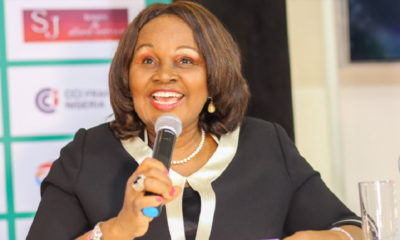
Nneka Onyeali-Ikpe is one of the most respected names in the Nigerian banking industry today. With more than thirty years of experience spanning treasury, corporate banking, risk management, and executive leadership, she has built a career defined by depth and consistency. Her appointment in January 2021 as the Managing Director and Chief Executive Officer of Fidelity Bank marked a remarkable moment in the history of the bank as she became its first female CEO.
But the story of Nneka Onyeali-Ikpe did not begin in the executive suite. Trained as a lawyer, she entered the financial sector in the early 1990s and steadily moved through critical roles at several institutions, including Standard Chartered Bank, Zenith Bank, Enterprise Bank, and later, Fidelity Bank. Each stage added technical strength and strategic insight that would later influence her leadership style.
Today, as Fidelity Bank CEO, Nneka Onyeali-Ikpe oversees one of Nigeria’s leading commercial banks at a time of rapid change in the financial industry. Her leadership has been linked to measurable growth, digital expansion, and stronger positioning in both local and international markets. Beyond performance metrics, her rise has also added to the growing presence of Nigerian women in top corporate roles.
This biography explores the education, early career decisions, executive journey, awards, and industry impact of Nneka Onyeali-Ikpe. It presents a clear picture of how experience, preparation, and steady advancement positioned her for one of the most influential roles in Nigerian banking.
Nneka Onyeali-Ikpe’s Early Life and Education

Nneka Onyeali-Ikpe was born on July 28, 1964 in Lagos, Nigeria. Although she was born in Lagos, she is originally from Anambra State in southeastern Nigeria. She grew up at a time the country was still developing its modern financial and legal systems, and came of age in an environment where education was widely regarded as the strongest path to opportunity.
Nneka Onyeali-Ikpe attended Federal Government Girls’ College, Owerri, one of Nigeria’s well-known unity schools. The discipline and academic focus of that environment helped to lay an early foundation for excellence. Those who passed through similar institutions often speak about the strong culture of competition and structure, and it is clear that Nneka benefited from that grounding.
After completing her secondary education, she gained admission into the University of Nigeria, Nsukka to study Law. Legal training requires analytical thinking, attention to detail, and clarity in communication. These skills would later prove valuable in her banking career, particularly in areas such as risk management, corporate governance, and regulatory compliance. So, earning a Bachelor of Laws degree was her first major academic milestone.
Determined to deepen her knowledge, Nneka Onyeali-Ikpe proceeded to the United Kingdom for postgraduate studies. She obtained a Master of Laws degree from King’s College London, one of the leading global institutions for legal education. Studying abroad exposed her to international standards and global perspectives on law and business. That experience broadened her understanding beyond the Nigerian environment and prepared her for work in institutions that operate within complex financial systems.
Her commitment to learning did not end with formal legal education. Over the years, she participated in executive education programmes at globally respected business schools. These include Harvard Business School, The Wharton School of the University of Pennsylvania, INSEAD, Chicago Booth School of Business, London Business School, IMD, and Saïd Business School at the University of Oxford where she completed a Diploma in Organizational Leadership. These programmes focused on strategy, leadership, finance, and executive management.
This continuous investment in education is a defining feature of the Nneka Onyeali-Ikpe biography because it shows a professional who understood early that leadership in banking requires more than technical skill. It requires global awareness, structured thinking, and the ability to adapt to change.
From Lagos to Nsukka to London and leading global business schools, the educational path of Nneka Onyeali-Ikpe reveals a steady pursuit of knowledge. That foundation would later support her transition from the legal profession into banking and, eventually, into executive leadership at Fidelity Bank.
Early Career
When people read a Nneka Onyeali-Ikpe biography, they often focus on her role as Fidelity Bank CEO. What is sometimes overlooked is how deliberately her early career unfolded. She did not begin in banking. She began in law.
In 1990, Nneka Onyeali-Ikpe started her professional journey as a legal officer at African Continental Bank. At the time, banks relied heavily on strong legal departments to manage regulatory compliance, contracts, lending documentation, and internal governance. Working within that environment gave her direct exposure to the mechanics of financial institutions. She was not yet a banker but she was already inside the system learning how it functioned.
It was during this period that she made a decisive shift. Rather than remain solely within legal practice, she transitioned into core banking operations. She moved into treasury and financial services roles beginning a new chapter that would define the rest of her career.
Her early banking years included roles at First African Trust Bank, Zenith Bank, and later, Standard Chartered Bank. In these institutions, she worked across treasury management, corporate banking, and investment banking functions. Treasury operations in particular demand precision and a clear understanding of liquidity management, risk exposure, and financial markets. These are areas where technical errors can have serious consequences. So, competence and discipline are essential.
At Zenith Bank and Standard Chartered Bank, Nneka Onyeali-Ikpe expanded her exposure to both local and international banking standards. Standard Chartered, as a global institution, operates within strict compliance and risk frameworks. Working there would have strengthened her understanding of governance, structured lending, and cross-border financial systems. Over time, she built experience that went beyond legal interpretation into revenue generation, customer relationship management, and strategic planning.
This transition from law to banking was not abrupt. It was progressive. Her legal training remained relevant, particularly in areas involving contracts, regulatory oversight, and structured finance. But she gradually moved closer to the commercial and operational core of banking. That decision widened her professional scope and positioned her for the executive leadership she would later assume.
By the early 2000s, Nneka Onyeali-Ikpe had accumulated experience across multiple segments of banking. She had worked in treasury, corporate finance, retail and commercial banking environments. She understood both policy and profit. She had seen institutions at different stages of growth. This breadth became one of her defining strengths.
In hindsight, the move from law into banking appears strategic as it placed her at the intersection of regulation and business. It allowed her to understand risk, not just from a legal perspective but from a financial and operational one. That balanced viewpoint would later become important when she took on senior leadership roles, including her eventual appointment as Managing Director and CEO of Fidelity Bank.
The early career phase of Nneka Onyeali-Ikpe is a reminder that leadership often grows from careful transitions rather than sudden leaps. Each role added depth. Each institution expanded her understanding. And over time, those accumulated experiences built the foundation for one of the most notable careers in Nigerian banking.
Rise Through the Ranks
By the time Nneka Onyeali-Ikpe had spent over a decade in banking, she was no longer simply learning the system. She was becoming part of the leadership structure within it. Her steady movement across institutions was not random. Each role added a new layer of responsibility and a broader view of how banks grow, manage risk, and remain competitive.
After building early experience in treasury and corporate banking, she took on more strategic positions at institutions like Zenith Bank and Standard Chartered Bank. These were environments known for performance discipline and strong governance culture. Working within such systems required attention to compliance, customer trust, and financial sustainability. Over time, Nneka Onyeali-Ikpe gained exposure to large corporate portfolios, structured transactions, and executive-level decision making.
A major turning point in the Nneka Onyeali-Ikpe career came with her move to Enterprise Bank. She joined the institution at a critical time. Enterprise Bank was one of the banks that emerged after regulatory intervention and restructuring within Nigeria’s banking sector. As the Executive Director, she became part of the leadership team responsible for stabilizing and repositioning the bank.
Her responsibilities at Enterprise Bank covered operations in key regions and core banking segments. The turnaround process required careful management of assets, rebuilding depositor confidence, and strengthening internal controls. The Asset Management Corporation of Nigeria later formally commended the management team for successfully restoring the bank to stability. Her role in that process strengthened her reputation as a dependable executive capable of navigating complex financial environments.
By the time she moved to Fidelity Bank in 2015 as Executive Director for the Lagos and South West Directorate, Nneka Onyeali-Ikpe had accumulated more than two decades of diverse banking experience. Fidelity Bank entrusted her with oversight of one of its most commercially significant regions. The Lagos and South West Directorate covers Nigeria’s economic nerve centre where competition among banks is intense.
Under her supervision, the directorate delivered strong financial contributions to the bank. According to official disclosures from Fidelity Bank, the region she oversaw accounted for more than 28 percent of the bank’s profit before tax, deposits, and loans, before her appointment as Chief Executive Officer. This performance reinforced confidence in her leadership capacity within the institution.
Her progression within Fidelity Bank was the result of measurable results rather than symbolic advancement. She had served as legal officer, treasury specialist, corporate banker, executive director, and strategic leader across multiple institutions. Each role built credibility, and each responsibility increased her visibility within the industry.
When the board of Fidelity Bank announced her appointment as Managing Director and Chief Executive Officer, effective January 1, 2021, it was a logical next step in a long professional journey. She succeeded Nnamdi Okonkwo and became the first female CEO in the history of the bank.
The rise of Nneka Onyeali-Ikpe through the banking ranks tells a story of gradual progression anchored in competence. It was not defined by dramatic transitions. Instead, it was marked by preparation, consistent performance, and trust earned over time. By the time she assumed the top office at Fidelity Bank, she had already spent years building the experience required to lead it.
From Executive Director to CEO
Nneka Onyeali-Ikpe joined Fidelity Bank in 2015 as an Executive Director taking responsibility for the Lagos and South West Directorate, one of the bank’s most strategically important regions. This directorate covers Nigeria’s commercial and industrial hub where competition is fierce and operational excellence is essential. Her role involved overseeing branch operations, corporate client relationships, treasury functions, and overall business performance in the region.
Under her leadership, the directorate consistently delivered strong financial results. Official disclosures from Fidelity Bank show that the area she supervised contributed more than 28 percent of the bank’s profit before tax, deposits, and loans, even before she became CEO. Her focus on operational efficiency, customer service, and strategic expansion strengthened the position of the bank in Nigeria’s most economically significant zone.
Her performance as Executive Director demonstrated her ability to balance operational management with strategic vision. She implemented initiatives to improve customer engagement, streamline branch operations, and expand the bank’s digital footprint. These efforts not only enhanced profitability but also improved the bank’s reputation for reliable service in a competitive market.
On January 1, 2021, Nneka Onyeali-Ikpe officially became the Managing Director and Chief Executive Officer of Fidelity Bank, succeeding Nnamdi Okonkwo. Her appointment was historic because it made her the first female CEO in the history of the bank, and broke a significant gender barrier in Nigeria’s banking industry. Her promotion was widely recognized as a result of her proven leadership, deep understanding of the operations of the bank, and long-standing commitment to building sustainable growth.
As CEO, she assumed responsibility for steering the bank through a period of rapid change in the financial sector. Her mandate included strengthening corporate governance, expanding digital banking services, improving risk management, and maintaining strong financial performance. Beyond operational objectives, she became a visible figure representing Fidelity Bank’s commitment to diversity and inclusion in leadership.
Her leadership approach emphasizes practical solutions, measured decision-making, and engagement with both staff and clients. By combining operational expertise with strategic foresight, she positioned Fidelity Bank for continued growth and competitiveness. Her rise from the Executive Director to the CEO exemplifies the blend of skill, experience, and measured leadership that has defined her career.
In the broader context of Nigerian banking, Nneka Onyeali-Ikpe’s ascent to the CEO position serves as a benchmark for career progression, and demonstrates that long-term experience, results, and integrity are as critical as ambition in reaching the highest executive roles.
Leadership Style and Strategic Outlook
Nneka Onyeali-Ikpe is known for a leadership style that combines clarity, consistency, and a focus on results. She approaches decision-making methodically by relying on both data and experience, and placing value on collaboration and open communication within her teams. Her time in legal practice, corporate banking, and executive roles across multiple institutions shaped her perspective, and gave her the ability to navigate complex financial systems while maintaining a human-centered approach to leadership.
At Fidelity Bank, her strategic outlook is forward-looking and rooted in sustainable growth. She has emphasized digital transformation as a core driver for expanding access to banking services. Under her guidance, the bank has invested in technology platforms that improve efficiency, enhance customer experience, and reach a wider audience across Nigeria. These digital initiatives have positioned the bank to compete effectively in a rapidly evolving financial sector.
Nneka Onyeali-Ikpe also prioritizes support for small and medium enterprises (SMEs). She has championed programmes that provide tailored financial solutions, advisory services, and access to credit for emerging businesses. By empowering SMEs, she not only strengthens the bank’s client base but also contributes to broader economic development.
Her leadership is characterized by a balance between risk management and innovation. While she encourages the adoption of new technologies and business models, she ensures that these initiatives are implemented responsibly, with strong governance and compliance oversight. This approach has helped Fidelity Bank to maintain financial stability as it pursues growth opportunities.
Colleagues describe her as approachable, yet disciplined. She encourages feedback, nurtures talent, and invests in building capable teams. Her leadership philosophy reflects the belief that sustainable success depends on both strong organizational systems and the people who operate them.
In strategic terms, Nneka Onyeali-Ikpe positions the bank not just to respond to immediate market demands but to anticipate future challenges. She monitors emerging trends, evaluates opportunities for expansion, and ensures that the bank remains competitive in areas such as digital banking, trade finance, and international operations. Her leadership style and strategic vision together create a framework that balances growth, risk, and human capital development, thus making Fidelity Bank stronger and more resilient.
Achievements and Recognitions
Nneka Onyeali-Ikpe’s career is marked by accomplishments that highlight her expertise, influence, and leadership in Nigerian banking. Her achievements span operational successes, executive leadership milestones, and recognition from both national and industry bodies.
In 2021, she became the first female Managing Director and Chief Executive Officer of Fidelity Bank, a historic milestone for the institution. This appointment alone positioned her as a role model for women in banking and corporate leadership across Nigeria.
Under her leadership, Fidelity Bank has experienced steady growth and innovation. The Lagos and South West Directorate which she previously oversaw as Executive Director contributed more than 28 percent of the bank’s profit before tax, deposits, and loans, as an expression of the measurable impact of her strategic direction. Her efforts in digital transformation, SME support programmes, and operational efficiency have strengthened the bank’s competitive position in Nigerian banking sector.
Nneka Onyeali-Ikpe’s contributions have also been formally recognized through prestigious awards and national honours. In 2023, she was awarded the Officer of the Order of the Niger (OON) by the Nigerian government in acknowledgment of her outstanding contributions to the country’s economy.
In addition to national recognition, she has earned multiple industry accolades:
- Banker of the Year 2022 at the Leadership Annual Conference and Champion Newspapers Awards.
- Best Banking CEO Nigeria 2023 at the Global Banking & Finance Awards.
- Listed among the Top 25 CEOs in Nigeria 2023 by BusinessDay Awards.
These accolades reflect recognition not only for her operational and strategic performance but also for her influence as a leader who elevates organizational culture, embraces innovation, and supports diversity in leadership.
Beyond formal awards, Nneka Onyeali-Ikpe is frequently cited as an inspiring figure for women aspiring to leadership in Nigeria’s financial sector. Her rise from a legal officer to a banking CEO demonstrates a combination of skill, diligence, and professional integrity that continues to set a benchmark for emerging leaders.
In essence, her achievements are measured in both tangible outcomes – profits, growth, operational efficiency, and in her lasting impact on leadership diversity, industry standards, and mentorship for the next generation of bankers.
Personal Life and Values

While Nneka Onyeali-Ikpe is best known for her professional accomplishments, she maintains a grounded and balanced personal life. She is married to Dr. Ken Onyeali-Ikpe, a marketing consultant and academic with a doctoral degree. Together, they maintain a private family life, and support each other’s careers while prioritizing family values and personal integrity. Publicly, she emphasizes the importance of work-life balance and the role of strong personal foundations in achieving professional success.
Her values of diligence, discipline, and lifelong learning are evident in both her career path and personal choices. Even outside the boardroom, she engages with initiatives that promote professional development, mentorship, and education for young people, particularly women. She encourages emerging professionals to cultivate skills deliberately and to pursue opportunities with focus and integrity.
Nneka Onyeali-Ikpe also places emphasis on mentorship. She believes that leadership is not only about achieving personal milestones but also about creating pathways for others to succeed. Through mentorship programmes within the banking sector, she has supported the growth of future leaders by promoting knowledge sharing and skill development.
Despite her demanding career, she maintains humility and a calm approach to challenges. Her personal philosophy reflects the idea that long-term success comes from consistent effort, careful planning, and ethical decision-making. This philosophy affirms her professional reputation and strengthens her influence as a role model for women and young professionals in Nigeria and beyond.
Her personal life and values provide context for her leadership. They show that the qualities that make her an effective CEO, namely, discipline, integrity, strategic thinking, and empathy are not limited to the workplace but are part of the broader way she approaches life. These principles continue to guide her decisions and define her legacy both inside and outside the banking sector.
Impact on Women in Banking
Nneka Onyeali-Ikpe’s appointment as the first female CEO of Fidelity Bank carries weight beyond her personal achievement. In an industry traditionally dominated by men, her rise has become a visible symbol of what is possible for women in Nigeria’s banking sector. Her journey offers both inspiration and a practical example for aspiring female leaders.
So far in her career, she has actively supported initiatives that promote gender diversity and inclusion. Within Fidelity Bank, she has emphasized mentorship programmes for female staff by creating opportunities for women to develop leadership skills, take on challenging assignments, and prepare for senior management roles. Her influence has helped to foster an environment where talent and performance, rather than gender determine career advancement.
Beyond Fidelity Bank, her professional visibility has encouraged conversations across Nigeria’s financial industry about the importance of gender representation at executive levels. She regularly participates in forums, panel discussions, and conferences focused on leadership, diversity, and women empowerment in finance. These engagements allow her to share her experiences, highlight barriers women face, and advocate for systemic changes that create equitable opportunities.
Her impact is measurable. Since her appointment, more women in Nigerian banks have pursued executive roles, and the boards have become increasingly aware of the need to diversify leadership. Nneka Onyeali-Ikpe’s presence at the top is proof that women can combine operational expertise, strategic thinking, and leadership impact to succeed at the highest levels.
Essentially, Nneka Onyeali-Ikpe is a catalyst for change in gender representation within the Nigerian banking sector. Her journey exemplifies that individual achievement can inspire structural progress, thus providing a roadmap for women aiming to reach executive positions while reinforcing the value of mentorship, professional growth, and leadership visibility.
Legacy and Future Outlook
The professional journey of Nneka Onyeali-Ikpe is already leaving a lasting mark on the Nigerian banking industry. Her legacy extends beyond titles and awards to measurable contributions in corporate performance, operational excellence, and leadership culture. At Fidelity Bank, she has strengthened the institution’s financial standing, championed digital transformation, and supported programmes that empower small and medium enterprises (SMEs). These achievements portray a leadership approach that balances growth, innovation, and sustainable practices.
Her rise as the first female CEO of the bank has also created a symbolic and practical legacy for women in banking. She has proven that gender is not a barrier to executive leadership and inspires young women and professionals seeking senior roles. By prioritizing mentorship and professional development within Fidelity Bank, she ensures that her impact reaches future generations of leaders.
Looking ahead, Nneka Onyeali-Ikpe is focused on positioning Fidelity Bank for sustainable growth both in Nigeria and beyond. She has guided the bank toward digital innovation, stronger risk management, and customer-centric solutions.
Expansion plans include scaling digital platforms to serve more clients efficiently and exploring opportunities in international markets, including obtaining approvals to operate in the United Kingdom. These strategic moves indicate a vision that combines modern banking practices with measured growth and long-term stability.
Her leadership philosophy, grounded in discipline, strategic foresight, and ethical management suggests that Fidelity Bank will keep thriving under her guidance. Beyond financial results, her emphasis on culture, inclusion, and mentorship promises to shape the organizational environment for years to come.
In essence, Nneka Onyeali-Ikpe’s legacy is twofold: the tangible improvements she has brought to Fidelity Bank and the broader influence she exerts on Nigerian banking, particularly in inspiring female leadership. As she continues to steer the bank into the future, her career serves as a model of how experience, vision, and integrity can create lasting impact.
In Conclusion …
The testimonial of Nneka Onyeali-Ikpe is one of steady progression, discipline, and thoughtful leadership. From her early days as a law graduate to her historic appointment as the first female CEO of Fidelity Bank, she has consistently combined expertise, strategic insight, and a people-centered approach. Her journey shows how deliberate career choices, continuous learning, and a commitment to excellence can lead to meaningful impact in highly competitive sectors.
Beyond corporate achievements, Nneka Onyeali-Ikpe has become a role model for women and young professionals in the Nigerian financial industry. Her leadership exemplifies how competence, integrity, and vision can open doors for others while driving organizational growth.
As Fidelity Bank keeps navigating a rapidly evolving financial terrain, her influence is evident not only in operational results but also in the culture she fosters – one of mentorship, inclusion, and innovation. Nneka Onyeali-Ikpe’s story is one that is both personal and professional, inspiring and instructive. It illustrates what sustained dedication and clear focus can accomplish in the Nigerian banking sector and beyond.
Her legacy is not just in the numbers or awards but in the pathways she has created for others to prove that leadership is as much about guiding people and institutions toward the future as it is about achieving individual success.
References
- https://en.wikipedia.org/wiki/Nneka_Onyeali-Ikpe
- https://nairametrics.com/2022/05/25/wcw-nneka-onyeali-ikpe-an-astute-banker-and-builder-of-people/
- https://fidelitybank.ng/documents/Fidelity_Bank%20Plc_Notice_of%20Board_Changes%202.pdf
- https://www.fidelitybank.ng/mrs-nneka-onyeali-ikpe-formally-assumes-new-role-as-ceo-of-fidelity-bank/
- https://guardian.ng/appointments/onyeali-ikpea-assumes-role-as-fidelity-bank-chief/
- https://www.megastarmagazine.com/news/see-the-profile-of-dr-nneka-onyeali-ikpe-oon/
You might want to check this out …