


Biographies & Personalities
Remembering Jerome Udoji: Nigeria’s First Stock Exchange Chairman and Civil Service Icon

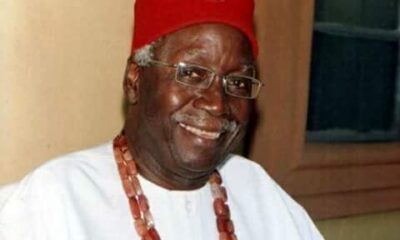
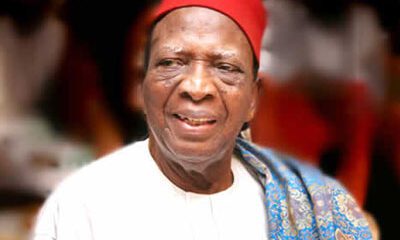
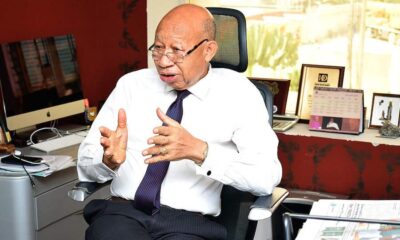
Jerome Udoji was a Nigerian public servant, business leader, and pioneer who became Nigeria’s first Stock Exchange Chairman and civil service icon, and whose dedication to service and leadership left a lasting mark on the nation.

Chief Jerome Udoji is one of those rare Nigerian figures whose influence quietly runs through both government and business. His name is closely tied to two powerful institutions, namely, the modern Nigerian civil service and the Nigerian Stock Exchange. As the first Chairman of the Nigerian Stock Exchange and the originator of the famous Udoji Award, he stood at the centre of reforms that altered how public administration worked and how Nigeria’s capital market evolved.
Born in 1912 in Ozubulu in present-day Anambra State, Jerome Udoji did not begin life with privilege or public acclaim. What he had was discipline, intellectual curiosity, and a deep belief in service. From his early education in Nigeria to his legal training at Cambridge University and Gray’s Inn in London, he built a foundation that would later support decades of national leadership. Each stage of his journey prepared him for larger responsibility.
When Nigeria needed a serious review of its civil service in the early 1970s, Jerome Udoji was entrusted with leading the Public Service Review Commission. The outcome which was widely known as the Udoji Award restructured salaries, introduced performance-based systems, and changed expectations within the public sector. Years later, as Chairman of the Nigerian Stock Exchange, he brought the same clarity and order to a growing financial market that required credibility and strong governance.
Jerome Udoji was a reformer, a lawyer, a boardroom leader, and a mentor whose influence reached beyond official documents and board resolutions. His life tells the story of a man who believed institutions could work better, and who committed his knowledge and energy to making that belief a reality.
Remembering Jerome Udoji simply means revisiting a chapter of Nigerian history defined by thoughtful reform, steady leadership, and a lasting commitment to national development.
Early Life and Education of Chief Jerome Udoji
Chief Jerome Oputa Udoji was born in 1912 in Ozubulu, a quiet town in the Ekwusigo Local Government Area of Anambra State in southeastern Nigeria. He grew up in a community that valued learning, discipline, and service to others. His family, though not wealthy invested deeply in education and moral upbringing, and instilled in him the values of diligence, integrity, and perseverance. From an early age, it was clear that Jerome Udoji possessed a sharp intellect and a curiosity about the world around him.
His educational journey began at St. Michael’s Catholic School in Ozubulu where he demonstrated not only academic talent but also leadership qualities among his peers. Recognizing his potential, his family supported his further studies at St. Charles Training College in Onitsha, a school known for developing disciplined and capable young men.
Later, he moved to King’s College, Lagos, one of Nigeria’s most prestigious secondary schools. There, he was exposed to a rigorous academic environment that challenged him to excel and broadened his understanding of society, governance, and civic responsibility.
Jerome Udoji’s ambition extended beyond Nigeria. Driven by a desire to acquire world-class education, he travelled to the United Kingdom to study law. He was admitted to Cambridge University where he pursued a legal education with dedication and distinction. His time at Cambridge honed his analytical skills, exposed him to diverse ideas, and deepened his understanding of governance and leadership. After completing his studies at Cambridge, he was called to the Bar at Gray’s Inn, London, in 1948 which officially marked his entry into the legal profession.
Not content with just law, Jerome Udoji later expanded his knowledge of administration and economic development by attending the Economic Development Institute of the World Bank in Washington, D.C. This further training equipped him with a global perspective on governance, economic planning, and public administration. With these skills, he would later transform Nigeria’s civil service and guide its emerging financial institutions.
From these early experiences, it was evident that Jerome Udoji was not only academically gifted but also determined to use his knowledge to make a difference. His education was not merely a personal achievement, it became the foundation for a life dedicated to public service, leadership, and nation-building. Every school, lecture, and examination he undertook was a step toward the impact he would later make on the governance and financial institutions of Nigeria.
Career in Public Service
Jerome Udoji’s return to Nigeria after his legal training in London marked the beginning of a career that would define public administration in the country. He joined the Colonial Administrative Service where his sharp intellect, discipline, and natural leadership quickly became apparent. His first postings were to the Western Region where he served as an Assistant District Officer in Ado Ekiti and later as District Officer for Egbado. In these roles, he gained hands-on experience in governance, learning the challenges of administration in diverse communities and understanding the importance of fairness, efficiency, and accountability.
By the mid-1950s, Udoji had moved to the Eastern Region where his career progressed rapidly. He held several senior positions as Permanent Secretary in the Health, Commerce, Finance, and Establishment ministries. In each ministry, he applied his skills with a focus on results and sustainability, thus earning a reputation as a problem-solver who could manage both people and processes with integrity. His work required not only technical knowledge but also diplomacy, as he navigated complex bureaucratic structures and worked with political leaders to implement policies effectively.
In 1959, Jerome Udoji was appointed Head of the Civil Service for the Eastern Region, one of the highest administrative positions in the government at the time. He also served as Chief Secretary to the Premier, Dr. Michael Okpara. This role placed him at the heart of decision-making and policy implementation. In these capacities, Udoji was recognized for his ability to combine vision with meticulous attention to detail. Colleagues and subordinates alike admired his fairness, clarity of instruction, and commitment to public welfare.
Perhaps the most celebrated milestone of Jerome Udoji’s public service career came in 1972 when he was appointed by General Yakubu Gowon to chair the Public Service Review Commission. This commission conducted a comprehensive review of Nigeria’s civil service, and analyzed salary structures, training programmes, and administrative procedures.
The outcome was the famous “Udoji Award”, a landmark reform that restructured pay scales, introduced performance-based incentives, and modernized bureaucratic processes. This effort was pivotal in professionalizing the civil service, boosting morale, and ensuring that public institutions could operate more effectively.
Beyond policy and administration, Udoji’s approach to public service was personal. He believed that leadership required empathy and mentorship. Many junior officers and colleagues credited him with offering guidance, encouragement, and advice that helped them grow professionally and personally. His influence extended far beyond policy documents and memoranda. It was reflected in the lives and careers of those he nurtured.
Throughout his public service career, Jerome Udoji maintained a philosophy that governance was not about authority alone but about responsibility and service to the people. He balanced diligence with foresight, and ensured that decisions were both practical and transformative. This approach cemented his reputation as a civil service icon, a leader whose legacy is still studied by administrators and scholars today.
Leadership at the Nigerian Stock Exchange

While Jerome Udoji’s legacy in public service was already monumental, his influence extended far beyond government offices. In 1981, he was appointed as the first Chairman of the Nigerian Stock Exchange. This position placed him at the forefront of Nigeria’s growing financial sector. At a time the country was navigating economic changes and the stock market was still developing, his leadership provided stability, credibility, and strategic vision.
Taking on the role of Chairman, Udoji approached the Nigerian Stock Exchange (NSE) with the same care and discipline that had defined his public service career. He understood that a strong stock market was essential not only for businesses but also for the nation’s economic growth. His leadership emphasized transparency, accountability, and the importance of investor confidence. Under his guidance, the NSE strengthened regulatory frameworks, improved operational systems, and began to attract both local and international investors.
Jerome Udoji was not content with merely presiding over meetings or signing papers. He took a hands-on approach which involved meeting with companies, brokers, and stakeholders to ensure that the Exchange functioned efficiently and could withstand the challenges of a dynamic economy. His focus was on long-term growth. So, he created structures that would allow the Nigerian Stock Exchange to flourish well beyond his tenure. He encouraged professionalism, corporate governance, and strategic planning, and set a standard that future leaders would follow.
During his time as Chairman, Udoji also emphasized education and awareness about the stock market. He believed that for the NSE to flourish, the public and businesses needed to understand its workings and benefits. By promoting financial literacy and encouraging companies to list transparently, he helped to nurture a culture of trust that was vital for a healthy capital market.
Jerome Udoji’s leadership at the NSE was widely recognized as pioneering. He became a bridge between government policy, business interests, and investors. His tenure laid the foundation for the Nigerian Stock Exchange to grow into one of Africa’s most important financial markets, and his influence continues to be felt in the policies and standards that guide the Exchange today.
Beyond policies and frameworks, what set Udoji apart was his character. He led with integrity, patience, and a commitment to excellence. Stakeholders recall that his decisions were fair, considerate, and always aligned with the larger goal of national progress. In many ways, his leadership at the NSE mirrored the principles he applied in public service which included diligence, accountability, and a sense of responsibility toward the people he served.
In remembering Jerome Udoji, it is clear that his contributions to the Nigerian Stock Exchange were more than administrative as he helped to define its culture, credibility, and future, and ensured that Nigeria’s capital market had a strong, principled foundation. His legacy in finance, like his work in civil service, portrays a rare combination of foresight, wisdom, and dedication that few leaders achieve.
Business and Board Leadership
Jerome Udoji was not only a transformative civil servant and the first Chairman of the Nigerian Stock Exchange, he was also a highly respected figure in the private sector. His reputation for integrity, strategic thinking, and principled leadership made him a natural choice for boards and leadership roles in some of Nigeria’s most influential companies. His contributions extended across banking, manufacturing, and industrial enterprises.
Among the companies he served, Citibank Nigeria benefited from his counsel on corporate governance and risk management while Nigerian Tobacco Company and Solgas Petroleum relied on his experience to navigate complex market and operational challenges. Udoji also held leadership positions at Wiggins Teape, RT Briscoe, and Michelin Nigeria where his presence strengthened decision-making processes and ensured that ethical practices remained central to business operations.
Jerome Udoji approached each corporate role with the same meticulousness he had applied in government and the stock exchange. He believed that strong leadership was not just about oversight but also about fostering a culture of responsibility, professionalism, and accountability. He encouraged transparency, long-term planning, and strategic thinking, and insisted that businesses could only succeed, if their foundations were solid and their governance principles clear.
Beyond formal board meetings, Udoji also invested time in mentoring young executives and emerging business leaders. Many credited him with the guidance that shaped their careers, as he taught lessons not only in strategy and management but also in ethics and service. He believed that businesses had a responsibility to the society, and he encouraged leaders to consider the broader impact of their decisions on employees, communities, and the national economy.
In addition to corporate leadership, Jerome Udoji’s influence extended into sports and industrial advocacy. He served as the chairman of Udoji United Football Club, a team that gained national attention and contributed to the development of sports in Nigeria. He also became the second Chairman of the Manufacturers Association of Nigeria where he advocated for policies to strengthen local industry, improve production standards, and support domestic enterprises. His efforts exemplified a consistent philosophy that leadership, whether in government, finance, or business, should combine skill, vision, and service to the nation.
Through these roles, Jerome Udoji left a legacy in corporate Nigeria that complemented his public service. He demonstrated that leadership was not limited to titles or positions but rather, about influence, integrity, and the ability to guide institutions toward sustainable growth. His business and board leadership ensured that the organizations he touched could not only survive but also thrive in a rapidly changing economic terrain.
Honours and Recognitions
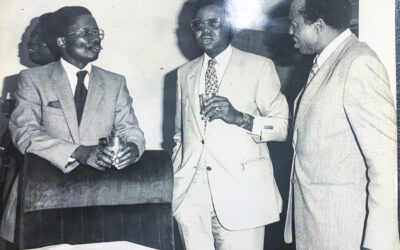
The extraordinary contributions of Chief Jerome Udoji to Nigeria did not go unnoticed. During his lifetime, he received numerous national, international, and traditional honours that represented both his professional achievements and the respect he earned from communities at home and abroad.
Among the most prestigious of his recognitions was the Commander of the Order of the Federal Republic (CFR), one of Nigeria’s highest national honours. This award acknowledged his exceptional service to the nation, particularly in modernizing the civil service and guiding the country’s financial institutions.
Jerome Udoji also received international accolades. He was appointed Commander of the Order of Saint Michael and Saint George (CMG) by the British Crown. That was a distinguished honour that recognized his significant contributions to public administration and governance. In addition, the Vatican awarded him the Papal Knighthood of Saint Gregory the Great, a rare distinction that reflected his integrity, leadership, and commitment to community values.
In his home region, Udoji earned the respect and admiration of his people through traditional titles. He was crowned Igwe Ozuluoha I of Igboland, a title that acknowledged his role as a custodian of culture, a community leader, and a source of guidance for the younger people. These traditional honours complemented his formal awards, and highlighted a life that bridged national service, corporate leadership, and community engagement.
Beyond formal awards, Jerome Udoji’s recognition came in other meaningful ways. His ideas and reforms influenced generations of civil servants and business leaders. Institutions, organizations, and even buildings have been named in his honour to serve as lasting reminders of his impact. In Anambra State, for example, the Jerome Udoji Secretariat Building stands as a tribute to his dedication to governance and public administration.
What set Jerome Udoji apart was not merely the number of honours he received but the breadth and significance of each. Each award, title, and recognition told the story of a man who earned respect through integrity, hard work, and commitment to service. Whether recognized nationally, internationally, or locally, Jerome Udoji’s accolades serve as a testament to a life devoted to excellence, leadership, and the betterment of society.
Personal Life
Beyond the corridors of power and the boardrooms of Nigeria’s leading companies, Jerome Udoji was a family man, a community figure, and a mentor whose influence extended far beyond his professional accomplishments. His personal life projected the same discipline, integrity, and commitment that defined his public and business leadership.
Jerome Udoji married Marcelina Uzoamaka Udoji in 1942. Together, they nurtured a family grounded in values of education, service, and responsibility. They raised three children, namely, Scholastica, Oscar Paul, and Peter Ebelechukwu Udoji who grew up witnessing their father’s dedication not only to work but also to his community and country.
For Udoji, family life was never separate from his broader commitment to society. His lessons in ethics, diligence, and compassion were as much for his children as they were for the people he served.
Even as he held some of the most influential positions in Nigeria, Jerome Udoji remained approachable and engaged with his community. He was an active member of his church, a participant in local initiatives, and a source of guidance for younger professionals and aspiring leaders. Many who worked with him recall his willingness to listen, mentor, and provide counsel. His mentorship extended beyond formal work environments. He often offered advice on career development, personal integrity, and civic responsibility.
Chief Jerome Udoji’s character was a combination of humility and quiet strength. He valued knowledge and lifelong learning, and demonstrated through his own life that education and curiosity were essential tools for leadership. He also believed in the importance of giving back and using his experience, networks, and influence to support initiatives that improved society, whether in education, business, or community development.
Though his professional life was demanding, Jerome Udoji maintained a balance that emphasized personal connections and social responsibility. His legacy is not just in the institutions he led or the reforms he initiated, it is also in the values he embodied and passed on to his family, colleagues, and the many people whose lives he touched.
Remembering Jerome Udoji’s personal life opens our eyes to a man whose public achievements were inseparable from his private character as a leader, mentor, and family man whose life offers lessons in integrity, dedication, and service to others.
Legacy and Impact
Jerome Udoji passed away on April 2, 2010 at the age of 98, leaving behind a legacy that continues to inspire Nigerians across generations. His influence extended far beyond the offices he occupied or the titles he held. He was a man whose life demonstrated that leadership is most powerful when guided by integrity, service, and vision.
One of the most visible aspects of his legacy is the modernized Nigerian civil service, shaped in large part by his leadership of the Public Service Review Commission in 1972. The resulting Udoji Award transformed how civil servants were compensated, trained, and evaluated, thereby creating systems that encouraged professionalism and efficiency. Many civil servants today still benefit from the structures and reforms he helped to establish, and his name remains synonymous with excellence in public administration.
Jerome Udoji’s impact was also strongly felt in the financial sector. As the first Chairman of the Nigerian Stock Exchange, he laid the foundation for a market built on transparency, accountability, and trust. His efforts helped to ensure that Nigeria’s capital market could grow responsibly, attract investors, and support the nation’s economic development. The policies and culture he fostered at the NSE still guide the institution, thus making him a benchmark for effective leadership in Nigerian finance.
In the private sector, his influence extended through board leadership and mentorship. Companies such as Citibank Nigeria, Nigerian Tobacco Company, Solgas Petroleum, and Michelin Nigeria benefited not only from his strategic guidance but also from his example of principled decision-making. Leaders who worked with him often cite his counsel as transformative as it informed their approach to governance, ethics, and corporate responsibility.
His legacy was not only institutional but also personal. Jerome Udoji inspired countless individuals – civil servants, business leaders, and community members through his example of humility, discipline, and dedication. He was an example of the fact that leadership is not about titles but about service, foresight, and the willingness to make difficult decisions for the greater good.
Communities and institutions still honour his memory. In Anambra State, the Jerome Udoji Secretariat Building stands as a permanent tribute to his contributions to public administration. Beyond the physical markers, his legacy lives on in the values he championed which include integrity, professionalism, mentorship, and a commitment to national development.
In remembering Jerome Udoji, one sees a life that bridged public service, finance, business, and community leadership. His story reminds Nigerians and the world that meaningful change comes from thoughtful leadership, ethical action, and a genuine desire to improve the society. Even over a decade after his passing, his work and influence remain deeply woven into the institutions, policies, and leadership culture of Nigeria.
In Conclusion …
Jerome Udoji’s life is a testament to what visionary leadership, integrity, and dedication can achieve. From his early days in Ozubulu to his transformative roles in Nigeria’s civil service, the private sector, and as the first Chairman of the Nigerian Stock Exchange, he showed that meaningful impact comes from service, not titles. His reforms, especially the Udoji Award redefined public administration, while his guidance at the NSE laid the foundation for a credible and thriving capital market.
More than policies and positions, his enduring legacy lies in the values he embodied, namely, discipline, mentorship, accountability, and a commitment to the greater good. He influenced generations of civil servants, business leaders, and communities, and showed that leadership is both a privilege and a responsibility. His life reminds us that thoughtful, ethical, and visionary action can leave an imprint that lasts far beyond one’s lifetime.
Remembering Jerome Udoji is not just to celebrate his achievements, it is also to honour a man whose life continues to inspire Nigerians to lead with integrity, think long-term, and serve others with humility.
His story is a guidepost for anyone who is seeking to make a difference in public service, business, or society at large. His is a legacy that will continue to impact on Nigeria’s institutions and leadership culture for generations.
References
- https://en.wikipedia.org/wiki/Jerome_Udoji
- https://biography.igbopeople.org/biography/chief-jerome-oputa-udoji/
- https://www.nigeriannewsleader.com/index.php/politics/debates-flashback/chief-jerome-udoji-the-story-of-the-man-behind-the-famous-udoji-salary-award-of-1972
- https://blerf.org/index.php/biography/udoji-chief-jerome-oputa/
- https://www.inigerian.com/jerome-oputa-udoji-the-exit-of-a-titan/
- https://en.wikipedia.org/wiki/Udoji_United_F.C.
You might want to check this out …