


Anambra News
Nnewi and the Anambra South Senatorial By-Election: A New Chapter in Representation

Introduction
Nnewi has always been at the center of leadership, commerce, and cultural identity in Anambra State. Known as a land of entrepreneurs and innovators, the town is equally influential in political life. This influence came to the fore once again during the recently concluded Anambra South Senatorial by-election, which drew the attention of the entire state and beyond.
The by-election was held to fill the vacancy created by the passing of Senator Ifeanyi Ubah, a businessman and politician from Nnewi North who had represented the district until his death in 2024. For Nnewi, the election was more than a political contest, it was another moment in the long story of representation, leadership, and community expectations.

The Structure of Representation in Anambra South
To understand the by-election, it is important to know how senatorial representation works in Nigeria. Each state elects three senators, one from each senatorial district. In Anambra State, these are:
- Anambra North
- Anambra Central
- Anambra South
Anambra South Senatorial District is made up of seven local government areas:
- Nnewi North
- Nnewi South
- Ekwusigo
- Aguata
- Ihiala
- Orumba North
- Orumba South
Nnewi, being divided into Nnewi North and Nnewi South, is one of the anchors of the district. With its history of industrialization and political involvement, the town often attracts keen attention whenever the senatorial seat is contested.
The By-Election and Its Significance
The 2025 by-election was necessitated by the sudden passing of Senator Ifeanyi Ubah. His death not only shocked the political scene but also created a vacuum that needed to be filled for the people of Anambra South to remain represented in the National Assembly.

Sen. Ifeanyi Ubah
The election was therefore more than just a replacement exercise, it became a symbolic event, highlighting the power dynamics within the district and testing the ability of different communities, including Nnewi, to influence the outcome.
Candidates from Nnewi
True to its reputation, Nnewi did not sit back during the by-election. The town produced notable candidates who stepped forward to vie for the position.
- Prince Onwa Nwafor Orizu (PDP), a son of the late Senate President A.A. Nwafor Orizu, declared his ambition from his Ndiakwu-Otolo country home in Nnewi North. His candidacy carried historical weight because of his father’s legacy in Nigerian politics.
- Prince Sam Ben Nwosu (PDP), also from Nnewi, presented himself as a candidate willing to bring fresh representation to the people of Anambra South.
These candidacies showed that Nnewi remained deeply engaged in the politics of the senatorial district. The town’s history of producing leaders and decision-makers continued in this election cycle, even though the ultimate outcome shifted elsewhere.
The Winner: Emmanuel Nwachukwu of Nnewi South
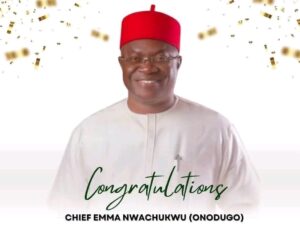
Chief Emma Nwachukwu
At the end of the election, the Independent National Electoral Commission (INEC) declared Emmanuel (Emma) Nwachukwu of the All Progressives Grand Alliance (APGA) as the winner. He polled 90,408 votes, far ahead of his closest rivals from other parties.
Emma Nwachukwu hails from Ukpor, Nnewi South Local Government Area, another part of Anambra South Senatorial District. His victory marked a significant shift in representation, as the senatorial seat moved from Nnewi (with Senator Ifeanyi Ubah) to Nnewi South.
For many observers, this outcome was not just about party politics, it was a reflection of the diversity within Anambra South. It showed that while Nnewi remains a powerful voice, other communities in the district also have strong claims to representation.
Nnewi’s Traditional Leadership and Political Identity
To understand how Nnewi interprets such shifts, one must look at the town’s traditional leadership system.
Nnewi is unique in Igbo land because it has four Obis, one for each quarter:
- Otolo
- Uruagu
- Umudim
- Nnewichi
The Obi of Otolo also serves as the Igwe of Nnewi, the overall traditional ruler of the town. This centralized system has given Nnewi a strong sense of identity and leadership, distinguishing it from many other Igbo towns that follow a more decentralized, village-based governance.
This tradition of leadership has shaped Nnewi’s modern political culture. From the days of Dim Chukwuemeka Odumegwu Ojukwu, who symbolized courage and boldness in politics, to the business icons who influenced Nigeria’s economy, and to Senator Ifeanyi Ubah’s tenure in the Senate, Nnewi has always expected its sons and daughters to play leading roles.
What the Shift Means for Nnewi
The election of Emma Nwachukwu from Nnewi South does not mean Nnewi has lost its place. Rather, it highlights several important realities such as:
- Shared Representation
The senatorial seat covers seven LGAs, not just Nnewi. By electing a senator from Nnewi South, the people of the district reaffirmed the idea that representation must rotate and accommodate all parts of the zone. - Nnewi’s Enduring Influence
Even though the winner is not from Nnewi, the town’s influence was felt through its candidates, its political engagement, and its role in shaping the conversation around the by-election. - A Time to Reflect on Development
For Nnewi, the new senator presents an opportunity to engage constructively, ensuring that the town’s needs from infrastructure to industry support are addressed as part of the wider Anambra South agenda. - The Legacy of Ifeanyi Ubah
The by-election also served as a reminder of Senator Ifeanyi Ubah’s legacy. His passing left a gap, but it also left behind lessons about courage, grassroots politics, and the ability of one individual from Nnewi to command statewide attention.
Nnewi in the Larger Anambra Story
Nnewi’s importance goes beyond politics. Known as the “Japan of Africa” for its entrepreneurial spirit, the town symbolizes self-reliance, innovation, and boldness. In politics, it is not surprising that Nnewi often produces strong voices and influential leaders.
The outcome of the by-election a senator from Nnewi South does not reduce this importance. Instead, it adds another chapter to the story, that Nnewi’s influence is part of a larger mosaic of communities that make up Anambra South. Just as Nnewi has had its turns, so too must other towns.
Conclusion
The Anambra South senatorial by-election of 2025 was more than a political exercise, it was a reflection of history, identity, and community expectations. For Nnewi, the loss of its son, Senator Ifeanyi Ubah, was a painful moment, but the town showed resilience by producing candidates and actively participating in the election.
The victory of Emmanuel Nwachukwu from Nnewi South demonstrates the balance and diversity of representation within the district. For Nnewi, it is an opportunity to strengthen collaboration with the new senator while continuing to uphold its tradition of leadership in culture, business, and politics.
Nnewi remains a central voice in Anambra South, and this by-election is another reminder that representation, like history itself, is a journey shared by all communities.
Reflective Question:
How can Nnewi use its history of leadership and entrepreneurship to build constructive partnerships with the new senator for the progress of Anambra South as a whole?