


Nigerian Festivals
Odi Ogori Ba Uge Festival: A Unique Celebration of Victory and Cultural Heritage in Odi, Bayelsa State

Odi Ogori Ba Uge Festival is a historic cultural celebration in Odi, Bayelsa State that marks the legendary buffalo victory of 1957, its traditions, meaning, and modern significance.

In the riverine town of Odi, there is a story people do not just tell, they relive it. It is a story about the fear that once gripped an entire community, and of the moment that fear finally broke. Today, that memory lives on through the Odi Ogori Ba Uge Festival, a cultural event rooted in a real and defining experience.
Long before it became a festival, it was a crisis. In the 1950s, a deadly buffalo roamed the forests around Odi, attacking residents and forcing daily life to a halt. Farms were abandoned. Movement became risky. For years, the community searched for a solution. When the animal was finally killed in 1957, the relief was immediate and overwhelming. People gathered, not just to celebrate survival but to mark the end of a period that had tested their courage and unity.
That moment became tradition. The Odi Ogori Ba Uge Festival was born out of that victory, and it has continued ever since as a powerful expression of identity, resilience, and shared history. What makes this festival stand out is not just its performances or gatherings but the fact that it is tied to a specific event that people still remember and pass down.
Today, the Odi Ogori Ba Uge Festival is one of the most distinctive cultural festivals in Bayelsa State. It brings together history, tradition, and community in a way that feels real and grounded. As you explore this festival, you are not just learning about a celebration. You are stepping into a story that has shaped a people and still defines them.
The Origin Story of the Odi Ogori Ba Uge Festival
Every festival has a beginning. However, the story behind the Odi Ogori Ba Uge Festival is one that people in Odi still speak about with a sense of memory, not myth.
In the early 1950s, life in Odi followed a familiar rhythm. People farmed, fished, and moved freely through their environment. That calm was disrupted when reports began to spread about a strange and dangerous buffalo seen around the outskirts of the community. At first, many dismissed the stories. It sounded unlikely. But the sightings did not stop.
Then came the attacks.
The buffalo began to target people, especially those who ventured into the forest or worked on their farms. What started as rumour quickly became reality. Fear settled into daily life. Families became cautious. Some avoided their farmlands altogether. Movement became limited, and a sense of uncertainty hung over the town.
Attempts were made to track and kill the animal. Local hunters organized search efforts using their knowledge of the terrain to locate it. But the buffalo proved difficult to find. Each failed attempt deepened the fear. Over time, the animal came to be seen as more than just a wild creature. Some believed it carried something beyond the ordinary. That made the situation even more unsettling.
This period which lasted for several years between 1953 and 1957 marked one of the most challenging times in the community’s history. The buffalo had taken lives and disrupted the normal flow of life in Odi. People were not just dealing with a physical threat but also the emotional weight of living under constant fear.
The turning point came on July 27, 1957.
On that day, the buffalo was finally sighted within reach. Word spread quickly, and hunters gathered with urgency and determination. This time, they succeeded. The animal was killed after a coordinated effort, bringing an end to years of tension and loss.
What followed was immediate. The fear that had held the community for so long gave way to relief. People came out in large numbers. There was singing, drumming, and spontaneous celebration. It was not planned. It was a natural response to survival.
That moment became history.
In the years that followed, the people of Odi chose not to forget what they had experienced. Instead, they turned it into a tradition. The event was remembered annually, not just as the killing of a buffalo but as a reminder of what unity and persistence can achieve.
This is the foundation of the Odi Ogori Ba Uge Festival. It is not built on distant legend or abstract belief. It is rooted in a real event that shaped a community and left a lasting imprint on its identity.
Meaning of “Odi Ogori Ba Uge”
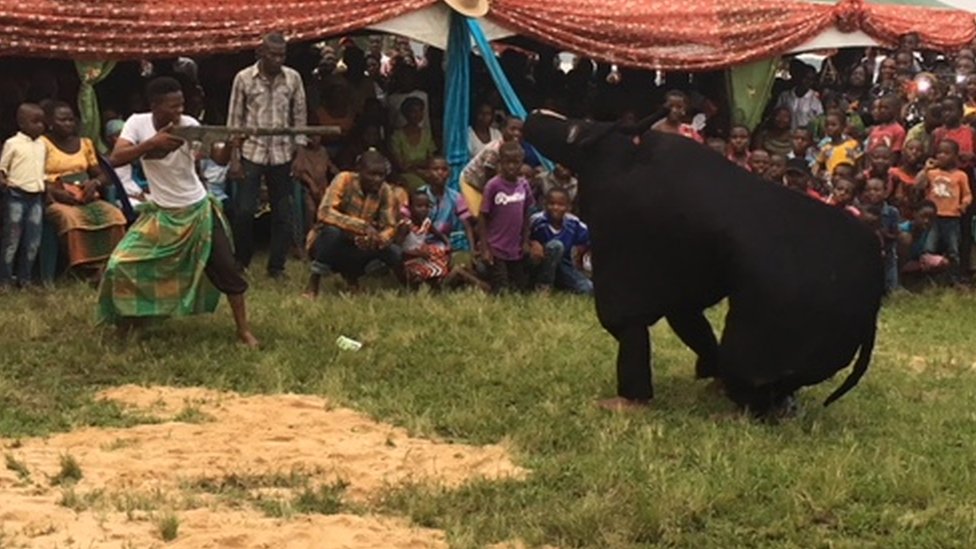
The name Odi Ogori Ba Uge is not just a title. It carries the weight of a real experience and tells the story of what the festival stands for.
In the local Ijaw context, the phrase is widely understood to mean “the killing of the buffalo in Odi” or more broadly, “victory over the buffalo in Odi.” Each part of the name connects directly to the historical event that gave birth to the festival.
“Odi” refers to the community itself, the place where everything happened. “Ogori” is associated with the buffalo, the animal that brought fear to the people. “Ba Uge” points to the act of defeating, killing, or overcoming. When combined, the phrase captures a complete story in just a few words. It speaks of a time when the people of Odi faced a serious threat and came together to overcome it.
Beyond the direct translation, the meaning goes deeper. The name has come to represent survival in the face of danger, collective effort rather than individual action, relief after a long period of fear, and a shared memory that binds the community together.
This is why the Odi Ogori Ba Uge Festival is not just about recalling the past. The name itself keeps the story alive. Each time it is spoken, it brings back the moment that changed the course of life in Odi.
In a simple but powerful way, the name serves as both history and identity. It reminds the people not only of what happened but also of who they are.
Timing of the Odi Ogori Ba Uge Festival
The Odi Ogori Ba Uge Festival is closely tied to the historical event it commemorates. The original killing of the buffalo took place on July 27, 1957, and this date remains central to the festival’s identity.
In modern practice, the festival is usually held annually around late July, often aligning with or building up to July 27. In some years, activities may extend into early August, depending on how the event is scheduled by community organizers and cultural committees.
Rather than being limited to a single day, the Odi Ogori Ba Uge Festival is often celebrated over several days. This allows for a full lineup of cultural activities, including performances, regattas, wrestling matches, and community gatherings.
The timing is not random. It is deliberately chosen to honour the exact period the community of Odi experienced both the height of the crisis and the moment of victory. Each year, as the date approaches, preparations begin, and anticipation builds within the community.
This connection between date and history is what gives the festival its strong sense of meaning. It ensures that the celebration remains rooted in a real event, even as it continues to grow and attract wider attention.
Cultural Activities and Festival Highlights
The Odi Ogori Ba Uge Festival comes alive through a wide range of cultural expressions that turn history into lived experience in Odi. What makes the festival engaging is not only its origin story, it is the way that story is retold through music, movement, and community participation.
Traditional dances are at the heart of the celebration. These dances are performed with strong rhythm and coordinated steps that carry cultural meaning. The drumming is steady and powerful. It guides every movement. Songs performed during these moments often recall community history and shared identity, thus keeping the memory of past events present in a natural way.
Masquerade displays also play an important role. These appearances are deeply rooted in tradition and are treated with respect within the community. Each masquerade carries its own symbolic meaning, and their performances add depth and intensity to the festival atmosphere. They are not simply entertainment. They are part of how culture is expressed and preserved.
Boat regattas bring energy to the river environment where Odi is located. Decorated boats move across the water in coordinated races, with paddlers working in rhythm. The river becomes a lively space filled with movement and cheering spectators watching from the banks. This activity highlights the strong connection between the people and their natural environment.
Traditional wrestling matches are another major highlight of the Odi Ogori Ba Uge festival. These contests attract attention because they combine strength, skill, and discipline. The crowd response adds to the excitement, making it one of the most anticipated parts of the festival.
Music and storytelling continue throughout the Odi Ogori Ba Uge Festival. Drumming does not stop easily during the festival period, and oral storytelling remains a key way of passing history from the elders to the younger generations. The story of the buffalo victory is often retold in different forms with the aim of keeping it alive in everyday memory.
All of these activities come together to make the Odi Ogori Ba Uge Festival more than a celebration. It becomes a shared cultural space where history, identity, and tradition are experienced in real time by everyone present.
Cultural Symbols, Attire, and Performances

The Odi Ogori Ba Uge Festival is not only heard in drums or seen in dances. It is also expressed through symbols, clothing, and performance styles that carry meaning across generations in Odi. These elements help to visually communicate the history and identity behind the festival.
Traditional attire is one of the most noticeable features during the celebration. Men and women dress in culturally inspired clothing that reflects their heritage. Wrappers, beads, head ties, and body adornments are common. The choice of colours and accessories is often deliberate as it not only shows respect for tradition, it also adds beauty to the occasion. In many cases, the clothing worn during the Odi Ogori Ba Uge festival is similar to what the ancestors once wore during important community events.
Symbols also play an important role. Many of the visual elements seen during the festival are connected to the original buffalo story. Some costumes and performances are designed to recall the hunters, the struggle, and the final victory. These symbolic expressions allow people to experience the story in a more direct and emotional way, even if they are hearing it for the first time.
Face painting and body decoration are sometimes used during performances. These markings are not random. They often carry cultural meaning and help distinguish different performance groups or roles within the festival. In some cases, they also add intensity to masquerade appearances, making them more striking to the audience.
Performances during the Odi Ogori Ba Uge festival are carefully structured. They combine dance, music, and movement in ways that tell a story without needing words. Drumming sets the pace while dancers use gestures that represent historical moments or cultural ideas. Each performance contributes to the overall narrative of the festival in such a way that makes it a shared storytelling experience rather than just entertainment.
Together, these symbols, attire, and performances give the Odi Ogori Ba Uge Festival its visual identity. They turn history into something people can see, wear, and feel, ensuring that the story remains present in both memory and practice.
The Role of the Community
At the centre of the Odi Ogori Ba Uge Festival is not an individual or a single group but the entire community of Odi. The festival exists because people come together, and it continues to survive because that unity is still active today.
From the earliest days, elders have played a guiding role. They are the custodians of the story behind the buffalo incident and the ones who ensure that the details passed down remain accurate. Their presence during the festival is not just ceremonial. It carries authority, memory, and continuity. Through their words and participation, the younger ones gain a direct connection to the past.
Youth involvement is equally important. Young people take part in dances, organize activities, and support event planning. For many of them, the Odi Ogori Ba Uge festival is more than tradition. It is a chance to reconnect with identity and participate in something larger than themselves. Their energy keeps the celebration active and ensures that it does not fade with time.
Community leaders and chiefs also play a coordinating role. They help to organize events, maintain order, and oversee traditional rites connected to the festival. Their involvement ensures that cultural protocols are respected and that the event maintains its structure and dignity.
Women and cultural groups contribute in meaningful ways as well. They prepare food, lead cultural performances, and support storytelling sessions. In many cases, they are central to the hospitality that defines the festival experience. They welcome the visitors and make them feel part of the celebration.
What stands out most is how responsibilities are shared. The Odi Ogori Ba Uge festival is not owned by one section of society. It is a collective effort where everyone contributes in one way or another. This shared participation strengthens social bonds and reinforces a sense of belonging.
Over time, the Odi Ogori Ba Uge Festival has become more than a cultural event. It has grown into a space where the community comes together to remember, celebrate, and reconnect. Through this shared effort, the story of the buffalo victory remains alive, not only in memory but in everyday participation.
Odi Ogori Ba Uge Festival in Modern Nigeria

The Odi Ogori Ba Uge Festival has grown far beyond its early beginnings as a local remembrance of a buffalo encounter. Today, it stands as one of the recognized cultural festivals in Odi and continues to gain attention within Nigeria’s wider cultural and tourism space.
In modern times, the festival has taken on a broader identity. While it still preserves the memory of the historic buffalo victory, it now also serves as a platform for cultural display, tourism, and community pride. Government agencies and cultural bodies in Bayelsa State have increasingly included the Odi Ogori Ba Uge festival in official calendars of events. This helps to give it more visibility beyond the local community.
Media coverage has also played a role in its modern development. Newspapers, online platforms, and broadcast stations now report on the festival, especially during major editions. This exposure has helped to introduce the event to audiences who may not be familiar with the history of Odi or the significance of the celebration.
In recent years, the Odi Ogori Ba Uge festival has also expanded its entertainment scope. Alongside traditional performances, there are now organized cultural shows, live music events, and guest appearances that attract wider audiences, including young people and visitors from outside the community. These additions have helped the festival to remain relevant in a fast-changing cultural environment while still holding on to its traditional foundation.
Tourism interest has grown steadily as well. Visitors travel to Odi during the Odi Ogori Ba Uge festival period to experience the culture firsthand. This movement of people contributes to local visibility and encourages small-scale economic activity within the community. Hotels, transport services, food vendors, and artisans often benefit from the increased presence of guests during the celebration.
Despite these modern developments, the festival has not lost its core identity. The story of the buffalo and the collective memory it represents still remains central. What has changed is the scale and presentation. The Odi Ogori Ba Uge Festival now exists at the intersection of tradition and modern cultural expression where history is preserved as well as also shared with a wider audience.
Economic and Tourism Impact
The Odi Ogori Ba Uge Festival is not only a cultural event. Over time, it has also become an important driver of local economic activity and tourism growth in Odi. What began as a community remembrance now attracts visitors, stimulates small businesses, and creates seasonal opportunities for income generation.
During the festival period, there is usually a noticeable increase in movement into Odi. Visitors come from nearby towns, other parts of Bayelsa State, and in some cases, from outside the state. This rise in attendance creates demand for transportation services, temporary accommodation, food vendors, and local logistics. Even informal traders benefit as festival grounds and surrounding areas become active commercial spaces.
Local artisans also gain visibility during the celebration. Crafts, clothing, cultural items, and food products are often displayed and sold to visitors. For many small-scale producers, the festival offers one of the few moments in the year where they can reach a larger audience beyond their immediate community.
The hospitality sector also experiences growth during the Odi Ogori Ba Uge festival period. Hotels, guest houses, and short-term lodging arrangements see increased occupancy. This demand often extends to neighbouring communities, thus helping to spread economic benefits beyond Odi itself.
Tourism development is another important aspect of the festival’s impact. The Odi Ogori Ba Uge Festival has gradually become part of Bayelsa State’s cultural tourism identity. It attracts cultural enthusiasts, researchers, and visitors interested in Niger Delta traditions. As awareness grows, the festival is increasingly seen as an opportunity to promote local heritage on a wider stage.
There is also a broader community benefit. The increased activity during the festival helps to strengthen the local economy, even if only temporarily. It encourages small business participation, creates short-term employment opportunities, and supports cultural entrepreneurship.
While the Odi Ogori Ba Uge festival is not primarily an economic event, its growing influence in tourism and commerce shows how culture can contribute to community development when properly supported and promoted.
Challenges Facing the Festival
Despite its cultural strength and growing recognition, the Odi Ogori Ba Uge Festival still faces a number of practical and structural challenges in Odi. These challenges affect how the festival is organized, funded, and experienced by both residents and visitors.
One of the most consistent concerns is funding. Organizing a festival of this scale requires resources for logistics, performances, security, publicity, and infrastructure. In many cases, financial support is limited or irregular, and this places pressure on community organizers and reduces the scale of what can be achieved in some editions.
Infrastructure is another major issue. As the Odi Ogori Ba Uge festival attracts more visitors, there is increasing demand for better roads, transportation systems, accommodation, and public facilities. Inadequate infrastructure can affect visitor experience and also limit the full tourism potential of the event.
There is also the challenge of balancing tradition with modern entertainment. Over time, festivals like the Odi Ogori Ba Uge Festival tend to include more contemporary elements such as concerts and modern performances. While these additions attract younger audiences, there is always a need to ensure that the original cultural meaning is not overshadowed or diluted.
Security and crowd management can also be demanding, especially as attendance grows. Ensuring the safety of visitors, performers, and residents requires careful planning and coordination. Without proper arrangements, large gatherings can become difficult to manage.
Another concern is cultural preservation. As the younger people become more exposed to modern lifestyles, there is a risk that some traditional knowledge and practices may lose depth over time. This makes documentation, education, and active participation very important for continuity.
Despite these challenges, the Odi Ogori Ba festival continues to survive and adapt. The commitment of the community, along with growing interest from cultural and tourism stakeholders, helps to keep the Odi Ogori Ba Uge Festival active and relevant.
Efforts to Preserve and Promote the Festival
The continued relevance of the Odi Ogori Ba Uge Festival is not accidental. It is the result of ongoing efforts by different groups who understand its cultural value in Odi and beyond. These efforts focus on keeping the history alive while also making the festival more visible in today’s world.
One of the strongest forms of preservation comes from within the community itself. Elders play a key role in passing down the original story of the buffalo incident. Through storytelling, they ensure that the younger generations understand not only what happened but also why it matters. This oral tradition remains one of the most reliable ways the history of Odi Ogori Ba Uge festival is preserved.
Cultural groups and local organizers also contribute by structuring performances and maintaining traditional elements of the celebration. They help to ensure that dances, masquerades, and rituals remain aligned with their original meanings, even as the festival grows in size and modern influence.
Government involvement in Bayelsa State has also supported the promotion of the Odi Ogori Ba Uge festival. Through cultural agencies and tourism initiatives, the event is included in official calendars and promoted as part of the state’s cultural identity. This recognition helps to attract visitors and encourages broader awareness.
In recent years, digital media has become an important tool for promotion. Videos, photographs, and online reports now circulate during festival periods, and as such, reaches audiences far beyond Odi. Social media platforms have made it easier for the festival to gain visibility among younger audiences and cultural enthusiasts who may never have visited the community before.
There are also efforts to encourage youth participation. By involving younger people in planning, performances, and storytelling, the community ensures that the festival does not remain only in memory. Instead, it becomes something actively lived and experienced by the next generation.
Together, these efforts help to preserve the Odi Ogori Ba Uge Festival as both a historical memory and a living cultural event. They ensure that the story of the buffalo victory continues to be told, shared, and understood in meaningful ways.
Why the Festival is Still Relevant Today
The Odi Ogori Ba Uge Festival continues to hold deep meaning for the people of Odi, not because of entertainment alone but because of what it represents at its core. It is a reminder of a real event that tested a community and brought them together in a moment of shared struggle and relief.
At its heart, the festival keeps history alive in a way that written records alone cannot achieve. The story of the buffalo and the collective effort that ended it is not treated as distant history. It is remembered, retold, and experienced through songs, dances, and gathering. In this wise, the Odi Ogori Ba Uge festival becomes a living archive of community memory.
It also matters because it strengthens identity. For many people in Odi, the festival is a moment to reconnect with their roots. It reminds them of where they come from and what their ancestors went through. This sense of belonging is especially important in a time when many cultural practices are fading or becoming less visible.
Another important reason the festival remains relevant is the lesson it carries about unity. The story behind the Odi Ogori Ba Uge Festival is not about one person’s victory. It is about a community acting together in the face of fear. That message continues to speak to both the older and younger generations.
The festival also plays a role in cultural continuity. As younger people take part in performances, storytelling, and planning, they learn traditions in a practical way. This participation helps to ensure that cultural knowledge does not remain locked in the past but continues into the future.
Finally, the festival has become a point of pride. It gives Odi visibility within Bayelsa State and beyond. It also helps outsiders to understand the richness of Ijaw heritage and the depth of community traditions in the Niger Delta.
In all these ways, the Odi Ogori Ba Uge Festival remains relevant. It is not just about remembering what happened. It is about carrying that memory forward in a way that still speaks to present realities.
In Conclusion …
More than a yearly celebration, the Odi Ogori Ba Uge Festival is the memory of a defining moment preserved through culture, storytelling, and community life in Odi. What began as a response to fear and uncertainty has become a lasting symbol of courage, unity, and shared identity.
Fundamentally, the festival keeps alive the story of how a community faced a serious challenge and overcame it together. That story continues to live on through dances, masquerades, music, and gatherings that bring people back to their roots. It is not just history being remembered. It is history being experienced again and again in real time.
Over the years, the festival has also grown in reach and importance. It now attracts visitors, supports local economic activity, and contributes to cultural tourism in Bayelsa State. Yet, despite these modern developments, it has remained grounded in its original meaning.
The Odi Ogori Ba Uge Festival stands today as a reminder that culture is not only what is inherited but also what is actively kept alive. Through participation, storytelling, and shared memory, the people of Odi continue to ensure that their history is not forgotten but passed forward with meaning and pride.
References
- https://odiogorifestival.com/
- https://newwaves.ng/odi-ogoriba-uge-festival-how-it-all-started/
- https://thenationonlineng.net/odi-hosts-ogori-ba-uge-festival/
- https://www.premiumtimesng.com/entertainment/naija-fashi
- on/835979-timaya-to-headline-2026-odi-ogori-ba-uge-festival.html
- https://radionigerialagos.gov.ng/odi-festival-showcases-culture-unity-and-economic-renewal/
- https://motd.bayelsastate.gov.ng/event_cat/festival-and-events/
- https://guardian.ng/art/revue/organisers-seek-support-for-odi-ogori-ba-uge/
You might want to check this out …