








Igbo culture
Chinua Achebe and the Portrayal of Igbo Culture in His Literary Works

Chinua Achebe Igbo culture is central to understanding African literature, as Achebe used his novels to present Igbo traditions, social systems, and identity in response to colonial misrepresentation. Explore how his works portray Igbo life and cultural values.

Chinua Achebe’s portrayal of Igbo culture goes beyond more than a literary theme. It is the foundation of how one of Africa’s greatest writers told his stories. Achebe did not write from a distance. He wrote from memory, from lived experience, and from a deep understanding of the Igbo world he grew up in.
Think of a village where decisions are not made by one voice but by many. Where stories carry history, and proverbs carry wisdom older than written records. That is the world Achebe steps into in his novels. And he does it with intention.
In works like Things Fall Apart, he brings Igbo life into full view, its leadership systems, beliefs, family structures, and everyday rhythms. Not as background detail but as the centre of the story. At a time African societies were often misrepresented or flattened in foreign narratives, Chinua Achebe chose to tell it differently, from the inside.
This is why discussions around his portrayal of Igbo culture remain important today. His writing does not just describe a people; it preserves a way of life, and challenges readers to see it with clarity, without distortion or assumption.
Who is Chinua Achebe?
Chinua Achebe was a Nigerian novelist, poet, essayist, and one of the most influential writers in modern African literature. He was born on November 16, 1930, in Ogidi, a town in present-day Anambra State, southeastern Nigeria, into an Igbo family during the late colonial period.
From an early age, he grew up at the intersection of two worlds. On one side was the traditional Igbo society with its customs, oral storytelling, and community life. On the other was the growing influence of British colonial rule and Christianity. This dual exposure later became a major influence in his writing.
Chinua Achebe studied English, history, and theology at the University College Ibadan which was then affiliated with the University of London. After graduating in 1954, he worked briefly in broadcasting with the Nigerian Broadcasting Service where he began developing his voice as a writer and cultural commentator.
He rose to global recognition in 1958 with his debut novel Things Fall Apart. The book quickly became one of the most important works in African literature, translated into many languages and studied worldwide. It told the story of precolonial Igbo society and the disruptions that followed colonial contact, presented from an African perspective rather than a colonial one.
Achebe went on to write other major works, including No Longer at Ease, Arrow of God, and A Man of the People. Across his writing, he consistently explored themes of culture, identity, tradition, and the impact of colonialism on African societies.
Beyond fiction, Achebe was also a respected essayist and thinker. His famous essay An Image of Africa: Racism in Conrad’s Heart of Darkness challenged how Africa was portrayed in Western literature and sparked global academic debate.
Chinua Achebe passed away on March 21, 2013 in the United States. Today, he is widely regarded as the “father of modern African literature,” not just for his storytelling but for how he used literature to give African societies, especially the Igbo people, a clearer and more authentic voice in world literature.
Understanding Igbo Culture Before Colonial Influence
Before colonial contact, Igbo culture was already a fully developed and self-sustaining way of life. It was not a single centralized kingdom. It was rather a network of communities that shared language, beliefs, and social values. Each community operated with a strong sense of identity, guided by customs that had been passed down through generations.
At the centre of Igbo society was a strong community system. Decisions were rarely made by one ruler. Instead, they were discussed openly in village assemblies where elders, titled men, and respected members of the community contributed. This participatory approach gave people a sense of belonging and responsibility in how their society was run.
Religion also played a central role in daily life. The Igbo believed in a supreme creator, often referred to as Chukwu, along with smaller deities and spiritual forces connected to nature, morality, and ancestors. These beliefs were not abstract. They were deeply connected to how people farmed, settled disputes, and related with one another. Shrines, rituals, and festivals formed part of the community’s rhythm of life.
Justice was handled within the community as well. Disputes were not taken to distant authorities. They were resolved through assemblies or symbolic institutions such as masked ancestral figures. These systems were designed to restore balance rather than simply punish wrongdoing.
Social organization was equally structured. Age grades played an important role in organizing responsibilities, from community labour to security. Family life was central, and lineage mattered in determining roles, inheritance, and social standing. Respect for hard work, especially in farming, was highly valued, and yam cultivation in particular was seen as a symbol of dignity and success.
Economically, the Igbo people engaged in farming, trading, and craftwork. Local markets were important social and economic spaces where goods and ideas were exchanged. This created a dynamic system of interaction between villages and neighbouring communities.
Taken together, these elements show that Igbo culture before colonial influence was not chaotic or undefined. It was organized, meaningful, and deeply rooted in shared values, with systems that governed political life, spirituality, justice, and economic activity in a balanced way.
Achebe’s Purpose in Portraying Igbo Culture
Chinua Achebe did not set out to simply tell stories for entertainment. His decision to portray Igbo culture in his writing was deliberate and deeply rooted in history, identity, and response to how Africa had long been described by outsiders.
During the colonial era and in much of early European literature, African societies were often presented in narrow or negative ways. They were frequently described as lacking structure, history, or civilization. Chinua Achebe read some of these works while growing up and later as a student, and he recognized a gap between what was written about Africa and what he knew from lived experience in Igbo society.
His purpose, therefore, was clear. He wanted to tell the story from inside the culture, not from outside it.
In Things Fall Apart, for example, Chinua Achebe presents Igbo life as it is lived by its people. He shows a society with laws, moral expectations, leadership systems, spiritual beliefs, and a strong sense of community. Nothing is random or accidental in the way the society is structured. Instead, it is shown as organized and guided by shared values.
This intention is closely tied to what is often discussed as Chinua Achebe’s portrayal of Igbo culture in literary studies. Through his work, he aimed to correct one-sided narratives and offer balance by showing complexity where earlier accounts had simplified or misrepresented African life.
He also used literature as a form of cultural preservation. By writing in English, he reached a global audience. But then, he filled his stories with Igbo proverbs, expressions, names, and worldview. This was not just stylistic. It was a way of keeping cultural memory alive and accessible, especially for the younger generations growing up in a changing Nigeria.
At the same time, Chinua Achebe was not romanticizing the past. He did not present Igbo society as perfect. Instead, he showed both its strengths and its tensions, especially when external forces such as colonial rule and missionary influence began to disrupt it.
In essence, Achebe’s purpose was to restore balance to the way African societies were seen and understood. He wrote to ensure that Igbo culture, and by extension African identity, was not spoken about in silence or distortion, rather, presented with clarity, depth, and human dignity.
Chinua Achebe’s Portrayal of Igbo Culture in Things Fall Apart
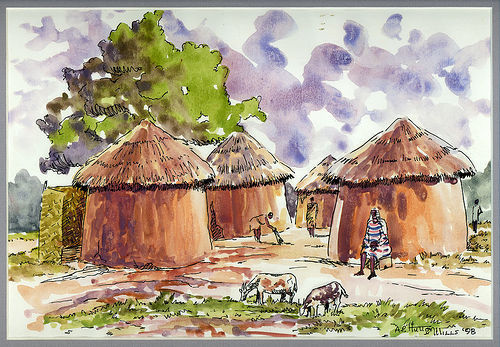
In Things Fall Apart, Chinua Achebe brings Igbo culture into the centre of the story in a way that feels lived-in, detailed, and familiar. The novel is not just about the main character, Okonkwo. It is also about a community and the systems that guide how people live, relate, and make decisions.
Through everyday events in Umuofia, Achebe presents a society built on shared values and structured traditions. Leadership is not placed in the hands of a single ruler. Instead, important decisions are discussed in gatherings where elders and respected members of the community speak on behalf of their people. This collective approach gives structure to political life and helps to maintain balance within the village.
Justice in the novel is also handled within the community. When disputes arise, they are brought before assemblies that include symbolic ancestral figures. These sessions are not rushed. They follow established customs that aim to restore order rather than create division. Chinua Achebe presents this system in a way that shows how deeply rooted it is in Igbo social life.
Religion is another key part of Igbo culture in the novel. The people believe in a supreme creator along with smaller deities and spiritual forces connected to land, ancestors, and morality. Rituals, festivals, and offerings are part of daily life, not separate from it. These beliefs guide how people understand success, misfortune, and responsibility.
Social values also stand out strongly. Respect, discipline, and reputation carry weight in the community. Okonkwo’s personal struggles, especially his fear of weakness and desire for status, are shaped by these expectations. At the same time, the novel shows how rigid interpretations of these values can create personal conflict.
Family life and gender roles are also carefully presented. The household is structured, with clear expectations for men, women, and children. Farming, especially yam cultivation, is more than a source of food. It is a measure of hard work and social standing.
All of these elements come together to show Igbo culture as a complete way of life. It is organized, expressive, and guided by shared understanding. This is why discussions around the way Chinua Achebe portrayed the Igbo culture often begin with Things Fall Apart, since the novel offers one of the clearest literary windows into precolonial Igbo society and its values.
Igbo Culture in Other Works
Chinua Achebe did not limit his portrayal of Igbo culture to Things Fall Apart. Across his other novels, he continued to explore Igbo life, but from different angles, especially as the society began to change under colonial influence and modern pressures.
In Arrow of God, Achebe turns his attention more deeply to traditional religious leadership. The story follows Ezeulu, a high priest who serves the god Ulu in the fictional community of Umuaro. Through this character, Achebe shows how religion and governance are closely connected in Igbo society. The priest is not just a spiritual figure. He is also part of the community’s political and social structure.
The novel presents Igbo religious life as carefully organized, with rituals, responsibilities, and authority systems that guide how people relate to the spiritual world. At the same time, he introduces tension between traditional authority and colonial administration, showing how external influence begins to affect long-standing cultural systems.
In No Longer at Ease, Chinua Achebe shifts the setting to a more urban and modern Nigeria. The focus here is on Obi Okonkwo, a young man who returns from studying abroad in Britain. While the story is set in a different environment, Igbo cultural expectations are still present in strong ways.
Obi is expected to uphold family responsibilities, respect traditional values, and meet community expectations. However, he also faces pressures from a changing society, including corruption, bureaucracy, and the influence of Western education. This creates a struggle between personal ambition and cultural obligation.
Through this novel, Achebe shows that Igbo culture does not disappear with modernization. Instead, it continues to influence identity, decisions, and relationships, even in changing environments.
Taken together, these works extend the discussion of Chinua Achebe Igbo culture beyond village life in Things Fall Apart. They show tradition interacting with religion, colonial systems, education, and modern urban life. He uses each story to explore how culture adapts, struggles, and survives under different conditions.
Literary Techniques Used by Achebe

Chinua Achebe’s ability to present Igbo culture in a clear and meaningful way is closely tied to the literary techniques he uses in his writing. He does not rely on complex language or distant narration. Instead, he builds his stories using methods that feel natural to oral storytelling and everyday speech which helps readers connect with the world he is describing.
One of the most important techniques he uses is the integration of proverbs. In Igbo tradition, proverbs carry wisdom, history, and moral guidance. Achebe weaves them into dialogue and narration in a way that feels natural to the characters. These proverbs are not decorative. They help to explain decisions, settle arguments, and express cultural values.
Another key feature is his use of oral storytelling style. Chinua Achebe structures many parts of his narratives in a way that echoes how stories are told in Igbo communities. There is a rhythm to the storytelling, with repetition, dialogue, and community voice playing important roles. This gives his writing a familiar tone for readers who understand oral traditions and an accessible entry point for those who do not.
Achebe also incorporates Igbo words and expressions directly into his English prose. Names, greetings, titles, and cultural terms appear without excessive translation. This technique allows readers to experience the language of the culture as part of the story rather than as an explanation from outside it.
Symbolism is another important element in his writing. Everyday objects and events carry deeper cultural meaning. For example, yams represent hard work and personal achievement in Things Fall Apart. Festivals, titles, and rituals also carry symbolic weight that connects personal life to community values.
His narrative style is also notable for its simplicity and clarity. Chinua Achebe avoids overly complex descriptions. Instead, he focuses on direct storytelling that allows events and characters to speak for themselves. This makes his work accessible while still rich in cultural detail.
Finally, Achebe uses multiple perspectives within his storytelling. He does not present only one viewpoint as absolute. Instead, different characters express different opinions which helps readers to understand the complexity within Igbo society itself.
Through these techniques, Achebe is able to present the Igbo culture in a way that feels authentic, grounded, and closely connected to lived experience.
Achebe’s Impact on Literature and Culture
Chinua Achebe’s impact on literature and culture goes far beyond his individual novels. His work changed how African stories are told, how they are studied, and how they are understood across the world.
One of his most important contributions was giving African societies a voice in global literature. Before him, much of what international readers knew about Africa came from outside perspectives. These accounts often lacked cultural depth or presented African life in simplified ways. Achebe’s writing challenged this by presenting the Igbo society from within, with its own systems, values, and worldview.
Through novels like Things Fall Apart, he introduced readers to a world where African communities were not background settings, instead, they are fully developed societies. This helped to shift academic and public conversations about Africa, especially in literary studies. The phrase Chinua Achebe Igbo culture became central in discussions about cultural representation and postcolonial writing because of how clearly his work documented Igbo life.
His influence also opened doors for other African writers. Authors such as Ngũgĩ wa Thiong’o, Chimamanda Ngozi Adichie, and many others have acknowledged Achebe’s role in paving the way for African storytelling to be taken seriously on the global stage. He helped to create space for African voices to be heard in universities, publishing houses, and literary discussions around the world.
Chinua Achebe also contributed to cultural preservation. His novels serve as written records of Igbo traditions, social systems, and belief structures. While they are works of fiction, they are grounded in cultural reality which makes them valuable for understanding precolonial and transitional African life.
In addition, Achebe played an active role in shaping literary thought through essays and lectures. His famous essay An Image of Africa: Racism in Conrad’s Heart of Darkness sparked global debate about how Africa is represented in Western literature. In it, he questioned long-standing assumptions and encouraged readers to think critically about perspective and bias.
Culturally, Achebe’s work strengthened African identity and pride, especially among the younger generations. His stories showed that African societies had complexity, history, and meaning long before colonial contact. This helped to restore confidence in cultural heritage at a time it was often undervalued.
Overall, Achebe’s influence continues to live on in classrooms, literary discussions, and cultural studies. His writing remains a reference point for understanding African literature and for exploring how storytelling can preserve identity and challenge long-held narratives.
Criticism and Scholarly Debate
Chinua Achebe’s works have been widely praised. But they have also attracted serious academic discussion and differing interpretations. These debates are part of what keeps his writing relevant in literary studies today.
One major area of debate focuses on how he presents precolonial Igbo society. Some scholars argue that Things Fall Apart offers a balanced and realistic portrayal of Igbo life, especially in the way it shows political systems, religion, and social order. Others suggest that the novel, while powerful, sometimes presents an idealized view of traditional society, especially in contrast to the disruption caused by colonialism.
Another discussion centres on the impact of colonial influence in his stories. Chinua Achebe clearly shows the tension between Igbo culture and European missionary and administrative systems. While many critics agree that this is a truthful representation of historical change, some argue that the focus on cultural conflict sometimes limits deeper exploration of internal challenges within Igbo society itself.
There is also scholarly debate about Achebe’s narrative choices. His use of English language, for example, has been both praised and questioned. On one hand, it allowed his work to reach a global audience and made African stories accessible worldwide. On the other hand, some critics have asked whether writing in English affects the authenticity of cultural expression. Achebe himself defended this choice, explaining that English could be adapted to carry African thought and expression.
In addition, critics have examined how gender roles are presented in his works. Some readings of Things Fall Apart and Arrow of God suggest that male experiences are more central in the narrative, while female characters often appear in supporting roles. Other scholars respond by pointing out that Achebe was primarily documenting social structures of the time rather than making modern gender arguments.
Despite these debates, there is broad agreement that Chinua Achebe’s work remains essential in postcolonial literature. His storytelling opened important conversations about history, identity, and cultural representation.
In relation to Chinua Achebe Igbo culture, most scholars agree on one key point – even when interpretations differ, his novels provide one of the most detailed literary windows into Igbo society during a period of major historical transition.
Modern Relevance of Achebe’s Works
Chinua Achebe’s writing continues to matter today, not only as literature but as a way of understanding identity, culture, and history in a changing world. Even decades after his major works were published, they remain widely read in schools, universities, and literary discussions across the globe.
One of the strongest reasons for this relevance is how his books preserve cultural memory. Through stories like Things Fall Apart and Arrow of God, readers are introduced to Igbo traditions, social systems, and ways of life that existed before and during colonial contact. This makes his work an important reference point in conversations about Chinua Achebe Igbo culture, especially for the younger ones who may not have direct exposure to traditional practices.
His writing also remains important in education. Many secondary schools and universities still include his novels in literature syllabuses because they help students to understand African history from an African perspective. Instead of relying only on external accounts, learners can engage with a narrative shaped by someone from within the culture.
In today’s global conversations about identity and representation, Chinua Achebe’s work is often revisited. Issues such as cultural pride, historical accuracy, and how societies are portrayed in media continue to be relevant. His response to earlier misrepresentations of Africa encourages readers and writers to think carefully about perspective and voice in storytelling.
Achebe’s novels also speak to ongoing social change. Themes such as cultural conflict, modernization, and the tension between tradition and new systems are still visible in many African societies today. This makes his work not just historical, but also reflective of continuing realities in different forms.
Beyond literature, Achebe’s influence extends into cultural studies and postcolonial thought. His essays and novels are still used in academic discussions about how societies recover identity after colonial rule and how literature can carry cultural knowledge forward.
Ultimately, Chinua Achebe’s relevance today lies in his ability to connect the past and the present. His writing continues to offer readers a grounded understanding of Igbo life and a broader reflection on how culture survives, adapts, and speaks through storytelling.
Conclusion …
Chinua Achebe’s literary works remain a powerful window into Igbo life, especially at a time African societies were often misunderstood or misrepresented in global writing. Through his novels, he did more than tell stories. He carefully presented the values, beliefs, social systems, and everyday experiences that define Igbo culture.
The discussion around Chinua Achebe Igbo culture runs through all his major works, from Things Fall Apart to Arrow of God and No Longer at Ease. Each story adds another layer to how Igbo society is understood, whether through traditional village life, religious leadership, or the pressures of a changing modern world.
What stands out most is his ability to present culture in a way that feels alive and grounded. His use of language, proverbs, and storytelling style allows readers to experience the Igbo society from the inside, not as outsiders looking in. At the same time, he does not ignore change or conflict. Instead, he shows how culture responds when faced with new ideas and systems.
Even today, his work continues to guide conversations about identity, history, and representation. It remains relevant in classrooms, literary studies, and cultural discussions because it offers both knowledge and perspective.
Ultimately, Chinua Achebe’s legacy is not only about literature. It is about preserving a way of life through storytelling and ensuring that Igbo culture, with all its depth and complexity, continues to be understood across generations.
References
- https://en.wikipedia.org/wiki/Chinua_Achebe
- https://www.britannica.com/topic/Igbo
- https://www.researchgate.net/publication/320053989_Clash_of_Cultures_in_Chinua_Achebe’s_Things_Fall_Apart
- Stanford University. “Things Fall Apart” Teaching Resources. https://web.stanford.edu/class/e297c/poverty_prejudice/mediarace/things.htm
- JSTOR. Scholarly Articles on Chinua Achebe and African Literature. https://www.jstor.org/
- Cambridge University Press. Chinua Achebe Studies. https://www.cambridge.org/
You might want to check this out …