






Igbo culture
Igbo Widowhood Rites: The Practice and Symbolism of Head Shaving in Mourning Rituals

“Igbo widowhood rites” highlight the mourning practices observed by widows in Igbo tradition with emphasis on head shaving. Explore the cultural meaning, practice, and symbolism of head shaving in mourning rituals, including historical roots, regional variations, and modern transformations in Igbo society.
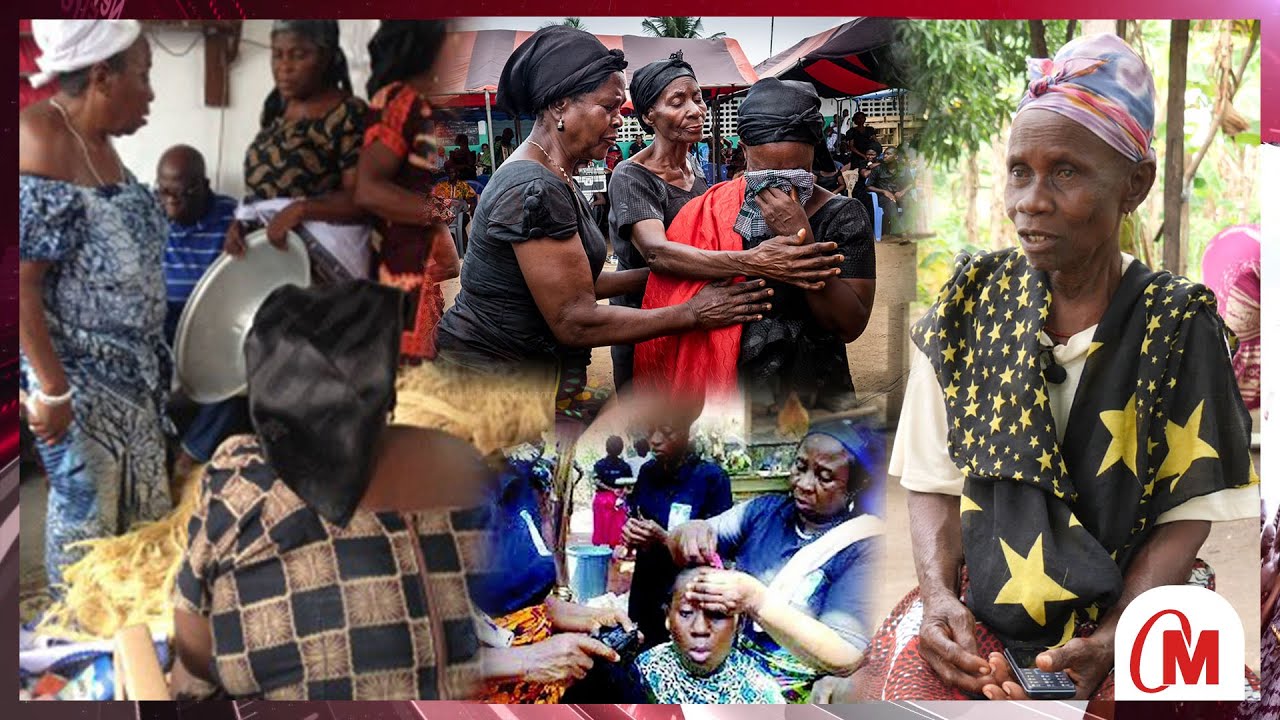
In many Igbo communities, when a husband dies, mourning does not unfold in silence alone. It unfolds within a framework that already has structure, expectations, and familiar steps. The widow is drawn into a period of mourning that is both personal and communal, where grief is expressed, observed, and guided by tradition rather than left entirely to individual choice.
Within this cultural setting, Igbo widowhood rites occupy a central place in how loss is understood and managed. These rites are not random practices. They are part of a long-established system that shapes how widows are expected to behave, appear, and transition after the death of their husbands. Among the most visible of these customs is the shaving of the widow’s hair. It is usually carried out early in the mourning period, often with the involvement of female relatives or other widows who understand the process.
To someone outside the tradition, the act can appear sudden or difficult to interpret. But within the cultural context, it carries meaning that is widely understood. Hair, in this setting, is not just personal appearance. It is tied to identity, marital status, and social position. Its removal becomes part of how change is acknowledged within the community.
What makes Igbo widowhood rites particularly complex is that they are not uniform across all Igbo communities. They differ from place to place and continue to evolve under the influence of Christianity, formal education, urban life, and changing legal and social norms.
This article examines these traditions with a focus on the practice and symbolism of head shaving in mourning rituals. It explores what the rite means, how it is performed, why it has persisted, and how it is being reinterpreted in contemporary Igbo society.
Understanding Widowhood in Igbo Society
In Igbo society, widowhood is not viewed only as the loss of a spouse. It is understood as a change in social position that places a woman in a new stage of life, one that carries both emotional weight and communal recognition. When a husband dies, the woman is no longer seen only as a wife. She enters a period that is carefully defined by custom, expectation, and shared cultural understanding.
Within this context, Igbo widowhood rites begin to take effect almost immediately after death. These rites are rooted in the belief that death does not completely end social relationships. Instead, it transforms them. The widow is expected to observe certain mourning practices that signal respect for the deceased, acknowledge the seriousness of the loss, and mark her transition into widowhood.
Traditionally, widowhood is also a public experience. It is not kept private within the household alone. The wider family and community often play a role in guiding, observing, and sometimes, enforcing mourning practices. This reflects the communal nature of Igbo life where individual experiences are closely connected to family lineage and community identity.
At the same time, widowhood is tied to spiritual beliefs about continuity between the living and the dead. In many interpretations of Igbo cosmology, the deceased is not considered completely gone, rather, he has moved into the ancestral realm. This belief influences how mourning is conducted and why certain rituals are performed.
Because of this worldview, Igbo widowhood rites are not seen as optional customs. They are part of a structured cultural response to death, defining how a widow is expected to behave, present herself, and gradually reintegrate into society after the mourning period.
Overview of Igbo Widowhood Rites
Igbo widowhood rites refer to the set of traditional mourning practices that a woman observes when her husband dies in Igbo society. These rites are not a single action but a sequence of cultural expectations that guide how a widow is expected to mourn, behave, and eventually reintegrate into normal community life after burial. Though they vary across communities, they share a common foundation built on respect for the deceased, social order, and communal participation in grief.
In many traditional settings, the rites begin immediately after death is announced. The widow may be required to wear specific mourning clothing, often plain or dark in colour, as a visible sign of grief. She may also be expected to reduce social interactions, remain within a designated space, and limit participation in public activities during the early mourning period. These practices are tied to the belief that mourning should be both personal and publicly acknowledged.
A key feature of Igbo widowhood rites is the structured mourning period which can be divided into stages. The first stage is the immediate mourning period which includes intense expressions of grief and close supervision by family members. The second stage is the burial and funeral process where the community gathers to honour the deceased and support the bereaved family. The third stage involves post-burial restrictions where the widow may continue certain mourning practices for weeks or even months, depending on local customs. The final stage is often a cleansing or reintegration ceremony which marks the end of mourning and allows the widow to resume normal social life.
In some communities, additional practices may be observed. These can include restrictions on cooking certain foods, avoidance of public celebrations, or participation in ritual cleansing ceremonies. The purpose of these practices is not only to express grief but also to maintain what is traditionally seen as social and spiritual balance after death.
At the centre of these customs is the belief that mourning is a communal responsibility. Family members, particularly women in the extended family such as umuada often play an important role in guiding or supervising the widow during this period. This communal involvement reflects the deeply social nature of Igbo life where individual experiences are closely tied to family structure and collective identity.
Overall, Igbo widowhood rites function as a cultural system for managing loss, preserving respect for the dead, and guiding the widow through a clearly defined transition from married life into widowhood and eventual reintegration.
The Practice of Head Shaving in Igbo Widowhood Rites
Within Igbo widowhood rites, the shaving of a widow’s hair is one of the most visible and widely discussed mourning practices. It is usually carried out in the early stage of widowhood, often shortly after the burial of the husband, depending on the customs of the particular community. While the exact procedure differs across Igbo regions, the act itself is consistently tied to mourning and transition.
In many traditional settings, the widow’s hair is cut or completely shaved by female relatives or other widows within the extended family. This is not done privately in isolation. It is often part of a larger mourning environment where other women are present, guiding and supporting the process. In some communities, elders or designated women within the family lineage oversee the ritual to ensure that it follows established custom.
In Igbo widowhood rites, the timing of the practice is also significant. It is usually performed during or immediately after burial rites when mourning is at its most intense stage. In some cases, it may occur during the widow’s confinement period, depending on how long the community expects mourning restrictions to last. The variation in timing reflects the broader diversity within Igbo widowhood rites which are not identical across all communities.
Although the act may appear simple, it carries strong cultural meaning. Hair in many Igbo traditional contexts is associated with identity, personal history, and social status. During mourning, its removal is interpreted as part of the widow’s transition into a new social condition. It marks a visible shift in how she is perceived within the family and the wider community.
Head shaving is part of the broader mourning rituals that help to structure the widow’s experience of loss. It is not an isolated act, rather, it is part of a sequence of Igbo widowhood rites that regulate behaviour, appearance, and social interaction during widowhood. In this sense, the practice functions within a larger cultural system that defines how grief is expressed publicly and collectively.
It is also important to note that the practice is not uniform across Igbo society. Some communities maintain full head shaving, while others observe partial cutting or symbolic trimming. In many urban families today, the practice has been reduced or replaced with alternative mourning expressions influenced by Christianity, education, and changing social attitudes.
Even with these changes, the practice remains one of the most recognizable elements of Igbo widowhood rites, often referenced in discussions about tradition, identity, and cultural transformation in Igbo society.
Symbolism and Meaning of Head Shaving
Within Igbo widowhood rites, the shaving of a widow’s hair carries meanings that go beyond appearance. It is not treated as a casual or cosmetic act. Instead, it sits within a cultural system where symbols are used to communicate change, grief, and social transition in ways that words alone cannot fully express.
One of the most widely understood meanings is that of transition. In traditional Igbo thought, marriage is not only a personal bond, it is also a social identity. When a husband dies, that identity changes. The removal of hair is seen as a visible marker of this shift, signalling that the woman has moved from the status of a married wife into widowhood. It becomes a public sign of a new life stage.
Closely linked to this is the expression of grief and loss. In many communities, mourning is not meant to remain private. It is acknowledged openly so that the community can respond appropriately. The shaved head becomes a shared signal of bereavement, helping others to recognize the widow’s condition and offer support or respect according to cultural expectations.
Another layer of meaning relates to ritual cleansing. In traditional belief systems, death is often seen as an event that affects not only the family but also the spiritual balance of the household. Some interpretations suggest that hair removal is part of the mourning process that helps to mark separation from the deceased and restore order during a period of transition. This idea is closely tied to broader beliefs within Igbo widowhood rites where cleansing rituals often follow burial.
The practice also carries a sense of social visibility. In many settings, the widow’s appearance communicates her status to the wider community without the need for explanation. This visibility influences how she is treated during the mourning period, including expectations around social interaction, participation in gatherings, and movement within the community.
Finally, in some interpretations of Igbo cosmology, the act is linked to spiritual separation. Marriage is seen as a bond that extends beyond physical life, and death alters that bond. The shaving of hair is understood by some as part of the process of releasing that connection and acknowledging the new relationship between the widow, the deceased, and the ancestral world.
Taken together, these meanings show that head shaving in Igbo widowhood rites is not a single-symbol practice. It carries multiple interpretations that reflect how Igbo society understands identity, loss, and transition within a deeply communal and spiritual worldview.
Gender Roles and Social Expectations in Igbo Widowhood Rites
Within Igbo widowhood rites, gender plays a central role in how mourning is experienced, guided, and enforced. These practices are not only about the loss of a husband, it is also about how society expects a woman to behave, appear, and respond during widowhood. The customs surrounding mourning reveal long-standing ideas about responsibility, respect, and social order.
In many traditional settings, widows are expected to observe mourning rules that affect their movement, dress, and interaction with others. These expectations are not created in isolation. They are often informed by the extended family and the wider community where certain standards of conduct are understood and shared. A widow who does not follow these customs may face criticism or be seen as not showing proper respect for the deceased.
Women also play a significant role in the administration of Igbo widowhood rites. Elderly women, female relatives, and groups such as umuada are often involved in guiding or supervising mourning practices. They may instruct the widow on what is expected, ensure that rituals are carried out correctly, and provide support during the mourning period. This involvement shows that widowhood rites are not enforced only by men, rather, they are deeply embedded in female social structures as well.
At the same time, these expectations can create emotional and social pressure. The widow is often placed in a position where her behaviour is closely observed. How she dresses, how she interacts with others, and how she participates in rituals may all be subject to communal attention. This level of visibility can make the mourning period both structured and demanding.
In some cases, Igbo widowhood rites also reflect broader ideas about order and respect within the family system. The rites are seen as a way of honouring the deceased husband while maintaining balance within the household and lineage. Because of this, compliance is often viewed not only as personal grief expression but also as a family obligation.
Over time, these gender expectations in Igbo widowhood rites have become part of ongoing cultural discussions. Modern influences such as education, Christianity, and human rights awareness have led many people to question certain aspects of widowhood practices, like the shaving of hair. Still, in many communities, the social expectations tied to widowhood remain influential, even as they continue to evolve.
Regional Variations in Igbo Widowhood Rites
One important feature of Igbo widowhood rites is that they are not practiced in exactly the same way across all Igbo communities. Although there are shared cultural foundations, the details of mourning rituals differ, depending on local customs, family traditions, and how strongly a community maintains older practices.
In some communities, especially in parts of rural Anambra, Imo, and Enugu States, Igbo widowhood rites are still observed in more traditional forms. These may include structured mourning periods, participation of extended family members, and in some cases, the practice of head shaving as part of early the mourning rituals. The emphasis in these areas is often on following inherited customs closely, particularly in families that maintain strong ties to ancestral traditions.
In other communities, particularly in more urban or highly Christianized areas, Igbo widowhood rites have been significantly reduced or adapted. Instead of strict traditional rituals, widows may observe simpler forms of mourning such as wearing black clothing, attending church services, and receiving condolence visits. In these settings, practices like head shaving may be considered optional, symbolic, or completely absent.
Differences also exist between family lineages within the same community. Some families continue to uphold traditional mourning expectations, while others have shifted toward more modern interpretations of widowhood. This means that even within a single town or village, experiences of widowhood can vary widely.
Education, religion, and exposure to urban life have also influenced these variations. Christian teachings in many Igbo communities have encouraged alternative mourning expressions that focus on prayer, comfort, and spiritual support rather than physical rituals. At the same time, increased awareness of human rights has led some families to question or modify practices that are seen as too strict or uncomfortable.
Despite these differences, the underlying cultural idea behind Igbo widowhood rites remains consistent. Mourning is still seen as a significant transition that requires recognition, respect, and a structured response from both the family and the wider community. What changes is not always the meaning, rather, the way it is expressed across different regions and generations.
Influence of Christianity, Colonialism, and Modern Law
The practice of Igbo widowhood rites has not remained untouched by time. Over the years, major social forces such as Christianity, colonial administration, and modern legal frameworks have significantly influenced how these mourning traditions are understood and practiced.
Christianity has been one of the strongest influences. With the spread of Christian teachings across Igbo land, many families began to reconsider traditional mourning rituals. Church doctrines often emphasize prayer, comfort, and spiritual support, rather than ritual practices tied to ancestral customs.
As a result, some elements of Igbo widowhood rites, including strict confinement periods and physical rituals like head shaving have been reduced or replaced with church-based mourning services and prayers for the deceased. In many Christian households today, mourning is expressed more through worship gatherings and pastoral support than through traditional rites.
Colonial influence also played a role in reshaping cultural practices. British colonial administration introduced new legal and social systems that altered existing community structures. While colonial authorities did not completely eliminate indigenous customs, their governance, education policies, and exposure to Western norms contributed to a gradual questioning of certain traditional practices. Over time, this led to changes in how widowhood was publicly managed, especially in urban centres where colonial influence was strongest.
Modern law and human rights discussions have further impacted Igbo widowhood rites. In contemporary Nigeria, there is growing awareness of individual rights, dignity, and personal choice. Legal frameworks and advocacy efforts have encouraged communities to review practices that may be seen as harmful or non-consensual. This has influenced a gradual shift away from strict enforcement of certain mourning rituals in some areas, especially those involving physical alteration such as head shaving or prolonged restriction.
Despite these influences, the transformation has not been uniform. In rural communities and families that maintain strong cultural ties, elements of traditional widowhood rites are still observed, though often with modifications. In urban settings, however, mourning practices are more likely to reflect a mix of cultural respect, Christian belief, and modern personal preference.
Overall, the influence of Christianity, colonial history, and modern law has not erased Igbo widowhood rites. It has, instead reshaped them. What exists today is a layered system where tradition and modern values continue to interact, sometimes blending and sometimes standing in contrast.
Widowhood Rites in Contemporary Igbo Society
In contemporary Igbo society, Igbo widowhood rites continue to exist. However, they no longer follow a single, fixed pattern. What is practiced today is a mix of tradition, religious influence, personal choice, and community expectation. The result is a system that is still culturally recognizable but significantly more flexible than in earlier generations.
In many rural communities, elements of traditional mourning are still observed, especially during funerals. Families may still expect widows to go through structured mourning periods, wear mourning attire, and observe certain behavioural restrictions for a time. In some cases, parts of older customs such as symbolic cleansing rituals or limited physical rites may still be present, though often with reduced intensity compared to the past.
At the same time, in urban and more educated settings, Igbo widowhood rites have taken on a different form. Many widows now express mourning through church services, condolence visits, and wearing black or simple clothing rather than undergoing traditional rituals. Religious practices, particularly within Christianity have become central to how grief is expressed and supported. The focus is often placed on prayer, emotional support, and family care rather than ritual observance.
Head shaving which was once a more visible part of mourning in some communities is now far less common in contemporary settings. Where it still exists, it is often symbolic or based on family agreement rather than strict cultural enforcement. In many families, it has been completely replaced by alternative forms of mourning expression.
The younger generations also play an important role in influencing these changes. Increased access to education, exposure to global ideas, and awareness of personal rights have influenced how widowhood is understood. Many people now question practices that place heavy social expectations on widows while still valuing the cultural meaning behind mourning traditions.
Despite these shifts, Igbo widowhood rites have not disappeared. Instead, they have adapted. The core idea of honouring the dead and supporting the bereaved remains important, even as the methods of expression continue to evolve. In this wise, contemporary practice reflects a balance between preserving cultural identity and responding to modern social realities.
Criticism and Ethical Debate
Like many long-standing cultural practices, Igbo widowhood rites have become part of an ongoing ethical and social debate. While some people view them as meaningful traditions that preserve cultural identity, others see certain aspects as outdated or difficult to reconcile with modern ideas about dignity and personal freedom.
One of the main areas of concern is the emotional and psychological impact some rites may have on widows. Practices such as strict mourning restrictions, social isolation during mourning periods, and in some communities, the shaving of hair, have been questioned by scholars and human rights advocates. The argument here is not always about the intention behind the rites but about how they affect the lived experience of grieving women.
From a human rights perspective, critics often emphasize the importance of consent and personal autonomy. They argue that mourning should be a personal process that allows space for grief without compulsory rituals that may feel restrictive. In this view, certain elements of Igbo widowhood rites are seen as practices that need re-evaluation in light of contemporary standards of dignity and individual choice.
At the same time, many cultural scholars and community elders offer a different perspective. They argue that these rites should not be judged outside their cultural context. In traditional Igbo society, widowhood practices were designed to manage grief collectively, maintain social order, and express respect for the deceased. From this viewpoint, the rites are not meant to punish widows but to guide a structured transition after loss.
Religious perspectives, especially within Christianity, have also contributed to the debate. Many churches discourage or reinterpret traditional mourning practices, encouraging widows to focus on prayer, worship, and family support, rather than ritual obligations. This has led to a gradual shift in how Igbo widowhood rites are observed in many Christian households.
Feminist and gender-focused analyses add another layer to the discussion. Some scholars highlight how widowhood practices reflect broader gender expectations in traditional society where women are often more visibly regulated during mourning than men. Others, however, point out that women also play important roles in administering and preserving these rites, making the system more complex than simple gender opposition.
Overall, the debate around Igbo widowhood rites is not about total rejection or full acceptance. It is about finding a balance between cultural preservation and evolving ideas about human dignity, personal choice, and social change.
Why Igbo Widowhood Rites is Still Significant Today
Even with changing times and growing debate, Igbo widowhood rites continue to hold cultural significance in many communities. Their importance is not only in the actions themselves but in what they represent within Igbo ways of life, memory, and social organization.
At the core, these rites remain a link to cultural identity. They carry traces of how the earlier generations understood life, death, and family continuity. In societies where oral tradition plays a strong role, practices like widowhood rites help to preserve cultural knowledge that might otherwise be lost. They tell a story about how communities once structured grief and supported bereaved families within shared expectations.
Igbo widowhood rites also matter today because they offer insight into social relationships in traditional Igbo society. They show how family systems were organized, how community involvement shaped personal experiences, and how roles were defined during moments of loss. Even for people who no longer follow the practices strictly, understanding them provides a clearer view of historical social life.
Another reason these rites remain relevant is their connection to worldview. In traditional Igbo thought, death is not only a private event, it is a communal and spiritual transition. Mourning practices, including those observed during widowhood reflect beliefs about the relationship between the living, the dead, and the ancestral world. Studying these rites helps to explain how meaning was assigned to loss beyond physical absence.
In contemporary discussions, Igbo widowhood rites also serve as a reference point for conversations about cultural change. They help communities to reflect on what should be preserved, what should be adapted, and what may no longer fit modern social realities. This ongoing reflection is part of how living cultures evolve without losing their roots entirely.
Ultimately, the continued relevance of these rites lies in their ability to connect past and present. Even as practices change or fade in some areas, the ideas behind them still influence how many people understand mourning, respect for the dead, and the role of community in times of loss.
Conclusion …
Igbo widowhood rites remain one of the most culturally expressive ways through which Igbo society has historically managed grief, transition, and social order after the death of a husband. Among these rites, the practice of head shaving stands out, not because it is uniform across all communities, but because of the strong meaning attached to it in places where it is observed.
Across the different sections of this discussion, one clear pattern emerges. These rites were never only about appearance or ritual performance. They were part of a wider cultural system that defined how loss was understood, how widows were supported within the family structure, and how communities collectively responded to death.
At the same time, Igbo widowhood rites have not remained static. Christianity, colonial history, modern education, and legal awareness have all influenced how they are practiced today. In many communities, older forms have been reduced, reinterpreted, or replaced entirely by simpler mourning expressions. What once was a structured cultural system in many rural areas is now, in several places, a more flexible and individualized experience of grief.
Yet, even with these changes, the cultural memory of these rites has not disappeared. They continue to shape conversations about identity, tradition, gender roles, and respect for the dead. They also serve as a reminder that culture is not fixed. It evolves as societies change. But it still carries traces of its past.
To understand Igbo widowhood rites, therefore, requires more than observation. It requires context, sensitivity, and an appreciation of how deeply culture, belief, and history are intertwined in influencing human responses to loss.
References
- https://www.researchgate.net/publication/322373351_Widowhood_Cleansing_Rituals_in_Mbaukwu_Implications_for_Policy_Makers
- https://hts.org.za/index.php/hts/article/view/6528/19308
- https://nigerianjournalsonline.com/index.php/TUJAMSS/article/view/806
- https://research.library.fordham.edu/dissertations/AAI3411005/
- https://www.nigerianjournalsonline.com/index.php/GOJAR/article/view/4497/0
You may want to check this out …