





Biographies & Personalities
Engr. Ebele Okeke: 12 Milestones of Nigeria’s First Female Head of Civil Service

Ebele Okeke is Nigeria’s first female Head of Civil Service and a pioneering engineer whose career spans national leadership, engineering excellence, and mentorship. Discover 12 key milestones that define her inspiring journey and lasting legacy.
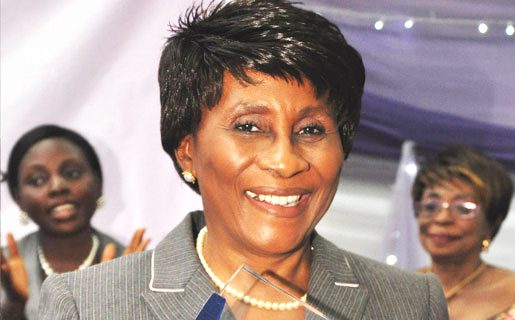
When you think of trailblazers in Nigeria, Engr. Ebele Okeke stands out not just for her achievements but for the path she carved where none existed before. Born in Nnewi in 1948, she grew from a curious, determined young girl into Nigeria’s first female Head of the Civil Service, a position that had been held exclusively by men for decades. Her story is one of persistence, skill, and quiet courage. A journey that spans engineering, public service, and leadership at the very highest levels of government.
From her early days studying civil engineering in England to steering national policies that impacted millions of Nigerians, Ebele Okeke has consistently proven that talent combined with dedication can break barriers. She has inspired countless women to pursue careers in engineering and public administration by showing that leadership is earned through competence and commitment, not circumstance.
In this article, we take you through 12 pivotal milestones in Engr. Ebele Okeke’s life, with highlights on the experiences, achievements, and contributions that made her a symbol of excellence in Nigeria’s civil service and engineering community. Each milestone tells a story of perseverance, innovation, and the kind of leadership that transforms not just institutions but lives.
1. Engr. Ebele Okeke’s Early Life and Education
Ebele Ofunneamaka Okeke was born on 14 June 1948 in Nnewi North, Anambra State, in southeastern Nigeria. Growing up in a community known for industriousness and enterprise, she was immersed from an early age in a culture that valued hard work, learning, and personal achievement. Her parents encouraged curiosity and education, and laid the foundation for her remarkable career.
She attended Archdeacon Crowther Memorial Girls’ School in Port Harcourt, one of Nigeria’s prestigious institutions for girls where she excelled academically. Even as a young student, she showed a strong aptitude for mathematics and the sciences, and those subjects would later become the cornerstone of her future professional life.
After completing her secondary education in 1965 with the West African School Certificate, Ebele Okeke pursued her passion for engineering. She travelled to the United Kingdom to study at the University of Southampton and earn her Bachelor of Science in Civil Engineering in 1971. At a time tvery few Nigerian women entered engineering, her decision to pursue this field was both bold and pioneering.
Her commitment to learning did not stop there. Ebele Okeke furthered her technical knowledge with a Postgraduate Diploma in Groundwater Studies from Loughborough University and another in Hydrology and Hydrogeology from University College London in 1979. Later, she returned to Nigeria to strengthen her leadership and administrative skills by earning an MBA from the University of Nigeria, Nsukka in 2001.
This combination of rigorous technical training and business education prepared her not only for the challenges of engineering but also for leadership roles in Nigeria’s civil service. Her early life and education reveal a woman determined to break boundaries, thus laying the groundwork for a career that would inspire generations of Nigerian women and professionals alike.
2. Beginning of her Engineering Career
After completing her studies in the United Kingdom, Ebele Okeke began her professional journey as a civil engineer. That was more like stepping into a field that had very few women at the time. Her first role was with Sanford Fawcett Wilton and Bell, a consulting engineering firm in London where she worked as a Public Health Engineer. In this position, she focused on designing and managing projects that ensured communities had access to clean water and proper sanitation.
Working in London offered Ebele Okeke exposure to large-scale engineering projects and modern management practices. She quickly gained experience in project planning, execution, and technical problem-solving. Her colleagues noted her meticulous approach and her ability to translate complex technical concepts into practical solutions.
Determined to bring her expertise back to Nigeria, she returned home and joined engineering firms such as Obiukwu Okeke Associates in Enugu and Gifford and Tolefe Consulting Engineers in Ibadan. Here, she expanded her focus to highways, transportation, and urban infrastructure projects, and contributed to national development while establishing herself as one of the few female engineers actively leading critical projects in Nigeria.
Her early engineering career was marked by a commitment to excellence and a drive to make tangible impacts on communities. These experiences honed not only her technical expertise but also her leadership skills, and prepared her for a transition into the public sector where her influence would reach far beyond individual projects to the national stage.
3. Entry into the Nigerian Federal Civil Service

Ebele Okeke’s dedication to serving her country became even more evident when she transitioned from private engineering practice to the Nigerian federal civil service. In 1978, she joined the Federal Ministry of Agriculture and Water Resources.
Her first official role was as a Principal Water Engineer, and she worked on planning and implementing projects that improved access to water and sanitation across Nigeria. The position required not only technical knowledge but also the ability to navigate complex administrative structures and collaborate with multiple stakeholders. Ebele Okeke approached these challenges with the same precision and determination that had defined her engineering work in London and Nigerian consulting firms.
Her entry into the civil service marked the beginning of a journey that would see her influence extend from local communities to national policy. She quickly became known for her problem-solving skills, attention to detail, and dedication to public service. Colleagues often noted her ability to balance technical insight with an understanding of bureaucratic processes. That combination would later distinguish her as a transformative leader in Nigeria’s civil service.
This phase of her career was not just about professional growth, it reflected her belief that engineering and public administration could directly improve lives. By bringing her expertise to the civil service, Ebele Okeke began to leave a mark that went beyond infrastructure. She was laying the foundation for a legacy of leadership, service, and national impact.
4. Rising Through Leadership Ranks
Ebele Okeke’s dedication and competence in the civil service quickly became visible, and she steadily moved up the leadership ladder. Over the years, she took on increasingly significant roles, and earned a reputation for her ability to manage complex projects and guide teams with professionalism and fairness.
She served as Deputy Director of Water Supply during which she oversaw critical programmes that affected millions of Nigerians, particularly in rural communities. Her work involved coordinating infrastructure development, ensuring water quality standards, and improving access to clean water in underserved areas. Her colleagues noted her meticulous planning and ability to deliver results under challenging circumstances.
Her leadership qualities soon led to her appointment as Director of Rural Development. The position allowed her to influence policies and programmes at a national level. In this capacity, she guided initiatives that combined technical engineering expertise with social and community considerations. Ebele Okeke’s work was not just about building systems, it was about creating solutions that addressed the real needs of people.
Her rise through the ranks reflected both her technical excellence and her strong leadership skills. She was respected not only for her professional accomplishments but also for the way she encouraged collaboration, mentored younger staff, and upheld integrity in public service. These experiences laid the groundwork for the historic milestone that would soon define her career, that is, becoming Nigeria’s first female Head of the Civil Service.
5. Permanent Secretary of the Federal Ministry of Water Resources
In March 2007, after decades of dedication and exceptional service, Ebele Okeke was appointed Permanent Secretary of the Federal Ministry of Water Resources. This position placed her among the top echelons of Nigeria’s civil service where she was responsible for overseeing national programmes that affected millions of Nigerians.
As Permanent Secretary, she managed initiatives involving water supply, irrigation, sanitation, and environmental planning. These programmes were vital for public health, agriculture, and overall community development. Her deep technical knowledge as a civil engineer combined with her leadership skills allowed her to implement policies efficiently and with precision.
Her tenure in this role was marked by a commitment to transparency, accountability, and innovation. She prioritized capacity building for staff, and ensured that the ministry not only delivered results but also fostered a culture of professionalism and excellence. Colleagues often praised her ability to maintain focus on both large-scale national projects and the smaller, often overlooked details that make implementation successful.
Ebele Okeke’s leadership in the ministry showcased her ability to balance technical expertise with administrative oversight. It was this combination of skills that positioned her for the historic appointment that would follow. Her work as Permanent Secretary remains a model for effective governance and leadership in public administration.
6. First Female Head of Nigerian Civil Service

In July 2007, Ebele Okeke achieved a historic milestone when she was appointed Head of the Nigerian Civil Service. She became the first woman ever to hold this prestigious position. This appointment was not only a personal achievement but also a groundbreaking moment for women in Nigeria, as it demonstrated that leadership at the highest levels of government was possible, regardless of gender.
As Head of the Civil Service, Ebele Okeke oversaw all federal ministries and departments, and guided policies, administrative procedures, and professional standards for thousands of civil servants across the nation. Her role required balancing complex political expectations with operational efficiency, and she navigated these challenges with grace and competence.
During her tenure, she emphasized meritocracy, professionalism, and accountability ensuring that decisions and promotions reflected performance rather than influence. Her leadership style combined technical precision with empathy, thus making her a respected figure among colleagues and subordinates alike.
Her appointment inspired countless women in Nigeria to pursue careers in public service and leadership. Ebele Okeke’s story revealed that excellence, dedication, and integrity could break long-standing barriers. She showed that leadership is earned through commitment, knowledge, and the ability to serve the greater good. As such, she left a legacy that continues to motivate future generations.
7. Associations and Professional Influence
Beyond her groundbreaking roles in Nigeria’s civil service, Ebele Okeke has made significant contributions to professional organizations, particularly in engineering. She recognized early on the importance of supporting women in fields where they were historically underrepresented, and she took deliberate steps to create opportunities for mentorship, networking, and professional growth.
One of her most notable achievements was founding the Abuja Chapter of the Association of Professional Women Engineers of Nigeria (APWEN). Through this platform, she championed programmes that encouraged young women to pursue careers in engineering and other technical fields. Her efforts helped to bridge the gap between potential talent and real opportunities.
Ebele Okeke is also a respected fellow of several professional bodies, including the Nigeria Society of Engineers and the Institution of Civil Engineers in Great Britain and Ireland. Her involvement in these organizations extended beyond membership. She actively participated in conferences, seminars, and workshops where she shared her expertise and advocated for higher standards in engineering practice and leadership.
Her influence in professional circles was matched by her commitment to mentorship. Colleagues and younger engineers often speak of her guidance, encouragement, and willingness to invest time in nurturing the next generation of leaders. By combining technical excellence with advocacy for women and mentorship, Ebele Okeke ensured that her impact would extend far beyond her personal achievements to affect the future of engineering and leadership in Nigeria.
8. National Honours and Recognition
Throughout her distinguished career, Ebele Okeke received recognition not only from professional bodies but also from the nation itself. Her contributions to engineering, public administration, and national development earned her some of Nigeria’s highest honours as a reflection of the profound impact of her work.
She was awarded the Officer of the Order of the Niger (OON), an honour reserved for Nigerians who have made significant contributions to national growth and development. Later, she received the Commander of the Federal Republic (CFR), one of the highest civilian awards in the country. These accolades affirmed her role as a trailblazer in the civil service and a model for excellence.
Her achievements were also celebrated in the wider professional and public spheres. Media outlets and professional organizations highlighted her leadership, dedication, and ability to inspire others. Through these honours, Nigeria acknowledged not just her technical expertise and administrative skill but also her pioneering role in opening doors for women in sectors traditionally dominated by men.
These awards and recognitions represent a lifetime of commitment to service, integrity, and the development of Nigeria’s human and institutional capacity. For many aspiring professionals, the story of Ebele Okeke serves as a powerful reminder that dedication, competence, and perseverance are recognized and celebrated at the highest levels.
9. Representation at National Conference
Even after her retirement from active civil service, Ebele Okeke continued to play a significant role in national development. In 2014, she was selected as one of the delegates representing retired civil servants at the Nigerian National Conference, a major gathering of leaders, policymakers, and professionals from across the country.
The conference provided a platform to discuss issues affecting Nigeria’s social, economic, and political landscape. Ebele Okeke brought her wealth of experience in civil service management, engineering, and public administration to the table. Her insights helped to influence recommendations on governance, service delivery, and institutional reform.
Her participation highlighted the continued value of her expertise and the respect she commands across professional and political spheres. It also demonstrated her enduring commitment to national progress, even beyond her formal roles. For younger professionals and civil servants, her involvement at the conference was a lesson in lifelong service and the importance of contributing experience to impact the future of the nation.
10. Humanitarian and Ambassadorial Roles
Even after formally retiring from Nigeria’s civil service, Ebele Okeke continued to influence national development through humanitarian and ambassadorial work. She was appointed as a Water, Sanitation, and Hygiene (WASH) Ambassador for Nigeria under the Water Supply and Sanitation Collaborative Council (WSSCC), an initiative aligned with the United Nations’ global goals for health and sustainable development.
In this role, she focused on promoting access to safe water, improving sanitation infrastructure, and raising awareness about hygiene practices. Her engineering background and extensive experience in public administration enabled her to approach these challenges with both technical expertise and practical solutions.
Ebele Okeke’s work as a WASH Ambassador was not limited to policy advocacy. She engaged with communities, professional networks, and government agencies to create programmes that addressed the daily realities of Nigerians, especially in rural areas. Her efforts helped to improve public health outcomes and inspired local leaders to prioritize water and sanitation projects.
Through these humanitarian and ambassadorial roles, she continued to exemplify how leadership can extend beyond formal positions. Ebele Okeke showed that service to the nation and society is a lifelong commitment, and that expertise can be leveraged to make a tangible difference in people’s lives, long after retirement.
11. Personal Philosophy and Values
Throughout her life and career, Ebele Okeke has been guided by a philosophy centered on integrity, dedication, and service to others. She believes that leadership is not about personal recognition but more about empowering others and creating systems that benefit communities and institutions alike.
She has often spoken about the importance of mentorship, particularly for women in engineering and public service. By encouraging young professionals to pursue excellence and seize opportunities, she has helped to nurture a generation of leaders who continue to advance Nigeria’s development. Her guidance emphasizes hard work, perseverance, and the courage to challenge societal norms when necessary.
Ebele Okeke also values collaboration. She believes that meaningful change comes when people work together, and combine knowledge, skills, and perspectives to solve complex problems. Whether in engineering projects, civil service administration, or advocacy for women, she has consistently applied this principle, and has fostered teamwork and mutual respect in every sphere she touches.
Her personal values reflect a commitment to lifelong learning, social responsibility, and ethical leadership. For those who follow her story, Ebele Okeke is not just a figure of professional achievement but a model of how character, vision, and dedication can inspire meaningful change in the society.
12. Legacy and Inspirational Impact
The legacy of Ebele Okeke extends far beyond her official titles and achievements. As Nigeria’s first female Head of Civil Service and a pioneering engineer, she has become a symbol of possibility for women and young professionals across the country. Her story illustrates that dedication, expertise, and perseverance can overcome barriers, even in fields traditionally dominated by men.
Her influence is visible in the number of women now entering engineering, public administration, and leadership positions who cite her as a role model. Through mentorship, advocacy, and professional involvement, she has created pathways for others to follow, ensuring that her impact will continue for generations.
Institutions and communities have recognized her contributions. That includes the commissioning of the federal secretariat in Awka, Anambra State in her honour. Such acknowledgments celebrate not only her career but also the example she sets for service, integrity, and excellence.
For aspiring leaders, Ebele Okeke is proof that true success is measured by the positive change one brings to society and the opportunities one creates for others. Her life is a testament to what can be achieved through vision, commitment, and courage, and as such, has left a lasting imprint on Nigeria’s civil service, engineering profession, and national development.
In Conclusion …
Ebele Okeke’s life story is a celebration of determination, skill, and pioneering leadership. From her early days in Nnewi to becoming Nigeria’s first female Head of Civil Service, she has consistently shown that excellence and integrity can break barriers and inspire change. Her contributions to engineering, public administration, and mentorship continue to influence generations of professionals and women across Nigeria.
Her journey reminds us that leadership is about service, dedication, and the courage to create opportunities for others. Ebele Okeke has left an enduring legacy that not only reflects her personal achievements but also elevates the standards of Nigeria’s civil service and professional communities. She stands as a role model for anyone striving to make a meaningful impact through expertise, perseverance, and ethical leadership.
References
- https://en.wikipedia.org/wiki/Ebele_Ofunneamaka_Okeke
- https://guardian.ng/guardian-woman/celebrating-first-ladies-of-the-professions/
- https://www.myengineers.com.ng/2023/05/26/engr-ebele-okeke-the-honouring-of-first-female-head-of-services-of-federation/
- https://fbsre.ng/our-team/ebele-okeke/
- https://www.truevaluemetrics.org/DBpdfs/Initiatives/WSSCC/Connecting-the-Dots_Report-NCs-2017.pdf
- https://www.westafricanpilotnews.com/2023/05/24/ebere-ofunneamaka-okeke-federal-secretariat-commissioned-in-awka-anambra-state/
- https://nnewicity.com/12-outstanding-daughters-of-nnewi/