




Anambra News
Ufuma Town: History, Culture, Festivals, and Development

This article looks at the history of Ufuma, its culture, festivals, people, economy, and modern development.
Historical Background of Ufuma
The story of Ufuma dates back to the 13th century. Oral history and community records say that the town was founded by Uvume, a descendant of Egbe (also called Diji), who was a great hunter and farmer. Uvume migrated with his brother Nkwere in search of fertile land. After a disagreement, Nkwere moved further away to what is today part of Enugu State, while Uvume remained and established Ufuma.
The name Ufuma (Ana Uvume) is believed to come from this ancestor, Uvume. His descendants grew into families, villages, and later into the community that is today called Ufuma.
Structure of the Town
Ufuma is divided into three main communities, and each community is further divided into villages:
- Umuebonato – made up of three villages.
- Okpuno – also made up of three villages.
- Umuehi – with three villages as well.
Altogether, there are nine villages that form the town. This structure is common in Igbo societies, where families grow into villages and later into towns, all connected by ancestry and tradition.
Geographical Location of Ufuma
Ufuma is located in Orumba North Local Government Area of Anambra State, in southeastern Nigeria. The town lies within the tropical rainforest zone, a region known for its fertile land and thick vegetation. Its coordinates are about 6°05′ North latitude and 7°11′ East longitude, placing it in the heart of Igboland.
The town shares boundaries with several neighboring communities:
- Ajalli and Awgbu to the north,
- Nanka and Oko to the west,
- Awa and Ndiowu to the south,
- Omogho and Enugwu-Umuonyia to the east.
The town experiences a tropical climate with two main seasons:
- The rainy season (April–October), which supports intensive farming.
- The dry season (November–March), which includes the Harmattan period in December and January.
The landscape is covered with farmlands, palm trees, and raffia palms, while several streams and small rivers run through the area, serving both agricultural and domestic needs.
This strategic location and fertile environment have made it one of the most agriculturally productive towns in Anambra State, and also a link between many neighboring communities.
Cultural Heritage of Ufuma
Culture is one of the strongest aspects of Ufuma. The people value their traditions and have preserved them for centuries.
Festivals
One of the most important festivals in Ufuma is the Egwu Otute Uvume Festival. This is a 32days festival that celebrates the harvest of yam, which is regarded as the king of crops among the Igbo people. In Ufuma, the festival comes with:
- Masquerade displays.
- Traditional dances.
- Wrestling competitions.
- Sharing of food and drinks.
The festival is not just about eating new yam, it is also a period of thanksgiving, unity, and prayers for a better farming season.
Another important celebration is the Ofala Festival, which is linked to the town’s traditional ruler. This event gathers indigenes and visitors to honor the leadership, culture, and history of the people.
Masquerades
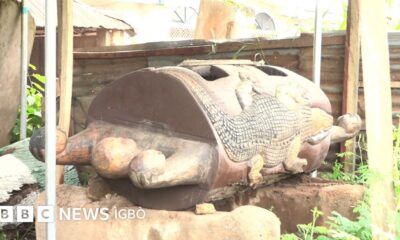
Masquerades in Ufuma are seen as representatives of the ancestors. They come out during festivals, burials of elders, and other important occasions. Masquerades entertain, educate, and also serve as spiritual symbols that connect the living with the ancestors.

Ufuma masquerades
Age Grade System
Like many Igbo towns, Ufuma has a strong age grade system. Young men who grow up together in the community form an age group that takes responsibility for certain community projects such as road clearing, building of halls, and maintaining order during festivals. This system encourages unity, discipline, and community development.
Religion in Ufuma
Religion plays a big role in the life of the people. Today, Christianity is the dominant religion, especially the Anglican and Catholic Churches. The Holy Trinity Anglican Church in Ufuma is one of the oldest churches in the community, and it celebrated its 100-year anniversary around 2010.

Holy Trinity Church, Ufuma
Despite the influence of Christianity, some traditional religious practices still remain, especially during cultural festivals. This shows the balance between the modern faith and the traditional heritage of the town.
Economy and Livelihood
The economy of the town is mainly based on agriculture. The people are hardworking farmers, and their main crops include:
- Yam
- Cassava
- Cocoyam
- Rice
- Palm produce (oil and wine)
Palm wine tapping and processing of palm oil are major activities in the community. Apart from farming, there are small- and medium-scale businesses in the town. At Afor Ufuma market, people buy and sell foodstuff, clothing, livestock, and household items.
Some residents also engage in:
- Block making
- Tailoring
- Timber processing
- Metal works
These activities provide jobs and income for families.
Education and Infrastructure
Education is very important to the people of Ufuma. The town has several primary and secondary schools, and it also hosts a campus of Federal Polytechnic, Oko. One of the most important educational facilities is the Community Secondary School Ufuma, which was recently upgraded with modern buildings, a library, science laboratories, and ICT centers through community and corporate support.

Federal Polytechnic Oko, Ufuma Campus
The town also enjoys basic infrastructure such as:
- Road networks linking it to nearby towns.
- Boreholes and local water supply.
- Health centers and local clinics.
- Electricity, though supply can be irregular.
- Postal services and telecommunication networks.
Security in the community is supported by a police post and local vigilante groups who help protect lives and property.
Governance and Community Development
Traditionally, Ufuma is ruled by a traditional ruler (Igwe), supported by a council of elders and chiefs. Historically, the title of “Diji” (from their ancestor Egbe/Diji, the farmer) has cultural meaning and is tied to their identity as descendants of a great farmer.
In modern times, the Ufuma Development Union (UDU) serves as the central community organization that manages development projects, community meetings, and welfare of the people. This union replaced the older General Assembly but continues the same vision of progress.
Through the UDU, the town has achieved road construction, school buildings, and youth empowerment programs.
Food and Hospitality
The people of Ufuma are known for their warm hospitality. Visitors are often welcomed with local delicacies such as:
- Yam with palm oil or vegetable sauce.
- Cassava meals like fufu and abacha (African salad).
- Fresh palm wine tapped from the raffia palm.
- Fish and meat prepared with traditional spices.
Hospitality is considered a virtue, and it is common for a visitor to be entertained before any serious discussion begins.
Notable Personalities from Ufuma
Over the years, Ufuma has produced many men and women who have excelled in different fields such as education, business, law, medicine, and sports. Some of the notable figures linked to the town include:
- Barr. Johnny C. Okonkwo (SAN) – a respected lawyer.
- Ngozika Ekwelum – a famous Nigerian boxer.
- Dr. Ernest Onyekwena – an expert in agricultural engineering.
- Dr. Obinna Onyekwena – a global health professional.
- Raymond Obieri – a banker and financial expert.
These individuals are sources of pride to the community and serve as role models to the younger generation.
Modern Challenges in Ufuma
Like many rural and semi-urban communities in Nigeria, Ufuma faces some challenges that affect daily life and development.
- Infrastructure Gaps – Even though the town has road networks and electricity, some areas still struggle with poor road maintenance, unstable power supply, and limited access to modern water systems.
- Unemployment and Youth Migration – Many young people travel to cities such as Onitsha, Lagos, Abuja, and abroad in search of better opportunities. While this has created a network of successful sons and daughters outside the town, it has also reduced the active youth workforce at home.
- Security Concerns – In recent years, parts of Anambra State have experienced insecurity linked to armed groups and cult activities. Ufuma has also recorded isolated cases, but the combined efforts of the police, vigilante groups, and community leadership have helped to restore calm.
- Limited Health Facilities – Although there are local health centers and private clinics, more investment is needed in modern hospitals and medical staff to serve the growing population.
Despite these challenges, the people of Ufuma remain resilient, working together through community unions, churches, and age-grade groups to improve their town.
Recent Developments
One of the most encouraging aspects of Ufuma’s growth is the role of corporate social responsibility (CSR) and community partnerships. For example, the Community Secondary School Ufuma was transformed into a modern facility with science laboratories, a library, an ICT center, and administrative buildings through CSR projects.
Another area of progress is education and youth empowerment. Many Ufuma indigenes abroad have returned home to sponsor scholarships, donate to schools, and support local businesses. These efforts show a strong bond between the town and its diaspora population.
Tourism and Cultural Potential
Ufuma has rich cultural traditions that could be developed into tourism attractions. Festivals such as the Egwu Otute Uvume Festival, Ofala celebrations, and masquerade displays already draw visitors from within and outside Anambra State.
The town’s environment, with its farmlands, rivers, and natural scenery, also makes it suitable for eco-tourism and cultural tourism. With proper investment in infrastructure, hospitality, and marketing, Ufuma could become a destination for those interested in Igbo culture and rural heritage.
The Future of Ufuma
The future of Ufuma depends on a combination of community effort, government support, and private investment. Key areas for growth include:
- Education: Building more schools, training teachers, and improving learning facilities.
- Agriculture: Expanding modern farming techniques to increase productivity.
- Infrastructure: Upgrading roads, electricity, and water systems to support development.
- Entrepreneurship: Encouraging youths to start small businesses through cooperative societies and funding.
- Tourism and Culture: Promoting festivals and cultural sites to attract visitors and generate revenue.
With its strong history, hardworking population, and committed diaspora, Ufuma has the potential to remain one of the most respected towns in Anambra State.
Conclusion
Ufuma town is more than just a name on the map. It is a living community with deep roots in history, a vibrant culture, and a people known for their hospitality and hard work. From the legendary ancestor Uvume to today’s modern generation, the town has maintained its identity while adapting to change.
The story of Ufuma reflects the wider story of Igboland, a story of resilience, tradition, and progress. As the community looks forward to the future, one thing is certain Ufuma will continue to play an important role in the cultural and economic life of Anambra State and Nigeria at large.
Related topics:Asala Festival, Amichi, Anambra State || Tourism, Culture and Traditions