

African Culture and Traditions
Ogba Ukwu Festival of Owerri-Ezukala

Ogba Ukwu festival of Owerri-Ezukala is a historic cultural celebration rooted in ancestral tradition, communal unity, and the warrior heritage of this part of Anambra State.
Ogba Ukwu festival of Owerri-Ezukala is a deeply rooted cultural celebration that bespeaks the history, strength, and communal identity of one of Anambra State’s oldest settlements. Celebrated in Owerri-Ezukala, Orumba South Local Government Area, the Ogba Ukwu festival is a living reminder of the ancestral values, warrior heritage, and long-standing sense of unity of Owerri-Ezukala.
For generations, the festival has served as a cultural gathering point where history is remembered, the ancestors are honoured, and community bonds are renewed. The festival takes its name from Ogba Ukwu, a historic communal arena in Owerri-Ezukala that once played a central role in public assemblies, strength displays, and important communal decisions. Over time, this space evolved into a powerful cultural symbol, giving rise to the festival as it is known today.
In this era of rapid modernization and cultural change, Ogba Ukwu festival remains a vital expression of the identity of Owerri-Ezukala. It brings together elders, youths, and indigenes from within and outside the town and offer a rare opportunity to experience authentic Igbo traditions through music, dance, masquerades, and shared history. Beyond celebration, the festival also promotes cultural education, social unity, and the preservation of indigenous knowledge.
This article explores the origin, meaning, traditions, and modern relevance of Ogba Ukwu festival and provide a clear and factual insight into why it continues to hold a special place in the cultural life of Owerri-Ezukala and Anambra State at large.
Historical Background of Ogba Ukwu in Owerri-Ezukala
The historical roots of Ogba Ukwu festival are closely tied to the early social organization of Owerri-Ezukala, an ancient town in present-day Orumba South Local Government Area of Anambra State. Like many long-established Igbo communities, Owerri-Ezukala developed around shared spaces that played central roles in governance, security, and social life.
Ogba Ukwu, which literally translates to the great arena or large communal ground refers to a recognized public space in Owerri-Ezukala that existed long before the modern festival emerged. According to oral accounts preserved by community elders, this space served as a central meeting point where important communal matters were addressed. Such arenas were common in traditional Igbo society and functioned as places for public assemblies, announcements, conflict resolution, and communal decision-making.
Owerri-Ezukala is historically known for its early settlement history and strategic location, particularly its proximity to the Owerri-Ezukala cave system which archaeological studies have identified as one of the earliest sites of human habitation in southeastern Nigeria. This long history of settlement explains why communal organization, vigilance, and collective strength were important to the survival of the town.
Within this historical context, Ogba Ukwu became associated with physical discipline, courage, and readiness to defend the community. Young men were traditionally encouraged to demonstrate strength and endurance, not for violence but as proof of maturity, responsibility, and ability to contribute to communal security. Over time, these activities gained symbolic meaning and became part of the town’s collective memory.
Ogba Ukwu festival developed as a cultural way of remembering and honouring this past. Rather than serving a military purpose, the festival transformed the historical arena into a space of celebration, reflection, and cultural education. Through music, performances, and storytelling, the people of Owerri-Ezukala continue to acknowledge the role Ogba Ukwu played in influencing their social structure and values.
It is important to note that much of this history is preserved through oral tradition which is a recognized and valid historical source in African historiography. While written records on Ogba Ukwu itself are limited, the broader patterns of communal arenas and their functions are well documented in Igbo historical studies, thus lending credibility to the accounts maintained by Owerri-Ezukala elders.
Meaning and Cultural Significance of Ogba Ukwu Festival
Ogba Ukwu festival takes its name from Ogba Ukwu, a historic communal ground in Owerri-Ezukala that traditionally served as a central place for public gatherings and collective activities. In the Igbo language, Ogba refers to an open arena or meeting space, while Ukwu means large or great. Together, the term describes a major communal arena which emphasizes openness, inclusiveness, and shared responsibility.
Culturally, Ogba Ukwu festival represents the collective strength and unity of the people of Owerri-Ezukala. In traditional Igbo society, communal spaces like Ogba Ukwu were not owned by individuals but belonged to the entire community. This shared ownership reinforced values such as cooperation, equality, and accountability, principles that remain central to the meaning of the festival today.
One of the most important cultural messages of the Ogba Ukwu festival is the celebration of physical discipline, courage, and moral strength. Historically, strength was valued not for domination but for protection and service to the community. The festival demonstrates this idea by symbolically honouring the qualities expected of responsible community members, especially young people coming of age.
Ogba Ukwu festival also plays a key role in ancestral remembrance. Through libations, masquerade performances, and traditional music, the community acknowledges the presence and influence of the ancestors who founded and protected the town. In Igbo culture, ancestors are seen as custodians of moral order, and honouring them reinforces respect for tradition and ethical living.
Beyond its historical roots, the cultural significance of Ogba Ukwu festival lies in its role as a tool for education and identity preservation. The festival provides a platform for passing down oral history, cultural norms, and communal values to younger generations. Songs, dances, and symbolic performances are used to communicate lessons about unity, respect for elders, and commitment to community development.
In contemporary Owerri-Ezukala, Ogba Ukwu festival has also become a symbol of cultural pride and continuity. While modern influences have reshaped certain aspects of the celebration, its core meaning remains intact. The festival continues to affirm the place of Owerri-Ezukala within Igbo cultural history and serves as a reminder that communal identity is strengthened when people remember and honour their shared past.
Traditional Practices and Rituals
Ogba Ukwu festival of Owerri-Ezukala is not only a celebration of history and community. It is also a showcase of traditional practices and rituals that have been preserved over generations. These practices are rooted in Igbo cultural norms and are guided by community elders and custodians of tradition to ensure that the festival remains authentic and meaningful.
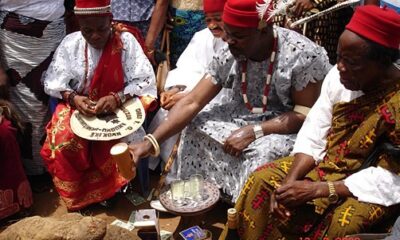
One of the most important rituals carried out during Ogba Ukwu festival is the pouring of libations which is a way of honouring the ancestors and seeking their continued guidance and protection. Elders lead prayers and offer symbolic drinks to the ancestors as an acknowledgement of their role in the survival, growth, and unity of Owerri-Ezukala. This practice represents a broader Igbo belief that the ancestors remain active participants in community life, thus safeguarding moral order and well-being.
Elders, chiefs, and titled men play a central role in Ogba Ukwu festival. They supervise ceremonies, enforce cultural protocols, and narrate historical events to younger participants. Their presence ensures that the festival remains respectful and that traditional norms are followed. By guiding the rituals, they also transmit knowledge of the values, hierarchy, and social expectations of the town.
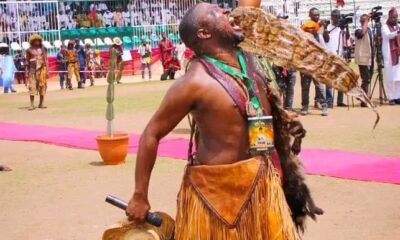
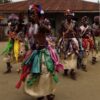
Masquerades are a key feature of the festival. In Owerri-Ezukala, masquerades symbolize the presence of ancestral spirits and community guardians. They perform dances, display unique costumes, and move through the community in a manner that teaches respect, humility, and moral discipline. These performances are not just entertainment, they are living expressions of cultural and spiritual beliefs.
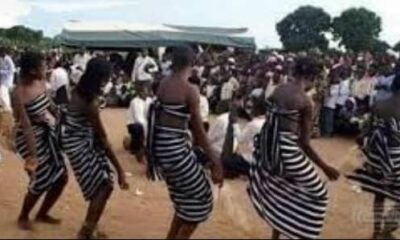
Historically, Ogba Ukwu festival highlighted physical strength as a community value. While modern celebrations are largely symbolic, youths often participate in controlled displays of endurance and wrestling to honour past traditions. These activities reflect the historical role of the Ogba Ukwu arena as a place for testing courage, resilience, and readiness to serve the community.
Music and dance are integral to the rituals. Drumming, flute music, and rhythmic clapping accompany dances and masquerade performances and create a lively atmosphere that reinforces communal participation. Songs often narrate historical events, praise community heroes, or convey moral lessons, and provide an oral educational experience for attendees.
The festival also emphasizes community bonding through shared meals and gatherings. Families and visitors prepare traditional dishes that are enjoyed collectively. Feasting is both a social and ritual practice that reinforces the values of hospitality, sharing, and unity. These communal meals also serve as a way for families separated by distance to reconnect during the festival.
The rituals and traditional practices of the Ogba Ukwu festival are not mere performances. They are expressions of social cohesion, moral education, and respect for ancestry. They ensure that every generation understands the history of Owerri-Ezukala, the responsibilities of citizenship, and the values of courage, discipline, and unity.
By preserving these rituals, Ogba Ukwu festival links the past to the present and offer both a cultural experience for visitors and a living classroom for youths and future custodians of the town’s traditions.
Timing and Festival Calendar
Ogba Ukwu festival of Owerri-Ezukala does not follow a fixed date in the Western calendar. Instead, its timing is traditionally determined by the community elders and guided by the cultural and agricultural calendar of the town as is common in many Igbo communities.
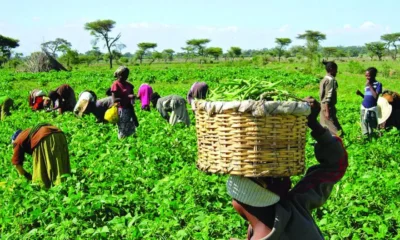
Historically, festivals like Ogba Ukwu were scheduled to align with important seasonal and communal events. In Owerri-Ezukala, the festival often occurs during the dry season or immediately after the harvest period. This timing allows for safe and accessible travel for indigenes returning from other towns or cities; abundant food supplies for communal feasting and participation of all age groups, including youths and elders.
The decision on the exact date is traditionally made by the elders’ council, also known as the Nze and Ozo title holders, in consultation with other community leaders. They ensure that the festival occurs at a time that honours tradition, accommodates the majority of the community, and does not conflict with other major events such as agricultural activities, religious observances, or social ceremonies.
While modern calendars and technology have influenced scheduling, the core practice remains guided by the customs of the town. Elders often consult historical precedence, ancestral guidance, and the seasonal context to select the most appropriate date. This ensures that the festival preserves its cultural significance while remaining inclusive and accessible.
Today, Ogba Ukwu festival may span several days, depending on the number of activities and the participation of villages within Owerri-Ezukala. The flexible timing aligns with the traditional Igbo approach to festivals which prioritizes community readiness, cultural respect, and seasonal practicality over rigid calendar dates.
Ogba Ukwu Festival in Contemporary Owerri-Ezukala
Ogba Ukwu festival remains a vital cultural event in Owerri-Ezukala, even as the town and the wider Anambra region experience modernization and social change. While the festival is still rooted in tradition, contemporary celebrations reflect adaptations that accommodate modern lifestyles, religion, and broader community participation.
In the past, Ogba Ukwu festival focused heavily on rituals, physical displays of strength, and ancestral veneration. Today, these traditional elements are maintained in symbolic forms while new practices have emerged to make the festival more inclusive and accessible. For example: masquerades and traditional dances are still central but performances are often more structured and family-friendly.
Youth participation has expanded, with cultural education sessions, storytelling, and games introduced alongside traditional activities. Community development initiatives such as discussions on local infrastructure, education, or social programmes are, sometimes, incorporated during festival gatherings.
The contemporary Ogba Ukwu festival has become a reunion platform for Owerri-Ezukala indigenes living outside the town. Families travelling from cities and abroad use the festival as an opportunity to reconnect with their roots. This strengthens cultural identity, promotes intergenerational dialogue, and ensures that younger generations understand their heritage.
Owerri-Ezukala is a diverse community with Christians and adherents of traditional beliefs. The festival has adapted to this diversity by emphasizing cultural and historical significance over strictly religious or ritualistic practices. While ancestral rites are still performed, participation is inclusive so that it allows people of different faiths to attend and celebrate the heritage.
Modern celebrations of Ogba Ukwu festival also provide opportunities for local economic activity and cultural education. Traders, artisans, and food vendors benefit from increased commerce during the festival. Schools and community groups often use the occasion to teach children about Owerri-Ezukala history, values, and traditions. Visitors and tourists gain firsthand experience of authentic Igbo culture, thus boosting cultural tourism in the region.
Despite contemporary adaptations, the core values of Ogba Ukwu festival which are unity, respect, courage, and ancestral remembrance remain intact. Elders and traditional councils continue to guide the events to ensure that modern additions do not erode the historical and cultural significance of the festival.
Social and Economic Importance of the Festival
Ogba Ukwu festival of Owerri-Ezukala plays a significant role in strengthening social cohesion and supporting local economic activities. Both historically and in contemporary times, the festival fosters unity, cultural pride, and economic opportunities for the town and its people.
One of the most important social functions of Ogba Ukwu festival is the reinforcement of communal bonds. The festival brings together families, youth groups, elders, and village representatives from across Owerri-Ezukala. These gatherings provide a platform for reconnecting family members who live in other towns or cities; resolving disputes and fostering reconciliation within the community and encouraging intergenerational dialogue, thus allowing elders to pass down cultural knowledge and values
By emphasizing shared identity and collective responsibility, the festival helps to maintain the social fabric of Owerri-Ezukala.
The festival serves as a living classroom, especially for younger generations. Through activities such as masquerade performances, traditional dances, and storytelling, children and youths learn about the history of Owerri-Ezukala; the significance of the Ogba Ukwu arena and communal practices and values like respect for elders, courage, discipline, and cooperation
This way, the festival ensures cultural continuity while also instilling a sense of pride and identity among the youth.
Ogba Ukwu festival also contributes to the local economy. During the festival period, there is increased economic activity where local artisans and traders sell crafts, traditional attire, and festival-related items, food vendors provide traditional meals to residents and visitors, transport services experience higher demand to the benefit of local drivers and families who host visiting relatives may also engage in small-scale hospitality and catering activities
These activities support livelihoods and promote the circulation of resources within the community.
Though primarily a community event, Ogba Ukwu festival attracts visitors interested in Igbo culture and history. This contributes to cultural tourism which increases local visibility and encourages preservation of traditions opportunities for research and documentation, as historians and cultural enthusiasts attend to study the festival and promotion of Owerri-Ezukala as a heritage town within Anambra State
By showcasing authentic Igbo traditions, the festival strengthens both cultural pride and socio-economic relevance.
Beyond tangible benefits, the festival has a profound psychological and social impact. It instills a sense of belonging, pride, and identity among the people of Owerri-Ezukala. This shared pride fosters cooperation, communal responsibility, and the motivation to preserve cultural practices and ensures that the festival remains meaningful for future generations.
Preservation and Cultural Continuity
Ogba Ukwu festival of Owerri-Ezukala is not only a celebration of history, it is also a vital instrument for preserving cultural heritage and ensuring continuity across generations. In a rapidly changing society where modernization and urban migration influence traditional lifestyles, the festival plays a key role in keeping the identity of the town alive.
In Owerri-Ezukala, elders, chiefs, and titled men are the primary custodians of culture. They guide the rituals, enforce traditional protocols, and educate younger participants about the historical significance of Ogba Ukwu. Through storytelling, oral histories, and live demonstrations, elders ensure that the community’s ancestral knowledge and values are passed down accurately.
A central aspect of cultural continuity is educating the younger generation. During the festival, youths participate in dances, masquerade performances, and traditional competitions where they learn firsthand about community unity and cooperation, respect for elders and authority and courage, discipline, and social responsibility
By engaging actively, young people internalize the lessons embedded in the festival which prepare them to uphold and transmit traditions.
Modern preservation efforts have complemented traditional methods. Researchers, historians, and cultural enthusiasts attend Ogba Ukwu festival to document performances, rituals, and oral histories. These records, often in the form of photographs, videos, and written accounts, help to archive the festival for future generations, provide educational material for schools and cultural institutions and support cultural tourism initiatives in Owerri-Ezukala and Anambra State.
While the festival maintains its core rituals and symbolic practices, contemporary adaptations have helped it remain relevant. Masquerade displays are organized with safety and audience engagement in mind. Ceremonial activities are balanced with modern schedules and conveniences even as participation has become inclusive to accommodate diaspora indigenes and people of different faiths
These adaptations ensure that the festival can survive and thrive without losing its historical and cultural essence.
Local cultural groups and community associations often use Ogba Ukwu festival as a platform to promote cultural awareness, social responsibility, and heritage preservation. Initiatives include workshops, youth mentorship programmes, and exhibitions that highlight Owerri-Ezukala history and traditions. Such programmes strengthen the role of the festival as a living cultural institution.
In summary, Ogba Ukwu festival serves as a bridge between the past and the future in order to ensure that the history, values, and traditions of Owerri-Ezukala endure. Through the combined efforts of elders, youth, and cultural advocates, the festival continues to preserve identity, educate generations, and sustain cultural pride within the community.
In Conclusion …
Ogba Ukwu festival of Owerri-Ezukala is a living testament to the history, cultural identity, and communal values of the town. Rooted in the historical significance of the Ogba Ukwu arena, the festival has evolved over generations while retaining its core purpose: to honour the ancestors, strengthen unity, and pass down essential cultural lessons to younger generations.
Through its rich rituals, masquerade performances, communal gatherings, and symbolic displays of strength, the festival preserves the moral and social values that have defined Owerri-Ezukala for centuries. It also provides opportunities for economic activity, cultural tourism, and education, and makes it relevant in both traditional and contemporary contexts.
In a rapidly changing world, Ogba Ukwu festival bridges the past and the present and reminds the people of Owerri-Ezukala and visitors alike of the enduring power of culture, heritage, and community.
By participating, supporting, and documenting the festival, generations ensure that the legacy of Ogba Ukwu lives on while celebrating the strength, unity, and pride of the town for years to come.
References