





Igbo History
Traditional Igbo Agrarian Society: A Powerful Insight into Farming, Wealth, and Culture in Pre-Colonial Igboland

Traditional Igbo agrarian society was built on farming, land ownership, and seasonal harvests. Discover how agriculture influenced the economy, culture, religion, and daily life in pre-colonial Igboland.

Agriculture stood at the centre of life in pre-colonial Igboland. For the Igbo, farming was not a secondary occupation or a seasonal activity. It was the main source of food, wealth, and security. Families depended on the land for survival, communities organized much of their social life around the farming calendar, and a person’s success was often closely linked to the size of their harvest.
This is what made the traditional Igbo agrarian society so distinctive. The economy rested largely on agriculture, with yam cultivation occupying a place of special importance. Land ownership carried both economic and social value while harvest festivals marked key moments in the communal year. Farming also influenced trade, family structure, religious observances, and systems of inheritance.
To study the traditional Igbo agrarian society leads to the understanding of the foundation upon which traditional Igbo civilization was built. It offers a clear picture of how agriculture sustained communities, created wealth, and helped to define the cultural identity of the Igbo people long before colonial rule.
Understanding Traditional Igbo Agrarian Society
The traditional Igbo agrarian society was basically a farming society. Before colonial rule, agriculture provided the main source of livelihood for most Igbo communities across southeastern Nigeria. The land supplied food, generated income, and supported the social and economic life of the people. Farming was not limited to a few individuals. It was the work of nearly every household.
An agrarian society is one in which agriculture forms the foundation of the economy and daily life. This definition fits the traditional Igbo society perfectly. Crops such as yam, cocoyam, cassava, maize, and vegetables were cultivated extensively while palm produce served as an important source of both local use and trade. Families depended on these agricultural activities for survival and prosperity.
The Igbo of the pre-colonial era were primarily agricultural people. Agriculture was the backbone of the pre-colonial Igbo economy.
In the traditional Igbo agrarian society, farming influenced far more than the economy. It determined social status, guided the annual calendar, and played a central role in religious festivals and family traditions.
A successful farmer earned respect, accumulated wealth, and often enjoyed greater influence within the community. Agriculture was, quite simply, the foundation upon which the traditional Igbo society rested.
The Land and the Igbo People
In traditional Igbo society, land was one of the most valuable possessions a family could own. It provided food, sustained livelihoods, and served as the economic foundation of the household. Without land, farming was impossible, and without farming, survival was uncertain. This made land central to the traditional Igbo agrarian society.
But land meant far more than economic value. It carried deep ancestral significance. Families traced their roots through the land they occupied, cultivated, and passed down from one generation to the next. To own land was to belong. It connected individuals to their lineage, their community, and the generations that had lived before them.
In most Igbo communities, land was held communally by kindreds, lineages, or extended families rather than by isolated individuals. The family head, usually the oldest male, allocated portions to members for farming and residential purposes. This arrangement helped to ensure that every household had access to land for cultivation.
Land inheritance was typically patrilineal, with sons receiving rights to family land. This system preserved the economic stability of the lineage and ensured continuity in agricultural production. While customs varied across different Igbo communities, the principle remained largely consistent.
Because land was so important, disputes over boundaries, inheritance, and ownership were common. Such matters were treated seriously and often resolved by elders, lineage heads, or village assemblies. Peaceful settlement was essential, since land affected the welfare of the entire community.
The close relationship between the Igbo people and their land also had spiritual dimensions. The earth was sacred, personified in the revered deity Ala, who was believed to oversee morality, fertility, and agricultural abundance. Respect for the land was, therefore, both practical and religious.
In every sense, the land was the lifeblood of the traditional Igbo agrarian society. It fed families, anchored identity, preserved ancestry, and sustained the economic life of the community. To understand traditional Igbo civilization, one must first understand its profound connection to the land.
Farming as the Main Occupation
In the traditional Igbo agrarian society, farming was the primary occupation of the people. It was the work that sustained households, provided economic security, and supported the wider community. Across Igboland, most families depended directly on agriculture for their daily needs and long-term prosperity.
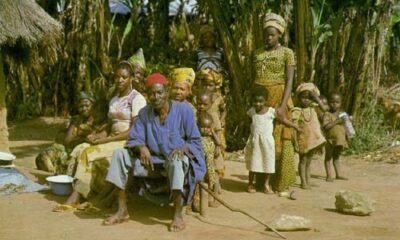
Farming was not reserved for a small group of specialists. Nearly every household cultivated crops. Men, women, and children all played important roles, each contributing according to age, strength, and responsibility. Agriculture was truly a family enterprise.
Men usually handled the heavier tasks. They cleared forests, prepared farmland, built yam mounds, planted yam seedlings, and constructed barns for storage. Yam cultivation, in particular, required considerable effort and was often regarded as a measure of a man’s industry and ambition.
Women were equally vital to the agricultural economy. They cultivated crops such as cassava, cocoyam, beans, vegetables, and maize. They also processed harvested produce, stored food, and transported goods to local markets. In many communities, women maintained their own farms and controlled the income generated from them.
Children began learning agricultural skills at an early age. They assisted with weeding, bird scaring, harvesting, and carrying produce. Farming knowledge was passed down through daily practice that ensured continuity from one generation to the next.
The farming calendar governed much of everyday life. During planting and harvesting seasons, the farm became the centre of activity. Families often left home early in the morning and spent long hours working the land before returning at sunset.
Agriculture also encouraged cooperation. Relatives, neighbours, and age-grade members frequently worked together during demanding tasks such as land clearing, planting, and harvesting. This communal labour increased productivity and strengthened social bonds.
For the Igbo, farming was far more than a means of earning a living. It was a way of life. It influenced family relationships, community organization, and personal reputation. A diligent farmer commanded respect while a successful harvest brought both pride and security.
This central role of agriculture is one of the clearest features of the traditional Igbo agrarian society. The land provided, and the people worked tirelessly to ensure it continued to do so.
Yam: The King of Crops

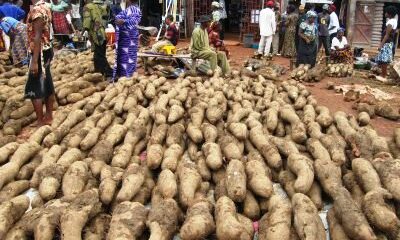
Among the Igbo, no crop commanded greater respect than yam. In the traditional Igbo agrarian society, yam was far more than a staple food. It was a symbol of wealth, industry, achievement, and social standing. A man’s reputation was often closely tied to the size of his yam farm and the fullness of his barn.
Yam cultivation demanded hard work, patience, and skill. Preparing the land alone required enormous effort. Forests had to be cleared, mounds carefully raised, seed yams planted, and stakes provided for the climbing vines. Throughout the growing season, constant attention was necessary to protect the crop from weeds, pests, and disease.
Because yam farming was labour-intensive, success in its cultivation earned admiration. A prosperous yam farmer was seen as disciplined, industrious, and responsible. In many communities, large yam barns stood as visible proof of a man’s diligence and economic strength.
In the traditional Igbo agrarian society, the importance of yam extended beyond the farm. It played a central role in social life, marriage arrangements, and community prestige. Wealthy farmers could support larger households, sponsor ceremonies, and pursue prestigious titles within the community.
Yam also occupied a special place in Igbo culture through the annual New Yam Festival, known widely as Iri Ji. This important celebration marked the end of the farming season and the beginning of a new agricultural year. Before the festival, eating newly harvested yam was traditionally forbidden. The first yams were offered in thanksgiving to God, the ancestors, and the deities for a successful harvest.
The festival brought communities together in joyful celebration. There were feasts, dances, prayers, masquerade performances, and visits among family and friends. It was both a spiritual observance and a public expression of gratitude.
Even today, yam remains one of the most respected crops in Igbo culture. Its continued importance speaks to the enduring legacy of the traditional Igbo agrarian society where agriculture was deeply intertwined with identity, prosperity, and communal life.
Other Important Crops
Although yam held a special place in the traditional Igbo agrarian society, it was not the only crop that sustained households. Igbo farming was diverse, and families cultivated a wide range of crops to ensure food security throughout the year. This variety reduced dependence on a single harvest and helped communities withstand seasonal challenges.
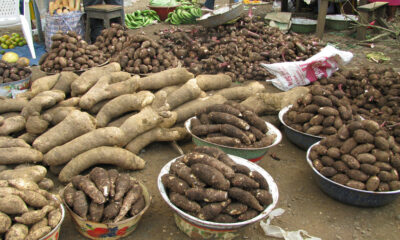
Cassava was one of the most important supplementary crops in the traditional Igbo agrarian society. It was hardy, adaptable, and could survive in less fertile soil. It also provided a reliable source of food during difficult periods. Cassava was processed into garri, fufu, tapioca, and other staple foods that became central to daily meals.
Cocoyam was another widely cultivated crop, especially valued for its versatility in cooking. It served as both a primary food and a complement to other dishes. Like cassava, it helped families maintain steady food supply beyond the yam harvest.
Maize and beans were also common in Igbo farms. Maize was eaten roasted, boiled, or processed into flour, while beans provided protein and were often combined with other staples to enrich meals. These crops contributed significantly to household nutrition.
Vegetables played a vital role in Igbo agriculture as well. Okra, ugu (pumpkin leaves), garden eggs, and other local greens were grown in home gardens or small plots near the house. They were essential for preparing soups which formed an important part of the diet.
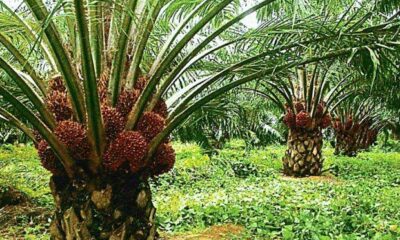
The oil palm tree was particularly valuable in the traditional Igbo agrarian society. It provided palm oil, palm kernel, wine, and materials for cooking and trade. Palm produce was not only used within households, it also became a major item of exchange in local markets.
Plantain and melon were also cultivated in many areas. Plantain provided a reliable food source, while melon seeds were used in preparing soups that were culturally significant in Igbo cuisine.
Women played a central role in managing many of these crops. They cultivated, processed, and traded agricultural produce, especially in local markets. Their contribution ensured that farming was not only a male-dominated activity but a balanced system of shared responsibility.
The diversity of crops in Igboland reflects the practical intelligence of traditional farming systems. By cultivating multiple food sources, households maintained stability, reduced risk, and supported a growing population. This agricultural balance is a defining feature of the traditional Igbo agrarian society.
Agricultural Tools and Techniques
In the traditional Igbo agrarian society, farming was sustained not by machines but by simple tools, deep experience, and carefully developed methods passed down through generations. Despite the absence of modern technology, Igbo farmers cultivated the land efficiently and maintained productive farms across diverse environments.
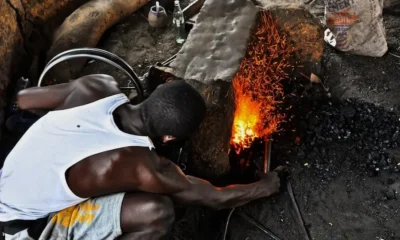
The most common tools in the traditional Igbo agrarian society were the hoe, machete, digging stick, and small knives. The hoe was essential for making yam mounds, weeding, and turning the soil. The machete was used for clearing bushes, cutting small trees, and opening up farmland. These tools were simple in design but required strength, skill, and endurance to use effectively.
Farming techniques were shaped by local knowledge of the soil, climate, and vegetation. One of the most widely practiced methods was mixed cropping. Farmers planted different crops such as yam, maize, cassava, and vegetables on the same piece of land. This approach reduced the risk of total crop failure and ensured that the soil was used efficiently.
Another important method was bush fallowing. After several years of continuous cultivation, farmland was left to rest for a period. During this time, natural vegetation regenerated, helping to restore soil fertility. When the land was eventually reused, it was often more productive.
Yam cultivation, in particular, required specialized techniques. Farmers created carefully shaped mounds to support yam growth and improve drainage. Wooden stakes were placed for vines to climb, and constant weeding was necessary to protect the crop. This level of attention made yam farming one of the most demanding agricultural activities.
Composting and the use of organic matter were also part of traditional farming practice. Decomposed plant material and household waste were sometimes returned to the soil to improve fertility. Although not described in modern scientific terms, these practices contributed to soil sustainability.
Agricultural knowledge was not written down. It was learned through observation, participation, and oral instruction. Young people gained skills by working alongside parents and elders, gradually mastering the rhythms of planting, tending, and harvesting.
Despite the simplicity of their tools, Igbo farmers achieved impressive results. Their methods supported large populations and maintained agricultural productivity over long periods. This practical understanding of the environment is one of the key strengths of the traditional Igbo agrarian society.
Seasonal Farming Calendar
The traditional Igbo agrarian society followed a clear seasonal rhythm that guided nearly every aspect of agricultural life. Farming was not random or continuous throughout the year. Instead, it was carefully aligned with rainfall patterns, soil conditions, and natural cycles that determined when each activity should take place.
In the traditional Igbo agrarian society, the agricultural year typically began with the dry season. During this period, farmers focused on clearing farmland, cutting bushes, and preparing new fields. It was a physically demanding time, as large trees and thick vegetation had to be removed before planting could begin.
As the first rains approached, attention shifted to planting. Yam was usually the first major crop to be planted, followed by other crops such as maize and vegetables. The timing of planting was crucial, as early rains provided the moisture needed for germination and growth.
The rainy season marked the busiest period in the farming calendar. Weeding became a constant task, as crops had to be protected from competition with grasses and weeds. Farmers spent long hours in the fields ensuring that their crops developed properly.
During this same period, cassava, cocoyam, and other secondary crops continued to grow. Farmers also monitored pests and environmental conditions closely, responding quickly to any threats that could affect yields.
As the rains began to reduce, attention turned toward harvesting. Early crops like maize and vegetables were harvested first, followed by yam and other major staples. Harvesting was a time of both hard work and anticipation, as families gathered the results of months of effort.
The agricultural cycle ended with the celebration of harvest, most notably the Iri Ji. This festival marked the beginning of a new farming year. It was a period of gratitude, communal feasting, and cultural celebration where communities gave thanks for a successful harvest and prayed for future abundance.
This seasonal structure also influenced social life. Marriage arrangements, community meetings, and festivals were often scheduled around farming periods to ensure that agricultural work was not disrupted.
The seasonal farming calendar was more than a schedule. It was a way of life. It connected people to the land, organized labour, and provided stability in the traditional Igbo agrarian society.
Social Status and Wealth
In the traditional Igbo agrarian society, wealth was closely tied to agricultural productivity. A person’s standing in the community was not measured by abstract status or titles alone, rather by visible evidence of hard work on the land. The size of a yam barn, the productivity of a farm, and the ability to support a large household all carried significant social meaning.
Yam played a central role in this system. A successful yam farmer was widely respected, not only for feeding his family but also for contributing to the wider community. Large barns filled with yam signified discipline, planning, and strength of character. These qualities often translated into influence within village affairs.
In the traditional Igbo agrarian society, wealth in this context was practical and communal. It was expressed through the ability to host guests, assist relatives, contribute to ceremonies, and participate in community obligations. A wealthy farmer was expected to support others, especially during difficult seasons or family events such as marriage and burial ceremonies.
Social mobility was possible through agriculture. A man who started with little could gradually build status through consistent farming success. Over time, such individuals could earn respect, take part in decision-making gatherings, and even receive traditional titles, depending on their community.
Marriage arrangements were also influenced by agricultural success. A man’s ability to maintain a stable farm and provide for a household was an important consideration. Families often looked at his farming capacity as a sign of responsibility and readiness for family life.
In some communities in the traditional Igbo agrarian society, agricultural achievement opened the door to leadership roles. Elders and titled men were often selected from individuals who had demonstrated diligence and reliability, especially in farming and community contribution.
The traditional Igbo agrarian society also placed value on cooperation. Wealth was not meant for isolation but for shared benefit. Successful farmers were expected to assist neighbours, participate in communal labour, and contribute to collective well-being.
This system created a strong link between work, reputation, and responsibility. Agriculture was not only a means of survival but also a pathway to respect and recognition within the community.
Gender Roles in Agriculture

In the traditional Igbo agrarian society, farming was a shared responsibility. However, roles were often organized along practical lines shaped by strength, skill, and social structure. Both men and women contributed significantly to agricultural life, and the survival of the household depended on this balance.
Men were primarily responsible for tasks that required heavy physical effort. These included clearing forests, preparing farmland, digging yam mounds, planting yam seedlings, and building yam barns for storage. Yam farming, in particular, was regarded as a major marker of male responsibility and achievement within the household.
Women, on the other hand, played an equally essential role in food production and agricultural sustainability. They cultivated crops such as cassava, cocoyam, beans, maize, vegetables, and other garden produce. These crops formed the daily diet of most families and ensured food security throughout the year.
Beyond cultivation, women were deeply involved in processing agricultural produce. They turned cassava into garri, fufu, and tapioca, prepared vegetables for cooking, and managed storage of food items. They also took charge of transporting and selling farm produce in local markets where they were key players in trade networks.
Children were introduced early into farming life. Boys often assisted fathers in the fields, while girls helped mothers with planting, harvesting, and processing. Through this gradual involvement, agricultural knowledge was passed down naturally within families.
It is important to note that women were not simply assistants in the farming system in the traditional Igbo agrarian society. In many communities, they maintained their own farms and controlled the income generated from them. This gave them a level of economic independence within the household structure.
Seasonal cooperation also strengthened gender collaboration. During peak farming periods, men and women often worked together, especially when tasks required combined effort. This ensured that planting and harvesting were completed on time.
The traditional Igbo agrarian society was, therefore, not a system of exclusion but one of interdependence. While roles differed, both genders were essential to agricultural success. Farming sustained households because men and women each carried important responsibilities that supported the overall agricultural economy.
Communal Labour and Cooperation
One of the most defining features of the traditional Igbo agrarian society was the strong culture of communal labour. Farming was rarely a solitary activity. Instead, it was built on cooperation, shared responsibility, and mutual assistance among families, age grades, and neighbours.
In the traditional Igbo agrarian society, during demanding farming periods such as land clearing, planting, and harvesting, people often came together to work on one another’s farms in turns. A household would receive help from others, and in return, the members would also contribute their labour when called upon. This system ensured that no family carried the burden of farming alone.
This practice was especially important in the traditional Igbo agrarian society because agriculture required time-sensitive effort. Tasks like clearing bush or harvesting yam had to be completed quickly to avoid crop loss. Communal labour made this possible by pooling human resources at the right moment.
Age grades played a central role in organizing this cooperation. Individuals of similar age groups formed associations that worked together on community projects and agricultural tasks. These groups rotated assistance among members, thereby strengthening both productivity and social bonds.
Extended families and kindred groups also participated in collective farming in the traditional Igbo agrarian society. Relatives supported one another during peak seasons, ensuring that all members of the lineage could meet their agricultural needs. This system reinforced unity within the family structure.
Beyond efficiency, communal labour carried social meaning in the traditional Igbo agrarian society. Working together in the fields created opportunities for conversation, storytelling, and relationship building. It strengthened trust among community members and reduced social isolation.
It also served as a form of informal education. Younger participants learned farming techniques, land management skills, and community values by observing and working alongside elders and experienced farmers.
In addition to farm work, communal cooperation extended to other areas of life such as building houses, clearing roads, and organizing festivals. Agriculture, however, remained the central activity around which most cooperation was organized.
This system of shared labour reflects the collective spirit of the traditional Igbo agrarian society. Farming was not just about individual success. It was a community effort that depended on solidarity, reciprocity, and shared responsibility.
Agriculture and Trade
In the traditional Igbo agrarian society, farming was not only about feeding households. It also created the foundation for trade and economic exchange. Once families produced more food than they needed for survival, the surplus naturally moved into local markets where it became part of a vibrant trading system across Igboland.
Agricultural produce formed the backbone of this exchange. Yams, cassava products, cocoyam, vegetables, palm oil, palm kernels, and livestock were commonly sold or exchanged in market spaces. These markets were not occasional gatherings. They operated on regular cycles and were central to economic life in many communities.
Within the traditional Igbo agrarian society, market days rotated across different villages, allowing traders and farmers to move from one location to another. This system encouraged interaction between communities and ensured a steady flow of goods. It also helped to balance supply and demand across regions.
Women played a particularly important role in agricultural trade. They were the primary market operators who bought produce from farms, processed some of it, and sold it to consumers. Many women also specialized in specific goods such as palm oil, vegetables, or processed cassava products.
This trade system was not limited to local exchange. In some cases, agricultural goods moved across longer distances, linking different parts of Igboland and neighbouring regions. These exchanges helped to integrate communities economically and socially.
Agriculture and trade worked closely together in the traditional Igbo agrarian society. Farming provided the goods, while markets provided the platform for distribution. This relationship ensured that agricultural production had value beyond the household and contributed to broader economic stability.
Markets also served as social spaces in traditional Igbo agrarian society. People met relatives, shared news, arranged marriages, and discussed community matters while trading goods. In this sense, agricultural trade supported both economic and social life.
The strength of this system shows how deeply agriculture was embedded in the traditional Igbo agrarian society. Farming did not exist in isolation. It was directly connected to commerce, communication, and community interaction.
Religion and Agricultural Life
In the traditional Igbo agrarian society, agriculture and religion were closely connected. Farming was not only a physical activity, it was also a spiritual responsibility. Many agricultural practices were guided by beliefs about the land, the ancestors, and spiritual forces believed to influence harvest outcomes.
Farmers often performed rituals before planting and after harvest. These acts were meant to seek protection, fertility of the soil, and good yields. Offerings and prayers were made to God and to ancestral spirits, to reflect the belief that successful farming required both human effort and spiritual approval.
A central figure in this belief system was the earth deity Ala. Ala was regarded as the guardian of the land, morality, and fertility. She was believed to oversee the productivity of the soil and the wellbeing of the community. Respect for the earth was, therefore, both a moral and agricultural obligation.
Certain actions were also considered taboo in traditional Igbo agrarian society because they were thought to offend the earth and disrupt agricultural harmony. Offenses against the land were taken seriously and often required ritual cleansing to restore balance.
Agricultural festivals, especially the harvest celebrations, also carried strong religious meaning. The Iri Ji marked the beginning of eating new yam and included prayers of thanksgiving for a successful farming season.
As such, religion gave deeper meaning to farming life. It helped to structure the agricultural calendar, guided conduct on the land, and reinforced respect for nature within the traditional Igbo agrarian society.
Festivals and Celebrations

In the traditional Igbo agrarian society, festivals were closely tied to the farming calendar. They were not random cultural events. They marked important agricultural milestones such as planting, harvesting, and the end of a farming cycle. Through these celebrations, communities expressed gratitude, renewed social bonds, and prepared for the next season of farming.
The most significant of these celebrations was the harvest festival, widely known as the Iri Ji. This festival marked the end of the agricultural year and the beginning of a new one. Before it was observed, eating new yam was traditionally forbidden. The first yams were offered in thanksgiving before the community could begin consumption.
The New Yam Festival was both a cultural and spiritual event. Families gave thanks for a successful harvest, prayed for future abundance, and honoured God and ancestral spirits. It was a moment of reflection on the farming year and recognition of the effort that sustained the community.
Celebrations during this period were lively and communal. People prepared special meals, visited relatives, and participated in dances and masquerade performances. Wrestling matches and other traditional games often accompanied the festivities, bringing excitement to the occasion.
Festivals also served a social purpose. They brought together members of the community who might have been separated by farming activities during the year. It was a time for reconciliation, communication, and strengthening of relationships.
In the traditional Igbo agrarian society, beyond the New Yam Festival, other smaller agricultural rites and seasonal observances were held throughout the year. These helped to maintain a sense of order within the farming calendar and reinforced the connection between agriculture and daily life.
In the traditional Igbo agrarian society, festivals were not separate from farming. They were part of it. They gave meaning to agricultural labour and created a rhythm that guided both work and celebration across the community.
Challenges Faced by Traditional Farmers
Despite the strength and stability of the traditional Igbo agrarian society, farming life was not without difficulty. Farmers worked within a system that depended heavily on nature, manual labour, and seasonal patterns which meant that several challenges could directly affect food production and household wellbeing.
One major challenge was weather unpredictability. Although farmers relied on seasonal rainfall, the timing and intensity of rains were not always consistent. Delayed rains could affect planting schedules, while excessive rainfall, sometimes, damaged crops or led to flooding in low-lying areas.
Pests and crop diseases also posed serious threats. Insects, rodents, and plant infections could destroy parts of a harvest, if not controlled early. Since there were no modern pesticides or advanced control systems, farmers had to rely on traditional methods such as manual removal and natural deterrents.
Labour intensity was another major difficulty. Farming in the traditional Igbo agrarian society required significant physical effort. Clearing land, making yam mounds, weeding, and harvesting were all demanding tasks carried out with basic tools. This made farming physically exhausting, especially during peak seasons.
Land pressure in some communities also created challenges. As populations grew, available farmland became more limited. This, sometimes, led to shorter fallow periods which affected soil fertility and reduced agricultural output over time.
Storage and preservation of food was another concern in the traditional Igbo agrarian society. While yam barns and traditional storage methods were used, they were not always sufficient to prevent spoilage or loss from pests and weather conditions.
In addition, farmers had to manage the risk of crop failure. Because agriculture was the main source of livelihood, a poor harvest could affect not just food supply but also social obligations, trade, and household stability.
Despite these challenges, farmers developed practical strategies to cope. They diversified crops, shared labour, used fallow systems, and relied on community cooperation to reduce risk and maintain productivity.
These difficulties highlight the resilience of the traditional Igbo agrarian society. Farming required endurance, knowledge, and cooperation, and communities adapted continuously to sustain themselves under changing conditions.
Impact of Colonialism
The arrival of colonial rule introduced significant changes to the traditional Igbo agrarian society. While agriculture remained important, the structure, purpose, and organization of farming began to shift under new economic and political systems introduced by the British administration.
One of the major changes was the increased focus on cash crops. Crops such as palm oil and palm kernels gained commercial importance because they were needed for export. This shifted attention away from food crops in some areas and encouraged farmers to participate in external trade networks that were controlled by colonial markets.
Colonial taxation also influenced agricultural life. The introduction of taxes payable in cash forced many households to engage more actively in market production. Farmers had to sell part of their produce or labour to meet tax obligations which gradually integrated them into a monetary economy.
New infrastructure, including roads and transport systems, made it easier to move agricultural goods over longer distances. While this supported trade, it also connected rural farming communities more directly to colonial economic centres, changing traditional patterns of local exchange.
At the same time, colonial rule introduced wage labour opportunities. Some people began working in administrative centres, mines, or plantations, thereby reducing the number of individuals fully engaged in subsistence farming. This created a gradual shift in how rural labour was distributed.
Despite these changes, agriculture did not disappear from Igbo life. Most communities continued to farm, especially for food production. However, the balance between subsistence farming and commercial agriculture began to change over time.
Traditional farming systems such as communal labour, land inheritance practices, and seasonal rituals remained in place in many areas, although they began to interact with new colonial economic realities.
The impact of colonialism on the traditional Igbo agrarian society was, therefore, complex. It introduced new economic pressures and opportunities but did not completely replace the agricultural foundation of Igbo life. Farming continued to remain central, even as its context evolved.
Agriculture in Contemporary Igbo Society
In modern Igbo society, agriculture has not disappeared. Instead, it has adapted to changing economic realities, urban growth, and new livelihoods. While many people now work in formal employment, business, and services, farming still remains an important part of life, especially in rural communities across southeastern Nigeria.
Today, agriculture is no longer the only source of livelihood as it was in the traditional Igbo agrarian society. However, it continues to provide food, income, and cultural continuity for many households. Families often maintain small or medium-sized farms where they grow staples such as yam, cassava, maize, vegetables, and cocoyam.
One of the most noticeable changes is the shift toward commercial farming. Many farmers now produce crops not only for household consumption but also for sale in local and regional markets. Cash crops such as palm produce, cassava derivatives, and vegetables are traded more widely than they were in the traditional Igbo agrarian society.
Urban migration has also influenced agricultural participation. As more people move to cities for education and employment, farming is, sometimes, left to older family members or hired labourers. Despite this, many urban dwellers still return to their hometowns during planting and harvest seasons to take part in farming activities.
Modern tools and agricultural practices are gradually being introduced in some areas. Improved seedlings, fertilizers, and farming equipment have increased productivity for some farmers, although traditional methods are still widely used in many rural communities.
Cultural practices connected to agriculture remain strong. Festivals such as the Iri Ji are still celebrated across Igboland. These events continue to honour the importance of yam and the agricultural cycle, even in an increasingly modern society.
Land remains an important asset, although its use is now influenced by urban development, population growth, and changing inheritance practices. In many communities, land is still seen as a symbol of identity and family heritage.
Agriculture in contemporary Igbo society, therefore, exists in a mixed form. It combines traditional practices with modern economic demands. While its centrality has reduced compared to how it was in the traditional Igbo agrarian society, it still plays a meaningful role in food security, cultural identity, and rural livelihoods.
The legacy of the traditional Igbo agrarian society continues to influence how people farm, celebrate harvests, and relate to the land today.
Conclusion …
The traditional Igbo agrarian society was built on a simple but powerful foundation – the land. Farming was not just a means of survival. It was the structure that supported economic life, guided social relationships, and influenced cultural and religious practices across Igboland.
From yam cultivation to mixed cropping systems, from communal labour to seasonal calendars, agriculture shaped how people lived, worked, and related with one another. Land ownership defined identity and inheritance while harvests determined wealth and social standing. Even festivals, rituals, and market systems were deeply connected to farming cycles.
Over time, colonial influence and modern development introduced new economic patterns. Yet, agriculture did not disappear. It adapted. Many communities still maintain farms, celebrate harvest festivals, and uphold cultural practices rooted in agricultural life.
Exploring the traditional Igbo agrarian society offers more than historical knowledge. It provides insight into how a people organized their world around the land and built a resilient system that sustained generations.
In many ways, the story of the Igbo people is also the story of farming, of seasons carefully observed, of hard work rewarded by harvest, and of a culture deeply connected to the earth that sustained it.
References
- Ahamefule, I. (2015). The pre-colonial economy of Ndi-Igbo: The agrarian system. ResearchGate. https://www.researchgate.net/publication/384498097
- Chukwuma, N. D. (2022). Agriculture and pre-colonial Igbo economy: The Nnewi example. Odezuru Igbo Journal. https://www.nigerianjournalsonline.com/index.php/ODEZURU-IGBO/article/view/3305
- Uchendu, V. C. (1965). The Igbo of Southeast Nigeria. Yale University Press.
- Afigbo, A. E. (1981). Ropes of sand: Studies in Igbo history and culture. University Press Limited.
- Achebe, C. (1958). Things fall apart. Heinemann.
- Isichei, E. (1976). A history of the Igbo people. Macmillan.
- Basden, G. T. (1921). Among the Ibos of Nigeria. Seeley, Service & Co.
You might want to check this out …