






Nigerian Ethnic Groups
The Ibibio People of Nigeria: Unveiling One of the Country’s Ancient Ethnic Groups with Rich Traditions

Ibibio people are a major ethnic group in southern Nigeria with a rich history, language, customs, artistic heritage, and strong community traditions that define their life and identity across generations.
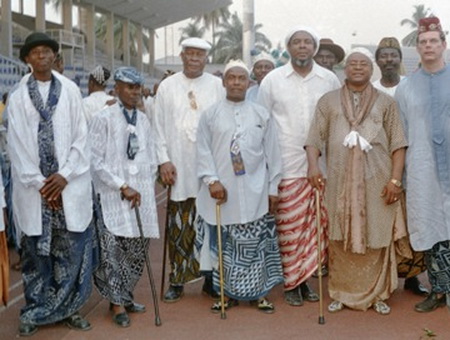
The Ibibio people are a remarkable and enduring ethnic group in southern Nigeria whose story is both ancient and very much alive today. Long before the modern cities and highways, Ibibio ancestors lived in thriving villages along rivers and forests, listening to the elders recount tales of origin and community, learning the rhythms of life through song and tradition. Over generations, this deep sense of belonging grew into a rich cultural world filled with language, music, farming wisdom, and festival life that connects the past to the present.
You may have heard of the Ibibio people in passing. You may have seen their vibrant masquerades or tasted the aromatic soups and stews of Akwa Ibom State. But there is far more to their story than meets the eye. From the Ibibio language that continues to bind family and home, to traditions that honour their ancestors and welcome new life, the experience of being Ibibio is both personal and communal.
In this article, you will discover who the Ibibio people are, where they come from, and how their values and traditions influence their everyday life. You will walk through their history, understand their cultural practices, and see their place in the modern world.
At the end, you will see why the Ibibio remain one of Nigeria’s most fascinating and culturally dynamic ethnic groups.
Who Are the Ibibio People?
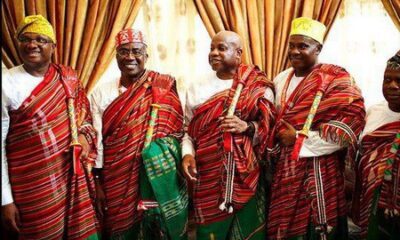
The Ibibio people are one of Nigeria’s most ancient and culturally rich ethnic groups. They are primarily found in Akwa Ibom State which lies in the southeastern region of the country, and have smaller communities in Cross River and eastern Abia State. With a population numbering in the millions, the Ibibio are one of the largest ethnic groups in the area known for their lively culture, communal lifestyle, and strong sense of identity.
The Ibibio share close cultural and linguistic ties with neighbouring groups such as the Annang, Efik, and Oron. These groups speak related languages and dialects, and historically interacted through trade, intermarriage, and shared religious and social practices. Despite these similarities, the Ibibio people maintain a distinct identity that is marked by unique traditions, festivals, and social systems that have been preserved over centuries.
Traditionally, Ibibio society revolves around the village and extended family. Villages are often organized into clans or lineages, with leadership guided by the elders and local chiefs. Decisions are usually made collectively, with elders offering guidance on matters such as disputes, marriages, and community projects. Respect for the elders and the wisdom of the ancestors is a defining feature of Ibibio life, and this reverence is expressed in everyday interactions, ceremonies, and rituals.
Family is central to Ibibio identity. Households are often extended, including parents, children, grandparents, and other relatives living together or nearby. This structure fosters strong bonds, shared responsibilities, and a deep sense of belonging. From an early age, children learn the values, stories, and skills of their people through oral storytelling, participation in festivals, and daily observation of community life.
The Ibibio are also known for their artistic and cultural expressions which serve as markers of identity. Music, dance, masks, carvings, and pottery are not just decorative, they are part of the fabric of the society that connect the people to their history, ancestors, and shared values. Traditional masquerades, such as the famous Ekpo festival are powerful examples of how the Ibibio integrate spiritual belief, art, and communal life into memorable cultural events.
Over the centuries, the Ibibio have adapted to change without losing their core identity. While many have moved to urban centres and embraced modern education, careers, and business, they still celebrate their festivals, speak their language, and honour ancestral customs. In contemporary Nigeria, the Ibibio people are contributors to politics, academia, business, and the arts.
Getting to know about the Ibibio people means appreciating a community that values family, respect, culture, and continuity. It is a people whose past informs the present, whose traditions enrich daily life, and whose identity remains strong, despite the pressures of modern society. Their story is a reminder that heritage and progress can coexist.
History of the Ibibio People

The Ibibio people have a history that stretches back centuries, long before the modern Nigeria existed. Their story began in the fertile forests and river valleys of southern Nigeria in what is now Akwa Ibom State where the early Ibibio communities thrived. These communities were primarily agricultural, as they relied on farming, fishing, and trade to sustain life. The land shaped their culture, and their culture, in turn, informed how their relationship with the land.
Oral traditions play a crucial role in Ibibio history. The elders have passed down stories of origin that explained the roots of various clans and lineages. One widely told story traces the Ibibio to early migrations from the west and north of the Cross River region, with settlements spreading along rivers and fertile forested areas. These migrations were motivated by the search for fertile farmland, water, and security. Over time, the Ibibio people established villages that became the foundation of clans and kingdoms.
Before colonial influence, Ibibio society was structured around villages and clans, each of which was led by the elders or chiefs. Leadership combined practical governance with cultural authority. Community decisions were guided by consensus and the wisdom of the elders, while spiritual leaders oversaw rituals, festivals, and matters related to the ancestors and spirits. Secret societies, such as the Ekpo and Ekpe were also central to precolonial governance. They played roles in social control, conflict resolution, and the preservation of cultural norms.
The arrival of European traders and missionaries in the 19th century introduced new dynamics to Ibibio life. The British colonial rule brought formal governance, Western education, and Christianity. The missionaries established schools that exposed Ibibio children to literacy, mathematics, and Western ideas, while also propagating the Christian faith. Many Ibibio communities embraced these changes, even as they kept elements of their traditional culture alive. As such, festivals, language, and ancestral veneration continued to thrive alongside new beliefs.
The Ibibio also played active roles in Nigeria’s struggle for independence and postcolonial development. Many Ibibio leaders became educators, politicians, and civil servants. They contributed to state-building, governance, and the growth of modern institutions in southern Nigeria. Despite urbanization and modernization, the Ibibio people have maintained a strong connection to their historical roots through language, storytelling, festivals, and family life.
One of the most enduring aspects of Ibibio history is their commitment to preserving culture. From the wood-carved masks of Ekpo masquerades to proverbs, songs, and ceremonies, these traditions serve as living links to the past. They remind each generation of who the Ibibio people are, where they come from, and the values that guide their lives till today.
The history of the Ibibio people is a story of resilience, adaptation, and continuity. It is a story of a people who survived migrations, environmental challenges, colonial pressures, and modern change while still maintaining a vibrant culture. This history forms the foundation of their identity and informs the Ibibio experience in contemporary Nigeria.
Language and Communication
The Ibibio people are deeply connected to their language which is more than a tool for communication. It is a living vessel of culture, history, and identity. The Ibibio language belongs to the Lower Cross subgroup of the Niger-Congo language family which makes it closely related to the Efik and Annang languages. This linguistic connection reflects centuries of interaction between communities through trade, marriage, and shared traditions.
Spoken by over six million people today, the Ibibio language is central to everyday life in villages, towns, and urban neighbourhoods across Akwa Ibom State. From greeting the elders with respect to telling stories to children, Ibibio words carry layers of meaning and social etiquette. Proverbs, idioms, and poetic expressions are common in speech and storytelling, and help to teach values, preserve history, and pass lessons from one generation to the next.
Traditionally, Ibibio communication was oral. The elders, storytellers, and spiritual leaders transmitted knowledge about the ancestors, customs, and social rules verbally. Stories were often performed with songs, gestures, and dramatizations during community gatherings, festivals, or initiation rites. These oral practices ensured that culture and wisdom were preserved, even before the written language existed.
With the arrival of missionaries in the 19th century, the Ibibio language began to be written using the Latin script. The missionaries developed alphabets, dictionaries, and textbooks to teach literacy in Ibibio alongside English. Today, the language is taught in schools, used in newspapers, radio broadcasts, and online platforms. This helps the younger people to maintain a strong connection to their heritage while engaging with modern education.
The Ibibio language also serves as a marker of identity. Speaking Ibibio signifies belonging to a shared cultural and historical heritage. Even Ibibio people living in cities or abroad often maintain the language in homes, cultural associations, and ceremonies as a way of ensuring that it remains a vital part of their community.
Beyond words, communication among the Ibibio people includes music, dance, and visual arts. Drumming, songs, and masquerade performances convey messages, celebrate milestones, and honour the ancestors.
For the Ibibio, language is inseparable from identity. It links the past to the present, grounds families in shared understanding, and connects communities across generations. The ability to speak and understand Ibibio is a celebration of heritage, a sign of respect for tradition, and a way to keep the stories, values, and wisdom of Ibibio people alive.
Ibibio Culture and Traditions
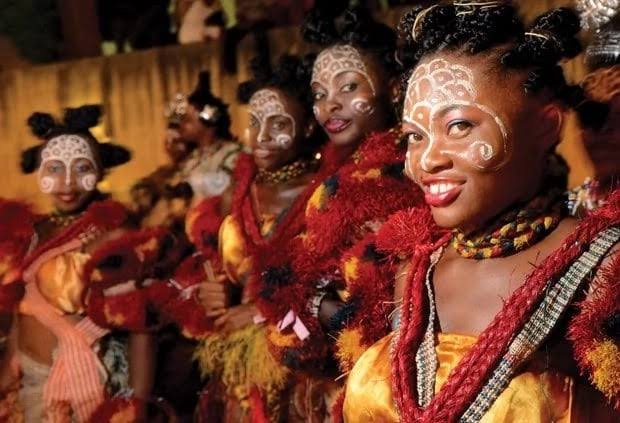
The Ibibio people have a culture that is vibrant, expressive, and deeply rooted in community life. Every festival, song, and ritual carries meaning that links families and generations. Their traditions express respect for elders, reverence for the ancestors, and a celebration of life’s milestones.
Marriage and Family Practices
Marriage among the Ibibio means more than a union between two people. It is a bond between families and a way to honour cultural values. Traditional weddings involve a ceremony called Ndoho where the groom’s family presents gifts or dowry items to the bride’s family. This act is a symbol of respect, commitment, and recognition of the bride’s family.
Family is central to Ibibio life. Households often include parents, children, grandparents, and extended relatives. Elders are respected and consulted for guidance in major decisions. Children grow up learning values and social norms from their families, through stories, songs, and participation in community life. This strong sense of family ensures that traditions and cultural knowledge are passed down across generations.
Festivals and Celebrations
The Ibibio people celebrate numerous festivals that honour their ancestors, land, and communal life. One of the most iconic is the Ekpo masquerade. In these festivals, masked performers represent ancestral spirits, and remind the living of their duties to family and community. While historically these performances were linked to spiritual and judicial roles, today they are also vibrant cultural events that showcase art, music, and dance.
Other festivals celebrate harvest, marriage, or significant community milestones. These gatherings feature drumming, singing, dancing, and feasting, and create a lively and shared experience that strengthens bonds within the community. Visitors often leave with a deep appreciation for the Ibibio people’s rich cultural life.
Arts, Music, and Dance
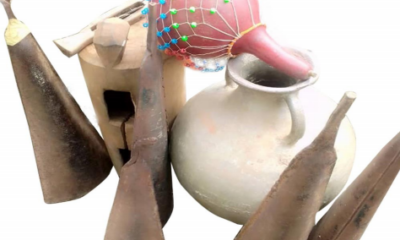
Art is central to Ibibio identity. The Ibibio people are known for wood carvings, raffia weaving, pottery, and masks used in festivals. These works are not just decorative, they convey spiritual beliefs, tell stories, and preserve history. Traditional music and dance accompany ceremonies and festivals. Drumming, singing, and choreographed movements are used to communicate emotions, celebrate milestones, and venerate the ancestors.
Storytelling is another vital cultural expression. Elders and griots recount myths, proverbs, and historical events during gatherings. These oral narratives teach lessons, entertain, and ensure that knowledge of the past is preserved for the future generations.
Religion and Beliefs
Traditionally, the Ibibio believed in a supreme deity called Abasi. This Creator was thought to oversee the universe, maintain justice, and guide human destiny. Ancestors and spirits were also central to spiritual life. Rituals and ceremonies honoured these ancestors in seeking their guidance and protection for families and communities.
With the arrival of missionaries in the 19th century, many Ibibio embraced Christianity. Today, the majority of Ibibio people are Christians, even though traditional beliefs and practices continue to influence ceremonies, festivals, and daily life. This combination of the old and the new highlights the Ibibio people’s ability to adapt as they preserve core cultural values.
The culture of the Ibibio people is a living heritage that binds community, art, spirituality, and daily life. Every marriage, festival, artwork, and song carries meaning, passing on lessons, values, and identity to the next generation. Their traditions are not relics of the past, they are active, evolving expressions of who the Ibibio people are today.
Modern Ibibio Society
The Ibibio people of today are a community that balances tradition and modern life with remarkable ease. While many still live in the villages and uphold ancestral customs, a large number have moved to urban centres in Akwa Ibom State, Lagos, Abuja, and beyond. In these cities, the Ibibio people work as educators, entrepreneurs, civil servants, artists, and business leaders. They contribute to modern Nigeria, even while still remaining deeply connected to their cultural heritage.
Education plays a central role in the lives of modern Ibibio families. Many Ibibio children attend primary and secondary schools in both rural and urban areas, while a growing number pursue higher education in Nigerian universities and abroad. This focus on education has produced Ibibio professionals who excel in fields such as medicine, law, engineering, finance, and technology.
The Ibibio people have also made significant contributions to Nigerian politics and governance. From local government leadership to participation in state and national political institutions, Ibibio leaders have helped in drawing policies and programmes that affect millions. They continue to serve as role models in public service, advocating for development and cultural preservation in their communities.
Despite the pressures of modern life, the Ibibio people maintain strong cultural ties. Festivals, traditional weddings, and masquerade performances are still celebrated, often with a mix of old rituals and contemporary influences. Cultural societies, language associations, and youth groups play a critical role in ensuring that the younger ones learn the Ibibio language, traditional music, dance, and storytelling.
Urban Ibibio communities are also adapting to technology. Many Ibibio now use social media, websites, and digital media to share culture, promote businesses, and connect with other Ibibio people around the world. This digital presence allows the Ibibio to celebrate their heritage globally as they engage with modern trends.
In modern society, the Ibibio continue to honour family and community. Strong family bonds remain a defining feature, with children learning respect, cooperation, and social responsibility at home and in schools. Through festivals, educational initiatives, and community projects, the Ibibio people preserve their identity while contributing meaningfully to the broader Nigerian society.
The modern Ibibio society express adaptation without losing identity. It shows how a people can embrace education, professional growth, and technology while keeping alive the language, customs, and values that define them. This balance between tradition and progress makes the Ibibio a dynamic and resilient community in contemporary Nigeria.
Common Misconceptions About the Ibibio People
The Ibibio people are often misunderstood, both within Nigeria and by outsiders. These misconceptions can oversimplify or misrepresent a community that is diverse, dynamic, and deeply rooted in tradition. Understanding the truth behind these myths allows for a clearer appreciation of Ibibio culture, identity, and contributions to the society.
One common belief is that the Ibibio people are overly traditional and resistant to change. In reality, the Ibibio balance tradition with modernity. Many Ibibio are educated professionals, entrepreneurs, and innovators. While they continue to celebrate festivals, perform masquerades, and carry out ancestral practices, they also embrace technology, business, and contemporary lifestyles. Modern Ibibio communities show that tradition and progress can coexist harmoniously.
Another misconception is that the Ibibio language is disappearing. While English is widely spoken for education, business, and formal communication purposes, Ibibio remains active at home, in cultural ceremonies, and within community associations. Efforts by youth organizations, schools, and cultural groups help to ensure that the language thrives across generations.
Some people assume that the Ibibio live in isolated communities with little interaction outside their villages. In truth, the Ibibio people are active participants in the broader Nigerian society. They engage in trade, politics, education, and cultural exchange with neighbouring groups. Urban Ibibio populations maintain strong networks that connect them locally and internationally.
While Ibibio festivals, like the Ekpo masquerade are visually spectacular, they are much more than entertainment. These events carry spiritual, historical, and social significance. They honour the ancestors, uphold social norms, and mark important milestones in the community. Reducing these festivals to mere spectacle ignores the deeper meaning they hold for the Ibibio people.
Finally, it is often assumed that the Ibibio people are a culturally uniform group. In reality, there is diversity within the Ibibio society. Differences exist in dialects, customs, and practices between clans, villages, and regions. Yet, this diversity is united by shared values of family, respect for elders, and cultural pride.
Dispelling these misconceptions allows outsiders and the younger members to appreciate the Ibibio people for who they truly are – a resilient, adaptive, and culturally rich community. Recognizing the depth of Ibibio traditions and contributions encourages respect, understanding, and admiration for one of Nigeria’s oldest ethnic groups.
Interesting Facts About the Ibibio People
The Ibibio people are full of fascinating traditions, history, and cultural practices that often surprise and delight anyone who takes the time to learn about them. Here are some notable facts that showcase their uniqueness and vibrancy:
1. Masters of Masquerade Art
The Ibibio are widely known for their Ekpo masquerades. These masked performances are not only artistic expressions but also historically carried spiritual and judicial significance. Masquerades often represent the ancestors and serve as reminders of social rules, ethics, and community responsibilities. Today, they are celebrated during festivals that draw both the locals and the visitors to experience Ibibio creativity and heritage.
2. Language That Preserves History
The Ibibio language is rich in proverbs, idioms, and poetic expressions. Every proverb tells a story or conveys wisdom about life, morality, and social behaviour. This oral tradition has preserved history, family values, and social norms for generations.
3. Culinary Heritage
Food is central to Ibibio culture. Traditional dishes like Afang soup, Atama soup, and Editan soup are made from locally sourced vegetables, fish, and spices. Apart from nourishment, meals offer shared experiences that bring families together and are essential during ceremonies, festivals, and daily life.
4. Artisans and Craftspeople
The Ibibio people are skilled artisans. They carve intricate wooden masks, create pottery, and weave raffia into functional and decorative items. Many of these crafts are tied to spiritual beliefs, celebrations, and rituals, thus making art a living part of daily life rather than simply a hobby or decoration.
5. Respect for Family and Elders
Family structure among the Ibibio is strong and extended. The elders are respected and play critical roles in guiding households and communities. Children grow up learning values, customs, and responsibilities through observation, storytelling, and participation in family events. This emphasis on family ensures that cultural knowledge is passed seamlessly from one generation to the next.
6. Resilient and Adaptive People
The Ibibio have demonstrated resilience through centuries of change. From migrations and colonial influence to modern urbanization, they have adapted, still maintain their cultural identity. Today, the Ibibio are active in education, politics, business, and the arts.
7. Connection to Ancestry
Venerating the ancestors is central to Ibibio life. Rituals, festivals, and personal practices often include paying respect to forebears, seeking guidance, or commemorating important events. This connection to ancestry strengthens identity, morality, and community cohesion.
The Ibibio people are a living example of a community that celebrates its heritage, even while they still engage with the modern world. Their traditions, language, art, and family values reveal a culture that is both deeply rooted and remarkably adaptable. Learning about the Ibibio people provides insight into one of Nigeria’s most fascinating and historically significant ethnic groups.
In Conclusion …
The Ibibio people are a living testament to the power of heritage, resilience, and cultural pride. From their ancient origins in the fertile river valleys of southern Nigeria to their contributions in modern education, politics, and business, they have maintained a strong sense of identity while embracing change. Their language, festivals, art, and family traditions continue to preserve history and values.
Learning about the Ibibio is to learn about a people who balance the wisdom of their ancestors with the opportunities of contemporary life. Their stories, customs, and achievements remind us that rather than being static, culture evolves, adapts, and thrives. Whether through their energetic masquerades, rich oral traditions, or the success of modern Ibibio professionals, the spirit of the Ibibio people endures.
For anyone curious about Nigeria’s diverse ethnic landscape, the Ibibio people offer a unique window into a culture that honours its past, celebrates its present, and inspires its future. Studying their history, traditions, and modern life is a journey into one of Nigeria’s most remarkable and dynamic communities.
References
- https://en.wikipedia.org/wiki/Ibibio_people
- https://www.britannica.com/topic/Ibibio
- https://en.wikipedia.org/wiki/Ibibio_language
- https://en.wikipedia.org/wiki/Ekpo_Society
- https://archive.org/details/peoplesofsouther01talb
- https://nationalpopulation.gov.ng/
You might want to check this out …