






African History
Patriarchy in Igbo Society: Gender Roles, Power Structures, and the Remarkable Power of Women in Traditional Igbo Culture

“Patriarchy in Igbo society” explores gender roles, traditional power structures, and women’s agency in precolonial Igbo culture. Discover how authority, inheritance, and female institutions coexisted in a complex social system shaped by both hierarchy and balance.
Patriarchy in Igbo society is a topic that often sparks strong opinions, especially when discussions turn to gender roles, tradition, and cultural identity in southeastern Nigeria. For many people, the first picture that comes to mind is a system where men held authority, made decisions, and controlled inheritance. That picture is not entirely wrong. But it is also not complete. To understand Igbo society properly, you have to look beyond the surface.
In many traditional Igbo communities, men did occupy formal leadership positions, especially in family lineages, councils of elders, and land inheritance systems. A son was often expected to carry the family name forward, and in many cases, the father’s authority was central to household decisions. These are the realities that give weight to the idea of patriarchy in Igbo society. But then, if the story ends there, it misses something important.
Alongside these male-centered structures existed strong, organized systems where women held real influence. Market women controlled local economies in powerful ways. The Umuada had authority in resolving disputes and maintaining peace within families. In some cases, women even stepped into roles that allowed them to exercise leadership in ways that did not fit neatly into Western ideas of gender hierarchy.
So, the question is not simply whether Igbo society was patriarchal or not. The deeper question is how patriarchy operated alongside other forms of authority, and how women still found space to lead, negotiate, and influence outcomes within that system.
This article takes a closer, more balanced look at patriarchy in Igbo society, exploring gender roles, traditional power structures, and the often overlooked systems of women’s agency that existed long before colonial influence reshaped social life.
Historical Overview of Traditional Igbo Society
To understand patriarchy in Igbo society, you first have to step back and look at how Igbo communities were actually organized before colonial rule changed many things.
The traditional Igbo society was not built around a single ruler or central authority. Instead, it was made up of many autonomous communities, each managing its own affairs through family lineages, age grades, elders, and community meetings. Decisions were rarely imposed from the top. They were usually reached through discussion, agreement, and shared responsibility.
At the heart of this system was the extended family. Every person belonged to a lineage, and that lineage played a major role in identity, land ownership, and social belonging. Elders, mostly men, often represented their families in public gatherings where community matters were discussed. This is one of the reasons patriarchy in Igbo society is often associated with male leadership in formal spaces. But daily life was more layered than public meetings alone suggest.
Within the home and the wider community, responsibilities were widely distributed. Farming, trade, child upbringing, conflict resolution, and religious practices were all part of a connected social system. Women were not outside this structure. They were deeply involved in the economic and social life of their communities, especially through farming and market trade which formed the backbone of local economies.
So, while leadership in public spaces often leaned toward men, the social fabric of Igbo life was built on interdependence. Authority was not concentrated in one place or one gender alone. It moved through families, age groups, and institutions that worked side by side.
This historical background is important because it sets the stage for a more accurate understanding of patriarchy in Igbo society. It was present, but it operated within a wider system where roles were shared, negotiated, and sometimes, flexible, depending on context.
Gender Roles in Traditional Igbo Society
When people talk about patriarchy in Igbo society, one of the clearest entry points is how roles were divided between men and women in everyday life. These roles were not random. They were informed by tradition, responsibility, and the needs of the community.
In traditional Igbo society, men were commonly associated with public leadership and representation. They attended village assemblies, spoke on behalf of their families, and handled matters involving land, inheritance, and external negotiations. In many cases, a man was seen as the head of the household, especially in formal or public contexts. This is one of the reasons patriarchy in Igbo society is often discussed as a visible social structure.
Women, on the other hand, carried equally important responsibilities that kept households and communities functioning. They were deeply involved in farming, especially the cultivation of food crops like cassava, vegetables, and yam processing activities. Beyond agriculture, women dominated local markets. Trading was not just a side activity; it was a major economic force that influenced household income and community stability.
Inside the home, women managed childcare, food preparation, and the daily rhythm of family life. But their influence did not stop there. Through market networks and women’s associations, they participated in discussions that affected pricing, trade rules, and community welfare. In many Igbo towns, market women could collectively take decisions that influenced local economic activity.
So, while patriarchy in Igbo society placed men in more visible leadership positions, gender roles were not simply about dominance and submission. They were about different responsibilities that often overlapped and depended on each other. A household could not function without both sides contributing in meaningful and practical ways.
This balance of roles is important because it shows that traditional Igbo life was not built on isolation of gender, rather on a structured form of cooperation where each role, though different, was necessary for survival and stability.
Structures of Patriarchy in Igbo Society
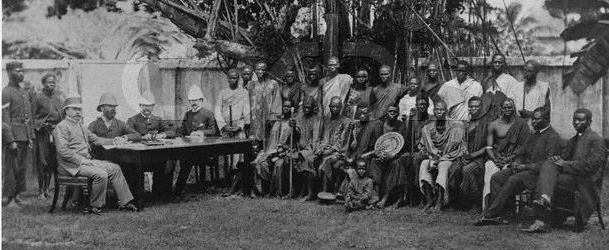
To clearly understand patriarchy in Igbo society, it helps to look at the structures where male authority was most visible and formally recognized. These were not hidden or accidental patterns. They were built into inheritance systems, leadership arrangements, and family organization.
One of the strongest expressions of patriarchy in Igbo society appears in inheritance practices. In many traditional Igbo communities, land and family property were passed primarily through the male line. The first son often held a special position as the custodian of the family legacy. He was expected to represent the lineage, oversee property matters, and maintain continuity of the family name. Daughters, in most cases, did not inherit land in the same way, especially within their birth families after marriage.
Leadership structures also show clear male dominance in formal settings. Village councils and elder assemblies were largely made up of men. These groups handled important decisions such as dispute resolution, land allocation, and community law. Title systems such as the Ozo institution in many Igbo areas were also predominantly male spaces, reserved for men who had met specific cultural and financial requirements.
Within the household, the father was commonly recognized as the head of the family. He represented the family in public matters and made final decisions in many domestic and social issues. This authority was socially accepted and reinforced through custom and tradition which further strengthens the understanding of patriarchy in Igbo society as a structural reality.
However, even within these systems, authority was not always absolute or uncontested. Decisions often involved consultation within the family, and respect for elders, both male and female, played an important role in maintaining balance.
Still, when viewed from a structural perspective, these patterns show that patriarchy in Igbo society was most visible in inheritance, formal leadership, and household representation where men were consistently placed in positions of recognized authority.
Women’s Agency and Female Power Structures

A full discussion of patriarchy in Igbo society is incomplete without looking closely at how the women organized themselves and exercised influence within their communities. While formal authority in many areas leaned toward men, Igbo women were never without structure, voice, or power.
One of the most important institutions that shows this is the Umuada system. Umuada refers to daughters of a particular lineage, especially the married ones who retain a strong connection to their natal family. Far from being passive relatives, they often played active roles in maintaining peace within families and communities. In disputes involving land, marriage conflicts, or moral issues, Umuada could step in, mediate, and demand accountability. Their intervention was widely respected and, in many cases, could not be ignored.
Market women associations also formed a strong economic and social force. In many Igbo towns, women controlled the daily flow of trade in local markets. These associations regulated prices, set trading standards, and addressed disputes among traders. Because markets were central to community survival, their influence extended beyond commerce into social stability and local governance. This economic control gave women a form of authority that existed alongside the more visible male-led structures often associated with patriarchy in Igbo society.
There were also cultural practices that allowed women to hold unconventional roles when necessary. In some documented cases, wealthy or socially influential women could become “female husbands,” a social arrangement that allowed them to take on responsibilities traditionally associated with men, especially in matters of inheritance and family continuity. These arrangements created space for flexibility in gender roles within Igbo culture.
Women also used collective action when necessary. Historical records, especially during the colonial period show organized protests led by women against unfair taxation and policies that affected their livelihoods. These actions were not random reactions. They were coordinated efforts rooted in established women’s networks.
Taken together, these systems show that even within a society where patriarchy in Igbo society defined formal leadership structures, women maintained organized channels of influence. Their power was not always centered in formal titles, but it was present in economic control, social regulation, and collective action that affected the wider community.
Gender Complementarity Vs. Patriarchy Debate
When scholars study patriarchy in Igbo society, one of the most important questions they try to answer is whether Igbo culture was strictly male-dominated or whether it operated on a more balanced system of gender relations.
At first glance, many visible structures seem to support the idea of patriarchy. Men often represented families in public meetings, inherited land, and occupied most formal leadership positions. These patterns are real and well documented, which is why patriarchy in Igbo society is a widely used term in historical and sociological discussions.
However, other scholars argue that this interpretation does not capture the full reality. Igbo society allowed a level of flexibility in gender roles that is not always found in rigid patriarchal systems. Gender roles in Igbo culture were not always fixed strictly by biological sex. Instead, social position, wealth, and context could influence what roles a person could take on.
This has led to the idea of gender complementarity which suggests that men and women operated in separate but interconnected spheres. Rather than one group fully controlling the other, authority and responsibility were distributed across different institutions. Men and women had distinct roles, but both were necessary for the functioning of society.
For example, while men often handled public political representation, women held strong influence in economic life through market systems and in social regulation through groups like the Umuada. These roles did not always compete directly. Instead, they often operated side by side, each addressing different aspects of community life.
This is where the debate becomes important. While some scholars maintain that patriarchy in Igbo society best describes the visible hierarchy in formal leadership and inheritance, others argue that this view is incomplete without acknowledging the parallel systems of female influence that existed outside those formal spaces.
The truth likely sits in between. Igbo society can be understood as a system where male authority was more visible in official structures while female power operated through economic, social, and communal institutions. These two realities existed at the same time, sometimes overlapping, sometimes operating independently, but both shaping how the society functioned.
Understanding this debate helps to move the discussion beyond simple labels and toward a more accurate picture of how traditional Igbo life actually worked.
Impact of Colonialism and Christianity on Gender Relations
Any serious discussion of patriarchy in Igbo society must include the major changes that came with colonial rule and the spread of Christianity. These two forces did not just introduce new religions and governance systems. They also reshaped how gender roles were understood and practiced in many Igbo communities.
Before colonial contact, Igbo society already had structured male authority in certain formal spaces, but women also held strong positions through market systems, lineage groups, and collective institutions like the Umuada. However, with the arrival of British colonial administration, a new political structure was introduced that changed how authority was recognized.
One of the most significant shifts was the way colonial authorities chose to govern through male representatives only. The British system of indirect rule relied heavily on “warrant chiefs” and male elders, even in places where leadership was traditionally more distributed. This approach sidelined existing women-led institutions, especially those that operated through collective organization and market authority. Over time, this contributed to a stronger public image of patriarchy in Igbo society, because official governance structures now appeared almost entirely male.
Colonial legal and administrative systems also redefined land ownership and inheritance in ways that favoured male control. Practices that were previously flexible or locally negotiated became more rigid under formal colonial law. This reduced the space women once had in some customary arrangements.
Christian missionary activity further influenced gender relations. Mission schools and churches introduced European ideals of family structure where men were positioned as primary providers and women were often encouraged toward domestic roles. While education expanded opportunities for both genders, the cultural messaging often reinforced a more fixed division of roles than what existed in many traditional settings.
Over time, these combined influences altered how people viewed patriarchy in Igbo society. What may have originally been a more complex and flexible system of shared authority gradually became interpreted through a narrower lens of male dominance in both public and private life.
It is important to note that these changes did not erase traditional structures completely. Elements of women’s associations and market influence continued, but their formal recognition and political visibility were significantly reduced, compared to precolonial times.
Patriarchy in Contemporary Igbo Society

The discussion of patriarchy in Igbo society does not end in the past. It continues into the present, where traditional norms and modern systems exist side by side, sometimes, in harmony and sometimes, in tension.
Today, many Igbo families still recognize the man as the head of the household, especially in formal or public settings. This is often expressed in decision-making around family matters, inheritance discussions, and representation in community gatherings. In many cases, sons are still expected to carry forward family lineage and are more likely to inherit ancestral property. These patterns show that patriarchy in Igbo society remains visible in everyday social organization.
At the same time, important changes have taken place. Education has opened new paths for women across Igbo communities. Women now occupy roles in law, medicine, business, academia, and government. In urban areas especially, financial independence has given women more influence in family decisions than in earlier generations.
Legal frameworks in Nigeria have also begun to challenge older inheritance practices. Court decisions in recent years have supported women’s right to inherit property in situations where they were previously excluded. While cultural resistance still exists in some communities, these legal shifts are gradually changing how patriarchy in Igbo society operates in practice.
Even with these changes, some traditional expectations remain strong. In certain rural areas, customs around land inheritance and male family leadership are still widely observed. Social expectations about marriage roles, family authority, and respect for male elders continue to influence daily life.
What emerges today is not a uniform system, instead, a mixed reality. Modern Igbo society carries both continuity and change. Elements of patriarchy in Igbo society still exist, though they now operate alongside growing female participation in public life and increasing conversations about gender equality.
This coexistence of the old and new creates a social space that is still evolving where tradition and modern values continue to interact in shaping gender relations.
Why This Debate is Still On Today
The conversation around patriarchy in Igbo society is not just an academic debate or a look into history. It continues to matter because it influences how people understand identity, gender roles, and cultural expectations in the present day.
For many families, ideas about who leads, who inherits property, and who speaks in public or family matters are still tied to long-standing cultural patterns. Even when laws and education open new opportunities, social expectations can remain deeply rooted. This is why discussions about patriarchy in Igbo society still come up in everyday life, from inheritance disputes to marriage expectations and community leadership roles.
The debate is also on because it helps to separate culture from assumption. Over time, simplified narratives have sometimes portrayed Igbo society as either strictly male-dominated or fully balanced. Neither view captures the full reality. By studying patriarchy in Igbo society alongside women’s historical roles and institutions, a more accurate picture emerges. One that shows both structure and flexibility, authority and negotiation.
There is also a broader reason this discussion is important. Across Africa, questions about gender, tradition, and modern rights are ongoing. Understanding how patriarchy in Igbo society operated in the past helps scholars, policymakers, and community leaders to make better sense of present-day challenges. It also prevents cultural misrepresentation by showing that African societies were not uniform or one-dimensional in how they organized power.
For the younger ones, this debate can also serve as a point of reflection. It encourages a closer look at how traditions are practiced today and how they have changed over time. It opens space for asking whether certain practices still serve the community in a fair and balanced way, without dismissing culture entirely.
In the end, the discussion around patriarchy in Igbo society remains relevant because it sits at the intersection of history, identity, and social change. It is not only about what was, it is also about what continues to evolve in how people live, relate, and organize their communities today.
Conclusion …
The study of patriarchy in Igbo society leads to one clear understanding – it is not a subject that can be explained with a single label or a simple conclusion.
Yes, there were structures that placed men in more visible positions of authority. Inheritance often followed the male line, and public leadership was largely male-dominated. These realities are part of the historical record, and they explain why patriarchy in Igbo society is a valid term in describing certain formal systems.
At the same time, focusing only on those structures leaves out an equally important part of the story. Igbo women were not absent from power or influence. Through institutions like the Umuada, market associations, and organized collective action, women participated actively in shaping economic life, resolving conflicts, and maintaining social order. Their roles were not symbolic. They had real impact on how communities functioned.
What emerges from both sides is a more layered picture. Igbo society operated through a mix of hierarchy and cooperation where authority was visible in some spaces and shared in others. Rather than a rigid system where one gender controlled all aspects of life, it was a social arrangement where responsibilities were distributed across different institutions.
Understanding patriarchy in Igbo society in this way helps to avoid oversimplification. It also allows for a more honest reading of history, one that acknowledges both structure and agency, both limitation and participation.
Ultimately, Igbo gender relations were not built on a single pattern. They were shaped by context, community needs, and long-standing traditions that evolved over time. Recognizing this complexity gives a clearer and more respectful understanding of how the people actually lived, related, and organized their society.
References
- Kujenga Amani. (2021, July 21). Understanding gender complementarity in Igbo society: The role of Umuada and Umunna in peacebuilding. Social Science Research Council. https://kujenga-amani.ssrc.org/2021/07/21/understanding-gender-complementarity-in-igbo-society-the-role-of-umuada-and-umunna-in-peacebuilding/
- Amadiume, I. (1987). Male daughters, female husbands: Gender and sex in an African society. Zed Books. https://books.google.com.ng/books/about/Male_Daughters_Female_Husbands.html?id=5f3OFZFYYz4C&redir_esc=y
- Gender and Social Structure in Igbo Society https://www.mdpi.com/2077-1444/16/3/359
- Van Allen, J. (1972). Sitting on a man: Colonialism and the lost political institutions of Igbo women. Canadian Journal of African Studies, 6(2), 165-181. https://doi.org/10.2307/484190
- https://nnewicity.com/gender-roles-in-igbo-culture/