






African Traditions
Inu Iyi (Oath-Taking) in Igbo Culture: Meaning, Rituals, and Role in Traditional Justice

Inu Iyi is a traditional oath-taking practice in Igbo culture used to establish truth, settle disputes, and enforce justice through spiritual authority and communal belief.

In many Igbo communities, truth is not always established by argument or evidence alone. There are moments when words are no longer enough, when denial meets accusation, and neither side is willing to yield. In such cases, people turn to something older, deeper, and far more serious. They turn to Inu Iyi.
Inu Iyi which is the traditional practice of oath-taking in Igbo culture is not a casual declaration or an empty ritual. It is a solemn act that calls on spiritual forces to witness and judge the truth. Once taken, an oath carries weight that goes beyond the individual. It places a person under the watch of the ancestors, deities, and moral laws that are believed to govern both the seen and unseen world.
For generations, Inu Iyi has served as a trusted method for resolving disputes, confirming innocence, and preserving order within the community. It often comes into play when every other path has failed, when mediation breaks down, and when the truth must be established in a way that no one can easily ignore. The fear attached to it is not accidental. It comes from a long-standing belief that false oaths carry consequences.
To understand Inu Iyi is to take a step into the heart of Igbo traditional justice where truth is more than a statement and accountability is not optional. It is a system built on belief, responsibility, and the idea that some matters are too important to be left unresolved.
What Is Inu Iyi in Igbo Culture?
Inu Iyi is a traditional form of oath-taking in Igbo culture where a person calls on spiritual forces to witness a declaration of truth. It is not just about speaking or making a promise. It is a serious, binding act that places the individual under the authority of the unseen world.
The phrase itself comes from Igbo words that point to the idea of “drinking an oath” or entering into a solemn spiritual agreement. In practice, it means publicly affirming one’s innocence or truth and invoking consequences, if the statement is false.
In traditional Igbo society, Inu Iyi is used when disputes become difficult to resolve through ordinary discussion. It may arise in cases involving land, family conflicts, accusations of theft, or questions of honesty. When both sides insist on their claims and there is no clear evidence, oath-taking becomes an option.
What makes Inu Iyi powerful is the belief behind it. The person taking the oath is not speaking to people alone. They are calling on deities, ancestors, and their personal spiritual guardian to act as witnesses. There is a widely held belief that if the oath is false, the individual will face consequences, over time. Because of this, many people would rather confess or withdraw a claim than take an oath falsely.
It is also important to understand that Inu Iyi is not done casually. It follows established customs and is usually guided by elders, priests, or custodians of shrines. The process may involve symbolic items such as the Ofo staff, kola nut, or other sacred elements, depending on the community.
Fundamentally, Inu Iyi is a system built on trust in spiritual justice. It reflects a worldview where truth is not only a social value but a moral obligation enforced by forces beyond human control.
Historical Origins of Inu Iyi
The origins of Inu Iyi can be traced back to pre-colonial Igbo society, a time communities governed themselves through deeply rooted customs, moral codes, and shared beliefs. There were no formal courts in the modern sense. Instead, justice was handled by elders, family heads, village assemblies, and custodians of shrines who were trusted to guide decisions and maintain order.
Within this system, truth was highly valued, but proving it was not always straightforward. Disputes over land, inheritance, or personal conduct often came down to one person’s word against another’s. In such situations, Inu Iyi developed as a practical and trusted way to settle matters when evidence was unclear and dialogue had reached its limit.
Anthropological and historical studies of Igbo communities show that oath-taking was already an established part of indigenous justice long before colonial rule. It functioned alongside other methods such as mediation, negotiation, and communal judgment. When these methods failed, Inu Iyi offered a final path to resolution by placing the matter in the hands of spiritual authority.
The practice is closely tied to the broader Igbo worldview where the visible and invisible are interconnected. In this worldview, actions are believed to carry consequences beyond the physical world. Truth is not only a social expectation but a moral duty upheld by forces such as the ancestors, deities, and the Earth goddess. This belief system gave Inu Iyi its strength and credibility within the community.
Scholarly research on traditional African societies confirms that oath-taking emerged as a way to maintain order, discourage dishonesty, and resolve conflicts in the absence of formal legal structures. Among the Igbo, it became a respected institution because it addressed a real need. It provided a way to reach closure in difficult disputes and preserve peace within the community.
Over time, Inu Iyi became more than just a method of conflict resolution. It grew into a cultural institution woven into the moral and social fabric of Igbo life. Its continued presence in oral traditions, community practices, and academic studies today speaks to its long-standing role in defining how justice and truth have been understood in Igbo society.
Spiritual Foundations of Oath-Taking in Igbo Society

To understand Inu Iyi, it is important to see the Igbo worldview where the physical and spiritual realms coexist and constantly interact. Events in the visible world are believed to be observed and judged by spiritual forces.
At the foundation of this belief is the idea that truth is a moral obligation upheld by spiritual authority. When a person takes an oath, they are not speaking only to humans, they are calling on powerful spiritual witnesses that include Chi, the individual’s personal guardian spirit; the ancestors, who are actively involved in the lives of their descendants; the deities linked to specific shrines or communities, and the Earth goddess, guardian of morality and justice.
The ancestors and deities are seen as present, observant, and concerned with moral conduct. Taking an oath through Inu Iyi is, thus, a serious spiritual commitment, essentially saying, “If I am lying, let these forces judge me.” This places the individual under spiritual accountability that goes beyond human enforcement.
Scholarly studies of Igbo traditional religion confirm that oath-taking invokes divine and ancestral authority, with the expectation that false declarations bring consequences. This is rooted in the cultural understanding of justice and moral balance.
Key concepts like Ofo na Ogu support this framework. The Ofo symbolizes rightful authority and moral clarity, while Ogu represents integrity and justice. Together, they ensure that truth prevails and that human actions are accountable to higher moral standards.
Within this spiritual framework, Inu Iyi becomes more than a ritual. It bridges human action and spiritual judgment, ensuring accountability, even when human systems fall short. This is why oath-taking is approached with care, because once an oath is taken, the matter is no longer solely in human hands.
Rituals and Process of Inu Iyi
The practice of Inu Iyi follows a deliberate and meaningful process. Every step carries significance which gives oath-taking its seriousness in Igbo culture.
When Inu Iyi Takes Place. Oath-taking is usually a last resort. Elders and family heads first attempt dialogue, mediation, and community intervention to resolve disputes. Inu Iyi is considered only when both parties insist on their claims, there is no clear evidence, and the truth cannot be established through discussion. It is taken cautiously and with mutual agreement.
Who Oversees the Process. The ritual is supervised by individuals with cultural and spiritual authority, such as elders, council members, family heads, traditional priests, or shrine custodians. Their role is to ensure the oath is conducted correctly and in line with tradition. They also determine the appropriate deity or shrine to invoke.
Selection of Deity or Shrine. A critical part of the process is choosing the spiritual authority before whom the oath is taken. The selection depends on the nature of the dispute, community customs, and the individuals involved. Some deities are associated with justice, truth, or specific offenses. This choice reflects the belief that certain spiritual forces are better suited to oversee and enforce particular matters.
Types of Oath-Taking in Igbo Culture
Inu Iyi is not a single practice in Igbo society. It takes several forms, and each serves a specific purpose to maintain order, enforce honesty, and uphold moral responsibility.
Judicial Oath is the most formal type used in legal or quasi-legal disputes such as land ownership, theft, or inheritance conflicts. When evidence is lacking or witnesses contradict each other, elders or council members supervise the oath to determine truth and ensure community recognition.
Personal Oath is taken by an individual to prove innocence or sincerity. It is often invoked during accusations of wrongdoing. Symbolic acts, like touching sacred objects or drinking from ritual containers place the person under spiritual accountability and convince witnesses of their honesty.
Communal Oath involves groups or communities affirming collective agreements or responsibilities. Examples include settling disputes between villages, formalizing communal decisions, or enforcing social rules. By invoking spiritual witnesses together, participants create shared accountability, thus strengthening unity and discouraging breaches of trust.
Covenant Oath (Igba Ndu) formalizes long-term commitments, such as business partnerships, family alliances, or marriage obligations. This type often includes complex rituals and symbolic acts aimed at establishing moral and spiritual bonds that parties are expected to honour indefinitely.
Each type serves a distinct function and share a common principle, which is, establishing truth and enforcing accountability through spiritual and communal authority. Judicial oaths resolve disputes, personal oaths affirm individual integrity, communal oaths maintain group trust, and covenant oaths create long-term commitments. By having multiple forms, Inu Iyi is applied flexibly to ensure truth and justice across diverse situations.
Role of Inu Iyi in the Traditional Justice System
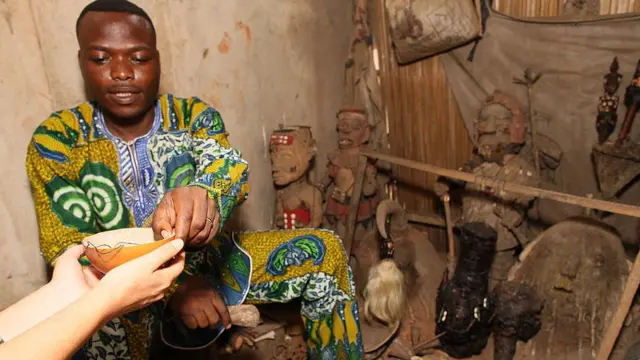
In Igbo society, Inu Iyi has long been central to traditional justice. Before formal courts, communities relied on elders, councils, and spiritual authorities to resolve disputes and maintain social harmony. Oath-taking was a trusted method to establish truth and ensure accountability.
When conflicts arose over land, inheritance, personal conduct, or communal responsibilities, mediation was usually the first step. Elders listened to both sides, examined evidence, and sought to restore peace through dialogue. When discussion alone could not resolve a dispute, Inu Iyi served as the final mechanism to reach a decision.
A key function of Inu Iyi was establishing truth when evidence was unclear. For example, in land disputes with no witnesses or documentation, an oath could determine rightful ownership. Spiritual forces invoked during the oath were believed to punish falsehood and vindicate honesty, thereby providing a strong incentive to tell the truth. Studies show that fear of spiritual consequences was often more effective than physical punishment in maintaining order.
Inu Iyi also acted as a deterrent against dishonesty. The belief that breaking an oath brought misfortune discouraged false claims and prevented conflicts from escalating. Beyond its judicial function, it helped to preserve social cohesion. Involving elders and spiritual witnesses reinforced community norms and values in a way that ensured that truth was verified by both human and spiritual authority.
Oath-taking was often part of a broader system that included mediation, negotiation, and communal deliberation. It was rarely the first step, thus creating a layered approach to justice that combined dialogue with spiritual enforcement.
Even today, the principles behind Inu Iyi influence parts of Igbo society. In rural areas, elders or shrine custodians are still consulted for difficult disputes. While modern courts handle most legal matters, the cultural memory of oath-taking continues to influence expectations of honesty, accountability, and fairness.
In essence, Inu Iyi was an essential tool in the traditional Igbo justice system. A mechanism to verify truth, deter dishonesty, and uphold communal and spiritual order.
Consequences of Breaking an Oath
In Igbo culture, Inu Iyi is more than a symbolic act. It carries spiritual weight, and breaking an oath is considered a serious offense. The consequences are both spiritual and social and are taken very seriously by the community.
Spiritually, taking an oath calls on the ancestors, deities, and personal spiritual guardians as witnesses. If the oath is false, these forces are believed to intervene. Reported outcomes include unexplained illness or accidents, decline in personal or business fortune, and in some cases, lasting misfortune or death. These consequences are reinforced by generations of oral history and community experience in a way that ensured respect for the practice.
Socially, breaking an oath damages a person’s reputation. Elders and neighbours may view the individual as untrustworthy. This may lead to loss of credibility in disputes, exclusion from communal decisions, and strained family or social relationships. In Igbo society, reputation is as valuable as material wealth. So, these consequences have lasting impact.
The fear of consequences also serves a preventive role. Many disputes are resolved before an oath is even taken because parties recognize the risks of dishonesty. Inu Iyi functions not only as a dispute-resolution tool but also as a deterrent against wrongdoing.
Behind these outcomes is the Igbo belief in moral order. The universe, as interpreted through Igbo spirituality, enforces balance. The oath is a sacred mechanism for upholding truth and justice, and breaking it is seen as a violation of both communal and spiritual law.
Essentially, the consequences of breaking an oath affect health, fortune, social standing, and spiritual wellbeing. This combination of social and spiritual accountability makes Inu Iyi a uniquely powerful institution in Igbo society.
Inu Iyi and the Concept of Truth in Igbo Culture
In Igbo culture, truth is not simply a personal choice or convenience. It is a moral responsibility that connects individuals to their family, community, and the spiritual world. Inu Iyi, or oath-taking is a powerful tool to uphold this principle, thus reminding people that honesty carries weight and falsehood has consequences.
Truth is a moral obligation in Igbo society. When someone takes oath, they declare their honesty in front of witnesses with moral and spiritual authority. This transforms personal honesty into a shared responsibility. Lies or deception threaten relationships, family cohesion, and social harmony, while oath-taking emphasizes that words and actions have far-reaching consequences.
Truth in Igbo thought is also a spiritual principle. The ancestors, deities, and the Earth goddess are believed to monitor human conduct. A true oath brings respect, social trust, and spiritual favour, while a false oath can result in misfortune, social exclusion, or spiritual punishment. Inu Iyi, thus, serves as a spiritual check on human behaviour.
The community plays a central role in validating truth. By taking an oath in front of elders, family heads, and respected figures, individuals publicly commit to honesty. This communal verification strengthens social trust and reinforces order, especially in disputes over property or inheritance.
Truth in Igbo culture is expressed through both words and actions. Inu Iyi embodies integrity by combining speech, ritual, and spiritual accountability. Unlike purely legal systems, it integrates morality, spirituality, and community cohesion. This makes honesty a lived principle.
The practice teaches enduring lessons. Truth is sacred and demands responsibility, accountability extends beyond personal conscience to community and spiritual oversight, honesty sustains social trust, and lies affect more than just the individual. Through Inu Iyi, the Igbo embed the value of truth deeply into everyday life, thereby ensuring integrity and moral awareness are maintained across generations.
Variations Across Igbo Communities
Inu Iyi is widely practiced among the Igbo. However, its form and execution vary across communities. This reflects local traditions, beliefs, and interpretations of justice.
The materials, deities, and ceremonial steps differ by region. In some areas, the Ofo staff is central, while others use kola nut, palm wine, or sacred water. Certain shrines or deities are invoked only locally, yet the core principle, that is, calling on spiritual authority to enforce truth remains consistent.
Procedures also vary. Some communities require councils of elders or priests while others rely on family heads or recognized spiritual leaders. The phrasing and emphasis of the oath may focus on either public accountability or spiritual consequences, depending on local custom.
The scope of Inu Iyi differs as well. Some communities reserve it for serious disputes like land, theft, or inheritance conflicts while others use it for affirming promises, social contracts, or family alliances. Rural villages often restrict it to critical matters, whereas towns with active community organizations may use it for broader agreements.
The cultural emphasis varies too. In some areas, spiritual enforcement is prioritized, and breaking an oath is believed to bring misfortune. In others, social accountability and trust are the focus.
Despite these differences, the essence of Inu Iyi remains the same. It is a solemn, spiritually backed commitment to truth and accountability. Regional variations enrich the Igbo cultural fabric and show how traditional practices evolve while preserving their core values.
Inu Iyi in Contemporary Igbo Society
Even in the modern era, Inu Iyi still holds significance in many Igbo communities. While contemporary legal systems and formal courts now handle most disputes, the traditional practice of oath-taking remains relevant as both a cultural symbol and a practical tool for resolving conflicts.
In rural areas where formal courts may be distant or inaccessible, Inu Iyi still serves as a trusted method of conflict resolution. Disputes over land, inheritance, or family matters are often settled through mediation followed by oath-taking, if needed. Elders and local spiritual custodians continue to oversee the process, ensuring that both parties respect the outcome.
Because the practice is deeply embedded in cultural belief, the fear of spiritual consequences keeps parties honest, even when human enforcement is limited. In this wise, Inu Iyi complements formal legal structures rather than replacing them.
For many Igbo people, Inu Iyi is also a cultural touchstone that reinforces identity and moral values. Even in urban settings where legal systems are available, the concept of oath-taking is remembered and respected. It serves as a reminder that truth and integrity are central to community life, and that accountability is not just legal but also moral and spiritual.
For instance, in family disputes or negotiations among business partners, invoking the spirit through Inu Iyi can encourage honesty and careful consideration. It symbolizes a higher standard of accountability that extends beyond what law alone can enforce.
In contemporary society, Inu Iyi has adapted in subtle ways. Some families perform simplified oath-taking rituals without extensive traditional paraphernalia, rather focusing on the declaration and communal witnesses. Educational programmes and cultural festivals may include demonstrations of Inu Iyi to teach the younger people about integrity, justice, and accountability. The principles of truth, consequence, and social responsibility associated with oath-taking influence ethical behaviour in both personal and professional contexts.
This adaptation shows the resilience of the practice. While some elements have evolved, the central idea that honesty carries weight and that falsehood invites consequences remains powerful.
Even within modern legal systems, Inu Iyi occasionally intersects with formal processes. Courts may respect community settlements influenced by traditional oaths, particularly in rural areas. In some cases, the fear of spiritual or social repercussions ensures compliance with agreements, thereby complementing legal enforcement.
Today, Inu Iyi continues to shape behaviour and uphold values in Igbo society. It reminds people that truth, honesty, and accountability are timeless principles, whether in the courtroom, the family home, or the marketplace. While modern life has changed many customs, the practice endures as a cultural and moral anchor that connects the present-day communities to their rich spiritual and historical heritage.
Challenges Facing the Practice Today
While Inu Iyi remains a respected tradition, its practice faces several challenges in contemporary Igbo society.
Modern legal systems have reduced reliance on traditional oath-taking, as many disputes are now handled through formal courts rather than community rituals. Urbanization and migration mean that fewer people have direct access to the elders or shrine custodians needed to perform Inu Iyi properly.
Changing beliefs among the younger generations can also weaken the practice, as some may view oath-taking as outdated or symbolic, thus reducing the fear of spiritual consequences that once enforced honesty. Additionally, in some cases, individuals attempt to manipulate or misuse oath-taking to intimidate others or settle personal scores. This undermines its integrity.
Despite these challenges, Inu Iyi still holds cultural and moral significance, especially in rural communities where traditional beliefs remain strong.
Why Inu Iyi is Still Significant Today
Even in the 21st century, Inu Iyi still holds importance in Igbo society because it is a reflection of values that guide human behaviour. The practice reminds people that honesty, accountability, and respect for truth are essential for maintaining trust and harmony in families, communities, and social relationships.
Inu Iyi matters because it bridges the past and the present. It connects modern Igbo people with their cultural heritage, and reinforces moral lessons that cannot always be enforced by formal laws alone. In situations where evidence is unclear or disputes are sensitive, the spiritual and communal weight of oath-taking provides a sense of closure and fairness that is recognized and respected by the community.
It also serves as a tool for teaching the younger ones about integrity. By witnessing or learning about oath-taking, children and young adults internalize the importance of truthfulness and responsibility which informs character and social conduct.
Ultimately, Inu Iyi matters because it sustains a system of accountability that balances human judgment with spiritual and moral oversight. It reminds the Igbo that justice is not only about rules and regulations but also about values, conscience, and the well-being of the community.
In Conclusion …
Inu Iyi stands as one of the most enduring and meaningful practices in Igbo culture. Rooted in centuries of tradition, it embodies the community’s commitment to truth, justice, and moral responsibility. From its historical origins to its spiritual foundations, and from its carefully structured rituals to its role in both individual and communal disputes, Inu Iyi reflects a society deeply invested in accountability and social harmony.
Even today, despite modern legal systems and urban migration, Inu Iyi continues to influence behaviour, thus reminding people that honesty and integrity carry both social and spiritual weight. It teaches that truth is not just a matter of personal preference, but a responsibility toward family, community, and the spiritual world. By integrating communal participation, spiritual oversight, and moral consequence, this practice preserves the moral fabric of Igbo society across generations.
Its cultural significance lies not only in resolving disputes but also in sustaining a worldview where truth, honour, and accountability are central to everyday life. It continues to serve as a bridge between the past and present. A living testament to the values that have long guided Igbo communities.
For anyone seeking to understand Igbo traditions, Inu Iyi offers a window into how truth and justice are perceived, practiced, and honoured. It is a system where words are sacred, and integrity is measured not only by the society but by forces beyond the human eye.
References
- https://doaj.org/article/7cd42d8bf698434bbd0d4c933e8279b1
- https://www.ijih.org/volumes/article/703
- https://www.ijih.org/volumes/article/946
- https://www.umuigbo.com/ofo-igbo/igbo-culture
- https://ozikoro.com/ofo-na-ogu-spiritual-foundation-of-igbo-religious-belief/
- https://www.nigerianjournalsonline.com/index.php/IJOCLLEP/article/view/4075
- https://www.researchgate.net/publication/373604070_Effects_of_Christianity_on_Igbo_Traditional_Religion_and_Culture
You may want to check this out …