


Biographies & Personalities
Chuka Umunna: The Remarkable Journey from UK Politics to Global Finance

Chuka Umunna is a British politician of Igbo‑Nigerian heritage whose journey from law to UK politics and global business reveals insights into leadership, public service, and cultural identity.
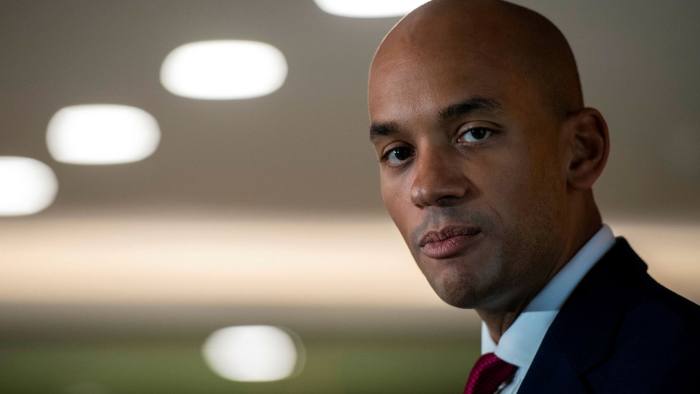
Chuka Umunna is a familiar name in British politics. He is a Nigerian of Igbo roots whose journey from the bustling streets of south London to the halls of Westminster and beyond tells a story of ambition, resilience, and purpose.
From a childhood shaped by rich cultural heritage to a career in law and politics, Chuka Umunna has consistently navigated complex worlds with clarity and vision. His time as a Member of Parliament, shadow cabinet minister, and later, as a business leader reveals a life dedicated to bridging communities, ideas, and opportunities.
In every role, Chuka Umunna has brought a distinctive voice that reflects both his roots and his drive to influence meaningful change.
This article explores his early life, political career, post-parliamentary ventures, and the impact he continues to have on British politics and global leadership.
Chuka Umunna’s Early Life and Igbo‑Nigerian Heritage
Chuka Umunna was born on 17 October 1978 in Lambeth, a vibrant part of south London to a family that blended Nigerian and British roots. His father, Bennett Umunna was an Igbo from Ogbunka in Anambra State, southeastern Nigeria whose journey to the UK was marked by determination and resilience.
From humble beginnings, Bennett built a career in import-export business that brought a sense of entrepreneurship and cultural pride into the household. Chuka’s mother, Patricia Milmo brought a legal perspective and English-Irish heritage. She worked as a solicitor and instilled in him the importance of fairness, discipline, and intellectual curiosity.
Growing up, Chuka Umunna experienced a rich mix of cultures. Family visits to Nigeria exposed him to Igbo traditions, language, and values. He learned early the significance of community, respect for heritage, and the idea that one’s roots can inform purpose in the wider world. These early experiences helped to form a young mind attuned to both the challenges and opportunities of life in a multicultural society.
Education played a central role in Chuka Umunna’s early development. He attended Hitherfield Primary School and Christ Church Primary School before enrolling at St Dunstan’s College, an independent school in Catford. Here, he excelled academically while engaging with a community of peers from diverse backgrounds. This environment allowed him to cultivate both confidence and empathy.
Chuka Umunna’s upbringing was grounded in stories of resilience from both sides of his family. The combination of Igbo determination and British legal tradition gave him a sense of purpose early on. He grew up understanding that identity and heritage are not just personal markers but sources of insight, leadership, and responsibility.
This foundation would later influence his career choices and public service, and set him on a path to become a notable figure in UK politics and beyond.
Legal Career and Early Professional Life
After completing his secondary education, Chuka Umunna pursued law with dedication and curiosity. He studied English and French law at the University of Manchester. He also spent time at the University of Burgundy in France to further broaden his understanding of law in a European context. Later, he completed his professional qualification at Nottingham Law School which equipped himself to practice as a solicitor.
Chuka Umunna began his professional journey as a corporate employment law solicitor in London. In this role, he advised both employees and employers on workplace rights, contracts, and organizational policies. This work honed his analytical skills and gave him a deep appreciation for fairness, negotiation, and structured problem-solving. His legal career also helped him to develop a strong voice for advocacy, and laid the groundwork for his eventual move into politics.
During this period, he remained closely connected to community and social causes. He served on boards of organizations supporting youth and education, including Generation Next, a London-based social enterprise that provides activities and mentorship for young people. These experiences allowed him to witness firsthand the impact of opportunity and guidance on young lives as well as strengthened his belief that public service and community engagement could make a meaningful difference.
Even as he excelled in law, Chuka Umunna’s curiosity about society, governance, and leadership was growing. The combination of legal expertise, cultural awareness, and community involvement gave him a unique perspective. He understood rules, rights, and responsibilities, but also the human impact of policies and decisions. This perspective would become a defining feature of his political career that would enable him to approach legislation, debate, and public service with both rigour and empathy.
Chuka Umunna’s early professional life shows how his foundation in law was not just a career choice but a preparation for leadership. It was a period analytical thinking, advocacy skills, and community commitment intersected, and set the stage for his transition from legal chambers to the parliamentary floor.
Political Career

Chuka Umunna’s entry into politics grew naturally from his legal career and community involvement. He was drawn to issues that connected to fairness, opportunity, and social justice. His understanding of law, combined with his Nigerian heritage and upbringing in south London gave him a perspective that resonated with a diverse electorate.
He became actively involved in the Labour Party in the mid-2000s by working with local branches and youth-focused political groups. He quickly gained a reputation as thoughtful, articulate, and willing to engage on complex issues. In March 2008, he was selected as Labour’s prospective parliamentary candidate for the Streatham constituency. His campaign focused on education, local development, and inclusive economic policies which reflected both his legal expertise and his commitment to community service.
At the 2010 general election, Chuka Umunna was elected as Member of Parliament (MP) for Streatham. He was one of the youngest MPs in London at the time. In his maiden speech, he emphasized the importance of opportunity, equality, and engaging communities in forming policy. His early years in Parliament established him as a voice attentive to both policy detail and human impact.
Chukka Umunna’s potential was quickly recognized within the Labour Party. In October 2010, he was appointed Parliamentary Private Secretary to Labour Leader Ed Miliband, a role that introduced him to the intricacies of party leadership and strategy. His ability to analyze complex policy issues and communicate clearly made him a natural candidate for promotion.
In May 2011, he became Shadow Minister for Small Business and Enterprise where he advocated for policies supporting entrepreneurship, economic growth, and fair regulation. Just months later, in October 2011, he joined the Shadow Cabinet as Shadow Secretary of State for Business, Innovation and Skills. In this role, Chuka Umunna worked on policies designed to make the UK economy more inclusive and sustainable. He spoke often about responsible business practices, financial reforms, and the importance of education and skills in creating opportunity.
His time in the Shadow Cabinet solidified his reputation as a forward-thinking politician capable of addressing national economic and social issues while staying connected to the needs of his constituency.
The political landscape shifted dramatically with the election of Jeremy Corbyn as Labour leader in 2015. Chuka Umunna whose centrist views sometimes clashed with the party’s new direction chose to step down from the Shadow Cabinet and return to the backbenches. During this period, he remained an advocate for evidence-based policy and continued to speak on issues such as economic fairness and the role of Britain in Europe.
His position on Brexit became a defining feature of his later political career. He supported the UK remaining in the European Union and actively participated in debates aimed at scrutinizing government proposals and protecting constituents’ interests. His stance reflected both his cosmopolitan outlook and his recognition of London’s diverse, globally connected communities.
In February 2019, disillusioned with the Labour Party’s direction, Chuka Umunna left to join a new centrist movement called The Independent Group, later known as Change UK. He served as one of its leading voices, and emphasized a pro-Remain, centrist vision for British politics. However, the party struggled to gain traction in elections.
By June 2019, Chuka Umunna had joined the Liberal Democrats with the belief that this platform best reflected his values and policy priorities. He contested the 2019 general election for Cities of London and Westminster but was not elected. Even outside Parliament, he remained a visible figure in debates on economic policy, social justice, and the future of UK governance.
Essentially, Chuka Umunna’s political career reflects a combination of principled leadership, cultural awareness, and policy expertise. From his early days in Labour to his later alignment with centrist parties, he consistently sought to connect policy with the practical realities of everyday people. His journey shows how a politician can balance ambition with authenticity, and identity with public service.
Post‑Politics Career
After leaving Parliament in 2019, Chuka Umunna shifted his focus from elected office to the world of business and global advisory work. His transition shows how the skills, insights, and networks built during a political career can be applied to new arenas, thus creating influence beyond government.
Chuka Umunna joined Edelman, a global communications and strategy firm where he worked on environmental, social, and governance (ESG) initiatives. In this role, he advised companies on how to integrate sustainability and ethical practices into their operations, thereby helping organizations navigate complex regulatory and reputational landscapes. His experience as a legislator and legal professional gave him a unique perspective on corporate accountability and long-term strategy.
In 2021, Chuka Umunna accepted a senior position at J.P. Morgan by becoming Managing Director and Global Head of Sustainable Solutions, and later leading Green Economy Investment Banking for Europe, the Middle East, and Africa (EMEA). In this capacity, he helps companies to secure financing for projects that focus on clean energy, sustainable infrastructure, and environmental innovation. His work sits at the intersection of finance, policy, and social impact which allowed him to continue advocating for responsible development on a global scale.
Even outside of direct politics, Chuka Umunna remains engaged in public discourse. He frequently contributes to conversations on economic reform, corporate responsibility, and the role of diversity and inclusion in business leadership. By leveraging his platform, he continues to influence debates that shape both policy and practice.
Chuka Umunna’s post-politics career exemplifies the continuity between public service and professional influence. His work in ESG and sustainable finance is a natural extension of the values that guided him in Parliament which include fairness, accountability, and a commitment to creating opportunity for communities. It also reflects how a politician’s critical thinking, advocacy, negotiation skills can have meaningful impact in entirely new contexts.
Achievements and Impact
Chuka Umunna’s career is marked by a series of achievements that span politics, law, and business. Each stage of his journey portrays his commitment to fairness, representation, and meaningful public service.
In politics, Umunna made an immediate impression as one of the youngest MPs elected to the UK Parliament in 2010. Representing Streatham, he brought a fresh perspective to Westminster as he connected with a constituency that was diverse, dynamic, and globally minded. His early speeches emphasized opportunity, equality, and practical solutions to economic challenges. This set him apart as a thoughtful and approachable leader.
During his time in the Shadow Cabinet, Chuka Umunna served as Shadow Secretary of State for Business, Innovation and Skills. In this role, he pushed for policies that encouraged entrepreneurship, supported small and medium enterprises, and promoted fairness in the labour market. He became known for his clear communication, policy knowledge, and ability to balance economic growth with social responsibility.
Beyond his political achievements, his Igbo-Nigerian heritage gives him a unique place in public life. He represents a story of cultural pride and diaspora success that shows that identity and heritage can inform leadership in meaningful ways. His visibility as an Igbo-Nigerian in the UK Parliament offered representation for communities that are often underrepresented in British politics.
After leaving elected office, Chuka Umunna’s achievements expanded into business and global advisory work. At Edelman, he helped organizations to implement sustainable and ethical practices. Later, at J.P. Morgan, he led initiatives that supported the green economy, and helped businesses secure financing for renewable energy projects and sustainable infrastructure. His work bridges policy insight with corporate responsibility, and demonstrated that leadership can extend beyond government to shape global practices.
Chuka Umunna has also influenced public conversation on topics such as Brexit, economic inclusion, and responsible corporate governance. His ability to analyze complex issues and communicate them clearly has made him a respected voice in debates about the future of the UK and its relationship with the world.
In essence, Chuka Umunna’s achievements lie not only in the offices he held or the projects he led but also in his ability to inspire others, represent underrepresented communities, and create a bridge between public service, cultural identity, and global impact. His journey shows that leadership is not confined to a single arena but is about influencing society in multiple, meaningful ways.
Personal Life and Values

Outside of politics and business, Chuka Umunna leads a life grounded in family, community, and the values that have guided him from his earliest days. He is married to Alice Sullivan, an employment lawyer, and together they have three daughters. He often speaks about the importance of family support in navigating the pressures of public life, with emphasis on the fact that personal grounding is essential to professional success.
Chuka Umunna’s upbringing which was influenced by his Igbo-Nigerian heritage has played a central role in forming his worldview. From a young age, he observed the resilience, determination, and communal focus of his father’s family, lessons that remain central to his approach to leadership and life. At the same time, his mother’s legal background reinforced the importance of fairness, accountability, and clarity in decision-making. These influences combined to give him a sense of purpose rooted both in heritage and personal responsibility.
Even in his professional career, whether in Parliament or in corporate advisory roles, his values are evident. He prioritizes transparency, ethical practices, and inclusivity. In his business work, he champions sustainability and social responsibility which is a reflection of his belief that leadership involves creating benefits that extend beyond oneself to the wider community.
Chukka Umunna also invests time in mentoring and supporting initiatives that empower young people. He has spoken about the importance of helping the next generation understand their potential and encouraging them to engage meaningfully in the society. This emphasis on mentorship reflects a broader philosophy which affirms that leadership is not only about personal achievement but also about opening doors for others.
Through his personal life and professional conduct, Chuka Umunna proves that values are not abstract principles but actionable guides. His story shows that cultural roots, family support, and ethical convictions can inform a life of impact, bridging politics, business, and community engagement in meaningful ways.
Legacy and Lessons
Chuka Umunna’s journey from south London to the corridors of Westminster and global corporate boardrooms offers lessons that extend far beyond politics. His life shows how identity, values, and determination can combine to create a meaningful impact.
As an Igbo-Nigerian politician, Umunna brought visibility to communities often underrepresented in British politics. His presence in Parliament reminded many that cultural heritage and professional ambition can coexist, and that leadership is enriched by diverse perspectives. By embracing his roots while navigating UK politics, he set an example for young people from diaspora communities seeking to make their voices heard.
Chukka Umunna’s political career also illustrates the importance of principled decision-making. From advocating for small businesses and responsible economic policies to taking a clear stance on Brexit, he consistently emphasized integrity and evidence-based reasoning. His willingness to challenge his own party when it conflicted with his values shows that leadership sometimes requires difficult choices and personal courage.
Beyond politics, Chuka Umunna’s work in sustainable finance and ESG shows that leadership does not end with public office. His post-parliamentary career strengthens the idea that skills developed in one arena – critical thinking, negotiation, and communication can be applied to solve global challenges in entirely new contexts.
For anyone observing his life, the lessons are clear. Heritage is a source of strength, values guide action, and impact is measured not only by titles held but by the tangible difference one makes in communities, policy, and society.
Chuka Umunna’s story encourages young leaders to embrace their identities, pursue excellence, and remain adaptable. It shows that influence and service can take many forms throughout a life.
In Conclusion …
Chuka Umunna’s life is a story of purpose, resilience, and meaningful impact. From his childhood in south London, with his Igbo-Nigerian heritage, to his career as a lawyer, Member of Parliament, shadow cabinet minister, and global business leader, he has consistently connected identity, values, and action.
His journey is proof that leadership is not defined by a single office or role. Whether advocating for fair economic policies in Parliament, representing diverse communities, or guiding companies toward sustainable practices, Chuka Umunna has demonstrated that influence comes from clarity of vision, commitment to principles, and a willingness to engage with the challenges of the world.
For young leaders, professionals, and members of diaspora communities, Chuka Umunna’s life offers inspiration. It is a reminder that heritage can inform purpose, education can open doors, and courage can create opportunities that extend beyond oneself. His story underscores that a meaningful career is built not only on ambition but on service, integrity, and the desire to make a positive difference.
Chuka Umunna remains a trailblazer. A figure whose path bridges politics, business, and culture, as well as leaves lessons for anyone seeking to turn values and heritage into action that matters.
References
- https://en.wikipedia.org/wiki/Chuka_Umunna
- https://www.npg.org.uk/collections/search/person/mp160098/chuka-umunna
- https://www.weforum.org/people/chuka-umunna/
- https://chuka.org.uk/business-advisor/
- https://obvarchive.com/our-communities/black-politicians/chuka-ummuna-mp
- https://www.itv.com/news/2019-06-13/lib-dems-boosted-as-former-labour-turned-change-uk-mp-chuka-umunna-joins
- https://www.standard.co.uk/business/chuka-umunna-interview-esg-jpmorgan-cop26-labour-b965890.html
You might want to check this out …