


Biographies & Personalities
Osita Chidoka: 7 Interesting Things You Didn’t Know About Him

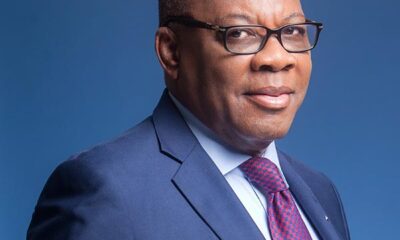
Osita Chidoka is a Nigerian public servant whose life and work go beyond titles. Read these 7 things you did not know about him from his early life and career to his personal passions, achievements, and current focus on national development.

If you have followed public affairs in Nigeria over the past two decades, the name Osita Chidoka will likely sound familiar. Many Nigerians know him as the former Corps Marshal of the Federal Road Safety Corps (FRSC) and later, as Minister of Aviation. Those roles placed him at the centre of important conversations about road safety, aviation reforms, and public administration in Nigeria.
But beyond the official titles and headlines, the story of Osita Chidoka holds several interesting details that are not always highlighted in typical biographies. His journey from a young graduate beginning his career in public service to a nationally recognized policy voice includes moments of quiet determination, bold administrative decisions, and personal milestones that shaped his path.
Here’s the thing, the life of Osita Chidoka is not only about government appointments, it is also about his education across continents, reforms that changed how institutions work, and a continuing interest in governance and national development. These lesser-known parts of his life offer a fuller picture of the man behind the public offices.
So what are the stories that often sit quietly behind the headlines? What experiences helped to define the career of Osita Chidoka, and what surprising details might even long-time observers have missed?
In this article, we explore seven things you probably did not know about Osita Chidoka. From his early life and academic journey to his influence in road safety, aviation, and policy discussions, these insights reveal a deeper side of a Nigerian public servant whose work continues to attract attention.
7 Interesting Things You Didn’t Know About Osita Chidoka
Osita Chidoka is widely recognized for his roles in Nigerian public service. But then, there are aspects of his journey that often go unnoticed. His life combines professional achievements, personal milestones, and experiences that reveal a more complete picture of who he is. The following highlights offer insights into the lesser-known facets of his career, education, and contributions:
A Humble Beginning That Set the Stage for Early Success
Before the public roles and national recognition, Osita Chidoka began life like many Nigerian children whose futures were still unwritten. He was born on 18 July 1971 in Enugu in southeastern Nigeria into a family that valued discipline, education, and service to society. Those early lessons would quietly guide many of the choices he made later in life.
Chidoka spent his formative years in Enugu where he attended St. Vincent De Paul Nursery School and Ziks Avenue Primary School. He later moved on to Union Secondary School, Enugu where he completed his secondary education in 1988. Like many students of his generation, his path was not defined by privilege but by effort, consistency, and the belief that education could open doors.
After secondary school, he gained admission to the University of Nigeria, Nsukka where he studied Management. His years at the university exposed him to ideas about leadership, organization, and governance. These interests would later influence his career in public administration and policy.
One of the lesser-known turning points in the story of Osita Chidoka came during his National Youth Service Corps (NYSC) year. Serving in the Federal Capital Territory, Abuja, he distinguished himself among his peers and received recognition for outstanding service. That performance did more than earn him praise. It led to an opportunity to begin his professional journey with the Federal Capital Development Authority (FCDA), shortly after completing his service year.
This early recognition hinted at a pattern that would repeat itself throughout his career. Even at the start, Osita Chidoka showed a capacity for diligence and leadership that drew attention. From those modest beginnings in Enugu to his first professional steps in Abuja, the foundation of his public service journey quietly took form.
His Education Is Deeply International and Multi‑Dimensional
Education has always been central to the story of Osita Chidoka. While many know he studied at the University of Nigeria, Nsukka, fewer realize his academic journey spans multiple countries and disciplines, and combines management, public policy, global strategy, maritime administration, and law.
He began in Nigeria with a Bachelor of Science in Management from where he gained insights into leadership, organizational systems, and strategic planning. His interest in governance led him abroad to George Mason University in the United States where he earned a Master’s in Public Policy, with focus on governance, logistics, and policy analysis.
Ostia Chidoka further expanded his global perspective with a certificate in Global Strategy and Political Economy from the University of Oxford which enabled him to explore how political systems, economics, and leadership decisions influence national development. In Asia, he obtained a Graduate Diploma in Maritime and Ports Management from the National University of Singapore which equipped him with practical knowledge of transportation systems and infrastructure management.
A deeply personal milestone came in 2021 when he completed a Bachelor of Laws at Baze University, Abuja, to fulfill a dream encouraged by his father and as well enhance his understanding of legal frameworks in governance.
This multi-dimensional education gave Chidoka a unique perspective on managing complex systems. It informed his reforms at the Federal Road Safety Corps and later, in the aviation sector as a reflection of a lifelong commitment to learning and a drive to approach public service with a well-rounded, globally informed mindset.
He Transformed Road Safety Management in Nigeria

One of the defining moments in Osita Chidoka’s career came in 2007 when he was appointed Corps Marshal and Chief Executive of the Federal Road Safety Corps (FRSC) at just 35 years old, making him one of the youngest to lead the agency. At the time, Nigeria faced high rates of road accidents, weak enforcement, and outdated systems for driver and vehicle documentation.
Ostia Chidoka quickly introduced reforms that modernized the FRSC. One of his most notable initiatives was the National Driver’s Licence scheme with biometric features which made driver identification more reliable and created a centralized record of licensed drivers. He also oversaw the redesign of vehicle number plates with improved security and a standardized format that links registration data to national databases for better monitoring and accountability.
Beyond technology, he strengthened collaboration between the FRSC and other transport agencies. The coordinated campaigns and public education programmes promoted safer driving habits, with emphasis seat belt use, speed management, and adherence to traffic laws. Under his leadership, the FRSC became the first law enforcement agency in Africa to achieve ISO 9001 Quality Management System certification. That reflected improved internal processes, operational discipline, and service delivery.
Ostia Chidoka also prioritized road safety awareness by expanding campaigns to drivers, transport unions, schools, and communities nationwide. His efforts focused not just on enforcement but on fostering a culture of safety among motorists.
Many of the systems in use today, including modern driver’s license records and standardized vehicle registration originated from reforms he implemented. His tenure at the FRSC remains a landmark period in his public service career. This was a demonstration of his ability to combine technology, policy, and institutional management to create lasting impact.
As Aviation Minister, He Promoted Local Talent and Infrastructure
After several years of public service in road safety administration, Osita Chidoka was appointed Minister of Aviation of Nigeria in July 2014 by then President Goodluck Jonathan. The aviation sector at the time was already undergoing reforms, and he stepped into the role with the task of sustaining progress while addressing long-standing structural challenges.
One of the ideas he became widely associated with during his tenure was the effort to promote greater participation of Nigerian professionals in the aviation industry. At the time, many local airlines relied heavily on foreign pilots, even though qualified Nigerian pilots were available. To address this imbalance, Osita Chidoka introduced what became popularly known as the “One Nigerian Pilot in the Cockpit” policy.
The policy encouraged airlines operating in Nigeria to ensure that at least, one Nigerian pilot was present in the cockpit of commercial flights. The objective was not to exclude international expertise but to create more opportunities for trained Nigerian pilots while strengthening the country’s local aviation workforce. For many young aviators, the policy represented an important step toward career growth within the domestic aviation sector.
Infrastructure development was another key focus during the period Osita Chidoka served as Aviation Minister. Nigeria’s major airports required upgrades in facilities, runway systems, and passenger handling capacity. During his time in office, progress continued on new airport terminal projects and improvements in airport infrastructure, including developments in airports like Murtala Muhammed International Airport in Lagos and Nnamdi Azikiwe International Airport in Abuja.
Efforts were also directed toward runway rehabilitation, lighting systems, and safety equipment which are essential for reliable flight operations. These improvements aimed to help Nigerian airports meet international aviation standards while improving passenger experience and operational safety.
Ostia Chidoka also supported policies that encouraged capacity development within aviation institutions, including training programmes for aviation professionals and technical personnel. Strengthening local expertise in areas such as aircraft maintenance, airport management, and aviation regulation was seen as an important step toward long-term growth in the sector.
While his tenure as Aviation Minister lasted less than a year before the transition to a new administration in 2015, the period still marked an important stage in the public service journey of Osita Chidoka. His approach combined policy initiatives that supported Nigerian professionals with continued investment in infrastructure that could serve the aviation industry for many years.
For many observers, this phase of his career showed his continued interest in building systems that encourage both institutional efficiency and national capacity. From road safety management to aviation policy, Osita Chidoka’s work often focused on improving how public institutions operate and how Nigerians participate in the sectors that drive the economy of the country.
He Is a Dedicated Public Policy Advocate and Writer

Beyond government appointments, Osita Chidoka has also built a reputation as a thoughtful voice in public policy discussions in Nigeria. Over the years, he has consistently shared his perspectives on governance, education, leadership, and national development through articles, public lectures, and media commentary.
One platform where his ideas regularly appear is his opinion column titled “Bridge Builder,” published in Leadership Newspaper. In these writings, Osita Chidoka discusses practical issues affecting Nigeria, often focusing on governance systems, institutional reforms, and the role of leadership in national progress. His approach tends to combine personal experience from public service with broader reflections on policy and development.
He also participates in conferences, policy forums, and interviews where he shares insights on public administration and governance. Through these engagements, Osita Chidoka contributes to national conversations about how Nigeria can improve its institutions and strengthen democratic accountability.
While many remember him for his work at the Federal Road Safety Corps and the Federal Ministry of Aviation, his role as a writer and policy commentator shows another side of his career. It reveals a long-standing interest in ideas and discussions that extend beyond the responsibilities of public office.
He Has Received Several Honours and Awards
Over the years, the work of Osita Chidoka in public administration and national service has earned him a number of recognitions from professional bodies, institutions, and the Nigerian government.
One of the most notable distinctions he received is the national honour of Officer of the Order of the Federal Republic (OFR). This award is conferred by the Federal Government of Nigeria to individuals who have made significant contributions to national development and public service. The recognition placed Osita Chidoka among a select group of Nigerians whose work has made meaningful impact on public institutions.
In addition to national honours, he has also received awards and professional acknowledgments from several organizations connected to governance, logistics, and leadership development. These recognitions often highlight his contributions to reforms within the Federal Road Safety Corps, particularly the modernization of driver licensing systems and improvements in institutional management.
Traditional institutions have also honoured him for his contributions to society. In his hometown – Obosi in Anambra State, community leaders recognized his public service and conferred on him the chieftaincy title Ike Obosi which can be interpreted as “the strength of Obosi.” Such honours often serve as a way for communities to celebrate individuals who have represented them with distinction on the national stage.
These recognitions tell an important part of the story of Osita Chidoka. They highlight how his efforts in public service, policy advocacy, and institutional reforms have been acknowledged by both formal institutions and local communities across Nigeria.
His Personal Life and Community Engagement Are Part of His Legacy
Away from the responsibilities of public office, Osita Chidoka maintains a life that is closely connected to family, community, and public conversations about Nigeria’s future. While his professional roles often place him in the spotlight, those who follow his journey also recognize the quieter aspects of his life that reveal his values and personal commitments.
Osita Chidoka is married and has children. His family life has largely remained private. But it is clear that family ties and upbringing have played an important role in his outlook on leadership and responsibility. Public service also runs within the wider Chidoka family. His younger brother, Obinna Chidoka served as a member of the House of Representatives of Nigeria who represented the Idemili North and South Federal Constituency in Anambra State.
Beyond family life, Osita Chidoka engages with communities and young Nigerians through speaking engagements, mentorship initiatives, and civic discussions. Over the years, he has participated in leadership forums and public lectures where he shares lessons from his experience in government and policy work. These engagements often focus on leadership ethics, national unity, and the responsibilities of citizens in strengthening democratic institutions.
In recent years, he has also directed more attention to civic advocacy and governance discussions outside partisan politics. In 2024, Osita Chidoka publicly announced his resignation from the People’s Democratic Party, with the explanation that he wished to concentrate on broader efforts aimed at improving governance and public dialogue in Nigeria.
This phase of his life shows another dimension of Osita Chidoka. Beyond the titles he has held in government, he remains involved in conversations about leadership, national development, and civic responsibility. Through community engagement and policy discussions, he continues to contribute ideas and perspectives to Nigeria’s public space.
In Conclusion …
The public life of Osita Chidoka goes far beyond the official titles many people recognize. While he is widely known for serving as Corps Marshal of the Federal Road Safety Corps and later, as Nigeria’s Minister of Aviation, a closer look at his journey reveals many interesting details that are often overlooked.
From his early years in Enugu and his academic journey across several countries, to the reforms he introduced in road safety administration and aviation policy, the career of Osita Chidoka has been built on a steady commitment to public service and institutional improvement. His work helped to modernize driver licensing systems, improve vehicle registration processes, and support professional growth within Nigeria’s aviation sector.
At the same time, his involvement in policy writing, civic discussions, and community engagement shows that his interest in national development extends beyond holding public office. Whether through opinion essays, public speaking, or mentorship, Osita Chidoka continues to contribute ideas to conversations about governance and leadership in Nigeria.
The seven insights explored in this article offer a broader view of the man behind the headlines. They highlight the experiences, education, and personal commitments that have defined his journey over the years.
For readers interested in Nigerian public affairs, the story of Osita Chidoka remains a compelling example of how dedication to service, learning, and civic engagement can leave a lasting mark on national institutions.
References
- https://en.wikipedia.org/wiki/Osita_Chidoka
- https://cme.utsouthwestern.edu/node/117554/bio/59628/view
- https://www.thecable.ng/former-aviation-minister-osita-chidoka-resigns-from-pdp/
- https://networthafrica.com/profile/osita-chidoka
You might want to check this out …