






African History
Bende || The Ancient Igbo Heartland of Trade, Tradition, and Courage

Bende is a historic town and local government area in Abia State, Nigeria. Explore its history, geography, communities, leadership, markets, religion, festivals, food, landmarks, notable people, challenges and future outlook.

Ulochukwu Cave in Bende
Bende, an ancient Igbo heartland located in present-day Abia State, Nigeria holds a remarkable place in the history and cultural life of southeastern Nigeria. Often described as one of the oldest and most influential Igbo settlements, the town has long been known for the courage, enterprise and deep-rooted traditions of its people.
Historically, it served as a major centre of trade and communication linking the hinterlands of the old Eastern Region with larger commercial towns such as Umuahia, Arochukwu and Aba. Today, Bende remains a symbol of Igbo resilience, a community where age-old customs coexist with modern aspirations.
Geographically, Bende sits in the northwestern part of Abia State, blessed with fertile land, rolling hills, and numerous streams that sustain farming and local crafts. Its location made it an economic hub in precolonial times, attracting traders from nearby regions who came to exchange palm produce, yams, livestock and other goods. The old Bende Division, from which parts of modern Abia and Imo States were carved was widely recognized for its rich human and cultural resources.
Bende’s thirteen autonomous communities, including Bende town itself, Uzuakoli, Igbere, Alayi, Item, Itumbuzo, and others each contribute unique customs, festivals and local leadership systems that reinforce communal unity. From the famed Uzuakoli market to the traditional institutions that preserve ancestral values, every aspect of Bende life reflects the enduring spirit of its people.
Despite challenges such as erosion, limited infrastructure, and economic shifts, Bende continues to thrive through the strength of its town unions, vibrant diaspora, and shared vision for sustainable development.
This article explores Bende’s journey, from its historical origins and traditional leadership to its economy, culture and modern challenges, offering a detailed portrait of one of southeastern Nigeria’s most historic and culturally significant regions.
A Brief History of Bende
Bende is one of the oldest and most historically significant areas in Abia State, Nigeria. Its roots stretch deep into the precolonial history of Igbo people with oral traditions and documented research describing it as part of the original heartland of Igbo civilization. The town and its surrounding communities formed part of the Old Bende Division, an important administrative and cultural region that once encompassed several settlements now spread across Abia and parts of Imo State.
According to historical and anthropological studies, the people of Bende trace their ancestry to early Igbo groups that migrated and settled along the fertile plains and hilly terrain of southeastern Nigeria. These settlers established strong kinship-based communities bound by shared customs, age-grade systems and trade networks.
Before colonial rule, Bende stood out as a commercial and cultural hub, attracting traders from Arochukwu, Ohafia and other neighbouring towns. The area was known for its active participation in the Aro trading network which connected the interior Igbo lands with coastal markets through the exchange of palm produce, livestock and local crafts.
During the colonial period, the British recognized Bende’s strategic importance and established an administrative post in the area. The Old Bende Division became one of the major divisions in what was then the Eastern Region, alongside Aba, Owerri and Okigwe. Bende served as a link between the hinterland and the colonial centres of trade and governance. The influence of the division extended far beyond its borders, contributing significantly to the early political and economic development of Eastern Nigeria.
After Nigeria’s independence and subsequent State creations, Bende retained its status as a Local Government Area in Abia State. Its historical role as a centre of leadership, education, and agriculture continued while its people maintained a reputation for industry, courage and unity.
Today, Bende is celebrated, not only for its historical legacy but also for the vital role its communities play in Abia’s socio-economic and cultural development.
Location and Geography
Bende is located in the northwestern part of Abia State, within the southeastern region of Nigeria. It shares boundaries with Ohafia Local Government Area to the east, Umuahia North to the south, Arochukwu to the northeast and Isiukwuato to the north. The headquarters of the local government is in Bende town, which serves as the administrative and historical centre of the area.
Geographically, Bende lies within the humid tropical rainforest zone of southeastern Nigeria. The area is characterized by undulating hills, fertile valleys and rich loamy soil, making it highly suitable for agriculture which is the mainstay of the local economy.
Numerous rivers and streams, such as the Imo River and its tributaries flow through parts of Bende, providing water for farming and domestic use. The region experiences two main seasons: the rainy season (April to October) and the dry season (November to March), with temperatures averaging between 22°C and 32°C throughout the year.
The vegetation is predominantly secondary forest interspersed with farmlands, reflecting a long history of cultivation and settlement. The land supports the growth of major crops such as yam, cassava, cocoyam, maize, palm produce and vegetables which are important both for local consumption and trade. However, parts of Bende, especially in hilly and gully-prone areas, have been affected by soil erosion, a common environmental challenge in Abia State.
Bende’s geographical location and natural features have played a major role in shaping its historical importance as a trade and communication link between the hinterland and other parts of southeastern Nigeria. The terrain and fertile soil continue to sustain the community’s agricultural and economic activities today.
Villages and Communities that Make Up Bende Town
Bende town which serves as the headquarters of Bende Local Government Area in Abia State is made up of several villages that together form the core of the town’s social and administrative structure. Each village maintains its own traditional leadership, age-grade system and cultural identity. Yet, all share strong family ties and communal values that bind them under the larger Bende community.
The major villages that make up the town include Agbamuzu, Uzuakoma, Igbere-Ukwu, Umuimenyi, Amankwo, Umuobasi, Uzuakoli, Umuoche and Umualu. These villages are historically linked through kinship and trade, and most have existed for many generations, maintaining traditional compounds and ancestral shrines that reflect the people’s long history in the area.
Each village contributes to the economic and cultural life of the town. The people are mainly farmers, traders and artisans, with local markets serving as important centres of exchange. Communal cooperation remains strong, with festivals, town meetings and age-grade activities reinforcing unity and development.
Traditional leadership in Bende town operates through the council of elders and the Eze-in-Council who oversee customary affairs and maintain social order. The villages work together in organizing community projects, preserving cultural heritage and representing the town’s interests within the larger Bende Local Government framework.
Through its network of villages, the town continues to embody the values of unity, hard work and respect for tradition that have long defined it as one of the most historic and respected centres of Igbo culture in Abia State.
Leadership and Traditional Authority
Leadership in Bende town reflects the typical structure of governance found across many Igbo communities in southeastern Nigeria where modern administrative systems coexist with indigenous institutions. The town recognizes both traditional and modern authorities, each playing distinct, yet, complementary roles in community organization and development.
At the traditional level, the Eze and his council of elders oversee customary matters, cultural preservation and conflict resolution. The Eze is regarded as the custodian of the people’s heritage and a symbol of unity. His leadership is guided by long-standing customs, and decisions are often made collectively with the advice of titled men, elders and representatives from various age-grade groups.
The age-grade system known locally as “ogbo” remains a strong social institution in the town. It plays a key role in community development, security, sanitation and cultural activities. Each age group contributes labour and resources toward community projects, ensuring that leadership and responsibility are shared across generations.
Alongside traditional authority, Bende operates under Nigeria’s democratic local government structure, with elected officials managing administrative functions through the Bende Local Government Council. The coexistence of these systems allows both traditional and modern leadership to work together on matters such as dispute resolution, infrastructure and social welfare.
Women also play an important role in leadership through organized groups such as the Bende Women’s Association and local Umuada who serve as moral voices and mediators in family and communal affairs.
This balanced structure of governance has contributed to the town’s social stability, respect for culture and cooperative approach to development.
Economy and Resources
The economy of Bende town is primarily agrarian, reflecting the fertile environment and favourable climate of the area. Most residents engage in farming, producing staple crops such as yam, cassava, cocoyam, maize, vegetables and palm produce. The region’s rich loamy soil and reliable rainfall support both subsistence and commercial agriculture, making farming the backbone of local livelihood.
Oil palm cultivation and processing are, especially significant economic activities. Many families produce palm oil and kernel products for household use and sale in local and regional markets. Cassava is processed into garri and fufu which are widely consumed within the community and traded across Abia State. In addition to crop farming, some residents engage in poultry, fish farming and livestock rearing on a small scale.
Trade and commerce also contribute to the economic life of the town. Local markets operate on the traditional four-day Igbo market cycle, providing venues for farmers and traders from within and neighbouring towns to exchange agricultural produce, household goods, and crafts. The town’s strategic location within the old Bende Division historically made it an important link in trade routes connecting Umuahia, Ohafia and Arochukwu.
Bende’s natural resources include fertile agricultural land, timber and water resources that sustain local farming and cottage industries. While the town does not have large-scale mineral exploitation, its agricultural potential remains a major asset. Economic activities are supported by cooperative societies and town unions which help mobilize funds for farming, small businesses and community projects.
In recent years, the community has faced challenges such as soil erosion and limited rural infrastructure which affect farm productivity and transportation. However, local organizations and government initiatives continue to promote agricultural extension services, rural road construction and youth empowerment programmes aimed at improving livelihoods.
Major Markets
Markets play a central role in the social and economic life of Bende town. They serve as gathering points for farmers, traders, artisans and buyers from neighbouring communities. The town’s markets operate based on the traditional Igbo four-day cycle – Eke, Orie, Afor, and Nkwo which determines when trading activities take place and how goods circulate among surrounding villages.
The main market in Bende town is Bende Main Market, locally known as Eke Bende which has operated for generations. It is the largest and most active trading centre in the area, attracting traders from within the local government area and nearby towns such as Uzuakoli, Alayi, Igbere, and Itumbuzo. At this market, agricultural produce such as yam, cassava, palm oil, cocoyam, maize, vegetables and livestock are sold alongside household items, clothing and locally crafted goods.
Uzuakoli Market located a few kilometers away within the same local government area, is also a significant commercial centre. Historically, it served as a hub of trade in the Old Bende Division, connecting interior Igbo communities with external trading routes. The market’s influence contributed to the development of Bende as an important economic zone in precolonial and colonial southeastern Nigeria.
These markets not only support livelihoods but also serve as venues for cultural exchange, community announcements and social interaction. They remain vital to the local economy, sustaining a network of farmers, traders and transporters whose activities link rural production to urban consumption centres such as Umuahia and Aba.
Despite challenges of poor road conditions and limited market facilities, local traders continue to sustain vibrant commercial activities that keep Bende’s traditional market culture alive.
Deities, Totems, Traditional Beliefs and Religion
Before the widespread adoption of Christianity, the people of Bende, like many Igbo communities, practiced traditional religion centered on reverence for ancestral spirits, local deities and natural forces believed to influence human affairs. Shrines dedicated to various divinities were common in compounds and sacred groves, serving as places for sacrifices, rituals and communal decision-making.
Among the notable traditional deities once venerated in Bende and its surrounding communities are Ngwu regarded as a guardian spirit associated with justice and protection and Ala, the earth goddess who oversees morality, fertility and the sanctity of the land. The people also paid respect to Chi, the personal spirit believed to guide each individual’s destiny, and to ancestral spirits known as Ndi Ichie who were honoured through offerings and prayers.
Certain animals and natural elements were regarded as totems and were not to be harmed as they were believed to embody protective spirits. The specific totems varied from one village to another, depending on lineage traditions and ancestral experiences.
With the coming of Christian missionaries in the late 19th and early 20th centuries, traditional worship gradually gave way to Christianity. Missionary activities, especially by the Church Missionary Society (CMS) and later the Roman Catholic Church led to the establishment of churches and schools in Bende and Uzuakoli. Today, Christianity is the dominant religion in Bende, with a strong presence of Anglican, Catholic and Pentecostal congregations.
Nevertheless, traces of traditional beliefs remain evident in certain cultural festivals, naming practices and moral customs that continue to emphasize respect for the land, elders and community values.
Festivals and Cultural Life
Bende town has a rich cultural heritage that is expressed through festivals, traditional ceremonies, music, dance and other community activities. Cultural life in the community revolves around both agricultural cycles and social events, reflecting the town’s strong communal values and historical traditions.
One of the most important cultural events is the New Yam Festival celebrated annually to mark the end of the farming season and the beginning of the harvest. This festival involves offering the first yams to the gods and ancestors, followed by feasting, masquerade displays, drumming and dancing. It serves as both a religious observance and a social gathering that unites families, clans and entire villages.
Masquerades are another central aspect of Bende’s cultural life. These masquerades appear during festivals, funerals and other important ceremonies to entertain, convey moral lessons and uphold tradition. Music, including drums, flutes and traditional Igbo instruments, accompanies dance performances and rituals.
Title-taking ceremonies also form part of the town’s cultural calendar. Men who achieve certain social, moral or economic milestones are honoured with chieftaincy titles which confer respect, responsibility and recognition within the community. These ceremonies are often accompanied by feasts, performances and communal celebrations.
In addition to festivals, social organizations such as age-grade groups, women’s associations and town unions play a role in preserving cultural norms and organizing community events. These groups ensure that customs, oral histories and local knowledge are passed down to younger generations.
While Christianity is now the dominant religion in Bende, traditional festivals and cultural expressions continue to play a significant role in reinforcing identity, fostering community cohesion and celebrating the history of the town.
Town Unions and Community Organization
In Bende town, town unions and community organizations play a vital role in local governance, social cohesion and development. These groups are formed by residents to address communal needs, manage projects and represent the town in interactions with government and external organizations.
The Bende Town Union serves as the primary organization for coordinating development efforts. It oversees projects such as road maintenance, health initiatives, educational support and security arrangements. The union also mobilizes funds from residents both within the town and from the diaspora, enabling community-driven infrastructure and social programs.
Age-grade groups, known locally as ogbo, are another key feature of community organization. Members of each age group work together to carry out tasks for the benefit of the town, including cleaning public spaces, assisting in communal labour and participating in festivals and social ceremonies.
Women’s associations and the Umuada also play important roles in Bende. They contribute to conflict resolution, mediate family and community disputes and participate in the planning and execution of cultural and social events.
These institutions operate alongside modern administrative structures, creating a complementary system where traditional and contemporary community leadership work together to promote development and maintain social order.
The strong presence of town unions and community groups in Bende has contributed significantly to the town’s stability, resilience and ability to execute local development initiatives effectively.
Local Dishes and Cuisine
The cuisine of Bende town reflects the culinary traditions of the Igbo people in southeastern Nigeria, emphasizing locally grown ingredients and communal eating. Food in Bende is often hearty, spicy, and prepared with a variety of fresh vegetables, palm oil and proteins.
Here are specific foods commonly enjoyed in the region around Bende (Abia State, Nigeria:
- Ofe Achara: A soup made from achara and mgbam in palm oil, often served with fufu.
- Abacha: Shredded cassava salad, seasoned with palm oil and local spices.
- Nkwobi: A spicy cow‑foot dish commonly served in the Igbo region;
- Banga soup: Palm‑nut based soup
- Poundo Cocoyam: A swallow made from processed cocoyam
Bende cuisine is not only a reflection of the town’s agricultural resources but also an expression of cultural identity, bringing families and communities together during meals, celebrations and traditional events.
Prominent Sons and Daughters
Several communities in the wider Bende area and neighbouring towns have produced notable people in politics, law, business and the arts. Some locally recognized eminent figures are associated with towns inside the Old Bende Division.
Here are some prominent individuals from the Bende area:
- Nnenna Elendu‑Ukeje – A Nigerian politician elected to the House of Representatives in 2007 for the Bende Federal Constituency in Abia State. She served as Chairman of the House Committee on Foreign Affairs. She is from Alayi in the Bende area.
- Amadi Guy Ikwechegh – A Nigerian naval officer who served as Military Governor of Imo State from 1986 to 1989.
- Benjamin Okezie Kalu – Member of the House of Representatives representing the Bende Federal Constituency. Known for various legislative and constituency‑projects efforts in Bende.
- Ogwo E. Ogwo – Nigerian academic from Igbere in Bende LGA, served as Vice‑Chancellor of Abia State University, Uturu from September 2000 to September 2005.
- Chinedu Ikedieze – Nigerian actor popularly known for his role in the film Aki and Pawpaw.
Landmarks and Tourist Attractions
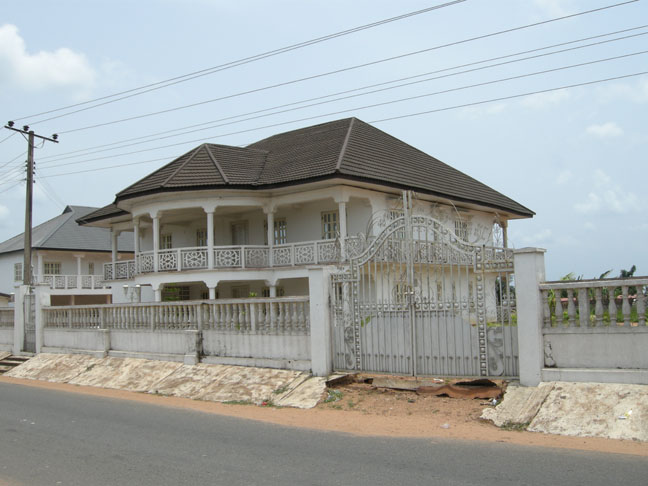
Landmarks of Igbere
Bende town and its surrounding communities in Abia State have several notable landmarks and sites of interest:
Ulochukwu Cave
The Ulochukwu Cave located in the Alayi community is recognized by the Abia State Government as a heritage site. It is valued for its historical and natural significance and is considered for preservation and tourism development.
Natural Springs and Waterfalls
The Igbere area features several natural attractions, including the Igwu River, Osuwowo Falls and springs such as Ikeogwu and Ogbonta at Ozara. These sites are appreciated for their scenic beauty and provide a tranquil environment for visitors.
Historic Vernacular Architecture
Bende is home to historic buildings that reflect early Igbo architectural traditions. Examples include the earthen courtyard house of Chief Ochu Kalu at Ndi Okereke Abam built before the Aro expedition of 1901–1902. These structures showcase traditional settlement patterns and construction techniques.
Ezeukwu Bridge
The Ezeukwu Bridge, currently under reconstruction is an important infrastructural landmark in Bende. It serves as a vital transport link within the local government area, connecting Bende to neighbouring communities and facilitating trade and mobility.
These landmarks, combining natural beauty, historical significance and infrastructure, highlight the cultural heritage and development potential of Bende. With ongoing government efforts to preserve heritage sites, the town has potential as a destination for local tourism.
Challenges Facing Bende
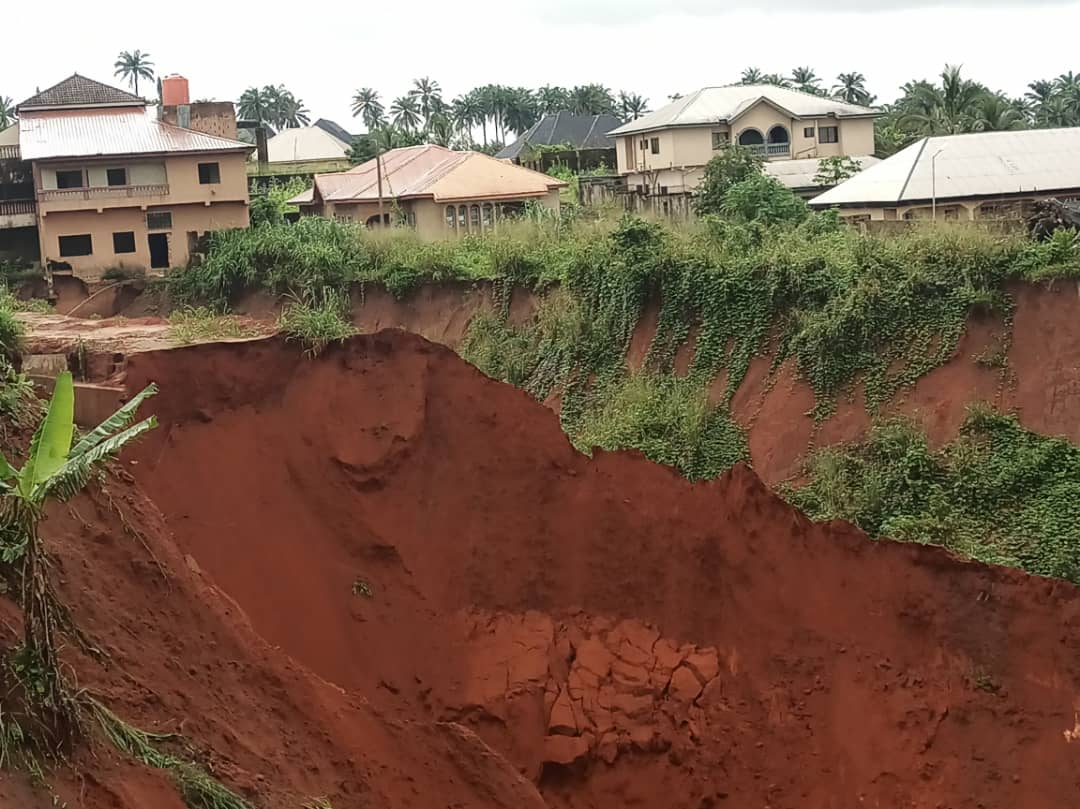
Erosion menace in Bende
Bende, like many communities in southeastern Nigeria, faces a range of socio-economic and environmental challenges that affect development and quality of life.
Soil erosion is a major environmental problem in Bende. The area’s undulating terrain, combined with heavy rainfall and poor land management has caused severe gully erosion in parts of the area and surrounding villages. This has led to the destruction of farmland, homes and roads, disrupting agriculture and local livelihoods.
Bende suffers from inadequate road networks and transportation infrastructure. Many rural roads are poorly maintained, making access to markets, schools and healthcare facilities difficult, especially, during the rainy season. The need for improved bridges and roads remains a pressing concern.
Healthcare services in Bende are limited. While primary healthcare centres exist, they are often under-resourced, lacking essential equipment, medicines and qualified medical personnel. This makes it challenging for residents to access quality healthcare.
A significant proportion of young people in Bende face unemployment or underemployment. Although agriculture remains a major occupation, mechanization and modern business opportunities are limited, leading many youths to seek work outside the town or migrate to urban centers.
Apart from erosion, deforestation and unsustainable farming practices have contributed to land degradation. This affects crop yields and reduces the availability of timber and other natural resources that the community relies on.
These challenges collectively impact the social, economic and environmental well-being of Bende. Local authorities, community organizations and government initiatives continue to address these issues, focusing on erosion control, infrastructure development and youth empowerment programmes.
Positive Outlook and Opportunities
Despite its challenges, Bende has significant potential for development and growth, offering opportunities in agriculture, tourism, education, and community-driven initiatives.
The fertile land and favourable climate continue to make agriculture a key opportunity for economic growth. There is potential to expand commercial farming in crops such as yam, cassava, cocoyam, maize and palm produce. Value-added processing, such as garri production, palm oil processing and cassava flour production can increase income for local farmers and create jobs for youths.
The natural attractions such as the Ulochukwu Cave, springs, waterfalls and historic vernacular architecture provide opportunities for tourism development. With proper infrastructure and marketing, Bende could attract domestic and regional tourists interested in cultural heritage, nature, and history.
Youth empowerment programmes, vocational training and microfinance initiatives offer opportunities for entrepreneurship and skills development. Many youths are engaged in small businesses, farming and trade, and with support from town unions and cooperatives, these ventures can be scaled for greater impact.
Strong community organizations, including town unions, age-grade groups and women’s associations create a framework for local development and social cohesion. These organizations can spearhead projects in education, health, infrastructure and cultural preservation, ensuring sustainable growth and empowerment.
Government projects such as the reconstruction of the Ezeukwu Bridge and ongoing road improvements are improving transportation and accessibility. Better infrastructure enhances trade, mobility and access to services, creating an enabling environment for business and development.
With these opportunities, Bende has a positive outlook for socio-economic development, combining its rich cultural heritage with practical initiatives that can improve livelihoods, attract investment and strengthen community resilience.
In Conclusion…
Bende stands as a remarkable example of Igbo heritage, combining rich history, vibrant culture and resilient communities. From its fertile lands and thriving agricultural economy to its historic landmarks, festivals and strong social structures, Bende embodies the spirit of tradition and progress.
While the area faces challenges such as soil erosion, inadequate infrastructure and youth unemployment, its strong community organizations, abundant natural resources and ongoing government initiatives provide a solid foundation for growth and development.
Opportunities in agriculture, tourism, education and entrepreneurship position Bende for a promising future, allowing it to preserve its cultural identity while embracing modern development.
The town’s prominent sons and daughters, active town unions and age-grade systems continue to inspire unity and progress. The story of Bende is one of courage, resilience and enduring cultural pride. The story of a town that honours its past, celebrates its present and looks forward to a future full of potential.
References
- https://en.wikipedia.org/wiki/Bende%2C_Nigeria
- https://www.researchgate.net/publication/356191302_ORIGIN_MIGRATION_AND_SETTLEMENT_IN_PRE-COLONIAL_OLD_BENDE_DIVISION_OF_SOUTHEASTERN_NIGERA
- https://mylg.ng/abia/bende/
- https://phd-dissertations.unizik.edu.ng/repos/81373579950_141590029113.pdf
- https://igbere.com/eminent.htm
- Vanguard (local news) — Erosion destroys buildings in Bende community. Reporting on recent erosion problems and community appeals.
You might want to check this out …