



African History
Oguta || The Lake Town of Imo State

Oguta is a historic lake town in Imo State, South East Nigeria. Explore the history, geography, villages, leadership, economy, markets, beliefs, festivals, food, notable people, attractions, challenges and future outlook of Oguta.

Oguta – The Lake Town
Oguta, often called the Lake Town of Imo State is one of the most captivating destinations in southeastern Nigeria. Blessed with the serene waters of Oguta Lake – acclaimed the largest natural lake in the region, its identity is deeply tied to its geography, history and vibrant culture.
Beyond its natural beauty, Oguta is a community where tradition, enterprise and spirituality flow together like the waters that define it. From the mythic tales of the lake goddess Uhamiri to the legacy of pioneering figures like Flora Nwapa and Justice Chukwudifu Oputa, the town stands as both a symbol of Igbo resilience and a beacon of cultural pride.
Situated in the lush, riverine stretch of Imo State, Oguta thrives on fishing, farming, oil and gas exploration and tourism. The town’s rhythm is set by its markets, festivals and lakefront life where canoes glide quietly at dawn and drums echo during community celebrations.
Its people, organized into several villages and bound by a deep sense of kinship, continue to uphold customs that have endured for centuries, even as modernity reshapes their landscape.
To understand the ancient town is to explore the harmony between nature and culture. It is to see how a town surrounded by water has navigated history, sustained its economy, nurtured creativity and kept its spiritual roots alive.
This article offers a rich and factual journey through Oguta – its origins, governance, beliefs, economy, landmarks, challenges and the enduring promise that makes it one of Nigeria’s truly special places.
A Brief History of Oguta
The town of Oguta, located in Imo State in Nigeria’s South-East region has its roots as a riverine settlement perched on the east bank of the natural body of water now known as Oguta Lake.
Scholars link the early settlement of Oguta to migration and trade patterns in the Niger Delta hinterland. According to a study of the trans-Atlantic slave trade in the region, Oguta was opened up as an inland port, taking advantage of waterways that linked the lake via the lower Njaba and Urashi rivers to the Atlantic coast.
Its importance in trade was both agricultural (palm oil, yam, cassava) and as a route for goods to move inland or toward the coast.
In the colonial era, Oguta lake and connecting waterways became key to export and administration. The shores of the lake and its navigable links allowed the British-era firms such as the United African Company (UAC) to evacuate palm produce, and the lake was noted in official lakes-database records as being used in the colonial period.
During the Nigerian Civil War (1967-1970), Oguta Lake’s strategic position again came into focus. The lake and its tributary routes served as marine bases for the Biafran navy and later had strategic relevance for military movements.
Throughout its development, Oguta retained a strong cultural identity. Its people refer to it as “Ugwuta” or “Ugwunta” in older records, deriving from local topography of highlands (“ugwu”) near the lake shore.
Over time, as trade and administration expanded, the town grew from a cluster of riverine villages into a township that now comprises both an “old” section representing traditional village groupings and a “new layout” for newer residential and commercial development.
Thus, the history of this lake town is shaped by its geography, by movement and commerce, and by colonial and post-colonial developments. These factors have combined to give the town its distinct character as a lake town which bridges tradition and modernity.
Location and Geography

Oguta Lake
Oguta is located in the northwestern part of Imo State, in southeastern Nigeria. It lies within the tropical rainforest belt of the Niger Delta basin and serves as the administrative headquarters of Oguta Local Government Area. The town sits about 40 kilometers northwest of Owerri, the State capital, and shares boundaries with communities such as Izombe, Awa, Ejemekwuru, Orsu-Obodo and Egwe. Its geographical coordinates are approximately latitude 5°43′N and longitude 6°48′E.
The town’s defining physical feature is Oguta Lake, a natural freshwater lake formed by the confluence of the Njaba and Utu rivers which later merge with the Urashi River. The lake covers about 180 hectares and has an average depth of 8 meters, making it the second-largest natural lake in Nigeria after Lake Chad.
The water is remarkably clear and non-saline, distinguishing it from the brackish waters of the Niger Delta creeks. A famous natural wonder at Oguta is the spot where two rivers meet – one blue and one muddy, yet, they flow side by side without visibly mixing, a phenomenon often cited by locals and visitors alike.
Oguta landscape is largely flat and low-lying, with fertile alluvial soils ideal for agriculture. Surrounding farmlands support the cultivation of oil palm, cassava, yam, maize and vegetables. The lake also sustains a thriving fishing industry, with species such as tilapia and catfish forming a vital part of the local diet and economy.
The area experiences a humid tropical climate characterized by two main seasons: the rainy season (April to October) and the dry season (November to March). Average annual rainfall ranges between 2,000 and 2,500 millimeters while temperatures remain warm throughout the year, averaging between 25°C and 30°C. These climatic and soil conditions support lush vegetation and biodiversity typical of southern Nigeria’s rainforest region.
Because of its riverine setting, water transport plays a role in local life. Wooden canoes and motorboats are used for fishing, local trade and commuting between villages along the lake’s shores. The lake’s natural beauty and navigable channels have also made it a potential site for eco-tourism and recreation.
Oguta’s geography has profoundly shaped its history, economy and culture. Its location along navigable waterways made it an early centre of trade and interaction between inland Igbo communities and the Niger Delta coastal markets.
Today, the town continues to benefit from this advantageous position, balancing its natural heritage with ongoing efforts in tourism, fishing and agriculture.
Villages and Communities That Make up Oguta
Oguta is a cluster of closely linked villages and communities that together form the heart of Oguta Local Government Area in Imo State. Traditionally, the town is divided into several autonomous communities, each with its own leadership structure, village heads and family lineages. These communities maintain strong cultural ties, common ancestry and shared traditions that reflect the deep-rooted kinship among the people.
The core Oguta town consists of about 27 traditional villages which together make up what is often referred to as Oguta Ancient Kingdom. Some of the well-known villages include Egbuoma, Umuapu, Umuorji, Osemotor, Abatu, Enigbo, Nkwesi, Obor, Umuokuta, Umukosi, and Umuenechi. These villages form the original settlement clusters that developed around the lake and along the riverbanks, giving the town its characteristic spread of water-connected communities.
Beyond these core areas, the larger Oguta Local Government Area includes several neighbouring autonomous communities such as Izombe, Ejemekwuru, Awa, Akabor, Egwe, Orsu-Obodo and Nnebukwu. Each community maintains its own traditional ruler and council of elders. However, they share common administrative ties under the Oguta LGA headquarters situated in Oguta town.
These villages and communities are linked not only by geography but also by a common history of trade, fishing and farming. Many families maintain ancestral homes within the original village areas even when living in newer extensions such as Oguta New Layout, a growing residential and commercial zone that reflects the town’s modernization.
The social organization of the town revolves around these village units which serve as the foundation for political representation, cultural festivals and community development projects. Each village has recognized age grades, women’s associations and youth groups that contribute to the governance and progress of the community.
Essentially, the villages and communities that make up Oguta form a living network of tradition and progress that preserves the customs of their ancestors while embracing the development that modern life brings.
Leadership and traditional authority
Oguta’s local leadership works in two related systems. It operates a dual leadership structure that combines traditional authority with modern local governance. The town serves as the administrative headquarters of Oguta Local Government Area, one of the 27 LGAs in Imo State under the State’s formal political system.
Traditional leadership in Oguta is headed by a monarch known as the Eze-Igwe of Oguta. The Eze-Igwe is the custodian of the town’s customs, traditions and cultural heritage. He presides over traditional matters, community disputes and ceremonies, and works closely with a council of chiefs and elders who represent the various villages within the town. These traditional institutions ensure that age-long customs are preserved while maintaining social harmony among the people.
In addition to the Eze-Igwe, each of the surrounding autonomous communities within the larger Oguta Local Government Area such as Izombe, Ejemekwuru, Awa and Orsu-Obodo also has its own recognized traditional ruler and council of elders. These leaders are registered under the Imo State Council of Traditional Rulers and serve as intermediaries between their people and the State government.
The coexistence of traditional authority and modern administration allows the community to balance its historical governance structures with contemporary political organization. This system helps maintain community order, promote development projects and preserve the cultural identity of the people.
Economy and Natural Resources

Oguta has a mixed economy that draws from agriculture, fishing, trade and oil exploration. The town is blessed with fertile soil and lies along the banks of Oguta Lake and the River Niger, making it ideal for farming and fishing.
Major agricultural produce from the area includes cassava, yam, maize, palm produce, plantain and vegetables which are cultivated both for subsistence and for local trade. Fishing also plays a major role in the local economy, with many residents depending on the lake for daily income.
In addition to agriculture, Oguta is rich in crude oil and natural gas. The town hosts oil exploration activities by multinational companies such as Shell Petroleum Development Company (SPDC) which has operated in the area for decades. This has made the town one of the oil-producing communities in Imo State, contributing significantly to the State’s revenue base.
Trade and small-scale businesses thrive around the major markets where farm produce, fish and manufactured goods are sold. The town’s proximity to other commercial centres like Orlu and Owerri also enhances its trading activities and mobility of goods.
Despite challenges such as environmental degradation from oil exploration and fluctuating agricultural productivity, Oguta’s economy remains vibrant and continues to support its growing population.
Major Markets
Oguta has several active markets that serve as important commercial hubs for residents and neighbouring communities. The most prominent among them is Eke Oguta Market located near the town centre. It operates mainly on the traditional four-day Igbo market cycle and is known for the sale of foodstuffs, fish, palm produce, household items and clothing.
Another notable market in the area is the Ogene Market which attracts traders from nearby towns such as Izombe, Orsu-Obodo and Awa. It serves as a major point for the exchange of agricultural produce, fresh fish and other local goods.
Smaller community markets, including Afor Nnebukwu and Nkwo Oguta, also contribute to the town’s local economy, providing opportunities for daily trade and social interaction.
These markets not only sustain economic activity but also serve as cultural gathering points where traditional values and social relationships are maintained.
Deities, Totems, Traditional Beliefs and Religion
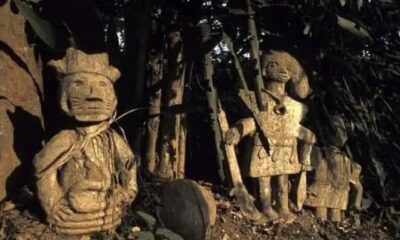
Oguta is deeply rooted in traditional Igbo spirituality which coexists today with Christianity. Historically, the people of the town held strong beliefs in local deities, ancestral spirits and natural forces which they considered central to community life and moral order.
The most revered deity in Oguta is Uhamiri, also known as Ogbuide, the goddess of Oguta Lake. She is believed to be a powerful water spirit associated with beauty, wealth, fertility and the well-being of the community.
Shrines dedicated to Uhamiri can still be found along the banks of Oguta Lake where rituals and annual sacrifices were traditionally offered to seek her blessings or appease her during times of hardship.
Another important spiritual element in Oguta’s traditional belief system is Ndebunze, or ancestral spirits. The people honour their ancestors through periodic festivals and family rituals which are believed to maintain harmony between the living and the dead.
Totems such as certain species of fish found in Oguta Lake are also respected by some families who consider them sacred and do not eat them as a sign of reverence to their lineage spirits.
Over time, Christianity has become the dominant religion in Oguta, with denominations such as the Catholic Church, Anglican Communion and various Pentecostal churches widely established in the town. However, many residents still acknowledge aspects of their traditional heritage, blending old beliefs with modern faith practices in ways that preserve cultural identity.
Festivals and Cultural Life
Oguta is known for its rich cultural heritage and vibrant festivals that reflect the people’s history, beliefs and communal spirit. Among the most notable celebrations is the Omerife (New Yam Festival) which marks the end of the farming season and the beginning of harvest.
It is an annual event that brings indigenes home from across Nigeria and abroad. During the festival, the first yam is offered to the gods and ancestors in thanksgiving before being eaten by the people. The occasion is celebrated with traditional dances, music, masquerades and communal feasting.
Another significant celebration is the Uhamiri Festival held in honour of the water goddess of Oguta Lake. Although not as widespread today, the festival was traditionally observed with processions, songs and rituals at the lakeside to seek the goddess’s blessings for fertility, prosperity and peace.
Masquerade displays are also an important part of Oguta’s cultural life, particularly during festive seasons and community events. These masquerades serve both entertainment and spiritual purposes, as they are believed to embody ancestral spirits.
Oguta’s cultural life extends beyond festivals. The town is known for its traditional music and dance styles such as Ekwe, Ogene, and Atilogwu which are performed at ceremonies, weddings and social gatherings.
Despite modern influences, many of these cultural expressions continue to thrive, reflecting the people’s commitment to preserving their heritage while embracing contemporary life.
Town Unions and Community Organization
Oguta has a well-structured system of community organization centered around its town unions and village associations. The main umbrella body is the Oguta Town Union (OTU) which serves as the central administrative and developmental organization for all indigenes, both at home and in the diaspora. The OTU works closely with traditional authorities and government representatives to promote peace, development, and social welfare in the community.
Each of the villages that make up Oguta has its own local development union that operates under the general supervision of the OTU. These village unions coordinate community projects such as road construction, school rehabilitation, youth empowerment and health initiatives. They also play important roles in conflict resolution and maintaining social order.
The Oguta Town Union is also known for mobilizing collective efforts among indigenes living outside the town through diaspora branches in major Nigerian cities and abroad. These branches contribute financially and technically to local development projects and cultural preservation programs.
In addition to the OTU, women and youth organizations play active roles in community life. The Oguta Women Association, for example, is involved in community sanitation, market regulation and advocacy for education and family welfare. Youth groups often organize sports and cultural events that strengthen unity and keep young people engaged in positive activities.
This combination of traditional leadership and organized civic structures helps the town maintain a strong sense of communal responsibility and cultural continuity.
Local Dishes and Cuisine
The people of Oguta share a rich culinary tradition typical of the wider Igbo culture, with dishes that make use of locally grown ingredients such as yam, cassava, vegetables, palm oil and fish. Because the town lies beside Oguta Lake and the River Njaba, fresh fish is a major part of the local diet.
A popular delicacy in the area is Ofe Owerri, a thick vegetable soup made with assorted meats, dried fish and local greens. It is often eaten with pounded yam or fufu. Another favourite is Ofe Onugbu, known for its distinct taste and nutritional value.
Fish pepper soup prepared with fresh catfish or tilapia from the lake is a common meal served at homes and gatherings. Dishes such as ukodo, abacha andakpu are also widely enjoyed. Palm wine tapped from local raffia palms remains a popular traditional drink, often served during festivals and ceremonies.
The cuisine reflects the people’s deep connection to their environment, using fresh, natural ingredients and simple cooking methods passed down through generations.
Prominent Sons and Daughters of Oguta
Over the years, Oguta has produced a number of remarkable men and women who have made significant contributions to Nigeria’s social, political, literary and cultural development. These individuals have distinguished themselves in their respective fields while proudly representing their hometown at State, national and international levels.
Below are some of the most notable figures from Oguta:
- Flora Nwapa – internationally recognized novelist and publisher. Her novels and literary work drew from Oguta culture and contributed to modern African literature.
- Mary Nzimiro – a pioneering businesswoman and activist from Oguta, known for retail and trading activities and for community philanthropy. Schools in the area carry family legacies.
- Ada Priscilla Nzimiro – a medical graduate with roots in Oguta; recorded as the first woman from Igboland to graduate as a medical doctor. Her family legacy includes the Priscilla Memorial Grammar School.
- Francis Arthur Nzeribe – businessman and former senator; an influential, sometimes, controversial national figure.
- Justice Chukwudifu Oputa – One-time Supreme Court justice and chair of the Oputa Panel; he was born and educated in local Oguta schools and retained deep ties to the town.
- Sir Mike Mbama Okiro – former Inspector General of Police.
- Charles Chukwuemeka Oputa (better known as “Charly Boy”) – Well-known Nigerian musician, television personality and social activist.
- Doris Nkiruka Uzoka‑Anite – Politician and medical doctor who has held ministerial roles in Nigeria.
These persons are examples of the contributions of Oguta to national life in literature, public service, entertainment, law and commerce.
Landmarks and Tourist Attractions
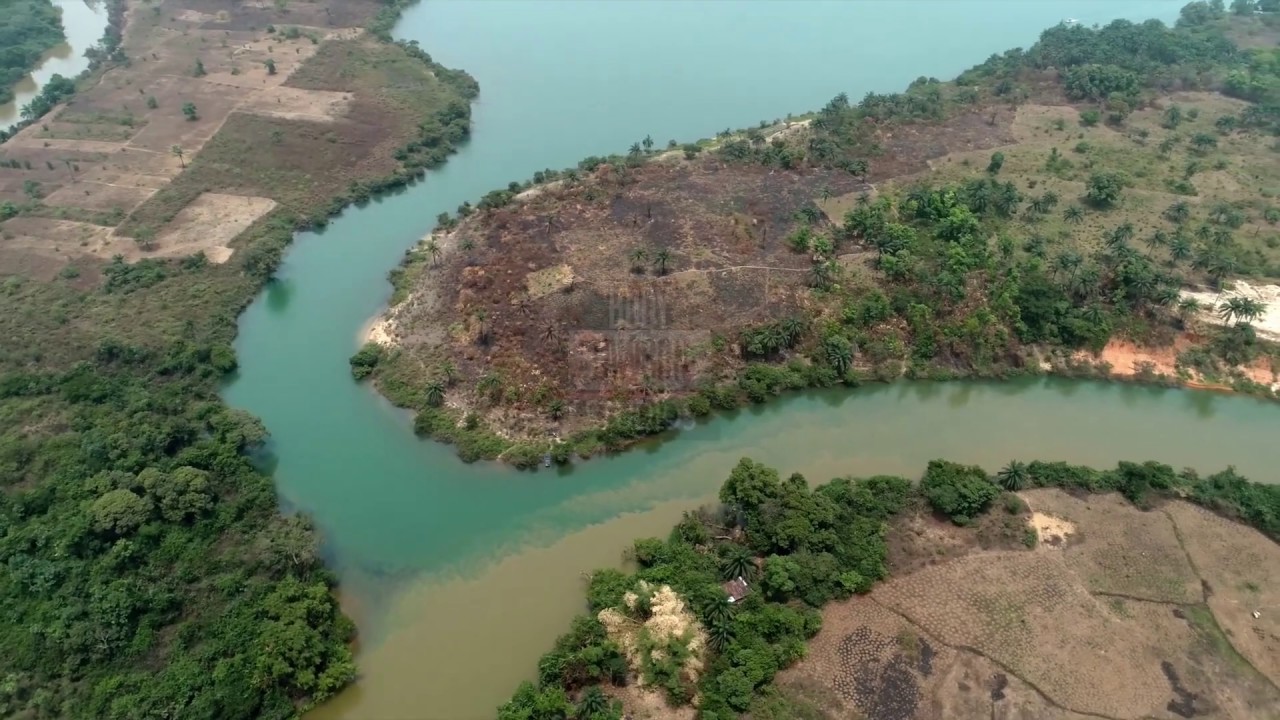
Urashi River and Oguta Lake Wonder
Oguta is one of the most popular tourist destinations in Imo State, largely because of its beautiful natural scenery and rich cultural heritage. The town’s most famous attraction is Oguta Lake, the largest natural lake in southeastern Nigeria and the second largest freshwater lake in the country, after Lake Chad.
The lake is notable for its clear blue-green water and for its confluence with the Urashi River, where the two bodies of water meet but do not mix, considered a rare natural phenomenon often called the “meeting point of two waters.” The lake provides opportunities for boating, fishing and sightseeing and serves as the centrepiece of the Oguta Lake Holiday Complex, a State-managed resort that includes a golf course, swimming pool, relaxation spots and accommodation facilities.
Another notable site is the Uhamiri Shrine located near the lakeside. It is dedicated to Uhamiri (also called Ogbuide), the revered water goddess of the town. The shrine attracts visitors interested in learning about the spiritual and cultural traditions of the people.
Oguta also features several colonial-era and historical landmarks, including St. Mary’s Catholic Church, one of the oldest churches in the region and Mary Nzimiro’s historic residence which stands as a testament to the life and achievements of one of Nigeria’s earliest female entrepreneurs.
The town’s natural landscape, with its rolling greenery and serene waters continues to attract tourists, researchers and filmmakers. The combination of scenic beauty, cultural heritage and historical depth makes the town a leading tourist destination in southeastern Nigeria.
Challenges the Town Faces

Spillage due to oil theft
Despite its natural beauty and economic potential, Oguta faces a number of developmental and environmental challenges. One major concern is environmental degradation resulting from oil exploration and related industrial activities.
The operations of oil companies in and around the area have contributed to issues such as water pollution, loss of aquatic life and soil contamination which affect fishing and farming – two key sources of livelihood for residents.
Another pressing challenge is infrastructure decay. Many internal roads within the town are in poor condition, particularly during the rainy season which hampers trade, tourism and transportation. Inadequate electricity supply and limited access to modern healthcare and educational facilities also pose difficulties for residents.
Youth unemployment remains a significant social issue, with limited local industries and job opportunities to absorb the growing population. This has led some young people to migrate to larger cities in search of better prospects.
The tourism potential of the town, though vast, is still underdeveloped due to insufficient government investment, poor maintenance of the Oguta Lake Holiday Complex and inadequate promotion of its cultural heritage sites.
However, there are ongoing calls from both the local population and the Imo State Government for improved infrastructure, sustainable oil exploration practices and better management of the lake and surrounding ecosystem to restore the environmental and economic vitality.
Positive Outlook and Opportunities
Despite its challenges, Oguta holds strong prospects for growth and revitalization. The town’s unique combination of natural beauty, cultural depth and strategic location along the Oguta Lake gives it immense potential for tourism, agriculture and eco-friendly investments. With proper management, the Oguta Lake Holiday Complex could be transformed into a top-tier tourist destination in southeastern Nigeria, attracting both domestic and international visitors.
The growing interest in eco-tourism and cultural heritage tourism presents an opportunity for the community and government to collaborate on sustainable projects that promote local employment and environmental conservation. Restoration of the lake’s ecosystem, coupled with responsible oil exploration and improved infrastructure could significantly boost livelihoods and enhance the image of the town as a peaceful waterfront town.
Agriculture and fisheries remain viable economic sectors, with room for innovation through mechanized farming, aquaculture and food processing ventures. The town’s fertile land and access to freshwater make it suitable for year-round cultivation and agribusiness development.
In addition, Oguta’s educated population and strong network of town unions and diaspora associations provide a solid foundation for community-driven development. Many indigenes in various parts of Nigeria and abroad continue to contribute to projects that support education, health care and youth empowerment in the town.
With consistent government attention, private-sector involvement and community participation, Oguta can harness its natural and human resources to achieve sustainable development and reclaim its place as one of the most promising towns in Imo State.
In Conclusion…
Oguta stands out as one of Imo State’s most remarkable towns – a place where nature, history and culture blend in harmony. From the tranquil expanse of Oguta Lake to its storied traditions and industrious people, the town embodies both the beauty and complexity of life in southeastern Nigeria. Its history of enterprise, scholarship and resilience is reflected in the achievements of its sons and daughters who continue to make their mark across the world.
Though faced with challenges such as environmental degradation and infrastructural decline, its potential remains undeniable. With its rich natural resources, fertile land and vibrant cultural heritage, the town has all it takes to become a model of sustainable development in the Niger Delta region. By combining government support, responsible investment and active community participation, the lake town can transform its resources into long-term prosperity.
Ultimately, Oguta is more than just a lake town, it is a symbol of continuity, resilience and hope. As its people work to preserve their heritage and embrace progress, the town continues to shine as one of Imo State’s most treasured and inspiring communities.
References
- https://en.wikipedia.org/wiki/Oguta_Lake
- https://en.wikipedia.org/wiki/Oguta
- https://townsvillages.com/ng/oguta/
- https://www.si.edu/object/water-goddess-igbo-cosmology-ogbuide-oguta-lake-sabine-jell-bahlsen%3Asiris_sil_905336
- https://www.gem.wiki/Izombe_Oil_and_Gas_Field_%28Nigeria%29
- https://businessday.ng/exclusives/article/how-gas-firms-imo-government-exploit-oil-producing-communities/
- https://jths.org.ng/wp-content/uploads/2023/06/64-81-INVESTIGATION-OF-COMMUNITY-INVOLVEMENT-IN-OGUTA-LAKE-TOURISM-SITE-IN-IMO-pdf.pdf
You might want to check this out…