







African History
7 Historical Events That Shaped Igboland

Historical events that shaped Igboland include key moments from ancient art and trade to colonial resistance and the Biafran struggle that defined the identity, culture, and history of Igboland with deep roots and wide influence.

History lives in places long before there were textbooks to record it. In the rolling hills, busy markets, ancient shrines, and warm hearths of southeastern Nigeria, the story of Igboland has been written by the people who lived it. From early trade routes and powerful cultural centres to moments of resistance and fierce struggle, these historical events that shaped Igboland tell a story of resilience, creativity, and deep community bonds.
This is not a history of distant rulers and faceless empires. It is the story of artisan hands crafting bronze in Igbo‑Ukwu long before European ships rounded the coast. It is the voice of women in 1929 who stood up to colonial authority with courage and song. It is the echo of families rebuilding after the heartbreak of war. These historical events that shaped Igboland reach into today’s towns and villages, in the festivals people celebrate, the markets they trade in, and the pride they carry in who they are.
As we move through time with this article, you will meet the moments and movements that informed who the Igbo people became. You will see how culture and conflict, belief and belonging, trade and transformation all played a role in the journey of Igboland. This exploration begins with the earliest chapters and brings history forward in a way that feels personal, present, and alive.
Historical Events That Shaped Igboland:
Ancient Igbo Ukwu Culture and Early Trade (9th Century AD and Before)
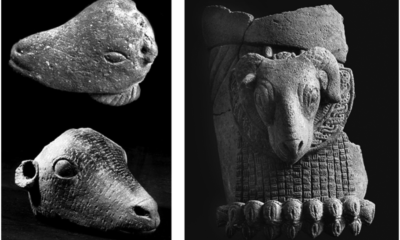
One of the earliest and most fascinating historical events that shaped Igboland can be traced to the ancient town of Igbo‑Ukwu in present-day Anambra State. Long before European contact, this community had developed a sophisticated society renowned for its craftsmanship and extensive trade networks.
Archaeologists have uncovered intricate bronze, copper, and iron artifacts dating back to the 9th century AD that showcased a level of skill and artistry that remains unparalleled in West African archaeology.
The artifacts reveal a society deeply engaged in religious practices, rituals, and commerce. Igbo‑Ukwu was connected to regional trade networks through exchanging goods such as pottery, textiles, metals, and other valuable resources across the Niger Delta and beyond. These early economic and cultural exchanges laid a foundation for the growth and influence of Igboland for centuries to come.
As one of the historical events that shaped Igboland, the achievements of Igbo‑Ukwu challenge common assumptions about precolonial African societies. They show that Igbo people had the knowledge, resources, and creativity to build complex economies, social systems, and cultural legacies long before the arrival of Europeans.
Today, Igbo‑Ukwu remains a symbol of innovation, artistry, and the enduring spirit of Igbo people. This marks it as a key milestone among the historical events that shaped Igboland.
The Kingdom of Nri and Cultural Foundations (10th Century Onwards)
Following the remarkable achievements of Igbo‑Ukwu, the rise of the Kingdom of Nri in the 10th century AD marked another pivotal chapter in the series of historical events that shaped Igboland. Located in what is now Anambra State, Nri became the spiritual, cultural, and political heart of Igboland.
Unlike other kingdoms in West Africa that expanded through conquest, the influence of Nri spread through religion, ritual, and diplomacy, and created a system of governance based on consensus, tradition, and moral authority.
The priests and leaders of Nri were highly respected as they served as mediators, religious guides, and keepers of law. They established societal rules, customs, and taboos that helped to unify Igbo communities without the use of military force. Through ceremonial rituals, spiritual authority, and cultural teachings, Nri shaped social order and influenced neighbouring communities across southeastern Nigeria.
Trade and economic exchange flourished under Nri influence. Pilgrims and traders travelled from distant towns, and strengthened regional connections while exchanging goods, ideas, and cultural practices. This network helped to consolidate the Igbo identity and established patterns of interaction that persisted for centuries.
The Kingdom of Nri is among the historical events that shaped Igboland because it played a foundational role in shaping the customs, governance, and spiritual life of Igbo people. Its legacy is enduring, and its influence is evident in festivals, religious practices, and local governance structures still present in modern Igboland. The rise and impact of Nri remain one of the most significant historical events that shaped Igboland that illustrate how culture, faith, and diplomacy can define a civilization.
The Aro Confederacy and Regional Networks (17th to Early 20th Century)
The rise of the Aro Confederacy between the 17th and early 20th centuries represents one of the most influential historical events that shaped Igboland. Centered in Arochukwu, Aro people built a vast political and trade network that connected Igbo communities with neighbouring ethnic groups, and created one of precolonial southeastern Nigeria’s most sophisticated systems of power.
At the heart of Aro influence was the Ibini Ukpabi oracle, also called the “Long Juju” which served as a spiritual and judicial authority. People travelled from far and wide to consult the oracle to seek justice, resolve disputes, or participate in religious rituals. The reputation of the oracle is among the historical events that shaped Igboland as it gave the Aro both cultural authority and political leverage, and allowed them to influence entire communities without military conquest.
Trade under the Aro Confederacy was equally remarkable. Palm oil, kola nuts, and other commodities moved along routes controlled by Aro agents, thereby connecting Igboland to the Niger Delta and even European traders on the coast. Their network of alliances, spiritual influence, and strategic trade partnerships ensured both economic prosperity and regional stability.
The power of the Aro Confederacy eventually waned with the arrival of the British which later culminated in the Anglo-Aro War of 1901–1902 that eventually dismantled their dominance. Yet, the Aro legacy endured, and influenced Igbo political organization, cultural practices, and regional trade networks for decades. The rise and influence of the Confederacy remain a defining chapter in the historical events that shaped Igboland that demonstrate the unique ways spirituality, commerce, and diplomacy combined to shape a people and a region.
British Colonization and the Transformations of Igboland (Late 19th to Mid‑20th Century)
One of the most transformative periods in the history of Igboland began with the arrival of the British in the late 19th century. This time would profoundly alter the social, political, and economic landscape of the region. The era is recognized as a key chapter among the historical events that shaped Igboland.
Before colonial contact, Igbo communities were largely self-governed through councils of elders, age grades, and spiritual authorities. Decisions were made collectively, and justice often involved mediation by respected figures or religious institutions.
British colonization disrupted these long-established systems. The introduction of warrant chiefs, often outsiders or individuals unfamiliar with traditional customs, undermined community consensus and replaced locally respected leaders. These chiefs were tasked with enforcing British policies, collecting taxes, and maintaining order which frequently led to tension and resentment within communities.
Missionaries arrived alongside colonial administrators and spread Christianity and Western education. Churches and mission schools quickly became centres of influence that offered literacy and new skills while subtly reshaping cultural norms and religious practices. For many Igbo families, education opened doors to new opportunities but also challenged traditional authority and cultural continuity.
Economically, British policies imposed taxes, regulated trade, and altered land ownership systems. Palm oil, kola nuts, and other locally produced goods were now subject to colonial controls, and traditional market systems were often reorganized to favour colonial economic goals. These changes disrupted the familiar rhythms of daily life and challenged long-standing practices of commerce and agriculture, hence the reason it is recalled as one of the historical events that shaped Igboland.
Colonial rule also fostered resistance that laid the groundwork for acts of defiance such as the Aba Women’s Riot of 1929 when Igbo women rose against unfair taxation and the abuses of warrant chiefs. Such resistance highlighted the tension between imposed colonial structures and indigenous systems and demonstrated the resilience of Igbo communities in protecting their social and cultural integrity.
The legacy of British colonization is complex. While it introduced Western education, Christianity, and new administrative structures, it also eroded certain traditional practices and created political tensions that would resonate well into the 20th century.
This period remains one of the most influential historical events that shaped Igboland as it set the stage for later movements, uprisings, and the struggle for autonomy that would define modern Igbo society.
The Aba Women’s Riot (1929)
Among the most remarkable historical events that shaped Igboland is the Aba Women’s Riot of 1929, also known as Ogu Umunwaanyi in Igbo. This was not mere protest. It was a powerful expression of courage, unity, and political awareness. Tens of thousands of Igbo women from present-day Abia, Imo, and surrounding areas rose up against the injustices of British colonial rule. Their target was the system of warrant chiefs and the unfair taxation policies that disrupted traditional governance and threatened local livelihoods.
The movement began when colonial authorities attempted to impose new taxes on women, often through warrant chiefs who were viewed as corrupt and oppressive. Women organized themselves in large groups, and marched from town to town, singing, chanting, and using their traditional authority to confront the colonial system. Their protests were highly disciplined, strategic, and rooted in longstanding practices of communal decision-making and public accountability.
The scale of the uprising was unprecedented. Thousands of women participated in peaceful demonstrations while others engaged in what became known as “sitting on a chief”, a traditional method of publicly shaming officials who acted against community interests.
The colonial authorities initially responded with force, and many women were injured or killed. Despite the violence, the protests forced the British to reconsider their policies, curb the power of warrant chiefs, and include women in local decision-making processes.
The Aba Women’s Riot remains a powerful symbol of resistance and empowerment in Igboland. It demonstrated that women were not passive observers but active participants in governance and social justice. For historians and descendants alike, it stands as one of the most influential historical events that shaped Igboland that left a lasting legacy on political participation, gender roles, and community solidarity.
This extraordinary uprising reminds us that the history of Igboland is a story of resilience, courage, and collective action. These qualities continue to define Igbo society today.
Nigerian Independence and Rising Ethnic Tensions (1960–1966)

The year 1960 was a moment of both hope and complexity for Igboland. Nigeria gained independence from British colonial rule on October 1, and the Eastern Region which was home to the Igbo people, became a vibrant centre of politics, trade, and education. For the first time, Igbo leaders held significant influence in the federal government, and communities embraced opportunities to shape their futures. This period is considered a pivotal chapter among the historical events that shaped Igboland.
Yet, independence also exposed deep ethnic and regional tensions. Political rivalries, competition over resources, and perceptions of unequal representation fueled resentment between the regions. In the North, growing hostility toward the Igbo population escalated. By 1966, a military coup and subsequent counter-coup triggered widespread anti-Igbo violence that forced thousands of Igbo civilians to flee their homes. This tragic episode known as the 1966 anti-Igbo pogroms marked an era among the Igbo that left an indelible mark on the Eastern Region and its people.
The forced displacement and mass killings highlighted the fragility of national unity and the vulnerability of minority groups within a newly independent nation. Communities in Igboland were forever altered, as families lost loved ones, villages were emptied, and social networks were disrupted. These historical events that shaped Igboland strengthened a collective awareness among the people of the importance of self-reliance and regional solidarity.
For historians and descendants, the experiences of 1960–1966 serve as a sobering reminder of how political tension and ethnic strife can impact communities. They also represent one of the most significant historical events that shaped Igboland that influenced later calls for autonomy, the Biafran secession, and the socio-political trajectory of southeastern Nigeria.
The Nigerian Civil War and Biafra (1967–1970)

One of the most defining and tragic chapters in the history of southeastern Nigeria is the Nigerian Civil War, also known as the Biafran War. Following the political unrest and ethnic violence of the mid-1960s, the Eastern Region declared independence in May 1967 under the leadership of Lt. Colonel Odumegwu Ojukwu, and formed the short-lived Republic of Biafra. This conflict quickly became one of the most significant historical events that shaped Igboland that left scars on families, communities, and the land itself.
The war lasted until January 1970 and brought unimaginable hardship. Blockades and military campaigns led to widespread famine, disease, and the deaths of hundreds of thousands of civilians. Families were displaced, towns were destroyed, and the social fabric of Igboland was deeply strained.
One particularly tragic moment, the Asaba massacre saw hundreds of Igbo men and boys killed by federal troops, leaving a painful legacy that remains in the collective memory of the region.
Beyond the immediate suffering, the war shaped the modern identity of Igboland. Though painful, this aspect of the historical events that shaped Igboland fostered resilience, self-reliance, and a renewed commitment to education, entrepreneurship, and community rebuilding. Survivors and their descendants rebuilt homes, schools, and markets, and created a culture of perseverance that continues to define Igbo society.
The Biafran War also influenced politics, culture, and economics in ways that are still evident today. Literature, art, and music from the period capture the pain and hope of the time, while modern Igbo communities continue to honour the memories of those who lived through it. As one of the most pivotal historical events that shaped Igboland, the civil war reminds us of both the fragility and the strength of communities under extreme pressure.
Post-War Reconstruction and Cultural Renaissance (1970–Present)
The end of the Nigerian Civil War in 1970 marked a defining turning point in the historical events that shaped Igboland. The region emerged from the conflict deeply scarred. Entire communities lay in ruins, infrastructure had collapsed, and countless families were displaced. Yet, this period also opened a new chapter of recovery, resilience, and renewal that continues to influence Igbo society today.
Rebuilding Igboland began at the grassroots level. Local communities took the lead in restoring homes, schools, markets, and roads, often with limited government support. Education quickly became a central priority, as families invested heavily in schooling as a pathway to stability and progress. Alongside education, trade and entrepreneurship flourished.
Small businesses reopened, apprenticeship systems expanded, and long-standing commercial networks were revived. These efforts helped to reposition Igboland as one of Nigeria’s most economically dynamic regions in a way that reinforced why post-war recovery stands among the most important historical events that shaped Igboland.
Beyond physical reconstruction, the post-war era witnessed a powerful cultural revival. Festivals, music, dance, and traditional ceremonies that had been disrupted by the war returned with renewed energy. Communities actively preserved oral traditions, rituals, and indigenous crafts, and ensured cultural continuity, despite the trauma of conflict. Writers, artists, and historians also began documenting wartime experiences and post-war realities, thereby contributing to a growing body of literature that preserves collective memory and strengthens Igbo identity.
This period further encouraged heightened social and political consciousness. Town unions, cultural organizations, and community associations played a major role in rebuilding trust, cooperation, and shared purpose. These groups helped to reinforce long-standing Igbo values such as communal responsibility, self-reliance, and innovation. The emphasis on collective effort during recovery became a lasting influence on how communities organize and support one another.
Today, post-war reconstruction and cultural renewal remain among the most enduring historical events that shaped Igboland. They highlight how a society can recover from devastation, even while preserving its cultural roots and redefining its future. Modern Igboland, with its strong commercial spirit and vibrant traditions stands as clear evidence of how resilience and community action can transform hardship into lasting strength.
How These Historical Events Have Shaped Igboland
The story of Igboland is the result of many defining moments layered over centuries. The historical events that shaped Igboland span ancient craftsmanship, spiritual authority, regional trade, colonial disruption, popular resistance, and post-war recovery.
From the early artistic achievements of Igbo Ukwu to the moral influence of the Kingdom of Nri, the commercial reach of the Aro Confederacy, the defiance of the Aba Women’s Riot, the struggles of independence, and the trauma of the Biafran War, each event contributed directly to how Igboland functions, remembers, and expresses itself today.
At the cultural level, these historical events that shaped Igboland helped to preserve and strengthen the Igbo identity. Archaeological evidence from Igbo Ukwu reveals early artistic sophistication, while Nri traditions established spiritual values, ritual practices, and social norms that continue to guide festivals, rites of passage, and community life. The Aro religious and trading networks further reinforced shared beliefs and regional connections that allowed culture to spread and endure across wide areas.
In terms of political organization, the historical events that shaped Igboland influenced systems of leadership and governance. The Kingdom of Nri promoted non-centralized authority and moral leadership, and emphasized consensus and communal responsibility. The Aro Confederacy introduced regional coordination through trade and religious influence.
Colonial rule later disrupted indigenous systems through imposed administration, thereby leaving lasting lessons that still inform modern Igbo governance which blends traditional leadership, town unions, and community decision-making.
Economic adaptability is another lasting outcome of the historical events that shaped Igboland. Early trade networks visible in Igbo Ukwu artifacts and later expanded by the Aro Confederacy laid the foundation for commerce and mobility. Even after colonial restrictions and the devastation of the civil war, Igbo communities rebuilt markets, revived trade routes, and expanded apprenticeship systems. This long history of adaptation explains the strong entrepreneurial culture for which Igboland is widely known today.
Social cohesion and organized resistance also grew out of the historical events that shaped Igboland. The Aba Women’s Riot of 1929 revealed the strength of grassroots mobilization and the political agency of women. The Biafran War, despite its immense human cost, reinforced shared experiences of sacrifice, unity, and survival. These moments deepened civic awareness and continue to influence community activism, collective memory, and social organization across Igboland.
Education and innovation remain central legacies of the historical events that shaped Igboland. Post-war recovery placed education, skill acquisition, and enterprise at the heart of rebuilding efforts. Over time, this emphasis helped to produce generations of professionals, traders, and innovators who contribute significantly to Nigeria’s economic and intellectual life.
Ultimately, the historical events that shaped Igboland created a society defined by resilience, creativity, and adaptability. They forged a people deeply rooted in cultural tradition while continuously responding to change.
Understanding these events is essential to appreciating Igboland today not just as a geographical region but as a living historical community shaped by its past and driven by its capacity to endure and evolve.
In Conclusion …
The history of Igboland highlights resilience, creativity, and determination. From the sophisticated craftsmanship of Igbo‑Ukwu and the cultural influence of the Kingdom of Nri, to the regional power of the Aro Confederacy, the courage of women in 1929, and the trials of independence and civil war, each moment has left a lasting mark. These are the historical events that shaped Igboland, and guided the political structures, cultural identity, and social values of the region.
Even after periods of conflict and hardship, Igboland has shown remarkable strength in rebuilding and preserving its heritage. Post-war reconstruction, the revival of festivals, arts, and education, and the spirit of entrepreneurship illustrate how communities can rise from adversity stronger than before.
Understanding these historical events that shaped Igboland means more than remembering the past. It is about appreciating the roots of Igbo culture, the courage of its people, and the enduring legacy that continues to influence Nigeria and beyond. The story of Igboland is one of survival, growth, and pride, a living testament to the power of history to shape identity and inspire future generations.
References
- https://en.wikipedia.org/wiki/Archaeology_of_Igbo-Ukwu
- https://en.wikipedia.org/wiki/Kingdom_of_Nri
- https://ozikoro.com/arochukwu-oracle-the-spiritual-empire-that-controlled-trade-justice-and-war-in-precolonial-igboland/
- https://www.cambridge.org/core/books/history-of-nigeria
- https://www.blackpast.org/global-african-history/aba-womens-riots-november-december-1929/
- https://www.britannica.com/place/Nigeria/Independence
- https://www.britannica.com/event/Nigerian-civil-war
- https://en.wikipedia.org/wiki/Igboland
- https://www.jstor.org/stable/40331235
- https://nnewicity.com/ibini-ukpabi-the-legendary-arochukwu-oracle/