
Igbo histories
Dr. Francis Akanu Ibiam: First Governor of Eastern Nigeria and the Remarkable Legacy of a Nigerian Statesman

Nigeria’s story is filled with men and women whose lives shaped the country’s political, religious, and social direction. Among these outstanding figures is Dr. Francis Akanu Ibiam (1906–1995), a man whose name symbolizes humility, service, and a deep commitment to the wellbeing of humanity. He was a medical doctor, Christian missionary, education advocate, statesman, respected traditional ruler, and a strong voice for justice. His life stretched across some of Nigeria’s most defining eras, from colonial rule to independence, and through the painful years of the civil war.
In Eastern Nigeria, especially among the people of Ebonyi State, Dr. Ibiam is remembered not only for the public roles he held, but for the remarkable principles that guided him. His rise from a small community in Unwana to becoming one of Nigeria’s most respected leaders stands as a story of discipline, courage, and unshakeable moral integrity.
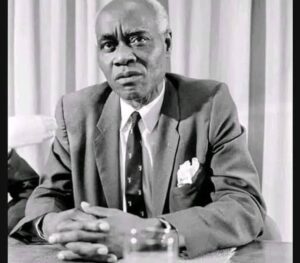
Akanu Ibiam
Dr Akanu Early Life and Family Background
Francis Akanu Ibiam was born on November 29, 1906, in the peaceful community of Unwana, near Afikpo in present-day Ebonyi State. Though he came from a lineage of respect, his father, Chief Ibiam Aka, was a traditional ruler, he faced early hardship. His father died when he was barely a year old, leaving his older brother, Samuel Aka Ibiam, with the responsibility of raising him.
Samuel, who worked as a teacher at Hope Waddell Training Institute in Calabar, recognized the potential in young Akanu and guided him academically. Akanu’s formal education began in 1912 at Hope Waddell Primary School, where he quickly stood out. By 1916, he had progressed into the Junior Secondary section and was baptized three years later, taking the Christian name “Francis.”
His dream of becoming a medical doctor required a strong science foundation, so in 1921 he transferred to King’s College, Lagos, one of the most prestigious institutions of the colonial era. While there, he excelled not only in academics but also as a talented footballer. In 1924, he completed his studies with a Senior Cambridge Certificate, one of the highest academic achievements at the time, an early sign that he would go far.
Journey to Europe and Medical Education
With the support of his devoted brother, Francis traveled to the United Kingdom to pursue medical studies,a rare opportunity for Nigerians of his era. He enrolled at the University of St Andrews in Scotland, in association with the University of Edinburgh, where he spent years training as a medical doctor.
Studying abroad exposed him to new ideas, expanded his worldview, and deepened his Christian faith. It also strengthened his belief that medicine could be a tool for service, not just a profession. In 1934, he graduated as a medical doctor, becoming one of the early Nigerian physicians trained in Europe.
This achievement opened many possibilities, yet Francis felt a strong call to return home and use his skills to uplift his people.
Return to Nigeria and Missionary Medical Service
In August 1935, Dr. Ibiam came back to Nigeria, choosing a life of rural medical service instead of the comfort and higher earnings available in the cities. Inspired by the sacrifices of European missionaries who worked in remote regions, he joined the Church of Scotland Mission as a medical missionary.
Developing Hospitals and Training Health Workers
His first major task was establishing a medical mission in the Arochukwu–Abiriba axis. He began with a small dispensary in 1936, which gradually expanded into a full hospital serving communities such as:
- Abiriba
- Ohafia
- Item
- Igbere
- Nkporo
He treated illnesses, performed medical procedures, delivered babies, and trained local health workers. Many nurses and midwives in Eastern Nigeria trace their early training to his influence.
Later, in 1945, he was transferred to Itu Hospital in today’s Akwa Ibom State. There, he played a major role in founding a School of Nursing, one of the earliest professional nursing programs in the region.
By 1952, he was posted to Uburu Hospital, where he introduced modern healthcare practices and championed maternal and child health. Under his watch, Presbyterian missions and the Eastern Regional Government invested more in rural hospital development.
Fighting Fear, Superstition, and Harmful Beliefs
Working in rural communities exposed him to deep-rooted beliefs that attributed common illnesses to witchcraft or spiritual attacks. Conditions like malaria, difficult childbirth, and convulsions were often misunderstood.
Instead of condemning people, Dr. Ibiam taught gently, using:
- medical explanations
- Christian pastoral care
- community outreach
- practical demonstrations
His mission was to heal both mind and body, replacing fear with knowledge and hope.
Educator and Pioneer in Nigerian School Leadership
In 1958, Dr. Ibiam returned to his alma mater, Hope Waddell Training Institution, but now as its first Nigerian Principal. His leadership strengthened the school’s reputation and inspired a new generation of students.
He emphasized discipline, academic excellence, moral conduct, and Christian values. Many of his students went on to become prominent professionals and leaders across Nigeria.
Political Career and Public Service
Even as a missionary doctor, Dr. Ibiam was already involved in public affairs. His leadership journey began in 1940 when he was elected to represent Afikpo in the Divisional Council. He later served in several important capacities, including:
- Member, Eastern House of Assembly
- Member, Legislative Council in Lagos
- Member, Privy Council of Eastern Nigeria
- Member, Executive Council of Nigeria
In recognition of his outstanding service, he was knighted in 1951 by King George VI as a Knight of the British Empire (KBE).
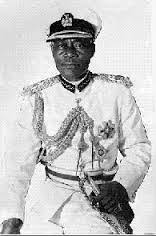
Governor of Eastern Nigeria (1960–1966)
On October 21, 1960, shortly after Nigeria gained independence, Sir Francis Akanu Ibiam became the Governor of Eastern Nigeria. Though the position was mostly ceremonial, he used it to promote ethical leadership and defend public morality.
His principled leadership was clear in several ways:
- He refused to approve a bill that would legalize gambling, even threatening resignation.
- He condemned corruption publicly.
- He opposed tribal discrimination and insisted on appointments based on merit.
Dr. Ibiam believed strongly that Nigeria could never progress if injustice and ethnic prejudice continued.
Nigeria’s Crisis and the Path to the Civil War
By the mid-1960s, Nigeria was sliding into political chaos. The 1966 coup, the counter-coup, and the killings of Easterners in the North left deep wounds. These tensions led the Eastern Region, under Col. Odumegwu Ojukwu, to declare the Republic of Biafra in 1967.
Humanitarian Efforts During the War
Although no longer governor at the time, Dr. Ibiam became an important humanitarian figure. He traveled widely within Biafra and outside the country seeking food, medicine, and relief support for civilians trapped in the crisis.
Because he was a respected global Christian leader having served with the World Council of Churches, many international bodies listened to his appeals.
Returning the Knighthood
In 1967, Dr. Ibiam made a bold decision that shocked the international community:
- He returned his knighthood
- He rejected the name “Francis”
- He stated he would be known simply as Akanu Ibiam
This was his protest against Britain’s support for the Nigerian Federal Military Government. In an open letter, he condemned Britain’s role in the suffering of Biafran civilians.
After the War and Continued Influence
When the war ended in January 1970, Dr. Ibiam returned from Germany, where he had gone to seek aid. Back in Nigeria, he met General Yakubu Gowon, who assured him of safety and respect despite his outspoken role during the conflict.
In the post-war years, he continued serving both the Eastern Region and Nigeria through:
- advisory roles to state governments
- leadership positions in Christian organizations
- chairmanship of the Imo State Council of Chiefs
- membership in university governing councils
- participation in international religious bodies
His voice remained strong in matters of justice, reconciliation, and national healing.
Traditional Leadership and Community Service
In 1983, the people of Unwana crowned him Ezeogo Isiala, one of the highest traditional honours in the community. It was a recognition of his lifelong service, moral uprightness, and devotion to his homeland.
As a traditional ruler, he promoted peace, cultural identity, and development projects, and remained accessible to his people despite his national status.
Personal Life and Character
Dr. Ibiam married a woman he cherished deeply. Her death in 1974 left a painful gap in his life, and in honour of her memory, he never remarried.
He lived a life marked by:
- modesty
- prayer
- discipline
- compassion
- strong moral values
He avoided extravagance and always placed service ahead of personal comfort. Even global leaders admired his simplicity.
Awards and Global Recognition
Throughout his lifetime, Dr. Ibiam received many prestigious honours, including:
- GCN (Grand Commander of the Order of the Niger)
- KCMG (Knight Commander of St. Michael and St. George)
- Honorary doctorate degrees from universities such as Ibadan and Ife
- Leadership positions in:
- World Council of Churches
- Christian Council of Nigeria
- United Bible Societies
- World Council of Christian Education
These achievements placed him among the most globally respected Nigerians of the 20th century.
Death and Enduring Legacy
Dr. Akanu Ibiam passed away on July 1, 1995, at the age of 89. His death marked the end of a life filled with extraordinary service, but his influence remains alive across Nigeria.
Institutions named after him include:
- Akanu Ibiam International Airport, Enugu
- Akanu Ibiam Federal Polytechnic, Unwana
- several schools, streets, and health facilities
But beyond the physical structures, his legacy is seen in the values he lived by—integrity, humility, courage, and commitment to the wellbeing of others.
Conclusion
Dr. Francis Akanu Ibiam lived a life built on service, courage, and moral conviction. From medicine to missionary work, from politics to traditional leadership, his actions consistently reflected a desire to uplift society. He stood for justice during Nigeria’s darkest moments and used every position he held to improve lives.
His life reminds us that true leadership is not about titles or wealth, but about service rooted in compassion and integrity. His story remains an enduring guide for future generations.
Read About The Love Story of Dim Chukwuemeka Odumegwu Ojukwu and Bianca Onoh