



African Culture and Traditions
Ipia Agba Festival in Enugwu-Ukwu

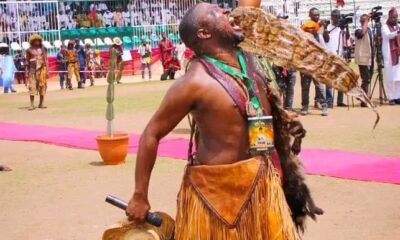
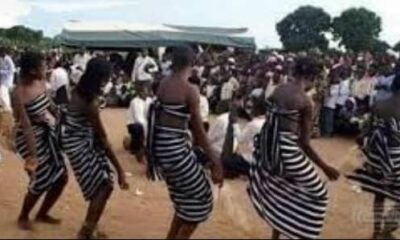
Ipia Agba festival in Enugwu-Ukwu is a yearly masquerade event held on December 26 that features stick-fighting displays, drumming, dance, and large community gatherings that celebrate Igbo culture.
Ipia Agba festival is one of the most well-known traditional festivals in Enugwu-Ukwu, a historic town in Njikoka Local Government Area of Anambra State, Nigeria. It is a cultural event that has been celebrated for many years and is deeply rooted in the customs of the people. Every year, the festival brings together indigenes, visitors, elders, youths, and cultural groups in a shared display of tradition, discipline, and community identity.
The festival is held on Boxing Day – December 26, a date that has become firmly associated with Ipia Agba festival in Enugwu-Ukwu. This timing allows the opportunity for many sons and daughters of the town who live in other parts of Nigeria or abroad to return home during the Christmas period. As a result, the festival often feels like both a cultural celebration and a homecoming event.
Ipia Agba festival is best known for its masquerade performances, traditional music, and a controlled stick-fighting display that symbolizes strength, courage, and endurance. While this aspect of the festival may seem unusual to outsiders, it follows clear traditional rules and is closely supervised by elders and handlers. Within the community, it is understood as a cultural expression rather than an act of violence.
Beyond the performances, Ipia Agba festival plays an important role in preserving Enugwu-Ukwu’s cultural heritage. It serves as a way to pass values, history, and customs from older generations to younger ones. It also strengthens social bonds, encourages respect for tradition, and reminds the community of its shared roots.
This article provides a clear and factual account of Ipia Agba festival in Enugwu-Ukwu. It explains its background, meaning, activities, cultural importance, and how it is celebrated today.
Where Ipia Agba Festival Takes Place
Ipia Agba festival takes place in Enugwu-Ukwu, a town located in Njikoka Local Government Area of Anambra State, Nigeria. The festival is held within the town itself and is organized by the local community under the guidance of traditional leaders and elders.
The main activities of the festival usually happen in a large open space within Enugwu-Ukwu. This open area often referred to as Obu Umunri allows enough room for masquerade performances, drumming, and crowd movement. Such spaces are commonly used in Igbo towns for major cultural events as they can safely accommodate both performers and spectators.
While the exact spot may vary slightly from year to year based on community arrangements, the festival is always held within Enugwu-Ukwu and in a central, accessible location that residents are familiar with. Elders and organizers ensure that the venue is suitable for traditional displays and that order is maintained throughout the event.
The choice of location is important because Ipia Agba festival is not a private or hidden ceremony. It is a public cultural event meant to be witnessed by the community and invited visitors. Holding it in an open, central area allows people of all ages to attend and also makes supervision easier.
In line with Igbo tradition, the festival space is respected during the event. Masquerades are given room to perform, and spectators are expected to observe from a safe distance and follow instructions from organizers and community elders.
When Ipia Agba Festival is Held
Ipia Agba festival is held once every year, usually on December 26 in Enugwu-Ukwu, Anambra State. This date has become the established and recognized time for the festival and is observed consistently by the community.
Over the years, videos, photographs, and community records have shown that the festival is repeatedly celebrated on December 26. This consistency has made the date closely associated with Ipia Agba festival in public awareness and local tradition.
December 26 which is also Boxing Day is an important period in Enugwu-Ukwu and many other Igbo towns. It is around the period when many indigenes return home to celebrate the festivities with family members. Holding Ipia Agba festival on this date allows for a large number of people to attend, including those who live outside the town.
The festival usually takes place during the daytime and may extend into the evening, depending on the flow of activities and the number of performances scheduled. Preparations often begin earlier in the day, with drumming, movement of masquerade groups, and the arrival of spectators.
By keeping the festival on the same date each year, the people of Enugwu-Ukwu have maintained continuity and made it easier for residents and visitors to plan their return home for the celebration.
Meaning of Ipia Agba
In Igbo, “ipịa” means to strike or to flog and
“Agba” refers to a strong stick or hard wooden cane.
When the two words are combined, “Ipia Agba” describes the act of striking with a stick. This meaning directly reflects the main physical display seen during the festival where masquerades take part in a controlled stick-fighting performance.
The term does not refer to punishment or random violence. Within the cultural setting of Enugwu-Ukwu, it describes a traditional display of strength, endurance, and discipline carried out according to long-established rules. The meaning of the name helps to explain why the stick-fighting element is central to the festival.
By using this name, the community clearly identifies the festival by its most recognized feature while also grounding it firmly in local language and tradition.
How Ipia Agba Festival Day is Organized
Ipia Agba festival is carefully organized by Enugwu-Ukwu community under the supervision of traditional elders and recognized cultural leaders. Planning begins before the festival day to ensure order and safety.
On December 26, activities start early in the day. Drummers and cultural groups arrive at the chosen open space within the town. Masquerade handlers make final preparations, including dressing the masquerades and checking performance items such as drums and sticks.
As the day progresses, spectators begin to gather. Elders and invited guests are seated in designated areas while the general public stands around the performance space. Clear boundaries are maintained to allow masquerades to move freely and to keep the crowd at a safe distance.
The programme follows an informal but understood order. Drumming and music usually begin first, followed by the arrival of masquerades. Each masquerade group performs in turn guided by drum rhythms and instructions from handlers. The stick-fighting displays are closely monitored, and elders intervene, where necessary.
Throughout the day, community members assist with crowd control and ensure that rules are followed. The festival continues until the scheduled performances are completed or daylight fades. At the end of the event, masquerades withdraw, and the crowd disperses peacefully.
This structured approach helps to maintain discipline and ensures that Ipia Agba festival remains a respected cultural event rather than a random gathering.
The Masquerades and Their Costumes
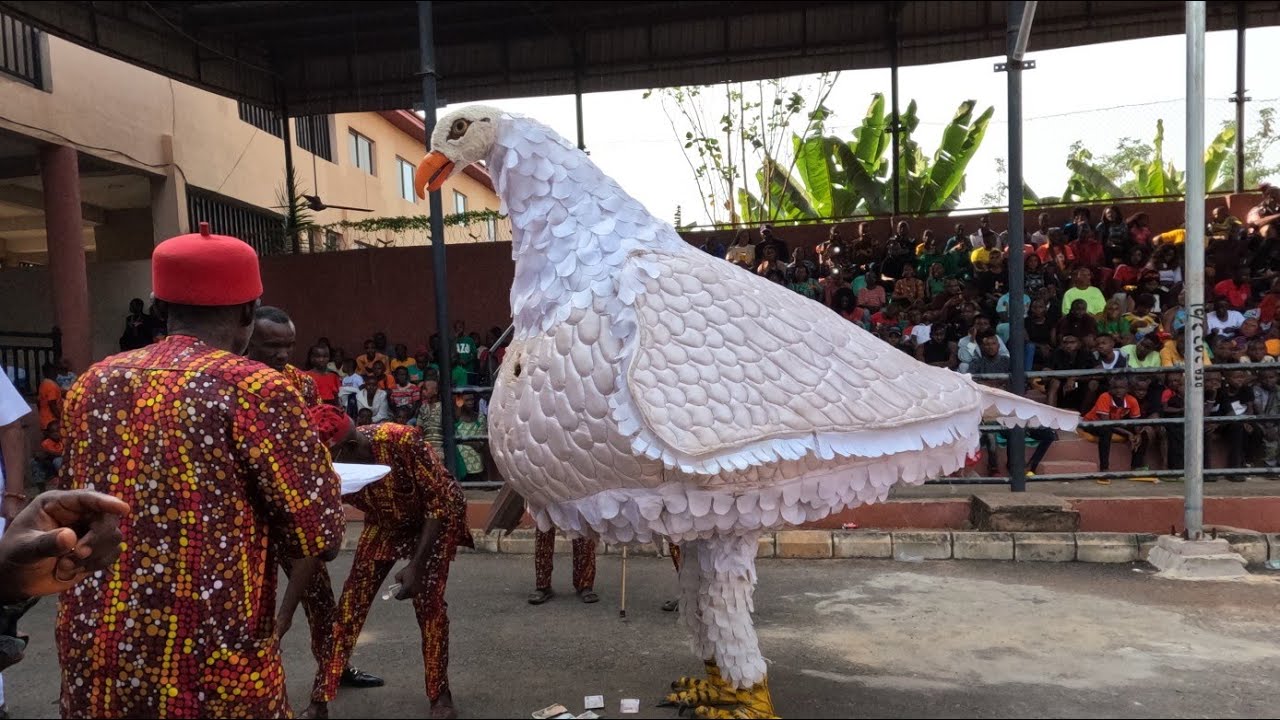
Masquerades are the central feature of Ipia Agba festival in Enugwu-Ukwu. In Igbo tradition, masquerades are not treated as ordinary. They represent ancestral presence and cultural authority, and their appearance during the festival is handled with respect.
The masquerades that appear at the Ipia Agba festival are usually organized in groups. Each group has its own style, movement, and role during the event. The masquerades do not speak directly to the crowd. When communication is needed, it is done through handlers who guide them and help maintain order.
Masquerade costumes are made using locally sourced materials, following long-standing practices. Common materials include raffia, cloth, wood, rope, and natural fibers. Some costumes are plain while others are decorated with patterns or painted masks. The design depends on the identity of the masquerade and the tradition of the group it belongs to.
The masks are usually carved from wood and painted. They may have strong facial features meant to appear serious or firm. These features are not meant to be entertaining but to reflect authority and discipline.
Costumes are designed to fully cover the wearer’s body. This is important because masquerades are not meant to be recognized as individuals. Complete covering helps to preserve the traditional belief that the masquerade represents something beyond an ordinary person.
The movement of each masquerade is guided by drum rhythms and signals from handlers. Some move slowly and steadily while others are more active. At all times, the masquerades are under supervision. This control ensures that performances stay within accepted limits and follow cultural rules.
Through their costumes and movement, the masquerades give visible form to the values and traditions that Ipia Agba festival is meant to uphold.
Music, Drumming and The Crowd
Music and drumming play a central role in Ipia Agba festival. Traditional drums set the rhythm for the entire event and guide the movement of the masquerades. Without the drums, the festival cannot take place in its proper form.
The drummers are usually experienced community members who understand the meaning of each rhythm. Different drum patterns signal different moments during the festival such as the entrance of a masquerade, a change in performance, or the end of a display. The masquerades respond directly to these rhythms to adjust their movements and pace.
Other traditional instruments may be used alongside the drums but drumming remains the main form of musical direction. At times, short chants or call-and-response songs are heard often led by members of the community. These songs are simple and are meant to support the rhythm rather than take attention away from the masquerades.
The crowd forms a wide circle around the performance space. Elders, titled men, and invited guests are usually seated in designated areas while the general public stands behind marked boundaries. This arrangement allows everyone to see the performances clearly while maintaining order.
Members of the crowd play an active role through observation, response to drum rhythms, and occasional verbal reactions. However, there are clear rules. Spectators are not allowed to cross into the performance area or interfere with the masquerades. Community volunteers and handlers help to enforce these rules throughout the event.
The interaction between the drums, the masquerades, and the crowd creates a shared experience that defines the tone of Ipia Agba festival.
Explanation of the Ipia Agba Stick-Fighting Display
The stick-fighting display is the most recognized feature of Ipia Agba festival in Enugwu-Ukwu. It is a traditional performance carried out by masquerades which follows established rules known within the community.
During this display, two masquerades face each other in an open space. Each holds a wooden cane. The exchange of strikes is controlled and takes place under close supervision, because the purpose is not to cause injury but to demonstrate physical strength, endurance, and self-control.
The performance is guided by drum rhythms. Changes in the drumbeat signal when to advance, pause, or withdraw. Handlers remain close and step in when necessary. Elders watch carefully and have the authority to stop the display, if it exceeds accepted limits.
Within Enugwu-Ukwu tradition, this display is understood as a cultural test of discipline rather than a fight. It reflects older values linked to readiness, courage, and the ability to withstand hardship without losing control.
The stick-fighting display is not open to everyone. Only recognized masquerades trained for this role are allowed to take part. This restriction helps to maintain order and ensures that the performance remains within cultural boundaries.
For visitors, the display may appear intense. However, within the local context, it is a respected and regulated part of the festival and is treated as a serious cultural expression rather than entertainment alone.
Symbolic Meaning of the Contest
Within Ipia Agba festival, the stick-fighting contest carries symbolic meaning that is well understood by the people of Enugwu-Ukwu. It is not seen as a fight for personal victory but as a public expression of shared values.
The contest represents strength combined with self-control. Participants are expected to show physical ability without losing discipline. This balance is important in traditional Igbo society where strength is respected only when guided by restraint.
The display also reflects readiness and resilience. In earlier times, communities valued the ability to endure hardship and protect collective interests. The controlled nature of the contest shows that courage is measured not by aggression but by the ability to stand firm under pressure.
Another meaning attached to the contest is respect for order and authority. The presence of elders and handlers reminds participants that individual action must remain within accepted limits. Obedience to these limits is part of the lesson the contest conveys.
Overall, the symbolic meaning of the contest lies in its emphasis on discipline, endurance, and responsibility to the community. These values explain why the stick-fighting display remains a central part of Ipia Agba festival and why it continues to be preserved.
Participants in the Ipia Agba Festival
Several groups of people take part in Ipia Agba festival, each with specific roles that keep the event organized and meaningful.
Masquerade Groups
The most visible participants are the masquerades. They are trained performers who represent ancestral spirits and cultural authority. Only recognized masquerades take part in performances and stick-fighting contests. Their participation is guided by handlers and elders to ensure safety and adherence to tradition.
Elders and Community Leaders
Elders, titled men, and chiefs play a crucial role in the festival. They approve the date, supervise the events, enforce rules, and intervene when necessary. Their presence gives authority to the proceedings and ensures that the festival is conducted according to long-standing customs.
Drummers and Musicians
Experienced drummers and other musicians control the rhythm of performances. They signal the start, change, and end of masquerade displays. Drumming is essential for timing and coordinating the movements of the masquerades.
Youth and Community Helpers
Young people assist with preparations and logistics. They help to set up the arena, manage crowds, carry performance items, and ensure order among spectators. Their involvement allows them to learn about cultural traditions and responsibilities.
Spectators and Visitors
The general public, including local residents and returning indigenes forms the audience. Many visitors arrive from nearby towns, cities, or even abroad during the Christmas season. Spectators observe the performances, follow instructions from organizers, and contribute to the lively atmosphere of the festival.
Together, these participants create a structured and meaningful event. Each group’s role ensures that Ipia Agba festival is both a respected cultural celebration and a safe, well-organized community gathering.
Safety and Management
Safety is a key concern during Ipia Agba festival because of the large crowds and the stick-fighting displays performed by masquerades. The festival is organized under the supervision of traditional elders and community leaders who ensure that activities are carried out in a controlled and orderly manner.
Handlers accompany each masquerade to guide their movements and prevent accidents. The stick-fighting contests are closely monitored, and elders have the authority to stop any performance, if it becomes unsafe or goes beyond established rules. This supervision helps to prevent injuries to performers and spectators alike.
The arena is arranged so that spectators remain at a safe distance from the performance area. Volunteers from the community assist with crowd control and make sure that people do not enter restricted zones. These measures create a clear boundary between performers and the audience.
In addition, organizers ensure that medical assistance or first aid is available, if needed, though serious incidents are rare because of strict adherence to traditional guidelines. The combination of elder supervision, trained handlers, controlled performance rules, and crowd management makes the festival safe while preserving its traditional elements.
Through careful planning and community involvement, Ipia Agba festival is celebrated every year without compromising the safety of participants or visitors.
Economic Effects of the Festival
Ipia Agba festival has a noticeable economic impact on Enugwu-Ukwu, particularly for local traders and service providers. Although it is primarily a cultural event, it creates opportunities for short-term business activities in the town.
Food vendors and small traders benefit from the increased number of people attending the festival. Many spectators, including visitors returning home for the Christmas season purchase snacks, drinks, and local goods. Transport operators such as bus and taxi drivers also experience higher demand because of the influx of people travelling to and from the town.
Local artisans and craftsmen may sell traditional items, masks, and decorations used for the festival, creating additional income. Temporary stalls and small shops are often set up specifically to meet the needs of festival-goers.
While the festival does not generate large-scale tourism revenue, it provides meaningful economic support to families and small business owners in Enugwu-Ukwu. The timing of the festival during the holiday season also amplifies its economic effect as many indigenes return home and spend money on food, transport, and festival-related goods.
Overall, Ipia Agba festival contributes to the local economy by creating short-term business opportunities, supporting small-scale trade, and encouraging economic activity within the community.
Media and Online Coverage
In recent years, Ipia Agba festival has gained attention beyond Enugwu-Ukwu through media and online coverage. Videos and photographs of the festival, especially the masquerade performances and stick-fighting displays are shared on platforms like YouTube, Facebook, and Instagram.
These recordings allow people who cannot attend in person to experience the festival virtually. They also help preserve the cultural practices for future generations as the videos document traditional costumes, performances, and drumming patterns.
Local media, sometimes, report on the festival and highlight its significance and the role it plays in the community. Online sharing has increased awareness among Nigerians in other States and even among members of the Igbo diaspora abroad.
Despite the wider visibility, the community controls what aspects of the festival are recorded and shared. Certain rituals and private practices remain reserved for insiders and are not shown publicly. This ensures that the festival retains its traditional and cultural integrity while reaching a broader audience.
Through media and online platforms, Ipia Agba festival is increasingly recognized as a living cultural heritage that can be appreciated both locally and internationally.
Challenges and Changes
Like many traditional festivals, Ipia Agba festival faces challenges as the community and society evolve. One challenge is the influence of modern lifestyles. Some young people are less familiar with traditional practices or may prioritize modern entertainment over cultural events. This can affect participation and continuity, if the younger generation is not actively involved.
Another challenge comes from media exposure and social media. While online sharing helps to promote the festival, it can also create pressure to alter performances for broader appeal, potentially changing traditional elements. The community carefully manages what is shown publicly to protect the integrity of the festival.
Urbanization and migration also play a role. Many indigenes now live in cities or abroad. So, maintaining regular participation and passing on skills such as drumming, masquerade handling, and performance coordination can be difficult. The festival relies heavily on returning indigenes during the Christmas season to sustain its vibrancy.
Despite these challenges, the festival has adapted in some ways. For example, organizers may use modern materials for costumes or improve crowd management while keeping the core traditions intact. Elders continue to supervise performances, and young people are trained to take over roles gradually, thus ensuring that cultural knowledge is preserved.
Overall, Ipia Agba festival continues to thrive because the community values its traditions and actively works to balance modern influences with cultural preservation.
Importance of Ipia Agba Festival
Ipia Agba festival is important to Enugwu-Ukwu for several cultural, social, and economic reasons.
Cultural Preservation
The festival helps to preserve Igbo traditions. Through masquerade performances, drumming, and stick-fighting displays, younger generations learn about the community’s history, values, and customs. It keeps alive practices that have been passed down orally for decades.
Social Cohesion
The festival brings people together. Many indigenes return home during the Christmas season which creates an opportunity for family reunions and community bonding. Elders, youth, and visitors share in the celebrations, strengthening social ties and a sense of belonging.
Education and Skill Transfer
Through participation, young people acquire cultural skills. They learn drumming, handling masquerades, organizing events, and understanding local rules and protocols. This ensures that the knowledge of the festival continues from one generation to the next.
Economic Support
Although primarily cultural, the festival generates short-term economic benefits. Food vendors, transport providers, and small traders earn additional income from the increased crowd during the festival.
Community Identity
Finally, the festival reinforces Enugwu-Ukwu’s identity. It marks the town as a place that values its traditions and displays cultural pride. The event reminds residents and visitors alike of the history and collective values of the community.
In all these ways, Ipia Agba festival offers both entertainment and a central feature of cultural and social life of Enugwu-Ukwu.
In Conclusion …
Ipia Agba festival in Enugwu-Ukwu is a colourful event and a living tradition that preserves the cultural heritage of the town, teaches values like discipline, endurance, and respect, and brings the community together. Celebrated every December 26, the festival combines masquerade performances, traditional drumming, and the unique stick-fighting display to create a memorable experience for both participants and spectators.
Beyond its cultural significance, the festival supports the local economy, provides opportunities for skill transfer, and strengthens social bonds among residents and returning indigenes. Despite modern challenges, including migration, changing lifestyles, and social media influence, the community continues to protect and organize the festival carefully, ensuring that its traditions are maintained for future generations.
Ipia Agba festival stands as a clear example of how cultural practices can remain relevant today as it connects the past with the present while fostering pride and unity within the community. It is a celebration that both educates and entertains; a tradition that shows the enduring value of Enugwu-Ukwu’s heritage.
References
- https://en.wikipedia.org/wiki/Enugwu_Ukwu
- https://ozikoro.com/enugwu-ukwus-ipia-agba-mmonwu-festival-a-vibrant-display-of-igbo-culture/
- https://thesun.ng/pomp-as-enugwu-ukwu-celebrates-igu-aro-festival/
- https://www.nairaland.com/7502664/colourful-enugwu-ukwu-celebrated%E2%80%91ipia%E2%80%91agba
- http://youtube.com/watch?v=yoBKbr6C9Qc
You might want to check this out …