






Cultural Heritage
10 Popular Igbo Cultural Festivals and Traditions You Should Know

“Popular Igbo cultural festivals and traditions” profiles 10 fascinating Igbo cultural festivals and traditions that celebrate heritage, music, dance, and community values. Learn about New Yam Festival, masquerades (Mmanwu), traditional title taking, dance, and more.

“Popular Igbo Cultural Festivals and Traditions” highlights the richness of Igbo cultural heritage. As Nigeria is home to a tapestry of vibrant cultures, the Igbo people of southeastern Nigeria are particularly celebrated for their rich heritage, colourful festivals, and timeless traditions. From dazzling masquerades to energetic dances, spiritual rituals, and harvest celebrations, Igbo cultural practices have been preserved for generations, shaping identity, community life, and social values.
Understanding popular Igbo cultural festivals and traditions takes more than just admiring their visual spectacle. It is a journey into the history, spirituality, and communal wisdom of one of Africa’s most dynamic ethnic groups. These festivals are windows into ancestral beliefs, moral teachings, and societal structures that have guided the Igbo people for centuries.
In this article, we explore ten of the most popular Igbo cultural festivals and traditions, highlighting their significance, rituals, historical roots, and modern relevance. Whether you are an Igbo native, part of the diaspora, or a curious cultural enthusiast, this guide will immerse you in the music, dance, ceremonies, and stories that continue to define Igbo heritage.
Discover how these traditions from the New Yam Festival to masquerades, traditional dances, and title-taking ceremonies celebrate life and preserve a collective memory that links the past, present, and future of Igbo people.
New Yam Festival (Iri Ji / Iwa Ji / Ikeji/Afiolu) – No. 1 of the Popular Igbo Cultural Festivals and Traditions.

Iri Ji
Meaning / Significance
The New Yam Festival is among the popular Igbo cultural festivals and traditions. It is a festival that marks the end of a farming season and the beginning of a new harvest season. For Igbo people, yam is one of the most important staple crops and holds deep cultural significance. It is often regarded as the “king of crops”. The festival is an occasion to thank the gods, the ancestors, and the earth for a bountiful harvest, and to celebrate abundance.
The New Yam Festival has long been observed by Igbo communities in various forms, often timed to coincide with the harvest of the first yams. In some towns, local versions of the festival have special names. For example, it is known as “Afiaolu Festival” in Nnewi.
Key Activities / Practices Involved
Ceremonial cutting and tasting of the first yam, often led by the king or community leader, like the Igwe or Obi to officially sanction consumption of the new yam.
Masquerade parade through villages or towns, dancing and entertaining crowds.
Traditional music, songs, and dances celebrate the harvest and boost communal spirit.
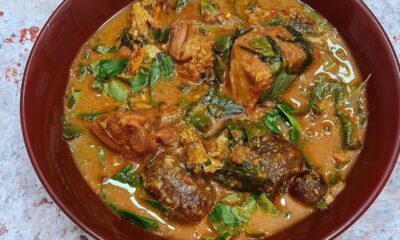
Feasting and sharing of yam-based meals. Families and community members share yam-based and local dishes prepared from the new harvest.
Cultural Values of New Yam Festival
As one of the popular Igbo cultural festivals and traditions, the New Yam Festival emphasizes gratitude, community solidarity, respect for the earth and ancestors, and the cycle of life and agriculture. It renews social bonds, reaffirms cultural identity, and gives thanks for sustenance. It also underscores the Igbo people’s respect for farming, land and their agrarian heritage.
Modern Relevance of New Yam Festival
Today, many Igbo people, including those in the diaspora still celebrate the New Yam Festival, sometimes, in adapted forms. This goes to show how much it means and why it is one of the popular Igbo cultural festivals and traditions. It continues to foster a sense of belonging, reconnect families to their cultural roots, and remind younger generations about their heritage.
Mmanwu Festival and Masquerade Culture – No. 2 Popular Igbo Cultural Festivals and Traditions
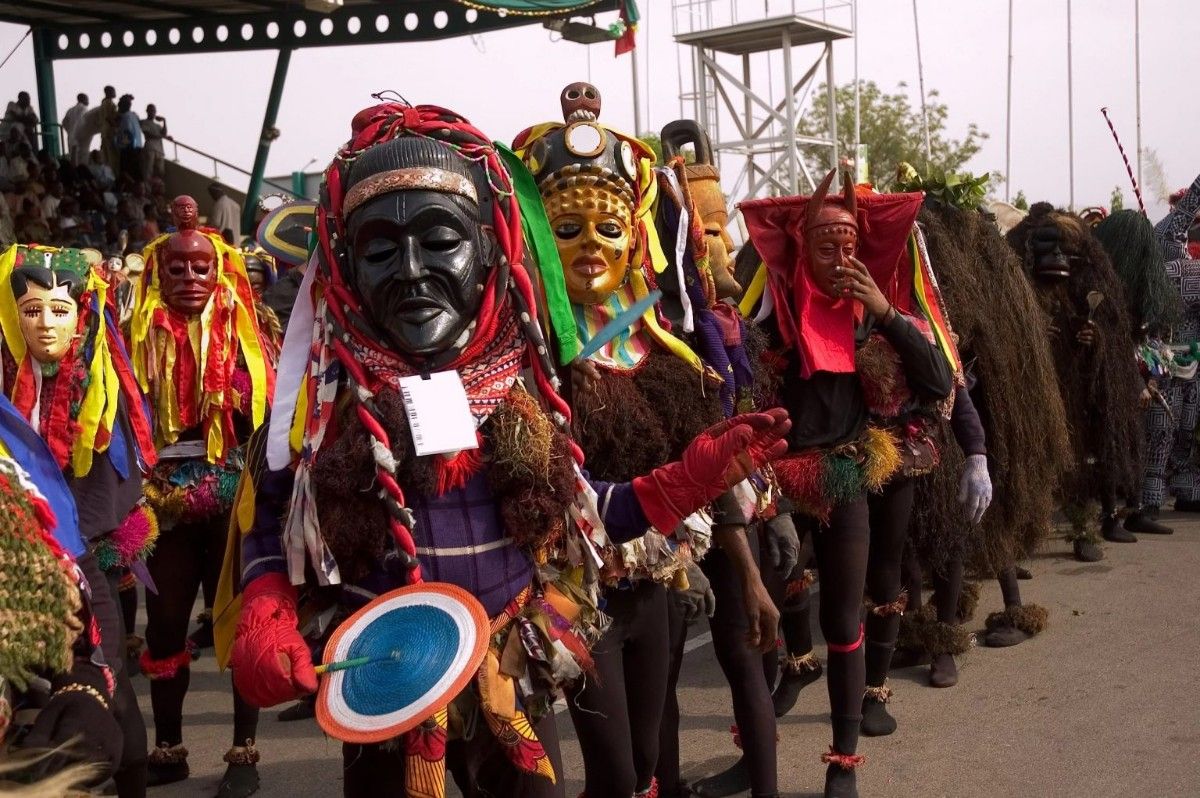
Mmanwu Festival
Meaning / Significance
Masquerades (mmanwu) forom part of the popular Igbo cultural festivals and traditions. They are a core component of Igbo spiritual and cultural life. They are believed to embody ancestral spirits, deities, or symbolic forces. Through masquerades, communities honour their ancestors, connect the living with the spiritual realm, and uphold moral and social order.
The masquerade tradition among the Igbo dates back generations. Through rituals, secret societies, and initiation rites, masquerades have historically held social and spiritual significance, often connected with cleansing, justice, ancestral reverence, and community protection.
Key Activities / Practices Involved
Masquerade parades and dances: Masked performers draped in elaborate costumes made of raffia, fabric, beads, carved wooden masks dance, dramatize, and move through the community.
Dramatic performances, storytelling, and moral lessons: Masquerades, sometimes, satirize social behaviours, expose wrongdoing, or act out traditional stories and parables.
Spiritual or religious rites: In some communities, masquerades play roles in honouring ancestors or deities, protecting the town, or enforcing community laws.
Integration in festivals and ceremonies: Masquerades often appear during harvest festivals, like New Yam, title-taking ceremonies, burial rites, and communal celebrations.
Cultural Values OF Masquerades
Being one of the popular Igbo cultural festivals and traditions, masquerades help to preserve Igbo spiritual beliefs, communal values, social discipline, respect for ancestors, and cultural continuity. They remind communities of their origins, moral codes, and collective identity.
Modern Relevance
Part of the reasons masquerade festivals are among the popular Igbo cultural festivals and traditions is that it helps to keep the Igbo culture alive by combining tradition with contemporary relevance. In many Igbo towns, masquerade festivals still attract people from far and wide. Some masquerade displays and festivals have become cultural showcases for tourists and younger generations, thus reinforcing pride in Igbo heritage.
Dance and Traditional Music – No. 3 of the Popular Igbo Cultural Festivals and Traditions
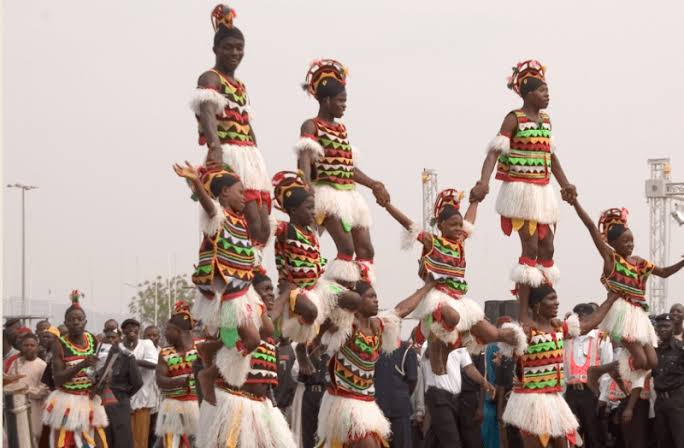
Atilogwu Dance
Meaning / Significance
Dance and music are inseparable from Igbo celebrations. Through rhythm, movement, and song, Igbo people express joy, spirituality, community, and identity. Among these, the Atilogwu dance stands out as a vibrant youth dance that captures energy, agility, and cultural pride.
Traditional Igbo dances have long been part of festivals, ceremonies, and daily life. They offer a medium for storytelling, celebration, and passing down history. The Atilogwu, for instance, is believed to have roots in ancestral times, and its name even loosely connotes “magic,” and reflects how people once viewed the dance’s athleticism and energy.
Key Activities / Practices Involved in Traditional Dances and Music
Vigorous dancing during festivals: During events like the New Yam Festival or masquerade festivals, dancers perform lively, often acrobatic moves that captivate audiences.
Music accompaniment: Drumming, ogene, oja, ekwe, and other traditional instruments set the rhythm and mood for dances.
Youth participation and community bonding: Such dances involve the young people of the community, and provide a way to pass on cultural values, have fun, and foster unity.
Cultural Values
As one of the popular Igbo cultural festivals and traditions, dance and music celebrate life, community, harvest, and spirituality. They help to preserve oral traditions, encourage unity, and name new generations into their heritage.
Modern Relevance
Even today, traditional dances continue to be performed at cultural events, weddings, festivals, and sometimes, modern concerts. They bridge generations by connecting elders and youth through shared heritage. This is why it is among the popular Igbo cultural festivals and traditions.
Traditional Title‑Taking – No. 4 of Popular Igbo Cultural Festivals and Traditions
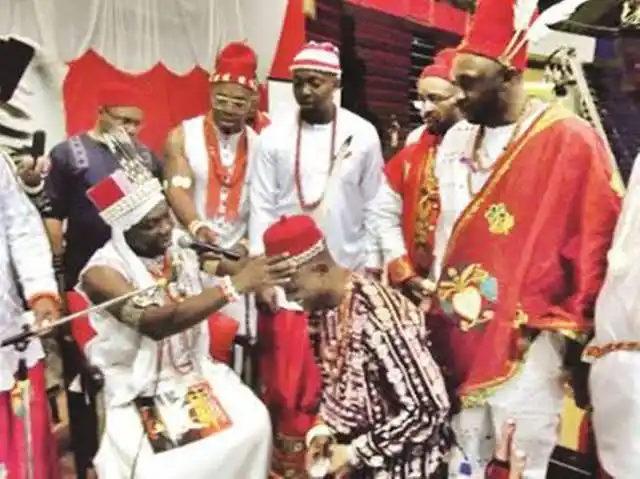
Ozo Title-taking
Meaning / Significance
Among the Igbo, social status, respect, leadership, and honour are sometimes conferred through traditional titles. Traditional title-taking is among the popular Igbo cultural festivals and traditions. For example, the Ozo title is one of the most respected among these, symbolizing prestige, responsibility, and recognition in the community.
Historically, title-taking was a way to recognize individuals who contributed positively to the community, morally, economically, or socially. It preserved community leadership, upheld cultural values, and identified role models in the society.
Key Activities / Practices Involved
Rituals and ceremonies, e.g. initiation rites, community announcement, and formal presentation before elders and community members.
Celebration and feasting: After the rites, community feasts, masquerades, dances, and songs celebrate the new title‑holder.
Social responsibilities and recognition: Title holders often take on community leadership roles, contribute to communal decisions, and uphold tradition and ethics.
Cultural Values
Title-taking is among the popular Igbo cultural festivals and traditions because it reinforces respect for elders, leadership, ethical behaviour, accountability, and communal values. It upholds tradition and ensures continuity of social structure.
Modern Relevance
While modernization has changed some aspects of traditional governance, title-taking ceremonies remain important in many Igbo communities, and as such, among the popular Igbo cultural festivals and traditions. They help to preserve identity, remind people of community values, and provide a link between modern life and tradition.
Ime Ego Nwanyi – No. 5 of the Popular Igbo Cultural Festivals and Traditions
Meaning / Significance
Ime Ego Nwanyi which literally means “bride price payment” is one of the popular Igbo cultural festivals and traditions of all times. It is a key component of Igbo traditional marriage rites which symbolizes the groom’s commitment, ability to provide, and respect for the bride’s family. Unlike modern misconceptions of “buying a bride,” in Igbo culture, the bride price is a symbolic and traditional gesture reflecting honour, family bonding, and social responsibility.
The ceremony strengthens ties between families, establishes mutual obligations, and sets the stage for the formal Igba Nkwu ceremony.
Historically, the bride price ensured that families formally recognized the union and that the groom could support his bride in the household. It represents a token of appreciation to the bride’s family for raising her. It strengthens alliances between families and communities, sometimes across villages or clans, and payments are often negotiated through elders, reflecting social hierarchy, wisdom, and respect.
The practice has evolved but remains culturally significant, emphasizing respect, responsibility, and social cohesion.
Key Activities / Practices Involved
Preparation: Both families list the items and amounts considered appropriate for the bride price. Items often include cash, food, drinks, cloth, jewelry, and symbolic gifts.
Negotiation: Elders from both families negotiate and agree on the bride price. The negotiation is done respectfully, often with humour, wisdom, and diplomacy.
Presentation: The groom or his family presents the agreed items to the bride’s family.
Acknowledgment: The bride’s family accepts the gifts, often accompanied by prayers, blessings, and cultural songs.
Documentation in Memory: Though not legal, the ceremony is considered binding socially as witnesses are present to affirm the union.
The bride price is never intended to “buy” a bride. It’s a symbol of respect, commitment, and community recognition.
Cultural Values
Ime Ego is among the age-old and popular Igbo cultural festivals and traditions because it honours the bride’s upbringing and family effort. It shows that the groom is capable of supporting a wife and future family. It’s a way of establishing social acknowledgment of the union. It helps to preserve Igbo traditions and formalize marriage customs.
Modern Relevance
In contemporary Igbo society the bride price often includes both cash and symbolic gifts, blending tradition with modern realities. It is integrated into combined traditional and modern weddings, allowing couples to respect heritage while embracing modern legal systems. Many young couples now negotiate culturally meaningful, yet practical bride prices that ensure affordability and cultural fidelity.
Ime Ego Nwanyi remains a cornerstone of popular Igbo cultural festivals and traditions, highlighting respect, commitment, and inter-family unity, ensuring that Igbo marital customs continue to thrive in modern times.
Igba Nkwu – No. 6 of the Popular Igbo Cultural Festivals and Traditions

Igba Nkwu Nwanyi
Meaning / Significance
Igba Nkwu which means “wine carrying” is among the age-old and popular Igbo cultural festivals and traditions. It is the traditional Igbo marriage ceremony that formalizes the union of a couple and joins their families. It celebrates love, reinforces family ties, community values, and cultural identity. The ceremony emphasizes respect, negotiation, and elder blessings, marking the couple’s transition into family life.
Practiced for centuries, Igba Nkwu was central to Igbo social structure, serving as both a union of individuals and a strategic alliance between families, villages, and clans.
Key Activities / Practices Involved
Introduction ceremony: Families formally meet, assess compatibility, and introduce the couple.
Bride price negotiation: Elders discuss and agree on the bride price, often with libations and prayers.
Wine carrying ceremony (igba nkwu): Bride carries palm wine and presents it to the groom. Bride searches for the groom in a ceremonial procession before finally locating him and giving him the wine as a symbol love, respect, and consent.
Blessings from elders: Elders and parents pray and pour libations over the couple.
Feasting, music and dance
Gift exchange: Families exchange symbolic gifts, cementing bonds.
Cultural Values
Igba nkwu is one of the popular Igbo cultural festivals and traditions because it applies across Igbo land. It unites two families, not just individuals. Elders guide decisions, and reinforce hierarchy. Because it involves the wider community, it strengthens bonds and preserves Igbo customs, language, attire, and rituals.
Modern Relevance
Couples often combine Igba Nkwu with church or civil ceremonies. The ceremony is now shared widely on social media as a way of promoting Igbo culture. It reinforces family values, respect, and community support, remaining relevant in modern life, hence, is rated among the popular Igbo cultural festivals and traditions that celebrates love, family, community, and cultural identity.
Ofala Festival – No. 7 of the Popular Igbo Cultural Festivals and Traditions

Ofala Festival
Meaning / Significance
Ofala Festival is rated among the popular Igbo cultural festivals and traditions. It is the traditional festival of kingship renewal among many Igbo towns. The name comes from two Igbo words — “ọfọ” (authority) and “ala” (land), meaning “authority over the land.” During Ofala, the king (Obi/Igwe/Eze) formally reins in his people, reaffirms his leadership, and receives homage.
Ofala Festival dates back several centuries. Some trace it to the 16th century, especially among the people of Onitsha, when kingship systems among some Igbo communities were formalized.
Key Activities / Practices Involved
The festival often begins with a gun salute or cannon firing, followed by royal gong (ufie) drumming, dancing, and cultural activities the night before the public appearance.
On the main day, the Obi/king appears in full regalia, often making three public appearances. First, as a formal emergence; second as audience with chiefs and subjects, and third for royal dance, usually to war drums where he parades before the people.
Chiefs, age‑grade groups, age‑sets, women’s groups and youths often pay homage, perform dances, bring gifts, or receive titles. The king may also grant chieftaincy titles during the festival.
Ofala serves as a symbolic renewal of authority and blessings for the community. It is a re-commitment by the king to lead and protect his people.
Cultural Values
As one of the popular Igbo cultural festivals and traditions, Ofala underscores respect for traditional authority, continuity of leadership, communal identity, and cultural heritage. It binds the community around a central figure of leadership and fosters unity, respect for tradition, and cultural pride.
Modern Relevance
Today, Ofala remains one of the biggest traditional events in many Igbo towns. It draws not only local community members but also diaspora returnees, cultural tourists, and young people, thus bridging modern life with ancestral heritage. It’s also sometimes a catalyst for community development, social cohesion, and cultural revival. This is why it is among the popular Igbo cultural festivals and traditions of all time.
Ito Ogbo – No. 8 of the Popular Igbo Cultural Festivals and Traditions

Ito Ogbo Festival
Meaning / Significance
Ito Ogbo Festival, though is not celebrated across all Igbo communities, but falls among the popular Igbo cultural festivals and traditions due to its significance and the media publicity it enjoys. It is a cultural celebration that honours octogenarians (people aged 80–89) who are still alive. It acknowledges their long life, experiences, contributions, and wisdom, and gives them communal recognition and respect.
Among the people of Obosi in Anambra State, and some other Igbo communities, Ito Ogbo has been practiced for centuries. It is considered a high honour and a way to celebrate longevity, communal continuity, and respect for elders.
Key Activities / Practices Involved
The festival typically occurs every three years. In each cycle, an age grade of people who have turned 80 in that period is honoured.
Celebrations include prayers, songs, dances, speeches, feasts, presentation of gifts, and communal gatherings.
The honoured elders are often given titles such as “Ogbueshi” (for men) or “Ogbueshi nwanyi” (for women), marking their elder‑status and respect within the community.
Cultural Values
Ito Ogbo is counted among the popular Igbo cultural festivals and traditions because it elevates the values of longevity, wisdom, elder‑respect, intergenerational continuity, and communal solidarity. It affirms that older people are honoured, cared for, and celebrated rather than neglected. It also anchors community memory and identity in living persons, and not just ancestor worship.
Modern Relevance
With changing social dynamics, aging population, diaspora movement, and migration, Ito Ogbo helps to sustain respect for elders and reconnect families. It serves as a reminder that elders are carriers of history, experience, and heritage, and remain valuable and worthy of honour.
Iwa Akwa – No. 9 of the Popular Igbo Cultural Festivals and Traditions
Meaning / Significance
Iwa Akwa festival is included among the popular Igbo cultural festivals and traditions. It literally means “cloth wearing” and is a traditional Igbo rite of passage that marks the transition of a young man from adolescence into adulthood. It confers adult status, social acceptance, and readiness to take up adult responsibilities.
Practiced in many Igbo communities, especially in parts of Imo State and Abia State, Iwa Akwa is ancient and rooted deeply in Igbo age‑grade tradition. It is said that an Igbo man who dies without Iwa Akwa would be regarded as a child, even in death.
Key Activities / Practices Involved
Young men, usually between about 21 and 26 years old undergo investigation by community elders to confirm eligibility.
Families buy special cloth wrappers, often “George” cloth, prepare reception venues, and invite guests.
On the day of the ceremony, initiates dress in their wrappers, often bare-chested, walk bare-footed, sometimes, decorate their bodies with chalk or other marks, and perform dances or march in procession through the village or market square.
After successful initiation, the new adult is celebrated with feasting, giving of gifts, and recognition as a full-fledged member of the community, eligible to marry, own property, participate in communal decision-making, and carry certain traditional privileges.
Cultural Values
Being one of the popular Igbo cultural festivals and traditions, Iwa Akwa underscores community values such as responsibility, maturity, respect, and participation in communal life. It preserves the age‑grade system and traditional social order, while helping youths to develop discipline, independence, and accountability.
Modern Relevance
Though modern education, Christianity, and urbanization have changed lifestyle for many Igbo youths, Iwa Akwa continues in some communities. For many, it remains a meaningful cultural anchor and a way to affirm identity, roots, and social maturity. This is why it is among the popular Igbo cultural festivals and traditions of all time.
Iwa Oji – No. 10 of the Popular Igbo Cultural Festivals and Traditions

Iwa Oji rituals
Meaning / Significance
Iwa Oji or kola-nut breaking ceremony is one of the popular Igbo cultural festivals and traditions that is carried out among many Igbo communities. It is a central Igbo tradition that symbolizes hospitality, unity, respect, and spiritual connection. Serving kola nut to guests, elders, or at ceremonies represents goodwill, peace, and acknowledgment of ancestors.
Dating back centuries, kola-nut rituals were used to initiate diplomatic negotiations or peace agreements, offer ancestral blessings during community decisions, and bless festivals, marriages, and harvests.
Key Activities / Practices Involved
Host offers kola nut to elders or guests.
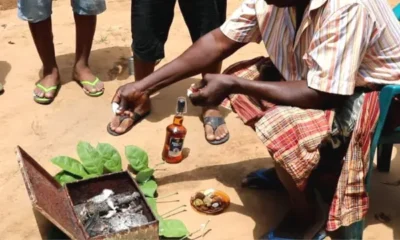
Elders offer prayers or libations to ancestors.
Kola nut is broken and shared in a respectful order.
Guests chew or taste kola nut to signify shared goodwill.
Cultural Values
Iwa Oji is one of the popular Igbo cultural festivals and traditions that honours elders first. When kola nut is shared, it shows hospitality and helps to builds bonds. Iwa Oji also honours the ancestors and is a way of seeking divine guidance. It helps to strengthen family and village ties.
Modern Relevance
Iwa Oji is still performed in weddings, funerals, meetings, and cultural festivals till today. Even among diaspora, it is observed as a way of maintaining identity. Iwa Oji is often an intgegral part of every traditional gathering or celebration. It is showcased during cultural programmes and tourism initiatives.
In Conclusion …
These popular Igbo cultural festivals and traditions explored in this article describe a people deeply rooted in community, spirituality, respect, and continuity. From the colourful Ofala festival to life-stage rites like Iwa Akwa and Ito Ogbo, and from symbolic customs such as kola-nut breaking to cherished marriage rites like Ime Ego Nwanyi and Igba Nkwu, each practice reflects the values that have guided Igbo society for centuries.
These traditions are both cultural performances and living expressions of identity, binding generations together and reminding Igbo communities at home and abroad of who they are. Even as the world modernizes, Igbo people continue to preserve, adapt, and celebrate their heritage, ensuring that these customs remain meaningful and relevant.
Understanding and documenting these practices helps to protect them from fading away. It also offers younger generations an invitation to reconnect with their roots and appreciate the wisdom embedded in their culture. Whether celebrated in a bustling village square in Anambra or recreated by diaspora communities in faraway cities, Igbo festivals and traditions remain powerful symbols of pride, resilience, and belonging.
The identity of Igbo people continues to echo through these vibrant, communal, and timeless ceremonies as a way of keeping the culture alive for the posterity.
References
- https://www.iosrjournals.org/iosr-jhss/papers/Vol20-issue5/Version-2/R02052128135.pdf
- https://guardian.ng/life/iwa-ji-the-new-yam-festival-in-igbo-land/
- https://www.igboamaka.ca/festivals
- https://en.wikipedia.org/wiki/Iwa_Akwa
- https://ozikoro.com/iwa-akwa-festival-obowo-a-majestic-rite-of-passage-in-igbo-heartland/
- https://www.nigerianjournalsonline.com/index.php/ijaas/article/viewFile/1311/1293
- https://umuigbo.com/the-ofala-festival/igbo-culture
- https://en.wikipedia.org/wiki/Atilogwu
- https://scrollforth.ng/important-festivals-in-igbo-culture
- https://www.igboguide.org/culture/kola-nut.htm
- https://guardian.ng/life/igbo-traditional-marriages-celebrating-culture-and-heritage/
- https://www.igboamaka.ca/traditional-igbo-weddings/
- https://nnewicity.com/ozo-title-in-igbo-culture-all-you-should-know/