



Igbo culture
Incantations: A Powerful Practice in Traditional Igbo Spirituality

Incantations play a powerful role in traditional Igbo spirituality through ritual speech, ancestral invocation, healing practices, sacred ceremonies, and oral traditions passed down across generations.

Across many African societies, words have always carried deep meaning. In traditional Igbo spirituality, spoken words were never seen as ordinary sounds. They were believed to carry intention, authority, memory, and spiritual force. This belief gave rise to the use of incantations in rituals, healing, prayers, protection, and communication with the spiritual world.
For centuries, incantations formed part of the daily spiritual life of the Igbo people of southeastern Nigeria. Elders spoke sacred words during kola nut prayers. Traditional healers uttered ritual phrases while preparing herbs. Diviners called upon ancestors during spiritual consultations. Hunters, farmers, and community leaders also used ritual speech in different situations that touched on life, protection, success, and communal wellbeing.
Today, the topic of incantations is often misunderstood. Popular movies and sensational stories sometimes present them only as mysterious or dangerous practices. Yet historical records, oral traditions, and academic studies reveal a much broader and more meaningful picture. In traditional Igbo spirituality, incantations were closely tied to belief systems, oral knowledge, respect for ancestors, and the idea that spoken words could influence both human and spiritual relationships.
Understanding this practice in the Igbo cultural setting requires looking beyond fear and stereotypes. It involves listening to history, culture, language, religion, and indigenous knowledge systems that existed long before colonialism and Christianity arrived in many Igbo communities.
This article explores the meaning, origins, cultural importance, and continued relevance of incantations in traditional Igbo spirituality. It also examines how sacred speech functioned in healing, rituals, festivals, divination, and everyday life among the Igbo people.
Meaning of Incantations in Traditional Igbo Spirituality
Incantations are sacred spoken words used during spiritual, religious, or ritual activities. In traditional Igbo spirituality, they often involved prayers, invocations, chants, ritual speech, or verbal expressions believed to carry spiritual authority.
Unlike ordinary conversation, they were spoken with purpose and intention. The words could be directed toward ancestors, deities, spiritual forces, nature, or members of the community. Some were spoken softly during private rituals, while others were recited publicly during ceremonies and festivals.
Among the Igbo, language itself was respected. Words were believed to have consequences. Blessings spoken by elders were taken seriously. Curses were feared. Oaths carried weight. Even everyday proverbs revealed how highly speech was valued in Igbo culture.
In this spiritual environment, incantations became an important part of traditional religious life. They were not merely dramatic performances. They were connected to faith, memory, ritual knowledge, and the unseen world.
Scholars who study African traditional religion often describe incantations as performative speech. This means the words were not only spoken for communication but were believed to achieve a spiritual or symbolic purpose when properly uttered during rituals.
Historical Origins of Incantations in Igbo Society
The roots of incantations in Igbo society go back to the earliest forms of indigenous spirituality in southeastern Nigeria. Before written records became common, knowledge was preserved orally. Elders passed down stories, rituals, songs, prayers, and sacred expressions from one generation to another.
Traditional priests, herbalists, diviners, and custodians of shrines often memorized long ritual formulas. These sacred words were taught carefully and usually learned through years of apprenticeship and observation.
In many Igbo communities, spiritual knowledge was treated with respect. Certain incantations were only spoken during specific ceremonies or by individuals believed to possess spiritual authority. This helped to preserve the seriousness attached to ritual speech.
The spiritual worldview of the Igbo also contributed to the growth of incantatory traditions. Traditional Igbo religion acknowledged the existence of Chukwu, ancestors, deities, spirits, and forces connected to nature and morality. Communication with these spiritual entities often involved spoken invocations and ritual language.
Oral tradition played a major role in preserving indigenous African religions. Since many spiritual practices were transmitted verbally, incantations became part of the cultural memory of the people.
The Belief in the Power of Spoken Words
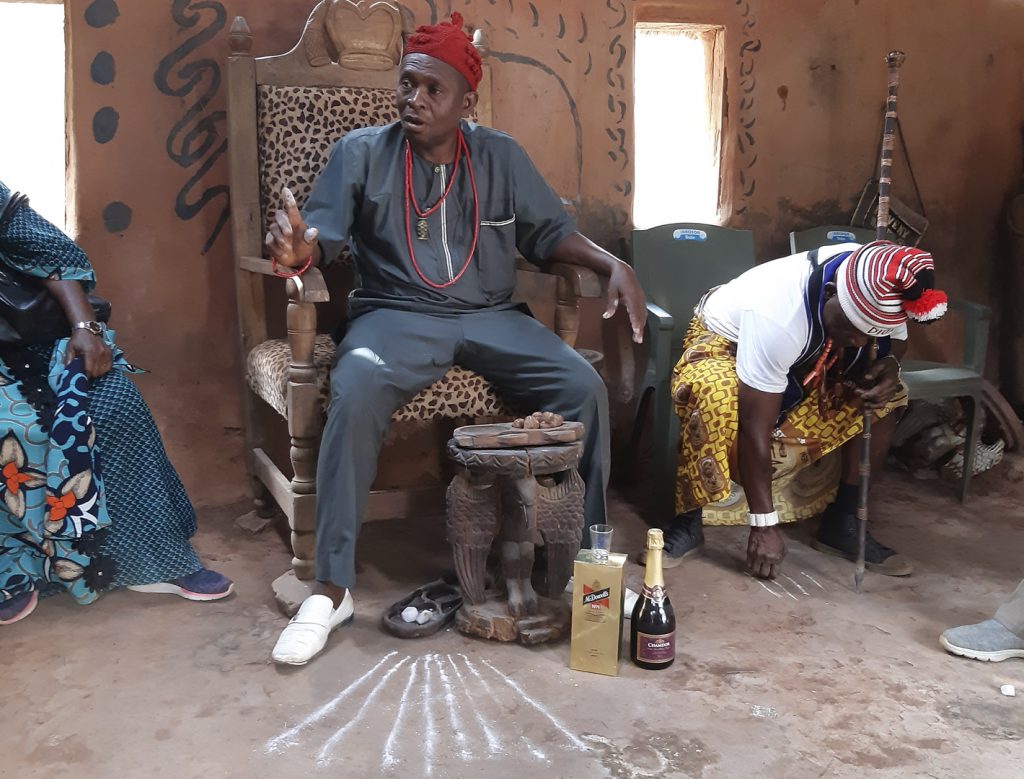
One of the strongest foundations of incantations in traditional Igbo spirituality was the belief that spoken words carried power. Among the Igbo, words could bless, warn, encourage, protect, or condemn. Elders prayed over children with spoken blessings. Community leaders used ritual speech during dispute settlements. Farmers offered verbal prayers before planting crops. Families invoked the names of ancestors during important occasions.
This belief can still be seen in many Igbo sayings today. Speech was expected to carry truth and seriousness. Careless words were discouraged because language was believed to affect both relationships and spiritual wellbeing.
In traditional spirituality, spoken words often worked together with symbolic actions. A healer might prepare herbs while speaking ritual phrases. A priest breaking kola nut might invoke peace and blessings through sacred prayers. During ancestral ceremonies, verbal invocations were used to invite spiritual presence and guidance.
This belief in the power of words was not unique to the Igbo alone. Similar traditions existed across many African societies. However, within Igbo culture, the practice became deeply connected to oral heritage, ritual authority, and communal life.
Types of Incantations in Traditional Igbo Culture
Healing Incantations
Healing incantations were commonly associated with traditional medicine. Herbalists and spiritual healers often combined herbs with ritual speech during treatment. The spoken words were believed to activate spiritual assistance or strengthen the healing process. In some cases, the healer invoked the ancestors or spiritual forces believed to support recovery and protection.
Traditional Igbo healing did not always separate physical health from spiritual wellbeing. Illness could sometimes be understood as involving social, spiritual, or moral dimensions. Because of this, healing rituals often included prayers, cleansing, symbolic actions, and incantations.
Protective Incantations
These were used to seek safety from danger, evil spirits, accidents, or misfortune. Hunters sometimes recited ritual words before entering forests. Travellers prayed for safe journeys. Families used spoken blessings for protection during uncertain times. Some protective invocations were connected to objects such as charms, sacred symbols, or ritual substances. However, the spoken words themselves remained central to the process.
Divination Incantations
Diviners in traditional Igbo spirituality acted as intermediaries between the spiritual and physical worlds. During consultations, they often used invocations, chants, and ritual speech. These incantations were believed to invite spiritual guidance or communication from ancestors and deities. Divination sessions usually involved careful ritual procedures, symbolic objects, and spoken formulas passed down through generations.
War and Hunting Incantations
Before colonial rule, hunting and warfare were important parts of life in many communities. Hunters and warriors sometimes used ritual speech connected to courage, safety, success, and spiritual protection. These incantations were part of broader cultural systems involving preparation, discipline, and belief in spiritual support.
Agricultural and Fertility Incantations
Agriculture played a major role in traditional Igbo society. Farming rituals often included prayers and invocations connected to rain, harvest, fertility, and prosperity. Some communities performed ceremonies before planting seasons. Spoken blessings were used to seek abundance and communal wellbeing.
Incantations in Healing and Herbal Practices
Traditional healing among the Igbo involved extensive knowledge of plants, roots, leaves, and natural remedies. Herbal medicine was highly respected, and many healers possessed deep understanding of local medicinal plants. In several traditional settings, healing involved both physical and spiritual elements. This is where incantations became important.
A healer preparing herbs might speak sacred words during the process. The words could include prayers, invocations, or ritual formulas associated with healing traditions. Ritual speech often served symbolic and psychological functions alongside herbal treatment. It helped to establish trust, spiritual confidence, and communal meaning around the healing process.
It is important to avoid sensational interpretations. Academic studies generally describe these practices within the context of indigenous religion, oral culture, and traditional healthcare systems rather than fictional portrayals of supernatural magic.
Even today, traces of these traditions survive in some rural communities where traditional healers continue to combine herbal knowledge with spiritual practices inherited from earlier generations.
Incantations in Divination and Ancestral Communication

Ancestors held an important place in traditional Igbo spirituality. Many communities believed that the dead remained spiritually connected to the living and could offer guidance, protection, or warnings. During rituals and ceremonies, incantations were often used to invoke ancestral presence. Diviners, priests, and elders sometimes called upon ancestors through ritual speech during consultations or communal gatherings.
This practice was closely tied to the Igbo understanding of family continuity and respect for lineage. Ancestors were not worshipped as gods but honoured as spiritual members of the extended community.
Divination practices also involved spoken invocations. The diviner sought insight regarding illness, conflict, misfortune, or important decisions affecting individuals and families. Ritual speech in these settings functioned as a bridge between visible and invisible realities within indigenous belief systems.
Incantations in Festivals, Rituals, and Ceremonies
Masquerade Traditions
Masquerades remain one of the most visible aspects of Igbo cultural life. In many communities, masquerades are linked to ancestral traditions, entertainment, moral instruction, and spiritual symbolism. Ritual speech and chants often accompany masquerade performances. Certain sacred utterances are used during preparations, public appearances, and ceremonial gatherings.
Kola Nut Rituals
The kola nut ceremony is one of the most respected traditions in Igbo culture. Before kola nut is shared, elders usually offer prayers and blessings. These prayers sometimes contain ritual language and invocations connected to peace, unity, prosperity, and protection. The ceremony reveals how sacred speech remains woven into social and spiritual life.
Marriage and Naming Ceremonies
Traditional marriage rites often include spoken blessings for fertility, peace, and family unity. Naming ceremonies also involve prayers and verbal declarations wishing children long life and success. These spoken words carry emotional and spiritual significance within the community.
Funeral and Ancestral Ceremonies
Funeral rites in traditional Igbo society involve prayers, chants, praise poetry, and invocations honoring the deceased and ancestors. Such ceremonies help to maintain the connection between memory, lineage, spirituality, and communal identity.
Symbolism and Spiritual Interpretation of Incantations
Incantations in traditional Igbo spirituality are more than spoken words. They carry layers of meaning that often go beyond their literal expressions. In many cases, what is said is only part of the message. The deeper meaning is found in the intention behind the words, the situation in which they are spoken, and the cultural understanding shared by the community.
Symbolism plays a central role in how incantations are understood. Certain words, names, and phrases are not used casually. They may point to ancestral authority, moral order, protection, healing, or spiritual balance. When spoken during rituals, they are believed to connect the physical world with the spiritual world in ways that ordinary speech does not.
In traditional Igbo thought, spoken words are never empty. Language is treated as something active, capable of carrying weight and consequence. Because of this belief, incantations are often delivered with care, rhythm, and repetition. These elements are not accidental. They help to preserve meaning, reinforce memory, and give structure to ritual speech.
Repetition, in particular, is important. A repeated phrase is not just for emphasis. It is part of how sacred speech is remembered and passed on. It also creates a sense of order during rituals, especially in communal settings where participation is expected.
Incantations also rely heavily on imagery drawn from everyday life. References to nature, such as rivers, earth, fire, trees, and animals, are common. These images help to communicate ideas about strength, fertility, protection, renewal, and continuity. In this way, spiritual ideas are expressed through familiar surroundings.
The performance of incantations adds another layer of meaning. Tone, timing, and setting all influence how the words are received. A ritual spoken in a shrine, during a festival, or at a family ceremony carries different emotional and cultural weight, even when similar phrases are used.
Within Igbo spirituality, incantations are, therefore. understood as both language and experience. They combine speech, belief, memory, and cultural identity. Their meaning is not fixed in a single interpretation but is shaped by tradition, context, and shared understanding within the community.
Incantations as Oral Literature and Indigenous Knowledge
Incantations in traditional Igbo spirituality are an important part of oral literature. They exist within a wider cultural system that includes proverbs, folktales, praise poetry, riddles, and ritual chants. These forms of expression were not written down in the past, yet they carried knowledge, values, and history across generations through spoken tradition.
As oral literature, incantations are carefully structured forms of speech. They often use rhythm, repetition, symbolism, and poetic language. These features make them easier to remember and pass on from elders to younger members of the community. In many cases, the exact wording is preserved because even small changes are believed to affect meaning and effectiveness within ritual contexts.
Incantations also function as a form of indigenous knowledge. They contain information about the environment, health practices, social order, moral expectations, and spiritual beliefs. For example, some incantations used in healing reflect traditional understanding of herbs and their uses, while others connected to farming reflect seasonal awareness and agricultural experience.
This body of knowledge was not separated into academic subjects as it is today. Instead, it was integrated into daily life, rituals, ceremonies, and communal interactions. Elders, priests, diviners, and traditional healers often served as custodians of this knowledge, ensuring it was preserved and transmitted responsibly.
Another important aspect is that incantations reflect the worldview of the people who created them. They show how the Igbo understood the relationship between humans, nature, ancestors, and the spiritual realm. Through ritual speech, ideas about justice, protection, balance, and community wellbeing were communicated in ways that were both symbolic and practical.
Today, scholars of African oral traditions study incantations as valuable cultural records. They provide insight into precolonial belief systems, social organization, and linguistic creativity. Even in modern times, traces of these traditions continue to appear in cultural festivals, storytelling practices, and artistic expressions.
As such, incantations remain both a literary form and a repository of indigenous knowledge, preserving the intellectual and spiritual heritage of the Igbo people.
Colonialism, Christianity, and Changing Perceptions of Incantations
The arrival of colonial rule and Christian missionary activity in Igboland brought major changes to traditional spiritual practices, including incantations. Before this period, incantations were deeply embedded in everyday life, ritual practice, and communal belief systems. They were understood as sacred speech used in healing, prayer, divination, and ancestral communication.
With the spread of Christianity, many indigenous practices were reinterpreted through a new religious lens. Missionaries often described traditional rituals, including incantations, as incompatible with Christian teaching. As a result, practices associated with traditional religion were frequently discouraged or abandoned in communities that adopted Christianity. This shift gradually changed how incantations were viewed in many areas.
Colonial education also played a role in reshaping perception. Western schooling systems introduced new ways of thinking about religion, language, and knowledge. Written texts were prioritized over oral traditions, and indigenous practices were often documented from an external perspective that did not always fully capture their cultural meaning. Over time, this contributed to a decline in the public use of incantations in urban and formally educated settings.
However, it is important to note that these changes were not absolute. In many rural communities, elements of traditional spirituality continued to exist alongside Christianity. Some families maintained cultural practices in private or adapted them into new forms that fit changing religious environments. Oral traditions, including ritual speech, also survived through festivals, cultural performances, and community ceremonies.
In contemporary times, perceptions of incantations vary widely. For some people, they are viewed mainly as part of cultural heritage and historical identity. For others, they remain closely tied to spiritual belief systems that predate modern religion. At the same time, scholars in African studies, anthropology, and religious studies approach incantations as part of indigenous knowledge systems that deserve careful documentation and respectful interpretation.
Today, there is also a growing interest in revisiting African traditional religions from a cultural and academic perspective. This has encouraged more balanced discussions that move beyond early colonial descriptions. Instead of seeing incantations only through fear or misunderstanding, modern research often places them within their historical, linguistic, and social contexts.
Modern Relevance of Incantations in Igbo Society
In today’s Igbo society, incantations no longer hold the same public and central role they once did in precolonial times, but they have not disappeared. Instead, they have changed form, moved into new spaces, and continue to exist in cultural, religious, and artistic expressions.
In some rural communities, elements of traditional spirituality are still practiced in private or within family settings. Certain elders, traditional healers, and custodians of indigenous knowledge continue to use ritual speech in healing practices, cultural rites, and community ceremonies. In these contexts, incantations are not treated as everyday speech but as sacred expressions reserved for specific moments and purposes.
Beyond ritual spaces, traces of incantatory language can also be found in cultural festivals and traditional celebrations. During events such as masquerade performances, title-taking ceremonies, marriage rites, and kola nut gatherings, prayers and blessings are still spoken in structured and symbolic language. While not always described explicitly as incantations, these spoken forms carry similar features of ritual speech and cultural meaning.
Modern Igbo Christianity has also influenced how such expressions are used. In many churches, spoken prayers, declarations, and chants form an important part of worship. Although these are not traditional incantations in the religious sense, they show that the cultural appreciation for spoken spiritual expression remains strong, even if the context has changed.
Another area where incantations remain visible is in creative arts. Nigerian literature, music, theatre, and film often draw inspiration from indigenous spirituality. Writers and performers sometimes include ritual speech, chants, and symbolic language to reflect cultural heritage or tell stories rooted in tradition. While these representations are sometimes dramatized, they help to keep public awareness of indigenous practices alive.
Academic interest has also contributed to the continued relevance of incantations. Scholars in anthropology, linguistics, history, and religious studies continue to document and analyze Igbo oral traditions. Their work helps to preserve knowledge that might otherwise fade due to modernization and language shift. Universities and cultural institutions now treat oral literature, including ritual speech, as an important part of African intellectual heritage.
At the same time, there is a growing cultural reawakening among the younger generations. Many people are beginning to explore indigenous identity, language, and spirituality with renewed curiosity. This interest is often expressed through online platforms, cultural groups, and heritage projects that aim to recover and preserve traditional knowledge systems.
Despite these changes, it is important to understand that incantations today exist in a complex space between history and modern life. They are no longer only ritual tools of traditional religion in the strict sense, but they remain symbols of cultural memory, identity, and the enduring power of spoken language in Igbo society.
Misconceptions About Incantations
Incantations in traditional Igbo spirituality are often surrounded by misunderstanding, especially in modern discussions shaped by popular media, religion, and incomplete historical narratives. Because of this, the term “incantations” is sometimes associated only with fear, superstition, or harmful practices. However, this view does not capture the full cultural and historical meaning of incantations within Igbo society.
One common misconception is that all incantations are connected to harm or negative spiritual forces. In reality, incantations were used in many different contexts. They were part of prayers for protection, healing, peace, fertility, success, and community wellbeing. In many cases, they were spoken during family ceremonies, agricultural activities, and rites of passage. Their purpose depended on the situation and intention of the speaker.
Another misunderstanding is the belief that incantations function independently of culture or tradition, as though they are isolated magical formulas. In Igbo spirituality, incantations are deeply connected to language, worldview, ritual practice, and social relationships. They are not random expressions but structured forms of speech learned through cultural transmission and guided by communal norms.
There is also the misconception that incantations were practiced by anyone at any time. Traditionally, certain forms of ritual speech were restricted to specific roles such as priests, diviners, herbalists, and respected elders. These individuals were trained within cultural systems that required discipline, memory, and understanding of spiritual context. This structure helped to maintain order and meaning within the practice.
Modern portrayals in films and storytelling have also contributed to distorted perceptions. In some cases, incantations are presented as dramatic or exaggerated actions meant to create fear or mystery. While storytelling often uses creative freedom, such portrayals can overshadow the real cultural and historical significance of ritual speech in Igbo society.
Another important point is the confusion between belief and superstition. From an academic perspective, incantations are studied as part of oral literature and indigenous religion. They are understood within their cultural framework rather than judged by external standards. This allows researchers to examine their role in communication, identity, and social structure without reducing them to superstition.
It is also worth noting that not all spoken rituals in Igbo culture are “incantations” in the strict sense. Some are prayers, blessings, chants, or symbolic declarations that function differently, depending on context. Grouping all ritual speech under one label can lead to oversimplification and misunderstanding.
A clearer understanding of incantations requires attention to history, language, and cultural context. When studied carefully, they reveal a complex system of communication that connects people to their beliefs, traditions, and community life. Recognizing this helps to move discussions away from stereotypes and toward a more balanced appreciation of Igbo spiritual heritage.
Conclusion …
Incantations occupy a meaningful place in traditional Igbo spirituality, not only as spoken words but as part of a wider system of belief, culture, and oral tradition. They were used in healing, rituals, divination, protection, ceremonies, and moments of communal life where language carried deep emotional and spiritual weight.
Across Igbo history, incantations were never separate from everyday living. They were tied to how people understood health, relationships, nature, ancestry, and the unseen world. Whether spoken during kola nut prayers, healing practices, or ancestral rites, they expressed values such as respect, unity, protection, and continuity of life within the community.
Over time, colonial influence, Christianity, and modernization changed how incantations are practiced and perceived. In many urban and religious settings, their public use declined, while in rural areas and cultural spaces, elements of ritual speech continued in different forms. Today, they exist both as lived tradition and as cultural memory preserved through oral history, festivals, and artistic expression.
Despite changing times, incantations remain important for understanding Igbo identity and indigenous knowledge systems. They reveal how language was not only a tool for communication but also a medium for meaning, belief, and shared experience. Studying them offers a clearer view of how traditional Igbo society connected speech with spirituality and community life.
Ultimately, incantations stand as part of a larger cultural heritage that continues to invite reflection, respect, and careful documentation.
References
- Duru, W. C. (2016). The communicativeness of incantations in the traditional Igbo society. Journal of Media and Communication Studies, 8(4), 30–36. https://academicjournals.org/journal/JMCS/article-full-text/3ABBDF561047
- Duru, W. C. (2024). Effectiveness of incantations as a mode of communication in the traditional Igbo society. In Recent Research Advances in Arts and Social Studies (Vol. 8). https://stm.bookpi.org/RRAASS-V8/article/view/14195
- Metuh, E. I. (1987). Comparative studies of African traditional religions. Imico Publishers.
- Mbiti, J. S. (1990). African religions and philosophy (2nd ed.). Heinemann.
- Isichei, E. (1976). A history of the Igbo people. Macmillan.
You might want to check this out …