



Afrobeat
Jeriq the Hussla: Igbo Street Rapper Who Sold Out Stadiums and Inspires the Youth

Early Life and Background
Ani Jeremiah Chukwuebuka, popularly known as Jeriq the Hussla, was born on May 6, 1999, in Enugu State, southeastern Nigeria. Growing up in Enugu, Jeriq’s childhood was marked by the realities of a bustling city and the challenges many young people face in the East. His neighborhood was alive with energy, commerce, and street hustle, a place where resilience, wit, and creativity were needed to navigate daily life. These experiences would later become central themes in his music.

Jeriq the Hussla
Jeriq attended the College of the Immaculate Conception (CIC) in Enugu, where he first discovered his passion for rap. Even as a student, he was drawn to the power of words and rhythm, often freestyling for friends or at small school events. His ability to capture real-life stories through his lyrics set him apart from peers who focused only on entertainment. He later pursued higher education at the Enugu State University of Science and Technology (ESUT), balancing academics with his growing dedication to music.
Family and community also played an important role in shaping his character. Though he did not come from a household of musicians, Jeriq’s parents encouraged hard work and discipline. Observing local artists and hearing street stories sparked his interest in expressing himself through music. By his late teens, he had decided that rap would not just be a hobby but a career, a tool to tell his story, inspire others, and showcase Igbo culture on a bigger stage.
Rapping in Igbo: A Bold and Unique Style
What truly distinguishes Jeriq in Nigeria’s crowded music scene is his decision to rap primarily in Igbo, his native language. In a country where English and Yoruba dominate mainstream rap, this choice was bold. It immediately connected him with audiences in the southeastern region while also creating curiosity in other parts of Nigeria and abroad.
Jeriq’s decision to rap in Igbo follows in the footsteps of artists like Phyno, Zoro, and Blaqbonez, who have all championed Indigenous rap in Nigeria. Phyno, often regarded as a pioneer of Igbo rap, showed that rapping in a local language could achieve mainstream success. Zoro brought street narratives and local slang to the fore, while Blaqbonez experimented with fusions of Igbo rap and modern hip-hop styles. These artists paved the way for younger talents like Jeriq to confidently embrace their heritage while appealing to wider audiences.
Jeriq’s music is infused with proverbs, local slang, and motivational street talk. This linguistic style allows him to communicate complex emotions, social realities, and street wisdom in a way that resonates with young people who grew up in similar environments. Songs such as “Oluoma,” “No More Nleka,” and “My Bro” are prime examples. In “Oluoma,” he mixes personal storytelling with advice for those chasing dreams, while “No More Nleka” touches on betrayal, loyalty, and the harsh realities of urban life. Through these songs, listeners often feel as if he is speaking directly to them, reflecting their own struggles and ambitions.
Beyond language, Jeriq’s music blends multiple genres. While firmly rooted in Igbo rap and street-hop, he incorporates elements of hip-hop, Afrobeat, and highlife, creating a sound that is both locally authentic and globally accessible. His beats often feature rhythmic drum patterns, melodic piano riffs, and vibrant synths, offering a balance between raw street energy and polished production.
The message in Jeriq’s music is just as important as the sound. He focuses on hustle culture, resilience, community, and ambition, often emphasizing that success comes from hard work and staying true to one’s roots. This messaging has earned him respect, particularly among the Igbo youth, who see him as both a voice and a role model.
Albums and Projects
Jeriq’s rise to prominence has been gradual, with each project building on the last and reflecting his growth as an artist.
Hood Boy Dreams (2020)
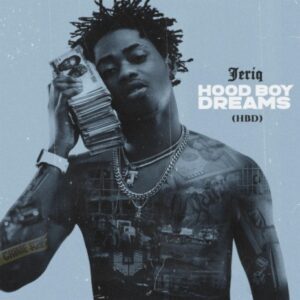
Hood Boy Dream
This breakout EP marked Jeriq’s entrance into mainstream music. It was raw, reflective, and filled with street-inspired storytelling. Tracks from this project introduced listeners to his unique style, freestyling in Igbo while addressing everyday struggles, ambition, and loyalty. It quickly garnered attention in southeastern Nigeria, establishing him as a promising new voice in Igbo rap.
Billion Dollar Dream (2022)
This album elevated Jeriq from regional recognition to national awareness. Featuring collaborations with heavyweights in the industry like Phyno, Flavour, and Alpha P, the project showcased his ability to merge street rap with commercial appeal. The album’s production fused Igbo rap with highlife-infused melodies and Afrobeat rhythms, making it accessible to audiences across Nigeria. Songs from this album are often cited for their motivational themes, encouraging young people to dream bigger and work harder.
Evil Twin (2023)
“Evil Twin” was a joint EP with Abuja-based rapper PsychoYP. This project highlighted Jeriq’s versatility, proving he could adapt to different styles and regions. The collaboration blended street-hop with trap and Afrobeat elements, demonstrating Jeriq’s commitment to growing beyond the East while maintaining his Igbo identity. Critics praised the EP for its cross-regional collaboration and lyrical depth.
King (2024)
“King” was a milestone album that positioned Jeriq as a leader among Gen Z rappers in Nigeria. Featuring collaborations with artists like Bella Shmurda, Odumodublvck, Victony, Blaqbonez, and UK-based Knucks, the project expanded his reach internationally. Lyrically, “King” explored themes of leadership, ambition, street credibility, and cultural pride. The album’s polished production, combined with street authenticity, cemented Jeriq’s reputation as a rising star who could compete on both local and global stages.
Beyond albums, Jeriq is known for his freestyles, street singles, and community-focused tracks. These releases often go viral online, showcasing his connection to the streets and his ability to capture contemporary social realities. Streaming platforms like Audiomack, Boomplay, Spotify, and YouTube reflect his growing popularity, with millions of plays demonstrating the widespread appeal of his music.
Recent Highlights and Career Updates
Electrifying Performance in Abia State
Jeriq continues to captivate audiences with his live performances across Nigeria. In August 2025, he performed in Abia State, where fans enthusiastically sang along to his hits. The energy of the concert reflected the deep connection he has with his audience and his ability to create unforgettable live experiences. Fans praised his dynamic stage presence and the way he brought street culture to life through music and performance.
New Music Release: “Out the Mud”
On May 6, 2025, Jeriq released his latest single, “Out the Mud.” The track combines his signature street-hop style with motivational themes, resonating with listeners who relate to his journey from the streets to the stage.
Collaborations and Features
Collaboration has been central to Jeriq’s career growth. He actively seeks partnerships that both expand his sound and connect him to new audiences. Artists he has collaborated with includes:
Phyno
As a mentor and fellow Igbo rapper, Phyno has helped guide Jeriq’s lyrical style, stagecraft, and understanding of the Nigerian music industry. Their collaborations combine street rap with mainstream appeal.
Flavour
Jeriq’s work with Flavour blends Igbo rap with highlife influences, offering melodic tracks that honor tradition while remaining contemporary.
Bella Shmurda and Victony
These collaborations introduce Afrobeat elements, allowing Jeriq to reach audiences beyond Igbo rap fans.
Blaqbonez, Odumodublvck, and PsychoYP
Working with these artists balances street credibility with mainstream hip-hop, highlighting Jeriq’s versatility.
Knucks
Collaborating with this UK-based artist signals Jeriq’s growing international ambitions, blending Igbo rap with UK drill and hip-hop culture.
These collaborations are not just musical experiments. They reflect Jeriq’s strategy to position himself as a cultural bridge, connecting Igbo rap to wider Nigerian, African, and global audiences. Through these features, he demonstrates that staying rooted in culture does not limit creativity or reach.
Selling Out Stadiums in the East
In 2024, Jeriq achieved a milestone that no Igbo rapper had accomplished at his level. His concerts in Onitsha and Enugu drew massive crowds, proving that his music had become a cultural phenomenon.
On November 24, 2024, Jeriq hosted a solo concert at Chuba Ikpeazu Stadium in Onitsha. The stadium was packed with over 20,000 fans. Many came from nearby cities such as Awka, Nnewi, and Asaba. The atmosphere was electric, with fans singing along to every verse and celebrating the energy of Igbo street rap. The concert highlighted not just Jeriq’s popularity but also the growing acceptance and appreciation for Igbo-language music in the mainstream.
Following that success, Jeriq returned to his hometown for the JeriqHood Concert in Enugu on December 21, 2024, held at Nnamdi Azikiwe Stadium. Over 30,000 people attended, filling the venue to capacity. The event was more than a concert. It was a homecoming, a celebration of Igbo culture, and a testament to the power of authenticity in music. Fans wore outfits inspired by Jeriq’s lyrics and music videos, danced to local beats, and created viral moments on social media. The event was widely covered by local and national media, cementing Jeriq’s reputation as a leading voice of the East.
These concerts were significant not just for ticket sales but for the cultural message they sent. They demonstrated that Igbo rap could command massive stages, influence youth culture, and inspire pride in the language and local traditions. Jeriq became a symbol of success for young people in the region, showing that one could achieve greatness without leaving home.
Influence and Role in Igbo Youth Culture
Jeriq is more than a musician. He is a symbol of possibility for young people in Igbo land. His music speaks to the realities of the streets, the challenges of growing up, and the dreams of youth who aspire to succeed despite obstacles.
He motivates young people to work hard, pursue their dreams, and embrace their identity. His lyrics often include lessons about loyalty, honesty, ambition, and resilience. Many fans say listening to Jeriq is like hearing their personal stories expressed through music. He represents a generation of young Igbo people who want to succeed while remaining rooted in their culture and language.
Jeriq has also become a cultural ambassador. He promotes Igbo businesses through partnerships like his ambassadorship with Kedu App, encouraging youth to support local enterprises. His visibility in the media and online platforms has made him a role model for young people who want to combine passion with entrepreneurship and cultural pride.
His social media presence amplifies his influence. By sharing behind-the-scenes moments, freestyle videos, and motivational messages, Jeriq connects directly with his audience. Fans engage with him not just for entertainment but also for guidance, inspiration, and encouragement. His ability to blend street authenticity with motivational storytelling gives him a unique position in Nigerian music and youth culture.
Recognition and Awards
Recognition for Jeriq has grown steadily alongside his music career. In 2024, he was honored by the Enugu Ministry of Youth and Culture for his contribution to promoting Igbo language and music. This recognition was a formal acknowledgment of his role in inspiring youth and celebrating cultural heritage.
Jeriq has also been featured by Rolling Stone Africa, highlighting his impact on the broader African music scene. He received multiple award nominations for categories such as Best Indigenous Rapper, Best Collaboration, and Album of the Year. These nominations reflect both his creative talent and his growing influence in the industry.
Beyond awards, international opportunities have started to appear. He has been invited to music showcases abroad, representing Igbo rap on global stages. Collaborations with UK-based artists like Knucks demonstrate his expanding reach and show that local-language rap can resonate with international audiences.
Jeriq’s recognition is not only about fame but about respect from peers, industry professionals, and fans. His story serves as an example of how staying authentic, working hard, and honoring one’s roots can lead to significant achievements in music and culture.
Conclusion
Jeriq the Hussla’s journey from a young boy freestyling in Enugu streets to a stadium-filling artist is a story of talent, persistence, and cultural pride. He has shown that rap in Igbo can be both commercially successful and culturally meaningful. By staying true to his roots, embracing street realities, and creating music that speaks to real people, he has become a leading figure in contemporary Nigerian music.
His concerts, albums, collaborations, and cultural influence have redefined what it means to be an Igbo rapper in the modern era. More importantly, he has inspired a generation of young people in the East to believe that their dreams are valid, their language is valuable, and their stories are worth telling.
Jeriq is far from finished. With growing recognition, a strong fan base, and a commitment to authentic storytelling, he is poised to take Igbo rap to even greater heights. His music remains a mirror of life in the East, a voice for the streets, and a celebration of culture and identity for generations to come.
Click here to watch his live performance in Abia State
Read More: Osita Osadebe: The King of Highlife Music